From Surf Wiki (app.surf) — the open knowledge base
Walter O'Malley
American businessman (1903–1979)

American businessman (1903–1979)
| Field | Value |
|---|---|
| name | Walter O'Malley |
| image | O'Malley Time magazine cover 28-April-1958.jpeg |
| caption | O'Malley on the cover of Time magazine, April 28, 1958. |
| birth_date | |
| birth_place | New York City, New York, U.S. |
| death_date | |
| death_place | Rochester, Minnesota, U.S. |
| resting_place | Holy Cross Cemetery, Culver City |
| known_for | Relocating the Dodgers from Brooklyn to Los Angeles |
| education | University of Pennsylvania (B.A.) |
| Columbia University | |
| Fordham University (LL.B.) | |
| occupation | Baseball executive |
| spouse | |
| children | |
| relatives | |
| parents | Edwin O'Malley (father) |
| Alma Feltner (mother) | |
| module | {{Infobox baseball biography |
| embed | yes |
| hoflink | National Baseball Hall of Fame |
| hoftype | National |
| hofdate | 2008 |
| hofvote | 75% |
| hofmethod | Veterans Committee |
Columbia University Fordham University (LL.B.) Alma Feltner (mother)
- 4× World Series champion (, , , )
- Los Angeles Dodgers Ring of Honor
Walter Francis O'Malley (October 9, 1903 – August 9, 1979) was an American sports executive who owned the Brooklyn / Los Angeles Dodgers team in Major League Baseball from 1950 to 1979. In 1958, as owner of the Dodgers, he brought major league baseball to the West Coast, moving the Dodgers from Brooklyn to Los Angeles despite the Dodgers being the second most profitable team in baseball from 1946 to 1956, and coordinating the move of the New York Giants to San Francisco at a time when there were no teams west of Kansas City, Missouri. In 2008, O'Malley was elected to the National Baseball Hall of Fame for his contributions to and influence on the game of baseball.
O'Malley's father, Edwin Joseph O'Malley, was politically connected. Walter, a University of Pennsylvania salutatorian, went on to obtain a Bachelor of Laws (LL.B.), and he used the combination of his family connections, his personal contacts, and both his educational and vocational skills to rise to prominence. First, he became an entrepreneur involved in public works contracting, and then he became an executive with the Dodgers. He progressed from being a team lawyer to being both the Dodgers' owner and president, and he eventually made the business decision to relocate the Dodgers franchise. Although he moved the franchise, O'Malley is known as a businessman whose major philosophy was stability through loyalty to and from his employees.
In 1970, O'Malley ceded the team presidency to his son, Peter. He would become the first chairman of the Dodgers, a title established for him, and remain so until his death in 1979. During the 1975 season, the Dodgers' inability to negotiate a contract with Andy Messersmith led to the Seitz decision, which limited the baseball reserve clause and paved the way for modern free agency.
Early years
Walter O'Malley was born on October 9, 1903, in The Bronx, New York City. He was the only child of Edwin Joseph O'Malley (1881–1953), who worked as a cotton goods salesman in the Bronx in 1903. Edwin O'Malley later became the Commissioner of Public Markets for New York City. Walter's mother was Alma Feltner (1882–1940). Walter was a third-generation Irish-American. His great grandfather, John O'Malley, was born in County Mayo, Ireland. O'Malley grew up as a Bronx-born New York Giants fan. He frequently attended Giants games at the Polo Grounds with his uncle Clarence. O'Malley was a Boy Scout who rose to the rank of Star Scout.
O'Malley attended Jamaica High School in Queens from 1918 to 1920 and then the Culver Academy (the eventual high school alma mater of future New York Yankees owner George Steinbrenner) in Indiana. He managed both the baseball and tennis teams, served on the executive staff of the student newspaper, was a member of the Hospital Visitation Committee as well as the debate team, Bible Discipline Committee and the YMCA. At Culver, his baseball career was ended with a baseball that hit him on the nose.
Later, he attended the University of Pennsylvania and graduated in 1926 as the senior class Salutatorian. At Penn, he was initiated into Theta Delta Chi, and he also served as president of the Phi Deuteron Charge. He was also Junior and Senior class president.
Pre-baseball career
After he completed his law degree in 1930 at Fordham Law, he worked as an assistant engineer for the New York City Subway. After working for the Subway, he worked for Thomas F. Riley, who owned the Riley Drilling Company, and they formed the partnership of Riley and O'Malley. With the help of Edwin O'Malley's political connections, Walter's company received contracts from the New York Telephone Company and the New York City Board of Education to perform geological surveys. Subsequently, Walter started the Walter F. O'Malley Engineering Company and published the Subcontractors Register with his uncle, Joseph O'Malley (1893–1985).
Walter eventually concentrated on the field of law, starting with work on wills and deeds. By 1933, he was senior partner in a 20-man Midtown Manhattan law firm. He developed the business habits of smoking cigars and of answering questions only after taking two puffs. During the Great Depression, O'Malley represented bankrupt companies and enriched himself, while building his thriving law practice. He invested wisely in firms such as the Long Island Rail Road, Brooklyn Borough Gas Company, the New York Subways Advertising Company, a building materials firm, a beer firm and some hotels. His success begot both influence and attention. The Brooklyn Democratic Machine powers such as judge Henry Ughetta and Brooklyn Trust Company president George Vincent McLaughlin were among those who noticed the rising O'Malley.
Dodgers

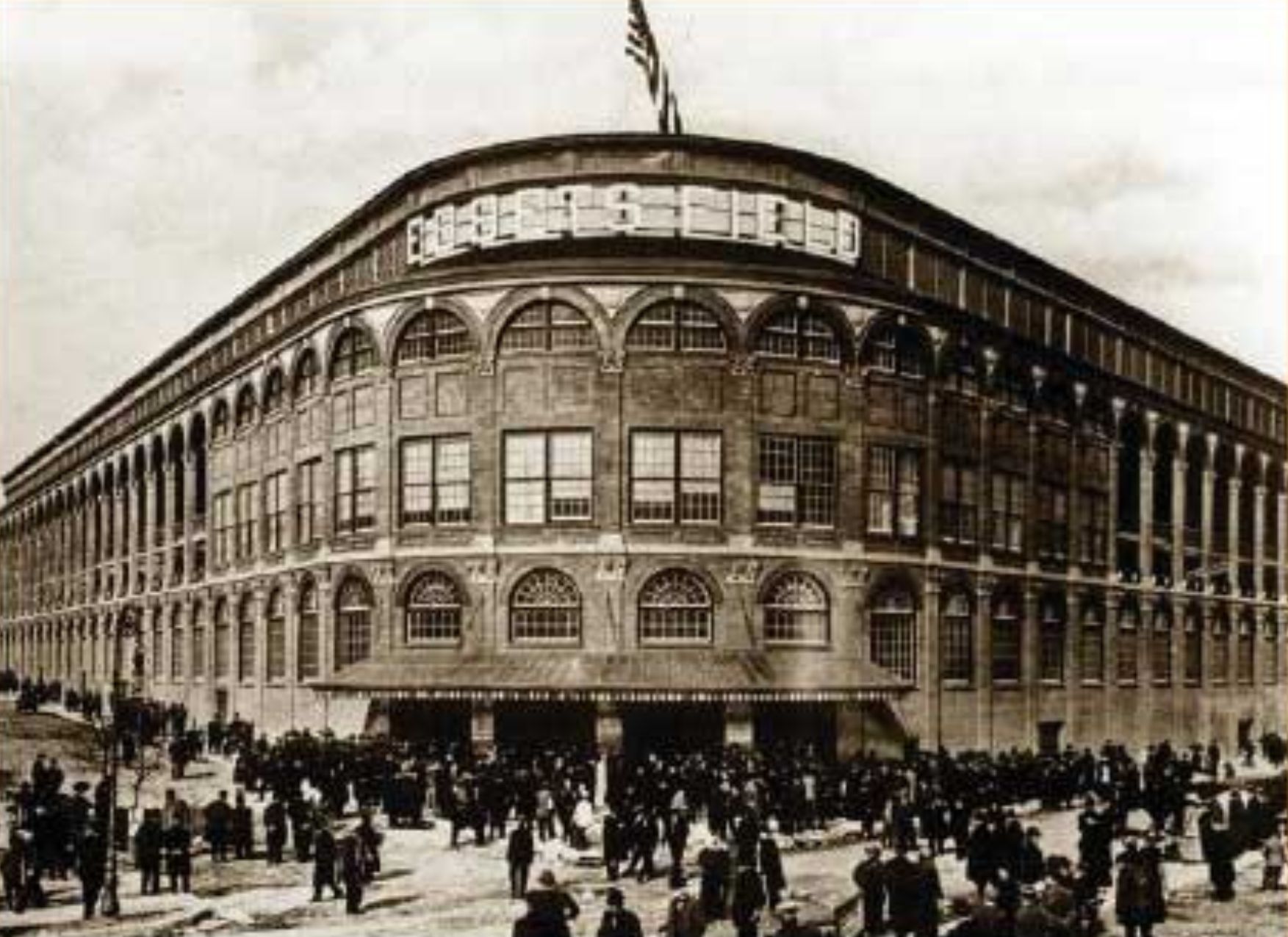
McLaughlin had been New York City Police Commissioner in 1926, knew O'Malley's father, and had attended Philadelphia Athletics games with O'Malley when O'Malley was still at the University of Pennsylvania. It was 1933 when Walter again met George V. McLaughlin, president of the Brooklyn Trust Company. It was through McLaughlin that Walter was brought into the financial arrangements for Ebbets Field in 1940. He purchased 25% as did Branch Rickey and John L. Smith (president of Pfizer Chemical), while the heirs of Stephen McKeever retained the final quarter. In 1943, he replaced Wendell Willkie as chief legal counsel. Branch Rickey, who had built the St. Louis Cardinals into champions, replaced MacPhail, and O'Malley began to accumulate stock in the Dodgers.

Control
When co-owner Smith died in July 1950, O'Malley convinced his widow to turn over control of the shares to the Brooklyn Trust Company, which O'Malley controlled as chief legal counsel. Rickey's contract as general manager was set to expire on October 28, 1950. Rickey's Dodgers stock was held on margin and he had fully leveraged his life insurance policy. O'Malley lowballed Rickey with an offer of $346,000 (the purchase price). Rickey demanded $1 million ($ today). O'Malley eventually pursued a complicated buyout of Rickey, who had received an outside offer from William Zeckendorf of $1 million for his interests. There were varying accounts about the sincerity of the offer because Zeckendorf and Pittsburgh Pirates owner John Galbreath were fraternity brothers, but there is a lot of evidence that he had a sincere interest in acquiring the team. The outside offer triggered a clause in the partnership agreement whereby the asking price of a third party had to be matched if a current owner wanted to retain control and the third party would be compensated $50,000. The canceled $50,000 check would later include Rickey's signature showing that Zeckendorf turned over the $50,000 to Rickey.
O'Malley replaced Rickey with Buzzie Bavasi. According to pitcher Clem Labine and noted author Roger Kahn, the first thing O'Malley did when he took over was assign Bavasi to enamor himself to Dick Young of the Daily News so that O'Malley would not have to worry about ever getting bad press from the Daily News.
After the ownership transfer, O'Malley's rivalry with Rickey became very public. O'Malley forbade the speaking of Rickey's name in Dodgers offices with transgressors being subjected to a fine. He abolished Rickey's title of general manager so that no front office person could perpetuate Rickey's role. In addition, when Rickey assumed the title with the Pittsburgh Pirates, O'Malley arranged for the Dodgers to omit the Pirates from their spring training schedule. In 1951, Brooklyn native and United States Congressman Emanuel Celler's Judiciary Committee investigated whether the reserve clause was in violation of federal anti-trust laws. Celler represented half of Brooklyn in Congress and O'Malley used the local press such as the Brooklyn Eagle to pressure Celler into backing off of the issue. During the 1951 season, the Dodgers engaged former West Point varsity baseball player and U.S. Army General Douglas MacArthur to lure war veterans. O'Malley attempted to entice him to take the post of Commissioner of Baseball. After the 1956 season, O'Malley sold Ebbets Field to Marvin Kratter and agreed to lease the stadium for three years.
Jackie Robinson had been a Rickey protege, and O'Malley did not have the same respect for Robinson that Rickey did. O'Malley referred to him as "Rickey's prima donna". Robinson did not like O'Malley's choice for manager, Walter Alston. Robinson liked to argue with umpires, and Alston rarely did so. Robinson derided Alston in the press. In 1955, Alston played Don Hoak at third base during the exhibition season. Robinson voiced his complaints to the press. Robinson did not get along with Bavasi either, and the three seasons under Alston were uncomfortable for Robinson. Robinson announced his retirement in Look magazine after the 1956 season.
The signing of Robinson brought the team international fame, making O'Malley an international baseball ambassador to celebrities such as Iraq's King Faisal II. In 1954, Dodgers scout Al Campanis signed Sandy Koufax in large part for two reasons, according to a memo to O'Malley that said "No. 1, he's a Brooklyn boy. No. 2, he's Jewish." Bavasi noted that "there were many people of the Jewish faith in Brooklyn." During the 1955 season, Dodgers catcher Roy Campanella had a medical billing controversy regarding neurosurgery services by Manhattan doctor Dr. Samuel Shenkman. Shenkman billed $9,500, an amount which Campanella forwarded to the Dodgers and the Dodgers refused to pay. O'Malley felt the doctor was overcharging: "It appears that [Dr. Shenkman] thought he was operating on Roy's bankroll..." The Dodgers had convinced Campanella to have the surgery after enduring a slump in 1954 following MVP seasons in 1951 and 1953. The surgery was intended to restore complete use of his hand.
Despite having won the National League pennants in 1947, 1949, 1952 and 1953, they lost to the New York Yankees in the World Series each time, which frustrated O'Malley and all Dodgers fans. In 1955, the team won the World Series for the first time in their history. However, attendance declined from a peak of 1.7 million in 1946 and 1947 to just over one million per year in the mid-1950s. With the advent of the affordable automobile and post-war prosperity, Brooklyn's formerly heterogeneous, middle-class fan base for the Dodgers began to splinter. A large white flight took place, and Ebbets Field's shabby condition and lack of parking spaces led to the loss of fans who relocated to Long Island.

Ultimately, O'Malley decided to leave Brooklyn for Los Angeles in 1957. Robert Moses authority Robert Caro and other contemporaneous sports historians felt that Moses was more to blame for the Dodgers' leaving.
Move to Los Angeles
O'Malley is considered by baseball experts to be "perhaps the most influential owner of baseball's early expansion era." Following the 1957 Major League Baseball season, he moved the Dodgers to Los Angeles, and New York's Dodgers fans felt betrayed. would have been the closest National League team. The joint move made West Coast road trips more economical for visiting teams. but he was convinced to join O'Malley on the West Coast at the end of the 1957 campaign. Since the meetings occurred during the 1957 season and against the wishes of Commissioner of Baseball Ford Frick, there was media gamesmanship.
On April 15, 1958, the Dodgers and Giants ushered in West Coast baseball at Seals Stadium. When O'Malley moved the Dodgers from Brooklyn the story transcended the world of sport and he found himself on the cover of Time. The cover art for the issue was created by sports cartoonist Willard Mullin, long noted for his caricature of the "Brooklyn Bum" that personified the team. The dual moves broke the hearts of New York's National League fans but ultimately were successful for both franchises – and for Major League Baseball as a whole. This did not assuage many Dodgers fans in New York; many years later, newspaper writers Pete Hamill and Jack Newfield each challenged the other to choose the three worst people of the 20th century. Independently, they produced identical lists: "Hitler, Stalin, O'Malley."
In the years following the move of the New York clubs, Major League Baseball added two completely new teams in California, as well as two in Texas, two in Canada, two in Florida, one each in the Twin Cities, Denver, and Phoenix, and two teams at separate times in Seattle. In addition, the Athletics, who had already moved to Kansas City, moved to Oakland; Kansas City would get a new team the year after the A's moved to Oakland. The National League returned to New York with the introduction of the New York Mets four years after the Dodgers and Giants had departed for California.
When he made the decision to relocate in October 1957 to Los Angeles, O'Malley did not have an established location for where the Dodgers would play in 1958. O'Malley worked out a deal with Los Angeles County and the state of California to rent the Los Angeles Coliseum for $200,000 per year for 1958 and 1959, plus 10% of the ticket revenue, and all concession profits for the first nine games of each season following an opening series with the San Francisco Giants. The Dodgers temporarily took up residence while they awaited the completion of 56,000-seat capacity Dodger Stadium, built for $23 million. The Dodgers were soon drawing more than two million fans a year. They remained successful on the field as well, winning the World Series in 1959, 1963, and 1965. The Los Angeles Angels also played in Dodger Stadium from 1962 to 1965.
Controversy regarding land deal with city of Los Angeles

Main article: Battle of Chavez Ravine
The dealings with the city of Los Angeles after the Vero Beach meeting raised questions. The initial offer of 500 acre and tax exemptions was determined to be illegal and improper. The minor league San Diego Padres owners led an opposition effort to stop the transfer of 352 acre in Chavez Ravine via a referendum. The plaintiffs initially prevailed in some of these suits. Finally, during the middle of the 1959 season, the Los Angeles City Council was able to approve the final parcel for the stadium.
One legendary negotiation with the city over concession revenue is that in O'Malley's move to the Coliseum he agreed to accept concession revenues from only half the team's games—the home half. The land was eventually transferred by the Los Angeles city government to O'Malley by an agreement which required O'Malley and the Dodgers to design, build, privately finance and maintain a 50,000-seat stadium; develop a youth recreation center on the land. O'Malley was to pay $500,000 initially, plus annual payments of $60,000 for 20 years; and pay $345,000 in property taxes starting in 1962, putting the land on the tax rolls. Also, the Dodgers would transfer team-owned Wrigley Field, then appraised at $2.2 million, to the city. The city exchanged "300 acres, more or less, in the Chavez Ravine area", while L.A. County Supervisors unanimously agreed to provide $2.74 million for access roads. In addition, the Dodgers also had to pay $450,000 for territorial rights to the Pacific Coast League, whose Los Angeles Angels and Hollywood Stars suspended play.
Management philosophy
His son, Peter O'Malley, described his management style as follows: "As president, the way he ran the business, he believed in stability and very little turnover. It was the strength of the organization. The management team worked as well as the team on the field." Scully was the voice of the Dodgers for 67 seasons until his retirement in 2016, the infield of first baseman Steve Garvey, second baseman Davey Lopes, shortstop Bill Russell and third baseman Ron Cey was the longest-running intact infield in major league history. Alston said O'Malley convinced him that when he signed his first one-year contract it could be a lifetime job by pointing out that "signing one-year contracts can mean a lifetime job, if you keep signing enough of them." Although O'Malley had good stories of loyalty with some employees, there were several stories of O'Malley's frugality.
Although O'Malley was loyal to his employees, he did not take kindly to demands from employees such as manager Charlie Dressen's request for a three-year contract. When Dressen requested a multi-year contract after losing a second consecutive World Series to the Yankees, he was released. Then when he hired Walter Alston as a replacement, he made it clear to the press that Alston would only receive one-year contracts and would not attempt to show up the management in the national media. There were rumors that Alston even signed blank contracts in the fall and showed up in the spring to find out his salary.
O'Malley also engaged in several high-profile salary disputes with his players. In 1960, he refused to pay right fielder Carl Furillo for the 1960 season after he was released early due to injury, which led Furillo to sue the team. Because of this, O'Malley allegedly blacklisted Furillo from any job in baseball. In 1966, Sandy Koufax and Don Drysdale engaged in a joint contract holdout. They demanded three-year $167,000 per year contracts and hired an agent, an entertainment lawyer named J. William Hayes, to negotiate on their behalf; at the time, both multi-year contracts and sports agents were highly unusual.
O'Malley liked clubhouse turmoil only slightly less than free agent disloyalty. When he traded Maury Wills to the Pittsburgh Pirates following consecutive National League pennants, it was attributed to Wills having quit during the middle of the Dodgers' post-season tour of Japan, even though the shortstop only did so because his ailing knees needed rest.
Retirement from presidency
On March 17, 1970, Walter turned over the presidency of the team to his son Peter, remaining as chairman until his death in 1979. Peter O'Malley held the position until 1998 when the team was sold to Rupert Murdoch. The team remained successful on the field under Peter and won the World Series in both 1981 and 1988. They remained successful at the box office as well: by the end of the 1980s, they had not only became the first franchise to draw three million fans, but also they had done it more times than all other franchises combined.
During the 1970s, O'Malley was credited for stagemanaging Lasorda's career. Lasorda become known for his die-hard Dodgers clichés, such as describing the color of his blood by saying "Cut me, I bleed Dodger blue." It was even said that the reciprocal loyalty and respect between Lasorda and O'Malley was so high that O'Malley gave Lasorda a tombstone as a gift that had an inscription that read "TOMMY LASORDA, A DODGER".
The McKeevers held their 25% interest in the Dodgers until 1975 when Dearie McKeever died. They sold out to O'Malley making him the sole owner of the Dodgers. Also during 1975, the Dodgers franchise was embroiled in the Andy Messersmith controversy that led to the Seitz decision, which struck down baseball's reserve clause and opened up the sport to modern free agency. Messersmith and the Dodgers were unable to come to contract terms in part because of a then unheard of no-trade clause demand, and Messersmith pitched the entire season without a contract under the reserve clause, which stated that team has the right to extend the prior years contract one year if a player does not agree to terms. Teams had previously had the right to continue such re-signings year after year. This gave owners the right to issue "take it or leave it" offers to the players. Although the Dodgers and Messersmith nearly hammered out a deal monetarily, they could not come to terms on the no-trade clause. Supposedly Major League Baseball instructed the Dodgers not to surrender such a clause for the good of the game. The Seitz decision limited the re-signings to one year, and since Messersmith performed quite well in 1975, winning a Gold Glove Award and leading the National League in complete games and shutouts, while finishing second in earned run average, he was a valuable talent. He earned offers from six different teams. Messersmith became the first free agent, except for Catfish Hunter who had been declared a 1974 free agent by breach of contract. O'Malley felt the price wars would be the downfall of baseball because the fans only have so much money. The scenario led to an eighteen-day lockout during spring training in 1976 over the prospect of dozens of players playing becoming free agents and the inability to redesign the reserve clause.
Personal life
On September 5, 1931, he married Katherine Elizabeth "Kay" Hanson (1907–79), whom he had dated since high school, at Saint Malachy's Roman Catholic Church in Manhattan. Kay had been diagnosed with laryngeal cancer in 1927 before the engagement and had to have her larynx removed. She was unable to speak above a whisper the rest of her life. Edwin O'Malley encouraged Walter to break off his engagement, and after Walter refused his parents did not attend the wedding. The couple had two children: Therese "Terry" O'Malley Seidler (born 1933) and Peter O'Malley (born 1937).
In 1944, he remodelled his parents' summer house in Amityville, New York and relocated his family there from Brooklyn. The house was next door to the house Kay had grown up and where her parents lived.
O'Malley was a smoker who golfed occasionally, but more commonly gardened for recreation. As a family man, he attended church regularly, attended Peter's football games at LaSalle Academy, and chaperoned his daughter's dances. On summer weekends, he took the family sailing on his boat, which was named Dodger.
Later in life, the O'Malleys split their time between their homes in Hancock Park, Los Angeles and in Lake Arrowhead, California.
Death and legacy
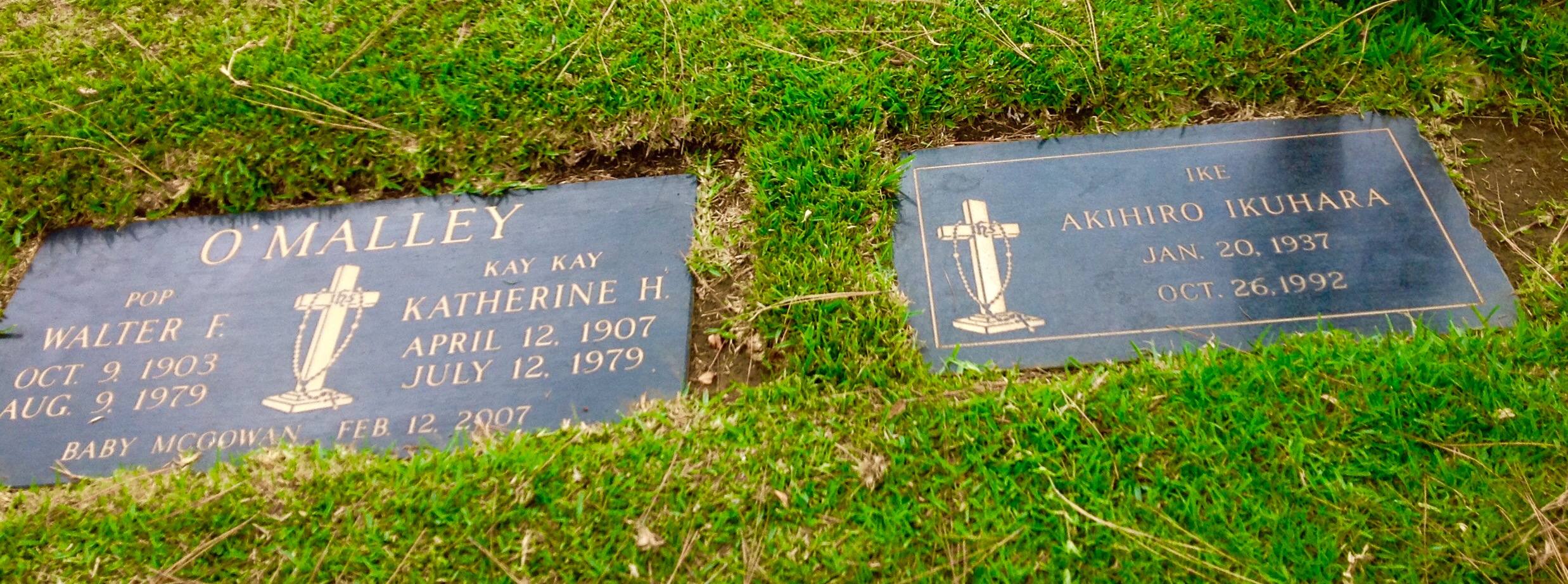
O'Malley was diagnosed with cancer, and he sought treatment at the Mayo Clinic in Rochester, Minnesota.{{cite news |title=Walter O'Malley Hospitalized
Although O'Malley had later retired and had relinquished control of the Dodgers before his death, he remains hated in Brooklyn for moving the Dodgers to the West Coast. At one time, Brooklyn Dodgers fans hated O'Malley so much that he was routinely mentioned along with Adolf Hitler and Joseph Stalin as the most villainous 20th-century men; Some still consider him among the worst three men of the 20th century. Much of the animosity was not just for moving the team, but robbing Brooklyn of the sense of a cohesive cultural and social identity that a major sports franchise provides.
His legacy is that of changing the mindset of a league that had the St. Louis Cardinals as the National League's southernmost and westernmost team (the Philadelphia Athletics of the American League had moved further west to Kansas City just three years prior). Tommy Lasorda said upon hearing of his election to the Hall, "He's a pioneer. He made a tremendous change in the game, opening up the West Coast to Major League Baseball." When asked how he wanted to be remembered, O'Malley said, "for planting a tree." The tree provided the branches to open up the West Coast to baseball, but O'Malley's son remembers his father's 28 years on Major League Baseball's executive council as service that "was instrumental in the early stages of the game's international growth." His contributions to baseball were widely recognized even before his Hall of Fame election: he was ranked 8th and 11th respectively by ABC Sports and The Sporting News in their lists of the most influential sports figures of the 20th century.
On July 7, 2009, Walter O'Malley was inducted into the Irish American Baseball Hall of Fame along with two other Dodger icons: slugger Steve Garvey and announcer Vin Scully. "Over the years, we have learned more of his decade-long quest to build a new stadium in Brooklyn and about how those efforts were thwarted by city officials. Perhaps this induction will inspire fans who themselves started new lives outside the borough to reconsider their thoughts about Walter O'Malley", said John Mooney, curator of the Irish American Baseball Hall of Fame. "He privately built one of baseball's more beautiful ballparks, Dodger Stadium, and set attendance records annually. While New York is the home of the Irish American Baseball Hall of Fame, it seeks to honor inductees whose impact was and is national."
On August 10, 2024, O'Malley's name was added to the Dodgers' Ring of Honor, alongside the franchise's retired numbers and microphones.
Popular culture
O'Malley was mentioned several times in Danny Kaye's 1962 song tribute "D-O-D-G-E-R-S (Oh, Really? No, O'Malley!)", which spins a tale of a fantasy game between the Dodgers and the Giants. At one point, the umpire's call goes against the home team:
:Down in the dugout, Alston glowers :Up in the booth, Vin Scully frowns; :Out in the stands, O'Malley grins... :Attendance 50,000! :So ....what does O'Malley do? CHARGE!!
O'Malley was featured prominently in the HBO documentary film Brooklyn Dodgers: Ghosts of Flatbush, which chronicled his executive management of the Brooklyn/Los Angeles Dodgers. The documentary focuses on the post World War II glory years of the franchise and presents a compelling case that O'Malley truly wanted to keep the Dodgers in Brooklyn in a stadium near the Long Island Rail Road's Atlantic Terminal, but he was unable to get the proper support from urban planner Robert Moses.
References
Book sources
References
- Wulf, Steve. (January 20, 1997). "Baseball's Blue Sale".
- (April 28, 1958). "Walter in Wonderland".
- (October 2008). "A Pioneer Owner (and Spoon Man) in the Hall of Fame". [[University of Pennsylvania]].
- Klitzman, Zach. (January 17, 2008). "Ruth, Koufax, Aaron ... O'Malley: Long-time Dodgers owner becomes first Penn alum to get Cooperstown invite". [[The Daily Pennsylvanian]].
- Shapiro]], p. 23.
- Shapiro]], p. 24.
- Boxerman, Burton A.. (2003). "Ebbets to Veeck to Busch: Eight Owners Who Shaped Baseball". McFarland.
- Shapiro]], p. 25.
- [[#Golenbock. Golenbock]], p. 84.
- [[#Dorinson. Dorinson]], p. 172.
- [[#Golenbock. Golenbock]], p. 105.
- Marzano]], pp. 123–124.
- [[#Golenbock. Golenbock]], p. 249.
- [[#Golenbock. Golenbock]], p. 250.
- [[#Dorinson. Dorinson]], p. 168.
- [[#Golenbock. Golenbock]], p. 251.
- [[#Golenbock. Golenbock]], p. 302.
- Nonetheless, after the transfer, the Dodgers remained successful under O'Malley: they won the National League pennants in 1952, 1953, 1955—the year of their first [[World Series]] championship—and 1956. Under O'Malley, the Dodgers were the most overtly political post World War II franchise.[[#Prince. Prince]], p. 23.
- [[#Prince. Prince]], pp. 62-63.
- [[#Prince. Prince]], p. 30.
- [[#Prince. Prince]], p. 31.
- [[#Sullivan. Sullivan]], p. 77.
- [[#Golenbock. Golenbock]], p. 270.
- [[#Golenbock. Golenbock]], p. 373.
- [[#Golenbock. Golenbock]], p. 385.
- [[#Golenbock. Golenbock]], p. 424.
- (August 25, 1952). "Hey King".
- (October 22, 1965). "Mr. Cool & the Pros".
- (June 6, 1955). "Double Trouble".
- [[#Prince. Prince]], p. 64-65
- (September 19, 1955). "September Habit".
- Kahn, Roger. (1972). "[[The Boys of Summer (book)". [[Harper & Row]].
- Sam Anderson. (September 17, 2007). "Exorcising the Dodgers".
- [[#Prince. Prince]], p. 63
- Corliss, Richard. (August 24, 1992). "Build It, and They (Will) MIGHT Come".
- [[#Sullivan. Sullivan]], p. 128.
- [https://content.time.com/time/subscriber/article/0,33009,824598,00.html "Time Clock, November 12, 1956," ''TIME'' (magazine), Monday, Nov. 12, 1956.] Retrieved March 3, 2023.
- (April 10, 1962). "The Dodgers Settle Down at Last in Chavez Ravine". [[The New York Times]].
- [[#Prince. Prince]], pp. 108, 145.
- Sullivan]], p. 36.
- (December 3, 2007). "Veterans elect five into Hall of Fame: Two managers, three executives comprise Class of 2008". National Baseball Hall of Fame and Museum, Inc..
- (November 1, 2007). "Worldwide Timetable". American Airlines.
- "Identifying Locations". colostate.edu.
- (May 20, 1957). "Scoreboard".
- "Franchise Timeline 1950s".
- "1958: Welcome to the West". [[MLB.com]].
- (April 28, 1958). "Walter O'Malley".
- (August 25, 1958). "Sporting Cartoons".
- McGookin, Steve. (September 28, 2007). "Fifty Years Of Loss". [[Forbes]].
- Marzano]], p. 203.
- (5 August 2020). "Legendary journalist and author Pete Hamill, a tabloid hero and teller of New York tales, dead at 85".
- (January 27, 1958). "Scoreboard".
- Perlmutter, Emanuel. (October 10, 1957). "Mayor Is Blamed For Dodger Move". [[The New York Times]].
- (June 16, 1958). "Relief Pitcher".
- (August 3, 1959). "Charge!".
- [[#Golenbock. Golenbock]], p. 442.
- Samuelsen, Rube. (October 16, 1957). "L.A. Council Invites Bums To Play Ball.". [[The Sporting News]].
- "Walter O'Malley". baseballbiography.com.
- (June 7, 1968). "Off to Splitsville".
- (August 6, 1973). "Boss of the Babes".
- [[#Golenbock. Golenbock]], p. 437-8.
- (October 26, 1953). "Managers Are Expendable".
- [[#Golenbock. Golenbock]], p. 370.
- O'Malley also did not support those who remained friends with Rickey, which was a large factor in [[Red Barber]] quitting as Dodgers announcer.[[#Golenbock. Golenbock]], p. 366-7.
- [[#Prince. Prince]]. p. 64.
- (March 25, 1966). "Double Play".
- (April 8, 1966). "Sic Transit Tradition".
- (December 16, 1966). "Down Go the Mighty".
- (March 17, 1970). "O'Malley's Son to Head Dodgers". [[The New York Times]].
- (January 7, 1997). "O'Malley Announces He'll Sell Dodgers". [[The New York Times]].
- (May 23, 1977). "The Dodgers: No Longer Seeing Red".
- Phillips, B.J.. (October 24, 1977). "Nice Guys Always Finish... ?".
- [[#Marzano. Marzano]], p. 93.
- Phillips, B.J.. (April 26, 1976). "A New Look for the Old Ball Game".
- 1931 New York City Marriage Index
- "Walter O'Malley Biography: Early Years". O'Malley Seidler Partners, LLC.
- [[#Shapiro. Shapiro]], p. 22.
- (August 6, 2012). "The O'Malley Family Tree". [[San Diego Union-Tribune]].
- [[#Shapiro. Shapiro]], p. 20.
- [[#Shapiro. Shapiro]], p. 21.
- "The Last Inning".
- (August 10, 1979). "Walter F. O'Malley, Leader of Dodgers' Move to Los Angeles, Dies at 75". [[The New York Times]].
- (July 14, 1979). "Kay O'Malley, 72, Wife of Dodgers Owner, Dies". [[New York Daily News]].
- "Walter O'Malley Was Right". Society for American Baseball Research.
- Starr, Mark. (July 11, 2007). "The Bums Are Still a Rush".
- Coatney, Mark. (January 7, 1997). "No Breaks in Brooklyn".
- Healey, Mark. (July 6, 2009). "Irish Baseball Hall Of Fame To Induct O'Malley". [[Baseball Digest]].
- (August 10, 2024). "Walter O'Malley, visionary, gets his flowers from Dodgers". [[Orange County Register]].
- [https://www.baseball-almanac.com/poetry/dodgers.shtml "D-O-D-G-E-R-S (Oh, Really? No, O'Malley)"] at [[Baseball Almanac]]
This article was imported from Wikipedia and is available under the Creative Commons Attribution-ShareAlike 4.0 License. Content has been adapted to SurfDoc format. Original contributors can be found on the article history page.
Ask Mako anything about Walter O'Malley — get instant answers, deeper analysis, and related topics.
Research with MakoFree with your Surf account
Create a free account to save articles, ask Mako questions, and organize your research.
Sign up freeThis content may have been generated or modified by AI. CloudSurf Software LLC is not responsible for the accuracy, completeness, or reliability of AI-generated content. Always verify important information from primary sources.
Report