From Surf Wiki (app.surf) — the open knowledge base
Waistband
Clothing component that encircles the waist, especially of a skirt or trousers
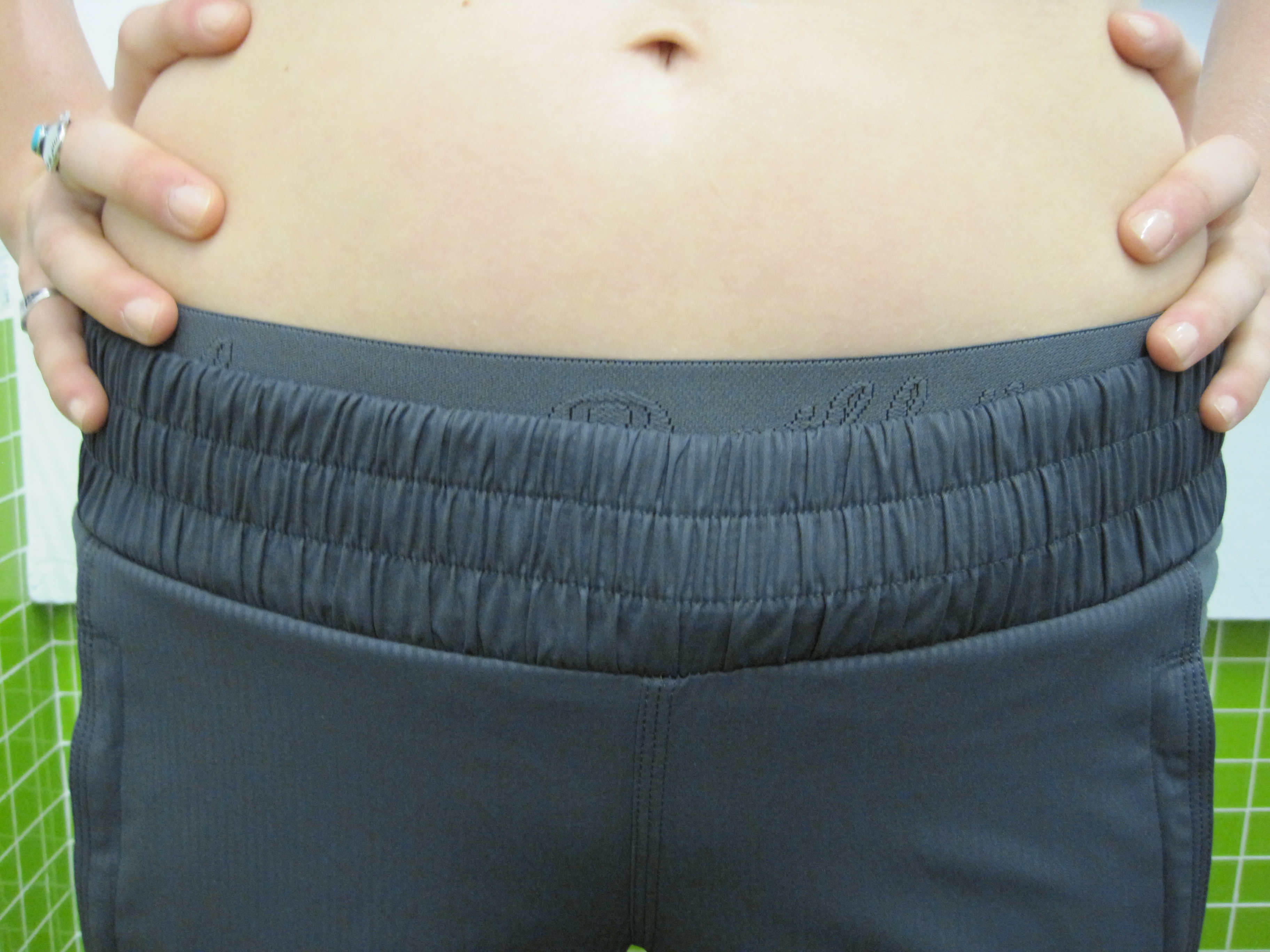
Clothing component that encircles the waist, especially of a skirt or trousers
A waistband is a strip of material that is either elastic or some other confining fabric that encircles the waist, usually as a component of clothing such as skirts, trousers, shorts, swimsuits, and undergarments.
A waistband can be a complete undergarment, worn to limit expansion of the abdomen, to meet various objectives including to help prevent overeating, to encourage mindful eating, to encourage good posture, or to immediately slim the appearance of the waist (much like a corset, also sometimes called a waist cincher, or girdle).
A waistband can be an outer garment, worn for fashion, or for utility.
History
Historically, in northern India, waistbands served various purposes including fastening miscellaneous items to oneself, such as knives. In ancient history in the southern Levant, the waistband could serve as a status symbol when people would adorn themselves with ornaments attached to their waistbands. In the early 19th century, members of some Taoist branches had their waistbands colored as a distinguisher and in order to symbolize their membership of the sect. In the western world during the 19th century, the contortion of waistbands was less pronounced due to the fashionability of suspenders.
Material and culture
Among some members of the Yoruba, the placement of beads upon their waistbands is an established tradition that is believed to enhance and accentuate a women's femininity. The dimensions of the waistband serve as a contrivance for streamlining waist measurements. Waistbands are often designed with belt loops in order to allow for variation in case of manufacturer subtleties or weight variation in the wearer. A recent Debenhams survey revealed that the placement of one's waistband by males varies with age, with mid-teen boys placing them the lowest, while it steadily rises until the age of 57. The exposure of the underpant waistband has become a trend among followers of grunge music and hip-hop. In stretchy waistbands, the material can be made of various materials including rubber and latex. In contemporary times, waistbands are more picturesque and scintillating compared to previous designs. In western culture waist bands are now often used to achieve body goals such as to prevent overeating in order to maintain a healthy weight.
Unwanted erections
Some men use the waistband in order to hide a genital bulge (also known by the informal terms man-bulge or moose-knuckle) in order to avoid embarrassment. During an erection, this is done by jutting it upwards beneath the waistband. This approach may on occasion be colloquially and informally referred to by slang terms such as a waistband tuck, the waistband trick, the uptuck or the tuck, the "6 to midnight", or the boner tuck. Although such penile concealment is common in many cultures, some analysts have proposed limiting such a sentiment to informal etiquette so it mitigates the possibility of a young male's propensity for genital dysphoria and subsequent gender dysphoria or body dysmorphia.
References
References
- Frank, Herter. "Belt-type side pocket waist adjustment for garments." U.S. Patent No. 3,638,242. 1 Feb. 1972.
- Hansen, Kathryn. "The virangana in North Indian history: myth and popular culture." Economic and Political Weekly (1988): WS25-WS33.
- Hesse, Rayner W. Jewelrymaking through history: An encyclopedia. Greenwood Publishing Group, 2007.
- (2012). "China at War: An Encyclopedia: An Encyclopedia".
- (2008). "The Greenwood Encyclopedia of Clothing Through World History: 1801 to the Present".
- (2016). "Encyclopedia of the Yoruba".
- Schroeder, Warren C. "Garment suspension waistband." U.S. Patent No. 4,516,275. 14 May 1985.
- Hawkins, Sherry D., and Saundra L. Lennartz. "Pants With A Weight-Distributing Waistband." U.S. Patent Application No. 12/948,333.
- Diffin, Elizabeth. (2010-01-29). "Men's waistbands have risen and fallen through history". [[BBC News]].
- (2014). "Cultural Encyclopedia of the Penis".
- (2009). "The Encyclopedia of Skin and Skin Disorders, Third Edition".
- Davenport, Irese. "Pants construction stabilized by integral undergarment." U.S. Patent No. 8,074,298. 13 Dec. 2011.
- "If Clement isn't fit for caucus, why is he fit to be anyone's MP?". [[Ipolitics]].
- "Size flatters". The Australian.
- Schlosser, Bethanee J., and Ginat W. Mirowski. "Approach to the patient with vulvovaginal complaints." Dermatologic therapy 23.5 (2010): 438-448.
- "New erection-hiding underwear unveiled". Health24.
- (2015-07-15). "Boner Blocking Boxers - Underwear Conceals Your Erection".
- (2014-07-15). "German team hero Mario Gotze wins World Cup, later loses dignity thanks to gross pic | SoraNews24 -Japan News". En.rocketnews24.com.
- "19 penis problems every man knows far too well".
- (2014-12-08). "13 Things I Wish I Knew About Boners When I Was Younger". Cosmopolitan.com.
- http://www.thefrisky.com/2015-07-15/get-the-boner-prone-man-in-your-life-bloxers-never-be-embarrassed-again/ {{Bare URL inline. (September 2022)
- Ryan Perry. (2014-11-21). "Man Tries To Conceal Boner With Waistband Technique, Fails Miserably". Uproxx.com.
- "10 Weird Things About Having An Erection, According To Guys, Because You Can Wiggle It".
- "6 Mysterious Reasons Men Always Touch Their Penis".
- O'Shea, Saoirse Caitlin. "This girl's life: An autoethnography." Organization 25.1 (2018): 3-20.
This article was imported from Wikipedia and is available under the Creative Commons Attribution-ShareAlike 4.0 License. Content has been adapted to SurfDoc format. Original contributors can be found on the article history page.
Ask Mako anything about Waistband — get instant answers, deeper analysis, and related topics.
Research with MakoFree with your Surf account
Create a free account to save articles, ask Mako questions, and organize your research.
Sign up freeThis content may have been generated or modified by AI. CloudSurf Software LLC is not responsible for the accuracy, completeness, or reliability of AI-generated content. Always verify important information from primary sources.
Report