From Surf Wiki (app.surf) — the open knowledge base
Wadi al Hayaa District
District of Libya
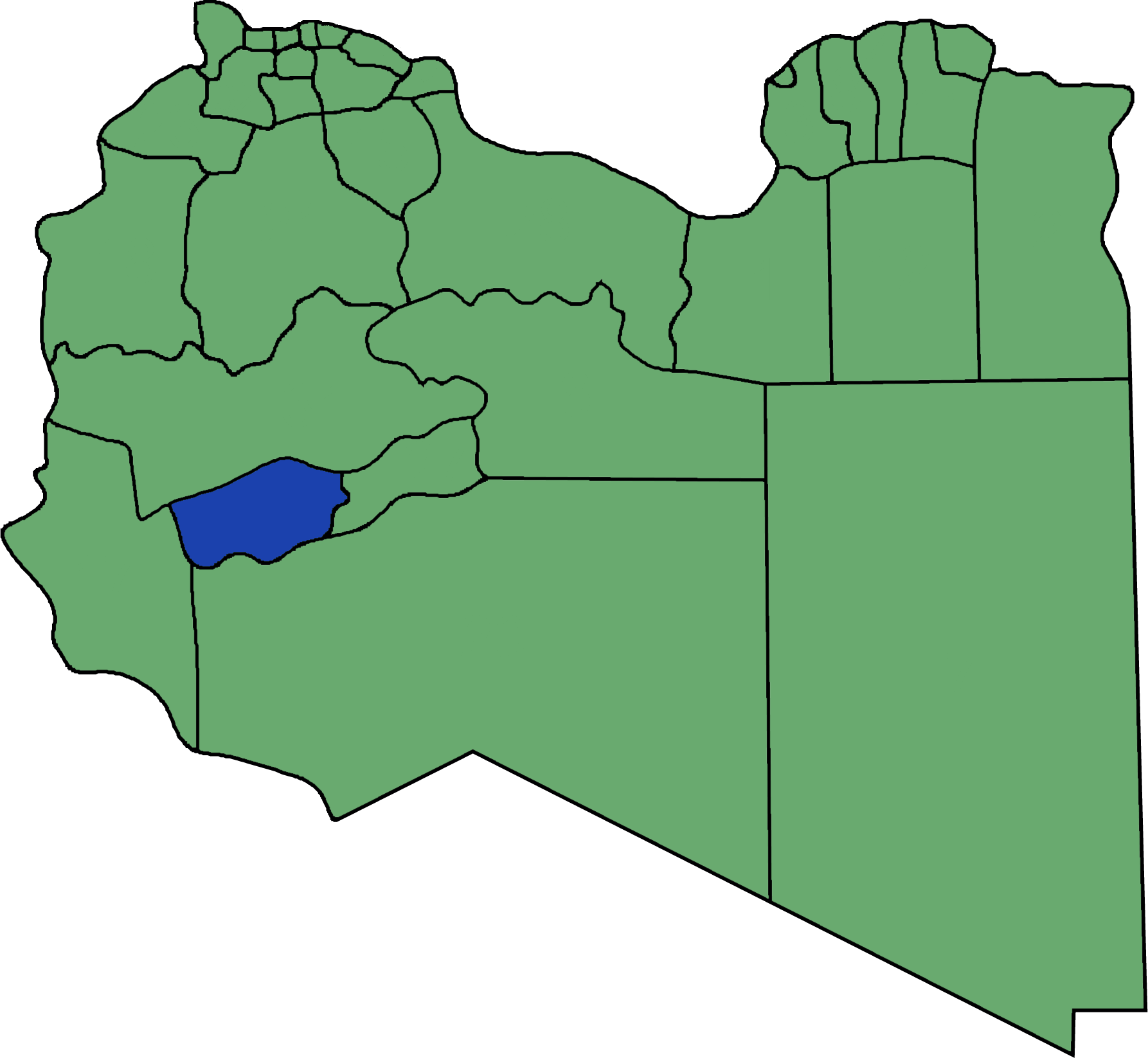
District of Libya
| Field | Value |
|---|---|
| name | Wadi al Hayaa |
| native_name | وادي الحياة |
| native_name_lang | ar |
| settlement_type | District |
| image_skyline | Oasis in Libya.jpg |
| image_map | Wadi al Hayaa in Libya.svg |
| map_caption | Map of Libya with Wadi Al Hayaa district highlighted |
| coordinates | |
| subdivision_type | Country |
| subdivision_name | Libya |
| population_as_of | 2006 |
| population_total | 76858 |
| population_note | |
| seat_type | Capital |
| seat | Ubari |
| area_total_km2 | 31890 |
| iso_code | LY-WD |
| population_density_km2 | auto |
| registration_plate_type | License Plate Code |
| registration_plate | 24 |
Wadi al Hayaa ( Wādī al Ḥayāh) is one of the districts of Libya. Its capital is the city of Ubari. As of 2006, it had a population of 72,587, area of 31,890 km2 and a population density of 2.28 persons per square kilometer.
Geography
The district is bordered by Wadi al Shatii in the north, Sabha in the east, Murzuq in the south and Ghat in the west. The district is part of the Fezzen geographical division of Libya which is mostly desert. The region receives an annual rainfall of 2.5 in. There are no perennial rivers in the region, but the region is abundant with groundwater aquifers. Libya has mostly a flat undulating plain and occasional plateau, with an average elevation of around 423 m. Around 91 per cent of the land ? is covered by desert, with only 8.8 per cent agricultural land (with only 1% arable lands) and 0.1 per cent of forests. The major resource found in the area is manganese. The Fezzen region has a desert climate. Dust storms lasting four to eight days are quite common during Spring. Fezzen is in southwest Libya.
Demographics
Per the census estimates of 2012, the total population in the region was 157,747 with 150,353 Libyans. The average size of the household in the country was 6.9, while the average household size of non-Libyans being 3.7. There were totally 22,713 households in the district, with 20,907 Libyan ones. The population density of the district was 1.86 persons per sq. km. Per 2006 census, there were totally 27,322 economically active people in the district. There were 14,650 government employees, 2,644 employers, 8,994 first level workers and 001 second level workers. There were 6,526 workers in state administration, 3,998 in agriculture, animal husbandry and forestry, 4,252 in agriculture & hunting, 6,511 in education, 2,226 in private enterprises, 1,419 in health & social work, 1,267 in production, 5,817 in technical work and 321 service workers. The total enrollment in schools was 26,890 and the number of people above secondary stage and less than graduation was 1,494. As per the report from World Health Organization (WHO), there were no communicable disease centres, two dental clinics, two out-patient clinics, 16 pharmacies, 36 PHC centres, one rural clinics and no specialized clinics.
References
References
- "Districts of Libya". statoids.com.
- McColl, R. W.. (2014). "Encyclopedia of World Geography, Volume 1". Infobase Publishing.
- (2016). "Libya profile".
- (2007). "The Libyan Economy: Economic Diversification and International Repositioning". Springer Science & Business Media.
- (2012). "Census of Libya". General Information Authority, Libya.
- (2007). "Health statistics of Libya". World Health Organization (WHO).
This article was imported from Wikipedia and is available under the Creative Commons Attribution-ShareAlike 4.0 License. Content has been adapted to SurfDoc format. Original contributors can be found on the article history page.
Ask Mako anything about Wadi al Hayaa District — get instant answers, deeper analysis, and related topics.
Research with MakoFree with your Surf account
Create a free account to save articles, ask Mako questions, and organize your research.
Sign up freeThis content may have been generated or modified by AI. CloudSurf Software LLC is not responsible for the accuracy, completeness, or reliability of AI-generated content. Always verify important information from primary sources.
Report