From Surf Wiki (app.surf) — the open knowledge base
Von Braun amide degradation

The von Braun amide degradation is the chemical reaction of a monosubstituted amide with phosphorus pentachloride or thionyl chloride to give a nitrile and an organohalide.{{cite journal
Reaction mechanism
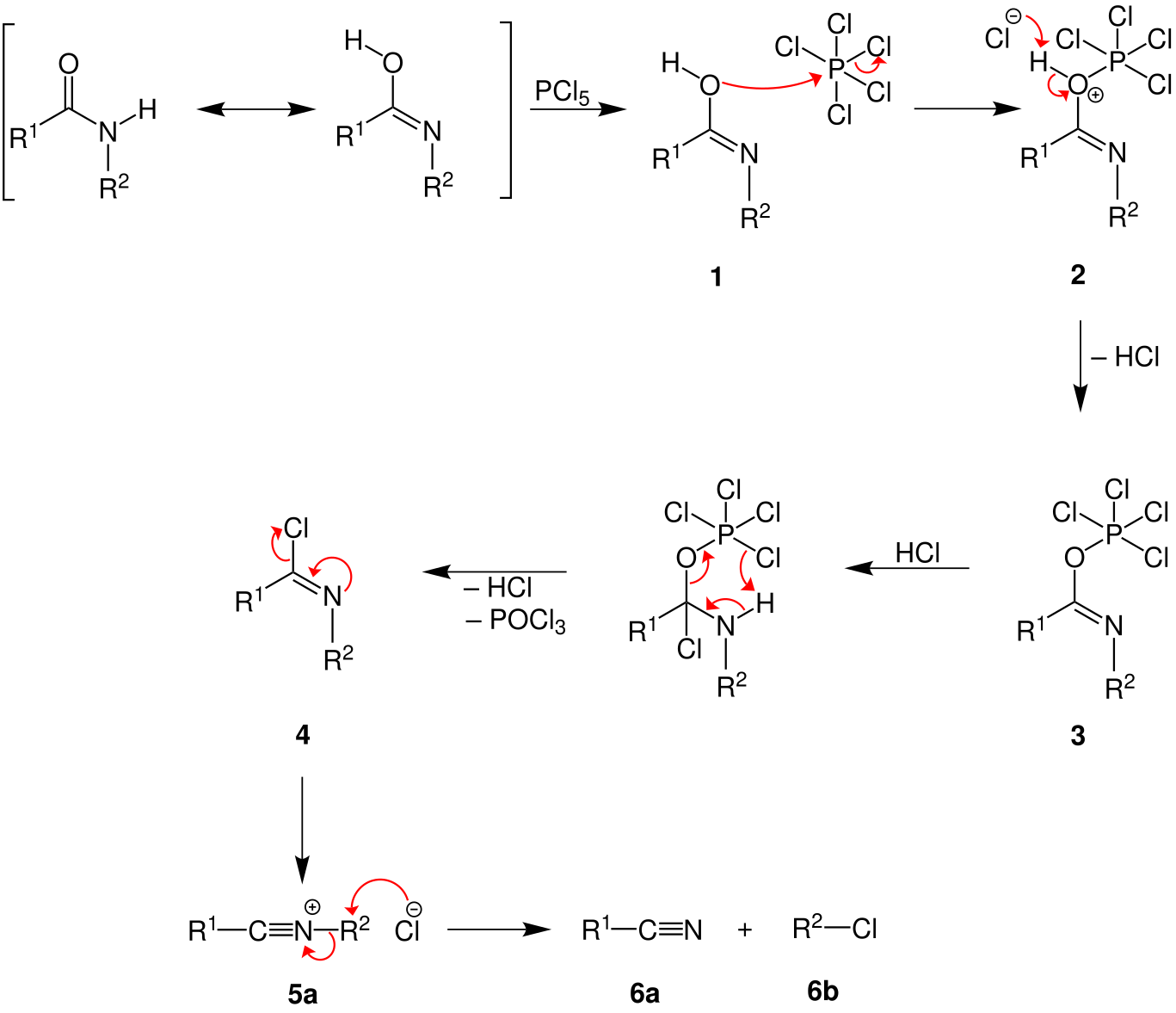
The secondary amide 1 reacts via its enolized form with phosphorus pentachloride to form the oxonium ion 2. This produces a chloride ion which deprotonates the oxonium ion to form and imine 3 and hydrogen chloride. These then react with one another to form an amine, with loss of the phosphorus chloride residue. The β-chloroimine 4 is unstable and undergoes internal elimination to a form a nitrilium cation 5 which is cleaved by attack by chloride to form a nitrile 6a and a haloalkane 6b.
References
This article was imported from Wikipedia and is available under the Creative Commons Attribution-ShareAlike 4.0 License. Content has been adapted to SurfDoc format. Original contributors can be found on the article history page.
Ask Mako anything about Von Braun amide degradation — get instant answers, deeper analysis, and related topics.
Research with MakoFree with your Surf account
Create a free account to save articles, ask Mako questions, and organize your research.
Sign up freeThis content may have been generated or modified by AI. CloudSurf Software LLC is not responsible for the accuracy, completeness, or reliability of AI-generated content. Always verify important information from primary sources.
Report