From Surf Wiki (app.surf) — the open knowledge base
Volkswagen Group
German multinational automotive manufacturing corporation

German multinational automotive manufacturing corporation
| Field | Value | |||||
|---|---|---|---|---|---|---|
| name | Volkswagen AG | |||||
| logo | Volkswagen Group Logo 2023.svg | |||||
| logo_size | 250 | |||||
| image | Wolfsburg VWHochhaus.jpg | |||||
| image_size | 250 | |||||
| image_caption | Headquarters in Wolfsburg, Germany | |||||
| type | Public | |||||
| traded_as | , | |||||
| DAX component (VOW3) | ||||||
| ISIN | ||||||
| area_served | Worldwide | |||||
| key_people | Hans Dieter Pötsch (chairman of the supervisory board) | |||||
| Oliver Blume (chairman of the board of management) | ||||||
| industry | Manufacturing | |||||
| products | Automobiles, commercial vehicles, internal combustion engines, motorcycles, turbomachinery | |||||
| production | 9,030,000 (2024) | |||||
| services | Banking, financing, fleet management, insurance, leasing | |||||
| revenue | €324.656 billion (2024) | |||||
| operating_income | €19.060 billion (2024) | |||||
| net_income | €12.394 billion (2024) | |||||
| assets | €632.905 billion (2024) | |||||
| equity | €196.731 billion (2024) | |||||
| owners | * Porsche SE: 31.9% of equity, 53.3% of votes () | |||||
| * State of Lower Saxony: 11.8% of equity, 20% of votes ({{as of | 2024 | 12 | 31 | lc | y | df=UK}}) |
| * QIA: 10.4% of equity, 17% of votes ({{as of | 2024 | 12 | 31 | lc | y | df=UK}}) |
| num_employees | 682,724 employees (average during 2024) | |||||
| brands | ||||||
| subsid | ||||||
| foundation | , in Berlin, Germany | |||||
| founder | German Labour Front | |||||
| location_city | Wolfsburg, Lower Saxony | |||||
| location_country | Germany | |||||
| locations | 100 production facilities across 27 countries | |||||
| homepage |
DAX component (VOW3) Oliver Blume (chairman of the board of management)
- State of Lower Saxony: 11.8% of equity, 20% of votes ()
- QIA: 10.4% of equity, 17% of votes () Volkswagen AG, or Volkswagen Group, is a German multinational conglomerate automotive manufacturer headquartered in Wolfsburg, Lower Saxony, Germany. Since the late 2000s, it has been a publicly traded family business owned by Porsche SE, which in turn is half-owned but fully controlled by the Austrian-German Porsche and Piëch family. The company also offers financing, leasing, and fleet management services. In 2024, it was the world's second-largest automaker by sales. It has maintained the largest market share in Europe for over two decades. It ranked 11th in the 2024 Fortune Global 500 list of the world's largest companies. In 2024, Volkswagen Group was the largest company in the European Union and the largest car manufacturer in the world by revenue.
The Volkswagen Group sells passenger cars under the Audi, Bentley, Cupra, Jetta, Lamborghini, Porsche, SEAT, Škoda and Volkswagen brands, motorcycles under the Ducati name, light commercial vehicles under the Volkswagen Commercial Vehicles brand, and heavy commercial vehicles via the marques of the listed subsidiary Traton (International Motors, MAN, Scania and Volkswagen Truck & Bus). Software and techstack under CARIAD. It is divided into two primary divisions: the Automotive Division and the Financial Services Division. As of 2008, it had about 342 subsidiary companies. Volkswagen also has three joint ventures in China, FAW-Volkswagen, SAIC Volkswagen and Volkswagen Anhui. The company has operations in roughly 150 countries, and it has 100 production facilities across 27 countries.
Volkswagen was founded in Berlin in 1937 and incorporated in Wolfsburg to manufacture the car that would become known as the Beetle. The company's production grew rapidly in the 1950s and 1960s. In 1965, it acquired Auto Union, which subsequently produced the first postwar Audi models. Volkswagen launched a new generation of front-wheel drive vehicles in the 1970s, including the Passat, Polo and Golf; the latter became its bestseller. Volkswagen acquired a controlling stake in SEAT in 1986, making it the first non-German marque of the company, and acquired control of Škoda in 1994, of Bentley, Lamborghini, and Bugatti in 1998, Scania in 2008 and of Ducati, MAN, and Porsche in 2012. The company's operations in China have grown rapidly in the 2010s, with the country becoming its largest market, though sales have declined significantly in the 2020s.
In 2015, Volkswagen was discovered to have used defeat devices to deceive environmental regulators about how much NOx its cars were emitting. The company was fined billions of dollars.
Volkswagen Aktiengesellschaft is a public company and has a primary listing on the Frankfurt Stock Exchange, where it is a constituent of the Euro Stoxx 50 stock market index, and secondary listings on the Luxembourg Stock Exchange and SIX Swiss Exchange. It has been traded in the United States via American depositary receipts since 1988, currently on the OTC Marketplace. Volkswagen delisted from the London Stock Exchange in 2013. The government of Lower Saxony holds 12.7% of the company's shares, granting it, by law, 20% of the voting rights.
History
1937 to 1945
Volkswagen (; ) was founded in Berlin as the Gesellschaft zur Vorbereitung des Deutschen Volkswagens mbH ('Limited Liability Company for the preparation of the German People's Car', abbreviated to Gezuvor) by the National Socialist Deutsche Arbeitsfront (German Labour Front) and incorporated in the Stadt des KdF-Wagens bei Fallersleben, (*"*City of the Strength Through Joy car at Fallersleben) on 28 May 1937. The purpose of the company was to manufacture the Volkswagen car, originally referred to as the Porsche Type 60, then the Volkswagen Type 1, and commonly called the Volkswagen Beetle. This vehicle was designed by Ferdinand Porsche's consulting firm, and the company was backed by the support of Adolf Hitler. On 16 September 1938, Gezuvor was renamed Volkswagenwerk GmbH ('Volkswagen Factory GmbH').
Shortly after the factory at Fallersleben was completed World War II started, and the plant primarily manufactured the military Kübelwagen (Porsche Type 82) and the related amphibious Schwimmwagen (Type 166), both of which were derived from the Volkswagen. Only a small number of Type 60 Volkswagens were made during this time. The Fallersleben plant also manufactured the V-1 flying bomb, making the plant a major bombing target for the Allied forces.
Slave labour was utilised in the Volkswagen plant, e.g. from the Arbeitsdorf concentration camp. The company would admit in 1998 that it used 15,000 slaves during the war effort. German historians estimated that 80% of Volkswagen's wartime workforce consisted of slave labour. Many of the slaves were reported to have been supplied from the concentration camps upon request from plant managers. A lawsuit was filed in 1998 by survivors for restitution for the forced labour. Volkswagen would set up a voluntary restitution fund.
1945 to 1970

After the war in Europe, in June 1945, Major Ivan Hirst In 1948, the Ford Motor Company of USA was offered Volkswagen, but Ernest Breech, a Ford executive vice president, said he did not think either the plant or the car was "worth a damn." Breech later said that he would have considered merging Ford of Germany and Volkswagen, but after the war, ownership of the company was in such dispute that nobody could possibly hope to be able to take it over. As part of the Industrial plans for Germany, large parts of German industry, including Volkswagen, were to be dismantled. Total German car production was set at a maximum of 10% of the 1936 car production numbers. The company survived by producing cars for the British Army, and in 1948 the British Government handed the company back over to the German state, and it was managed by former Opel chief Heinrich Nordhoff.

Production of the Type 60 Volkswagen (re-designated Type 1) started slowly after the war due to the need to rebuild the plant and because of the lack of raw materials, but production grew rapidly in the 1950s and 1960s. The company began introducing new models based on the Type 1, all with the same basic air-cooled, rear-engine, rear-drive platform. These included the Volkswagen Type 2 in 1950, the Volkswagen Karmann Ghia in 1955, the Volkswagen Type 3 in 1961, the Volkswagen Type 4 in 1968, and the Volkswagen Type 181 in 1969.
In 1960, upon the flotation of part of the German federal government's stake in the company on the German stock market, its name became Volkswagenwerk Aktiengesellschaft (usually abbreviated to Volkswagenwerk AG).
On 1 January 1965, Volkswagenwerk acquired Auto Union GmbH from its parent company Daimler-Benz. The new subsidiary went on to produce the first post-war Audi models, the Audi F103 series, shortly afterwards.
Another German manufacturer, NSU Motorenwerke AG, was merged into Auto Union on 26 August 1969, creating a new company, Audi NSU Auto Union AG (later renamed AUDI AG in 1985).
1970 to 1999

From the late 1970s to 1992, the acronym V.A.G. was used by Volkswagen AG as a brand for group-wide activities, such as distribution and leasing. Contrary to popular belief, "V.A.G." had no official meaning, and was never the formal name of the Volkswagen Group.
On 30 September 1982, Volkswagenwerk made its first step expanding outside Germany by signing a co-operation agreement with the Spanish car manufacturer SEAT, S.A.
To reflect the company's increasing global diversification from its headquarters and main plant (the Volkswagenwerk in Wolfsburg), on 4 July 1985, the company name was changed again—to Volkswagen Aktiengesellschaft (Volkswagen AG).
On 18 June 1986, Volkswagen AG acquired a 51% controlling stake in SEAT, making it the first non-German subsidiary of the Volkswagen Group. On 23 December the same year, it became the Spanish company's major shareholder by increasing its share up to 75%.
In 1990—after purchasing its entire equity—Volkswagen AG took over the full ownership of SEAT, making the company a wholly owned subsidiary, and on 28 March 1991, another step to the expansion of the group's activities was made through the signing of a joint-venture partnership agreement with Škoda automobilová a.s. of Czechoslovakia, accompanied with the acquisition of a 30% stake in the Czech car manufacturer on 16 April 1991.
On 19 December 1994, the group began the acquisition of Škoda Auto by raising its share to 60.3%. Later, on 11 December 1995, it became the Czech company's largest and controlling shareholder by increasing its share up to 70%.
Three prestige automotive marques were added to the Volkswagen portfolio in 1998: Bentley, Lamborghini, and Bugatti.
2000 to present

On 30 May 2000, after having gradually raised its equity share, Volkswagen AG took over the full ownership of Škoda Auto, making the company a wholly owned subsidiary.
From 2002 up to 2007, the Volkswagen Group's automotive division was restructured so that two major Brand Groups with different profile would be formed, the Audi Brand Group focused on more sporty values—consisted of Audi, SEAT and Lamborghini —and the Volkswagen Brand Group on the field of classic values—consisted of Volkswagen, Skoda, Bentley and Bugatti—with each Brand Group's product vehicles and performance being respectively under the higher responsibility of Audi and Volkswagen brands.
Volkswagen Group revealed on 24 October 2009 that it had made an offer to acquire long-time partner and German niche automotive manufacturer Wilhelm Karmann GmbH out of bankruptcy protection. In November 2009, the supervisory board of Volkswagen AG approved the acquisition of assets of Karmann, and planned to restart vehicle production at their Osnabrück plant in 2012.
In December 2009, Volkswagen AG bought a 49.9% stake in Dr. Ing. h.c. F. Porsche AG (more commonly known as Porsche AG) in a first step towards an 'integrated automotive group' with Porsche. The merger of Volkswagen AG and Porsche SE was scheduled to take place during the course of 2011. On 8 September 2011, it was announced that the planned merger "cannot be implemented within the time frame provided for in the Comprehensive Agreement". As reasons, unquantifiable legal risks, including a criminal probe into the holding's former management team were given. Both parties "remain committed to the goal of creating an integrated automotive group with Porsche and are convinced that this will take place".
On 4 July 2012 Volkswagen group announced they would wrap up the remaining half of Porsche shares for 4.46 billion euros (US$5.58 billion) on 1 August 2012 to avoid taxes of as much as 1.5 billion euros, which would have to be paid if the wrap up happened after 31 July 2014. On 1 August 2012, Volkswagen AG purchased the remaining stake in Porsche AG equaling 100% of the shares in Porsche Zwischenholding GmbH, thus making Porsche the second German wholly owned subsidiary of the group after Audi.
Volkswagen AG completed the purchase of 19.9% of Suzuki Motor Corporation's issued shares on 15 January 2010. Suzuki invested part of the amount received from Volkswagen into 1.49% percent of Volkswagen. In 2011, Suzuki filed a lawsuit at an arbitration court in London requesting that Volkswagen return the 19.9% stake.
On 25 May 2010, it was announced that Volkswagen Group, through its subsidiary Lamborghini Holding S.p.A., had acquired a 90.1% stake in the Italian automotive design house Italdesign Giugiaro. In less than three months, the transaction had been completed making the Italian firm a member of the Volkswagen Group. Since 2013 the Volkswagen Group has held a 89.7% stake in Traton.
In 2015 research showed a security flaw in the keyless ignition of Volkswagen and other carmakers' vehicles. Volkswagen spent two years trying to keep the research from the public domain.
On 3 August 2015, Nokia announced that it had reached a deal to sell its Here digital maps division to a consortium of three German automakers—BMW, Daimler AG, and Volkswagen Group, for €2.8 billion. This was seen as an indication that the automakers were interested in automated cars.
Volkswagen held a 19.9% non-controlling shareholding in Suzuki between 2009 and 2015. An international arbitration court ordered Volkswagen to sell the stake back to Suzuki. On 17 September 2015, Suzuki paid $3.8bn to complete the stock buy-back just hours prior to a major scandal about emissions violations engulfing Volkswagen. Suzuki had wished to buy Fiat diesel engines.
In 2021, Volkswagen sold their 55% stake in Bugatti to Rimac Group while transferring the remaining 45% to Porsche AG, forming a joint venture company called Bugatti Rimac.
In early 2024, Volkswagen Group began looking for partners among international technology corporations to create AI labs, new digital prototypes of products and functions using artificial intelligence.
In October 2024, Volkswagen plans to close at least three plants in Germany and cut jobs, facing challenges from delayed EV investments and a drop in Chinese sales.
Emissions scandal, 2015
Main article: Volkswagen emissions scandal
On 18 September 2015, the U.S. EPA announced that Volkswagen had installed a "defeat device" software code in the diesel models sold in the US from 2009 to 2015. The code was intended to detect when an emissions test was being conducted, and altered emissions controls for better compliance. Off the test stand, the controls were relaxed, and emissions jumped 35 to 40 times regulatory levels according to investigators at West Virginia University and the California Air Resources Board. About 482,000 vehicles are under the recall order, a potential $18 billion ($37,500 per violation) in fines are pending, and news accounts speculate a criminal indictment for the deception is certain. The VW Group CEO, Martin Winterkorn, said he was "deeply sorry" and ordered an external investigation. The software code was only revealed when the EPA refused to certify VW's 2016 models for sale in the US unless the corporation provided full disclosure. On Sunday, 20 September 2015, VW Group announced it was halting the sale of its four-cylinder diesel models in the US. The US EPA press release on its Notice of Violation, and the California Air Resources Board letter dated 18 September 2015 contain significant chronological detail of the agencies interaction with VW on the issue.
On 22 September 2015, VW AG admitted that 11 million cars worldwide had been fitted with software intended to deceive emissions testing. The company issued a profit warning, saying it had set aside $7 billion to fix the fraud. On 23 September 2015, Martin Winterkorn announced his resignation from the CEO position after a crisis meeting of the company board. On 25 September 2015 Matthias Müller was named CEO. Müller was the head of the Porsche marque within the VW corporate umbrella.
On 21 April 2017, a U.S. federal judge ordered Volkswagen "to pay a $2.8 billion criminal fine for rigging diesel-powered vehicles to cheat on government emissions tests". The "unprecedented" plea deal formalized a punishment that Volkswagen AG agreed to earlier in 2017. In addition, the plea deal includes a $1.5 billion settlement for various environmental, customs and financial violations.
Overall, Volkswagen will pay more than $30 billion in penalties and lawsuit settlements related to the scandal.
Huge debt
In its own financial report for 2023 Volkswagen Group estimated its long, medium and short term debt at 155,6 Billion Euros. It is unclear how Volkswagen group plans to pay off that massive debt considering its falling global vehicle deliveries, planned closure of at least 3 factories in Germany after it previously closed 2 factories in Russia as well as 64% drop in profit for the three months to the end of September 2024. German Chancellor Olaf Scholz criticized Volkswagen's plan to close factories in Germany. He proposed a European subsidy program for electric vehicles.
Latest setback for Volkswagen came on 21 November 2024, when Swedish battery producer Northvolt filed for bankruptcy, Volkswagen previously invested 1.4 billion euros in their failed business. On 27 November 2024, Volkswagen announced sale of its Xinijang factory in China partly because "demand for combustion engine vehicles is going down".
Electrification strategy 2025
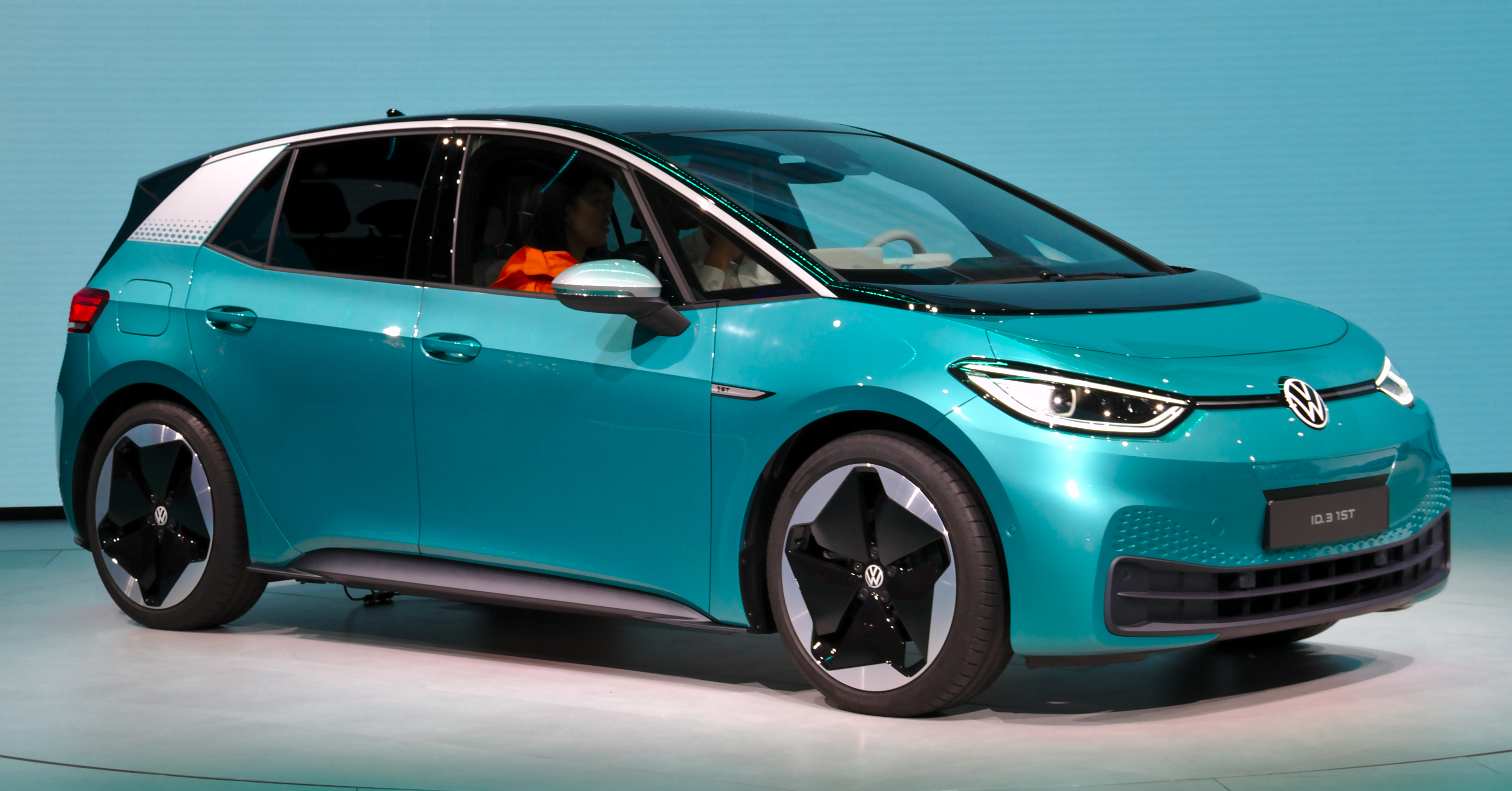
In 2016, Volkswagen Group announced a corporate "Strategy 2025" that focuses on electrification of its portfolio. The VW Group developed the Volkswagen Group MEB platform chassis that will be utilized in a range of various cars and light utility vehicles across several VW Group marques due to its flexibility and floor-mounted battery.
As of May 2018, the VW Group has committed $48 billion in car battery supplies and plans to outfit 16 factories to build electric cars by the end of 2022. According to VW Group CEO Dr. Herbert Diess, the company will offer 25 electric models and 20 plug-in hybrids by 2020.
Production in Xinjiang
Volkswagen Group came under pressure for cooperating with the Chinese government in the region of Xinjiang. In that same region, western-funded NGOs accused the Chinese government of having committed human rights abuses against the Uyghur minority group, which included mass surveillance, incarceration, and forced labor. After these accusations emerged, Volkswagen responded, "We do not assume any of our employees are forced laborers." Süddeutsche Zeitung claimed that Volkswagen was operating a plant in Xinjiang at a loss in order to curry favor with the Chinese government to set up more lucrative plants in other parts of China, which Volkswagen denied, saying that the decision to set up the plant in 2012 was purely based on economics. In November 2024, Volkswagen announced it would sell the plant to Shanghai Motor Vehicle Inspection Certification.
New Auto
In 2021, Volkswagen Group released their New Auto strategy. The strategy was based on transitioning to electric cars, and building a shared platform, battery systems, software and mobility solutions to use across all their brands. This involves creating the Scalable Systems Platform, as well as developing software under a new subsidiary CARIAD. Volkswagen Group aims by 2024 to transition to selling mostly electric cars. It aims to have six battery factories in Europe by 2030. In 2023, Volkswagen Group announced plans to cut costs by €10 billion ($11.1 billion). In February 2024, Volkswagen Group and Chinese electric vehicle manufacturer XPeng signed a technology cooperation and joint development agreement on platform and software.
Operations
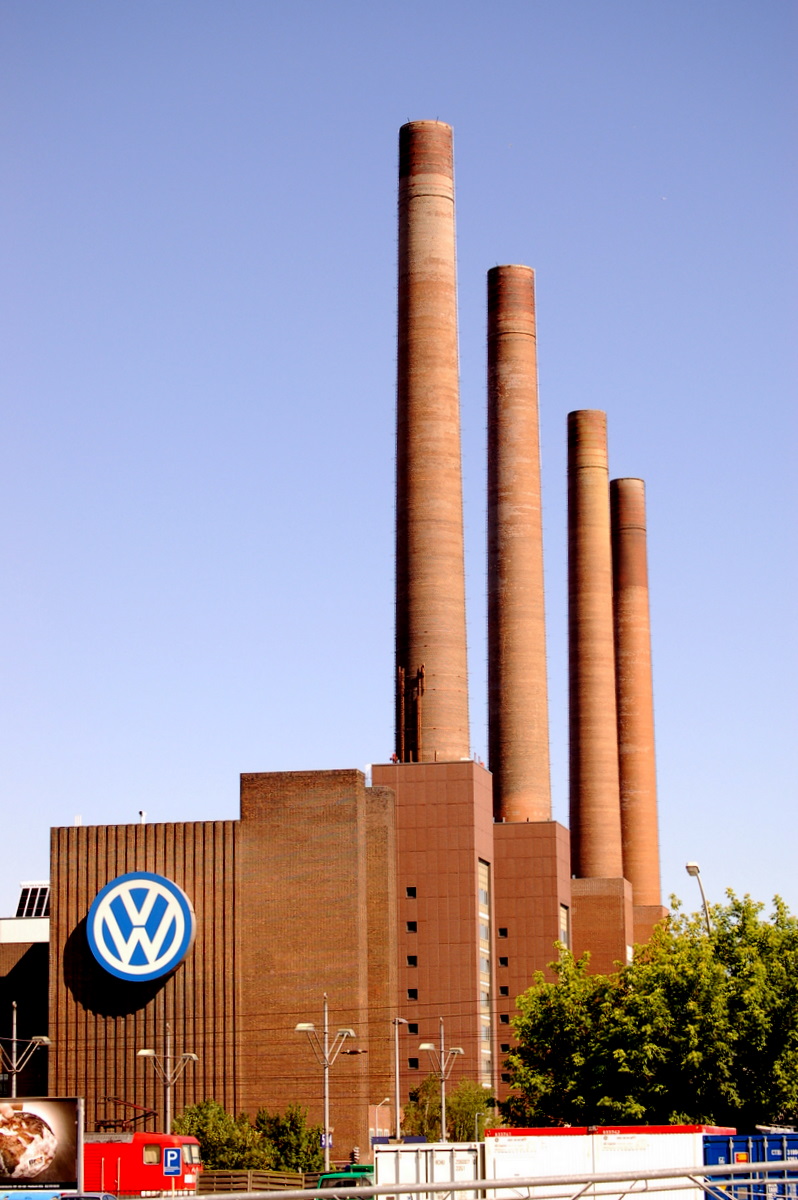
Rooted in Europe, the Volkswagen Group operates in 153 countries. Volkswagen Passenger Cars is the Group's original marque, and the other major subsidiaries include passenger car marques such as Audi, Bentley, Lamborghini, Porsche, SEAT, and Škoda. Volkswagen AG also has operations in commercial vehicles, owning Volkswagen Commercial Vehicles, along with controlling stakes in truck, bus and diesel engine manufacturers Scania AB and MAN SE.
Subsidiaries and brands
The Volkswagen Group comprises the following vehicle manufacturers and their corresponding brands:Volkswagen Truck and Bus are renamed to TRATON AG. Here are the brands operated under the Volkswagen Group:
- Audi AG: 100% ownership — The current company was formed through the acquisitions of Auto Union from Daimler-Benz on 30 December 1964, and NSU Motorenwerke on 9 March 1969 - Audi being the sole surviving marque from the Auto Union combine.
- Audi Sport GmbH — Audi's performance engineering and manufacturing subsidiary.
- Automobili Lamborghini S.p.A.: 100% ownership — acquired by AUDI AG in September 1998.
- Ducati Motor Holding S.p.A.: 100% ownership — bought on 19 July 2012.
- Bentley Motors Ltd: 100% ownership. Volkswagen purchased Rolls-Royce Motors and Bentley from Vickers on 28 July 1998, however the purchase did not include the license to use the Rolls-Royce trademark on automobiles, which is controlled by Rolls-Royce Holdings plc. BMW outmaneuvered Volkswagen, succeeding in obtaining the rights to use the Rolls-Royce trademark on automobiles. From July 1998 until December 2002, BMW continued to supply engines for the Rolls-Royce Silver Seraph and the Bentley division sold cars under both the Bentley and Rolls-Royce marques, under an agreement with BMW. In January 2022, Bentley became part of the Audi Group.

- Dr. Ing. h.c. F. Porsche AG: 75% ownership — Volkswagen AG purchased 49.9% of the shares in Porsche Zwischenholding GmbH (the holding company of Porsche AG) in December 2009. Volkswagen AG purchased the remaining stake in Porsche AG equaling 100% of the shares in Porsche Zwischenholding GmbH, effectively becoming its parent company as of 1 August 2012. 25% of shares sold in an IPO of Porsche AG in 2022.
- Jetta: Joint venture with First Automotive Works created in 2019.
- Scout Motors Inc.: 100% ownership — founded in 2022.
- SEAT, S.A.: 100% ownership — initially in 1982 a co-operation agreement with AUDI AG; 51% and 75% ownership in 1986, and full ownership in 1990. SEAT was the first non-German subsidiary of the Volkswagen Group.
- Cupra: 100% ownership by SEAT. In 2018, SEAT's motorsport division SEAT Sport was renamed Cupra Racing and at the same time, Cupra was launched as an independent brand alongside SEAT.
- Škoda Auto a.s.: 100% ownership — initially in 1991 a co-operation agreement and 30% ownership; 60.3% and 70% ownership in 1994 and 1995 respectively, 100% ownership since 2000
- TRATON SE: 87.5% ownership — Formerly Volkswagen Truck and Bus, TRATON is the holding company for Volkswagen Group's heavy commercial vehicle operations.
- MAN Truck & Bus SE: 100% ownership — Transferred to TRATON SE after it merged with MAN SE in August 2021.
- International Motors: 100% ownership — produces heavy trucks under the International brand. Wholly owned by TRATON SE since July 2021. Volkswagen Truck and Bus (now TRATON) took an initial 16.6% stake in Navistar in February 2017.
- Scania AB: 100% ownership — wholly owned by TRATON SE since 15 January 2015. Volkswagen acquired a controlling stake in July 2008, making Scania the 9th marque of the Volkswagen Group.
- Volkswagen Truck & Bus: 100% ownership — Volkswagen's Brazilian heavy truck and bus division. Sold by Volkswagen Group to MAN SE in December 2008 and from that point was also known as MAN Latin America. In November 2011, Volkswagen acquired a majority of the shares in MAN SE, bringing Volkswagen Truck & Bus back into the group. Transferred to TRATON SE after it merged with MAN SE in August 2021.
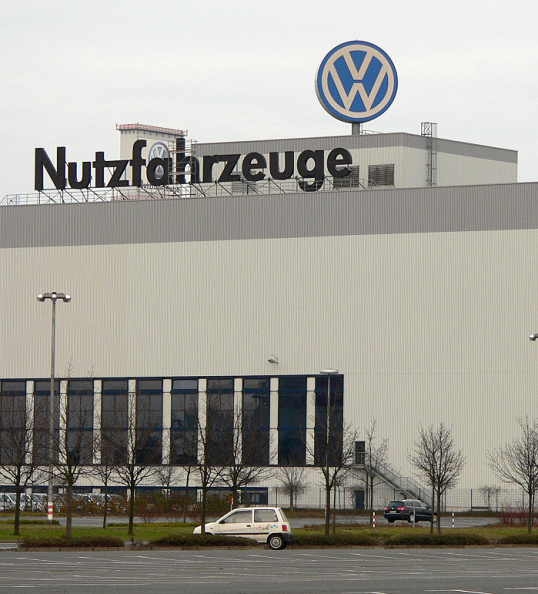
- Volkswagen Commercial Vehicles (Volkswagen Nutzfahrzeuge): 100% ownership — Volkswagen's light commercial vehicle division started operations as an independent entity in 1995.
- Volkswagen Passenger Cars: 100% ownership — the founding and flagship marque of the company. Other subsidiaries and shareholdings:
- Bugatti Rimac: Joint venture between Porsche AG (45%) and Rimac Group (55%).
- CARIAD: 100% ownership
- Diconium: 100% ownership
- Digiteq Automotive: CARIAD SE owns 51% and Škoda Auto a.s. owns 49% .
- Gotion: 24% stake since 2022.
- IAV: 50% ownership
- Italdesign Giugiaro S.p.A.: 100% ownership — 90.1% acquired via Lamborghini S.p.A. in May 2010. Remaining shares transferred in July 2015.
- MHP Management- und IT-Beratung: 100% ownership
- MOIA: 100% ownership — new mobility services company.
- Porsche Design: 100% ownership
- Porsche Engineering: 100% ownership
- Xpeng Motors: 4.99% ownership
The Group also owns five defunct marques which are managed through the companies Auto Union GmbH and NSU GmbH, both of which are 100% owned by AUDI AG:
- Auto Union — the Auto Union company, together with NSU Motorenwerke AG (NSU), were merged into "Audi NSU Auto-Union AG" in 1969. The name was shortened to "AUDI AG" in 1985, and the interlocked four-ring badge from Auto Union is still used by AUDI AG.
- Dampf-Kraft-Wagen (DKW)
- Horch
- NSU Motorenwerke AG (NSU) – bought in 1969 by Volkswagen AG, and merged into "Audi NSU Auto-Union AG"; the NSU brand has not been used since 1977, while the former NSU manufacturing plant at Neckarsulm is still used for Audi assembly.
- Wanderer
Corporate affairs
Business trends
| Sector | Share |
|---|---|
| Passenger Cars and Light Commercial Vehicles | 68.9% |
| Financial Services | 16.7% |
| Commercial Vehicles | 13.1% |
| Power Engineering | 1.2% |
| Region | Share |
|---|---|
| Europe/Other Markets | 40.6% |
| North America | 20.9% |
| Germany | 19.1% |
| Asia Pacific | 13.6% |
| South America | 5.8% |
In February 2025, Volkswagen's market capitalization was valued at US$50.5 billion. The key trends for the Volkswagen Group are (as at the financial year ending March 3):
| Year | Revenue | |||||||
|---|---|---|---|---|---|---|---|---|
| (€ bn) | Net income | |||||||
| (€ bn) | Employees | |||||||
| (k) | Deliveries | |||||||
| (m) | Sources | |||||||
| 1990 | 34.8 | 0.55 | 261 | 3.0 | ||||
| 2000 | 81.8 | 2.6 | 322 | 5.1 | ||||
| 2001 | 87.3 | 2.9 | 324 | 5.1 | title=Annual Report 2002 Volkswagen Group | url=https://www.volkswagen-group.com/en/publications/corporate/annual-report-2002-2320 | access-date=2023-11-28 | website=www.volkswagen-group.com}} |
| 2002 | 85.2 | 2.5 | 324 | 4.9 | ||||
| 2003 | 84.8 | 1.0 | 335 | 5.0 | title=Annual Report 2004 Volkswagen Group | url=https://www.volkswagen-group.com/en/publications/corporate/annual-report-2004-2322 | access-date=2023-11-28 | website=www.volkswagen-group.com}} |
| 2004 | 88.9 | 0.69 | 343 | 5.1 | ||||
| 2005 | 93.9 | 1.1 | 345 | 5.1 | title=Annual Report 2006 Volkswagen Group | url=https://www.volkswagen-group.com/en/publications/corporate/annual-report-2006-2324 | access-date=2023-11-28 | website=www.volkswagen-group.com}} |
| 2006 | 104 | 2.7 | 324 | 5.7 | ||||
| 2007 | 108 | 4.1 | 329 | 6.1 | ||||
| 2008 | 113 | 4.6 | 369 | 6.2 | ||||
| 2009 | 105 | 0.91 | 368 | 6.3 | ||||
| 2010 | 126 | 7.2 | 399 | 7.2 | ||||
| 2011 | 159 | 15.7 | 502 | 8.3 | ||||
| 2012 | 192 | 21.8 | 550 | 9.3 | ||||
| 2013 | 197 | 9.1 | 573 | 9.7 | ||||
| 2014 | 202 | 11.0 | 593 | 10.2 | ||||
| 2015 | 213 | −1.3 | 610 | 10.0 | ||||
| 2016 | 217 | 5.3 | 627 | 10.2 | ||||
| 2017 | 230 | 11.6 | 634 | 10.7 | ||||
| 2018 | 235 | 13.9 | 656 | 10.8 | ||||
| 2019 | 252 | 12.3 | 671 | 10.9 | ||||
| 2020 | 222 | 8.3 | 663 | 9.3 | ||||
| 2021 | 250 | 14.8 | 673 | 8.8 | ||||
| 2022 | 279 | 14.9 | 675 | 8.2 | ||||
| 2023 | 322 | 16.0 | 679 | 9.2 | ||||
| 2024 | 325 | 10.7 | 682 | 9.0 |
Ownership
Under the Volkswagen Law, no shareholder in Volkswagen AG could exercise more than 20 percent of the firm's voting rights, regardless of their level of stock holding. This law was supposed to protect Volkswagen Group from takeovers. In October 2005, Porsche acquired an 18.53 percent stake in the business, and in July 2006, Porsche increased that ownership to more than 25 percent. Analysts disagreed as to whether the investment was a good fit for Porsche's strategy.
On 26 March 2007, after the European Union moved against the Volkswagen law, Porsche took its holding to 30.9 percent, triggering a takeover bid under German law. Porsche formally announced in a press statement that it did not intend to take over Volkswagen Group, setting its offer price at the lowest possible legal value, but intended the move to avoid a competitor taking a large stake, or to stop hedge funds dismantling Volkswagen Group, which is Porsche's most important partner. On 16 September 2008, Porsche announced that the company had increased its stake in Volkswagen AG to 35 percent. By October 2008, Porsche held 42.6 percent of Volkswagen AG's ordinary shares, and held stock options on another 31.5 percent. thus, effectively holding over 74 percent; 42.6 percent actual shares, and the rest as convertible options. Volkswagen AG briefly became the world's most valuable company, as the stock price rose to over €1,000 per share as short sellers tried to cover their positions. The substantial investment in Volkswagen left Porsche with huge financial burden with its debts accumulating up to 13 billion euros by 2009. Porsche would get emergency infusion of about a billion dollars from Volkswagen. In July 2012, Volkswagen completed takeover of Porsche ending the four-year saga and formed an integrated automotive group with Porsche. Porsche AG would become the 10th brand of Volkswagen. The holding company Porsche SE was left with 31 percent of the subscribed capital of Volkswagen AG, and 50.7 percent of the voting rights in the company.
, share ownership of Volkswagen AG is distributed as follows:
| Percentage | Shareholder name |
|---|---|
| 31.4% | Porsche Automobil Holding SE |
| 25.9% | Foreign institutional investors |
| 14.6% | Qatar Holding LLC |
| 11.8% | State of Lower Saxony |
| 12.9% | Private shareholders / Others |
| 3.4% | German institutional investors |
| Percentage | Shareholder name |
|---|---|
| 53.3% | Porsche Automobil Holding SE |
| 20.0% | State of Lower Saxony |
| 17.0% | Qatar Holding LLC |
| 9.7% | Others |
Stock market listings
Volkswagen AG shares are primarily traded on the Frankfurt Stock Exchange, and are listed under the 'VOW' and 'VOW3' stock ticker symbols. First listed in August 1961, the shares were issued at a price of DM 350 per DM 100 share, Volkswagen AG shares are now separated into two different types or classes: 'ordinary shares' and 'preference shares'. The ordinary shares are now traded under the WKN 766400 and ISIN DE0007664005 listings, and the preference shares under the WKN 766403 and ISIN DE0007664039 listings.
Volkswagen AG shares are also listed and traded on other major domestic and worldwide stock exchanges. In Germany's domestic exchanges, since 1961 these include those in Berlin, Düsseldorf, Hamburg, Hanover, Munich and Stuttgart. International exchanges include those in Basel (listed in 1967), Geneva (1967), Zürich (1967), Luxembourg (1979), London (1988), and New York (1988).
Since the start of trading in 1961, Volkswagen AG shares have been subjected to two stock splits – the first was on 17 March 1969 when they were split at a ratio of 2:1, from a DM 100 share to a DM 50 share. The second split occurred on 6 July 1998, the DM 50 share being converted into a share of no overall nominal value, at a ratio of 1:10.
From 23 December 2009, Volkswagen AG preferred shares replaced its ordinary shares in the DAX index.
Leadership, sales and market share
| Tenure | Leader(s) | |||||||||
|---|---|---|---|---|---|---|---|---|---|---|
| 1937 to 1945 | Bodo Lafferentz, Ferdinand Porsche, Jakob Werlin | |||||||||
| June 1945 to December 1947 | Ivan Hirst (Royal Electrical and Mechanical Engineers) | |||||||||
| 1 January 1948 to April 1967 | url=https://www.volkswagen-media-services.com/medias_publish/ms/content/en/broschueren/2008/09/16/hn07_volkswagen_chronicle.standard.gid-journalisten.html | title=Historical Notes 7: Volkswagen Chronicle – Becoming a Global Player | access-date=20 November 2011 | year=2008}} | ||||||
| 1 May 1968 to September 1971 | Kurt Lotz | |||||||||
| 1 October 1971 to February 1975 | Rudolf Leiding | |||||||||
| 10 February 1975 to December 1980 | Toni Schmücker | |||||||||
| 1 January 1982 to December 1992 | Carl Hahn | |||||||||
| 1 January 1993 to 16 April 2002 | Ferdinand K. Piëch | |||||||||
| 16 April 2002 to 31 December 2006 | Bernd Pischetsrieder | |||||||||
| 1 January 2007 to 23 September 2015 | last1=Moore | first1=Thad | title=Volkswagen CEO quits amid emissions cheating scandal | url=https://www.washingtonpost.com/business/economy/volkswagen-ceo-resigns-after-emissions-cheating-scandal-spreads/2015/09/23/6b09e540-6203-11e5-8e9e-dce8a2a2a679_story.html | access-date=23 September 2015 | newspaper=The Washington Post | date=23 September 2015 | archive-url=https://web.archive.org/web/20150923220627/http://www.washingtonpost.com/business/economy/volkswagen-ceo-resigns-after-emissions-cheating-scandal-spreads/2015/09/23/6b09e540-6203-11e5-8e9e-dce8a2a2a679_story.html | archive-date=23 September 2015 | url-status=live}} |
| 25 September 2015 to 12 April 2018 | Matthias Müller | |||||||||
| 12 April 2018 to 31 August 2022 | Herbert Diess | |||||||||
| From 1 September 2022 | Oliver Blume |
| Group | Units |
|---|---|
| Volkswagen | 10,083,000 |
| Renault-Nissan-Mitsubishi | 10,076,000 |
| Toyota | 10,059,000 |
In 2024, Volkswagen Group's largest single country market was China with 2.93 million units delivered, followed by Germany with 1.12 million units. Divided by regions, Asia-Pacific was the second-largest market of the Volkswagen Group with 3.21 million units in 2013, followed by Western Europe with 3.14 million, and North America with 962,000 units delivered in 2024.
| Group | Units | share |
|---|---|---|
| Volkswagen | 2,957,653 | 25.0 |
| PSA | 1,311,406 | 11.1 |
| RENAULT | 1,076,367 | 10.4 |
The European ranking of automakers is compiled monthly by the European Auto Manufacturers' Association ACEA. Volkswagen has held the top spot in Europe uninterrupted for more than two decades.
The company was again the top global automaker in 2018, for the fifth consecutive year, selling 10.083 million vehicles in the year 2018, just 7,000 more than the Renault–Nissan–Mitsubishi Alliance.
Co-management
Main article: Volkswagen worker organizations
With 295,178 employees in Germany and 682,724 globally, it is one of the most well organized labour represented companies in the world. The role that Works Councils and the trade union IG Metall play is unique even within Germany. VW workers have some of the strongest collective agreements. With the exception of the United States, all of its major locations are represented in the Global Works Council and local trade union bodies. VW has a strong tradition and practice of social partnership and co-determination rights globally.
In September 2024, in response to the threat of mass layoffs at Volkswagen, German Economy Minister Robert Habeck said that the government would consider how it could help Volkswagen. In December 2024, tens of thousands of VW workers in Germany went on strike.
Sponsorships
Volkswagen is heavily involved in sports sponsorship, with investments having included the 2008 Summer Olympics, the 2014 Winter Olympics, as well as the David Beckham Academy. Volkswagen AG wholly owns the Bundesliga football side VfL Wolfsburg; the company is also the shirt sponsor of League of Ireland Premier Division Sligo Rovers and top level of the Mexican football league system Liga MX team Puebla F.C.
Notes
References
Corporate documents
- {{cite web |access-date = 8 August 2012 |url-status = dead |archive-url = https://web.archive.org/web/20140808045514/http://www.chronicle.volkswagenag.com/inc/pdf.php?year=1937&lang=en |archive-date = 8 August 2014
- {{cite web |archive-url = https://web.archive.org/web/20140808045530/http://www.volkswagenag.com/content/vwcorp/content/en/investor_relations/corporate_governance/Annual_Document.bin.html/downloadfilelist/downloadfile/downloadfile_0/file/Satzung_August_2102_engl.pdf |archive-date = 8 August 2014 |url-status = dead |access-date = 15 August 2012
- {{cite web |archive-url = https://web.archive.org/web/20140808045501/http://www.volkswagenag.com/content/vwcorp/info_center/en/publications/2008/03/Annual_Report_2007.bin.html/binarystorageitem/file/VW_AG_GB_2007_en.pdf |archive-date = 8 August 2014 |url-status = dead |access-date = 8 August 2012
- {{cite web |archive-url = https://web.archive.org/web/20120722061829/http://www.volkswagenag.com/content/vwcorp/info_center/en/publications/2009/03/GB_2008.-bin.acq/qual-BinaryStorageItem.Single.File/Y_2008_e.pdf |archive-date = 22 July 2012 |url-status = dead |access-date = 8 August 2012
- {{cite web |archive-url = https://web.archive.org/web/20140808045434/http://www.volkswagenag.com/content/vwcorp/info_center/en/publications/2010/03/Annual_Report_2009.bin.html/binarystorageitem/file/Y_2009_e.pdf |archive-date = 8 August 2014 |url-status = dead |access-date = 8 August 2012
- {{cite web |archive-url = https://web.archive.org/web/20140808045407/http://www.volkswagenag.com/content/vwcorp/info_center/en/publications/2011/03/Volkswagen_AG_Geschaeftsbericht_2010.bin.html/binarystorageitem/file/GB_2010_e.pdf |archive-date = 8 August 2014 |url-status = dead |access-date = 8 August 2012
- {{cite web |archive-url = https://web.archive.org/web/20120526072621/http://www.volkswagenag.com/content/vwcorp/info_center/en/publications/2012/03/Volkswagen_AG_Annual_Report_2011.bin.html/binarystorageitem/file/Y_2011_e.pdf |archive-date = 26 May 2012 |url-status = live |access-date = 8 August 2012
- {{cite web |archive-url = https://web.archive.org/web/20131002114536/http://www.volkswagenag.com/content/vwcorp/info_center/en/publications/2012/03/navigator-2012---facts-and-figures.bin.html/binarystorageitem/file/Navigator_11_06_2012_en_WEB.pdf |archive-date = 2 October 2013 |url-status = dead |access-date = 10 August 2012
- {{cite web |archive-url = https://web.archive.org/web/20120722061539/http://www.volkswagenag.com/content/vwcorp/content/en/the_group/production_plants.html |archive-date = 22 July 2012 |access-date = 8 August 2012 |url-status = dead
References
- "Extensive revision of Volkswagen Group management structure decided".
- (22 July 2022). "Oliver Blume follows Herbert Diess as Chairman of the Board of Management of the Volkswagen Group".
- (1 September 2022). ""Team spirit, fairness and passion are key"".
- (14 January 2025). "Volkswagen Group with 9 million deliveries after strong fourth quarter".
- "Consolidated Financial Statements of Volkswagen AG as of December 31, 2024". Volkswagen AG.
- "Shareholder structure".
- "About Us". Volkswagen Group.
- (17 December 1999). "History". Volkswagen Group.
- (16 January 2013). "New Passenger Car Registrations By Manufacturer European Union (EU)". ACEA.
- "Global 500 2023".
- "Fortune Global 500".
- "Brands & Brand Groups". Volkswagen Group.
- Waldersee, Victoria. (22 April 2025). "VW Group pitches comeback in China with new models, in-house assisted driving". [[Reuters]].
- (14 February 2017). "Volkswagen AG Factsheet". Volkswagen AG.
- (14 February 2017). "Volkswagen AG Investor Relations FAQ". Volkswagen AG.
- (27 October 2011). "Volkswagen Aktiengesellschaft Interim Report January – September 2011". Volkswagen AG.
- (16 June 2009). "Seventy-Five Years Ago: Porsche Receives the Order to Construct the Volkswagen". [[Porsche AG]].
- Sloniger, Jerry. (1980). "The VW Story". Patrick Stephens.
- "Volkswagen Makes Automotive History". Volkswagen AG.
- Nelson, Walter. (1967). "Small Wonder". Little, Brown & Company.
- (2018). "Management Systems and Performance Frameworks for Sustainability: A Road Map for Sustainably Managed Enterprises". Routledge.
- (13 June 1998). "Volkswagen Faces Suit Over Jewish Slave Labor". The New York Times.
- (1 September 1998). "World: Americas German firms face slave labor case". BBC News.
- (18 March 2000). "Obituaries – Ivan Hirst". The Guardian.
- Ford: The Times, the Man, the Company by Allan Nevins and Frank Ernest Nevins 1954
- "Harry S. Truman – Library & Museum – Draft, The President's Economic Mission to Germany and Austria, Report 3, March, 1947; OF 950B: Economic Mission as to Food...; Truman Papers". Trumanlibrary.org.
- (2008). "Volkswagen Chronicle". Volkswagen AG.
- Schmitt, Bertel. (16 May 2009). "VW/Porsche: Auto Union? What the NSFW?". TheTruthAboutCars.com.
- "Skoda Auto ownership chronicle".
- "Automotive News".
- "Volkswagen Group – Business lines and markets". Volkswagen AG.
- "Volkswagen Group – Brands and business fields". Volkswagen AG.
- (24 October 2009). "Volkswagen May Take Over Carmaker Karmann, Spiegel Reports". [[Bloomberg L.P..
- (20 November 2009). "Volkswagen Supervisory Board lays foundation for car manufacture at Karmann site in Osnabrück". Volkswagen AG.
- (13 August 2009). "Volkswagen Supervisory Board approves Comprehensive Agreement for an Integrated Automotive Group with Porsche". Volkswagen AG.
- (8 December 2009). "Volkswagen takes 49.9 percent stake in Porsche AG". Autoblog.com.
- (7 December 2009). "Volkswagen takes 49.9 percent stake in Porsche AG". Volkswagen AG.
- (9 September 2011). "Porsche loses investment appeal as VW merger skids AG". Reuters.
- (8 September 2011). "Merger of Volkswagen Aktiengesellschaft and Porsche Automobil Holding SE no longer expected within the time frame laid down in the Comprehensive Agreement". Volkswagen AG.
- (4 July 2012). "Volkswagen aims to wrap up Porsche purchase on Aug 1".
- (5 July 2012). "Volkswagen to Buy Remaining Stake in Porsche". The New York Times.
- (15 January 2010). "Volkswagen completes Suzuki tieup". The Japan Times.
- (9 December 2009). "Volkswagen and Suzuki agreed to establish a comprehensive partnership". Volkswagen AG.
- [https://www.bloomberg.com/news/2011-09-12/suzuki-executives-to-discuss-ending-capital-alliance-with-volkswagen.html Suzuki Seeks 'Divorce' From Volkswagen as Their 20-Month Alliance Crumbles] {{Webarchive. link. (21 January 2015 . Bloomberg. Retrieved on 16 July 2013.)
- [http://online.wsj.com/article/BT-CO-20130314-703432.html VW Expects Suzuki Decision Mid-2013 at Earliest – WSJ.com] {{Webarchive. link. (6 March 2014 . Online.wsj.com (14 March 2013). Retrieved on 16 July 2013.)
- (25 May 2010). "Volkswagen Group takes majority shareholding in Italdesign Giugiaro". Volkswagen AG.
- (9 August 2010). "Volkswagen Group completes acquisition of majority shareholding in Italdesign Giugiaro". Volkswagen AG.
- Olivia Solon. (14 August 2015). "VW Has Spent Two Years Trying to Hide a Big Security Flaw". Bloomberg.com.
- "Nokia sells Here maps business to carmakers Audi, BMW and Daimler". CBS Interactive.
- (30 August 2015). "VW and Suzuki settle four-year dispute". BBC.
- (17 September 2015). "Suzuki buys back Volkswagen's stake for $3.8bn". BBC.
- "Bugatti and Rimac begin cooperation".
- "VW founds AI lab, in talks with potential partners".
- (28 October 2024). "Exclusive: China's Xi pressed Biden to alter language on Taiwan". Reuters.
- "09/18/2015: EPA, California Notify Volkswagen of Clean Air Act Violations / Carmaker allegedly used software that circumvents emissions testing for certain air pollutants". epa.gov.
- Bloomberg/Getty Images. (19 September 2015). "The Justice Department Pledge To Prosecute White-Collar Criminals Is About To Face A Major Test". The Huffington Post.
- (18 September 2015). "EPA Accuses VW of Cheating Smog Testing on 482,000 Cars".
- (20 September 2015). "Volkswagen CEO apologizes, orders external probe on emissions allegations". USA TODAY.
- (19 September 2015). "VW's Emissions Cheating Found by Curious Clean-Air Group". Bloomberg.com.
- (20 September 2015). "Volkswagen to halt U.S. sales of some 2015 diesel cars". Yahoo News.
- "ARB Letter to VW". ca.gov.
- Ewing, Jack. (22 September 2015). "Volkswagen Says 11 Million Cars Worldwide Are Affected in Diesel Deception". The New York Times.
- (24 September 2015). "Volkswagen CEO steps down, takes responsibility for scandal". Yahoo Finance.
- (25 September 2015). "Volkswagen Names Matthias Müller, an Insider, as Chief Executive". The New York Times.
- (22 September 2015). "Volkswagen's CEO is staying at the company - Business Insider". Business Insider.
- Rogers, Christina. (21 April 2017). "Judge Slaps VW With $2.8 Billion Criminal Fine in Emissions Fraud". [[Wall Street Journal]].
- (11 January 2017). "Volkswagen AG Agrees to Plead Guilty and Pay $4.3 Billion in Criminal and Civil Penalties; Six Volkswagen Executives and Employees are Indicted in Connection with Conspiracy to Cheat U.S. Emissions Tests".
- (18 January 2019). "Grand jury charges four Audi managers in emissions case". Phys.org.
- "Annual financial report 2023".
- "Volkswagen deliveries down - Reuters".
- (28 October 2024). "Historic moment for Volkswagen: Automaker plans to close 'at least' 3 German plants and cut thousands of jobs - CNN".
- (3 March 2022). "Volkswagen stops production of vehicles in Russia and suspends export".
- (30 October 2024). "Volkswagen profit plunges 64% as China sales slide - Financial times". Financial Times.
- (7 December 2024). "Volkswagen plant closures 'not the right way', Germany's Scholz says". Reuters.
- (10 December 2024). "Germany's Scholz calls for Europe EV subsidy plan". France 24.
- "Volkswagen wrote down majority of its stake in Northvolt over past year - Financial Times". Financial Times.
- Cooban, Anna. (2024-11-27). "Volkswagen sells its car plant in Xinjiang, citing 'economic reasons'".
- William Boston. [https://www.wsj.com/articles/vw-ceos-strategy-overhaul-focuses-on-electric-vehicles-1466073807 "Strategie 2025" VW CEO's Strategy Overhaul Focuses on Electric Vehicles] {{Webarchive. link. (5 February 2017 . ''[[The Wall Street Journal]]''. Published on 16 June 2016.)
- Christiaan Hetzner. [http://www.autonews.com/article/20160528/OEM05/305309989/vw-weighs-second-ev-platform VW weighs second EV platform]. ''[[Automotive News]]''. 28 May 2016.
- [http://fortune.com/2018/05/03/vw-tesla-electric-car-batteries/ VW doubles its electric vehicle battery contracts to $48 billion] {{Webarchive. link. (6 June 2018 . ''[[Fortune (magazine)). Fortune]]''. 3 May 2018.
- Darrell Etherington. [https://techcrunch.com/2018/03/13/volkswagen-has-locked-down-25b-in-battery-supplies-for-its-electric-vehicle-push/ Volkswagen has locked down $25B in battery supplies for its electric vehicle push] {{Webarchive. link. (3 May 2018 [[TechCrunch]]. 13 March 2018.)
- Welle (www.dw.com), Deutsche. "Volkswagen defends presence in China's Xinjiang amid uproar over Uighur abuses {{!}} DW {{!}} 26 November 2019".
- (24 April 2025). "VW buckles after years of pressure to sell up in Xinjiang". Reuters.
- (16 March 2021). "Volkswagen Group set to use platform model for issues of the future". www.volkswagenag.com.
- (14 July 2021). "VW Group's 10-year plan: A single EV platform across all its brands". Ars Technica.
- (13 July 2021). "VW lifts profit targets as it outlines battery production plans". Financial Times.
- (2 September 2024). "'A very serious situation': Volkswagen could close plants in Germany for the first time in history". CNN.
- (2024-02-29). "Ready for next EV push: Volkswagen enters into agreement with XPENG for fast joint development of two smart e-cars".
- Taylor III, Alex. (23 July 2012). "Das Auto Giant". [[Fortune (magazine).
- Taylor, Edward. (4 July 2011). "UPDATE 3-VW says secures majority stake in truckmaker MAN". [[REUTERS]].
- "Volkswagen Group Brands".
- (8 May 1998). "BMW 'Rolls' out ultimatum".
- "Bentley Motors Ltd".
- "Porsche SE – Holding Structure". [[Porsche]].
- "TRATON is a company for a new era of transportation. An Interview with Andreas Renschler.".
- "Volkswagen pays SEK 200 per share to noncontrolling interest shareholders of Scania". Volkswagen AG.
- "All about our company".
- Shepherd, Christian. (May 29, 2020). "VW increases bet on China's slowing electric vehicle market".
- Carey, Nick. (2024-12-20). "After Northvolt, Europe's battery hopes rely heavily on China". Reuters.
- "MOIA – the Volkswagen Group's new mobility services company".
- "Volkswagen AG: Shareholders Board Members Managers and Company Profile {{!}} DE0007664039 {{!}} MarketScreener".
- "VOW.DE Key Statistics {{!}} VOLKSWAGEN AG ST O.N. Stock - Yahoo Finance".
- "Volkswagen Vz Fundamentalanalyse {{!}} KGV {{!}} Kennzahlen".
- (2024-08-01). "Financial Reports".
- "Volkswagen Group - AnnualReports.com".
- "Volkswagen AG - Umsatz bis 2018 {{!}} Statistik".
- "Volkswagen Group - global number of employees 2018".
- "Geschäftsbericht 1990 {{!}} Volkswagen Group".
- "Geschäftsbericht 2000 {{!}} Volkswagen Group".
- "Annual Report 2002 {{!}} Volkswagen Group".
- "Annual Report 2004 {{!}} Volkswagen Group".
- "Annual Report 2006 {{!}} Volkswagen Group".
- (13 February 2007). "Top EU court finds against VW law". BBC.
- (23 October 2007). "VW Law is a write-off". Management Today.
- Landler, Mark. (7 November 2006). "Porsche cites need for changes at Volkswagen". International Herald Tribune / nytimes.com.
- (26 March 2007). "Porsche triggers a VW takeover bid". BBC.
- Schwartz, Nelson D.. (16 September 2008). "Porsche Takes a Controlling Interest in VW". The New York Times.
- (26 October 2008). "Porsche heads for domination agreement".
- (30 January 2009). "Porsche admits it's not invincible, posts 14% sales decline". Autoblog.com.
- (29 October 2008). "Hedge funds make £18bn loss on VW". BBC.
- (3 March 2009). "Porsche Mired In Debt". Forbes.
- (10 February 2010). "Annual Report 2009". Volkswagen AG.
- (5 July 2012). "Volkswagen swallows Porsche". The Guardian.
- "Shareholder Structure".
- "Volkswagen Group – Share Fact Sheet". Volkswagen AG.
- (18 December 2009). "Volkswagen preferred shares replace ordinary shares in DAX". Volkswagen AG.
- [http://www.verfolgte-schueler.org/1933-45.htm Chronik/Rückblick mit scheinbaren Analogien und ohne Anspruch auf Vollständigkeit] {{Webarchive. link. (20 April 2010 . Retrieved 22 October 2009.)
- (December 2019). "Historical Notes 7: Volkswagen Chronicle – Becoming a Global Player".
- (23 September 2015). "Volkswagen CEO quits amid emissions cheating scandal". The Washington Post.
- (23 September 2015). "VW CEO resigns in cheating scandal". The Detroit Free Press.
- (25 September 2015). "Matthias Müller appointed CEO of the Volkswagen Group". volkswagen-media-services.com.
- "Renault-Nissan group sold most cars last year, but VW's No.1 including trucks". [[Reuters]].
- "Volkswagen AG Annual Report 2024". Volkswagen AG.
- (16 January 2014). "New Passenger Car Registrations by Manufacturer – European Union (EU)". ACEA.
- (2011). "Historical series: 1990–2010: New Passenger Car Registrations by manufacturer". ACEA.
- Ruddick, Graham. (2016-11-18). "Volkswagen to axe 30,000 jobs worldwide".
- "Workplace trade union engagement with European Works Councils and transnational agreements: the case of Volkswagen Europe".
- (23 September 2023). "Driving on empty: The German government has few options to help an ailing car industry". Politico.
- (10 December 2024). "Volkswagen strike: 'Still a long way from a viable solution'". Euronews.
- (11 October 2008). "Ozone layer protection: Olympic sponsors in action". [[2008 Summer Olympics.
- (18 September 2009). "VW to sponsor Sochi 2014 Olympics". BBC News.
- van Loon, Jeremy. (22 July 2005). "Wolfsburg, 'Special' City, Reels as Volkswagen Flounders". [[Bloomberg L.P..
This article was imported from Wikipedia and is available under the Creative Commons Attribution-ShareAlike 4.0 License. Content has been adapted to SurfDoc format. Original contributors can be found on the article history page.
Ask Mako anything about Volkswagen Group — get instant answers, deeper analysis, and related topics.
Research with MakoFree with your Surf account
Create a free account to save articles, ask Mako questions, and organize your research.
Sign up freeThis content may have been generated or modified by AI. CloudSurf Software LLC is not responsible for the accuracy, completeness, or reliability of AI-generated content. Always verify important information from primary sources.
Report