From Surf Wiki (app.surf) — the open knowledge base
Virginia-class submarine
US Navy fast attack submarine class
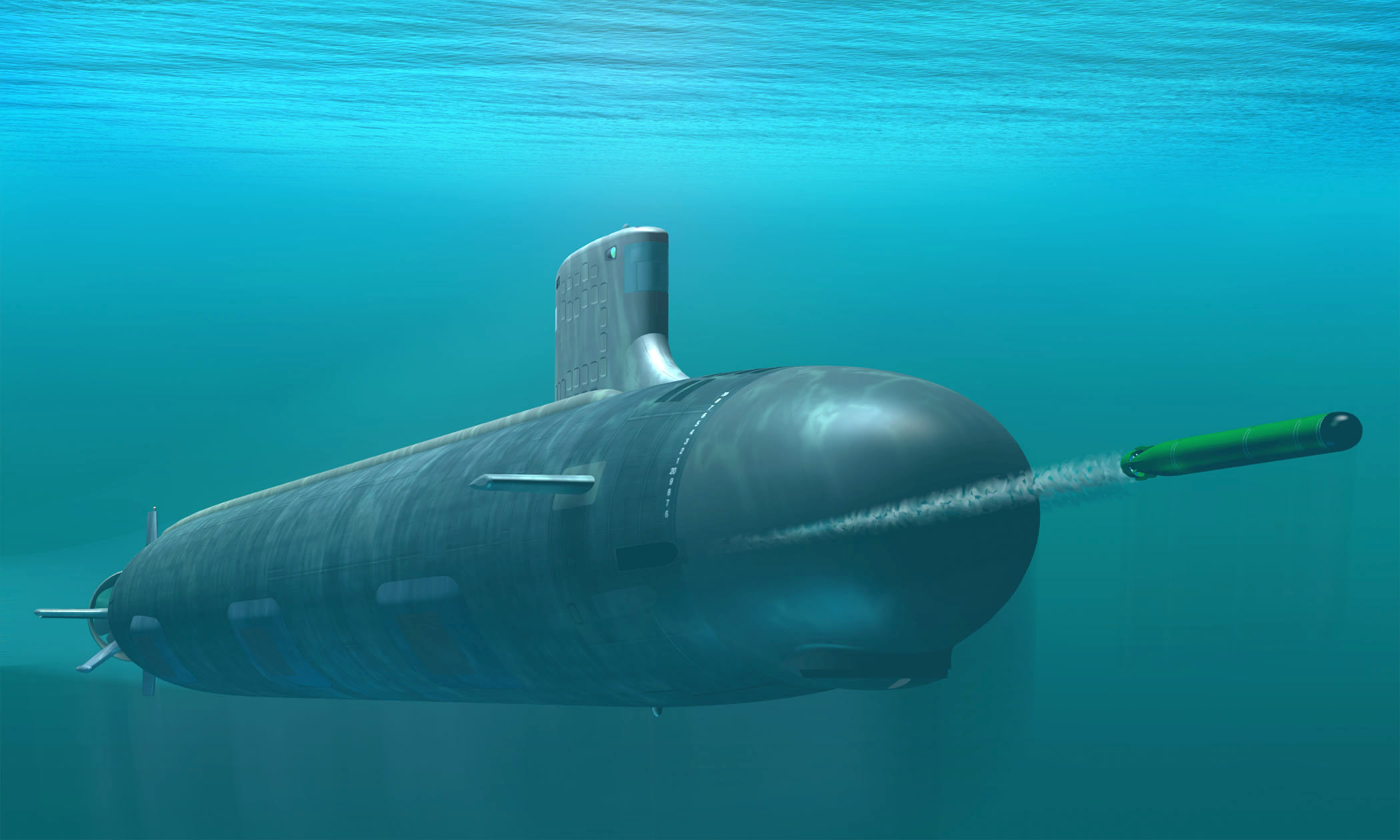
US Navy fast attack submarine class
| Field | Value | |||||
|---|---|---|---|---|---|---|
| section1 | {{Infobox ship/image | |||||
| image | SSN774.svg | |||||
| image_caption | Virginia-class SSN profile | |||||
| section2 | {{Infobox ship/image | |||||
| image | US Navy 040730-N-1234E-002 PCU Virginia (SSN 774) returns to the General Dynamics Electric Boat shipyard.jpg | |||||
| image_caption | USS Virginia underway in July 2004 | |||||
| section3 | {{Infobox ship/class overview | |||||
| builders | * General Dynamics Electric Boat | |||||
| operators | * | |||||
| class_before | * | |||||
| class_after | ||||||
| cost | $2.8 billion per unit (2019); $4.3 billion per unit w/VPM (2023) | |||||
| built_range | 2000–present | |||||
| in_commission_range | 2004–present | |||||
| total_ships_planned | *US Navy: 66 | |||||
| *Royal Australian Navy: 3 <br /><small>(2 block IV second-hand, 1 block VII ) + option for 2<ref>{{Cite web | url | https://news.usni.org/2025/10/20/trump-backs-selling-submarines-to-australia-under-aukus-agreement | title=Trump Backs Selling Submarines to Australia Under AUKUS Agreement | date=20 October 2025}} | ||
| total_ships_on_order | *43 | |||||
| *<small>Detailed orders: 4 block I, 6 block II, 8 block III, 10 block IV, 12 Block V, 3 block VI)</small><ref name | "list submarines" / | |||||
| total_ships_building | *8 | |||||
| total_ships_completed | *26 | |||||
| total_ships_canceled | 0 | |||||
| total_ships_active | *24 | |||||
| section4 | {{Infobox ship/characteristics | |||||
| type | Nuclear-powered attack submarine (SSN) | |||||
| displacement | *Submerged: | |||||
| :*Block I–IV: {{convert | 7900 | MT | ST | sp | us | abbr=on}} |
| :*Block V: {{convert | 10200 | MT | ST | sp | us | abbr=on}} |
| length | *377 ft | |||||
| *{{convert | 460 | ft | m | 0 | abbr | on}} for Block V |
| beam | 34 ft | |||||
| propulsion | *1 × S9G nuclear reactor 210 MW | |||||
| *2 × steam turbines {{convert | 40000 | shp | MW | abbr | on | disp=b}} |
| *1 × single shaft pump-jet propulsor<ref name | "Propulsion" / | |||||
| *1 × secondary propulsion motor<ref name | "Propulsion" / | |||||
| speed | 25 kn or over | |||||
| range | Unlimited | |||||
| endurance | Only limited by food and maintenance requirements. | |||||
| test_depth | Over 800 ft | |||||
| complement | 135 (15 officers; 120 enlisted) | |||||
| armament | * Block I–II: | |||||
| *25 × torpedo tube launched torpedoes & missiles:<ref name | "cbo" | |||||
| * Block III–IV:<ref name | "US Navy to Arm Virginia-Class Attack Subs With New Hypersonic Weapon"/ | |||||
| * Block V-VI:<ref name | "US Navy to Arm Virginia-Class Attack Subs With New Hypersonic Weapon"/ |
- Huntington Ingalls Industries
- Newport News Shipbuilding
- (planned)
- (cruise missile submarine variant)
- Royal Australian Navy: 3 (2 block IV second-hand, 1 block VII ) + option for 2
- Detailed orders: 4 block I, 6 block II, 8 block III, 10 block IV, 12 Block V, 3 block VI)
- (2 block IV, 6 block V)
- (4 block I, 6 block II, 8 block III, 8 block IV)
- (4 block I, 6 block II, 8 block III, 6 block IV)
:*Block I–IV: 7900 MT :*Block V: 10200 MT
- 460 ft for Block V
- 2 × steam turbines 40000 shp
- 1 × single shaft pump-jet propulsor
- 1 × secondary propulsion motor :12 × vertically launched missiles: :* 12 × VLS tubes (for Tomahawk cruise missiles)
- 25 × torpedo tube launched torpedoes & missiles:
- 4 × 21" torpedo tubes (for Mk-48 torpedoes or UGM-84 Harpoon missiles)
- Block III–IV: :* 12 × vertically launched missiles: :** 2 × Virginia payload tubes, each capable of launching six cruise missiles (12 × Tomahawk BGM-109)
- 25 × torpedo tube launched torpedoes & missiles: :** 4 × 21" torpedo tubes for Mk-48 torpedoes or UGM-84 Harpoon missiles
- Block V-VI: :* 40 × vertically launched missiles: :** 4 × Virginia payload modules (VPM), each capable of launching seven cruise missiles (28 × Tomahawk BGM-109 and future guided cruise missiles) :** 2 × Virginia payload tubes, each capable of launching six cruise missiles (12 × Tomahawk BGM-109)
- 25 × torpedo tube launched torpedoes & missiles: :** 4 × 21" torpedo tubes for Mk-48 torpedoes or UGM-84 Harpoon missiles
The Virginia class, or the SSN-774 class, is a class of nuclear-powered attack submarine with cruise missile capability in service with the United States Navy. The class is designed for a broad spectrum of open-ocean and littoral missions, including anti-submarine warfare and intelligence gathering operations. They are scheduled to replace older Los Angeles-class attack submarines, many of which have already been decommissioned, as well as four cruise missile submarine variants of the Ohio-class submarines. Upon the 25 July 2025 decommissioning of the Los Angeles-class submarine USS Helena (SSN-725), the Virginia-class became the most numerous active submarine class in the world.
Virginia-class submarines will be acquired through 2043, and are expected to remain in service until at least 2060, with later submarines expected to operate into the 2070s.
On 14 March 2023, the trilateral Australian-British-American security pact known as AUKUS announced that the Royal Australian Navy would purchase three Virginia-class submarines as a stopgap measure between the retirement of their conventionally powered s and the acquisition of the future SSN-AUKUS class submarines. If SSN-AUKUS falls behind schedule, Australia will have the option of purchasing two additional Virginia-class submarines.
History
The class was developed under the codename Centurion, later renamed New SSN (NSSN). The "Centurion Study" was initiated in February 1991. The Virginia-class submarine was the first US Navy warship with its development coordinated using such 3D visualization technology as CATIA, which comprises computer-aided engineering (CAE), computer-aided design (CAD), computer-aided manufacturing (CAM), and product lifecycle management (PLM). Design problems for Electric Boat—and maintenance problems for the Navy—ensued nonetheless.
By 2007 approximately 35 million labor hours had been spent to design the Virginia class. Constructing a single Virginia-class submarine has required around nine million labor hours, and over 4,000 suppliers. Each submarine is projected to make 14–15 deployments during its 33-year service life.
The Virginia class was intended in part as a less expensive alternative to the ($1.8 billion vs $2.8 billion), whose production run was canceled after just three boats had been completed. To reduce costs, the Virginia-class submarines use many "commercial off-the-shelf" (COTS) components, especially in their computers and data networks. Improvements in shipbuilding technology have trimmed production costs below the $1.8 billion projected fiscal year 2009 dollars.
In hearings before both House of Representatives and Senate committees, the Congressional Research Service (CRS) and expert witnesses testified that the annual procurement rate of only one Virginia-class boat—rising to two in 2012—would result in excessive unit production costs, yet an insufficient complement of attack submarines. In a 10 March 2005 statement to the House Armed Services Committee, Ronald O'Rourke of the CRS testified that, assuming that the production rate remains as planned, "production economies of scale for submarines would continue to remain limited or poor."
In 2001, Newport News Shipbuilding and the General Dynamics Electric Boat Company built a quarter-scale version of a Virginia-class submarine dubbed Large Scale Vehicle II (LSV II) Cutthroat. The vehicle was designed as an affordable test platform for new technologies.
The Virginia class is built through an industrial arrangement designed to maintain both GD Electric Boat and Newport News Shipbuilding, the only two U.S. shipyards capable of building nuclear-powered submarines. Under the present arrangement, the Newport News facility builds the stern, habitability, machinery spaces, torpedo room, sail, and bow, while Electric Boat builds the engine room and control room. The facilities alternate work on the reactor plant as well as the final assembly, test, outfit, and delivery.
O'Rourke wrote in 2004 that, "Compared to a one-yard strategy, approaches involving two yards may be more expensive but offer potential offsetting benefits." Among the claims of "offsetting benefits" that O'Rourke attributes to supporters of a two-facility construction arrangement is that it "would permit the United States to continue building submarines at one yard even if the other yard is rendered incapable of building submarines permanently or for a sustained period of time by a catastrophic event of some kind", including an enemy attack.
To get the submarine's price down to $2 billion per submarine in FY-05 dollars, the Navy instituted a cost-reduction program to shave off approximately $400 million of each submarine's price tag. The project was dubbed "2 for 4 in 12", referring to the Navy's desire to buy two boats for $4 billion in FY-12. Under pressure from Congress, the Navy opted to start buying two boats per year in FY-11, meaning that officials would not be able to get the $2 billion price tag before the service started buying two submarines per year. However, program manager Dave Johnson said at a conference on 19 March 2008 that the program was only $30 million away from achieving the $2 billion price goal, and would reach that target on schedule.
The Virginia-class Program Office received the David Packard Excellence in Acquisition Award in 1996, 1998, and 2008 "for excelling in four specific award criteria: reducing life-cycle costs; making the acquisition system more efficient, responsive, and timely; integrating defense with the commercial base and practices; and promoting continuous improvement of the acquisition process."
In December 2008, the Navy signed a $14 billion contract with General Dynamics and Northrop Grumman to supply eight submarines. The contract required the delivery of one submarine in each of fiscal 2009 and 2010, and two submarines on each of fiscal 2011, 2012, and 2013. This contract was designed to bring the Navy's Virginia-class fleet to 18 submarines. In December 2010, the United States Congress passed a defense authorization bill that expanded production to two subs per year. Two submarine-per-year production resumed on 2 September 2011 with commencement of construction.
On 21 June 2008, the Navy christened , the first Block II submarine. This boat was delivered eight months ahead of schedule and $54 million under budget. Block II boats are built in four sections, compared to the ten sections of the Block I boats. This enables a cost saving of about $300 million per boat, reducing the overall cost to $2 billion per boat and the construction of two new boats per year. Beginning in 2010, new submarines of this class were to have included a software system that can monitor and reduce their electromagnetic signatures when needed.
The first full-duration six-month deployment was successfully carried out from 15 October 2009 to 13 April 2010. Authorization of full-rate production and the declaration of full operational capability was achieved five months later. In September 2010, it was found that urethane tiles, applied to the hull to damp internal sound and absorb rather than reflect sonar pulses, were falling off while the subs were at sea. Admiral Kevin McCoy announced that the problems with the Mold-in-Place Special Hull Treatment for the early subs had been fixed in 2011, then Minnesota was built and found to have the same problem.
In 2013, just as two-per-year sub construction was supposed to commence, Congress failed to resolve the United States fiscal cliff, forcing the Navy to attempt to "de-obligate" construction funds.
In April 2019, the CRS reported that the Navy estimated the cost of a boat was $2.8 billion. In July 2023, the CRS reported that the Navy estimates at the present production rate of two boats per year that the cost per boat when equipped with the additional Virginia Payload Module (VPM) mid-body section was $4.3 billion.
On 14 September 2023, at a Senate confirmation hearing, Admiral Lisa Franchetti said that the US Navy would have to work with builders to raise the rate of production from 1.2/year to 2.2/year to meet the AUKUS target.
Innovations
_commissioning_2.jpg)
The Virginia class incorporates several innovations not found in previous US submarine classes.
Technology barriers
Because of the low rate of Virginia production, the Navy entered into a program with DARPA to overcome technology barriers to lower the cost of attack submarines so that more could be built, to maintain the size of the fleet.
These include:
- Propulsion concepts not constrained by a centerline shaft.
- Externally stowed and launched weapons (especially torpedoes).
- Conformal alternatives to the existing spherical sonar array.
- Technologies that eliminate or substantially simplify existing submarine hull, mechanical, and electrical systems.
- Automation to reduce crew workload for standard tasks
Unified Modular Masts
Virginia-class subs are the first class where all masts share common design – the Universal Modular Mast (UMM) – designed by L3 KEO (previously Kollmorgen). Shared components have been maximized and some design choices are also shared between different masts. The first UMM was installed on , a Los Angeles-class submarine. The UMM is an integrated system for housing, erecting, and supporting submarine mast-mounted antennas and sensors. The UMMs are the following:
- Snorkel mast
- Two photonic masts
- Two communication masts
- One or two high-data-rate satellite communication (SATCOM) masts, built by Raytheon, enabling communication at super high frequency (for downlink) and extremely high frequency (for uplink) range
- Radar mast (carrying AN/BPS-16 surface search and navigation radar)
- Electronic warfare mast (AN/BLQ-10 Electronic Support Measures) used to detect, analyze, and identify both radar and communication signals from ships, aircraft, submarines, and land-based transmitters
Photonics masts

The Virginia class is the first to utilize photonic sensors instead of a traditional periscope. The class is equipped with high-resolution cameras, along with light-intensification and infrared sensors, an infrared laser rangefinder, and an integrated Electronic Support Measures (ESM) array. Two redundant sets of these sensors are mounted on two AN/BVS-1 photonics masts located outside the pressure hull. Signals from the masts' sensors are transmitted through optical fiber data lines through signal processors to the control center. Visual feeds from the masts are displayed on liquid-crystal display interfaces in the command center.
The design of earlier optical periscopes required them to penetrate the pressure hull, reducing the structural integrity of the pressure hull as well as increasing the risk of flooding, and also required the submarine's control room to be located directly below the sail/fin. Implementation of photonics masts (which do not penetrate the pressure hull) enabled the submarine control room to be relocated to a position inside the pressure hull which is not necessarily directly below the sail.
The current photonics masts have a visual appearance so different from ordinary periscopes that when the submarine is detected, it can be distinctly identified as a Virginia-class vessel. As a result, current photonic masts will be replaced with Low-Profile Photonics Masts (LPPM) which resemble traditional submarine periscopes more closely.
In the future, a non-rotational Affordable Modular Panoramic Photonics Mast may be fitted, enabling the submarine to obtain a simultaneous 360° view of the sea surface.
Propulsor
In contrast to a traditional bladed propeller, the Virginia class uses pump-jet propulsors by BAE Systems, originally developed for the Royal Navy's s. The propulsor significantly reduces the risks of cavitation, and allows quieter operation.
Improved sonar systems
Sonar arrays aboard Virginia-class submarines have an "Open System Architecture" (OSA) which enables rapid insertion of new hardware and software as they become available. Hardware upgrades (dubbed Technology Insertions) are usually carried out every four years, while software updates (dubbed Advanced Processor Builds) are carried out every two years. Virginia-class submarines feature several types of sonar arrays.
- BQQ-10 bow-mounted spherical active/passive sonar array (Large Aperture Bow (LAB) sonar array from SSN-784 onward)
- A wide aperture lightweight fiber optic sonar array, consisting of three flat panels mounted low along either side of the hull
- Two high frequency active sonars mounted in the sail and bow. The chin-mounted (below the bow) and sail-mounted high frequency sonars supplement the (spherical/LAB) main sonar array, enabling safer operations in coastal waters, enhancing under-ice navigation, and improving anti-submarine warfare performance.
- Low-Cost Conformal Array (LCCA) high frequency sonar, mounted on both sides of the submarine's sail. Provides coverage above and behind the submarine.
Virginia-class submarines are also equipped with a low frequency towed sonar array and a high frequency towed sonar array.
- TB-16 or TB-34 fat line tactical towed sonar array
- TB-29 or TB-33 thin line long-range search towed sonar array
Rescue equipment
- Submarine Escape Immersion Equipment MK11 suit(s) that enable ascent from a sunken submarine (maximum ascent depth 600 ft)
- Lithium hydroxide canisters that remove carbon dioxide from the submarine's atmosphere
- Submarine Emergency Position Indicating Radio Beacon (SEPIRB)
Virginia Payload Module

The Block III submarines have two multipurpose Virginia Payload Tubes (VPT) replacing the dozen single purpose cruise missile launch tubes.
The Block V submarines built from 2019 onward will have an additional Virginia Payload Module (VPM) mid-body section, increasing their overall length. The VPM will add four more VPTs of the same diameter and greater height, located on the centerline, carrying up to seven Tomahawk missiles apiece, that would replace some of the capabilities lost when the SSGN conversion s are retired from the fleet. Initially eight payload tubes/silos were planned but this was later rejected in favor of four tubes installed in a 70 ft long module between the operations compartment and the propulsion spaces.
The VPM could potentially carry (non-nuclear) medium-range ballistic missiles. Adding the VPM would increase the cost of each submarine by $500 million (2012 prices). This additional cost would be offset by reducing the total submarine force by four boats. More recent reports state that as a cost reduction measure the VPM would carry only Tomahawk SLCM and possibly unmanned undersea vehicles (UUV) with the new price tag now estimated at $360–380 million per boat (in 2010 prices). The VPM launch tubes/silos will reportedly be similar in design to the ones planned for the Ohio class replacement. In July 2016 General Dynamics was awarded $19 million for VPM development. In February 2017 General Dynamics was awarded $126 million for long lead time construction of Block V submarines equipped with VPM.
The VPM was designed by General Dynamics Electric Boat; however, manufacturing is undertaken by BWX Technologies and BAE Systems.
High-energy laser weapon
According to open-source budget documents, Virginia-class submarines are planned to be equipped with a high-energy laser weapon likely to be incorporated into the photonics mast and have a power output of 300–500 kilowatts, based on the submarine's 30 megawatts reactor capacity.
Other improved equipment
_new_components_is_it's_diesel_generator,_a_Caterpillar_3512B_V-12_Twin-turbo_charged_engine.jpg)
- Optical fiber fly-by-wire Ship Control System replaces electro-hydraulic systems for control surface actuation.
- Command and control system module (CCSM) built by Lockheed Martin.
- The auxiliary generator is powered by a Caterpillar model 3512B V-12 marine diesel engine. This replaced the Fairbanks-Morse diesel engine, which would not fit in Virginias auxiliary machinery room.
- Modernized version of the AN/BSY-1 integrated combat system designated AN/BYG-1 (previously designated CCS Mk2) and built by General Dynamics AIS (previously Raytheon). AN/BYG-1 integrates the submarine Tactical Control System (TCS), Payload Control System (PCS) (formerly Weapon Control System (WCS)), and Information Assurance (IA).
- USS California was the first Virginia-class submarine with the advanced electromagnetic signature reduction system built into it, but this system is being retrofitted into the other submarines of the class.{{cite web |url= http://www.gao.gov/new.items/d09326sp.pdf |title= GAO-09-326SP
- Integral 9-man lock-out diving chamber.
Specifications

- Builders: General Dynamics Electric Boat and HII Newport News Shipbuilding
- Length: 377 ft [Block V: 460 ft (140.2 m)]
- Beam: 34 ft
- Displacement: 7800 LT Block V: 10200 LT
- Payload: 40 weapons, [special operations forces, unmanned undersea vehicles, Advanced SEAL Delivery System (ASDS) Block V: 40 [Tomahawk cruise missiles]
- Propulsion: S9G nuclear reactor delivering 40,000 shp. Nuclear core life estimated at 33 years. Nuclear fuel manufactured by BWX Technologies.
- Test depth: greater than 800 ft, allegedly around 1600 ft.
- Speed: Greater than 25 kn, allegedly up to 35 kn
- Planned cost: about US$1.65 billion each (based on FY95 dollars, 30-boat class and two boat/year build-rate)
- Actual cost: US$1.5 billion (in 1994 prices), US$2.6 billion (in 2012 prices)
- Annual operating cost: $50 million per unit (in 2012 prices)
- Crew: 120 enlisted and 14 officers
- Armament: 12 VLS & four torpedo tubes, capable of launching Mark 48 torpedoes, UGM-109 Tactical Tomahawks, Harpoon missiles and the new advanced mobile mine when it becomes available. Block V boats will have the additional VPM module which contains four large diameter tubes which can accommodate seven Tomahawk cruise missiles each. This would increase the total number of torpedo-sized weapons (such as Tomahawks) carried by the Virginia-class design from about 37 to about 65—an increase of about 76%.
- Decoys: Acoustic Device Countermeasure Mk 3/4
Blocks
Block I
_christening_ceremony.jpg)
Block I includes 4 boats and modular construction techniques were incorporated during construction. Earlier submarines (e.g., Los Angeles-class SSNs) were built by assembling the pressure hull and then installing the equipment via cavities in the pressure hull. This required extensive construction activities within the narrow confines of the pressure hull which was time-consuming and dangerous. Modular construction was implemented in an effort to overcome these problems and make the construction process more efficient. Modular construction techniques incorporated during construction include constructing large segments of equipment outside the hull. These segments (dubbed rafts) are then inserted into a hull section (a large segment of the pressure hull). The integrated raft and hull section form a module which, when joined with other modules, forms a Virginia-class submarine. Block I boats were built in 10 modules with each submarine requiring roughly 7 years (84 months) to build.
Block II
_sits_moored_to_the_pier_at_General_Dynamics_Electric_Boat_shipyard_moments_before_her_christening_ceremony_commenced.jpg)
Block II comprised 6 boats; they were built in four sections rather than ten, saving about $300 million per boat. Block II boats (except the New Hampshire) were also built under a multi-year procurement agreement as opposed to a block-buy contract in Block I, enabling savings in the range of $400 million ($80 million per boat). As a result of improvements in the construction process, New Hampshire (SSN-778) was US$500 million cheaper, required 3.7 million fewer labor hours to build (25% less), thus shortening the construction period by 15 months (20% less) compared to Virginia.
Block III
_at_sea_in_August_2014.JPG)
Construction of Block III, through SSN-791 (8 boats), began in 2009. Block III subs feature a revised bow with a Large Aperture Bow (LAB) sonar array, as well as technology from Ohio-class SSGNs (2 VLS tubes each containing 6 missiles). The horseshoe-shaped LAB sonar array replaces the spherical main sonar array which has been used on all U.S. Navy SSNs since 1960. The LAB sonar array is water-backed—as opposed to earlier sonar arrays which were air-backed—and consists of a passive array and a medium-frequency active array. Compared to earlier Virginia-class submarines about 40% of the bow has been redesigned.
South Dakota (SSN-790) will be equipped with a new propulsor, possibly the Hybrid Multi-Material Rotor (HMMR), developed by Defense Advanced Research Projects Agency (DARPA). The Hybrid Multi-Material Rotor program is an attempt to improve the design and manufacturing process of submarine propellers with an aim of reducing the cost and weight of the propeller/rotor as well as improving overall acoustic performance.
Block IV
_underway_on_the_Thames_River_at_Groton,_Connecticut_(USA),_on_15_October_2020_(201015-N-AY957-202).JPG)
Block IV consists of ten submarines. The 2013 budget sequestration put this ten-submarine in doubt by budget sequestration that same year. The most costly shipbuilding contract in history, worth $17.6 billion, was awarded on 28 April 2014 to General Dynamics Electric Boat. The main improvement over the Block III is the reduction of major maintenance periods from four to three, increasing each boat's total lifetime deployments by one.
The long-lead-time materials contract for SSN-792 was awarded on 17 April 2012, with SSN-793 and SSN-794 following on 28 December 2012. The U.S. Navy has awarded General Dynamics Electric Boat a $208.6 million contract modification for the second fiscal year (FY) 14 Virginia-class submarine, SSN-793, and two FY 15 submarines, SSN-794 and SSN-795. With this modification, the overall contract is worth $595 million.
Block V
Block V has twelve boats and may incorporate the Virginia Payload Module (VPM), which would give guided-missile capability when the SSGNs are retired from service. The Virginia Payload Module will be included on Block V submarines starting with the second boat, SSN-803. The Block V boats with VPM are expected to triple the capacity of shore targets for each boat. Construction on the first two boats of this block was expected to begin in 2019 but was pushed back to 2020, with contracts for long lead time material for SSN-802 and SSN-803 being awarded to General Dynamics Electric Boat. HII Newport News Shipbuilding was awarded a long-lead materials contract for two Block V boats in 2017, the first Block Vs for the company.
On 2 December 2019, the Navy announced an order for nine new Virginia-class submarines—eight Block Vs and one Block IV—for a total contract price of $22 billion with an option for a tenth boat. The Block V subs were confirmed to have an increased length, from 377 ft (115 m) to 460 ft (140 m), and displacement, from 7,800 tons to 10,200 tons. This would make the Block V the second-longest US submarine, behind only the s (at 560 ft; 170 m).
On 22 March 2021, the U.S. Navy added the tenth boat of the Block V series of the Virginia-class attack submarine, issuing a $2.4 billion adjustment on the December 2019 contract. This brings the total cost of the contract with prime contractor General Dynamics Electric Boat to $24.1 billion. The net increase for the contract is $1.89 billion, according to a General Dynamics release. Huntington Ingalls Industries' Newport News Shipbuilding is the partner yard in the program.
Block VI
For the Fiscal Year 2025, the Navy announced procurement of three Block VI boats, with plans to eventually acquire nine to ten boats in total. The Navy awarded General Dynamics Electric Boat a $1.3 billion long lead materials contract for the first Block VI Virginia-class boats, with a future multi-year contract between the submarine yard and the Navy expected. The Block VIs will be the second set of Virginia-class attack submarines to feature the Virginia Payload Module, which will meet the Navy's requirement for a large-scale land strike missile platform after the four guided-missile submarines are decommissioned by 2030. Block VI boats will feature six 84-foot wide Multiple All-up-round Canister (MAC) VPMs, four in the middle of the submarine and two on the bow, with each VPM holding seven TLAMs, this will give the Block VI a total capacity of over forty Tomahawk Cruise Missiles. The Navy is also planning to equip its attack submarines, including some of the Block VI's VPMs, with the new Conventional Prompt Strike hypersonic missile system starting in 2028. The Navy has said it would need twenty VPM boats to make up for the strike missile loss when the Ohios retire. Design improvements on the Block VI include improvements in stealth, propulsion, weapons and specialized technology for interacting with the water column from the surface to the seabed, allowing the Block VI to perform land strike missions, anti-submarine and surface ship warfare, special operations support, and intelligence, surveillance, and reconnaissance (ISR) missions. Block VI boats will also be equipped with a special type of drone that can be deployed from the submarine, connected by a strong fiber optic cable, and interface with military communications networks, allowing the submarine to share data gathered by their sonar and other acoustic systems with air, surface, and land communications nodes. At least one Block VI boat is expected to be a specialized seabed warfare variant, specially designed for undersea espionage and other special missions such as deploying special operations teams, and would eventually replace the . In January, 2025 it was announced the first three Block VI boats would be named , and ; the contract to build Potomac is expected to be issued in FY2026 with delivery and commissioning in 2034 or 2035.
Boats in class
| Name | Hull number | Block | Builder | Ordered | Laid down | Launched | Commissioned | Status | Name | Hull number | Block | Builder | Ordered | Laid down | Launched | Commissioned | Status | ||||||||||||||
|---|---|---|---|---|---|---|---|---|---|---|---|---|---|---|---|---|---|---|---|---|---|---|---|---|---|---|---|---|---|---|---|
| SSN-774 | I | General Dynamics Electric Boat, Groton, CT | 30 September 1998 | 2 September 1999 | 16 August 2003 | 23 October 2004 | In service | ||||||||||||||||||||||||
| SSN-775 | Newport News Shipbuilding, Newport News, VA | 12 July 2002 | 9 April 2005 | 9 September 2006 | In service | ||||||||||||||||||||||||||
| SSN-776 | General Dynamics Electric Boat, Groton, CT | 27 August 2004 | 17 June 2006 | 5 May 2007 | In service | ||||||||||||||||||||||||||
| SSN-777 | Newport News Shipbuilding, Newport News, VA | 22 May 2004 | 5 May 2007 | 3 May 2008 | In service | ||||||||||||||||||||||||||
| SSN-778 | II | General Dynamics Electric Boat, Groton, CT | 14 August 2003 | 30 April 2007 | 21 February 2008 | 25 October 2008 | In service | ||||||||||||||||||||||||
| SSN-779 | Newport News Shipbuilding, Newport News, VA | 12 April 2008 | 18 January 2009 | 27 March 2010 | In service | ||||||||||||||||||||||||||
| SSN-780 | General Dynamics Electric Boat, Groton, CT | 27 September 2008 | 20 November 2009 | 31 July 2010 | In service | ||||||||||||||||||||||||||
| SSN-781 | Huntington Ingalls Industries, Newport News, VA | 1 May 2009 | 14 November 2010 | 29 October 2011 | In service | ||||||||||||||||||||||||||
| SSN-782 | General Dynamics Electric Boat, Groton, CT | 9 June 2010 | 10 December 2011 | 2 June 2012 | In service | ||||||||||||||||||||||||||
| SSN-783 | Huntington Ingalls Industries, Newport News, VA | 20 May 2011 | 10 November 2012 | 7 September 2013 | In service | ||||||||||||||||||||||||||
| SSN-784 | III | General Dynamics Electric Boat, Groton, CT | 14 August 2003 | url= | title=North Dakota (SSN 784) | website=Naval Vessel Register | access-date=29 August 2016}} | 15 September 2013 | 25 October 2014 | In service | |||||||||||||||||||||
| SSN-785 | Huntington Ingalls Industries, Newport News, VA | 22 December 2008 | url= | title=John Warner (SSN 785) | website=Naval Vessel Register | access-date=29 August 2016}} | 10 September 2014 | 1 August 2015 | In service | ||||||||||||||||||||||
| SSN-786 | General Dynamics Electric Boat, Groton, CT | url= | title=Illinois (SSN 786) | website=Naval Vessel Register | access-date=29 August 2016}} | 8 August 2015 | url=https://news.usni.org/2016/08/29/attack-boat-illinois-delivers-early-navy | title=Attack Boat Illinois Delivers Early to Navy | publisher=USNI News | last=LaGrone | first=Sam | date=29 August 2016 | access-date=29 August 2016 | archive-url=https://web.archive.org/web/20160830022333/https://news.usni.org/2016/08/29/attack-boat-illinois-delivers-early-navy | archive-date=30 August 2016 | url-status=live}} | In service | ||||||||||||||
| SSN-787 | Huntington Ingalls Industries, Newport News, VA | url= | title=Washington (SSN 787) | website=Naval Vessel Register | access-date=29 August 2016}} | 25 March 2016 | url=http://www.kitsapsun.com/story/news/local/2017/10/05/new-uss-washington-commissioned-saturday/710106001/ | title=New USS Washington to be commissioned Saturday | newspaper=Kitsap Sun | last=Stanford | first=Julianne | date=7 October 2017 | access-date=7 October 2017 | archive-url=https://web.archive.org/web/20171214061033/http://www.kitsapsun.com/story/news/local/2017/10/05/new-uss-washington-commissioned-saturday/710106001/ | archive-date=14 December 2017 | url-status=live}} | In service | ||||||||||||||
| SSN-788 | General Dynamics Electric Boat, Groton, CT | url= | title=Colorado (SSN 788) | website=Naval Vessel Register | access-date=29 August 2016}} | 29 December 2016 | 17 March 2018 | In service | |||||||||||||||||||||||
| SSN-789 | Huntington Ingalls Industries, Newport News, VA | url= | title=Indiana (SSN 789) | website=Naval Vessel Register | access-date=29 August 2016}} | 9 June 2017 | 29 September 2018 | In service | |||||||||||||||||||||||
| SSN-790 | General Dynamics Electric Boat, Groton, CT | url= | title=South Dakota (SSN 790) | website=Naval Vessel Register | access-date=29 August 2016}} | 14 October 2017 | 2 February 2019 | In service | |||||||||||||||||||||||
| SSN-791 | Huntington Ingalls Industries, Newport News, VA | url= | title=Delaware (SSN 791) | website=Naval Vessel Register | access-date=29 August 2016}} | 17 December 2018 | 4 April 2020 | In service | |||||||||||||||||||||||
| SSN-792 | IV | General Dynamics Electric Boat, Groton, CT | 28 April 2014 | c. February 2017 | 29 March 2019 | 18 April 2020 | url= | title=Vermont (SSN 792) | website=Naval Vessel Register | access-date=29 August 2016}} | |||||||||||||||||||||
| SSN-793 | 8 July 2017 | 25 June 2020 | 28 May 2022 | In service | |||||||||||||||||||||||||||
| SSN-794 | Huntington Ingalls Industries, Newport News, VA | 16 May 2018 | 8 February 2021 | 25 June 2022 | url= | title=Montana (SSN 794) | website=Naval Vessel Register | access-date=22 October 2016}} | |||||||||||||||||||||||
| SSN-795 | General Dynamics Electric Boat, Groton, CT | 11 May 2018 | 26 August 2021 | 14 October 2023 | url= | title=Hyman G. Rickover (SSN 795) | website=Naval Vessel Register | access-date=22 October 2016}} | |||||||||||||||||||||||
| SSN-796 | Huntington Ingalls Industries, Newport News, VA | 25 March 2019 | 14 April 2022 | 14 September 2024 | url= | title=New Jersey (SSN 796) | website=Naval Vessel Register | access-date=29 August 2016}} | |||||||||||||||||||||||
| SSN-797 | General Dynamics Electric Boat, Groton, CT | 20 August 2019 | last1=Ozberk | first1=Tayfun | title=U.S. Navy Christens 6th Block IV Virginia-Class Submarine USS Iowa (SSN-797) | url=https://www.navalnews.com/naval-news/2023/06/u-s-navy-christens-6th-block-iv-virginia-class-submarine-uss-iowa-ssn-797/ | website=Naval News | access-date=10 July 2023 | date=19 June 2023}} | 5 April 2025 | In service | ||||||||||||||||||||
| SSN-798 | Huntington Ingalls Industries, Newport News, VA | 11 December 2020 | 23 February 2024 | Scheduled for March 28, 2026 | Delivered | ||||||||||||||||||||||||||
| SSN-799 | General Dynamics Electric Boat, Groton, CT | 24 August 2020 | last=Bahtić | first=Fatima | date=2024-08-15 | title=US Navy launches new Virginia-class submarine USS Idaho | url=https://www.navaltoday.com/2024/08/15/us-navy-launches-new-virginia-class-submarine-uss-idaho/ | access-date=2024-08-16 | website=Naval Today | language=en-US}} | title=Future USS Idaho Delivered to U.S. Navy | url=https://www.navy.mil/Press-Office/News-Stories/display-news/Article/4360305/future-uss-idaho-delivered-to-us-navy/ | archive-url=https://web.archive.org/web/20260115210739/https://www.navy.mil/Press-Office/News-Stories/display-news/Article/4360305/future-uss-idaho-delivered-to-us-navy/ | archive-date=15 January 2026 | access-date=2026-01-24 | work=United States Navy | language=en-US | url-status=live }} | Delivered | ||||||||||||
| SSN-800 | Huntington Ingalls Industries, Newport News, VA | 19 November 2022 | 2 July 2025 | Estimated in 2028 | Launched | ||||||||||||||||||||||||||
| SSN-801 | General Dynamics Electric Boat, Groton, CT | 1 September 2021 | Estimated in 2027 | Christened | |||||||||||||||||||||||||||
| SSN-802 | V | Huntington Ingalls Industries, Newport News, VA | 2 December 2017 | 2 August 2023 | Estimated in 2028 | url= | title=Oklahoma (SSN 802) | website=Naval Vessel Register | access-date=18 April 2020}} | ||||||||||||||||||||||
| SSN-803 | General Dynamics Electric Boat, Groton, CT | 7 December 2022 | Estimated in 2028 | url= | title=Arizona (SSN 803) | website=Naval Vessel Register | access-date=18 April 2020}} | ||||||||||||||||||||||||
| SSN-804 | Huntington Ingalls Industries, Newport News, VA | 2 December 2019 | 9 December 2025 | Under construction | |||||||||||||||||||||||||||
| SSN-805 | General Dynamics Electric Boat, Groton, CT | 17 August 2023 | date=1 December 2021 | title=Tang (SSN 805) | url= | website=Naval Vessel Register | access-date=2021-11-20}} | ||||||||||||||||||||||||
| SSN-806 | Huntington Ingalls Industries, Newport News, VA | date=1 December 2021 | title=Wahoo (SSN 806) | url= | website=Naval Vessel Register | access-date=2021-11-20}} | |||||||||||||||||||||||||
| SSN-807 | Under construction | ||||||||||||||||||||||||||||||
| SSN-808 | General Dynamics Electric Boat, Groton, CT | Authorized | |||||||||||||||||||||||||||||
| SSN-809 | Huntington Ingalls Industries, Newport News, VA | Authorized | |||||||||||||||||||||||||||||
| SSN-810 | General Dynamics Electric Boat, Groton, CT | Authorized | |||||||||||||||||||||||||||||
| SSN-811 | Huntington Ingalls Industries, Newport News, VA | Authorized | |||||||||||||||||||||||||||||
| Baltimore | SSN-812 | General Dynamics Electric Boat, Groton, CT | Announced | ||||||||||||||||||||||||||||
| Atlanta | SSN-813 | General Dynamics Electric Boat, Groton, CT | Announced | ||||||||||||||||||||||||||||
| Potomac | SSN-814 | VI | title=SECNAV Del Toro Names Future Virginia-class Submarines SSN 814, SSN 815, and SSN 816 | url=https://www.navy.mil/Press-Office/Press-Releases/display-pressreleases/Article/4027572/secnav-del-toro-names-future-virginia-class-submarines-ssn-814-ssn-815-and-ssn/ | access-date=2025-01-14 | website=United States Navy | language=en-US}} | ||||||||||||||||||||||||
| Norfolk | SSN-815 | Announced | |||||||||||||||||||||||||||||
| Brooklyn | SSN-816 | Announced |
Future acquisitions
The Navy initially planned to acquire at least 30 Virginia-class submarines, however, more recent data provided by the Naval Submarine League (in 2011) and the Congressional Budget Office (in 2012) seems to imply that more than 30 submarines may eventually be built. The Naval Submarine League believes that up to 10 Block V boats will be built. The same source also states that 10 additional submarines could be built after Block V submarines, with 5 in the so-called Block VI and 5 in Block VII, largely due to the delays experienced with the "Improved Virginia". These 20 submarines (10 Block V, 5 Block VI, 5 Block VII) would carry VPM bringing the total number of Virginia-class submarines to 48 (including the 28 submarines in Blocks I, II, III and IV). The CBO in its 2012 report states that 33 Virginia-class submarines will be procured in the 2013–2032 timeframe, resulting in 49 submarines in total since 16 were already procured by the end of 2012. Such a long production run seems unlikely but another naval program, the , is still ongoing even though the first vessel was ordered in 1985. However, other sources believe that production will end with Block V. In addition, data provided in CBO reports tends to vary considerably compared to earlier editions.
One Block VI submarine will include an organic ability to employ seabed warfare equipment.
General Dynamics Electric Boat, a business unit of General Dynamics, announced on 5 August 2024 it has been awarded a $1.3 billion undefinitized contract modification allowing Electric Boat to purchase long lead time materials for Virginia-class Block VI submarines.
During the Naval Submarine League's annual symposium on 13 November 2024, plans for extending the Virginia-class to Block VIII - due to SSN(X) delays - were voiced.
SSN(X)/Improved ''Virginia''
Main article: SSN(X)-class submarine
Initially dubbed Future Attack Submarine and Improved Virginia class in early Congressional Budget Office (CBO) reports, the SSN(X) will instead be a largely new design that initially supplements and eventually replaces the Virginia class submarines.
In late 2014, the US Navy began early preparation work on the SSN(X). It was planned that the first submarine would be procured in 2025. However, their introduction (i.e., procurement of the first submarine) has been pushed back to 2033/2034. The long-range shipbuilding plan is for the new SSN to be authorized in 2034, and become operational by 2044 after the last Block VII Virginia is built. Roughly a decade would be spent identifying, designing, and demonstrating new technologies before an analysis of alternatives is issued in 2024. An initial small team has been formed to consult with industry and identify the threat environment and technologies the submarine will need to operate against in the 2050-plus timeframe.
In 2019, the Congressional Budget Office estimated that the SSN(X) boats could cost up to $5.5 billion per hull. The current Virginia-class boats cost about $2.8 billion per hull, while the Block V boats with the 80-foot Virginia Payload Module will cost about $3.2 billion. "The Navy indicates that the next-generation attack submarine should be faster, stealthier, and able to carry more torpedoes than the Virginia-class, similar to the Seawolf-class submarine. CBO therefore assumed that the SSN(X) would be a Seawolf-sized SSN, which displaces about 9,100 tons when submerged, and would have an all-new design in keeping with the Navy's description of it as a fast, lethal next-generation attack submarine", the CBO wrote.
Potential exports
On 16 September 2021, Australian Prime Minister Scott Morrison announced that Australia had canceled its contract with French shipbuilder Naval Group for 12 diesel-electric submarines based on the French nuclear submarine that were to replace Australia's diesel-electric s. The AUKUS trilateral security partnership between Australia, the United Kingdom, and the United States, was announced the same day. Under the pact, the US will share nuclear propulsion technology with Australia the same as it has with the UK since 1958, as will the UK. The Royal Australian Navy (RAN) would acquire at least eight nuclear-powered submarines armed with conventional weapons with basic design and key technologies decided by an 18-month research project. On 22 November 2021, Australia, the UK and the US signed the Exchange of Naval Nuclear Propulsion Information Agreement (ENNPIA) treaty to share classified information about nuclear propulsion.
On 13 March 2023, AUKUS announced that "in the early 2030s, pending Congressional approval, the United States intends to sell Australia three Virginia-class submarines, with the potential to sell up to two more if needed". These submarines will ensure there is no capability gap between when the Collins-class is retired and the introduction of a new class of nuclear-powered submarines, the SSN-AUKUS. AUKUS also announced on the same day that the UK's SSNR submarine design will be renamed SSN-AUKUS and be trilaterally developed and built in the UK and in Australia. The SSN-AUKUS class "will have a high degree of commonality" with the Virginia-class, including "sharing elements of the propulsion plant, combat system and weapons".
The first in-service U.S. Navy Block IV Virginia-class boat is planned to be sold to the RAN in 2032 and the second in-service Block IV in 2035. The third boat to be sold to the RAN, in 2038, will be a new Block VII without the Virginia Payload Module. The first boat of the SSN-AUKUS class for the RAN is planned to be delivered in the early 2040s; five boats are planned to be built, with a boat built every three years. If the SSN-AUKUS build schedule falls behind, the RAN has the option of purchasing up to two additional Virginia-class boats.
References
References
- Larson, Caleb. (14 December 2021). "Why the US Navy's New SSN(X) Submarine Could Change Everything".
- (April 16, 2019). "Navy Virginia (SSN-774) Class Attack Submarine Procurement: Background and Issues for Congress". [[Congressional Research Service]].
- (July 6, 2023). "Navy Virginia (SSN-774) Class Attack Submarine Procurement: Background and Issues for Congress". [[Congressional Research Service]].
- (January 2025). "An Analysis of the Navy's 2025 Shipbuilding Plan".
- (20 October 2025). "Trump Backs Selling Submarines to Australia Under AUKUS Agreement".
- "Virginia class Attack Submarine - SSN".
- Ragheb, Magdi. (2011-09-09). "Nuclear Naval Propulsion". IntechOpen.
- (26 April 2021). "How deep can a submarine dive?". navalpost.com.
- (21 February 2020). "US Navy to Arm Virginia-Class Attack Subs With New Hypersonic Weapon".
- "Virginia Block III: The Revised Bow".
- (July 2012). "An Analysis of the Navy's Fiscal Year 2013 Shipbuilding Plan". [[Congressional Budget Office]].
- "Submarine Products and Technology".
- (17 May 2017). "Navy Virginia (SSN-774) Class Attack Submarine Procurement: Background and Issues for Congress". Congressional Research Service.
- (28 March 2019). "Submarine surge: Why the Navy plans 32 new attack subs by 2034".
- (4 November 2013). "Navy Selects Virginia Payload Module Design Concept".
- (6 August 2024). "The Strategic Imperative of Virginia Block VI Submarines".
- Osborn, Kris. (12 February 2014). "Navy Considers Future After ''Virginia''-class Subs". Defensetech.org.
- Thompson, Loren. (6 May 2014). "Five Reasons Virginia-Class Subs Are the Face of Future Warfare".
- (14 March 2023). "Joint Leaders Statement on AUKUS".
- (14 March 2023). "Big gamble, but even bigger benefits in AUKUS subs". [[The Australian]].
- "General Dynamics Electric Boat - History".
- "SSN-774 Virginia class".
- "Navy Report on New Attack Submarine (Senate - July 21, 1992)". [[Federation of American Scientists]].
- (2011). "RAND Corporation-Virginia Case Study". Learning from Experience.
- (22 December 2008). "Submarine Industrial Base Council". Submarinesuppliers.org.
- (2007). "Sustaining U.S. Nuclear Submarine Design Capabilities". National Defense Research Institute.
- (27 September 2012). "Naval Submarine League". Navalsubleague.com.
- (17 August 2011). "Submarine Road Show". navalsubleague.com.
- Roberts, Jim. (Winter 2011). "Double Vision: Planning to Increase Virginia-Class Production". US Navy.
- Butler, John D.. (June 2011). "The Sweet Smell of Acquisition Success". U.S. Naval Institute.
- (27 June 2000). "Statement of The Honorable Duncan Hunter, Chairman, Subcommittee on Military Procurement, Submarine Force Structure and Modernization". [[Federation of American Scientists]] Military Analysis Network.
- (10 March 2005). "Statement of Ronald O'Rourke Specialist in National Defense Congressional Research Service before the House Armed Services Committee Subcommittee on Projection Forces Hearing on Navy Force Architecture and Ship Construction".
- "AUV System Spec Sheet Cutthroat LSV-2 configuration". Antonymous Undersea Vehicle Applications Center.
- Fox, David M.. (Spring 2001). "Small Subs Provide Big Payoffs for Submarine Stealth". public.navy.mil.
- (19 January 2009). "SSN-774 Virginia-class NSSN New Attack Submarine". [[Federation of American Scientists]].
- O'Rourke, Ronald. (26 March 2015). "Navy Virginia (SSN-774) Class Attack Submarine Procurement: Background and Issues for Congress". Congressional Research Service.
- (May 2016). "Cost reduction".
- (8 November 2008). "Navy's Virginia Class Program Recognized for Acquisition Excellence". Team Submarines Public Affairs.
- (22 December 2008}}{{dead link). "General Dynamics And Northrop Awarded Submarine Deal". [[The New York Times]].
- McDermott, Jennifer. (23 December 2010). "House, Senate ok defense bill for 2011; sub plan stays on track". [[The Day (New London).
- (8 September 2011). "Construction Begins on SSN 787; Navy Transitions to Building Two Virginia Class Submarines Per Year". NAVSEA – Naval Sea Systems Command.
- Pike, John. "SSN-774 Virginia-class NSSN New Attack Submarine".
- Communication, Mass. "VARFD.aspx". Public.navy.mil.
- . (10 October 2010). ["Virginia Class Program Reaches Major Milestone"](http://www.navy.mil/submit/display.asp?story_id=55866). *United States Navy*.
- Hooper, Craig. (6 September 2010). "Virginia Class: When does hull coating separation endanger the boat?".
- (7 November 2013). "The Virginia Peel: Why are $2 Billion Dollar Subs Losing Their Skin?".
- Christopher Cavas. (2 March 2013). "U.S. Navy Sets Budget-cutting Plans in Motion". Blogs.defensenews.com.
- [https://www.defensenews.com/congress/2023/09/14/aukus-agreement-requires-submarine-production-boost-franchetti-says/ AUKUS agreement requires submarine production boost, Franchetti says], Bryant Harris, [[Defense News]], 2023-09-15
- Baker, A. D. III. (1998). "Combat Fleets of the World, 1998–1999". Naval Institute Press.
- O'Rourke, Ronald. (23 June 2005). "Navy Ship Acquisition: Options for Lower-Cost Ship Designs — Issues for Congress". Congressional Research Service.
- "Tango Bravo". [[DARPA]].
- "Submarine Imaging". L-3com.
- (7 February 2012). "L-3 Completes Acquisition of Kollmorgen Electro-Optical". L-3com.
- (8 February 2012). "L-3 completes $210M Kollmorgen acquisition". SPIE Europe.
- (20 March 2008). "Photonics Mast Program". L-3 KEO.
- (30 July 1998). "U.S. Navy: Vision… Presence… Power". US Navy.
- "Virginia class Attack Submarine – SSN".
- (27 June 2000). "RADM Fages' 2000 Testimony". Chief of Naval Operations, Submarine Warfare Division.
- (28 July 2000). "Raytheon to Produce SATCOM System for New Virginia Class Submarine; Contract Valued at $29.4 Million". Raytheon.
- (25 March 2015). "Factsheets: Advanced Extremely High Frequency System". Air Force Space Command.
- (6 December 2013). "AN/BPS-15/16 Radar". US Navy.
- (Spring 2001). "Ships, Sensors, and Weapons". US Navy.
- Phelps, William. (29 October 2002). "AN/BLQ-10(V): Submarine Electronic Warfare Support for the 21st Century". Association of Old Crows.
- "AN/BLQ-10 Submarine Electronic Warfare Support System". OSD.
- Paschoa, Claudio. (11 September 2014). "UMM Photonics Mast for ''Virginia''-class Attack". Marine technology news.
- (Winter 1999). "''Virginia''-class: America's Next Submarine". US Navy.
- Holian, Thomas. (Fall 2004). "Eyes from the Deep: A History of U.S. Navy Submarine Periscopes". US Navy.
- (October 2012). "Affordable Modular Panoramic Photonics Mast". Office of Naval Research.
- "Affordable Modular Panoramic Photonics". Office of Naval Research.
- (1 June 2012). "BAE Systems Delivers First U.S. Navy Submarine Propulsor from Louisville Facility, Receives Additional $24.3 Million Contract". BAE Systems.
- (2003). "Damned Un-English Machines, a history of Barrow-built submarines". Tempus.
- (2013). "US Navy Program Guide 2013". US Navy.
- (December 2008). "APPENDIX C Exercise and Sonar Type Descriptions".
- (August 2023). "Submarine Hull Arrays". Northrop Grumman.
- "Special Purpose Sonar". Ultra Electronics Ocean Systems.
- (1999). "USS ''Asheville'' Leads the Way in High Frequency Sonar". Navy.
- Keller, John. (25 March 2012). "Lockheed Martin to provide Navy submarines with 360-degree situational-awareness sail-mounted sonar". Military & Aerospace Electronics.
- "Virginia Class Attack Submarine - SSN". Military.
- "Acoustic Rapid Commercial Off‑the‑Shelf (COTS) Insertion (A-RCI) and AN/BYG‑1 Combat Control System". OSD.
- "Acoustic Rapid Commercial Off-the-Shelf (COTS) Insertion for Sonar AN/BQQ-10 (V) (A-RCI)". Global Security.
- Crafty Devil. "Products » RFD Beaufort – SEIE MK11". Survitec Group.
- "Ultra Electronics Ocean Systems - Underwater Communications". Ultra Electronics.
- (29 March 2012). "SSN 774 Class Guard Book – Disabled Submarine Survival Guide – Aft Escape Trunk (Logistics Escape Truck)". US Navy.
- (16 April 2014). "Navy Sub Program Stumbles: SSN North Dakota Delayed By Launch Tube Troubles". Breaking Media.
- (Winter 2012). "The Virginia Payload Module: A Revolutionary Concept for Attack Submarines". US Navy.
- (4 November 2013). "Navy Selects Virginia Payload Module Design Concept". U.S. Naval Institute.
- (24 October 2013). "Document: PEO Subs Overview of U.S. Navy Undersea Programs". U.S. Naval Institute.
- Grossman, Elaine M.. (1 August 2012). "U.S. Senate Panel Curbs Navy Effort to Add Missiles to Attack Submarines". Nuclear Threat Initiative.
- Cavas, Christopher P.. (4 February 2013). "Navy cuts fleet goal to 306 ships". Navy Times.
- Ross, Robert T.. (17 May 2013). "Lower Ohio-Class Replacement Cost Tied To VA-Class Multiyear Deal: Could Achieve 8 To 15 Percent Savings".
- Osborn, Kris. (28 January 2014). "Navy, Electric Boat Test Tube-Launched Underwater Vehicle". Defense Tech.
- (19 July 2016). "General Dynamics Awarded $19 Million by U.S. Navy for Virginia Payload Module Development".
- (16 February 2017). "General Dynamics Awarded $126 Million by U.S. Navy for Virginia-Class Block V Long Lead Time Material".
- "BWX Technologies to Develop Payload Tubes for Virginia-class Submarines".
- "BAE Systems ramps up for Virginia-class submarine payload module launch tube production".
- (4 February 2020). "The Navy Is Arming Nuclear Subs With Lasers. No One Knows Why".
- (9 February 2020). "The Navy Is Arming Attack Submarines With High Energy Lasers".
- (15 June 2011). "NSSN Virginia Class Attack Submarine". naval-technology.
- Kearney, Tom. (Spring 2001). "Status Report: PCU Virginia (SSN-774)". US Navy.
- (30 January 2006). "Raytheon Delivers Submarine Combat System to Royal Australian Navy". Raytheon.
- (21 July 2009). "General Dynamics To Upgrade Submarine Weapons Control Systems". Defense Industry Daily.
- "AN/BYG-1 Submarine Tactical Control System (TCS)". General Dynamics.
- (27 June 2013). "General Dynamics continues project to upgrade submarine electronics with COTS computers". Military & Aerospace Electronics.
- (20 April 2021). "Progeny Systems to build and upgrade submarine combat system to control weapons on Navy fast-attack boats".
- "USS Virginia SSN-774-A New Steel Shark at Sea". Applied Technology Institute.
- Ragheb, M.. (11 November 2010). "Nuclear Marine Propulsion". Rensselaer Polytechnic Institute.
- "U.S. Naval Reactors".
- (26 February 2018). "BWXT Announces $492 Million in Naval Nuclear Reactor Contract Option Awards".
- (11 May 2018). "Protecting the Future of Freedom across the globe". nuclearfuelservices.com.
- "Attack Submarines - SSN".
- (2015). "How American, Russian, and Chinese Nuclear-POwered Submarines Compare".
- (2017). "US Virginia Class vs Russian Yasen Class Submarine Warfare - Who Wins?".
- (2007). "Modern Warships". Zenith Imprint.
- (20 October 1994). "Lessons of Prior Programs May Reduce New Attack Submarine Cost Increases and Delays". [[Government Accountability Office]].
- (20 November 2008). "Virginia Class Sub Program Wins Acquisition Award". Defenseindustrydaily.com.
- Cowan, Simon. (5 November 2012). "Facts favour nuclear-powered submarines".
- (18 February 2016). "West: U.S. Navy Anti-Ship Tomahawk Set for Surface Ships, Subs Starting in 2021".
- "Wahoo (SSN-806)".
- (31 March 2022). "Navy Virginia (SSN774) Class Attack Submarine Procurement: Background and Issues for Congress (updated)". fas.org.
- "Acoustic Countermeasures". Ultra Electronics Ocean Systems.
- Patani, Arif. (24 September 2012). "Next Generation Ohio-Class". US Navy.
- (Winter 2011). "The Four-Module Build Plan: The Second Decade of Virginia-class Construction Gets Better". US Navy.
- (23 September 2008). "Engineering the Solution: Virginia-Class Submarine Cost Reduction". American Society of Naval Engineers.
- (21 December 2008). "Virginia Block III: The Revised Bow". Defense Industry Daily.
- (19 July 1997). "Submarine Technology Through the Years". US Navy.
- Lambert, Paul. "Official USS Tullibee (SSN 597) Web Site - USS Tullibee History".
- "North Dakota (SSN-784)".
- LaGrone, Sam. (17 April 2014). "Navy Delays Commissioning of Latest Nuclear Attack Submarine". U.S. Naval Institute.
- (12 August 2016). "Posted:New Acoustic Quieting to be Tested on Submarine South Dakota". seapowermagazine.org.
- (21 April 2016). "Welcome to Defense Advanced Research Projects Agency (DARPA) Tactical Technology Office (TTO) Proposers Day". darpa.mil.
- (2012). "SEG projects in the Maritime domain". summit-group.com.
- "U.S. Navy Fact Sheet Attack Submarines - SSN". Naval Sea Systems Command.
- Freedburg, Sydney. (12 September 2013). "Navy To HASC: We're About To Sign Sub Deals We Can't Pay For". Breaking Defense.
- LaGrone, Sam. (28 April 2014). "U.S. Navy Awards 'Largest Shipbuilding Contract' in Service History". U.S. Naval Institute.
- (17 April 2012). "Contracts". U.S. Department of Defense.
- (28 December 2012). "Contracts". U.S. Department of Defense.
- (1 July 2013). "General Dynamics Awarded $209 Million for Future Virginia-class Submarines". General Dynamics - Electric Boat.
- "Virginia Payload Module (VPM)".
- (8 October 2021). "Attack Submarines - SSN". United States Navy.
- (16 February 2017). "General Dynamics Awarded $126 Million by US Navy for Virginia-class Block V Long Lead Time Material". gd.com.
- "General Dynamics Electric Boat archives: 26 February 2017 Block V press release". gdeb.com.
- (4 May 2017). "Huntington Ingalls Industries reports first quarter 2017 results".
- (3 December 2019). "''Popular Mechanics''".
- (3 December 2019). "U.S. Navy Orders New Block of Attack Submarines". maritime-executive.com.
- David Larter. (2021-03-22). "US Navy inks deal for a tenth Virginia-class submarine". Defense News.
- (6 August 2024). "Navy Awards $1.3B Long-Lead Contract for Virginia Block VI Boats Ahead of Anticipated Multi-Year Contract". [[United States Naval Institute]].
- (15 July 2025). "General Dynamics moves ahead on Virginia-class Block VI attack submarines and sensors for undersea warfare". EndeavorB2B.
- (5 June 2025). "The Navy's New Block VI Virginia-Class Submarine Is Built to Fight Russia". © National Security Journal Corp.
- (15 January 2025). "SECNAV Del Toro Names Four More Warships at SNA, 16 Ships Named This Month". [[United States Naval Institute]].
- Piggott, Mark O.. (24 October 2004). "Commissioning of USS Virginia Ushers in New Era of Undersea Warfare". Commander, Submarine Force, U.S. Atlantic Fleet Public Affairs.
- Shoffner, Scott. (5 September 2006). "Texas Arrives in Galveston". Commander, Naval Submarine Force, Atlantic Fleet Public Affairs.
- Elinson, Ira J.. (5 May 2007). "Navy Commissions USS Hawaii". Naval Submarine Base New London Public Affairs.
- Zeldis, Jennifer. (4 May 2008). "USS North Carolina Joins the Fleet". Fleet Public Affairs Center Atlantic.
- Zeldis, Jennifer. (26 October 2008). "USS New Hampshire Joins Fleet". Fleet Public Affairs Center Atlantic.
- McKnight, Kleynia. (27 March 2010). "Submarine New Mexico Joins the Fleet". Navy Public Affairs Support Element - East.
- Merritt, T.H.. (1 August 2010). "USS Missouri Joins Commissioned Fleet". Submarine Group 2 Public Affairs.
- (28 January 2016). ["''Missouri'' (SSN 780)"]({{Naval Vessel Register URL).
- Durie, Eric. (29 October 2011). "Navy's Newest Submarine, California Namesake Joins Fleet in Norfolk". Commander, Submarine Force, U.S. Atlantic Fleet Public Affairs.
- Sims, Hayley. (4 June 2012). "USS Mississippi Commissioned in Namesake State". Commander, Submarine Force, U.S. Atlantic Fleet Public Affairs.
- (25 October 2012). "Navy to Christen Submarine Minnesota". Department of Defense Public Affairs.
- Lindberg, Joseph. (24 October 2012). "Submarine USS Minnesota to be commissioned Saturday". [[St. Paul Pioneer Press]].
- ["''North Dakota'' (SSN 784)"]({{Naval Vessel Register URL).
- ["''John Warner'' (SSN 785)"]({{Naval Vessel Register URL).
- ["''Illinois'' (SSN 786)"]({{Naval Vessel Register URL).
- LaGrone, Sam. (29 August 2016). "Attack Boat Illinois Delivers Early to Navy". USNI News.
- ["''Washington'' (SSN 787)"]({{Naval Vessel Register URL).
- Stanford, Julianne. (7 October 2017). "New USS Washington to be commissioned Saturday". Kitsap Sun.
- ["''Colorado'' (SSN 788)"]({{Naval Vessel Register URL).
- "Upcoming US Navy Ship Commissionings".
- ["''Indiana'' (SSN 789)"]({{Naval Vessel Register URL).
- "Commissioning - USS Indiana (SSN 789) Commissioning Committee".
- ["''South Dakota'' (SSN 790)"]({{Naval Vessel Register URL).
- "Events {{!}} USS South Dakota SSN 790". USS South Dakota (SSN 790).
- ["''Delaware'' (SSN 791)"]({{Naval Vessel Register URL).
- (4 April 2020). "US Navy has commissioned USS Delaware SSN 791 Virginia-class nuclear attack submarine". navyrecognition.com.
- (April 2025). "Navy Celebrates Commissioning of USS Vermont (SSN 792)".
- ["''Vermont'' (SSN 792)"]({{Naval Vessel Register URL).
- "The latest keel laying marks attack submarine construction". usnews.com.
- "Navy commissions USS Oregon (SSN 793)".
- Industries, Huntington Ingalls. "Photo Release--Huntington Ingalls Industries Authenticates Keel of Submarine Montana (SSN 794)".
- (April 2025). "Navy Commissions USS Montana (SSN 794)".
- ["''Montana'' (SSN 794)"]({{Naval Vessel Register URL).
- "Navy Commissions USS Hyman G. Rickover (SSN 795)". United States Navy.
- ["''Hyman G. Rickover'' (SSN 795)"]({{Naval Vessel Register URL).
- "Navy Commissions USS New Jersey (SSN 796)". United States Navy.
- ["''New Jersey'' (SSN 796)"]({{Naval Vessel Register URL).
- (19 June 2023). "U.S. Navy Christens 6th Block IV Virginia-Class Submarine USS Iowa (SSN-797)".
- "Navy to Commission Submarine Iowa (SSN 797)". United States Navy.
- Markowski, Joe. (7 April 2025). "Navy Commissions USS Iowa (SSN 797)".
- Industries, Huntington Ingalls. "Photo Release — Huntington Ingalls Industries Authenticates Keel of Virginia-Class Attack Submarine Massachusetts (SSN 798)".
- "Naval Vessel Register".
- "USS Massachusetts (SSN 798) Commissioning Committee".
- Davies, Sydney. (2020-08-27). "August 27, 2020 - Quonset Point Hosts Keel Laying Ceremony for Submarine Idaho".
- Bahtić, Fatima. (2024-08-15). "US Navy launches new Virginia-class submarine USS Idaho".
- "Future USS Idaho Delivered to U.S. Navy". United States Navy.
- "USS Idaho (SSN-799) Commissioning Committee".
- "Arkansas (SSN 800) Keel Laying".
- "HII Launches Virginia-class Submarine Arkansas (SSN 800) at Newport News Shipbuilding".
- "HII Launches Virginia-class Submarine Arkansas (SSN 800) at Newport News Shipbuilding".
- Marques, Richard. (2021-09-02). "September 2, 2021 - Picture Story: SSN 801 Utah Keel Laying".
- "USS UTAH (SSN 801) Commissioning Committee".
- "Navy Lays Keel for Future USS Oklahoma (SSN 802)". United States Navy.
- ["''Oklahoma'' (SSN 802)"]({{Naval Vessel Register URL).
- Davies, Sydney. (2022-12-15). "Electric Boat Lays Keel for SSN 803 PCU Arizona on Pearl Harbor Remembrance Day".
- ["''Arizona'' (SSN 803)"]({{Naval Vessel Register URL).
- Staff, Seapower. (2025-12-09). "HII Hosts Keel Laying of Virginia-Class Attack Submarine Barb (SSN 804)".
- (2 September 2020). ["''Barb'' (SSN 804)"]({{Naval Vessel Register URL).
- Staff, Naval News. (2023-08-18). "Electric Boat Lays Keel of 32nd Virginia-class Submarine".
- (1 December 2021). ["''Tang'' (SSN 805)"]({{Naval Vessel Register URL).
- (1 December 2021). ["''Wahoo'' (SSN 806)"]({{Naval Vessel Register URL).
- (15 January 2021). "Secretary of the Navy Kenneth J. Braithwaite - Growing the Fleet".
- (1 March 2023). ["''John H Dalton'' (SSN 808)"]({{Naval Vessel Register URL).
- (25 May 2023). "New submarine to be named USS Long Island, Navy Secretary Carlos Del Toro says".
- (3 October 2023). "SECNAV Del Toro Names Future Nuclear-Powered Attack Submarine USS San Francisco (SSN 810)". United States Navy.
- (20 June 2023). ["''Miami'' (SSN 811)"]({{Naval Vessel Register URL).
- (7 May 2024). "SECNAV Del Toro Names Future Nuclear-Powered Attack Submarine USS Miami (SSN 811) with Gloria Estefan as Sponsor". United States Navy.
- (20 September 2024). "SECNAV Del Toro Names Future Nuclear-Powered Attack Submarine USS Baltimore (SSN 812)". United States Navy.
- (10 October 2024). "Navy Awards GD Electric Boat $1.28B in Contracts While Service Continues Sub Negotiations". United States Naval Institute.
- "SECNAV Del Toro Names Future Virginia-class Submarines SSN 814, SSN 815, and SSN 816".
- (2024-10-09). "General Dynamics Receives $1.2B in Navy Contract Modifications for Virginia-Class Submarine Materials".
- "US Navy 21st Century - SSN Virginia Class". Jeffhead.com.
- (22 December 2008). "Submarine Industrial Base Council". Submarinesuppliers.org.
- "Naval Submarine League". Navalsubleague.com.
- (10 April 2013). "Funding For U.S. Navy Subs Runs Deep". Aviation Week.
- O'Rourke, Ronald. (22 October 2013). "Navy DDG-51 and DDG-1000 Destroyer Programs: Background and Issues for Congress". [[Congressional Research Service]].
- McCullough III, Bernard. (January 2013). "Now Hear This - The Right Destroyer at the Right Time". U.S. Naval Institute.
- Pike, John. "SSN-774 Virginia-class NSSN New Attack Submarine". Globalsecurity.org.
- (18 April 2023). "Navy New Virginia Block VI Virginia Attack Boat Will Inform SSN(X)". TheDrive.
- [https://web.archive.org/web/20240805215621/https://www.defense.gov/News/Contracts/Contract/Article/3862089/ General Dynamics Electric Boat awarded $1.3 billion contract modification for long lead time material for Virginia-class submarines]. defense.gov
- [https://news.usni.org/2024/11/13/naval-reactors-virginia-class-will-extend-to-block-viii-ssnx-start-in-2040s Naval Reactors: Virginia-class Will Extend to Block VIII, SSN(X) Start in 2040s]
- "Future Attack Submarine". Federation of American Scientists.
- (May 2010). "An Analysis of the Navy's Fiscal Year 2011 Shipbuilding Plan". Congressional Budget Office.
- LaGore, Sam. (22 November 2021). "Next Generation SSN(X) Attack Sub 'Is Going to Carry a Lot of Torpedoes,' Says Admiral". U.S. Naval Institute.
- (16 September 2021). "Australia to pursue Nuclear-powered Submarines through new Trilateral Enhanced Security Partnership".
- (16 September 2021). "Joint Leaders Statement on AUKUS".
- Morrison, Prime Minister Scott. (16 September 2021). "Interview with Jane Marwick, 6PR". [[6PR]].
- (February 2015). "The UK Naval Nuclear Propulsion Programme and Highly Enriched Uranium".
- (2021-11-23). "Australia, UK and USA Formally Sign Agreement On Nuclear Submarine".
- (2021). "Agreement between the Government of the United Kingdom of Great Britain and Northern Ireland, the Government of Australia, and the Government of the United States of America for the Exchange of Naval Nuclear Propulsion Information". Her Majesty's Stationery Office.
- (14 March 2023). "The AUKUS Nuclear Powered-Submarine Pathway: A Partnership for the Future".
- (10 March 2023). "Australia to buy US submarines to bridge gap before UK-design boats".
- (17 September 2021). "Design work begins on successor to Astute-class submarines in £170m deal".
- (17 November 2023). "Here's when the US Navy plans to sell subs to Australia under AUKUS". Sightline Media Group.
- (14 March 2023). "Interview with Andrew Clennell, Sky News".
- (9 November 2023). "First newly built nuclear-powered submarine under AUKUS likely to be sold in 2038, US admiral reveals". Australian Broadcasting Corporation.
- (12 October 2023). "How many nuclear-powered submarines for Australia?".
- (22 March 2023). "AUKUS nuclear-powered submarine pathway, House of Representatives, Parliament House, Canberra ACT".
- (14 March 2023). "Press conference - Parliament House, Canberra".
This article was imported from Wikipedia and is available under the Creative Commons Attribution-ShareAlike 4.0 License. Content has been adapted to SurfDoc format. Original contributors can be found on the article history page.
Ask Mako anything about Virginia-class submarine — get instant answers, deeper analysis, and related topics.
Research with MakoFree with your Surf account
Create a free account to save articles, ask Mako questions, and organize your research.
Sign up freeThis content may have been generated or modified by AI. CloudSurf Software LLC is not responsible for the accuracy, completeness, or reliability of AI-generated content. Always verify important information from primary sources.
Report