From Surf Wiki (app.surf) — the open knowledge base
Verrine
Glass container for serving food
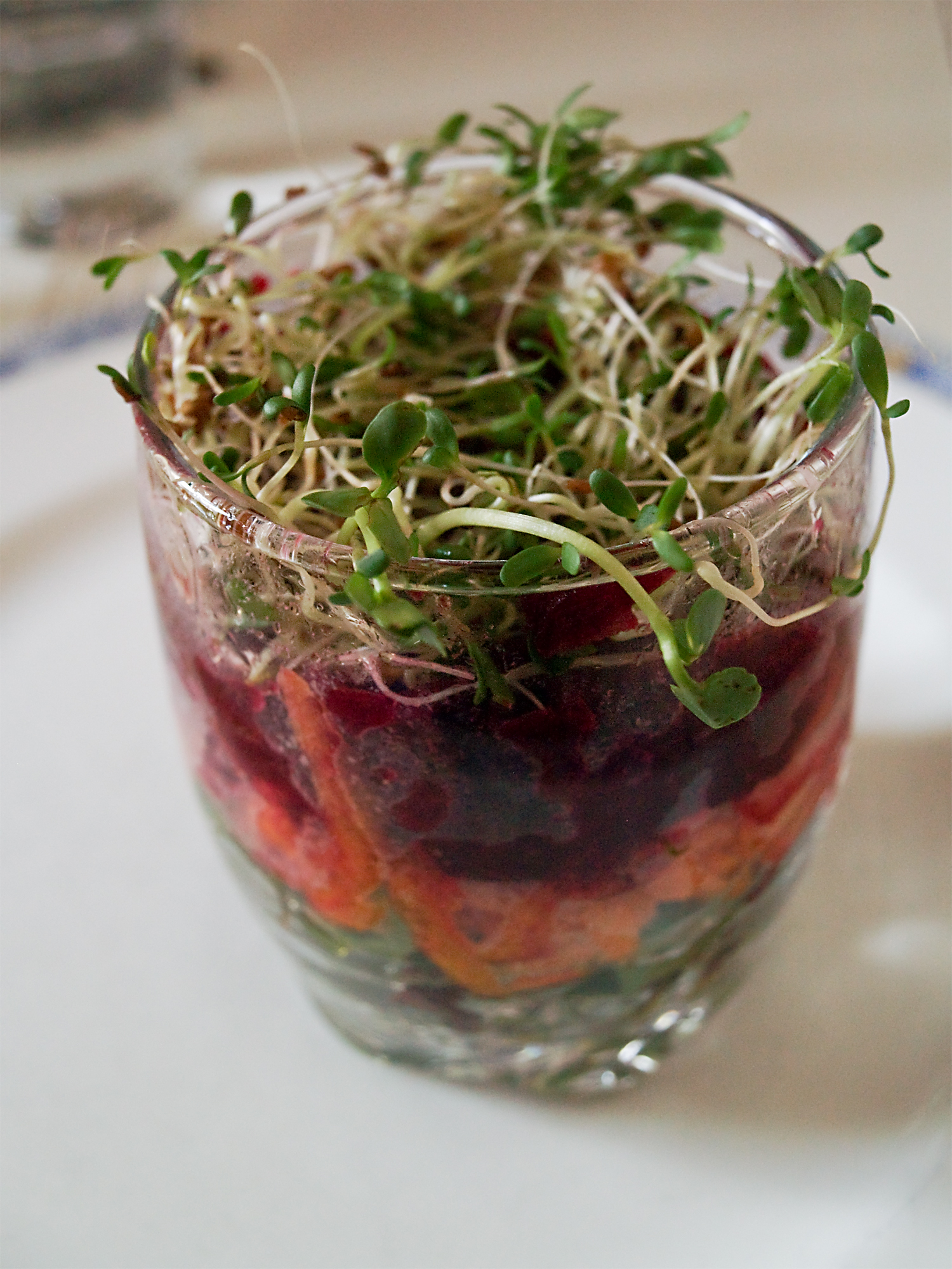
Glass container for serving food
A verrine () is a glass container, often small, in which is served a starter, main course or dessert, rather than a drink. The glass might be able to be used for drinks, but when used for food, it is referred to as a verrine, and indeed the dish itself can be named ″a verrine″. This French word is usually left untranslated because there is no single English word for it.
Metonymously, a "verrine" designates in the cooking world a dish served in a verrine, in a vertical manner, allowing a different aesthetic and gustatory experience compared to a dish served on a plate.
Philippe Conticini was the first (in 1994) to imagine a dessert served in a verrine. He introduced more than a simple evolution of the form, but rather a notable evolution in taste experience.
The verticality and transparency of the verrine allows:
- Immediate visual reading and construction of taste, and
- Completion of the gustatory balance in the mouth rather than in the verrine; sensations of intensity and finish are strengthened and better controlled by the experiencer.
According to the original concept, verrines are composed of three layers, each conveying specific taste characteristics:
- The upper, thin layer is made of an acidic preparation to trigger salivation and prepare the taste buds to receive other tastes
- The intermediate, thicker layer consists of a preparation bringing the "main flavor"
- The lower layer consists of a smooth and silky preparation aimed at coating the taste buds and providing a full-bodied, pleasant finish.
References
References
- ''Larousse Gastronomique'', p. 887 left column, article "verrine" (French)
- [[wiktionary:verrine]]
This article was imported from Wikipedia and is available under the Creative Commons Attribution-ShareAlike 4.0 License. Content has been adapted to SurfDoc format. Original contributors can be found on the article history page.
Ask Mako anything about Verrine — get instant answers, deeper analysis, and related topics.
Research with MakoFree with your Surf account
Create a free account to save articles, ask Mako questions, and organize your research.
Sign up freeThis content may have been generated or modified by AI. CloudSurf Software LLC is not responsible for the accuracy, completeness, or reliability of AI-generated content. Always verify important information from primary sources.
Report