From Surf Wiki (app.surf) — the open knowledge base
Venomous snake
Species of the suborder Serpentes that produce venom
Species of the suborder Serpentes that produce venom
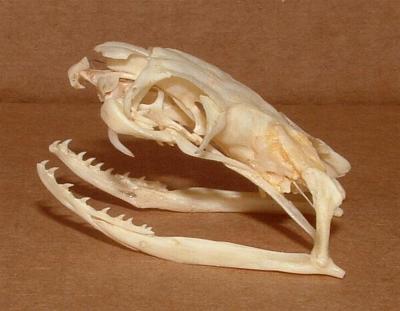
Venomous snakes are species of the suborder Serpentes that are capable of producing venom, which they use for killing prey, for defense, and to assist with digestion of their prey. The venom is typically delivered by injection using hollow or grooved fangs, although some venomous snakes lack well-developed fangs. Common venomous snakes include the families Elapidae, Viperidae, Atractaspididae, and some of the Colubridae. The toxicity of venom is mainly indicated by murine , while multiple factors are considered to judge the potential danger to humans. Other important factors for risk assessment include the likelihood that a snake will bite, the quantity of venom delivered with the bite, the efficiency of the delivery mechanism, and the location of a bite on the body of the victim. Snake venom may have both neurotoxic and hemotoxic properties. There are about 600 venomous snake species in the world.
Evolution
Main article: Evolution of snake venom
The evolutionary history of venomous snakes can be traced back to as far as 28 million years ago. Snake venom is modified saliva used for prey immobilization and self-defense and is usually delivered through highly specialized teeth, hollow fangs, directly into the bloodstream or tissue of the target. Evidence has recently been presented for the Toxicofera hypothesis, that venom was present (in small amounts) in the ancestors of all snakes (as well as several lizard families) as "toxic saliva" and evolved to extremes in those snake families normally classified as venomous by parallel evolution. The Toxicofera hypothesis further implies that "nonvenomous" snake lineages have either lost the ability to produce venom (but may still have lingering venom pseudogenes), or actually do produce venom in small quantities, likely sufficient to help capture small prey but causing no harm to humans when bitten.
Taxonomy
There is not a single or special taxonomic group for venomous snakes. Venom is known in several families. This has been interpreted to mean venom in snakes originated more than once as the result of convergent evolution. Around a quarter of all snake species are identified as being venomous.
| Family | Description |
|---|---|
| Atractaspididae (atractaspidids) | Purple-glossed snakes, centipede eaters, burrowing asps, Revoil's short snake, Chilorhinophis, Hypoptophis, Homoroselaps, Macrelaps, Micrelaps, and more. |
| Colubridae (colubrids) | Most are harmless, but others have potent venom and at least five species, including the boomslang, have caused human fatalities. |
| Elapidae (elapids) | Sea snakes, taipans, brown snakes, coral snakes, kraits, death adders, tiger snakes, mambas, king cobras, cobras and more. |
| Viperidae (viperids) | True vipers, including the Russell's viper, saw-scaled vipers, puff adders and pit vipers, including rattlesnakes, lanceheads and copperheads and cottonmouths. |
Terminology
Venomous snakes are often said to be poisonous, but poison and venom are not the same thing. Poisons must be ingested, inhaled or absorbed, while venom must be injected into the body by mechanical means. While unusual, there are a few species of snake that are actually poisonous. Keelback snakes are both venomous and poisonous – their poisons are stored in nuchal glands and are acquired by sequestering toxins from poisonous toads the snakes eat. Similarly, certain garter snakes from Oregon can retain toxins in their livers from ingesting rough-skinned newts.
Danger

Toxicity issues
Venom toxicities are compared by looking at the median lethal dose (usually using rodents as test animals and termed the murine LD50), which is the dose of venom per unit body mass that kills half of the test animals that receive it. The result obtained depends on which of the four delivery sites is used for the injection: subcutis (SC), vein (IV), muscle or peritoneum (IP). Smaller murine LD50 values indicate venoms that are more toxic, and there have been numerous studies on snake venom with a variability of potency estimates. SC LD50 is considered the most applicable to actual bites as only vipers with large fangs (such as large specimens from the genera Bitis, Bothrops, Crotalus, or Daboia) are capable of a truly intramuscular bite, snakebites rarely cause IV envenomation, and IP envenomation is even rarer. Measurements of LD50 using dry venom mixed with 0.1% bovine serum albumin in saline are more consistent than the results obtained using saline alone. As an example, the venom of the eastern brown snake has a murine LD50 (SC) of 41 μg/kg when measured in 0.1% bovine serum albumin in saline; when saline alone is used, the value is 53 μg/kg.
Belcher's sea snake, which sometimes is mistakenly called the hook-nosed sea snake, has been erroneously popularized as the most venomous snake in the world, due to the first edition of Ernst and Zug's book, Snakes in Question: The Smithsonian Answer Book, published in 1996. Prominent venom expert Associate Professor Bryan Grieg Fry has clarified the error: "The hook nosed myth was due to a fundamental error in a book called Snakes in Question. In there, all the toxicity testing results were lumped in together, regardless of the mode of testing (e.g., subcutaneous vs. intramuscular vs. intravenous vs. intraperitoneal). As the mode can influence the relative number, venoms can only be compared within a mode. Otherwise, it's apples and rocks." and 0.155 mg/kg. Studies on mice*
- LISTS . Nine of the World's Deadliest Snakes. "#1: The snake with the world's deadliest venom - Oxyuranus microlepidotus" . Encyclopædia Britannica. Retrieved November 5, 2013.
- BBC Nature Wildlife. Inland Taipan page. "Australia's inland taipan is considered to be the most venomous snake in the world". BBC. Retrieved October 15, 2013.
- Cecilie Beatson (November 29, 2011). Animal Species: Inland Taipan "The venom of the Inland Taipan is extremely potent and is rated as the most toxic of all snake venoms in LD50 tests on mice". Australian Museum. Retrieved October 14, 2013.
- Steve Irwin presentation .Australia Zoo Tour with Steve Irwin (1m54s) "..the number 1 most venomous snake in the entire world, the fierce snake". Australia Zoo (official YouTube Channel). Retrieved October 14, 2013.Inland Taipan Venom vs. Sea Snakes Venom (most notable Belcher's sea snake)
- Oakley, Cecily (2011). Interview with Associate Professor Bryan Fry Biochemist and molecular biologist . "...For my PhD, I worked on the inland taipan, which is the world's most venomous snake..." . Australian Academy of Science. Retrieved October 14, 2013.
- kingsnake.com September Guest Chatter (September 16, 2006).Q&A with Dr. Bryan Grieg Fry, Deputy Director, Australian Venom Research Unit, University of Melbourne . "Q: In retrospect to the LD50 charts, what do you personally feel is the hottest snake, in regards to potency, defensiveness, means of injection, etc.? A: It is the inland taipan (Oxyuranus microlepidotus). Not, as is popularised, any of the sea snakes." connectedbypets.com. Retrieved October 14, 2013. Though many (Oxyuranus microlepidotus) do -have- lots of venom stored. They are actually not as brutal as other snakes.
- Garden of Eden Exotics (May 2, 2012) Dr. Bryan Grieg Fry – Interview "...The inland taipan (Oxyuranus microlepidotus) is far and away the most toxic, much more so than even sea snakes." nyexotics.blogspot.com Retrieved October 14, 2013 and human cardiac cell culture show that venom of the inland taipan is the most toxic among all snakes.
| Snake | rowspan=2 | Region | colspan=2 | subcutaneous injection | rowspan=2 | intravenous injection | 0.1% bovine serum albumin in saline | in saline | ||||
|---|---|---|---|---|---|---|---|---|---|---|---|---|
| Inland taipan | Australia | |||||||||||
| Dubois' sea snake | Coral Sea, Arafura Sea, Timor Sea, and Indian Ocean | |||||||||||
| Eastern brown snake | Australia, Papua New Guinea, Indonesia | |||||||||||
| Yellow-bellied sea snake | Tropical oceanic waters | |||||||||||
| Peron's sea snake | Gulf of Siam, Taiwan Strait, Coral Sea Islands, and other places | |||||||||||
| Coastal taipan | Australia | |||||||||||
| Many-banded krait | Mainland China, Taiwan, Vietnam, Laos, Burma | |||||||||||
| Black-banded sea krait | eastern coast of the Malay Peninsula and Brunei, and in Halmahera, Indonesia | |||||||||||
| Black tiger snake | Australia | |||||||||||
| Mainland tiger snake | Australia | |||||||||||
| Western Australian Tiger snake | Australia | |||||||||||
| Beaked sea snake | Tropical Indo-Pacific |
Other factors
The toxicity of snake venom, based on laboratory tests conducted on mice, is sometimes used to gauge the extent of danger to humans, but this is not enough. Many venomous snakes are specialized predators whose venom may be adapted specifically to incapacitate their preferred prey. A number of other factors are also critical in determining the potential hazard of any given venomous snake to humans, including their distribution and behavior. For example, while the inland taipan is regarded as the world's most venomous snake based on LD50 tests on mice, it is a shy species and rarely strikes, and has not caused any known human fatalities. On the other hand, India's Big Four (Indian cobra, common krait, Russell's viper, and saw-scaled viper), while less venomous than the inland taipan, are found in closer proximity to human settlements and are more confrontational, thus leading to more deaths from snakebite. In addition, some species, such as the black mamba and coastal taipan, occasionally show some aggression, generally when alarmed or in self-defence, and then may deliver fatal doses of venom, resulting in high human mortality rates.
References
References
- (March 20, 2014). "Oldest fossil evidence of modern African venomous snakes found in Tanzania". PLOS ONE.
- Klauber LM.. (1997). "Rattlesnakes: Their Habitats, Life Histories, and Influence on Mankind". [[University of California Press]], Berkeley, 1956, 1972.
- (2004). "A resistant predator and its toxic prey: persistence of newt toxin leads to poisonous (not venomous) snakes". Journal of Chemical Ecology.
- Mackessy, Stephen P.. (June 2002). "Biochemistry and pharmacology of colubrid snake venoms". Journal of Toxicology: Toxin Reviews.
- (1979). "The lethality in mice of dangerous Australian and other snake venom". [[Toxicon]].
- (1974). "Lethality of sea snake venoms". [[Toxicon]].
- [http://www.sciencearchive.org.au/scientists/interviews/f/fry.html Fry, Bryan] {{Webarchive. link. (2014-04-19 (February 08, 2005) [http://www.venomdoc.com/forums/viewtopic.php?t=1212&postdays=0&postorder=asc&highlight=inland+taipan&start=0 Most Venomous] {{Webarchive). link. (2014-10-17 ,"Q;I was wondering what snakes venom is the most potent to humans A:Drop for drop it is the inland taipan (''Oxyuranus microlepidotus''), which has a venom more toxic than any other land snake or even the sea snakes." venomdoc.com Forums, Retrieved April 17, 2014)
- Seymour, Jamie. "World's Worst Venom". [[National Geographic Channel]].
- Seymour, Jamie. "Venom Deathmatch". [[National Geographic Channel]].
- Fry, B. G.. (February 24, 2012). "Snakes Venom LD50 – List of the Available Data and Sorted by Route of Injection".
- (January 11, 2014). "Facts and Figures: World's Most Venomous Snakes". Australian Venom Research Unit, [[University of Melbourne]].
- (2018-12-31). "What is an LD50 and LC50".
- "Most venomous snakes". [[Reptile Gardens]].
- Walls, Jerry G.. "Deadly Snakes: What are the world's most deadly venomous snakes?". [[Reptiles (magazine).
- Davidson, Terence. "Immediate First Aid – Black Mamba". University of California, San Diego.
- "Immediate First Aid for bites by Australian taipan or common taipan".
This article was imported from Wikipedia and is available under the Creative Commons Attribution-ShareAlike 4.0 License. Content has been adapted to SurfDoc format. Original contributors can be found on the article history page.
Ask Mako anything about Venomous snake — get instant answers, deeper analysis, and related topics.
Research with MakoFree with your Surf account
Create a free account to save articles, ask Mako questions, and organize your research.
Sign up freeThis content may have been generated or modified by AI. CloudSurf Software LLC is not responsible for the accuracy, completeness, or reliability of AI-generated content. Always verify important information from primary sources.
Report