From Surf Wiki (app.surf) — the open knowledge base
Variegate porphyria
| Field | Value |
|---|---|
| name | Variegate porphyria |
| synonyms | NamesMixed hepatic porphyria, Mixed porphyria, South African genetic porphyria, and South African porphyria. |
| image | Protoporphyrinogen IX.svg |
| caption | Protoporphyrinogen IX |
| symptoms | skin problems, |
| causes | genetic mutations. |
| treatment | liver transplants. |
Enzyme difficiency. Variegate porphyria, also known by several other names, is an autosomal dominant porphyria that can have acute (severe but usually not long-lasting) symptoms along with symptoms that affect the skin. The disorder results from low levels of the enzyme responsible for the seventh step in heme production. Heme is a vital molecule for all of the body's organs. It is a component of hemoglobin, the molecule that carries oxygen in the blood.
Signs and symptoms
When symptoms occur, they can include acute attacks (similar to acute intermittent porphyria) or skin damage. Acute attacks usually begin in adulthood and cause abdominal pain, vomiting, diarrhoea and constipation. During an attack, a person may also experience muscle weakness, seizures, and mental changes such as anxiety and hallucinations. These signs and symptoms are triggered by nongenetic factors such as certain drugs, dieting or fasting, certain hormones and stress.
Some people with variegate porphyria have skin that is overly sensitive to sunlight (photosensitive). Areas of skin exposed to the sun develop severe blistering, scarring, changes in pigmentation, and increased hair growth. Exposed skin becomes fragile and is easily damaged.
Rarely, the signs and symptoms of variegate porphyria can begin in infancy or early childhood. In such cases, the signs and symptoms are usually more severe than those starting later in life.
Genetics
Mutations in the PPOX gene cause variegate porphyria. The PPOX gene makes a membrane bound mitochondrial enzyme called protoporphyrinogen oxidase, which is critical to the chemical process that leads to heme production. The activity of this enzyme is reduced by 50 percent in most people with variegate porphyria. In severe cases that begin early in life, the enzyme is almost completely inactive. Nongenetic factors such as certain drugs, stress, and others listed above can increase the demand for heme and the enzymes required to make heme. The combination of this increased demand and reduced activity of protoporphyrinogen oxidase disrupts heme production and allows byproducts of the process to accumulate in the liver, triggering an acute attack.
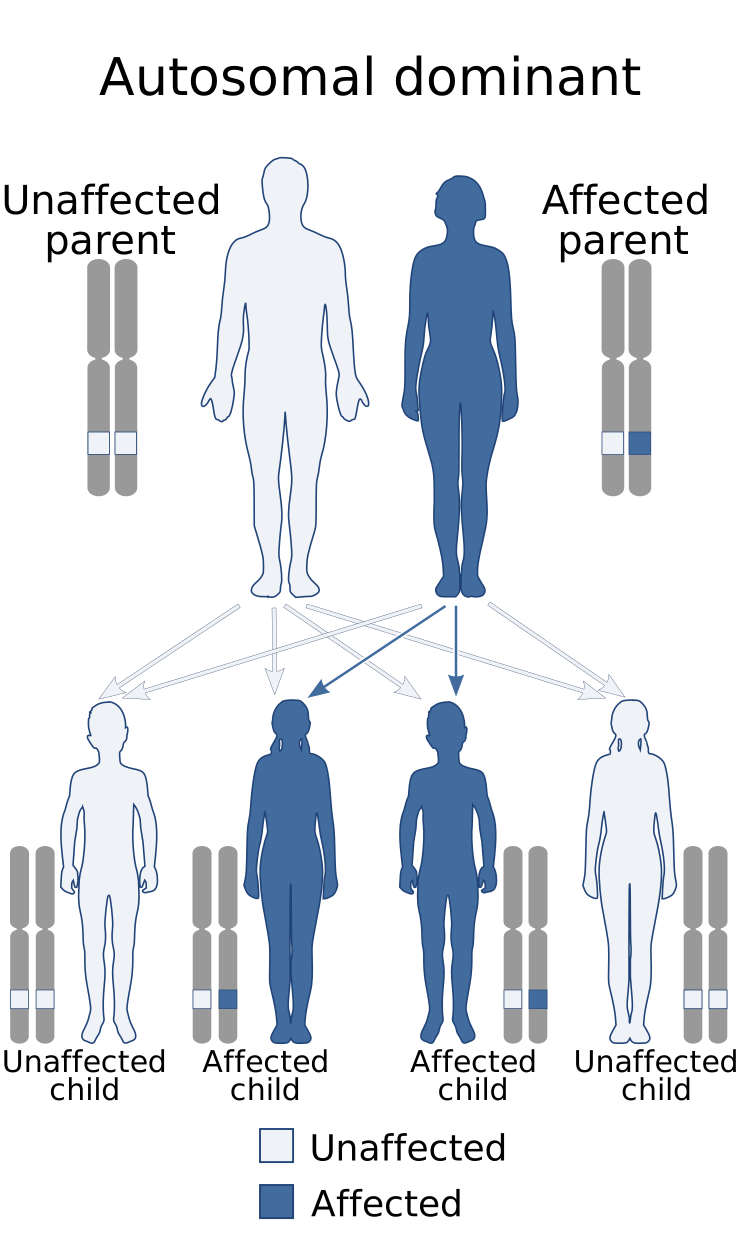
Variegate porphyria is inherited in an autosomal dominant pattern, which means the defective gene is located on an autosome, and inheriting one copy of the defective gene from an affected parent is sufficient to cause the disorder. More severe cases result from inheriting two copies of the defective gene.
The entire PPOX gene has about 8kb with 13 exon sequences. It was successfully cloned from a cDNA library in 1995 revealing that, after processing, it is 477 nucleotides long. It has previously been thought that the PPOX gene was located on human chromosome 14, however mapping experiments (FISH) have shown that it is near 1q23. An additional aggravating mutation affecting variegate porphyria can be found at 6p21.3 on the HFE gene.
A 2006 clinical, biochemical and mutational study of eight Swiss variegate porphyria patients and their families found four novel PPOX gene mutations believed to be unique to the Swiss population.
Diagnosis
Diagnosis is by finding raised urine porphyrins, raised faecal porphyrins, markedly raised plasma porphyrins (pathognomic) and finding photosensitive cutaneous lesions on clinical examination.
Treatment
Liver transplant has been used in the treatment of this condition.
Epidemiology
In South Africa, the prevalence of variegate porphyria is approximately 1 in 300. In Finland, the prevalence is approximately 1 in 75,000.
It is also found in Argentina, Sweden, and Australia.
References
This article incorporates public domain text from The U.S. National Library of Medicine
References
- (2006). "Andrews' Diseases of the Skin: clinical Dermatology". Saunders Elsevier.
- (2007). "Dermatology: 2-Volume Set". Mosby.
- {{DorlandsDict. nine/210001837. porphyria variegata
- (1998). "Variegate porphyria: past, present and future". Skin Pharmacol. Appl. Skin Physiol..
- (July 1988). "Linkage between the variegate porphyria (VP) and the alpha-1-antitrypsin (PI) genes on human chromosome 14". Hum. Genet..
- (December 1995). "Partial characterization and assignment of the gene for protoporphyrinogen oxidase and variegate porphyria to human chromosome 1q23". Hum. Mol. Genet..
- (August 1999). "Spectrum of mutations in the HFE gene implicated in haemochromatosis and porphyria". Hum. Mol. Genet..
- (August 2006). "Swiss patients with variegate porphyria have unique mutations". Swiss Med Wkly.
- (July 2004). "Recovery from a variegate porphyria by a liver transplantation". Liver Transpl..
- (2006). "Pediatric hematolog". Blackwell Pub..
- Mustajoki, P.. (1980). "Variegate porphyria. Twelve years' experience in Finland". The Quarterly Journal of Medicine.
- (2008). "Genetic and biochemical studies in Argentinean patients with variegate porphyria". BMC Med. Genet..
- (August 2003). "Nine novel mutations in the protoporphyrinogen oxidase gene in Swedish families with variegate porphyria". Clin. Genet..
- Rossi E, Chin CY, Beilby JP, Waso HF, Warnich L. (September 2002). "Variegate porphyria in Western Australian Aboriginal patients". Internal Medicine Journal.
This article was imported from Wikipedia and is available under the Creative Commons Attribution-ShareAlike 4.0 License. Content has been adapted to SurfDoc format. Original contributors can be found on the article history page.
Ask Mako anything about Variegate porphyria — get instant answers, deeper analysis, and related topics.
Research with MakoFree with your Surf account
Create a free account to save articles, ask Mako questions, and organize your research.
Sign up freeThis content may have been generated or modified by AI. CloudSurf Software LLC is not responsible for the accuracy, completeness, or reliability of AI-generated content. Always verify important information from primary sources.
Report