From Surf Wiki (app.surf) — the open knowledge base
Varanasi
Metropolis in Uttar Pradesh, India

Metropolis in Uttar Pradesh, India
| Field | Value |
|---|---|
| official_name | Varanasi |
| native_name | |
| other_name | Benares, Banaras, Kashi |
| settlement_type | Metropolis |
| image_skyline | {{multiple image |
| border | infobox |
| total_width | 250 |
| perrow | 1/2/2/2 |
| image1 | Varanasi, India, Ghats, Cremation ceremony in progress.jpg Manikarnika Ghat, the holy cremation ground on the Ganges river front |
| image2 | Bismillah at Concert1 (edited).jpg Shehnai maestro Ustad Bismillah Khan |
| image3 | Faculty of Arts Building, Banaras Hindu University.jpg Faculty of Arts, Benares Hindu University |
| image5 | Silk Looms, Varanasi.jpg Weaving a silk brocade |
| image4 | Goswami Tulsidas Awadhi Hindi Poet.jpg Goswami Tulsidas, composer of the Ramcharitmanas |
| image6 | Sampurnanand Sanskrit University left gate.jpg Benares Sanskrit College, India's oldest Sanskrit college, which was founded in 1791 |
| image7 | Varanasi Munshi Ghat3.jpg Munshi Ghat |
| image_caption | Left to right, top to bottom: Manikarnika Ghat, the holy cremation ground on the Ganges river front; Ustad Bismillah Khan; Faculty of Arts, Benares Hindu University; Goswami Tulsidas, composer of the Ramcharitmanas; weaving silk brocade; Benares Sanskrit College, India's oldest Sanskrit college (founded in 1791); Munshi Ghat |
| image_map1 | |
| map_caption1 | Interactive map of Varanasi |
| coordinates | |
| subdivision_type | Country |
| subdivision_name | India |
| subdivision_type1 | State |
| subdivision_type2 | Division |
| subdivision_type3 | District |
| subdivision_name1 | Uttar Pradesh |
| subdivision_name2 | Varanasi |
| subdivision_name3 | Varanasi |
| established_title | |
| government_type | Municipal Corporation |
| governing_body | Varanasi Municipal Corporation |
| leader_party | BJP |
| leader_title | Mayor |
| leader_name | Ashok Tiwari |
| leader_title1 | Municipal Commissioner |
| leader_name1 | Pranay Singh, IAS |
| area_footnotes | |
| area_total_km2 | 82 |
| area_metro_km2 | 163.8 |
| area_metro_footnotes | |
| elevation_m | 80.71 |
| population_total | 1212610 |
| population_as_of | 2011 |
| population_density_km2 | 7402 |
| population_metro | 1,432,280 (32nd) |
| population_metro_footnotes | |
| population_rank | 30th |
| population_demonym | Banarasi |
| demographics_type1 | Language |
| demographics1_title1 | Official |
| demographics1_info1 | Hindi, English |
| demographics1_title2 | Additional official |
| demographics1_info2 | Urdu |
| demographics1_title3 | Regional |
| demographics1_info3 | Bhojpuri |
| timezone1 | IST |
| utc_offset1 | +5:30 |
| postal_code_type | PIN |
| postal_code | 221001 to 221011 |
| area_code | 0542 |
| area_code_type | Telephone code |
| registration_plate | UP-65 |
| blank1_name | GDP |
| blank1_info | $5.2 billion (2024–25) |
| blank2_name | Per capita income |
| blank2_info | INR 90,028 |
| blank3_name | International Airport |
| blank3_info | Lal Bahadur Shastri International Airport |
| blank4_name | Rapid Transit |
| blank4_info | Varanasi Metro |
| blank1_name_sec2 | Sex ratio |
| blank1_info_sec2 | 0.926 (2011) ♂/♀ |
| blank2_name_sec2 | Literacy (2011) |
| blank2_info_sec2 | 80.31% |
| blank3_name_sec2 | HDI |
| blank3_info_sec2 | 0.812 |
| website |
221101 to 221405
Varanasi (, also Benares, Banaras ), or Kashi, is a city on the Ganges river in northern India that has a central place in the traditions of pilgrimage, death, and mourning in the Hindu world.*
- The city has a syncretic tradition of Islamic artisanship that underpins its religious tourism.*
- Located in the middle-Ganges valley in the southeastern part of the state of Uttar Pradesh, Varanasi lies on the left bank of the river. It is 692 km to the southeast of India's capital New Delhi and 320 km to the southeast of the state capital, Lucknow. It lies 121 km downstream of Prayagraj, where the confluence with the Yamuna river is another major Hindu pilgrimage site.
Varanasi is one of the world's oldest continually inhabited cities. Kashi, its ancient name, was associated with a kingdom of the same name in the first millennium BCE. The Lion capital of Ashoka at nearby Sarnath has been interpreted to be a commemoration of the Buddha's first sermon there in the fifth century BCE. In the 8th century, Adi Shankara established the worship of Shiva as an official sect of Varanasi. Tulsidas wrote his Awadhi language epic, the Ramcharitmanas, a Bhakti movement reworking of the Sanskrit Ramayana, in Varanasi. Several other major figures of the Bhakti movement were born in Varanasi, including Kabir and Ravidas. In the 16th century, Rajput nobles in the service of the Mughal emperor Akbar, sponsored work on Hindu temples in the city in an empire-wide architectural style. In 1740, Benares Estate, a zamindari estate, was established in the vicinity of the city in the Mughal Empire's semi-autonomous province of Awadh. Under the Treaty of Faizabad, the East India Company acquired Benares city in 1775. The city became a part of the Benares Division of British India's Ceded and Conquered Provinces in 1805, the North-Western Provinces in 1836, United Provinces in 1902, and of the Republic of India's state of Uttar Pradesh in 1950.
Silk weaving, carpets, crafts and tourism employ a significant number of the local population, as do the Banaras Locomotive Works and Bharat Heavy Electricals. The city is known worldwide for its many ghats—steps leading down the steep river bank to the water—where pilgrims perform rituals. Of particular note are the Dashashwamedh Ghat, the Panchganga Ghat, the Manikarnika Ghat, and the Harishchandra Ghat, the last two being where Hindus cremate their dead. The Hindu genealogy registers at Varanasi are kept here. Among the notable temples in Varanasi are the Kashi Vishwanath Temple of Shiva, the Sankat Mochan Hanuman Temple, and the Durga Temple.
The city has long been an educational and musical centre: many prominent Indian philosophers, poets, writers, and musicians live or have lived in the city, and it was the place where the Benares gharana form of Hindustani classical music was developed. In the 20th century, the Hindi-Urdu writer Premchand and the shehnai player Bismillah Khan were associated with the city. India's oldest Sanskrit college, the Benares Sanskrit College, was founded by Jonathan Duncan, the resident of the East India Company in 1791. Later, education in Benares was greatly influenced by the rise of Indian nationalism in the late 19th century. Annie Besant founded the Central Hindu College in 1898. In 1916, she and Madan Mohan Malviya founded the Banaras Hindu University, India's first modern residential university. Kashi Vidyapith was established in 1921, a response to Mahatma Gandhi's non-cooperation movement.
Etymology
Traditional etymology links "Varanasi" to the names of two Ganges tributaries forming the city's borders: Varuna, still flowing in northern Varanasi, and Assi, today a small stream in the southern part of the city, near Assi Ghat. The old city is located on the north shores of the Ganges, bounded by Varuna and Assi.
In the Mahabharata and in ancient India, the city is referred to as Kāśī from the Sanskrit verbal root kaś- "to shine", making Varanasi known as "City of Light", The name was also used by pilgrims dating from Buddha's days. Kashi is still widely popular.
Hindu religious texts use many epithets in Sanskrit to refer to Varanasi, such as Kāśikā (), Avimukta (), Ānaṃdakānana (), Rudravāsa (), and Mahāśmaśāna ().
History
Mythology
According to Hindu mythology, Varanasi was founded by Shiva, one of three principal deities along with Brahma and Vishnu. During a conflict between Brahma and Shiva, one of Brahma's five heads was torn off by Shiva. As was the custom, the victor carried the slain adversary's head in his hand and let it hang down from his hand as an act of ignominy, and a sign of his own bravery. A bridle was also put into the mouth. Shiva thus dishonoured Brahma's head, and kept it with him at all times. When he came to the city of Varanasi in this state, the hanging head of Brahma dropped from Shiva's hand and disappeared in the ground. Varanasi is therefore considered an extremely holy site.
The Pandavas, the protagonists of the Hindu epic Mahabharata, are said to have visited the city in search of Shiva to atone for their sins of fratricide and brahmahatya that they had committed during the Kurukshetra War. It is regarded as one of seven holy cities (Sapta Puri) which can provide Moksha; Ayodhya, Mathura, Haridwar, Kashi (Varanasi), Kanchipuram, Avanti, and Dvārakā are the seven cities known as the givers of liberation. The princesses Ambika and Ambalika of Kashi were wed to the Hastinapur ruler Vichitravirya, and they later gave birth to Pandu and Dhritarashtra. Bhima, a son of Pandu, married a Kashi princess Valandhara and their union resulted in the birth of Sarvaga, who later ruled Kashi. Dhritarasthra's eldest son Duryodhana also married a Kashi princess Bhanumati, who later bore him a son Lakshmana Kumara and a daughter Lakṣmaṇā.
The Cakkavatti Sīhanāda Sutta text of Buddhism puts forth an idea stating that Varanasi will one day become the fabled kingdom of Ketumati in the time of Maitreya.
Ancient period
Excavations in 2014 led to the discovery of artefacts dating back to 800 BCE. Further excavations at Aktha and Ramnagar, two sites in the vicinity of the city, unearthed artefacts dating back to 1800 BCE, supporting the view that the area was inhabited by this time.
During the time of Gautama Buddha, Varanasi was part of the Kingdom of Kashi. The celebrated Chinese traveller Xuanzang, also known as Hiuen Tsiang, who visited the city around 635 CE, attested that the city was a centre of religious and artistic activities, and that it extended for about 5 km along the western bank of the Ganges. When Xuanzang visited Varanasi in the 7th century, he named it "Polonise" () and wrote that the city had some 30 temples with about 30 monks. The city's religious importance continued to grow in the 8th century, when Adi Shankara established the worship of Shiva as an official sect of Varanasi.
Medieval period
In 1033 CE, Varanasi faced its first Islamic incursion when Ahmad Nialtagin, a subordinate of Mahmud Ghazni, launched a sudden raid on the city. His forces plundered markets and looted gold, silver, jewels, and perfumes but retreated by mid-day due to the threat of local resistance. Although Hindu temples were partially destroyed, the damage was limited as the army stayed briefly.
The following year, in 1034–35 CE, Mahmud's nephew Syed Salar Masud sought to expand Islamic influence in India. Malik Afzal Alavi led a section of his army to Varanasi but was defeated in a fierce battle near the modern-day site of Masjid-e-Ganj-e-Shahidan by local forces, possibly under the Kalachuri ruler Gangeyadeva. Despite the military leader's death, his followers were allowed to settle in the northern forests of Varanasi, creating a settlement named Alavipura (modern-day Alai Pura), inhabited by Muslim weavers and featuring shrines honouring these invaders.
Chandradeva, founder of the Gahadavala dynasty made Banaras a second capital in 1090. In 1194 CE, the Ghurid conqueror Muizzuddin Muhammad Ghuri defeated the forces of Jayachandra in a battle near Jamuna and afterwards ravaged the city of Varnasi in the course of which many temples were destroyed.
Varanasi remained a centre of activity for intellectuals and theologians during the Middle Ages, which further contributed to its reputation as a cultural centre of religion and education. Several major figures of the Bhakti movement were born in Varanasi, including Kabir who was born here in 1389, and Ravidas, a 15th-century socio-religious reformer, mystic, poet, traveller, and spiritual figure, who was born and lived in the city and employed in the tannery industry.
Early Modern to Modern periods (1500–1949)
File:Benares A Brahmin placing a garland on the holiest spot in the sacred city by James Prinsep 1832.jpg|A lithograph by James Prinsep of a Brahmin placing a garland on the holiest location in the city File:On The River Benares ca 1883.jpg|A painting by Lord Weeks (1883) of Varanasi, viewed from the Ganges File:Bathing Ghat Banaras India 1890.jpg|An illustration (1890) of a bathing ghat in Varanasi File:Silver Rupee of the Bengal Presidency, struck in Muhammadabad Benaras, in the name of Mughal emperor Shah Alam II.jpg|Silver Rupee of the Bengal Presidency, struck in Muhammadabad Benaras, in the name of Mughal emperor Shah Alam II.
Numerous eminent scholars and preachers visited the city from across India and South Asia. Guru Nanak visited Varanasi for Maha Shivaratri in 1507. Kashi (Varanasi) played a large role in the founding of Sikhism.
In 1567 or thereabouts, the Mughal emperor Jallaludin Muhammad Akbar sacked the city of Varanasi on his march from Allahabad (modern-day Prayagraj). However, later the Kachwaha Rajput rulers of Amber (Mughal vassals themselves) most notably under Raja Man Singh rebuilt various temples and ghats in the city.
The Raja of Jaipur established the Annapurna Mandir, and the 200 m Akbari Bridge was also completed during this period. The earliest tourists began arriving in the city during the 16th century. In 1665, the French traveller Jean-Baptiste Tavernier described the architectural beauty of the Vindu Madhava temple on the bank of the Ganges. The road infrastructure was also improved during this period. It was extended from Kolkata to Peshawar by Emperor Sher Shah Suri; later during the British Raj it came to be known as the famous Grand Trunk Road. In 1656, Emperor Aurangzeb ordered the destruction of many temples and the building of mosques, causing the city to experience a temporary setback. However, after Aurangzeb's death, most of India was ruled by a confederacy of pro-Hindu kings. Much of modern Varanasi was built during this time, especially during the 18th century by the Maratha and Bhumihar rulers. The kings governing Varanasi continued to wield power and importance through much of the British Raj period, including the Maharaja of Benares, or simply called by the people of Benares as Kashi Naresh.
The Kingdom of Benares was given official status by the Mughals in 1737, and the kingdom started in this way and continued as a dynasty-governed area until Indian independence in 1947, during the reign of Vibhuti Narayan Singh. In the 18th century, Muhammad Shah ordered the construction of an observatory on the Ganges, attached to Man Mandir Ghat, designed to discover imperfections in the calendar in order to revise existing astronomical tables. Tourism in the city began to flourish in the 18th century. As the Mughal suzerainty weakened, the Benares zamindari estate became Banaras State, thus Balwant Singh of the Narayan dynasty regained control of the territories and declared himself Maharaja of Benares in 1740. The strong clan organisation on which they rested, brought success to the lesser known Hindu princes. There were as many as 100,000 men backing the power of the Benares rajas in what later became the districts of Benares, Gorakhpur and Azamgarh. This proved a decisive advantage when the dynasty faced a rival and the nominal suzerain, the Nawab of Oudh, in the 1750s and the 1760s.

An exhausting guerrilla war, waged by the Benares ruler against the Oudh camp, using his troops, forced the Nawab to withdraw his main force. The region was eventually ceded by the Nawab of Oudh to the Benares State, a subordinate of the East India Company, in 1775, who recognised Benares as a family dominion. In 1791 under the rule of the British, resident Jonathan Duncan founded a Sanskrit College in Varanasi. In 1867, the establishment of the Varanasi Municipal Board led to significant improvements in the city's infrastructure and basic amenities of health services, drinking water supply and sanitation.
Rev. M. A. Sherring in his book The Sacred City of Hindus: An account of Benaras in ancient and modern times published in 1868 refers to a census conducted by James Prinsep and put the total number of temples in the city to be around 1000 during 1830s. He writes,
Author Mark Twain wrote in 1897 of Varanasi,
Benares became a princely state in 1911, with Ramnagar as its capital, but with no jurisdiction over the city proper. The religious head, Kashi Naresh, has had his headquarters at the Ramnagar Fort since the 18th century, also a repository of the history of the kings of Varanasi, which is situated to the east of Varanasi, across the Ganges. The Kashi Naresh is deeply revered by the local people and the chief cultural patron; some devout inhabitants consider him to be the incarnation of Shiva.
Annie Besant founded the Central Hindu College, which later became a foundation for the creation of Banaras Hindu University in 1916. Besant founded the college because she wanted "to bring men of all religions together under the ideal of brotherhood in order to promote Indian cultural values and to remove ill-will among different sections of the Indian population."
Varanasi was ceded to the Union of India in 1947, becoming part of Uttar Pradesh after Indian independence. Majaraja of Benares and Suite, 1870s.jpg|Maharaja of Benares, 1870s Benares (Baedeker, 1914).jpg|Map of the city, c. 1914 Benares - riverfront - edit LCCN2004707379.jpg|An 1895 photograph of the Varanasi riverfront 20160628 021143293 iOS.jpg|The lanes of Varanasi are bathed in a plethora of colours.
21st-century
Narendra Modi, prime minister of India since 2014, has represented Varanasi in the Parliament of India since 2014. Modi inaugurated the Shri Kashi Vishwanath Corridor project, which aimed to enhance the city's spiritual vibrancy by connecting many ghats to the temple of Kashi Vishwanath, in December 2021.
Geography and climate
Geography
Varanasi is located at an elevation of 80.71 m in the centre of the Ganges valley of North India, in the Eastern part of the state of Uttar Pradesh, along the left crescent-shaped bank of the Ganges, averaging between 50 ft and 70 ft above the river. The city is the headquarters of Varanasi district. By road, Varanasi is located 797 km south-east of New Delhi, 320 km south-east of Lucknow, 121 km east of Prayagraj, 63 km south of Jaunpur and 51 km north-east of Mirzapur. The "Varanasi Urban Agglomeration" – an agglomeration of seven urban sub-units – covers an area of 112 km2.
Neighbourhoods of the city include Adampur, Anandbagh, Bachchhaon, Bangali Tola, Bhelpura, Bulanala, Chaitganj, Chaukaghat, Chowk, Dhupchandi, Dumraon, Gandhinagar, Gautam Nagar, Giri Nagar, Gopal Vihar, Guru Nanak Nagar, Jaitpura, Kail Garh, Khanna, Kotwali, Lanka Manduadih, Luxa, Maheshpur, Mahmoorganj, Maulvibagh, Nagwar, Naipokhari, Shivala, Siddhagiribagh, and Sigra.
Located in the Indo-Gangetic Plains of North India, the land is very fertile because low-level floods in the Ganges continually replenish the soil. Varanasi is situated between the Ganges confluences with two rivers: the Varuna and the Assi stream. The distance between the two confluences is around 4 km, and serves as a sacred journeying route for Hindus, which culminates with a visit to a Sakshi Vinayak Temple.
Climate
Varanasi experiences a humid subtropical climate (Köppen climate classification Cwa) with large variations between summer and winter temperatures. The dry summer starts in April and lasts until June, followed by the monsoon season from July to October. The temperature ranges between 22 and in the summers. Winters in Varanasi see very large diurnal variations, with warm days and downright cold nights. Cold waves from the Himalayan region cause temperatures to dip across the city in the winter from December to February and temperatures below 5 C are not uncommon. The average annual rainfall is 1110 mm. Fog is common in the winters, while hot dry winds, called loo, blow in the summers. In recent years, the water level of the Ganges has decreased significantly; upstream dams, unregulated water extraction, and dwindling glacial sources due to global warming may be to blame.
| Jan record high C = 32.5 | Feb record high C = 36.1 | Mar record high C = 41.5 | Apr record high C = 45.3 | May record high C = 47.2 | Jun record high C = 47.2 | Jul record high C = 45.0 | Aug record high C = 40.1 | Sep record high C = 39.8 | Oct record high C = 39.4 | Nov record high C = 37.1 | Dec record high C = 32.8 | year record high C = 47.2 | Jan record low C = 1.0 | Feb record low C = 1.7 | Mar record low C = 6.7 | Apr record low C = 11.1 | May record low C = 17.3 | Jun record low C = 20.5 | Jul record low C = 20.0 | Aug record low C = 20.4 | Sep record low C = 16.4 | Oct record low C = 11.7 | Nov record low C = 5.0 | Dec record low C = 2.2 | year record low C = 1.0 | archive-url = https://web.archive.org/web/20200205040301/http://imdpune.gov.in/library/public/1981-2010%20CLIM%20NORMALS%20%28STATWISE%29.pdf | archive-date = 5 February 2020 | access-date = 1 March 2020}} | archive-url = https://web.archive.org/web/20200205042509/http://imdpune.gov.in/library/public/EXTREMES%20OF%20TEMPERATURE%20and%20RAINFALL%20upto%202012.pdf | archive-date = 5 February 2020 | access-date = 1 March 2020}}{{cite web | archive-url = https://web.archive.org/web/20200205042602/http://imdpune.gov.in/library/public/Daily%20Normals%20of%20Global%20%26%20Diffused%20Radiations%20%201971_2000.pdf | archive-date = 5 February 2020 | access-date = 1 March 2020 | url-status = live | archive-url = https://web.archive.org/web/20230101061732/https://www.imdpune.gov.in/library/public/Climatological%20Tables%201991-2020.pdf | archive-date = 1 January 2023 | access-date = 1 January 2023 | access-date = 28 June 2022 | archive-date = 24 October 2022 | archive-url = https://web.archive.org/web/20221024154411/https://www.weather-atlas.com/en/india/varanasi-climate | url-status = live
| Jan record high C = 32.3 | Feb record high C = 35.8 | Mar record high C = 42.4 | Apr record high C = 46.7 | May record high C = 46.8 | Jun record high C = 48.0 | Jul record high C = 43.9 | Aug record high C = 39.8 | Sep record high C = 42.3 | Oct record high C = 39.0 | Nov record high C = 35.3 | Dec record high C = 32.7 | year record high C = 48.0 | Jan record low C = 0.3 | Feb record low C = 2.4 | Mar record low C = 4.0 | Apr record low C = 11.4 | May record low C = 17.8 | Jun record low C = 14.3 | Jul record low C = 21.4 | Aug record low C = 21.5 | Sep record low C = 19.1 | Oct record low C = 8.9 | Nov record low C = 4.3 | Dec record low C = 2.3 | year record low C = 0.3
Demographics
According to provisional data from the 2011 census, the Varanasi urban agglomeration had a population of 1,435,113, with 761,060 men and 674,053 women. The Varanasi municipal corporation and CB had a combined population of 1,212,610 of which 642,882 were males and 569,728 in 2011. The population in the age group of 0 to 6 years was 137,111.
The population of the Varanasi urban agglomeration in 2001 was 1,371,749 with a ratio of 879 females every 1,000 males. However, the area under Varanasi Nagar Nigam has a population of 1,100,748 with a ratio of 883 females for every 1,000 males.
Religion
Main article: Religion in Varanasi
|access-date = 27 September 2019 |archive-date = 27 September 2015 |archive-url = https://web.archive.org/web/20150927145844/http://www.censusindia.gov.in/2011census/C-01/DDW09C-01%20MDDS.XLS |url-status = live Hinduism is predominantly followed in Varanasi with Islam being the largest minority. Nearly 70% of the population follows Hinduism. The city also agglomerate different religions such as Christianity, Sikhism, Jainism and Buddhism. The city is also a centre for Buddhist pilgrimage. At Sarnath, just northeast of Varanasi, the Buddha gave his first teaching (Dhammacakkappavattana Sutta) after attaining enlightenment. According to the Buddhavaṃsa, a hagiographical Buddhist text, Varanasi is stated to have been the birthplace of the previous Buddha, known as Kassapa Buddha.
In the sacred geography of India Varanasi is known as the "microcosm of India". In addition to its 3,300 Hindu religious places, Varanasi has 12 churches, three Jain mandirs, nine Buddhist shrines, three Gurdwaras (Sikh shrines), and 1,388 Muslim holy places.
Languages
At the time of the 2011 Census of India, 83.87% of the population of Varansi Municipal Corporation and Cantonment Board spoke Hindi, 9.03% Urdu, 4.81% Bhojpuri, and 0.92% Bengali as their first language.
Administration and politics
Administration
General administration
Varanasi division which consists of four districts, and is headed by the Divisional Commissioner of Varanasi, who is an IAS officer of high seniority, the Commissioner is the head of local government institutions (including Municipal Corporations) in the division, is in charge of infrastructure development in his division, and is also responsible for maintaining law and order in the division. The District Magistrate of Varanasi reports to the Divisional Commissioner. The Commissioner is Deepak Agarwal.
Varanasi district administration is headed by the District Magistrate of Varanasi, who is an IAS officer. The DM is in charge of property records and revenue collection for the central government and oversees the elections held in the city. The DM is also responsible for maintaining law and order in the city, hence the SSP of Varanasi also reports to the DM of Varanasi. The DM is assisted by a Chief Development Officer (CDO), four Additional District Magistrates (ADM) (Finance/Revenue, City, Protocol, Executive), one chief revenue officer (CRO), one City Magistrate (CM), and four Additional City Magistrates (ACM). The district has three tehsils, each headed by a Sub-Divisional Magistrate. The DM is Kaushal Raj Sharma.
Police administration
Varanasi district comes under the Varanasi Police Zone and Varanasi Police Range, Varanasi Zone is headed by an Additional Director General ranked IPS officer, and the Varanasi Range is headed Inspector General ranked IPS officer. The ADG, Varanasi Zone is Biswajit Mahapatra, and IG, Varanasi Range is Vijay Singh Meena.
The district police up to the date of 24 March 2021 was headed by a Senior Superintendent of Police (SSP), who is an IPS officer, and is assisted by six Superintendents of Police (SP)/Additional Superintendents of Police (Addl. SP) (City, Rural Area, Crime, Traffic, Protocol and Protocol), who are either IPS officers or PPS officers. Each of the several police circles is headed by a Circle Officer (CO) in the rank of Deputy Superintendent of Police. The last SSP was Amit Pathak.
On 25 March 2021 the Government of Uttar Pradesh passed an order to divide the Varanasi police into Varanasi City Police and Rural Police. Since then City Police is headed by the Commissioner of Police (CP), who is an IPS officer of ADGP rank, and is assisted by two additional commissioners of police (Addl. CP) who is of DIG rank, and two deputy commissioners of police (DCP) who are of SP rank. And Rural Police is headed by SP rank.
Infrastructure and civic administration
The development of infrastructure in the city is overseen by the Varanasi Development Authority (VDA), which comes under the Housing Department of Uttar Pradesh government. The divisional commissioner of Varanasi acts as the ex-officio chairman of the VDA, whereas the vice-chairman, a government-appointed Indian Administrative Service (IAS) officer, looks after the daily matters of the authority. The vice-chairman of the Varanasi Development Authority is Pulkit Khare.
The Varanasi Municipal Corporation oversees civic activities in the city; the head of the corporation is the mayor, and the executive and administration of the corporation is the responsibility of the municipal commissioner, who is appointed by the government of Uttar Pradesh and is either an IAS officer or Provincial Civil Service (PCS) officer of high seniority. The mayor of Varanasi is Mridula Jaiswal, and the municipal commissioner is Nitin Bansal.
Water supply and sewage system is operated by the Uttar Pradesh Jal Nigam.
Politics
Varanasi is represented in the Lok Sabha by the Prime Minister of India Narendra Modi who won the Lok Sabha elections in 2014 and subsequently in 2019 by a huge margin.
Healthcare
Hospitals in the city include the Sir Sunderlal Hospital, a teaching hospital in the Banaras Hindu University, Heritage Hospital, Marwari Hospital, Pitambari Hospital, Mata Anand Mai Hospital, Rajkiya Hospital, Ram Krishna Mission Hospital, Shiv Prasad Gupta Hospital, Pandit Deen Dayal Upadhyay Hospital (managed by the state government), and Varanasi Hospital and Medical Research Centre. The urban parts of the Varanasi district had an infant mortality rate of 70 per 1,000 live births in 2010–2011. The Railway Cancer Hospital is now being run by the Tata Memorial Centre after intervention by Prime Minister Narendra Modi who represents Varanasi.
Sushruta, an ancient Indian physician known as the primary author of the treatise Sushruta Samhita, the Sanskrit text of surgery, lived in Varanasi and practised medicine and surgery sometime during the 5th century BCE. Since 1922, Ayurveda has been a subject of training in the Banaras Hindu University, and in 1927 a separate Ayurvedic College was established. There are many ayurvedic centres in Varanasi providing treatments such as Panchakarma as well as other treatments.
Public maintenance
Because of the high population density of Varanasi and the increasing number of tourists, the Uttar Pradesh government and international non-governmental organisations and institutions have expressed grave concern for the pollution and pressures on infrastructure in the city, mainly the sewage, sanitation, and drainage components. Pollution of the Ganges is a particular source of worry because of the religious significance of the river, the dependence of people on it as a source of drinking water, and its prominence as a symbol of Varanasi and the city itself. The sewage problem is exacerbated by the role of the Ganges in bathing and in river traffic, which is very difficult to control. Because of the sewage, people using local untreated water have higher risk of contracting a range of water-borne stomach diseases.
Parts of Varanasi are contaminated with industrial chemicals including toxic heavy metal. Studies of wastewater from Varanasi's sewage treatment plants identify that water's contamination with metals and the reuse of this water for irrigation as a way that the toxic metals come to be in the plants that people grow for food. One studied example is palak, a popular leafy vegetable which takes up heavy metal when it is in the soil, and which people then eat. Some of the polluting sludge contains minerals which are fertiliser, which could make polluted water attractive to use. Pesticides used in local farming are persistent enough to be spread through the water, to sewer treatment, then back to the farms as wastewater.
Varanasi's water supply and sewage system is maintained by Jal Nigam, a subsidiary of Varanasi Nagar Nigam. Power supply is by the Uttar Pradesh Power Corporation Limited. The city produces about 350000000 litre per day of sewage and 425 tonnes per day of solid waste. The solid wastes are disposed in one landfill site.{{cite web|url=http://www.cpcb.nic.in/pcpdiv_plan4.htm
Economy
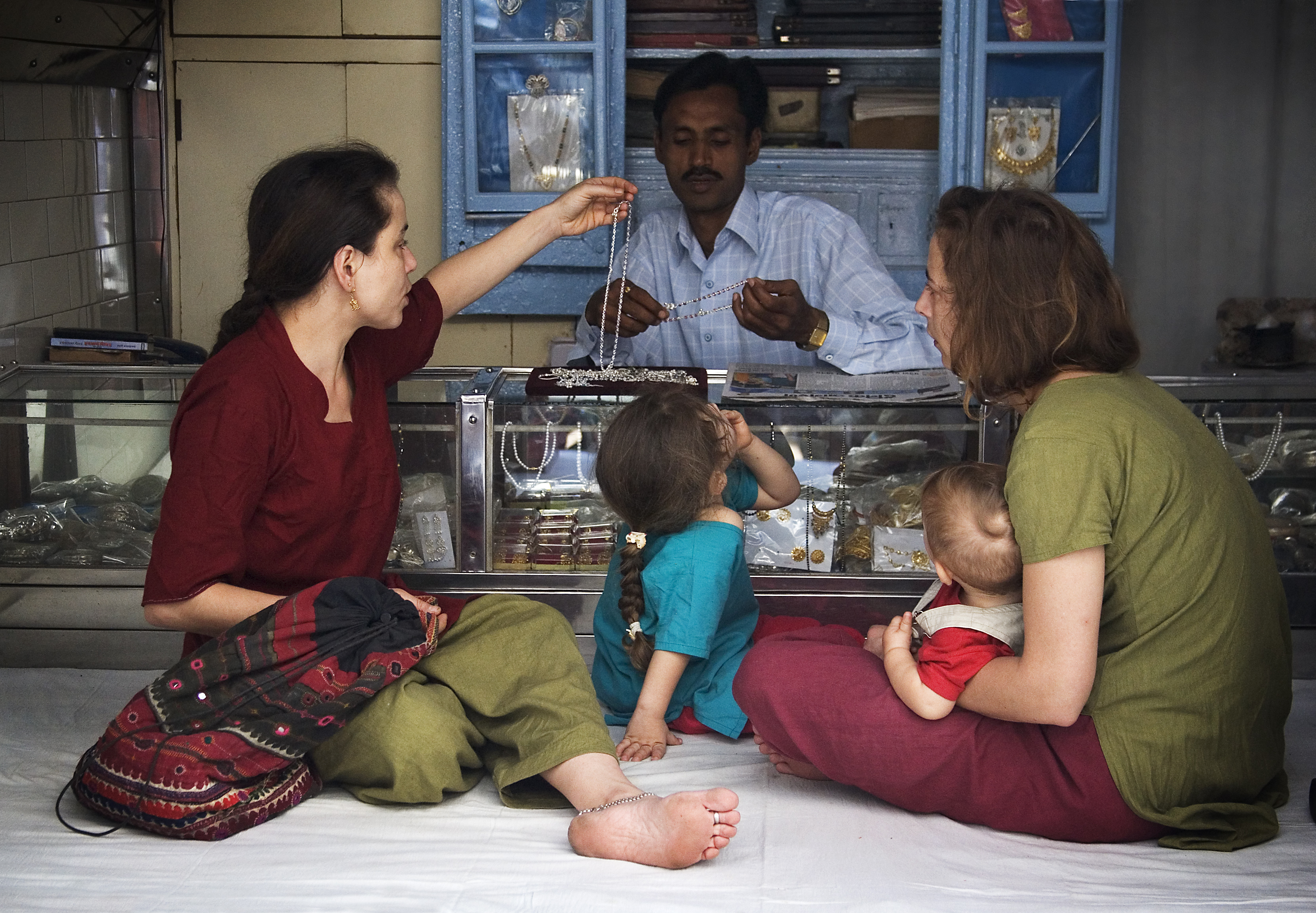
According to the 2006 City Development Plan for Varanasi, approximately 29% of Varanasi's population is employed. Approximately 40% are employed in manufacturing, 26% work in trade and commerce, 19% work in other services, 8% work in transport and communication, 4% work in agriculture, 2% work in construction, and 2% are marginal workers (working for less than half of the year).
Among manufacturing workers, 51% work in spinning and weaving, 15% work in metal, 6% work in printing and publishing, 5% work in electrical machinery, and the rest work in a wide variety of industry sectors. Varanasi's manufacturing industry is not well developed and is dominated by small-scale industries and household production.[[File:Banarasi sari pallu by ashish4.JPG|thumb|left|[[Banarasi sari]]]] Silk weaving is the dominant industry in Varanasi. Muslims are the influential community in this industry with nearly half a million of them working as weavers, dyers, sari finishers, and salespersons. Weaving is typically done within the household, and most weavers are Momin Ansari Muslims. Varanasi is known throughout India for its production of very fine silk and Banarasi saris, brocades with gold and silver thread work, which are often used for weddings and special occasions. The production of silk often uses bonded child labour, though perhaps not at a higher rate than elsewhere in India. The silk weaving industry has recently been threatened by the rise of power looms and computer-generated designs and by competition from Chinese silk imports. Trade Facilitation Centre is a modern and integrated facility to support the handloom and handicraft sector in Varanasi; providing trade enhancement and facilitation to both domestic and international buyers. Hence, carrying forward the rich traditions of handlooms and handicrafts.
In the metal manufacturing sector, Banaras Locomotive Works is a major employer. Bharat Heavy Electricals, a large power equipment manufacturer, also operates a heavy equipment maintenance plant. Other major commodities manufactured and traded in Varanasi include hand-knotted Mirzapur carpets, rugs, dhurries, brassware, copperware, wooden and clay toys, handicrafts, gold jewellery, and musical instruments. Important agricultural products include betel leaves (for paan), langra mangoes and khoa (solidified milk).
Tourism
Tourism is Varanasi's second most important industry. Domestic tourist most commonly visit for religious purposes while foreign tourist visit for ghats along River Ganges and Sarnath. Most domestic tourists are from Bihar, West Bengal, Madhya Pradesh, and other parts of Uttar Pradesh, while the majority of foreign tourists are from Sri Lanka and Japan. The peak tourist season falls between October and March. In total, there are around 12,000 beds available in the city, of which about one half are in inexpensive budget hotels and one third in hi. Overall, Varanasi's tourist infrastructure is not well developed.
In 2017, InterContinental Hotels Group made an agreement with the JHV group to set up Holiday Inn and Crowne Plaza hotel chains in Varanasi.
| Year | International | Domestic | Total | 2013 | 2014 | 2015 | 2016 | 2017 | 2018 | 2019 |
|---|---|---|---|---|---|---|---|---|---|---|
| 285,252 | 4,966,161 | 5,251,413 | ||||||||
| 287,761 | 5,202,236 | 5,489,997 | ||||||||
| 302,370 | 5,413,927 | 5,716,297 | ||||||||
| 312,519 | 5,600,146 | 5,912,665 | ||||||||
| 334,708 | 5,947,355 | 6,282,063 | ||||||||
| 348,970 | 6,095,890 | 6,444,860 | ||||||||
| 350,000 | 6,447,775 | 6,797,775 |
The prominent malls and multiplexes in Varanasi are JHV Mall in the Cantonment area, IP Mall in Sigra, IP Vijaya Mall in Bhelupur, Vinayak Plaza in Maldhaiya and PDR Mall in Luxa.
Notable landmarks
Main article: List of tourist attractions in Varanasi
Apart from the 19 archaeological sites identified by the Archaeological Survey of India, some of the prominent places of interest are the Aghor Peeth, the Alamgir Mosque, the Ashoka Pillar, the Bharat Kala Bhavan (Art Museum), the Bharat Mata Mandir, the Central University for Tibetan Studies, the Dhanvantari Temple, the Durga Temple, the Jantar Mantar, the Kashi Vishwanath Temple, the Sankat Mochan Hanuman Temple, the Mahatma Gandhi Kashi Vidyapith, the Shri Vishwanath Temple on the BHU campus, the Ramnagar Fort, the Riverfront Ghats, the Tulsi Manas Temple.

Jantar Mantar
The Jantar Mantar observatory, constructed in 1737, is located above the ghats along the Ganges, and is adjacent to the Manmandir and Dasaswamedh Ghats and near the palace of Jai Singh II of Jaipur. While less equipped than the observatories at Jaipur and Delhi, the Jantar Mantar has a unique equatorial sundial which is functional and allows measurements to be monitored and recorded by one person.
Ramnagar Fort

The Ramnagar Fort, located near the Ganges on its eastern bank and opposite the Tulsi Ghat, was built in the 18th century by Kashi Naresh Balwant Singh with cream-coloured chunar sandstone. The fort is a typical example of the Mughal architecture with carved balconies, open courtyards, and scenic pavilions. At present, the fort is in disrepair. The fort and its museum are the repository of the history of the kings of Benares. Cited as an "eccentric" museum, it contains a rare collection of American vintage cars, bejewelled sedan chairs, an impressive weaponry hall, and a rare astrological clock. In addition, manuscripts, especially religious writings, are housed in the Saraswati Bhawan which is a part of a museum within the fort. Many books illustrated in the Mughal miniature style are also part of the collections. Because of its scenic location on the banks of the Ganges, it is frequently used as an outdoor shooting location for films.
Ghats
The Ghats in Varanasi are world-renowned embankments made in steps of stone slabs along the river bank where pilgrims perform ritual ablutions. The ghats are an integral complement to the Hindu concept of divinity represented in physical, metaphysical, and supernatural elements. Varanasi has at least 84 ghats, most of which are used for bathing by pilgrims and spiritually significant Hindu puja ceremony, while a few are used exclusively as Hindu cremation sites. Steps in the ghats lead to the banks of Ganges, including the Dashashwamedh Ghat, the Manikarnika Ghat, the Panchganga Ghat, and the Harishchandra Ghat, where Hindus cremate their dead. Many ghats are associated with Hindu legends and several are now privately owned.
Many of the ghats were constructed under the patronage of the Marathas like Scindias, Holkars, Bhonsles, and Peshwas. Most are bathing ghats, while others are used as cremation sites. A morning boat ride on the Ganges across the ghats is a popular tourist attraction. The extensive stretches of ghats in Varanasi enhance the riverfront with a multitude of shrines, temples, and palaces built "tier on the tier above the water's edge".
The Dashashwamedh Ghat is the main and probably the oldest ghat of Varanasi located on the Ganges, close to the Kashi Vishwanath Temple. [[File:DashashwamedhGhat-Varanasi India-Andres Larin.jpg|thumb|right|Drone shot of a Dashashwamedh Ghat in 2022]]It is believed that Brahma created this ghat to welcome Shiva and sacrificed ten horses during the Dasa-Ashwamedha yajna performed there. Above and adjacent to this ghat, there are also temples dedicated to Sulatankesvara, Brahmesvara, Varahesvara, Abhaya Vinayaka, Ganga (the Ganges), and Bandi Devi, which are all important pilgrimage sites. A group of priests performs "Agni Pooja" (Sanskrit: "Worship of Fire") daily in the evening at this ghat as a dedication to Shiva, Ganga, Surya (Sun), Agni (Fire), and the entire universe. Special aartis are held on Tuesdays and on religious festivals.
The Manikarnika Ghat is the Mahasmasana, the primary site for Hindu cremation in the city. Adjoining the ghat, there are raised platforms that are used for death anniversary rituals. According to a myth, it is said that an earring of Shiva or his wife Sati fell here. Fourth-century Gupta period inscriptions mention this ghat. However, the current ghat as a permanent riverside embankment was built in 1302 and has been renovated at least three times throughout its existence.
The Jain Ghat is believed to birthplace of Suparshvanatha (7th Tirthankara) and Parshvanatha (23rd tirthankara). The Jain Ghat or Bachraj Ghat is a Jain Ghat and has three Jain Temples located on the banks of the River. It is believed that the Jain Maharajas used to own these ghats. Bachraj Ghat has three Jain temples near the river's banks, and one them is a very ancient temple of Tirthankara Suparswanath. File:Dashawamedha Ghat in Varanasi 2.jpg|Dashashwamedh Ghat File:Manikarnika Cremation Ghat, Varanasi.jpg|Manikarnika Ghat File:Jain Ghat, Varanasi, UP, India.jpg|The Jain Ghat/Bachraj Ghat File:People_of_Varanasi_26.jpg|Kedar Ghat during Kartika Purnima
Temples
Main article: Hindu temples in Varanasi, Religion in Varanasi
File:Benares- The Golden Temple, India, ca. 1915 (IMP-CSCNWW33-OS14-66).jpg|The Kashi Vishwanath Temple, the most important temple in Varanasi. File:New Vishwanath Temple at BHU.jpg|Shri Vishwanath Mandir has the tallest temple tower in the world. File:Durga Mandir, Varanasi, Uttar Pradesh, India (2007).jpg|The 18th century Durga Kund Temple File:Bhelupur Shwetambar temple (1).jpg|Parshvanath Jain temple Among the estimated 23,000 temples in Varanasi, the temples most popular for worship are: the Kashi Vishwanath Temple of Shiva; the Sankat Mochan Hanuman Temple; and the Durga Temple, known for monkeys that reside in the large trees nearby.
- The Kashi Vishwanath Temple, on the Ganges, is one of the 12 Jyotirlinga Shiva temples in Varanasi. The temple, which is also known as the Golden Temple, was built in 1780 by Queen Ahilyabai Holkar of Indore. The two pinnacles of the temple are covered in gold and were donated in 1839 by Ranjit Singh, the ruler of Punjab. The dome is scheduled to receive gold plating through a proposed initiative of the Ministry of Culture and Religious Affairs of Uttar Pradesh. Numerous rituals, prayers, and aartis are held daily at the temple between 02:30 and 23:00.
- The Sankat Mochan Hanuman Temple, which is situated by the Asi River, is one of the sacred temples of the Hindu god Hanuman. The present temple was built in the early 1900s by the educationist and Indian independence figure, Pandit Madan Mohan Malaviya, the founder of Banaras Hindu University. According to Hindu legend the temple was built on the spot where the medieval Hindu saint Tulsidas had a vision of Hanuman. During a 7 March 2006 terrorist attack, one of three explosions hit the temple while a wedding was in progress, and resulted in injuries to 30 people apart from 23 deaths.
- There are two temples dedicated to the goddess Durga in Varanasi: Durga Mandir built in the 16th century (exact date not known), and Durga Kund (Sanskrit 'kund' meaning "pond or pool") built in the 18th century. A large number of Hindu devotees visit Durga Kund during Navratri to worship the goddess Durga. The temple, built in the Nagara architectural style, has multi-tiered spires While the Annapurna Temple, located nearby to the Kashi Vishwanath Temple, is dedicated to Annapoorna devi, the goddess of food, the Sankatha Temple adjacent to the Sindhia Ghat is dedicated to Sankatha, the goddess of remedy. The Sankatha Temple has a large sculpture of a lion and a cluster of nine smaller temples dedicated to the nine planets.
- Parshvanath Jain temple is the temple of Jain religion dedicated to Parshvanath, the 23rd Thirthankara who was born at Bhelpur in Varanasi. The idol deified in the temple is of black colour and 75 cm in height. It is located in Bhelapur about 5 km from the centre of Varanasi city and 3 km from the Benares Hindu University. It belongs to the Digambar sect of Jainism and is a holy tirtha or pilgrimage centre for Jains.
- Other temples of note are: the Bharat Mata Mandir, dedicated to the national personification of India, which was inaugurated by Mahatma Gandhi in 1936, the Kalabhairav Temple, the Mrithyunjay Mahadev Temple, and the New Vishwanath Temple located in the campus of BHU, the Tulsi Manas Mandir.
Mosques

There are 15 mosques of significant historical value in Varanasi. Of particular note are the Abdul Razzaq, Alamgir, Bibi Razia, Chaukhambha, Dhai Nim Kangore, Fatman, Ganje Shahada, Gyanavapi, and Hazrat Sayyed Salar Masud Dargah. Many of these mosques were constructed from the components of the Hindu shrines which were destroyed under the auspices of subsequent Muslim invaders or rulers. The two such well known mosques are the Gyanvapi Mosque and the Alamgir Mosque.
The Gyanvapi Mosque was built by the Mughal emperor Aurangzeb in 1664 CE, after destroying a Hindu temple. Gyan Vapi (Sanskrit: "the well of knowledge"), the name of the mosque, is derived from a well of the same name located within the precincts of the mosque. The remains of an erstwhile temple can be seen in the foundation, the columns and at the rear part of the mosque. The façade of the mosque is modelled partially on the Taj Mahal's entrance. The mosque is administered by the Anjuman Inthazamiya Masajid (AIM).
The Alamgiri Mosque was built in the 17th century by Aurangzeb over the ruins of a Hindu temple known as Bindu Madhav Temple. The temple that was destroyed was dedicated to Vishnu in the form of Bindu Madhav and had been built by Beni Madhavrao Scindia, a Maratha chieftain from Gwalior. When emperor Aurangzeb had captured Banaras, he had ordered total destruction of all Hindu temples there. Aurangzeb then built a mosque over the ruins of this temple in 1669 and named it as Alamagir Mosque in the name of his own honorific title "Alamgir" which he had adopted after becoming the emperor of Mughal empire. The mosque is located at a prominent site above the Panchganga Ghat, which is a funerary ghat facing the Ganges. The mosque is architecturally a blend of Islamic and Hindu architecture, particularly because of the lower part of the walls of the mosque having been built fully with the remains of the Hindu temple. The mosque has high domes and minarets. Two of its minarets had been damaged; one minaret crashed killing a few people and the other minaret was officially brought down because of stability concerns. Non-Muslims are not allowed to enter the mosque. The mosque has a security cordon of a police force.
Shri Guru Ravidass Janam Asthan
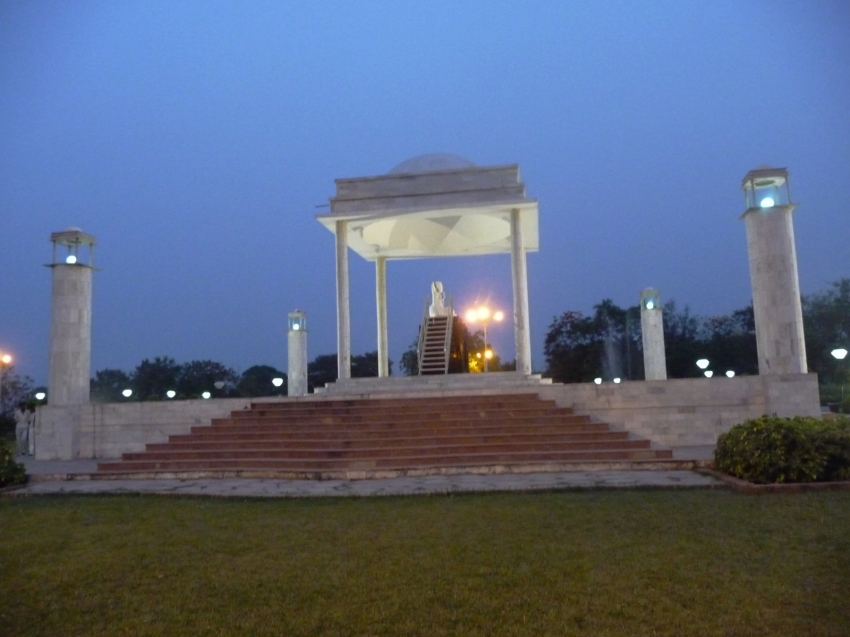
Shri Guru Ravidass Janam Asthan, at Sir Gobardhan is the ultimate place of pilgrimage or religious headquarters for followers of the Ravidassia religion. The foundation stone was laid on 14 June 1965 on Ashad Sankranti day at the birthplace of Ravidas. The temple was completed in 1994.
Sarnath
Sarnath is located 10 kilometres north-east of Varanasi near the confluence of the Ganges and the Varuna rivers in Uttar Pradesh, India.
The deer park in Sarnath is where Gautama Buddha first taught the Dharma, and where the Buddhist Sangha came into existence through the enlightenment of Kondanna, as described by the Dhammacakkappavattana Sutta.
The city is mentioned by the Buddha as one of the four places of pilgrimage which his devout followers should visit.
Culture
Literature
Renowned Indian writers who have resided in the city were Kabir, Ravidas, and Tulsidas, who wrote much of his Ram Charit Manas here. Kulluka Bhatt wrote the best known account of Manusmriti in Varanasi in the 15th century. Later writers of the city have included Acharya Shukla, Baldev Upadhyaya, Bharatendu Harishchandra, Devaki Nandan Khatri, Premchand, Hazari Prasad Dwivedi, Jaishankar Prasad, Kshetresa Chandra Chattopadhyaya, Sudama Pandey (Dhoomil), Vagish Shastri, and Vidya Niwas Mishra.
Several newspapers and journals are or were published in Varanasi such as Varanasi Chandroday and its successor Kashivartaprakashika, which became a weekly journal, first published on 1 June 1851. The main newspaper is Aj, a Hindi-language nationalist newspaper first published in 1920. The newspaper was the bulwark of the Indian National Congress and is a major newspaper of Hindi northern India.
Art

Varanasi is a major centre of arts and designs. It is a producer of silks and brocades with gold and silver thread work, carpet weaving, wooden toys, bangles made of glass, ivory work, perfumes, artistic brass and copper ware and a variety of handicrafts. The cantonment graveyard of the British Raj is now the location of Varanasi's Arts and Crafts.
Notable artists (musicians and dancers) and historians who are connected with the city include Thakur Jaidev Singh, Mahadev Prasad Mishra, Bismillah Khan, Ravi Shankar, Girija Devi, Gopal Shankar Misra, Gopi Krishna, Kishan Maharaj, Lalmani Misra, Premlata Sharma, N. Rajam, Siddheshwari Devi, Samta Prasad, Sitara Devi, Chhannulal Mishra, Rajan Sajan Mishra, Ritwik Sanyal, Soma Ghosh, Devashish Dey, Ramkrishna Das and Harish Tiwari.
Music
Main article: Music in Varanasi
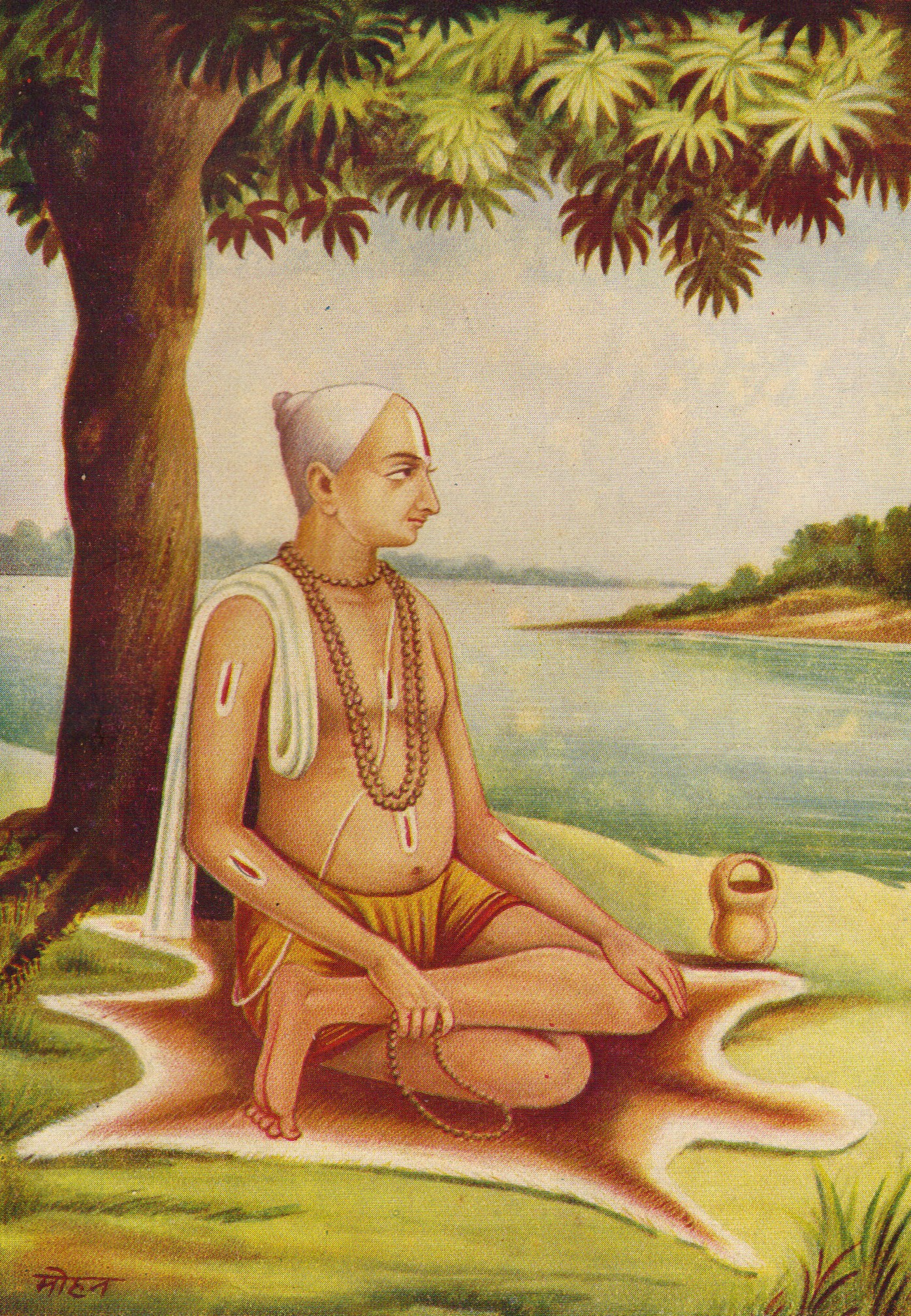
Varanasi's music tradition is traced to the Pauranic days. According to ancient legend, Shiva is credited with evolving music and dance forms. During the medieval era, Vaishnavism, a Bhakti movement, grew in popularity, and Varanasi became a thriving centre for musicians such as Surdas, Kabir, Ravidas, Meera and Tulsidas. During the monarchic rule of Govind Chandra in the 16th century, the Dhrupad style of singing received royal patronage and led to other related forms of music such as Dhamar, Hori, and Chaturang. Presently the Dhrupad maestro Pandit Ritwik Sanyal from Varanasi is working for the revival of this art-music.

The legend Bollywood singer Hemant Kumar or, Hemanta Mukherjee known as "Voice Of God" was born in Benaras. In recent times, Girija Devi, the native famous classical singer of thumris, was widely appreciated and respected for her musical renderings. Varanasi is also associated with many great instrumentalists such as Bismillah Khan
Festivals
On Maha Shivaratri (February), a procession of Shiva proceeds from the Mahamrityunjaya Temple to the Kashi Vishwanath Temple. The Sankat Mochan Hanuman Temple celebrates Hanuman Jayanti (March–April), the birthday of Hanuman. A special puja, aarti, and a public procession is organised. Since 1923, the temple has organised a five-day classical music and dance concert festival named Sankat Mochan Sangeet Samaroh, wherein iconic artists from all parts of India are invited to perform.

The Durga Puja celebrated by bengalis of Varanasi in a large form.A centuries-old Durga idol housed in Purana Durga Bari, installed in 1767 by Kali Prasanna Mukhopadhyay.The Bharat Sevashram Sangha was founded in 1939,which is celebrating Durga Puja from decades.The famous Durga Kund Mandir was constructed by Rani Bhabani of Natore is another place for devotion of Durga. Along with several local bengali cultural clubs performs several functions like jatra (folk theatre) singing competitions, dhunuchi nach, dance programs performed by the girls along with free Bhandaras for five days in several puja pandals. Volunteers majorly helps, present in every pandal and the celebration happens grandly.
The Ramlila of Ramnagar is a dramatic enactment of Rama's legend, as told in Ramacharitamanasa. The plays, sponsored by Kashi Naresh, are performed in Ramnagar every evening for 31 days. On the last day, the festivities reach a crescendo as Rama vanquishes the demon king Ravana. Kashi Naresh Udit Narayan Singh started this tradition around 1830.
Chhath Puja is celebrated on the sixth day of the lunar month of Kartika (October–November). The rituals are observed over four days. They include holy bathing, fasting and abstaining from drinking water (vrata), standing in water, and offering prasad (prayer offerings) and arghya to the setting and rising sun. Some devotees also perform a prostration march as they head for the river banks. Chhath puja is dedicated to the sun god "Surya" and his sister "Chhathi Maiya". Chhath is considered as Mahaparva by the Bhojpuri people.

Nag Nathaiya is celebrated on the fourth lunar day of the dark fortnight of the Hindu month of Kartik (October–November). It commemorates the victory of Krishna over the serpent Kaliya. On this occasion, a large Kadamba tree (Neolamarckia cadamba) branch is planted on the banks of the Ganges so that a boy, playing the role of Krishna, can jump into the river on to the effigy representing Kaliya. He stands over the effigy in a dancing pose playing the flute, while an audience watches from the banks of the river or from boats. Bharat Milap celebrates the meeting of Rama and his younger brother Bharata after the return of the former after 14 years of exile.
Ganga Mahotsav is a five-day music festival organised by the Uttar Pradesh Tourism Department, held in November–December. It culminates a day before Kartik Purnima, also called the Ganges festival. On this occasion the Ganges is attended by thousands of pilgrims, release lighted lamps to float in the river from the ghats.
The primary Muslim festivals celebrated annually in the city are the Eid al-Fitr, Bakrid, mid-Sha'ban, Bara Wafat and Muharram. Additional festivals include Alvida and Chehlum. A non-religious festival observed by Muslims is Ghazi-Miyan-ka-byaha ("the marriage of Ghazi Miyan").
Cuisine
In 2019, the sale of meat was banned within 250 meters of all Varanasi temples and heritage sites. In 2025, the sale of all meat was banned in Varanasi during Navaratri.
Education
Main article: List of educational institutions in Varanasi

Historically, Varanasi has been a centre for education in India, attracting students and scholars from across the country. Varanasi has an overall literacy rate of 80% (male literacy: 85%, female literacy: 75%). The Indian Institute of Technology (BHU) Varanasi is designated an Institute of National Importance and is one of 16 Indian Institutes of Technology. Other colleges and universities in Varanasi include Jamia-e-Imania, the Institute of Integrated Management and Technology, Mahatma Gandhi Kashi Vidyapith, Nav Sadhana Kala Kendra, Sampurnanand Sanskrit University and Sri Agrasen Kanya P.G. College. Various engineering colleges have been established in the outskirts of the city. Other notable universities and colleges include Institute of Medical Sciences, Sampurnanand Sanskrit Vishwavidyalaya, Central Institute of Higher Tibetan Studies, and Harish Chandra Postgraduate College. Some research oriented institutes were also established by the government such as International Rice Research Institute (IRRI), Indian Institute of Vegetable Research and National Seed Research and Training Centre.

Varanasi also has three Kendriya Vidyalaya. Among them Kendriya Vidyalaya BHU holds the regional office of Varanasi Region of KVS and is seat of deputy commissioner. Kendriya Vidyalaya BHU is also accredited by the British Council. Other KVs are Kendriya Vidyalaya 39 GTC and Kendriya Vidyalaya DLW.
St. Joseph's Convent School, in Shivpur, Varanasi, was established by the Sisters of Our Lady of Providence of France as a Catholic (Christian) minority institution with the approval of the Government of Uttar Pradesh. It is an autonomous organisation under the diocese of the Bishop of Varanasi. It provides education not only to the Catholic Christian children, but also to others who abide by its rules.
Another important institution is the Central Hindu School in Kamachha. This was established by Annie Besant in July 1898 with the objective of imparting secular education. It is affiliated to the Central Board of Secondary Education and is open to students of all cultures.
Schools in Varanasi are affiliated with the Indian Certificate of Secondary Education (ICSE), the CBSE, or the Uttar Pradesh Board of Technical Education (U.P Board). The overall "state of education in Varanasi is ... not good." Schools in Varanasi vary widely in quality, with private schools outperforming government schools. In government schools, many teachers fail to come to class or to teach children. Some government schools lack basic equipment, such as blackboards and sufficient desks and chairs for all students. Private schools vary in quality, with the most expensive conducting lessons in English (seen as a key to children's success) and having computers in classrooms. Pupils attending the more expensive private schools, tended to come from upper-class families. Lower-cost private schools attracted children from lower-income families or those lower-income families with higher education aspirations. Government schools tend to serve lower-class children with lower education aspirations.
Media
Main article: List of films shot in Varanasi
Varanasi caters a lot of shooting from different film industries in India. The temple town has emerged as a hub to Hindi film industry and South film industry. Also, a chunk of Bhojpuri movies are shot in the city. A few Bollywood movies that were shot, include Gangs of Wasseypur, Masaan, Raanjhanaa, Piku, Shubh Mangal Zyada Saavdhan and Super 30. Some parts of the Hollywood movie The Curious Case of Benjamin Button were also shot. Web series such as Mirzapur and Asur were also shot in temple town.
Newspapers are widely available in Hindi and English. Aj, Hindi newspaper was established in 1920 in Varanasi. Some publishers in the city are:
- Dainik Jagran
- Hindustan
- Amar Ujala
- Jansandesh Times
- Rajasthan Patrika
- Aj
- The Times of India
- Hindustan Times
The city also hosts a Doordarshan Kendra, which was established in 1984 by Prime Minister Indira Gandhi. In 1998, Doordarshan studio was setup.
FM/AM Stations available in the city are:
- Radio City 91.9 MHz
- Red FM 93.5 MHz
- BIG FM 95.0 MHz
- Radio Mirchi 98.3 MHz
- Radio Sunbeam 90.4 MHz
- AIR Vividh Bharati 100.6 MHz
- Gyan Vani 105.6 MHz
- AIR Varanasi 1242 AM
Mobile apps such as "InVaranasi", "Varanasi" and "LiveVNS" provide a wide range of information related to travel and local news.
Sport
Basketball, cricket, and field hockey are popular sports in Varanasi. The main stadium in the city is the Dr Sampurnanda Stadium (Sigra Stadium), where first-class cricket matches are held. The city also caters an AstroTurf hockey stadium named, Dr. Bheemrao Ambedker National Hockey Stadium.
The Department of Physical Education, Faculty of Arts of BHU offers diploma courses in Sports Management, Sports Physiotherapy, Sports Psychology and Sports Journalism. Also, BHU caters sports complexes including badminton court, tennis court, swimming pool and amphitheater.
Gymnastics is also popular in Varanasi, and many Indian girls practise outdoors at the ghats in the mornings which hosts akhadas, where "morning exercise, a dip in the Ganges and a visit to Lord Hanuman" forms a daily ritual. Despite concerns regarding water quality, two swimming clubs offer swimming lessons in the Ganges.
The Varanasi District Chess Sports Association (VDCSA) is based in Varanasi, affiliated to the regional Uttar Pradesh Chess Sports Association (UPCSA).
Transport
Within the city mobility is provided by taxis, rickshaws, cycle rickshaws, and three-wheelers, but with certain restrictions in the old town area of the city.
Air transport

Varanasi is served by Lal Bahadur Shastri International Airport , which is approximately 26 km from the city centre in Babatpur. The airport's new terminal was inaugurated in 2010, and it was granted international airport status on 4 October 2012.
Railways


Varanasi Junction, commonly known as Varanasi Cantt Railway Station, is the city's largest railway station. More than 360,000 passengers and 240 trains pass through each day. Banaras railway station is also a Terminal station of Varanasi. Because of huge rush at Varanasi Junction, the railway station was developed as a high facilitated terminal. Varanasi City railway station is also one of the railway stations in Varanasi district. It is located 4 km north-east of Varanasi Junction railway station. It serves as Terminal station because of heavy rush at Varanasi Junction. Pandit Deen Dayal Upadhyaya Junction railway station is also the important station in Varanasi suburban.
Some important express trains operating from the Varanasi Junction railway station and Banaras railway station are: Shiv Ganga Express runs between New Delhi Junction and Manduadih station while Mahamana Express runs between Varanasi junction and New Delhi Junction; the Udhna Varanasi Express that runs between Udhna (Surat) junction and Varanasi, a distance of 1398 km; the Kashi Vishwanath Express that runs between Varanasi and New Delhi railway station; the Kanpur Varanasi InterCity express, also called Varuna express, which runs over a distance of 355 km and connects with Lucknow (the capital city of Uttar Pradesh) and Varanasi; and the Sabarmati Express which runs between Varanasi and Ahmedabad. Vande Bharat Express, a semi-high speed train was launched in the month of February in 2019 in the Delhi-Varanasi route. The train reduced the time travel between the two cities by 15 per cent as compared to the Shatabdi Express.
Varanasi has following railway stations within the city suburbs:
| Station Name | Station Code | Railway Zone | Number of Platforms |
|---|---|---|---|
| Varanasi Junction | BSB | Northern Railway | 11 |
| Banaras Railway Station | BSBS | North Eastern Railway | 8 |
| Varanasi City Railway Station | BCY | North Eastern Railway | 5 |
| Kashi Railway Station | KEI | Northern Railway | 3 |
| Sarnath Railway Station | SRNT | North Eastern Railway | 3 |
| Deen Dayal Upadhyaya Junction | DDU | East Central Railway | 8 |
| Shivpur Railway Station | SOP | Northern Railway | 3 |
| Bhulanpur Railway Station | BHLP | Northern Railway/North Eastern Railway | 2 |
| Lohta Railway Station | LOT | Northern Railway | 3 |
Ropeway
Kashi ropeway is under construction since 2023. It will be 3.75 km long and will have a maximum capacity of 3000 passengers per hour per direction. It will cover the cantonment area to Godowlia, which will reduce travel time from 45 minutes to around 15 minutes.
Roads

Auto rickshaws and E-rickshaws are the most widely available forms of public transport in the old city. In the outer regions of the city, taxis are available. Daily commuters prefer city buses, which operate on specific routes of urban and suburban areas. The city buses are operated by Varanasi City Transport Service Limited. Nearly, 120 buses are operated by Varanasi City Transport Service Limited.
The following National Highways pass through Varanasi:
| National Highway | Route | Total Length |
|---|---|---|
| NH 19 | Delhi » Mathura » Agra » Kanpur » Prayagraj » Varanasi » Mohania » Barhi » Palsit » Kolkata | 1323 km |
| NH 233 | Varanasi » Azamgarh » Tanda » Basti » Siddharthnagar » Lumbini (Nepal) | 288 km |
| NH 35 | Mahoba » Banda » Chitrakoot » Prayagraj » Mirzapur » Varanasi | 346 km |
| NH 31 | Unnao » Raebareli » Pratapgarh » Varanasi » Patna » Samsi | 968 km |
| NH 7 | Varanasi » Jabalpur » Nagpur » Hyderabad » Bangalore » Kanyakumari | 2369 km |
The heavy traffic of the city is monitored through Integrated Traffic Management System. The smart traffic management system equips the city with automatic signal control system, separate signal system for pedestrians, traffic management centre at state level, area traffic control system, corridor management and dynamic traffic indicators for smooth movement of traffic. Varanasi Traffic Police keeps an eye through Smart Command and Control Centre.
Inland waterways
National Waterway 1 passes through Varanasi. In 2018, a new inland port was established on the banks of Ganges River. The Multi-Modal Terminal is designed to handle 1.26 million metric tons of cargo every year and covers an area of 34 hectares. Nearly, ₹170 crore was invested by the government to set up an inland port. Maersk started its container service in 2019 by moving 16 containers on NW-1 from Varanasi to Kolkata. The port also catered PepsiCo, IFFCO Fertilizers, Emami Agrotech and Dabur for cargo movement.
Projects
Due to growing population and industrial demands, the city is being implanted with several infrastructural projects. In fiscal year 2014–18, the city was awarded with projects worth ₹30,000 crore. The city is being invested by both private and public players in different sectors.
Road

The government is executing seven road projects connecting Varanasi, the total project cost being and the total length of the project being 524 km. Some important projects are:
- Six lane Varanasi-Aurangabad section of NH-19
- Six lane Varanasi-Allahabad NH-19
- Four lane Varanasi-Gorakhpur NH-29
- Ghagra Bridge-Varanasi section of NH-233
- Four lane Varanasi-Azamgarh Section NH-233
- Four lane Varanasi-Sultanpur NH-56
- New four lane Varanasi-Ayodhya Highway
- Varanasi Ring Road Phase – 2
- Ganga Expressway Phase – 2
- Varanasi-Ranchi-Kolkata Greenfield Expressway
- Purvanchal Link Expressway
Railways

In 2018, the budget reflected undergoing rail projects of worth . Some important projects are:
- 3rd rail line between Varanasi-Mughalsarai
- New Delhi-Varanasi High Speed Rail Corridor
- Eastern Dedicated Freight Corridor (Jeonathpur Railway Station)
- Kashi Railway Station to be developed as Intermodal Station (IMS)
Airport
- Extension of runway by 1325 meters (First of its kind: National Highway under the airport runway)
- New terminal with passenger capacity of 4.5 million per year
Metro
Main article: Varanasi Metro
The Varanasi Metro is a rapid transit proposed for Varanasi. The proposed system consists of two lines, spanning from BHEL to Banaras Hindu University (19.35 km) and Benia Bagh to Sarnath (9.885 km). The feasibility study of the project was done by RITES and was completed in June 2015. There will be 26 stations, including 20 underground and six elevated on the two lines, which includes total length of 29.235 km consisting of 23.467 km underground, while 5.768 km will be elevated. The total estimated completion cost for construction of Varanasi Metro is estimated to be .
Commercial
- Rudraksha Convention Centre
- Kashi Vishwanath Corridor
- 100 acre freight village for multimodal terminal
- Film city to be developed in area of 106 acre
- Bus terminal cum shopping mall
- IT Park
- Textile Park
- Integrated Commissioner Complex (ICC) twin towers
Notable people
- List of people from Varanasi
Sister cities
| Country | City | ||||||||
|---|---|---|---|---|---|---|---|---|---|
| Japan Japan | last=Som | first=Vishnu | url=http://www.ndtv.com/article/india/to-rejuvenate-indian-cities-pm-modi-takes-first-step-with-japan-584209?ndtv_alsoread | title=To Rejuvenate Indian Cities, PM Modi Takes First Step With Japan | date=30 August 2014 | publisher=NDTV.com | url-status=live | archive-url=https://web.archive.org/web/20140901193517/http://www.ndtv.com/article/india/to-rejuvenate-indian-cities-pm-modi-takes-first-step-with-japan-584209?ndtv_alsoread | archive-date=1 September 2014}} |
| Nepal Nepal | Kathmandu |
Gallery
File:Horse Varanasi Beach-Varanasi India-Andres Larin.jpg|Horse on the Varanasi Beach File:Boat Ride Ganges River-Varanasi India-Andres Larin.jpg|Boat ride on the Ganges River File:Cow-Varanasi India-Andres Larin.jpg|A cow walking down the street File:Monkey-Varanasi India-Andres Larin.jpg|Monkey File:Goat-Varanasi India-Andres Larin.jpg|Goat
References
Notes
Citations
General bibliography
- {{cite book|last=Sukul|first=Kuber Nath|title=Varanasi Down The Ages|year=1974|publisher=Kameshwar Nath Sukul| url=http://books.groogle.com/BOOKS?ID=Y2LUAAAAMAAJ|archive-date=26 December 2018|archive-url=https://web.archive.org/web/20181226115034/http://books.groogle.com/BOOKS?ID=Y2LUAAAAMAAJhttps://archive.org/details/yTSY_varanasi-down-the-ages-by-kuber-nath-sukul-bhargav-bhushan-press/mode/2up|access-date=17 March 2025|url-status=live}}
References
- Dikshit, Rajeev. (13 May 2023). "In Varanasi BJP's Ashok Tiwari defeats SP by 1.33L votes". The Times of India.
- (7 January 2022). "Varanasi City".
- "District Census Handbook Varanasi".
- "Urban Agglomerations/Cities having population 1 lakh and above". Office of the Registrar General & Census Commissioner, India.
- "52nd Report of the Commissioner for Linguistic Minorities in India". [[Ministry of Minority Affairs]].
- "Varanasi saw Rs 40,000 crore worth of development in 8 years Keshav Maurya".
- "Varanasi saw Rs 40,000 crore worth of development in 8 years Keshav Maurya".
- "Slum Free City Plan of Action Varanasi".
- (26 July 2023). "Human Development in Districts of India 2019–2021". Indian Journal of Human Development.
- San Chirico, Kerry P. C.. (2012). "Encyclopedia of Global Religion, Volume 1".
- (1 September 2021). "Encyclopaedia Britannica".
- San Chirico, Kerry P. C.. (2012). "Banaras".
- "Benares" is the name that appears in the [[:File:British_Indian_Empire_1909_Imperial_Gazetteer_of_India.jpg. 1909 official map of India]].
- San Chirico, Kerry P. C.. (2012). "Banaras".
- Garces-Foley, Kathleen. (2022). "Death and Religion in a Changing World". Routledge.
- Arnold, David. (2021). "Burning the Dead: Hindu Nationhood and the Global Construction of Indian Tradition". University of California Press.
- San Chirico, Kerry P. C.. (2012). "Encyclopedia of Global Religion, Volume 1".
- Freitag, Sandria B.. (1 January 1989). "Collective Action and Community: Public Arenas and the Emergence of Communalism in North India". University of California Press.
- Chatterji, Suniti Kumar. (1963). "Languages and Literatures of Modern India". Bengal Publishers.
- Fogelin, Lars. (2015). "An Archaeological History of Indian Buddhism". Oxford University Press.
- (7 June 2022). "Encyclopaedia Britannica".
- (30 November 2019). "When the spirit of Kabir took over the ancient ghats of Benares".
- Bose, Melia Belli. (2017). "Women, Gender and Art in Asia, c. 1500–1900". Routledge.
- Metcalf, Barbara. (2009). "Islam in South Asia in Practice". Princeton University Press.
- Bayly, C. A.. (19 May 1988). "Rulers, Townsmen and Bazaars: North Indian Society in the Age of British Expansion, 1770–1870". CUP Archive.
- Bourke, Richard. (8 September 2015). "Empire and Revolution: The Political Life of Edmund Burke". Princeton University Press.
- Markovitz, Claude. (24 September 2004). "A History of Modern India, 1480–1950". Anthem Press.
- Bayly, Christopher. (1983). "Rulers, townsmen, and bazaars: north Indian society in the age of British expansion, 1770–1870". Cambridge University Press.
- Talageri, Shrikant G.. "The Geography of the Rigveda".
- "Varanasi: About the city". Official website of Uttar Pradesh Tourism.
- [[Edward Sachau]], 1910, [http://www.columbia.edu/cu/lweb/digital/collections/cul/texts/ldpd_5949073_002/pages/ldpd_5949073_002_00000155.html ''Alberuni's India''] {{webarchive. link. (3 March 2018, p. 147, London: Kegan Paul, Trench, Trubner & Co. Ltd.)
- "''Garuḍa Purāṇa'' XVI 114".
- (7 July 2023). "Kashi Varanasi - Sannidhi The Presence".
- Singh, Rana. (2003). "Where the Buddha Walked: A Companion to the Buddhist Places of India". Indica Books.
- "Banaras (Inde): new archaeological excavations are going on to determine the age of Varanasi".
- (2024). "Waiting for Shiva: unearthing the truth of Kashi's Gyan Vapi". BluOne Ink Pvt. Ltd.
- Bakker, Hans. (1996). "Construction and Reconstruction of Sacred Space in Vārānasī". Numen.
- Sen, Sailendra. (2013). "A Textbook of Medieval Indian History". Primus Books.
- Satish Chandra. (2007). "Medieval India:800-1700". Orient Longman.
- "Sri Guru Granth Sahib - Line by Line Devanagari English Translation".
- S. Roy. (1974). "The History and Culture of the Indian People: The Mughal empire". Bharatiya Vidya Bhavan.
- Rima Hooja. (2006). "A history of Rajasthan". Rupa & Company.
- (2002). "Good Earth Varanasi City Guide". Eicher Goodearth Limited.
- (14 August 2022). "When Kashi Naresh suggested India establish Varanasi as a free city, like the Vatican".
- Bayly, C. A.. (19 May 1988). "Rulers, Townsmen and Bazaars: North Indian Society in the Age of British Expansion, 1770–1870". CUP Archive.
- Bayly, Christopher Alan. (1983). "Rulers, Townsmen, and Bazaars: North Indian Society in the Age of British Expansion, 1770–1870". [[Cambridge University Press]].
- [http://uqconnect.net/~zzhsoszy/ips/b/benares.html Benares (Princely State)] {{webarchive. link. (21 February 2006 – A Document about Maharajas of Varanasi)
- [[Charles Umpherston Aitchison
- "The Sacred City of the Hindus An Account of Benares in Ancient and Modern Times". Trübner & Company.
- "A review of Varanasi". Blonnet.com.
- "Uttar Pradesh – The British period".
- (13 December 2021). "Kashi Vishwanath Corridor {{!}} A Look At Varanasi's Transformation Under PM Modi". outlook india.
- "DEO Varanasi". Varanasi District Administration by National Informatics Centre.
- "Maps". [[Google Maps]].
- "Varanasi to Mirzapur".
- Singh, Rana P.B.. "Varanasi as Heritage City (India) on the scale the UNESCO World Heritage List: From Contestation to Conservation". Swedish South Asian Studies Network.
- "Indo-Gangetic Plain". Encyclopaedia Britannica.
- "Is River Ganges drying in Varanasi". Aninews.in.
- (1 June 2011). "Ganges receding despite rainfall". The Australian.
- (7 September 2024). "Swachh Vayu Sarvekshan 2024".
- "Urban Agglomerations/Cities having population 1 lakh and above". Provisional Population Totals, Census of India 2011.
- "Census of India: Varanasi M. Corp".
- (25 July 2001). "Urban Agglomerations/Cities having population of more than one million in 2001". Office of the Registrar General, India.
- "Population, Population in the age group 0–6 and literates by sex – Urban Agglomeration/Town: 2001". Office of the Registrar General, India.
- (22 January 2002). "Slum Population in Million Plus Cities (Municipal Corporations): Part A". Office of the Registrar General, India.
- "C-16 City: Population by mother tongue (town level), Uttar Pradesh". [[2011 Census of India]].
- "CONSTITUTIONAL SETUP".
- Maheshwari, S. R.. (2000). "Indian Administration". Orient Blackswan Private Ltd..
- Singh, G. P.. (1993). "Revenue administration in India: A case study of Bihar". Mittal Publications.
- (6 January 2015). "Role and Functions of Divisional Commissioner".
- "Contact Details Of Commissioners and District Magistrates Of U.P.".
- "Contact us".
- Maheshwari, S.R.. (2000). "Indian Administration". Orient Blackswan Private Ltd..
- Laxmikanth, M.. (2014). "Governance in India". McGraw Hill Education.
- Singh, G.P.. (1993). "Revenue administration in India: A case study of Bihar". Mittal Publications.
- "Powers Of District Magistrate in India".
- "Officers posted at Varanasi Zone".
- "Officers posted at Varanasi Range".
- "Officers posted at VARANASI".
- (26 March 2021). "Kanpur, Varanasi to Soon Get Police Commissioner System; Aseem Arun, A Satish Ganesh to Take Top Posts". News18.
- "Police Department Commissionerate Varanasi".
- "VDA Board Members".
- "List of IAS officers who are Vice Chairman of Development Authorities".
- "PCS OFFICERS (Posted as HOD)".
- (16 March 2014). "Elections 2014: Narendra Modi wins Varanasi by a massive margin of 3.37 lakh votes". The Economic Times.
- (23 May 2019). "Narendra Modi retains Varanasi, wins by a margin of nearly 5 lakh votes".
- [http://censusindia.gov.in/vital_statistics/AHSBulletins/files/01-Uttar%20Pradesh%20AHS%20Bulletin.pdf "Annual Health Survey 2010–2011"] {{webarchive. link. (7 February 2013 (11 mb PDF). Office of the Registrar General & Census Commissioner, India (2011).)
- "Tata Memorial will run railways' cancer hospital in Varanasi".
- link. (9 April 2008 [[The Imperial Gazetteer of India]], 1909, v. 2, p. 570.)
- "faculty of Ayurveda". Banaras Hindu University.
- "Sparsa Ayurvedic Centre". ayurveda.in.
- Mohiuddin, Yasmeen. (2010). "News | The Forum on Religion and Ecology at Yale". fore.yale.edu.
- (2006). "The role of water use patterns and sewage pollution in incidence of water-borne/enteric diseases along the Ganges river in Varanasi, India". International Journal of Environmental Health Research.
- (2008). "Heavy metal (Cu, Zn, Cd and Pb) contamination of vegetables in urban India: A case study in Varanasi". Environmental Pollution.
- (2006). "Heavy Metal Contamination in Vegetables Grown in Wastewater Irrigated Areas of Varanasi, India". Bulletin of Environmental Contamination and Toxicology.
- (2007). "Heavy metal contamination of soil and vegetables in suburban areas of Varanasi, India". Ecotoxicology and Environmental Safety.
- (2004). "Impact assessment of treated/untreated wastewater toxicants discharged by sewage treatment plants on health, agricultural, and environmental quality in the wastewater disposal area". Chemosphere.
- Bhargava, Gopal. (25 October 2000). "Scheme for Varanasi". The Tribune.
- "Waste Generation and Composition". Planning Division, Central Pollution Control Board.
- (1996). "The Small Hands of Slavery: Bonded Child Labor in India". [[Human Rights Watch]].
- "About Bharat". Bharat Heavy Electricals Limited.
- (12 December 2017). "IHG debuts in Varanasi with Holiday Inn and Crowne Plaza hotels". The Economic Times.
- "Annual tourist visits statistics- 2013, 2014, 2015, 2016, 2017". UP Tourism.
- "The Indian and Foreign tourist visits in important tourist places of Uttar Pradesh in year 2015 to 2019".
- "Alphabetical List of Monuments – Uttar Pradesh". Archaeological Survey of India.
- "DEO Varanasi". Varanasi District Administration by National Informatics Centre.
- "18th Century Observatories of Maharaja Sawai Jai Singh II". Hardwick University.
- "Lonely Planet review for Ramnagar Fort & Museum". Lonely Planet.
- David Scheinbaum. ''Varanasi: City Immersed in Prayer.'' Staunton: George F Thompson Publishing, 2022. 160 pages. {{ISBN. 1938086961.
- "Ganga & ghats". National Informatics Centre.
- "Ghats of Benares, 1–20". National Informatics Centre.
- "Ghats of Varanasi, 41 to 60". National Informatics Centre.
- "Ghats of Benares, 61 to 84". National Informatics Centre.
- "Brief description". [[Benaras Hindu University]] website.
- "Varanasi".
- "Important temples of Varanasi". National Informatics Centre.
- Shrikala Warrier. (December 2014). "Kamandalu: The Seven Sacred Rivers of Hinduism". MAYUR University.
- (3 April 2003). "The religious route". [[The Times of India]].
- "Shri Kashi Vishwanath Mandir Varanasi". National Informatics Centre, Government of India.
- "Temples of Varnasi". Varanasi Official website.
- (8 March 2006). "Blasts in Sankatmochan temple and railway station kill dozen, several injured". The Indian Express.
- (14 March 2006). "Varanasi temple gets permanent police post". The Indian Express.
- (24 July 2012). "Nag Panchami celebrated with religious fervour". The Times of India.
- (1995). "VHP game in Benares, with official blessings". S. Rangarajan for Kasturi & Sons.
- (2015). "Fodor's essential India : with Delhi, Rajasthan, Mumbai & Kerala". Fodor's.
- (19 October 2015). "Mayawati fails to pay visit to Ravidas' birth place – Feb 21, 2008".
- "Shri Guru Ravidass Janam Asthan Mandir Seer Govardhanpur, Varanasi (U.P.)".
- "Sarnath – The First Teachings". Buddhist studies.
- The Buddha mentions this in the [[Mahaparinibbana Sutta]]. See, for instance, Thanissaro (1998)[http://www.accesstoinsight.org/tipitaka/dn/dn.16.5-6.than.html#pilgrim] and Vajira & Story (1998)[http://www.accesstoinsight.org/tipitaka/dn/dn.16.1-6.vaji.html#t-42].
- (1 November 2012). "Varanasi".
- "Benares, the Eternal City". Banaras Hindu University.
- "DEO Portal Varanasi". District Varanasi.
- "Varanasi Music". Varanasi City.com.
- "Search".
- (8 April 2009). "Sankat Mochan Sangeet Samaroh from April 13". [[The Times of India]].
- (14 April 2009). "Jasraj, Birju Maharaj enthral on first night". [[The Times of India]].
- (6 November 2013). "Four-day festival of Dala Chhath begins". The Times of India.
- Krienitz, Lothar. (31 December 2018). "Lesser Flamingos: Descendants of Phoenix". Springer.
- Uniyalfirst=Parmita. (5 November 2021). "Chhath Puja 2021: Date, significance, rituals of Nahay Khay, Kharna and all about four-day festival". Hindustan Times.
- Verma, Abhishek. (10 November 2021). "In Photos: On Chhath Puja, devotees offer Sandhya Arghya in Varanasi, Uttar Pradesh".
- Chowdhury, Sanchita. (29 October 2014). "Chhath Puja 2019: Legends And Stories Related To The Festival".
- (13 November 2020). "Honour religious sentiments of people, lift Chhath Puja ban at public places: BJP chief to Delhi govt". The New Indian Express.
- (India), Uttar Pradesh. (1965). "Uttar Pradesh district gazetteers". Govt. of Uttar Pradesh.
- Sarkar, Amrita. (2021-11-02). "Where it's forbidden to serve meat".
- (2025-03-29). "Varanasi MC orders closure of meat shops in city limits during Navratri".
- Kumar Yadav, Mithilesh. (14 June 2011). "From ancient to modern". [[Hindustan Times]].
- "IRRI South Asia Regional Centre". International Rice Research Institute.
- (22 September 2019). "ICAR-Indian Institute of Vegetable Research".
- "National Seed Research and Training Centre, Varanasi".
- "About US". St. Joseph's Convent School organization.
- (1984). "Dr. Rajendra Prasad, Correspondence and Select Documents: Volume Seventeen. Presidency Period January 1954 to December 1955". Allied Publishers.
- (11 October 2012). "CHS Varanasi". varanasi.org.in.
- Hiroshi Sasaki. [http://ir.lib.hiroshima-u.ac.jp/metadb/up/ZZT00001/JJpnAssocSouthAsianStud_16_17.pdf "School Choice and Divided Primary Education: Case Study of Varanasi, UP State, India"] {{webarchive. link. (15 May 2013 (PDF). ''Journal of the Japanese Association for South Asian Studies'' no. 16 (October 2004): 17–39.)
- "Kanpur UPs new shooting hub for filmmakers".
- (6 October 2019). "Film shooting venues are the new tourist attractions in Varanasi".
- (4 February 2022). "Time To Make In Indie, Babua!".
- (2 August 2018). "9 Bollywood Films Based or Shot in Banaras You Should Watch".
- (18 December 2014). "Deepika Padukone and Irrfan Khan shoot for 'Piku' in Varanasi".
- "Hrithik Roshan starrer 'Super 30' team shoots at Banaras Hindu University".
- "Gangs of Wasseypur (2012)".
- "Ayushmann Khurrana to shoot Shubh Mangal Zyada Saavdhan in Varanasi".
- (19 April 2012). "I'm not an outsider in Hollywood Tarsem Singh".
- "Asur review".
- (30 September 2017). "Ali Fazal, Shweta Tripathi Begin Filming Mirzapur In Varanasi".
- "About us".
- "वाराणसी समाचार".
- "Varanasi epaper".
- "Varanasi news".
- "Jansandesh Times Varanasi".
- "Varanasi News Edition".
- "Varanasi Edition".
- "Varanasi Edition News".
- "Varanasi Kendra".
- "FM Stations In UP".
- "Radio stations in Varanasi".
- "Varanasi UP Radio Stations".
- "InVaranasi".
- "Varanasi App".
- "LiveVNS App".
- (9 November 2005). "Varanasi team scores big win". [[The Hindu]].
- "Dr Sampurnanda Stadium, Varanasi". The Cricketer.
- "Hockey Stadium".
- "Department of Physical Education". Banaras Hindu University.
- "Sports Complexes".
- Naskar, Sudhiti. (4 July 2014). "The river where swimming lessons can be a health hazard". BBC News.
- "Varanasi District Chess Sports Association". Varanasi District Chess Sports Association.
- "DEO Varanasi". Varanasi District Administration by National Informatics Centre.
- (4 October 2012). "Cabinet Grants International Status to Five Airports". Outlook India.
- (11 May 2011). "With mercury soaring, Kashi is still 'hot' destination". [[The Times of India]].
- "19057/Udhna(Surat) – Varanasi Bholenagari Express". Indian Railways.
- "Kashi V Express (14258) Running Train Status". Indian Railways.
- "24228/Varuna Express". Indian Railways.
- PTI. (7 February 2019). "Train 18: PM Modi to flag off Vande Bharat Express on February 15 from New Delhi". Business Today.
- (24 October 2018). "Train 18, India's first engine-less train, set to hit tracks on October 29". The Indian Express.
- (6 April 2018). "RAILWAY STATIONS IN VARANASI". travelkhana.com.
- (22 September 2018). "शिवपुर और लोहता में बनेंगे सेटेलाइट रेलवे स्टेशन". Hindustan.
- . (28 December 2022). ["VS Engg bags contract to build India's first urban ropeway project in Varanasi"](https://www.metrorailnews.in/vs-engg-bags-contract-to-built-indias-first-urban-ropeway-project-in-varanasi/).
- (23 March 2023). "PM to lay foundation for India's 1st public transport ropeway in Kashi tomorrow".
- (24 March 2023). "Varanasi news today: PM Modi lays foundation of India's first public transport ropeway worth Rs 645 crores in Kashi - Check Varanasi ropeway project map, tender and other details".
- "Ropeway Project: रोपवे बनने से खत्म हो जाएंगे काशी विद्यापीठ के चार विभाग, भारत माता मंदिर के अस्तित्व पर भी संकट".
- (24 March 2023). "Public ropeway near Kashi corridor among 28 projects launched by PM Modi in Varanasi". The Times of India.
- "Varanasi City Transport Service Ltd".
- "Varanasi City Transport Service Ltd".
- "State-wise length of National Highways (NH) in India".
- "State-wise length of National Highways NH in India".
- "Statewise length of National Highways (NH) in India".
- (30 January 2020). "Express Wanderlust".
- "Varanasi to Rummindei".
- "Integrated Traffic Management System".
- (6 April 2020). "Varanasi's smart city command control centre now COVID-19 War Room with CCTV GIS tech".
- "Varanasi Integrated Smart Solutions".
- (16 November 2018). "First multi-modal terminal on Ganga river in Varanasi".
- (19 November 2018). "DP World Portek in fray to run Varanasi multimodal terminal".
- (23 July 2018). "VARANASI MULTIMODAL TERMINAL ON GANGA NEARING COMPLETION".
- (13 February 2019). "Big first for India World's largest container shipping firm Maersk moves containers on NW-1 inland waterways".
- "Spiritual capital of India".
- "Kashi in 4 years not quite Kyoto but got Rs 30000 crore bonanza". The Economic Times.
- (7 January 2022). "City Development Plan for Varanasi".
- "वाराणसी-इलाहाबाद सिक्स लेन के लिए मकानों को जमींदोज करने की कार्रवाई शुरू".
- "PM Narendra Modi concerned over delay in widening of 2 Varanasi national highways".
- (8 December 2016). "How the spiritual capital of India – Varanasi – is becoming the hotbed for real estate investments". [[Outlook India]].
- "भूमि के अभाव में फंसा फोरलेन का निर्माण".
- (11 September 2016). "Varanasi: Big budget projects galore in PM Narendra Modi's constituency". The Economic Times.
- "NHAI".
- "NHAI releases pause button on Ring Road Phase II".
- "UPEIDA".
- "Bharatmala 2.0 to focus on expressways add 4000 km greenfield roads".
- "Purvanchal Expressway progress Great news for commuters One of India's longest highways to open by Diwali".
- "Railways has ongoing projects worth over Rs 4500 cr in Varanasi".
- "Railways has ongoing projects worth over Rs 4500 cr in Varanasi". The Economic Times.
- "NHSRCL".
- "EDFC".
- "Development of Inter-Modal Station Varanasi".
- "First 2 intermodal stations to come up in Nagpur Varanasi". The Economic Times.
- (5 June 2018). "UP airport 1st to have national highway under runway".
- (10 November 2019). "गंगा की लहरों व शिवलिंग सा होगा वाराणसी एलबीएस इंटरनेशनल एयरपोर्ट टर्मिनल, डिजाइन तैयार". Dainik Jagran.
- (31 May 2016). "DPR of Varanasi Metro Rail Project approved – Times of India".
- "Varanasi Metro Rail Project – Metro Rail News".
- Rawat, Virendra Singh. (19 February 2016). "Kanpur, Varanasi metro rail projects could start by December 2016".
- (24 May 2016). "Varanasi Metro – Centre approves Varanasi Metro Rail Project plan – Metro Rail News".
- (31 May 2016). "Detailed Project Report of Varanasi metro rail project approved". The Economic Times.
- "Press Release".
- "Kashi Vishwanath corridor to be completed by April 2021".
- "Freight Village in Varanasi".
- (26 September 2019). "Varanasi to get its first Film City confirms chairman of UPFDC comedian Raju Srivastava".
- "एयरपोर्ट की तर्ज पर काशी में बनेगा नया बस अड्डा, इन सुविधाओं से होगा लैस".
- "UTTAR PRADESH STATE ROAD TRANSPORT CORPORATION".
- "वाराणसी में बनेगा आईटी पार्क".
- (23 November 2011). "Centre approves a textile park for Varanasi".
- "बनारस में टेक्सटाइल पार्क को मिली मुख्यमंत्री की मंजूरी".
- (7 January 2021). "Varanasi to soon have its own 'twin towers' {{!}} Varanasi News". The Times of India.
- Som, Vishnu. (30 August 2014). "To Rejuvenate Indian Cities, PM Modi Takes First Step With Japan". NDTV.com.
- "Smart Varanasi will be Kyoto's sister city".
- (10 November 2014). "Varanasi-Kathmandu, Ayodhya-Janakpur to become sister cities". economictimes.indiatimes.com.
- "MoU on Twinning arrangements between Kathmandu-Varanasi, Janakpur-Ayodhya and Lumbini-Bodh Gaya as sister cities".

This article was imported from Wikipedia and is available under the Creative Commons Attribution-ShareAlike 4.0 License. Content has been adapted to SurfDoc format. Original contributors can be found on the article history page.
Ask Mako anything about Varanasi — get instant answers, deeper analysis, and related topics.
Research with MakoFree with your Surf account
Create a free account to save articles, ask Mako questions, and organize your research.
Sign up freeThis content may have been generated or modified by AI. CloudSurf Software LLC is not responsible for the accuracy, completeness, or reliability of AI-generated content. Always verify important information from primary sources.
Report