From Surf Wiki (app.surf) — the open knowledge base
Vancouver Police Department
Municipal police of the Canadian city of Vancouver

Municipal police of the Canadian city of Vancouver
| Field | Value |
|---|---|
| agencyname | Vancouver Police Department |
| commonname | Vancouver Police |
| logo | Vancouver Police Logo.svg |
| badge | VPD Patch.jpg |
| badgecaption | Shoulder Flash of the Vancouver Police |
| logocaption | Heraldic badge of the VPD |
| abbreviation | VPD |
| formedyear | 1886 |
| formedmonthday | May 10 |
| employees | 1,909 |
| volunteers | Depending on CPC |
| budget | $349.6 m |
| country | Canada |
| governingbody | Vancouver Police Board |
| constitution1 | BC *Police Act* |
| police | Yes |
| local | Yes |
| sizearea | 114.97 km2 |
| sizepopulation | 662,248 |
| headquarters | 2120 Cambie Street/3585 Graveley Street |
| stationtype | Command |
| stations | 41 Divisions 13 Transit Districts 11 Housing Police Service Areas |
| sworn | 1,448 sworn officers (2023) |
| sworntype | Police Constables |
| unsworn | 461 Civilian Employees |
| unsworntype | Civilian Employees |
| minister1name | The Honourable Mike Farnworth |
| minister1pfo | Minister of Public Safety and Solicitor General of British Columbia |
| minister2name | His Worship Ken Sim |
| minister2pfo | Mayor & Chair of the Vancouver Police Board |
| chief1name | Steve Rai |
| chief1position | Chief Constable |
| website | |
| vehicle1type | Police Cruisers |
| vehicles1 | 449 |
| boat1type | Police boats |
| boats1 | 2 |
| aircraft1type | Helicopters (Airships) |
| animal1type | Horses |
| animals1 | 17 |
| animal2type | Dogs |
| animals2 | 18 German Shepherds/K-9 Units |
the police department in Vancouver, British Columbia
The Vancouver Police Department (VPD) () is the police force in Vancouver, British Columbia, Canada. It is one of several police departments within the Metro Vancouver Area and is the second largest police force in the province after RCMP "E" Division.
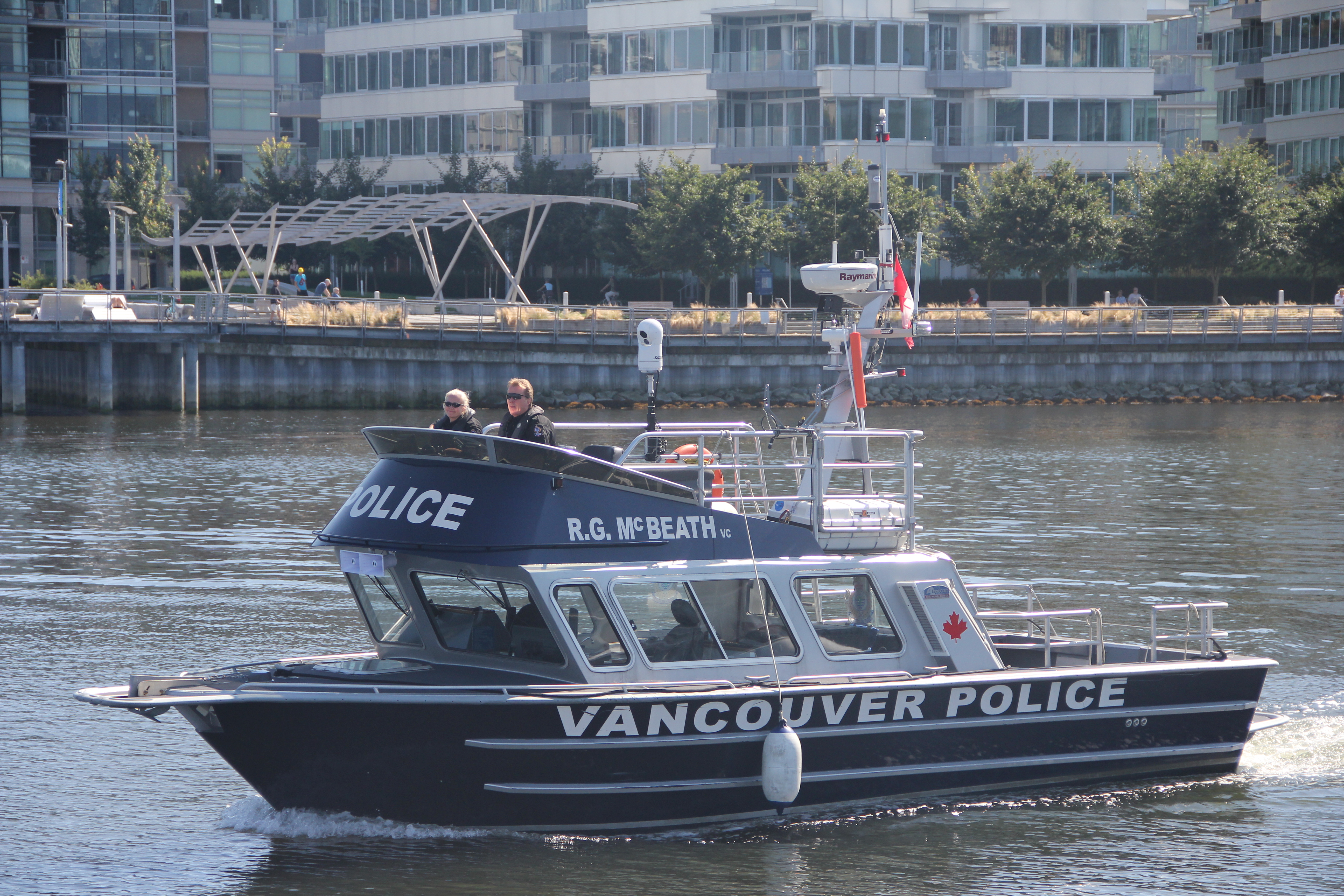
VPD was the first Canadian municipal police force to hire a female officer and the first to start a marine squad.
VPD, along with twelve other BC municipal police forces, seconds officers to the Combined Forces Special Enforcement Unit – British Columbia.
VPD now occupies the former Vancouver Organizing Committee for the 2010 Olympic and Paralympic Winter Games (VANOC) building at 3585 Graveley Street, which houses administrative and specialized investigation units.
History
At the first meeting of Vancouver City Council, Vancouver's first police officer, Chief Constable John Stewart, was appointed on May 10, 1886.
On June 14, 1886, the morning after the Great Fire of 1886, Mayor McLean appointed Jackson Abray, V.W. Haywood, and John McLaren as special constables. With uniforms from Seattle and badges fashioned from American coins, this four man team became Vancouver's first police department based out of the City Hall tent at the foot of Carrall Street. These four were replaced in 1887 by special constables sent by the provincial government in Victoria for not keeping the peace during the anti-Asian unrest of that year. The strength of the force increased from four to fourteen as a result.
By 1904, the department had grown to 31 members and occupied a new police building at 200 Cordova Street. In 1912, Vancouver's first two women were taken on the force as matrons. With the amalgamation of Point Grey and South Vancouver with Vancouver in 1929, the department absorbed the two smaller police forces under the direction of Chief Constable W.J. Bingham, a former district supervisor with the Metropolitan Police in London. By the 1940s the department had grown to 570 members.

In 1912, L.D. Harris and Minnie Miller were hired as the first two policewomen in Canada.
In 1917, Chief Constable McLennan was killed in the line of duty in a shoot-out in Vancouver's East End. Responding to a call by a landlord attempting to evict a tenant, the police were met by gunfire. Along with McLennan, the shooter was killed in the battle, as was a nine-year-old boy in the vicinity at Georgia and Jackson streets, which is now marked by a mosaic memorial. A detective who lost an eye in the shootout, John Cameron, later became the chief constable of the New Westminster Police Department before taking the top job of the Vancouver force, which he occupied from 1933 to the end of 1934.
Another member of the force was killed in the line of duty in 1922. Twenty-three-year-old constable, Robert McBeath, was shot by a man stopped for impaired driving. McBeath had received the Victoria Cross for "most conspicuous bravery" at the Battle of Cambrai in France in the First World War. McBeath's killer, Fred Deal, was initially sentenced to death, but won an appeal reducing it to life in prison because he had been beaten while in custody. The marine squad's boat, the R.G. McBeath VC, was commissioned in 1995 and named in honour of McBeath.
Plans for a new police building at 312 Main Street began in 1953. The Oakridge police station opened in 1961.
A police memorial at 325 Main St. is dedicated to the Vancouver Police Department members who died in the First and Second world wars and lists the Vancouver Police Department members killed in the line of duty in Vancouver.{{cite web | access-date = May 28, 2014
In 1935, under Chief Constable W. W. Foster, the Vancouver Police Department was complemented with hundreds of special constables because of a waterfront strike led by communists, which culminated in the Battle of Ballantyne Pier, a riot that broke out when demonstrators attempted to march to the docks to confront strikebreakers. Also that year, nearly 2,000 unemployed men from the federal relief camps scattered throughout the province flocked to Vancouver to protest camp conditions. After two months of incessant demonstrations, the camp strikers left Vancouver and began the On-to-Ottawa Trek.
The Vancouver Police were at the centre of one of the biggest scandals in the city's history in 1955. Feeling frustrated that blatant police corruption was being ignored by the local media, a reporter for the Vancouver Daily Province switched to a Toronto-based tabloid, Flash. He wrote a sensational article alleging corruption at the highest levels of the police department in Vancouver, specifically, that a pay-off system had been implemented whereby gambling operations that paid the police were left alone and those that did not were harassed. After the Flash article appeared in Vancouver, the allegations could no longer be ignored, and a Royal Commission, the Tupper Commission, was struck to hold a public inquiry. Chief Constable Walter Mulligan fled to the United States, another officer from the upper ranks committed suicide, and still another attempted suicide rather than face the inquiry. Other scandals and public inquiries plagued the force before and since this one, dubbed the "Mulligan Affair", but none were so dramatic. An earlier inquiry into corruption in 1928 was ambiguous in its conclusions as to the extent of the problem. The last major inquiry into policing in Vancouver focused largely on police accountability. Judge Wally Oppal (later provincial attorney general), submitted the results of his report in 1994 in a four volume package entitled Closing the Gap: Policing and the Community.
Leonard Hogue, a constable in the police department, was the perpetrator in the 1965 Coquitlam Massacre.
In 2009, the RCMP "E" Division joined forces with VPD to operate the Integrated National Security Enforcement Team (INSET)—Vancouver, operating out of VPD facilities instead of the INSET-BC Surrey operation base. [[File:VPD beach patrol.jpg|thumb|VPD beach patrol at [[Kitsilano Beach]]]]
.jpg)
Community policing centres

Organization
Community policing centres (CPCs), except the Granville Downtown and Kitsilano Fairview CPCs, are run by registered societies. The Granville Downtown CPC is under the direct control of the District 1 commander whereas Kitsilano Fairview is under the District 4 commander.
Budget
Each CPC receives $108,200 annually from the VPD, with the exception of two non-society based CPCs which have a combined budget of $140,000. The budget is delivered in four quarterly payments and they can be used towards staff salaries, CPC programs, costs from electricity, renting office space, etc.
Operation
CPCs are run by volunteers on a day-to-day basis with the supervision from paid staffs. Each year, the VPD audits all the CPCs and then reports to the city council on budgeting.
Each CPC is assigned a neighbourhood police officer (NPO) who provides resources and guidance for the operation of the CPC.
Programs
Each CPC offers different programs based on budget and neighbourhood needs. For example:
- Taking non-emergency/lost and found property reports
- Project Griffin
- Working in conjunction with the Insurance Corporation of British Columbia for the Speed Watch Program
- Working in conjunction with the Insurance Corporation of British Columbia for the Stolen Auto Recovery Program
- Working in conjunction with the VPD for the Block Watch Program
- Community patrol (foot and bike)
- Bike Roadeo, program for young children in bike safety
- Outreach and education programs
- Engraving
- Community cleanup
- Child Find
- Citizen's Crime Watch
However, CPCs do not offer any of the following services:
- Taking emergency report
- Criminal record checks
- Law/bylaw enforcement
- Legal/policing advice
- Victim services
- Situations that requires police attendance/assistance
Departmental organization
Overseen by the Police Board, the 1,716 employees of the VPD have been led by Chief Constable Steve Rai since May 22, 2025, following the departure of Adam Palmer, who retired in order to join the Royal Canadian Mounted Police. The force has seven operating divisions assigned to the Chief Constable:
Operations Division

Led by Deputy Chief Constable Alison Laurin since 2025.
Operations Command
- District 1
- District 2
- District 3
- District 4
- Diversity, Community, & Indigenous Relations
Operations Support Command
- Operations Support Section
- Duty Officers
- Court & Detention Services Section
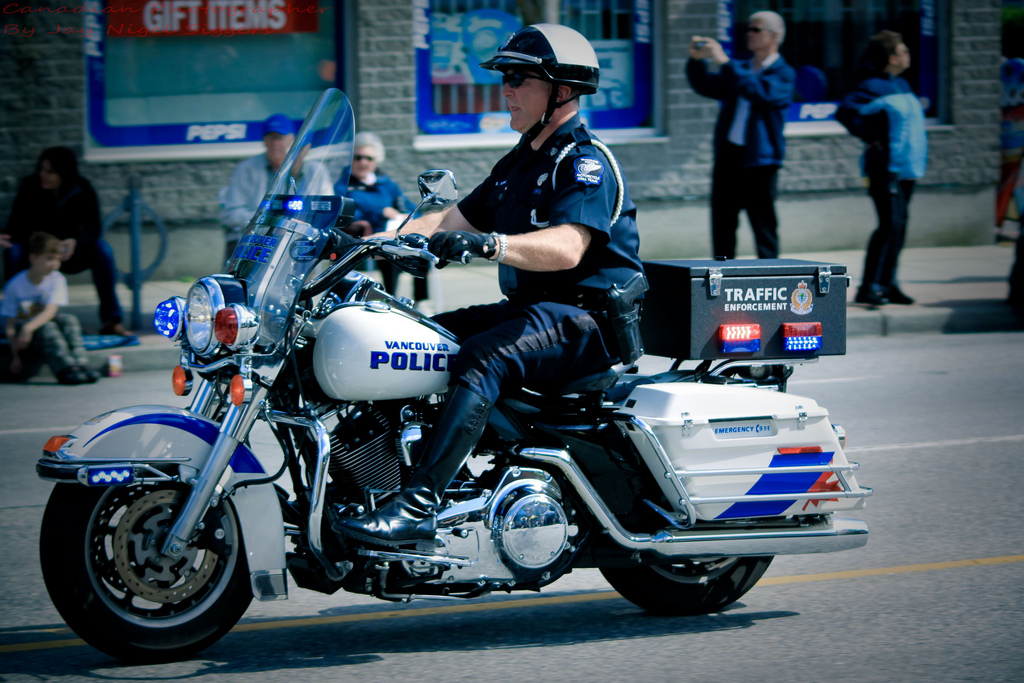
- Traffic Section
- Emergency Response Section
Emergency Management & Major Events Command
- Emergency & Operational Planning Section
- 2026 FIFA World Cup Issue
Investigation Division

Led by Senior Deputy Chief Constable Howard Chow since 2025.
Investigative Services
- Major Crime Section
- Organized Crime Section
- Special Investigation Section
**Investigative Support Services **
- Tactical Support Section
- Forensic Services Section
- General Investigation Section
- Youth Services Section
- Body Worn Camera Section
Executive Services
Led by Inspector Kevin Bernardin.
Public Affairs
Led by Inspector Shaun Deans.
Support Services Division
Led by Deputy Chief Constable Andrew Chan since 2025.
Planning, Research & Audit Section
Discipline Authority Services
Personnel Services
Led by Superintendent Shelley Horne.
- Human Resources Section
- Training & Recruiting Section
- Professional Standards Section
- Labour & Employee Relations Services
Information Services
Led by Superintendent Tyrone Sideroff.
- Information & Communication Technology Section
- Information Management Section
- Fleet Operations Section
- Facilities Section
- Property & Forensic Storage Section
- Information & Privacy Section
- Enterprise Risk Management Section
Force Options Training Section
Financial Services
Led by Chief Financial Officer Nancy Eng.
Strategy & Innovation Division
Led by Deputy Chief Constable Don Chapman since 2025.
Union
The Vancouver Police Union is a trade union that represents 1,450 front-line police officers, jail guards and special constables of the Vancouver Police Department.
Rank structure
| Chief constable | Deputy chief constable | Superintendent | Inspector | Staff sergeant | Sergeant | Police constable 1st class/Detective | Police constable 2nd class | Police constable 3rd class | Police constable 4th class | ||||||||||||||||||||||||||||||||||
|---|---|---|---|---|---|---|---|---|---|---|---|---|---|---|---|---|---|---|---|---|---|---|---|---|---|---|---|---|---|---|---|---|---|---|---|---|---|---|---|---|---|---|---|
| [[File:Vancouver Police - Chief Constable.png | center | frameless | 72x72px]] | [[File:Vancouver Police - Deputy Chief Constable.png | center | frameless | 72x72px]] | [[File:Vancouver Police - Superintendent.png | center | frameless | 72x72px]] | [[File:Vancouver Police - Inspector.png | center | frameless | 72x72px]] | [[File:Vancouver Police - Staff Sergeant.png | center | frameless | 72x72px]] | [[File:Vancouver Police - Sergeant.png | center | frameless | 72x72px]] | [[File:Blank Police Epaulette.png | alt= | center | frameless | 72x72px]] | [[File:Blank Police Epaulette.png | alt= | center | frameless | 72x72px]] | [[File:Blank Police Epaulette.png | alt= | center | frameless | 72x72px]] | [[File:Blank Police Epaulette.png | alt= | center | frameless | 72x72px]] |
- Special municipal constable (traffic authority/jail guard/community safety personnel)
List of chief constables
| Number | Name | Tenure | 1 | 2 | 3 | 4 | 5 | 6 | 7 | 8 | 9 | 10 | 11 | 12 | 13 | 14 | 15 | 16 | 17 | 18 | 19 | 20 | 21 | 22 | 23 | 24 | 25 | 26 | 27 | 28 | 29 | 30 | 31 | 32 |
|---|---|---|---|---|---|---|---|---|---|---|---|---|---|---|---|---|---|---|---|---|---|---|---|---|---|---|---|---|---|---|---|---|---|---|
| John Stewart | 1886–1890 | |||||||||||||||||||||||||||||||||
| John McLaren | 1890–1895 | |||||||||||||||||||||||||||||||||
| William Ward | 1895–1896 | |||||||||||||||||||||||||||||||||
| John Stewart | 1896–1901 | |||||||||||||||||||||||||||||||||
| Samuel North | 1901-1906 | |||||||||||||||||||||||||||||||||
| Colin Chisholm | 1906–1907 | |||||||||||||||||||||||||||||||||
| Rufus Chamberlin | 1907–1912 | |||||||||||||||||||||||||||||||||
| Charles Mulhern | 1913–1914 | |||||||||||||||||||||||||||||||||
| Malcolm MacLennan | 1914–1917 | |||||||||||||||||||||||||||||||||
| William McRae | 1917–1920 | |||||||||||||||||||||||||||||||||
| James Anderson | 1920–1924 | |||||||||||||||||||||||||||||||||
| Henry "Harry" Long | 1924–1929 | |||||||||||||||||||||||||||||||||
| William Bingham | 1929–1931 | |||||||||||||||||||||||||||||||||
| Charles Edgar Edgett | 1931–1933 | |||||||||||||||||||||||||||||||||
| John Cameron | 1933–1935 | |||||||||||||||||||||||||||||||||
| William Foster | 1935–1941 | |||||||||||||||||||||||||||||||||
| Donald MacKay | 1941–1945 | |||||||||||||||||||||||||||||||||
| Alexander McNeill | 1945–1947 | |||||||||||||||||||||||||||||||||
| Walter Mulligan | 1947–1955 | |||||||||||||||||||||||||||||||||
| George Archer | 1955–1962 | |||||||||||||||||||||||||||||||||
| Ralph Booth | 1962–1968 | |||||||||||||||||||||||||||||||||
| John Fisk | 1968–1974 | |||||||||||||||||||||||||||||||||
| Don Winterton | 1974–1981 | |||||||||||||||||||||||||||||||||
| Robert Stewart | 1981–1991 | |||||||||||||||||||||||||||||||||
| William Marshall | 1991–1994 | |||||||||||||||||||||||||||||||||
| Raymond Canuel | 1994–1997 | |||||||||||||||||||||||||||||||||
| Bruce Chambers | 1997–1999 | |||||||||||||||||||||||||||||||||
| Terry Blythe | 1999–2002 | |||||||||||||||||||||||||||||||||
| Jamie Graham | 2002–2007 | |||||||||||||||||||||||||||||||||
| Jim Chu | 2007–2015 | |||||||||||||||||||||||||||||||||
| Adam Palmer | 2015–2025 | |||||||||||||||||||||||||||||||||
| Steve Rai | 2025–present |
Controversies
Battle of Ballantyne Pier
Main article: Battle of Ballantyne Pier
On 18 June 1935, roughly 1,000 longshoremen and their supporters marched towards the Heatley Street entrance to Ballantyne Pier as a demonstration for more livable wages. They were led by Victoria Cross recipient Mickey O'Rourke and a contingent of World War I veterans and marched behind a Union Jack flag, to great symbolic effect. They soon encountered the Vancouver police, who partook in mass brutality. Many, including bystanders, were injured. In light of the injuries, the Ukrainian Community Centre was used as a makeshift hospital. Members of the women's auxiliary operated the centre, before the Vancouver police threw tear gas into the first-aid centre. The strike, in congruence with other, similar West Coast strikes, led to the right to collective bargaining and the creation of International Longshore and Warehouse Union.
Bloody Sunday
Bloody Sunday was a 1938 confrontation between peaceful sit-in strikers and the VPD, along with other forces. After mass unemployment across Canada, many people migrated to Vancouver for job opportunities. When unemployment persisted and workers felt no financial relief, they organized a massive peaceful demonstration, occurring in multiple locations for an entire month. Protesters occupied Hotel Georgia, the Vancouver Art Gallery (then located at 1145 West Georgia Street), and the main post office (now the Sinclair Centre). Later that day, 10,000 supporters went to Oppenheimer Park in condemnation of excessive police force of the Vancouver Police Department.
Gastown riots
Also known as "The Battle of Maple Tree Square", Vancouver Police attacked a peaceful protest in the Gastown neighbourhood on August 7, 1971. The protestors opposed the use of coercive undercover police tactics. The Vancouver Police were accused of heavy-handed tactics such as indiscriminate beatings with their batons and charging on horseback at crowds of onlookers and tourists.
Geography
The VPD is divided into four geographic districts, with one additional task force:
- District 1: Downtown, Granville, West End and Coal Harbour
- District 2: Grandview-Woodland and Hastings-Sunrise
- District 3: Collingwood and South Vancouver
- District 4: Kerrisdale, Oakridge, Dunbar, West Point Grey, Kitsilano, Arbutus, Shaughnessy, Fairview, Musqueam and Marpole
- Beat Enforcement Team: Downtown Eastside, Chinatown and Gastown
Fleet
.jpg)
.jpg)
- Eurocopter EC120 Colibri (air patrol operations shared with RCMP "E" Division)
- Ford Crown Victoria Police Interceptor (being phased out)
- Lenco BearCat (APC - purchase approved)
- Cambli International Thunder 1 (ARV—delivered 2010 for ERT use)
- Ford Police Interceptor Sedan (two unmarked black demonstration units that were kept)
- Dodge Charger Pursuit (replacement for Ford Crown Victoria)
- Ford Police Interceptor Utility (marked, unmarked, and supervisor vehicles)
- Chevrolet Tahoe (unmarked SUVs)
- Ford Fusion (CSP/special investigations)
- Ford F-150 (traffic authority)
- Ford F-350 (ERT)
- Ford Expedition (ERT)
- Mobile Command Centre (Communications use and transportation of command members).
References
- "Vancouver Police Department – History"
- Joe Swan, A Century of Service: The Vancouver Police 1886–1986. Vancouver: Vancouver Police Historical Society and Centennial Museum, 1986.
References
- Vancouver Police Department. [https://vpd.ca/wp-content/uploads/2023/08/2022.pdf]. Retrieved 27 February 2024.
- "History - Vancouver Police Department".
- "3585 GRAVELEY STREET fact sheet".
- "Vancouver police leaving old headquarters".
- Macdonald, Ian. (1997). "The Mulligan Affair: Top Cop on the Take". Heritage House.
- [[Wally Oppal]] (1994). [http://www.pssg.gov.bc.ca/police_services/publications/oppal/ClosingTheGap.pdf ''Closing the Gap: Policing and the Community''].
- "This week in history: Police officer Leonard Hogue's grisly murder-suicide shocked region".
- Division, Government of Canada, RCMP, E. "RCMP in BC -".
- "Community Policing - Vancouver Police Department".
- "2011 VPD Preliminary Operating Budget and Capital Submission".
- "Community Policing Initiatives and Funding".
- [http://www.icbc.com/road_safety/speedwatchPU.asp Speed Watch]. ICBC. Retrieved on 2014-04-12.
- [http://www.icbc.com/crime-fraud/autocr_thefta_volunt.asp Stolen Auto Recovery Program]. ICBC. Retrieved on 2014-04-12.
- "Block Watch".
- "Bike & Pedal Car Roadeo - Collingwood Community Policing Centre".
- [https://www.childfindbc.com/ ChildFindBC.com]. ChildFindBC.com (October 4, 2011). Retrieved on 2014-04-12.
- "Organization - Vancouver Police Department".
- Steacy, Lisa. (2025-05-23). "Vancouver Police Department names new top cop".
- Holliday, Ian. (2025-04-03). "Retiring VPD Chief Adam Palmer will join RCMP as assistant commissioner later this month".
- "Chief Constable of the Vancouver Police Department".
- "Archived copy".
- (May 26, 2025). "Vancouver Police Organizational Chart".
- admin1. "Executive Team".
- "Welcome to the Vancouver Police Union Website". Vancouver Police Union.
- (1907). "Game of British Columbia /". Bureau of Provincial Information.
- (1995). "My Past Is Now: Further Memoirs of a Labour Lawyer". Labour / Le Travail.
- "13418a, 1833-10-16, BALLANTYNE (W.), Battle (Sussex), bookseller and stationer".
- "13418a, 1833-10-16, BALLANTYNE (W.), Battle (Sussex), bookseller and stationer".
- "Bloody Sunday in context". Pluto Press.
- Cutler, Terrence. (1973). "Sunday, Bloody Sunday". Labour History.
- "Gastown Riot". Canada's Human Rights History. Dr. Dominique Clément, University of Alberta. Retrieved October 15, 2015.
- "Aldermen seek probe of wild Gastown clash," Vancouver Sun, August 9, 1971.
- Collins, Doug (August 15, 1971). "Pot and Politics: Canada and the Marijuana Debate - 1971 Gastown riots over Vancouver smoke-in" (video). CBC News. Retrieved August 31, 2013.
- "Photos: The 1971 Gastown riot" (photos). Vancouver Sun. May 25, 2010. Retrieved September 1, 2013.
This article was imported from Wikipedia and is available under the Creative Commons Attribution-ShareAlike 4.0 License. Content has been adapted to SurfDoc format. Original contributors can be found on the article history page.
Ask Mako anything about Vancouver Police Department — get instant answers, deeper analysis, and related topics.
Research with MakoFree with your Surf account
Create a free account to save articles, ask Mako questions, and organize your research.
Sign up freeThis content may have been generated or modified by AI. CloudSurf Software LLC is not responsible for the accuracy, completeness, or reliability of AI-generated content. Always verify important information from primary sources.
Report