From Surf Wiki (app.surf) — the open knowledge base
Uttar Pradesh
State in northern India

State in northern India
| Field | Value |
|---|---|
| name | Uttar Pradesh |
| image_skyline | {{multiple image |
| border | infobox |
| total_width | 300 |
| perrow | 1/2/2/2/1 |
| image1 | Taj Mahal (Edited).jpeg |
| caption1 | Taj Mahal |
| image2 | India-5163 - Flickr - archer10 (Dennis).jpg |
| caption2 | Sarnath |
| image3 | Dept of Electrical Engineering IIT-BHU.jpg |
| caption3 | IIT Varanasi |
| image4 | Dudhwa National Park, Lucknow division, Uttar Pradesh, India (30783128830).jpg |
| caption4 | Dudhwa National Park |
| image5 | Fatehpur Sikri near Agra 2016-03 img09.jpg |
| caption5 | Fatehpur Sikri |
| image6 | Agra 03-2016 14 Agra Fort.jpg |
| caption6 | Agra Fort |
| image7 | Mighty S3, a dominant alpha tiger (Panthera tigris tigris) of Pilibhit reserve area.jpg |
| caption7 | Pilibhit Tiger Reserve |
| type | State |
| image_seal | Seal of Uttar Pradesh.svgclass=skin-invert |
| etymology | Northern Province |
| motto | Satyameva Jayate (Truth alone triumphs) |
| image_map | IN-UP.svg |
| coordinates | |
| region | North India |
| before_was | United Provinces (1937–1950) |
| formation_date2 | formation1 |
| formation_date4 | 24 January 1950 |
| capital | Lucknow |
| largestcity | capital |
| metro | Lucknow |
| districts | 75 (18 divisions) |
| Governor | Anandiben Patel |
| Chief_Minister | Yogi Adityanath |
| party | BJP |
| Deputy_CM | Keshav Prasad Maurya (BJP) |
| Brajesh Pathak (BJP) | |
| legislature_type | Bicameral |
| council | Uttar Pradesh Legislative Council |
| council_seats | 100 seats |
| assembly | Uttar Pradesh Legislative Assembly |
| assembly_seats | 403 seats |
| rajya_sabha_seats | 31 seats |
| lok_sabha_seats | 80 seats |
| judiciary | Allahabad High Court |
| area_total_km2 | 243286 |
| area_rank | 4th |
| length_km | 650 |
| width_km | 240 |
| elevation_footnotes | |
| elevation_max_m | 957 |
| elevation_max_point | Amsot Peak |
| elevation_min_m | 60 |
| elevation_min_point | Ganges River |
| population_total | 241,066,874 |
| population_as_of | 2021 |
| population_rank | 1st |
| population_density | 1001 |
| population_urban | 22.27% |
| population_rural | 77.73% |
| 0fficial_Langs | Hindi |
| additional_official | Urdu |
| official_script | Devanagari script |
| GDP_footnotes | |
| GDP_total | |
| GDP_year | 2022–2023 |
| GDP_rank | 3rd |
| GDP_per_capita | |
| GDP_per_capita_rank | 28th |
| HDI | 0.609 |
| HDI_year | 2022 |
| HDI_rank | 34th |
| literacy | 78.2% |
| literacy_year | 2024 |
| literacy_rank | 30th |
| sex_ratio | 1015 ♀/1000 ♂ |
| sexratio_year | 2021 |
| sexratio_rank | 19th |
| iso_code | IN-UP |
| registration_plate | UP |
| website | up.gov.in |
| foundation_day | Uttar Pradesh Day |
| mammal | Barasingha |
| bird | Sarus crane |
| flower | Palash |
| tree | Ashoka |
| image_highway | SH IN-UP.png |
| SH_numbers | UP SH1 – UP SH99 |
Brajesh Pathak (BJP)
Uttar Pradesh (, abbr. UP; , , ) is a state in northern India. With over 241 million inhabitants, it is the most populated state not just in India but worldwide – if it were a country, it would be the sixth-largest in the world – and accounting for 17% of the population of India and around 3% of the total world population. The state is bordered by Rajasthan to the west, Haryana, Himachal Pradesh and Delhi to the northwest, Uttarakhand and Nepal to the north, Bihar to the east, Madhya Pradesh, Chhattisgarh and Jharkhand to the south. It is the fourth-largest Indian state by area covering 243286 km2, accounting for 7.3 per cent of the total area of India. Lucknow serves as the state capital, with Prayagraj being the judicial capital. It is divided into 18 divisions and 75 districts.
Uttar Pradesh was established in 1950 after India had become a republic. It is a successor to the United Provinces, established in 1935 by renaming the United Provinces of Agra and Oudh, in turn established in 1902 from the North-Western Provinces and the Oudh Province. Though long known for sugar production, the state's economy is now dominated by the services industry. The service sector comprises travel and tourism, hotel industry, real estate, insurance and financial consultancies. The economy of Uttar Pradesh is just the third-largest state economy in India, with in gross domestic product and a per capita GSDP of . The High Court of the state is located in Prayagraj. The state plays an important role in national politics, sending 80 seats to the lower house Lok Sabha and 31 seats to the upper house Rajya Sabha.
The two major rivers of the state, the Ganges and its tributary Yamuna, meet at the Triveni Sangam in Prayagraj, a Hindu pilgrimage site. Other notable rivers are Gomti and Sarayu. Most of the state is covered by the Indo Gangetic plain which is intensely farmed. The forest cover in the state is 6.1 per cent of the state's geographical area, mainly in the northern Terai. The cultivable area is 82 per cent of the total geographical area, and the net area sown is 68.5 per cent of the cultivable area.
Uttar Pradesh encompasses several distinct cultural regions, forming a continuum from Braj and Rohilkhand in the west to Bundelkhand and Awadh in the centre and Purvanchal in the east. Hindi is the official and most widely-spoken language, with Urdu as an additional official language. The region has been a major centre of political and cultural development throughout Indian history. It was the core area of several dominant Indian dynasties, including the Maurya, Gupta, Vardhana, Pala, Delhi Sultanate, and Mughal empires. During the British colonial period, the area contained several princely states, notably Rampur, Benares, and Ramgadi, and played a central role in the Indian independence movement, including the Indian Rebellion of 1857.
Uttar Pradesh is significant for several major world religions. It is home to many of Hinduism’s most important pilgrimage sites, including Varanasi, Mathura, Ayodhya, and Prayagraj. The state is also important to Buddhism; Gautama Buddha delivered his first sermon at Sarnath near Varanasi. Several sites in the state are associated with Jainism, and Uttar Pradesh has been an important centre of Islamic culture, architecture, and learning since the medieval period. The state contains three UNESCO World Heritage Sites.
History
Main article: History of Uttar Pradesh
Prehistory
Modern human hunter-gatherers have been in Uttar Pradesh since between around 85,000 and 72,000 years ago. There have also been prehistorical finds in the state from the Middle and Upper Paleolithic dated to 21,000–31,000 years old and Mesolithic/Microlithic hunter-gatherer settlement, near Pratapgarh, from around 10550–9550 BCE. Villages with domesticated cattle, sheep, and goats and evidence of agriculture began as early as 6000 BCE, and gradually developed between c. 4000 and 1500 BCE beginning with the Indus Valley Civilisation and Harappa culture to the Vedic period and extending into the Iron Age.
Ancient and classical period
Out of the sixteen mahajanapadas () or oligarchic republics that existed in ancient India, seven fell entirely within the present-day boundaries of the state. The kingdom of Kosala, in the Mahajanapada era, was also located within the regional boundaries of modern-day Uttar Pradesh. According to Hinduism, the divine King Rama of the Ramayana epic reigned in Ayodhya, the capital of Kosala. Krishna, another divine king of Hindu legend, who plays a key role in the Mahabharata epic and is revered as the eighth reincarnation (Avatar) of the Hindu god Vishnu, is said to have been born in the city of Mathura. The aftermath of the Kurukshetra War is believed to have taken place in the area between the Upper Doab and Delhi, (in what was Kuru Mahajanapada), during the reign of the Pandava King Yudhishthira. The kingdom of the Kurus corresponds to the Black and Red Ware and Painted Gray Ware culture and the beginning of the Iron Age in northwest India, around 1000 BCE.
Control over Gangetic plains region was of vital importance to the power and stability of all of India's major empires, including the Maurya (320–200 BCE), Kushan (100–250 CE), Gupta (350–600), and Gurjara-Pratihara (650–1036) empires. Following the Huns' invasions that broke the Gupta empire, the Ganges-Yamuna Doab saw the rise of Kannauj. During the reign of Harshavardhana (590–647), the Kannauj empire reached its zenith. It spanned from Punjab in the north and Gujarat in the west to Bengal in the east and Odisha in the south. It included parts of central India, north of the Narmada River and it encompassed the entire Indo-Gangetic Plain. Many communities in various parts of India claim descent from the migrants of Kannauj. Soon after Harshavardhana's death, his empire disintegrated into many kingdoms, which were invaded and ruled by the Gurjara-Pratihara empire, which challenged Bengal's Pala Empire for control of the region. Kannauj was several times invaded by the South Indian Rashtrakuta dynasty, from the 8th century to the 10th century. After the fall of the Pala empire, the Chero dynasty ruled from the 12th century to the 18th century.
Delhi Sultanate
Uttar Pradesh was partially or entirely ruled by the Delhi Sultanate for 320 years (1206–1526). Five dynasties ruled over the Delhi Sultanate sequentially: the Mamluk dynasty (1206–90), the Khalji dynasty (1290–1320), the Tughlaq dynasty (1320–1414), the Sayyid dynasty (1414–51), and the Lodi dynasty (1451–1526).
The first Sultan of Delhi, Qutb ud-Din Aibak, conquered some parts of Uttar Pradesh, including Meerut, Aligarh, and Etawah. His successor, Iltutmish, expanded the Sultanate's rule over Uttar Pradesh by defeating the King of Kannauj. During the reign of Sultan Balban, the Mamluk dynasty faced numerous rebellions in the state, but he was able to suppress them and establish his authority. Alauddin Khilji, extended his conquests to various regions in the state, including Varanasi and Prayagraj. Apart from the rulers, the Delhi Sultanate era also saw the growth of Sufism in Uttar Pradesh. Sufi saints, such as Nizamuddin Auliya and Qutbuddin Bakhtiar Kaki, lived during this period and their teachings had a significant impact on the people of the region. Sultanat era in the state also witnessed the construction of mosques and tombs, including the Atala Masjid in Jaunpur, the Jama Masjid in Fatehpur Sikri, and the Ghiyath al-Din Tughluq's Tomb in Tughlaqabad.
Medieval and early modern period
In the 16th century, Babur, a Timurid descendant of Timur and Genghis Khan from Fergana Valley (modern-day Uzbekistan), swept across the Khyber Pass and founded the Mughal Empire, covering India, along with modern-day Afghanistan, Pakistan and Bangladesh. The Mughals were descended from Persianised Central Asian Turks (with significant Mongol admixture). In the Mughal era, Uttar Pradesh became the heartland of the empire. Mughal emperors Babur and Humayun ruled from Delhi. In 1540 an Afghan, Sher Shah Suri, took over the reins of Uttar Pradesh after defeating the Mughal King Humanyun. Sher Shah and his son Islam Shah ruled Uttar Pradesh from their capital at Gwalior. After the death of Islam Shah Suri, his prime minister Hemu became the de facto ruler of Uttar Pradesh, Bihar, Madhya Pradesh, and the western parts of Bengal. He was bestowed the title of Hemchandra Vikramaditya (title of Vikramāditya adopted from Vedic period) at his formal coronation took place at Purana Qila in Delhi on 7 October 1556. A month later, Hemu died in the Second Battle of Panipat, and Uttar Pradesh came under Emperor Akbar's rule. Akbar ruled from Agra and Fatehpur Sikri.
In the 18th century, after the fall of Mughal authority, the power vacuum was filled by the Maratha Empire, in the mid-18th century, the Maratha army invaded the Uttar Pradesh region, which resulted in Rohillas losing control of Rohilkhand to the Maratha forces led by Raghunath Rao and Malha Rao Holkar. The conflict between Rohillas and Marathas came to an end on 18 December 1788 with the arrest of Ghulam Qadir, the grandson of Najeeb-ud-Daula, who was defeated by the Maratha general Mahadaji Scindia. In 1803–04, following the Second Anglo-Maratha War, when the British East India Company defeated the Maratha Empire, much of the region came under British suzerainty.
British India era
Starting from Bengal in the second half of the 18th century, a series of battles for north Indian lands finally gave the British East India Company accession over the state's territories. Ajmer and Jaipur kingdoms were also included in this northern territory, which was named the "North-Western Provinces" (of Agra). Although UP later became the fifth-largest state of India, NWPA was one of the smallest states of the British Indian empire. Its capital shifted twice between Agra and Allahabad.
Due to dissatisfaction with British rule, a serious rebellion erupted in various parts of North India, which became known as the Indian Rebellion of 1857; Bengal regiment's sepoy stationed at Meerut cantonment, Mangal Pandey, is widely considered as its starting point. After the revolt failed, the British divided the most rebellious regions by reorganising their administrative boundaries, splitting the Delhi region from 'NWFP of Agra' and merging it with Punjab Province, while the Ajmer–Marwar region was merged with Rajputana and Oudh was incorporated into the state. The new state was called the North Western Provinces of Agra and Oudh, which in 1902 was renamed as the United Provinces of Agra and Oudh. It was commonly referred to as the United Provinces or its acronym UP.
In 1920, the capital of the province was shifted from Allahabad to Lucknow. The high court continued to be at Allahabad, but a bench was established at Lucknow. Allahabad continues to be an important administrative base of today's Uttar Pradesh and has several administrative headquarters. Uttar Pradesh continued to be central to Indian politics and was especially important in modern Indian history as a hotbed of the Indian independence movement. The state hosted modern educational institutions such as the Aligarh Muslim University, Banaras Hindu University and Darul Uloom Deoband. Nationally known figures such as Ram Prasad Bismil and Chandra Shekhar Azad were among the leaders of the movement in Uttar Pradesh, and Motilal Nehru, Jawaharlal Nehru, Madan Mohan Malaviya and Govind Ballabh Pant were important national leaders of the Indian National Congress. The All India Kisan Sabha was formed at the Lucknow session of the Congress on 11 April 1936, with the famous nationalist Sahajanand Saraswati elected as its first president, to address the longstanding grievances of the peasantry and mobilise them against the zamindari landlords attacks on their occupancy rights, thus sparking the Farmers movements in India. During the Quit India Movement of 1942, Ballia district overthrew the colonial authority and installed an independent administration under Chittu Pandey. Ballia became known as "Baghi Ballia" (Rebel Ballia) for this significant role in India's independence movement.
Post-independence
After India's independence, the United Provinces were renamed "Uttar Pradesh" (), preserving UP as the abbreviation of the state's name, with the change coming into effect on 24 January 1950. The new state was formed after the merger of several princely states and territories, including the United Provinces of Agra and Oudh, and the Delhi territory. The state has provided nine of India's prime ministers which is more than any other state and is the source of the largest number of seats in the Lok Sabha. Despite its political influence since ancient times, its poor record in economic development and administration, poor governance, organised crime and corruption have kept it among India's backward states. The state has been affected by repeated episodes of caste-related and communal violence. In December 1992 the disputed Babri Mosque located in Ayodhya was demolished by Hindu activists, leading to widespread violence across India. In 2000, northern districts of the state were separated to form the state of Uttarakhand.
Geography
Main article: Geography of Uttar Pradesh
Uttar Pradesh, with a total area of 240928 km2, is India's fourth-largest state in terms of land area and is roughly of same size as United Kingdom. It is situated on the northern spout of India and shares an international boundary with Nepal. The Himalayas border the state on the north, but the plains that cover most of the state are distinctly different from those high mountains. The larger Gangetic Plain region is in the north; it includes the Ganges-Yamuna Doab, the Ghaghra plains, the Ganges plains and the Terai. The smaller Vindhya Range and plateau region are in the south. It is characterised by hard rock strata and a varied topography of hills, plains, valleys and plateaus. The Bhabhar tract gives place to the terai area which is covered with tall elephant grass and thick forests interspersed with marshes and swamps. The sluggish rivers of the bhabhar deepen in this area, their course running through a tangled mass of thick undergrowth. The terai runs parallel to the bhabhar in a thin strip. The entire alluvial plain is divided into three sub-regions. The first in the eastern tract consisting of 14 districts which are subject to periodical floods and droughts and have been classified as scarcity areas. These districts have the highest density of population which gives the lowest per capita land. The other two regions, the central and the western, are comparatively better with a well-developed irrigation system. They suffer from waterlogging and large-scale user tracts. In addition, the area is fairly arid. The state has more than 32 large and small rivers; of them, the Ganga, Yamuna, Saraswati, Sarayu, Betwa, and Ghaghara are larger and of religious importance in Hinduism.
Cultivation is intensive in the state. Uttar Pradesh falls under three agro-climatic zones viz. Middle Gangetic Plains region (Zone–IV), Upper Gangetic Plains region (Zone–V) and Central Plateau and Hills region (Zone–VIII). The valley areas have fertile and rich soil. There is intensive cultivation on terraced hill slopes, but irrigation facilities are deficient. The Siwalik Range which forms the southern foothills of the Himalayas, slopes down into a boulder bed called 'bhabhar'. The transitional belt running along the entire length of the state is called the terai and bhabhar area. It has rich forests, cutting across it are innumerable streams which swell into raging torrents during the monsoon.
Climate
Main article: Climate of Uttar Pradesh
|8.0|22.3|9 |10.4|25.2|12 |15.9|32.0|10 |22.3|38.5|10 |26.5|41.6|16 |28.5|40.7|67 |26.8|35.2|196 |25.8|33.7|227 |24.4|34.4|113 |19.9|34.3|27 |13.7|29.7|3 |9.1|24.0|5

Uttar Pradesh has a humid subtropical climate and experiences four seasons. The winter in January and February is followed by summer between March and May and the monsoon season between June and September. Summers are extreme with temperatures fluctuating anywhere between 0-50 C in parts of the state coupled with dry hot winds called the Loo. The Gangetic plain varies from semiarid to sub-humid. The mean annual rainfall ranges from 650 mm in the southwest corner of the state to 1000 mm in the eastern and south eastern parts of the state. Primarily a summer phenomenon, the Bay of Bengal branch of the Indian monsoon is the major bearer of rain in most parts of state. After summer it is the southwest monsoon which brings most of the rain here, while in winters rain due to the western disturbances and north-east monsoon also contribute small quantities towards the overall precipitation of the state.
The rain in Uttar Pradesh can vary from an annual average of 170 cm in hilly areas to 84 cm in Western Uttar Pradesh. Given the concentration of most of this rainfall in the four months of the monsoon, excess rain can lead to floods and shortage to droughts. As such, these two phenomena, floods and droughts, commonly recur in the state. The climate of the Vindhya Range and plateau is subtropical with a mean annual rainfall between 1000 and 1200 mm, most of which comes during the monsoon. Typical summer months are from March to June, with maximum temperatures ranging from 30-38 C. There is a low relative humidity of around 20% and dust-laden winds blow throughout the season. In summer, hot winds called loo blow all across Uttar Pradesh.
Flora and fauna
| State sport | Field hockey | [[File:Field hockey.jpg | 50px]] |
|---|
Uttar Pradesh has an abundance of natural resources. In 2011, the recorded forest area in the state was 16583 km2 which is about 6.9% of the state's geographical area. In spite of rapid deforestation and poaching of wildlife, a diverse flora and fauna continue to exist in the state. Uttar Pradesh is a habitat for 4.2% of all species of Algae recorded in India, 6.4% of Fungi, 6.0% of Lichens, 2.9% of Bryophytes, 3.3% of Pteridophytes, 8.7% of Gymnosperms, 8.1% of Angiosperms. Several species of trees, large and small mammals, reptiles, and insects are found in the belt of temperate upper mountainous forests. Medicinal plants are found in the wild and are also grown in plantations. The Terai–Duar savanna and grasslands support cattle. Moist deciduous trees grow in the upper Gangetic plain, especially along its riverbanks. This plain supports a wide variety of plants and animals. The Ganges and its tributaries are the habitat of large and small reptiles, amphibians, fresh-water fish, and crabs. Scrubland trees such as the Babool (Vachellia nilotica) and animals such as the Chinkara (Gazella bennettii) are found in the arid Vindhyas. Tropical dry deciduous forests are found in all parts of the plains. Since much sunlight reaches the ground, shrubs and grasses are also abundant. Large tracts of these forests have been cleared for cultivation. Tropical thorny forests, consisting of widely scattered thorny trees, mainly babool are mostly found in the southwestern parts of the state.
Uttar Pradesh is known for its extensive avifauna. The most common birds which are found in the state are doves, peafowl, junglefowl, black partridges, house sparrows, songbirds, blue jays, parakeets, quails, bulbuls, comb ducks, kingfishers, woodpeckers, snipes, and parrots. Bird sanctuaries in the state include Bakhira Sanctuary, National Chambal Sanctuary, Chandra Prabha Wildlife Sanctuary, Hastinapur Wildlife Sanctuary, Kaimoor Wildlife Sanctuary, and Okhla Sanctuary.
Other animals in the state include reptiles such as lizards, cobras, kraits, and gharials. Among the wide variety of fishes, the most common ones are mahaseer and trout. Some animal species have gone extinct in recent years, while others, like the lion from the Gangetic Plain, the rhinoceros from the Terai region, Ganges river dolphin primarily found in the Ganges have become endangered. Many species are vulnerable to poaching despite regulation by the government.
Constituent regionsRegions and cities
Divisions, districts and cities
Main article: Administrative divisions of Uttar Pradesh, List of districts of Uttar Pradesh, List of urban local bodies in Uttar Pradesh

Uttar Pradesh is divided into 75 districts under these 18 divisions:
| Saharanpur | Moradabad | Bareilly | Meerut | Aligarh | Agra | Devipatan | Basti | Gorakhpur | Kanpur | Lucknow | Ayodhya | Azamgarh | Jhansi | Chitrakoot | Prayagraj | Varanasi | Mirzapur |
|---|
The following is a list of top districts from state of Uttar Pradesh by population, ranked in respect of all India.
| Rank (in India) | District | Population | Growth Rate (%) | Sex Ratio (Females per 1000 Males) | Literacy Rate (%) |
|---|---|---|---|---|---|
| 13 | Prayagraj | 5,954,391 | 20.63 | 901 | 72.32 |
| 26 | Moradabad | 4,772,006 | 25.22 | 906 | 56.77 |
| 27 | Ghaziabad | 4,681,645 | 42.27 | 881 | 78.07 |
| 30 | Azamgarh | 4,613,913 | 17.11 | 1019 | 70.93 |
| 31 | Lucknow | 4,589,838 | 25.82 | 917 | 77.29 |
| 32 | Kanpur Nagar | 4,581,268 | 9.92 | 862 | 79.65 |
| 41 | Agra | 4,418,797 | 22.05 | 868 | 71.58 |
| 50 | Bareilly | 4,448,359 | 22.93% | 887 | 58.5 |
Each district is administered by a District Magistrate (DM), who is an Indian Administrative Service (IAS) officer appointed Government of Uttar Pradesh and reports to Divisional Commissioner of the division in which his district falls. The Divisional Commissioner is an IAS officer of high seniority, and part of revenue department. Each district is divided into subdivisions, administered by a Sub-Divisional Magistrate, and again into Tehsils for land revenue administration. Each district is divided into Blocks, primarily for rural development administration, and consists of gram panchayats (village councils). These blocks consists of urban units viz. census towns and rural units called gram panchayat.
Local governance comprises Panchayati Raj Institutions in rural areas—Zilla Parishads, Kshettra Panchayats, and Gram Panchayats—and urban local bodies such as Nagar Nigams (municipal corporations), Nagar Palikas (municipal councils), and Nagar Panchayats, all governed by elected councils with five-year terms.
Uttar Pradesh has more metropolitan cities than any other state in India. The absolute urban population of the state is 44.4 million, which constitutes 11.8% of the total urban population of India, the second-highest of any state. According to the 2011 census, there are 15 urban agglomerations with a population greater than 500,000. Uttar Pradesh has a complex system of municipalities. Nagar Nigam (Municipal Corporation) are urban local bodies in large cities such as Lucknow, Kanpur, Varanasi and cities having population more than 4 million. These governed by a mayor and councillors elected from wards. Nagar Palika Parishad or Municipal Council, serves medium-sized towns like Bela Pratapgarh, Jalaun, or Bisalpur and are governed by a chairperson and councillors. Nagar Panchayat which operate in smaller towns and semi-urban areas like Badlapur, Jaunpur, Bikapur, or Chilkana Sultanpur, are governed by a chairman and councillors. There are 14 Municipal Corporations, while Noida and Greater Noida in Gautam Budha Nagar district are specially administered by statutory authorities under the Uttar Pradesh Industrial Development Act, 1976.
In 2011, state's cabinet ministers headed by the then Chief Minister Mayawati announced the separation of Uttar Pradesh into four different states of Purvanchal, Bundelkhand, Avadh Pradesh and Paschim Pradesh with twenty-eight, seven, twenty-three and seventeen districts, respectively, later the proposal was turned down when the Akhilesh Yadav–lead Samajwadi Party came to power in the 2012 election.
Demographics
Main article: Demographics of Uttar Pradesh
|1901|46647804 |1911|46012663 |1921|44556427 |1931|47478533 |1941|53920630 |1951|60273743 |1961|70143635 |1971|83848797 |1981|105136540 |1991|132061653 |2001|166197921 |2011|199812341
Uttar Pradesh has a very large population and a high population growth rate. From 1991 to 2001 its population increased by over 26 per cent. It is the most populous state in India, with 199,581,477 people on 1 March 2011. The state contributes to 16.2 per cent of India's population. As of 2021, the estimated population of the state is around 240 million people. The population density is 828 people per square kilometre, making it one of the most densely populated states in the country. It has the largest scheduled caste population, making up 23% of the state's population, whereas scheduled tribes are less than 1 per cent of the total population.
The sex ratio in 2011, at 912 women to 1000 men, was lower than the national figure of 943. The low sex ratio in Uttar Pradesh, is a result of various factors, such as sex-selective abortion, female infanticide, and discrimination against girls and women. The state's 2001–2011 decennial growth rate (including Uttrakhand) was 20.1 per cent, higher than the national rate of 17.64 per cent.
The literacy rate of the state at the 2011 census was 67.7 per cent, which was below the national average of 74 per cent. The literacy rate for men is 79 per cent and for women 59 per cent. In 2001 the literacy rate in the state stood at 56 per cent overall, 67 per cent for men and 43 per cent for women. A report based on a National Statistical Office (NSO) survey revealed that Uttar Pradesh's literacy rate is 73 per cent, less than the national average of 77.7 per cent. According to the report, in the rural region, the literacy rate among men is 80.5 per cent and women is 60.4 per cent, while in urban areas, the literacy rate among men is 86.8 per cent and women is 74.9 per cent.
Economically large number of state's population living below the poverty line. Estimates released by the Reserve Bank of India for the year 2011–12 revealed that the state had 59 million (59819,000) people below the poverty line, the most for any state in India. The central and eastern districts in particular have very high levels of poverty. The state is also experiencing widening consumption inequality. As per the report of the Ministry of Statistics and Programme Implementation released in 2020, the state per capita income is below per annum.
Religion
Pie chart|caption=Religion in Uttar Pradesh (2011) Uttar Pradesh is home to the highest numbers of both Hindus and Muslims, who make up roughly 80% and 19% of the population respectively. Hinduism is the predominant religion, and is especially strong in rural areas. Islam is more prominent in urban areas and northwestern parts of the state, where they form a majority in two districts. There are small pockets of Jainism in urban areas in the northwest and in Bundelkhand, while many Sikhs, mainly descendants of refugees from Partition, are settled in northern districts bordering Uttarakhand or Nepal.
Language
Hindi Bhojpuri Braj ]]--
Hindi is the primary official language and is spoken by the majority of the population. Bhojpuri is the second most spoken language of the state, it is spoken by almost 11 per cent of the population. Most people speak regional languages classified as dialects of Hindi in the census. These include Awadhi, spoken in Awadh in central Uttar Pradesh; Bhojpuri spoken in Purvanchal in eastern Uttar Pradesh; and Braj Bhasha spoken in the Braj region in Western Uttar Pradesh. These languages have also been recognised by the state government for official use in their respective regions. Urdu is given the status of a second official language, spoken by 5.4 per cent of the population. English is used as a means of communication for education, commerce, and governance. It is commonly spoken and employed as a language of instruction in educational institutions, as well as for conducting business transactions and managing administrative affairs. Other notable languages spoken in the state include Punjabi (0.3 per cent) and Bengali (0.1 per cent).
Governance and administration
Main article: Government of Uttar Pradesh, Vidhan Bhavan, Lucknow
.jpg)
The state is governed by a parliamentary system of representative democracy. Uttar Pradesh is one of the seven states in India, where the state legislature is bicameral, comprising two houses: the Vidhan Sabha (Legislative Assembly) and the Vidhan Parishad (Legislative Council). The Legislative Assembly consists of 404 members who are elected for five-year terms. The Legislative Council is a permanent body of 100 members with one-third (33 members) retiring every two years. The state sends the largest number of legislators to the national Parliament. The state contributes 80 seats to Lok Sabha, the lower house of the Indian Parliament, and 31 seats to Rajya Sabha, the upper house.
The Government of Uttar Pradesh is a democratically elected body in India with the governor as its constitutional head and is appointed by the president of India for a five-year term. The leader of the party or coalition with a majority in the Legislative Assembly is appointed as the chief minister by the governor, and the council of ministers is appointed by the governor on the advice of the chief minister. The governor remains a ceremonial head of the state, while the chief minister and his council are responsible for day-to-day government functions. The Council of Ministers consists of Cabinet Ministers and Ministers of State (MoS). The Secretariat headed by the Chief Secretary assists the council of ministers. The Chief Secretary is also the administrative head of the government. Each government department is headed by a minister, who is assisted by an Additional Chief Secretary or a Principal Secretary, who is usually an officer of Indian Administrative Service (IAS), the Additional Chief Secretary/Principal Secretary serves as the administrative head of the department they are assigned to. Each department also has officers of the rank of Secretary, Special Secretary, Joint Secretary etc. assisting the Minister and the Additional Chief Secretary/Principal Secretary.
For administration, the state is divided into 18 divisions and 75 districts. Divisional Commissioner, an IAS officer is the head of revenue administration on the divisional level. The administration in each district is headed by a District Magistrate (DM), who is also an IAS officer, and is assisted by several officers belonging to state services. The District Magistrate, as the head of the district administration, is responsible for revenue administration, maintenance of law and order, disaster management, conducting elections, coordination among various departments, and delivery of public services in the district. At the block level, the Block Development Officer (BDO) is responsible for the overall development of the block. The Uttar Pradesh Police is headed by an IPS officer of the rank of Director general of police (DGP). A Superintendent of Police (SP), an IPS officer assisted by the officers of the Uttar Pradesh Police Service, is entrusted with the responsibility of maintaining law and order and related issues in each district. The Divisional Forest Officer (DFO), an officer belonging to the Indian Forest Service manages the forests, environment, and wildlife of the district, assisted by the officers of Provincial Forest Service and Uttar Pradesh Forest Subordinate Service.

The judiciary in the state consists of the Allahabad High Court in Prayagraj, the Lucknow Bench of Allahabad High Court, district courts and session courts in each district or Sessions Division, and lower courts at the tehsil level. The president of India appoints the chief justice of the High Court of the Uttar Pradesh judiciary on the advice of the Chief Justice of the Supreme Court of India as well as the governor of Uttar Pradesh. Subordinate Judicial Service, categorised into two divisions viz. Uttar Pradesh civil judicial services and Uttar Pradesh higher judicial service are another vital part of the judiciary of Uttar Pradesh. While the Uttar Pradesh civil judicial services comprise the Civil Judges (Junior Division)/Judicial Magistrates and civil judges (Senior Division)/Chief Judicial Magistrate, the Uttar Pradesh higher judicial service comprises civil and sessions judges. The Subordinate judicial service (viz. The district court of Etawah and the district court of Kanpur Dehat) of the judiciary at Uttar Pradesh is controlled by the District Judge.
Politics in Uttar Pradesh has been dominated by four political parties – the Samajwadi Party, the Bahujan Samaj Party, the Bharatiya Janata Party, and the Indian National Congress. The political landscape of the state is often characterised by intense competition and polarisation, leading to caste-based tensions and communal conflicts. Critics often suggest that despite Uttar Pradesh's significant political legacy of producing eight Prime Ministers, the state continues to struggle with issues that hinder its overall advancement.
Crime and accidents
According to the National Human Rights Commission of India (NHRC), Uttar Pradesh tops the list of states of encounter killings and custodial deaths. In 2014, the state recorded 365 judicial deaths out of a total 1,530 deaths recorded in the country. NHRC further said, of the over 30,000 murders registered in the country in 2016, Uttar Pradesh had 4,889 cases. A data from Minister of Home Affairs (MHA) avers, Bareilly recorded the highest number of custodial death at 25, followed by Agra (21), Allahabad (19) and Varanasi (9). National Crime Records Bureau (NCRB) data from 2011 says, the state has the highest number of crimes among any state in India, but due to its high population, the actual per capita crime rate is low. The state also continues to top the list of states with maximum communal violence incidents. An analysis of Ministers of State of Home Affairs states (2014), 23 per cent of all incidents of communal violence in India took place in the state. According to a research assembled by State Bank of India, Uttar Pradesh failed to improve its Human Development Index (HDI) ranking over a period of 27 years (1990–2017). Based on sub-national human development index data for Indian states from 1990 to 2017, the report also stated that the value of human development index has steadily increased over time from 0.39 in 1990 to 0.59 in 2017. The Uttar Pradesh Police, governed by the Department of Home and Confidential, is the largest police force in the world.
Uttar Pradesh also reported the highest number of deaths – 41,746 – due to road accidents till December 2022, according to "Road Accidents in India" report of Union Ministry of Road Transport and Highways. The UP Transport Department report also indicates that the primary cause of road accident fatalities was over-speeding, which accounted for 40 per cent of deaths. Drunken driving contributed to 10 per cent of fatalities, while 12 per cent of deaths were due to driving on the wrong side. Additionally, 10 per cent of accident deaths were caused by the use of mobile phones, and 5 per cent resulted from running red lights. The remaining 23 per cent of deaths were attributed to factors such as losing control of the vehicle, drowsiness, poor road visibility, and engineering defects.
Between 2006 and 2010, the state has been hit with three terrorist attacks, including explosions in a landmark holy place, a court and a temple. The 2006 Varanasi bombings were a series of bombings that occurred across the Hindu holy city of Varanasi on 7 March 2006. At least 28 people were killed and as many as 101 others were injured. In the afternoon of 23 November 2007, within a span of 25 minutes, six consecutive serial blasts occurred in the Lucknow, Varanasi, and Faizabad courts, in which 28 people were killed. Another blast occurred on 7 December 2010, the blast occurred at Sheetla Ghat in Varanasi in which more than 38 people were killed. In February 2016, a series of bomb blasts occurred at the Jhakarkati Bus Station in Kanpur, killing 2 people and injuring more than 30.
Economy
Main article: Economy of Uttar Pradesh
| Year | Net State Domestic Product | |
|---|---|---|
| 2011–12 | ||
| 2015–16 | ||
| 2016–17 | ||
| 2017–18 |
![Common sunflower farming in [[Lambhua]], Sultanpur](https://upload.wikimedia.org/wikipedia/commons/8/87/Common_Indian_Sunflower.jpg)
In terms of net state domestic product (NSDP), Uttar Pradesh is the fourth-largest economy in India, with an estimated gross state domestic product of , contributing 8.4% of India's gross domestic product. According to the report generated by India Brand Equity Foundation (IBEF), in 2014–15, Uttar Pradesh has accounted for 19% share in the country's total food grain output. About 70% of India's sugar comes from Uttar Pradesh. Sugarcane is the most important cash crop as the state is country's largest producer of sugar. As per the report generated by Indian Sugar Mills Association (ISMA), total sugarcane production in India was estimated to be 28.3 million tonnes in the fiscal ending September 2015 which includes 10.47 million tonnes from Maharashtra and 7.35 million tonnes from Uttar Pradesh.
The state has significant reserves of cement-grade limestone and crystalline marble, in districts of Mirzapur and Sonbhadra, supporting a growing cement and refractory industry. With 359 manufacturing clusters, cement is the top sector of SMEs in Uttar Pradesh. The Uttar Pradesh Financial Corporation (UPFC) was established in 1954 under the SFCs Act of 1951 mainly to develop small- and medium-scale industries in the state. The UPFC also provides working capital to existing units with a soundtrack record and to new units under a single window scheme. In July 2012, due to financial constraints and directions from the state government, lending activities were suspended except for State Government Schemes. The state has reported total private investment worth over Rs. 25,081 crores during the years of 2012 and 2016. According to a 2015 report by the World Bank on the Ease of Doing Business in India, Uttar Pradesh was ranked among the top 10 states and was the first among the northern states. The state is home to over 11,500 leather production units, primarily concentrated in Agra and Kanpur, making it one of India's leading leather manufacturing regions. Uttar Pradesh also contributes around 15 per cent of India's total fabric production and employs nearly 30 per cent of the country's artisan workforce.
According to the Uttar Pradesh Budget Documents (2019–20), Uttar Pradesh's debt burden is 29.8 per cent of the GSDP. The state's total financial debt stood at in 2011. Uttar Pradesh has not been able to witness double-digit economic growth despite consistent attempts over the years. The GSDP is estimated to have grown 7 per cent in 2017–18 and 6.5 per cent in 2018–19 which is about 10 per cent of India's GDP. According to a survey conducted by the Centre for Monitoring Indian Economy (CMIE), Uttar Pradesh's unemployment rate increased 11.4 percentage points, rising to 21.5 per cent in April 2020. Uttar Pradesh has the largest number of net migrants migrating out of the state. The 2011 census data on migration shows that nearly 14.4 million (14.7%) people had migrated out of Uttar Pradesh. Marriage was cited as the predominant reason for migration among females. Among males, the most important reason for migration was work and employment. Uttar Pradesh continues to have regional disparities, particularly with the western districts of the state showing higher development indicators such as per capita district development product (PCDDP) and gross district development product (GDDP) compared to other regions. Due to inadequate infrastructure and a dense population, Purvanchal faces notable socio-economic disparities. For 2021–22 the GDDP for Purvanchal it is ₹5.37 lakh crore, while for Western Uttar Pradesh (including the Upper Doab, Rohilkhand and Braj) it is ₹9.44 lakh crore. For the Bundelkhand and Awadh regions, the GDDP remained ₹99,029.34 crore and ₹3.36 lakh crore, respectively. As of 2021–22, the per capita annual income in eastern districts is about one-fourth of the national average at ₹12,741 while the state's average stood at ₹17,349.
.jpg)
In 2009–10, the tertiary sector of the economy (service industries) was the largest contributor to the gross domestic product of the state, contributing 44.8 per cent of the state domestic product compared to 44 per cent from the primary sector (agriculture, forestry, and tourism) and 11.2 per cent from the secondary sector (industrial and manufacturing). Noida, Meerut, and Agra rank as the top 3 districts with the highest per capita income, whereas Lucknow and Kanpur rank 7th and 9th in per capita income. During the 11th five-year plan (2007–2012), the average gross state domestic product (GSDP) growth rate was 7.3 per cent, lower than 15.5 per cent, the average for all states of the country. The state's per capita GSDP was , lower than the national per capita GSDP of . Labor efficiency is higher at an index of 26 than the national average of 25. Textiles and sugar refining, both long-standing industries in Uttar Pradesh, employ a significant proportion of the state's total factory labour. The economy also benefits from the state's tourism industry.
Transportation
.jpg)
The state has the largest railway network in the country but in relative terms has only sixth-highest railway density despite its plain topography and largest population. , there were 9,077 km of rail in the state. The railway network in the state is controlled by two divisions of the Indian Railways viz. North Central Railway and North Eastern Railway. Prayagraj is the headquarters of the North Central Railway and Gorakhpur is the headquarters of the North Eastern Railway. Lucknow and Moradabad serve as divisional Headquarters of the Northern Railway Division. Lucknow Swarna Shatabdi Express, the second fastest Shatabdi Express train, connects the Indian capital of New Delhi to Lucknow while Kanpur Shatabdi Express, connects New Delhi to Kanpur Central. This was the first train in India to get the new German LHB coaches. The railway stations of Prayagraj Junction, Agra Cantonment, Lucknow Charbagh, Gorakhpur Junction, Kanpur Central, Mathura Junction and Varanasi Junction are included in the Indian Railways list of 50 world-class railway stations. The Lucknow Metro, along with the Kanpur Metro (Orange line), are rapid transit systems that serve Lucknow and Kanpur, respectively.
The state has a large, multimodal transportation system with the largest road network in the country. It has 42 national highways, with a total length of 4942 km comprising 8.9 per cent of the total national highways length in India. The Uttar Pradesh State Road Transport Corporation (UPSRTC) was established in 1972 to provide transportation in the state with connecting services to adjoining states. The UPSRTC's current fleet consists of 11,238 buses operating on 2,762 routes across a total distance of 768,065 km throughout the state, generating an average daily income of . Despite its extensive operation, many of UPSRTC buses are now outdated and unreliable, raising concerns about their condition and the impact on passenger safety. All cities are connected to state highways, and all district headquarters are being connected with four lane roads which carry traffic between major centres within the state. One of them is Agra–Lucknow Expressway, which is a 302 km controlled-access highway constructed by UPEIDA. Uttar Pradesh has the highest road density in India – 1027 km per 1000 km2 – and the largest surfaced urban-road network in the country – 50721 km.

By passenger traffic in India, Chaudhary Charan Singh International Airport in Lucknow and Lal Bahadur Shastri Airport in Varanasi, are the major international airports and the main gateway to the state. Another international airport has been built at Kushinagar. However, since its inauguration, Kushinagar International Airport has not yet seen any outbound flights to international destinations. Ayodhya Airport, officially known as Maharshi Valmiki International Airport, was inaugurated on 30 December 2023 and currently facilitates domestic air travel. Uttar Pradesh has six domestic airports located at Agra, Allahabad, Bareilly, Ghaziabad, Gorakhpur and Kanpur. Under the collaboration with civilian aviation authority, these domestic airports are primarily used by the Indian Air Force for operational flexibility, especially during emergencies or natural disasters. Developed under Regional Connectivity Scheme (UDAN), Chitrakoot Airport is the first and only airport in the Bundelkhand region. Although inaugurated in 2024, the airport has remained largely inactive due to low passenger traffic, and flight operations were suspended in December 2024 owing to poor visibility and operational challenges. Similarly, the airports in Azamgarh, Aligarh, Moradabad, Shravasti, and Saharanpur have faced temporary closures due to limited commercial viability, low passenger traffic, and a shortage of suitable aircraft. The Noida International Airport is proposed to be built near Jewar in Gautam Buddha Nagar, district. Indira Gandhi Rashtriya Uran Akademi (IGRUA) is a premier pilot training institute located in Amethi. Established in 1985 under the Ministry of Civil Aviation, IGRUA provides commercial pilot training programs.
Sports

Traditional sports, now played mostly as a pastime, include wrestling, swimming, kabaddi, and track-sports or water-sports played according to local traditional rules and without modern equipment. Some sports are designed to display martial skills such as using a sword or 'Pata' (stick). Due to a lack of organised patronage and requisite facilities, these sports survive mostly as individuals' hobbies or local competitive events. Among modern sports, field hockey is popular and Uttar Pradesh has produced top-level players in India, such as Nitin Kumar. and Lalit Kumar Upadhyay.
Recently, cricket has become more popular than field hockey. Uttar Pradesh won its first Ranji Trophy tournament in February 2006, beating Bengal in the final. Shaheed Vijay Singh Pathik Sports Complex is a newly built international cricket stadium with a capacity of around 20,000 spectators. Wrestling has deep roots in Uttar Pradesh, with many akharas (traditional wrestling schools) spread across the state.
The Uttar Pradesh football team (UPFS) serves as the governing body for football in Uttar Pradesh. It holds authority over the Uttar Pradesh football team and is officially affiliated with the All India Football Federation. The UPFS participates in sending state teams to compete in all National Football Championships organised by the All India Football Federation. Additionally, the UPFS oversees two Mandal Football Associations: the Aligarh Football Association and the Kanpur Football Association. The Uttar Pradesh Badminton Association is a sports body affiliated to Badminton Association of India responsible for overseeing players representing Uttar Pradesh at the national level.
The Buddh International Circuit hosted India's inaugural F1 Grand Prix race on 30 October 2011. Races were only held three times before being cancelled due to falling attendance and lack of government support. The government of Uttar Pradesh considered Formula One to be entertainment and not a sport, and thus imposed taxes on the event and participants.
Education
Main article: Education in Uttar Pradesh
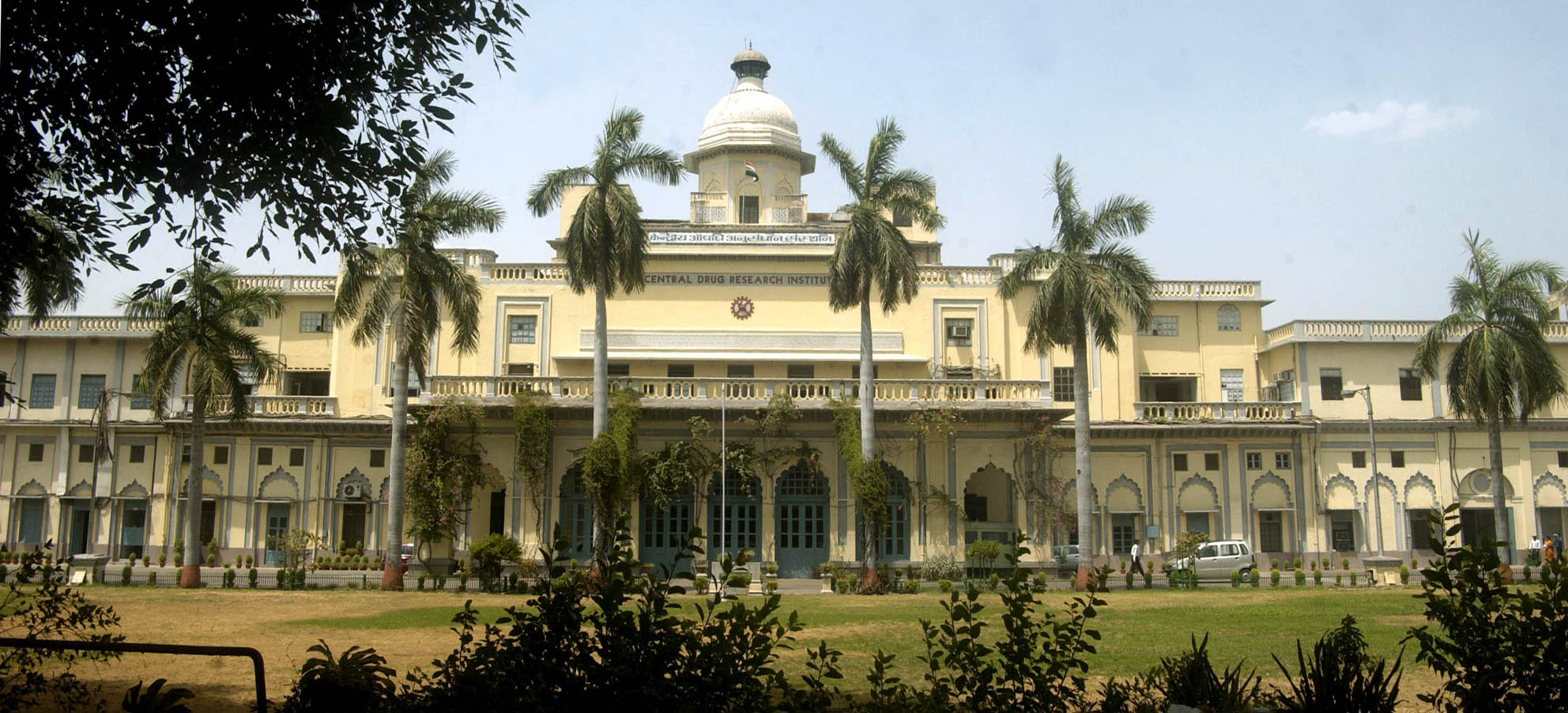
Uttar Pradesh has a prolonged tradition of education, although historically it was primarily confined to the elite class and religious schools. Sanskrit-based learning formed the major part of education from the Vedic to the Gupta periods. As cultures travelled through the region they brought their bodies of knowledge with them, adding Pali, Persian and Arabic scholarship to the community. These formed the core of Hindu-Buddhist-Muslim education until the rise of British colonialism. The present schools-to-university system of education owes its inception and development in the state (as in the rest of the country) to foreign Christian missionaries and the British colonial administration.
Schools in the state are either managed by the government or by private trusts. Hindi is used as a medium of instruction in most of the schools except those affiliated to the CBSE or the council for ICSE boards. Under the 10+2+3 plan, after completing secondary school, students typically enroll for two years in a junior college, also known as pre-university, or in schools with a higher secondary facility affiliated with the Uttar Pradesh Board of High School and Intermediate Education (commonly referred to as U.P. Board) or a central board. Students choose from one of three streams, namely liberal arts, commerce, or science. Upon completing the required coursework, students may enrol in general or professional degree programs. In a study done by Child Rights and You (CRY) and the Centre for Budgets, Governance, and Accountability (CBGA), Uttar Pradesh spent ₹9,167 per pupil, which is below the national average of ₹12,768.
The pupil/teacher ratio is 39:1, lower than the national average of 23:1. According to the National Bureau of Economic Research, the state reported the second-highest teacher absenteeism (31 per cent) in rural public schools among 19 surveyed states. According to an answer given by the Union Education Minister in 2020 in the Lok Sabha, about 17.1 per cent of all elementary teacher posts in government schools in Uttar Pradesh are vacant. In terms of absolute numbers, the figure stands at 210,000. In February 2024, the Uttar Pradesh government informed legislative assembly that, 85,152 posts of headmasters and assistant teachers are vacant in the state.

Uttar Pradesh has more than 45 universities, including six central universities, twenty eight state universities, eight deemed universities, two IITs in Varanasi and Kanpur, AIIMS Gorakhpur and AIIMS Rae Bareli, an IIM in Lucknow Founded in 1845, La Martinière Girls' College in Lucknow, stands as one of the oldest schools in India. Located in Amethi, Rajiv Gandhi Institute of Petroleum Technology (RGIPT), provides education and training in STEM fields, particularly emphasising the petroleum industry. With deemed university status, the RGIPT awards degrees in its own right.
King George's Medical University (KGMU), located in Lucknow, is an institution for medical education, research, and healthcare services. The Integral University, a state level institution, was established by the Uttar Pradesh Government to provide education in different technical, applied science, and other disciplines. The Central Institute of Higher Tibetan Studies was founded as an autonomous organisation by the national ministry of culture. Jagadguru Rambhadracharya Handicapped University is the only university established exclusively for the disabled in the world.
As of 2023, the state has 573 public libraries. Established in 1875, Maulana Azad Library is one of the oldest and is the largest university library in Asia. Rampur Raza Library is a repository of Indo-Islamic cultural heritage established in the last decades of the 18th century. It was established in 1774 by nawab Faizullah Khan and now an autonomous body under the Ministry of Culture. Thornhill Mayne Memorial also known as Allahabad Public Library, has an approximate collection of 125,000 books, 40 types of magazines, and 28 different newspapers in Hindi, English, Urdu and Bangla and it also contains 21 Arabic manuscripts. A large number of Indian scholars are educated at different universities in Uttar Pradesh. Notable scholars who were born, worked or studied in the geographic area of the state include Harivansh Rai Bachchan, Motilal Nehru, Harish Chandra and Indira Gandhi.
Tourism
Main article: Tourism in Uttar Pradesh

Uttar Pradesh ranks first in domestic tourist arrivals among all states of India. According to the Ministry of Tourism (Government of India), 1.6 million foreign tourists and approximately 317.91 million domestic tourists visited the state in 2023. The Taj Mahal attracts some 7 million people a year, earning almost in ticket sales in 2023-24. The state is home to three World Heritage Sites: the Taj Mahal, Agra Fort, and the nearby Fatehpur Sikri.
Religious tourism plays a significant role in the state's economy. Varanasi is a major religious hub and one of the seven sacred cities (Sapta Puri) in Hinduism and Jainism. Vrindavan is considered to be a holy place for Vaishnavism. Sravasti generally considered as revered sites in Buddhism, believed to be where the Buddha taught many of his Suttas (sermons). Owing to the belief as to the birthplace of Rama, Ayodhya (Awadh) has been regarded as one of the seven most important pilgrimage sites. Millions gather at Prayagraj to take part in the Magh Mela festival on the banks of the Ganges. This festival is organised on a larger scale every 12th year and is called the Kumbh Mela, where over 10 million Hindu pilgrims congregate in one of the largest gatherings of people in the world.
Buddhist attractions in Uttar Pradesh include stupas and monasteries. The historically important towns of Sarnath where Gautama Buddha gave his first sermon after his enlightenment and died at Kushinagar; both of which are important pilgrimage sites for Buddhists. Also at Sarnath are the Pillars of Ashoka and the Lion Capital of Ashoka, both important archaeological artefacts with national significance. At a distance of 80 km from Varanasi, Ghazipur is famous not only for its Ghats on the Ganges but also for the tomb of Lord Cornwallis, the 18th-century Governor of East India Company ruled Bengal Presidency. The tomb is maintained by the Archaeological Survey of India.
Jhansi Fort, located in the city of Jhansi, is closely associated with the "First War of Indian Independence", also known as the "Great Rebellion" or the Indian Rebellion of 1857. The fort is constructed in accordance with medieval Indian military architecture, featuring thick walls, bastions, and various structures within its complex. The architecture reflects a blend of Hindu and Islamic styles.
Healthcare
Uttar Pradesh has a mix of public as well as private healthcare infrastructure. Public healthcare in Uttar Pradesh is provided through a grid of primary health centers, community health centers, district hospitals, and medical colleges. Although an extensive network of public and private sector healthcare providers has been built, the available health infrastructure is inadequate to meet the demand for health services in the state. In 15 years to 2012–13, the population increased by more than 25 per cent. The public health centres, which are the frontline of the government's health care system, decreased by 8 per cent.
Smaller sub-centres, the first point of public contact, increased by no more than 2 per cent over the 25 years to 2015, a period when the population grew by more than 51 per cent. The state is also facing challenges such as a shortage of healthcare professionals, increasing cost of healthcare, a lack of essential medicines and equipment, the mushrooming of private healthcare and a lack of planning. The number of doctors registered with State Medical Councils or the Medical Council of India in Uttar Pradesh was 77,549.
In 2019, the number of government hospital in rural and urban areas of Uttar Pradesh stood at 4,442 with 39,104 beds and 193 with 37,156 beds respectively. The average population served per government hospital stands at 47,782 individuals. , Out-of-pocket expenditures in Uttar Pradesh is , highest in India.
A newborn in Uttar Pradesh is expected to live four years fewer than in the neighbouring state of Bihar, five years fewer than in Haryana and seven years fewer than in Himachal Pradesh. The state contributed to the largest share of almost all communicable and noncommunicable disease deaths, including 48 per cent of all typhoid deaths (2014); 17 per cent of cancer deaths and 18 per cent of tuberculosis deaths (2015). Its maternal mortality ratio is higher than the national average at 285 maternal deaths for every 100,000 live births (2021), with 64.2 per cent of pregnant women unable to access minimum ante-natal care. Around 42 per cent of pregnant women, more than 1.5 million, deliver babies at home. About two-thirds (61 per cent) of childbirths at home in the state are unsafe. It has the highest child mortality indicators, from the neonatal mortality rate to the under-five mortality rate of 64 children who die per 1,000 live births before five years of age, 35 die within a month of birth, and 50 do not complete a year of life.
Culture
Main article: Culture of Uttar Pradesh
Language and literature
Main article: Languages of Uttar Pradesh
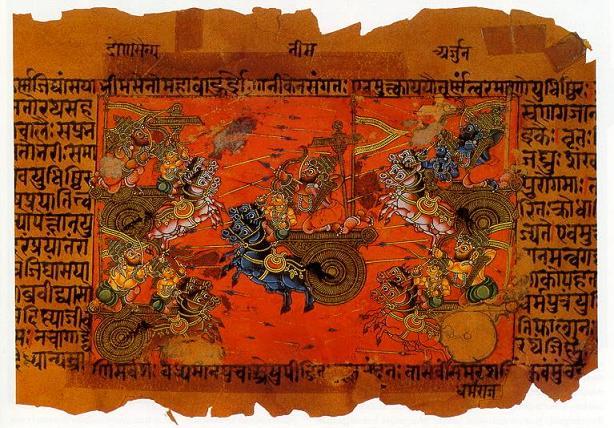
Several texts and hymns of the Vedic literature were composed in Uttar Pradesh. Renowned Indian writers who have resided in Uttar Pradesh were Kabir, Ravidas, and Tulsidas, who wrote much of his Ram Charit Manas in Varanasi. The festival of Guru Purnima is dedicated to Sage Vyasa, and also known as Vyasa Purnima as it is the day which is believed to be his birthday and also the day he divided the Vedas.
Hindi became the language of state administration with the Uttar Pradesh Official Language Act of 1951. A 1989 amendment to the act added Urdu, as an additional language of the state. There are numerous language varieties spoken in the state. The north and northwestern parts of the state speak Khadi Boli, the language variety from which Standard Hindi and Urdu developed. In the southwest is spoken Braj Bhasha, seen as the language of Krishna and an important literary language for Krishna Bhakti literature. To the east of Braj and Khadi Boli is Kannauji, a transitional dialect between western and eastern Hindi varieties. In the southwest of the state, south of the Yamuna, is spoken Bundeli. Awadhi, the language of the Ram Charit Manas, is spoken in the centre of the state with small pockets of Bagheli speakers in the far southeast. East of Awadhi is spoken Bhojpuri. Rather than having clean linguistic boundaries, these language varieties form part of one large dialect continuum covering north and east India, Pakistan and Bangladesh. In urban areas, Standard Hindi and Urdu are dominant, with Lucknow being a major centre for Urdu literature.
Music and dance
Main article: Music of Uttar Pradesh
With each district of Uttar Pradesh having its unique music and tradition, traditional folk music in Uttar Pradesh has been categorised in three different ways including music transmitted orally, music with unknown composers and music performed by custom. During the medieval period, two distinct types of music began to emerge in Uttar Pradesh. One was the courtly music, which received support from cities like Agra, Fatehpur Sikri, Lucknow, Jaunpur, Varanasi, and Banda. The other was the religious music stemming from the Bhakti Cult, which thrived in places like Mathura, Vrindavan, and Ayodhya.
The popular folk music of Uttar Pradesh includes sohar, which is sung to celebrate the birth of a child. Evolved into the form of semi-classical singing, Kajari sung during the rainy season, and its singing style is closely associated the Benares gharana. Ghazal, Thumri and Qawwali which is a form of Sufi poetry is popular in the Awadh region, Rasiya (especially popular in Braj), which celebrate the divine love of Radha and Krishna. Khayal is a form of semi-classical singing which comes from the courts of Awadh. Other forms of music are Biraha, Chaiti, Chowtal, Alha, and Sawani.
Kathak, a classical dance form, owes its origin to the state of Uttar Pradesh. Ramlila is one of the oldest dramatic folk dances; it depicts the life of the Hindu deity Rama and is performed during festivals such as Vijayadashami. Nautanki is a traditional form of folk theatre that originated in Uttar Pradesh. It typically portrays a variety of themes ranging from historical and mythological tales to social and political commentary. In the gharana dance form, both the Lucknow and the Benares gharanas are situated in the state. Charkula is popular dance of the Braj region.
Fairs and festivals

Chhath Puja is the biggest festival of eastern Uttar Pradesh. The Kumbh Mela, organised in the month of Maagha (February—March), is a major festival held every twelve years in rotation at Prayagraj on the river Ganges. Lathmar Holi is a local celebration of the Hindu festival of Holi. It takes place well before the actual Holi in the town of Barsana near Mathura. Taj Mahotsav, held annually at Agra, is a colourful display of the culture of the Braj area. Ganga Mahotsav, a festival of Kartik Purnima, is celebrated fifteen days after Diwali.
Cuisine
Main article: Cuisine of Uttar Pradesh
Mughlai cuisine is a style of cooking developed in the Indian subcontinent by the imperial kitchens of the Mughal Empire. It represents the cooking styles used in North India, especially Uttar Pradesh, and has been strongly influenced by Central Asian cuisine. Awadhi cuisine from the city of Lucknow consists of both vegetarian and non-vegetarian dishes. It has been greatly influenced by Mughlai cuisine.
Bhojpuri cuisine is a style of food preparation common in the districts located near the Bihar border. Bhojpuri foods are mostly mild and tend to be less hot in terms of spices used. The cuisine consists of both vegetable and meat dishes.
Explanatory notes
References
References
- (2 May 2017). "United Province, UP was notified in Union gazette on January 24, 1950". [[The New Indian Express]].
- "Uttar Pradesh District". Government of Uttar Pradesh.
- "List of districts in Uttar Pradesh". Government of India.
- PTI. (20 July 2019). "Anandiben Patel made UP governor, Lal ji Tandon to replace her in Madhya Pradesh". India Today.
- "The Governor of Uttar Pradesh". Uttar Pradesh Legislative Assembly.
- "Uttar Pradesh {{!}} History, Government, Map, & Population {{!}} Britannica". Encyclopedia Britannica.
- (29 July 2017). "List of Highest Mountain Peaks State-wise".
- "Handbook of Statistics of Indian States 2021–22".
- "India: Subnational HDI".
- (23 September 2024). "Annual Report, Periodic Labour Force Survey (PLFS) (July 2023 – June 2024)". National Sample Survey Office, Ministry of Statistics and Programme Implementation, Government of India.
- "Sex ratio of State and Union Territories of India as per National Health survey (2019–2021)".
- (11 October 2017). "If Uttar Pradesh were a country". Quartz India.
- "Agriculture". [[NITI Aayog]].
- Virendra N. Misra, Peter Bellwood. (1985). "Recent Advances in Indo-Pacific Prehistory: proceedings of the international symposium held at Poona". BRILL.
- Bridget Allchin, Frank Raymond Allchin. (1982). "The Rise of Civilization in India and Pakistan". Cambridge University Press.
- (1985). "Studies in Indian Archaeology: Professor H.D. Sankalia Felicitation Volume". Popular Prakashan.
- Confidence limits for the age are 85 (±11) and 72 (±8) thousand years ago.
- (2008). "Quaternary fluvial and eolian deposits on the Belan river, India: paleoclimatic setting of Paleolithic to Neolithic archeological sites over the past 85,000 years". Quaternary Science Reviews.
- Kenneth A. R. Kennedy. (2000). "God-apes and Fossil Men". University of Michigan Press.
- Bridget Allchin, Frank Raymond Allchin. (1982). "The Rise of Civilization in India and Pakistan". Cambridge University Press.
- Misra, V N. (November 2001). "Prehistoric human colonization of India". [[Indian Academy of Sciences]].
- "Uttar Pradesh – History".
- Sailendra Nath Sen. (1999). "Ancient Indian History And Civilization". New Age International.
- William Buck. (2000). "Ramayana". Motilal Banarsidass.
- Richard White. (2010). "The Middle Ground: Indians, Empires, and Republics in the Great Lakes Region, 1650–1815". Cambridge University Press.
- Marshall Cavendish Corporation. (2007). "World and Its Peoples: Eastern and Southern Asia". Marshall Cavendish.
- Pran Nath Chopra. (2003). "A Comprehensive History of Ancient India". Sterling Publishers Pvt. Ltd.
- The History of India by Kenneth Pletcher p. 102
- The City in South Asia by James Heitzman p. 37
- Singh, Pradyuman. (19 January 2021). "Bihar General Knowledge Digest". Prabhat Prakashan.
- Srivastava, Ashirvadi Lal. (1929). "The Sultanate of Delhi 711–1526 A D". Shiva Lal Agarwala & Company.
- (1998). "History of Civilizations of Central Asia". UNESCO.
- (20 June 2017). "Atala Masjid".
- Datta, Rangan. (22 July 2022). "The tomb of Ghiyasuddin Tughlaq".
- "The Islamic World to 1600: Rise of the Great Islamic Empires (The Mughal Empire)".
- John Stewart Bowman. (2000). "Columbia Chronologies of Asian History and Culture". Columbia University Press.
- Annemarie Schimmel. (2004). "The Empire of the Great Mughals: History, Art and Culture". Reaktion Books.
- (2006). "Babur Nama: Journal of Emperor Babur". Penguin Books India.
- Carlos Ramirez-Faria. (2007). "Concise Encyclopedia of World History". Atlantic Publishers & Dist.
- Stronge, Susan. (2012). "Mughal Hindustan is renowned for its opulence". The Arts of the Sikh Kingdoms.
- Ashvini Agrawal. (1983). "Studies in Mughal History". Motilal Banarsidass.
- Fergus Nicoll, ''Shah Jahan: The Rise and Fall of the Mughal Emperor'' (2009)
- Mayaram, Shail. (2003). "Against history, against state: counterperspectives from the margins Cultures of history". Columbia University Press.
- (3 May 2017). "Uttar Pradesh Day: How the state was born 67 years back".
- Gyanesh Kudaisya. (1994). "Region, nation, "heartland": Uttar Pradesh in India's body-politic". LIT Verlag Münster.
- K. Sivaramakrishnan. (1999). "Modern Forests: Statemaking and Environmental Change in Colonial Eastern India". Stanford University Press.
- Ashutosh Joshi. (2008). "Town Planning Regeneration of Cities". New India Publishing.
- Rudrangshu Mukherjee. (2005). "Mangal Pandey: brave martyr or accidental hero?". Penguin Books.
- (1934). "District Gazetteers of the United Provinces of Agra and Oudh: supp.D.Pilibhit District". Supdt., Government Press, United Provinces.
- Dilip K. Chakrabarti. (1997). "Colonial Indology: sociopolitics of the ancient Indian past". Munshiram Manoharlal Publishers Pvt. Ltd..
- Bernard S. Cohn. (1996). "Colonialism and Its Forms of Knowledge: The British in India". Princeton University Press.
- Clare M. Wilkinson-Weber. (1999). "Embroidering Lives: Women's Work and Skill in the Lucknow Embroidery Industry". SUNY Press.
- Mathur, Prakash Narain. "A History of the Lucknow Bench Of The Allahabad High Court". Allahabad High Court.
- K. Balasankaran Nair. (2004). "Law of Contempt of Court in India". Atlantic Publishers & Dist.
- Śekhara, Bandyopādhyāya. (2004). "From Plassey to Partition: A History of Modern India". [[Orient Longman]].
- Bandyopādhyāya, Śekhara. (2004). "From Plassey to Partition: A History of Modern India". [[Orient Longman]].
- Bankim Chandra Chatterji. (2006). "Anandamath". Orient Paperbacks.
- "Uttar Pradesh – States and Union Territories".
- (22 August 2007). "Uttar Pradesh". What is India.
- (6 August 2014). "Communal violence". [[Ananda Publishers]].
- communal violence, in uttar pradesh. "Communal conflicts in state". Tehalka.
- (1995). "Uttarakhand: Past, Present, and Future". Concept Publishing Company of India.
- "Most critical factors". Uttar Pradesh climate department.
- "Uttar Pradesh Geography". Uttar Pradesh State Profile.
- "The larger Gangetic Plain". Gecafs.
- "Gangetic Plains and Vindhya Hills and plateau.". [[Zee news]].
- Anwar, Shakeel. (16 August 2018). "List of major canals and dams in Uttar Pradesh". Dainik Jagran.
- "Indo–African Journal for Resource Management". Indo–African Journal for Resource Management and Planning.
- Anwar, Shakeel. "The Great Plains of India". Dainik Jagran.
- Clift, Charles. (1977). "Progress of Irrigation in Uttar Pradesh: East-West Differences". [[JSTOR]].
- R P Meena. "Uttar Pradesh Current Affairs Yearbook 2020". New Era Publication.
- "Rivers of Uttar Pradesh". [[The Economic Times]].
- "The Glossary of Meteorology". Allen Press Inc..
- "Agriculture Mechanization Guide for Uttar Pradesh".). Ministry of Agriculture, Government of India.
- "Potential Creation and Utilisation". Irrigation department U.P.
- "Purports to define every important meteorological term likely to be found in the literature today.". Allen Press, Inc..
- Vir Singh. (1998). "Mountain Ecosystems: A Scenario of Unsustainability". Indus Publishing.
- "Climate change impacts". Uttar Pradesh climate department.
- S.V.S. Rana. (2007). "Essentials of Ecology and Environmental Science". Prentice Hall of India.
- Government of Uttar Pradesh, Lucknow, Irrigation Department Uttar Pradesh. "Average rainfall pattern of Uttar Pradesh". Irrigation Department Uttar Pradesh.
- Upkar Prakashan – Editorial Board. (2008). "Uttar Pradesh General Knowledge". Upkar Prakashan.
- Sethi, Nitin. (13 February 2007). "Met dept blames it on 'western disturbance'". [[The Times of India]].
- "State Animal, Bird, Tree and Flower".
- "Music & Dance". Uttar Pradesh Tourism.
- "Uttar Pradesh Forest Corporation". Forest department uttar pradesh.
- "Forest and tree resources in states and union territories: Uttar Pradesh". Forest Survey of India, Ministry of Environment & Forests, Government of India.
- "Floral and Faunal Diversity of Uttar Pradesh". Uttar Pradesh State Biodiversity Board.
- "Aegyptica". Bsienvis.nic.in.
- "Bird Sanctuary". U.P tourism.
- "Sanctuary Park in U.P". U.P tourism.
- "Few patches of natural forest". State government of Uttar Pradesh.
- The Forests and biodiversity, in UP are important in many ways. "Miscellaneous Statistics". Ministry of Environment and Forests.
- "Conservation of the Avifauna". [[Dudhwa National Park]].
- "Bakhira Bird Sanctuary". UP Forest and Wildlife Department.
- "National Chambal Gharial Wildlife Sanctuary". National Chambal Sanctuary.
- "Chandra Prabha Wildlife Sanctuary And Picnic Spots". Uttar Pradesh Tourism.
- "Hastinapur Wild Life Sanctuary". P Forest and Wildlife Department.
- "Kaimoor Wild Life Sanctuary". Forest and Wildlife Department Uttar Pradesh.
- "Inside Okhla Bird Sanctuary". UP Forest and Wildlife Department.
- S. K. Agarwal. (1998). "Environment Biotechnology". APH Publishing.
- "Processing of manuscripts of Fauna". Indian Government.
- "State division of Uttar Pradesh". Government of India.
- "Indian Districts by population".
- "Objectives & Functions {{!}} Division Prayagraj, Government of Uttar Pradesh {{!}} India".
- (1947). "Panchayati Raj Act, 1947 – Chapter 6 – The Nyaya Panchayat".
- (1947). "Panchayati Raj Act, 1947".
- "Panchayati Raj Uttar Pradesh".
- "State Election Commission::UP".
- [https://urbandevelopment.up.nic.in/ https://urbandevelopment.up.nic.in/contact.html]
- "The Uttar Pradesh Kshettra Panchayats and Zila Panchayats Adhiniyam, 1961 {{!}} Ministry Of Panchayati Raj {{!}} India".
- (30 August 2010). "Panels to draft development plans for 13 cities". [[The Indian Express]].
- "The area and density of metropolitan cities". The Ministry of Urban Development.
- "Provisional population totals, Census of India 2011". Census of India 2011.
- "Provisional population totals paper 1 of 2011 : Uttar Pradesh". Census of India 2011.
- "Seventy-fourth Constitutional Amendment".
- "THE UTTAR PRADESH MUNICIPALITIES ACT, 1916".
- (1959). "Uttar Pradesh Municipal Corporation Act, 1959".
- (1959). "Uttar Pradesh Municipal Corporation Act, 1959".
- (1976). "U.P. Industrial Development Act – 1976 (U.P. Act Number 6, of 1976)".
- (1976). "U.P. Industrial Development Act – 1976 (U.P. Act Number 6, of 1976)".
- Khan, Atiq. (16 November 2011). "Maya splits U.P. poll scene wide open". [[The Hindu]].
- "A-2: DECADAL VARIATION IN POPULATION SINCE 1901". Registrar General and Census Commissioner of India.
- "The density of population in U.P.". Environment and Related Issues Department U.P.
- "Provisional population totals". Census of India 2011.
- (16 November 2022). "World population grew by a billion in past 12 yrs & 5% came from just UP & Bihar, data shows". ThePrint.
- "Statistics of Uttar Pradesh". Government of Uttar Pradesh.
- "Scheduled castes and scheduled tribes". Office of the Registrar General & Census Commissioner, India.
- "Indigenous Peoples Policy Framework". World Bank.
- "Census 2011 (Final Data) – Demographic details, Literate Population (Total, Rural & Urban)". Planning Commission, Government of India.
- (16 July 2021). "Higher Female Foeticide, Targeted Harassment: UP's Population Control Bill May Be Dangerous". The Wire (India).
- (16 February 2017). "How one Uttar Pradesh district is using technology to prevent sex-selective abortions". Scroll.in.
- "Decennil growth of population by census". Census of India (2011).
- "Decennial growth rate and density for 2011 at a glance for Uttar Pradesh and the districts: provisional population totals paper 1 of 2011". Census of India(2011).
- "Uttar Pradesh Profile". Census of India 2011.
- "A comparison of the literacy rates". censusmp.gov.in.
- "Literacy rate in Uttar Pradesh". Census of India 2011.
- (8 September 2020). "UP literacy rate poor than national average: Report". Hindustan Times.
- "Uttar Pradesh Poverty, Growth & Inequality". World Bank.
- "The state with large no. of peoples living below poverty line". Press Information Bureau.
- "Press Note on Poverty Estimates, 2011–12". Government of India.
- (7 April 2020). "Per Capita Income of Indian States 2019–20". Jagran Josh.
- "U.P religions by numbers". N. Ravi.
- "Muslim population grew faster: Census".
- "Table C-16: Language by States and Union Territories – Uttar Pradesh".
- "Report of the Commissioner for linguistic minorities: 52nd report (July 2014 to June 2015)". Commissioner for Linguistic Minorities, Ministry of Minority Affairs, Government of India.
- Experts, Disha. (1 July 2020). "Amazing Uttar Pradesh – General Knowledge for UPPSC, UPSSSC & other Competitive Exams". Disha Publications.
- "Language – India, States and Union Territories". Office of the Registrar General.
- "Uttar Pradesh Vidhan Parishad structure". [[Government of India]].
- "Uttar Pradesh Vidhan Sabha structure". [[Government of India]].
- Four other states seen as a barometer of support for the federal government.. "Legislative elections in Uttar Pradesh". [[Al Jazeera Arabic.
- Grover, Verinder. (1989). "Legislative Council in State Legislatures". Deep & Deep Publications.
- "Composition of Rajya Sabha". Rajya Sabha Secretariat.
- "Role of The Governor". Raj Bhavan Uttar Pradesh.
- "Constitutional Setup".
- Laxmikanth, M.. (2014). "Governance in India". McGraw Hill Education.
- Maheshwari, S.R.. (2000). "Indian Administration". Orient Blackswan Private Ltd..
- Singh, G.P.. (1993). "Revenue administration in India: A case study of Bihar". Mittal Publications.
- "Contact Details of Commissioners and District Magistrates of U.P.".
- "Revenue {{!}} District Varanasi, Government of Uttar Pradesh {{!}} India".
- "LIST OF ABBREVIATIONS". Government of Uttarakhand.
- "Uttar Pradesh judiciary". Maps of India.
- "The Uttar Pradesh Judicial Service Rules, 2001". Allahabad High Court.
- "The History and Role of Subordinate Civil Judiciary in Uttar Pradesh". Allahabad High Court.
- "Subordinate Civil Judiciary in Uttar Pradesh". [[Allahabad High Court]].
- (20 October 2020). "Casteism and social apartheid the norm in Uttar Pradesh". The Frontline.
- "UP: the nerve center of politics". [[Zee news]].
- (19 August 2018). "In Custody: Six died daily in four months". The New Indian Express.
- (14 May 2018). "More bad news for Yogi Adityanath as data show UP tops crime chart". India Today.
- "NHRC registered 1,782 fake encounter cases between 2000–2017; Uttar Pradesh alone accounts for 44.55%". Firstpost.
- Pervez Iqbal Siddiqui. (30 October 2011). "UP tops in crime, low on 'criminality'". [[The Times of India]].
- (14 March 2018). "Uttar Pradesh tops the list of communal violence hit states in 2017: Govt". The Economic Times.
- (14 March 2018). "Communal Violence Goes Up In Country, Uttar Pradesh Still Tops List". NDTV.
- "Human Development Index Across Indian States: Is the Glass Still Half Empty?". State Bank of India.
- "UP fails to improve human development index ranking in 27 years". Hindustan Times.
- (December 2008). "Uttar Pradesh Human Development Report".
- (22 October 2011). "India Human Development Report report raps Gujarat, praises UP and Bihar". [[The Times of India]].
- Shafi, Alam. "The strength of Armed Police in Uttar Pradesh". [[National Crime Records Bureau]].
- "General Information".
- "Highlight of criminal statistics". Ministry of statistics and program implementation.
- (3 December 2023). "UP sees 6.5% rise in road accidents, 4% in fatalities this yr, says govt data". Express News Service.
- (7 January 2017). "At 23,219, UP reports highest number of road, rail accident". Bennett, Coleman & Co. Ltd..
- "An accident reported every two hours in UP: Fatal accidents in the state".
- (20 July 2012). "A powerful bomb placed in". [[Zee news]].
- "Sankat Mochan Hanuman temple blast". '[[Rediff.com]].
- (7 December 2010). "Varanasi blast". [[NDTV]].
- Swami, Praveen. (25 November 2007). "Uttar Pradesh bombings mark new phase". [[The Hindu]].
- Swami, Praveen. (26 December 2007). "Wiretap warning on Uttar Pradesh bombings went in vain". [[The Hindu]].
- (25 November 2011). "Massive terror attacks". The Sunday Indian.
- "Chronology of recent terror attacks". [[Yahoo]].
- (5 March 2009). "Freak blast sets panic alarm ringing". Bennett, Coleman & Co. Ltd..
- "Gross State Domestic Product by Economic Activity (crore Rs) Uttar Pradesh".
- Khullar, Vatsal. (20 February 2018). "Uttar Pradesh Budget Analysis 2018–19".
- "TABLE 27: GROSS STATE DOMESTIC PRODUCT".
- . (2015). ["Uttar Pradesh: A Rainbow Land"](https://www.ibef.org/download/Uttar%20Pradesh-November-2015.pdf). *[[India Brand Equity Foundation]]*.
- "Indian sugar mills association".
- Goyal, Malini. (9 June 2013). "SMEs employ close to 40% of India's workforce, but contribute only 17% to GDP". The Economic Times.
- "Details of financing & limits of accommodation". UPFC India.
- "A statement of the categories of documents that are held by the Corporation.". Uttar Pradesh Financial Corporation.
- "The budget allocated to each of its agency". UPFC India.
- Rawat, Virendra Singh. (27 March 2016). "Private investment under Akhilesh government more than doubles". Business Standard India.
- "10. Uttar Pradesh – World Bank Survey: India's top 10 states on the ease of doing business ranking – The Economic Times".
- Husain, Saman. (13 August 2025). "Trump's 50% tariff: Beginning to get foothold in US market, Agra's leather belt takes a hit".
- (7 August 2025). "UP govt's new policy aims to boost leather manufacturing, exports".
- (23 October 2019). "Finance commission asks Uttar Pradesh to bring down its debt burden". Hindustan Times.
- (14 June 2011). "State slipping into debt burden". [[The Times of India]].
- (1 May 2020). "Unemployment in Uttar Pradesh increased 11.4 pct points, rose to 21.5% in Apr 2020: CMIE Survey". [[Mint (newspaper).
- (26 July 2019). "What the 2011 census data on migration tells us". Hindustan Times.
- (30 July 2019). "Migrants seem to prefer neighbouring States for livelihood". The Hindu Group.
- "Census of India 2001 – Data Highlights". Government of India.
- Singh, Mahendra. (21 October 2013). "Eastern UP, not Bundelkhand, most backward: Govt data".
- (31 December 2021). "A study of disparities in the socio-economic development of eastern Uttar Pradesh, India". National Geographical Journal of India.
- Raghuvanshi, Umesh. (7 September 2023). "Regional disparities persist, west U.P. far ahead of east".
- (4 January 2016). "Noida-Greater Noida's world class infrastructure to be highlighted in UP Pravasi Diwas". [[The Times of India]].
- "Investment climate of a state". IBEF organization.
- (14 March 2009). "Service sector over the present crisis". [[The Economic Times]].
- "Statistical Diary of Uttar Pradesh".
- (13 May 2011). "Only 5 states exceed 11th Plan growth targets: Govt: Ruled by CNBC TV18 News". [[CNBC]] TV18-MoneyControl Post.
- "RBI releases Study on State Finances 2009–10". [[Reserve Bank of India]] (RBI).
- "Ministry of statistics and Program Implementation". Ministry of statistics and Program Implementation Govt. Of India.
- "Small scale industries and other small trades.". Ministry of Small Scale Industries.
- "total railway route length uttar pradesh". Northern Railways Lucknow Division.
- "The Network". Ministry of Railways.
- "North Central Railway-The Allahabad Division". Indian Railways Portal CMS Team.
- "the Portal of Indian Railways". [[Indian Railways]].
- "Equipment arrives for integrated security system". [[The Times of India]].
- (2 July 2012). "Lucknow New Delhi Shatabdi Express". [[The Times of India]].
- "Introducing the Railway Budget 2011–12". [[Indian Railways]].
- Investment Promotion & Infrastructure Development Cell. "Road". Department of Industrial Policy and Promotion.
- "Basic Road Statistics, 2018 - 19". Ministry of Road Transport and Highways of India.
- "Road network". India Brand Equity Foundation.
- (24 June 2024). "UPSRTC to replace 45% of its existing fleet with e-buses". [[Hindustan Times]].
- (26 March 2019). "UPSRTC has set a new record by registering the highest profit among all state transport undertakings". Times of India.
- "Welcome :: U.P. Expressways Industrial Development Authority".
- "Pervasive road network of Uttar Pradesh". Planning commission, Government of India.
- "contributing to economic growth and prosperity of the nation". Airports Authority of India.
- Kumar, Mayank. (30 November 2023). "The over-promise of Uttar Pradesh's Kushinagar International Airport".
- (7 January 2013). "Kushinagar international airport to get ready for take-off". Virendra Singh Rawat.
- "PM inaugurates Maharishi Valmiki International Airport at Ayodhya Dham".
- "DFCCIL".
- (9 March 2021). "UP gets its 8th airport". mint.
- (27 October 2025). "Four UP airports shut down during winter schedule 2025".
- Sahu, Rajesh Kumar. (26 October 2025). "7 new Uttar Pradesh airports closed after inauguration: Shravasti gets airport despite no railway station; multiple facilities built within 50–70 km".
- (21 June 2013). "UP to seek DGCA nod for Taj airport". Hindustan Times.
- "Hindustan Times e-Paper". Hindustan Times.
- (24 June 2017). "Jewar to be second airport in Delhi NCR". The Economic Times.
- (7 November 1985). "About Indira Gandhi Rashtriya Uran Akademi".
- Sinha, Saurabh. (23 October 2021). "Haryana signs up with IGRUA & Drone Destination to train personnel for speedy implementation of schemes".
- Rao, Mohan. (2005). "From Population Control To Reproductive Health: Malthusian Arithmetic". Sage Publications.
- (19 April 2012). "Hapless victim of a TV sting, this hockey player is now a rising star". [[The Indian Express]].
- (29 July 2013). "Uttar Pradesh: Sports". Jagran Prakashan Limited.
- "Uttar Pradesh win Ranji Trophy". [[Rediff.com]].
- "UP to get one more cricket stadium by 2011". First Published:PTI, Friday, 27 November 2009, 21:26.
- Singh, Prithviraj. (24 October 2021). "Akhara body caught in successor row after UP mahant's 'murder', 1 group claims leader is elected".
- "District Football Association Kanpur – Uttar Pradesh Football Sangh".
- (6 September 2023). "Arunachal Pradesh to host Final Rounds of 77th National Football Championship for Santosh Trophy".
- "About Us – Uttar Pradesh Football Sangh".
- (22 June 2023). "Up Players Dominate In Badminton C'ship".
- (18 November 2011). "The Buddh International Circuit (BIC), which played host to India's first Formula One Grand Prix". [[CNN-IBN]].
- (24 October 2013). "Why India's Formula 1 Grand Prix is under threat". BBC News.
- "Islamic religious schools". [[The Times of India]].
- "British colonial administration system in state education system". State Education Board.
- "Uttar Pradesh Facts & Figures". Uttar Pradesh education department.
- Jain, Isha. (12 May 2017). "At Rs 9, 167, UP spends least on per child school education, reveals study".
- Balani, Khushboo. (7 January 2017). "Uttar Pradesh has India's largest population of children, but least teachers per student".
- "The Fiscal Cost Of Weak Governance: Evidence From Teacher Absence In India".
- (20 September 2020). "17% of teaching posts in govt schools vacant".
- (6 February 2024). "85,152 posts of headmasters and assistant teachers are vacant in Uttar Pradesh, says state government".
- "List of universities".
- "List of Universities in Uttar Pradesh". Education department of U.P.
- "Official Website of IIM Lucknow". [[IIM Lucknow]].
- "India's Best Schools, 2014". Rediff.com.
- "The Integral University Lucknow state level institution". Government of Uttar Pradesh.
- Ragini, Dikshit. (10 July 2007). "चित्रकूट: दुनिया का प्रथम विकलांग विश्वविद्यालय". Jansatta Express.
- "No. of public libraries in different States and Union Territories". Ministry of Culture, Government of India.
- "Public Library network". Government of Uttar Pradesh.
- "Top libraries of UP". Government of Uttar Pradesh.
- (23 September 2014). "Public library witnesses 37% increase in readers".
- (4 September 2018). "List of Famous Freedom Fighters from Uttar Pradesh".
- Upkar Prakashan – Editorial Board. (2010). "Uttar Pradesh General Knowledge". Upkar Prakashan.
- (2011). "Performance of Tourist Centres in Uttar Pradesh: An Evaluation Using Data Envelopment Analysis". Administrative Staff College of India.
- "Arrivals of Foreign Tourist".
- (5 April 2025). "Taj Mahal tops ASI charts with INR 98 crore ticket sales in FY24, outshines Red Fort".
- "Taj Mahal".
- "Agra Fort".
- "Fatehpur Sikri".
- (2018). "Understanding World Geography". John Wiley & Sons.
- Eck, Diana. (2013). "Banaras, the City of Light". Alfred Knopf Inc, [Columbia University Press].
- Parry, Jonathan P.. (2000). "Death in Banaras". Cambridge University Press.
- (2020). "Krishna's Playground: Vrindavan in the 21st Century". Oxford University Press.
- Gopal, Madan. (1990). "India through the ages". Publication Division, Ministry of Information and Broadcasting, Government of India.
- (7 February 2019). "Ministry of Tourism presents its latest webinar on "In the Footsteps of the Buddha" under Dekho Apna Desh Webinar Series".
- Paramasivan, Vasudha. (2009). "Patronage and Popularisation, Pilgrimage and Procession". Otto Harrassowitz Verlag.
- "District Ayodhya – Government of Uttar Pradesh: City Of Lord Rama: India".
- "About District".
- MacLean, Kama. (2008). "Pilgrimage and Power: The Kumbh Mela in Allahabad, 1765–1954". Oxford University Press.
- (12 February 2010). "Hindus gather for the Kumbh Mela at the Ganges in India and Maha Shivaratri in Allahabad". The Daily Telegraph.
- "Sarnath General Information". Tourism department of Varanasi.
- Joon, Sanjeev. "Complete Guide for SSC". Tata McGraw-Hill Education.
- "Jhansi Fort". Government of Uttar Pradesh.
- "Ticketed Monuments – Uttar Pradesh jhansi Fort". Archaeological Survey of India.
- (1 July 2014). "Health status and health care services in Uttar Pradesh and Bihar: A comparative study". Indian Journal of Public Health.
- (2013). "Annual Health Survey 2012–13 Fact Sheet – Uttar Pradesh". [[Ministry of Home Affairs (India).
- (11 May 2019). "India facing critical shortage of healthcare providers: WHO". The Hindu.
- "Doctors Registered". The Ministry Of Health And Family Welfare.
- "State/UT wise Number of Government Hospitals". Directorate General of State Health Services.
- "Out Of Pocket Expenditure Data". Department Of Health And Family Welfare.
- "Maternal & Adolescent Healthcare". Ministry of Health & Family Welfare (MoHFW).
- "Maternal Mortality Ratio (MMR) (Per 100000 Live Births)". NITI Aayog.
- (8 February 2017). "Uttar Pradesh has a free ambulance service for pregnant women but substandard hospitals". Scroll.in.
- "State of Urban Health in Uttar Pradesh – Urban Health Resource Center". [[Ministry of Health and Family Welfare]], [[Government of India]].
- "Estimates of mortality indicators". Census of India.
- (2015). "Rural Health Statistics 2014–15".
- (2008). "Awakening Indians to India". Chinmaya Mission.
- "Uttar Pradesh Legislature". U.P assembly.
- "The Uttar Pradesh Official Language (Amendment) Act, 1989".
- "Ethnologue report for language code: bfy". Ethnologue.
- Frawley, William. (May 2003). "International Encyclopedia of Linguistics: 4-Volume Set". Oxford University Press.
- (10 March 2016). "Visit the land of the Taj for some Hindustani music & dance".
- (12 July 2018). "List of Folk Music of Uttar Pradesh".
- Walker, Margaret E.. (2016). "India's Kathak Dance in Historical Perspective". Routledge.
- (1977). "The Ramlila of Ramnagar [India]". The MIT Press.
- Goyal, Shikha. (3 January 2022). "List of Folk Dances of Different States in India".
- (10 January 2022). "Kathak: The cultural gem of Uttar Pradesh". The Statesman.
- "Charkula Dance".
- (18 October 2021). "Chhath puja and the centrality of the Purvanchal community in Delhi politics".
- Maclean, Kama. (2003). "Making the Colonial State Work for You: The Modern Beginnings of the Ancient Kumbh Mela in Allahabad". The Journal of Asian Studies.
- (21 March 2016). "What is Lathmar Holi? Why is it celebrated?". India Today.
- (19 March 2011). "The Braj Holi: Legend in real life". [[Hindustan Times]].
- "The glorious traditions and mythological legacy". Department of tourism U.P.
- (16 January 2022). "How is Awadhi Cuisine different from Mughlai Cuisine". The Times of India.
- (24 May 2021). "Bhojpuri: सवाद के सरताज ह फुटेहरी, रउआ सभे खइले जरूर होखब!".
This article was imported from Wikipedia and is available under the Creative Commons Attribution-ShareAlike 4.0 License. Content has been adapted to SurfDoc format. Original contributors can be found on the article history page.
Ask Mako anything about Uttar Pradesh — get instant answers, deeper analysis, and related topics.
Research with MakoFree with your Surf account
Create a free account to save articles, ask Mako questions, and organize your research.
Sign up freeThis content may have been generated or modified by AI. CloudSurf Software LLC is not responsible for the accuracy, completeness, or reliability of AI-generated content. Always verify important information from primary sources.
Report