From Surf Wiki (app.surf) — the open knowledge base
Utrecht (province)
Province of the Netherlands
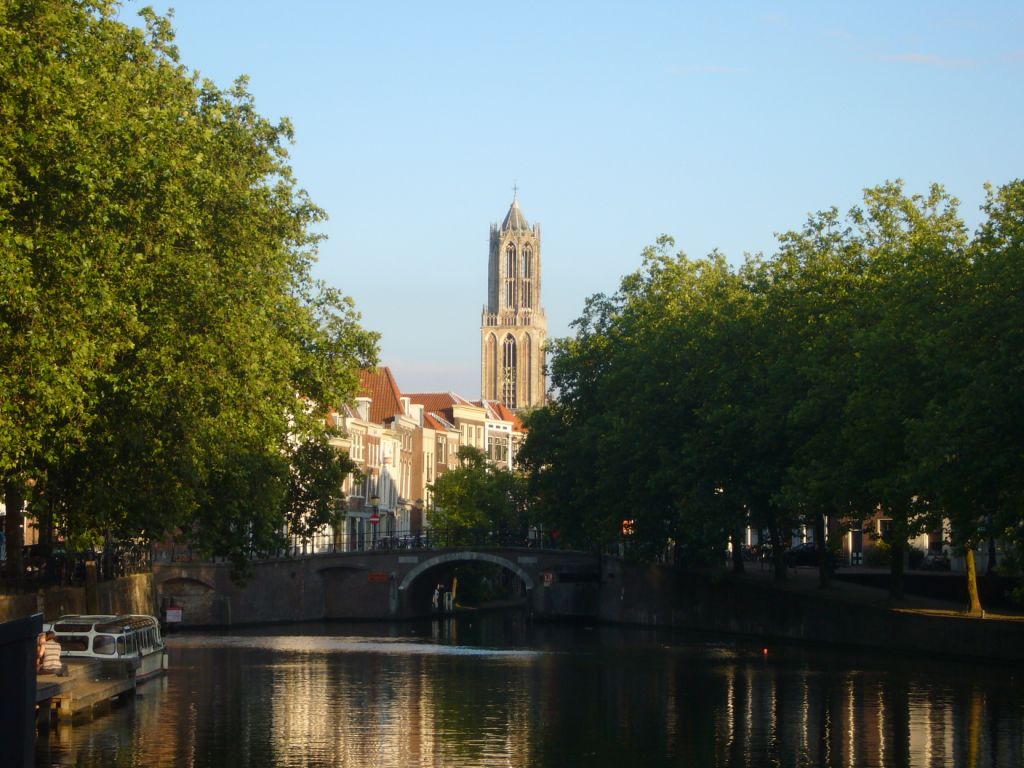
Province of the Netherlands
| Field | Value | |
|---|---|---|
| <!-- See Template:Infobox settlement for additional fields and descriptions --> | name | Utrecht |
| official_name | Province of Utrecht | |
| nl | ||
| native_name | nl | |
| image_shield | File:Utrecht provincie wapen.svg | |
| image_flag | Utrecht (province)-Flag.svg | |
| settlement_type | Province | |
| image_map | Utrecht in the Netherlands.svg | |
| map_caption | Location of Utrecht in the Netherlands | |
| image_map1 | Prov-Utrecht-OpenTopo.jpg | |
| map_caption1 | Topography map of Utrecht | |
| coordinates | ||
| subdivision_type | Country | |
| subdivision_name | Netherlands | |
| established_title | ||
| seat_type | Capital | |
| (and largest city) | ||
| seat | Utrecht | |
| seat1_type | Largest city | |
| leader_title | King's Commissioner | |
| leader_name | Hans Oosters | |
| leader_party | PvdA | |
| leader_title1 | Council | |
| leader_name1 | Provincial Council of Utrecht | |
| anthem | Langs de Vecht en d'oude Rijnstroom | |
| unit_pref | Metric | |
| area_footnotes | (2023) | |
| area_total_km2 | 1560 | |
| area_land_km2 | 1484 | |
| area_water_km2 | 76 | |
| area_rank | 12th | |
| population_footnotes | ||
| population_total | 1,387,643 | |
| population_as_of | 1 January 2023 | |
| population_density_km2 | 935 | |
| population_density_rank | 3rd | |
| population_rank | 5th | |
| demographics_type2 | GDP | |
| demographics2_footnotes | ||
| demographics2_title1 | Total | |
| demographics2_info1 | €99.348 billion (2023) | |
| demographics2_title2 | Per capita | |
| demographics2_info2 | €76,716 (2023) | |
| iso_code | NL-UT | |
| blank_name_sec2 | HDI (2023) | |
| blank_info_sec2 | 0.969 | |
| · 1st of 12 | ||
| website | www.provincie-utrecht.nl | |
| image_blank_emblem | Utrecht.svg | |
| blank_emblem_type | Brandmark | |
| blank_emblem_size | 120px |
nl (and largest city) · 1st of 12
Utrecht (), officially the Province of Utrecht (), is a province of the Netherlands. It is located in the centre of the country, bordering the Eemmeer in the north-east, the province of Gelderland in the east and south-east, the province of South Holland in the west and south-west and the province of North Holland in the north-west and north. The province of Utrecht has a population of about 1,388,000 as of January 2023. With a land area of approximately 1484 km2, it is the second smallest province in the country. Apart from its eponymous capital, major cities and towns in the province are Amersfoort, Houten, IJsselstein, Nieuwegein, Veenendaal and Zeist. The busiest railway station in the Netherlands, Utrecht Centraal, is located in the province of Utrecht.
History
The Bishopric of Utrecht was established in 695 when Saint Willibrord was consecrated bishop of the Frisians at Rome by Pope Sergius I. With the consent of the Frankish ruler, Pippin of Herstal, he settled in an old Roman fort in Utrecht. After Willibrord's death the diocese suffered greatly from the incursions of the Vikings. Better times appeared during the reign of the Saxon emperors, who frequently summoned the Bishops of Utrecht to attend the imperial councils and diets. In 1024 the bishops were made Princes of the Holy Roman Empire and the new Prince-Bishopric of Utrecht was formed. In 1122, with the Concordat of Worms, the Emperor's right of investiture was annulled, and the cathedral chapter received the right to elect the bishop. It was, however, soon obligated to share this right with the four other collegiate chapters in the city. The Counts of Holland and Guelders, between whose territories the lands of the Bishops of Utrecht lay, also sought to acquire influence over the filling of the episcopal see. This often led to disputes and consequently the Holy See frequently interfered in the election. After the middle of the 14th century the popes repeatedly appointed the bishop directly without regard to the five chapters.
During the Hook and Cod Wars, Utrecht was fought over by forces of the Duke of Burgundy leading to the First Utrecht Civil War (1470–1474) and Second Utrecht Civil War (1481–1483).
In 1527, the Bishop sold his territories, and thus his secular authority, to Holy Roman Emperor Charles V and the principality became an integral part of the Habsburg dominions, which already included most other Dutch provinces. The chapters transferred their right of electing the bishop to Charles V and his government, a measure to which Pope Clement VII gave his consent, under political pressure after the Sack of Rome. However, the Habsburg rule did not last long, as Utrecht joined in the Dutch Revolt against Charles' successor Philip II in 1579, becoming a part of the Dutch Republic.
In World War II, Utrecht was held by German forces until the general capitulation of the Germans in the Netherlands on May 5, 1945. It was occupied by Canadian Allied forces on May 7, 1945. The towns of Oudewater, Woerden, Vianen and Leerdam were transferred from the province of South Holland to Utrecht in 1970, 1989, 2002 and 2019 respectively. In February 2011, Utrecht, together with the provinces of North Holland and Flevoland, showed a desire to investigate the feasibility of a merger between the three provinces. This has been positively received by the Dutch cabinet, for the desire to create one Randstad province has already been mentioned in the coalition agreement. The province of South Holland, part of the Randstad urban area, visioned to be part of the Randstad province, and very much supportive of the idea of a merger into one province, is not named. With or without South Holland, if created, the new province would be the largest in the Netherlands in both area and population.
Geography
In the east of Utrecht lies the Utrecht Hill Ridge (Dutch: Utrechtse Heuvelrug), a chain of hills left as lateral moraine by tongues of glacial ice after the Saline glaciation that preceded the last ice age. Because of the scarcity of nutrients in the fast-draining sandy soil, the greatest part of a landscape that was formerly heath has been planted with pine plantations. The south of the province is a river landscape. The west consists mostly of meadows. In the north are big lakes formed by the digging of peat from bogs formed after the last ice age; these lakes are now popular recreational areas for boating, fishing, and water sports.
Nature

One of the most attractive natural areas in the province is the Vechtstreek ("Vecht region"), situated on either side of the Vecht river.
An international nature conservation organisation that has settled the head office of its Netherlands branch in this province (at Zeist) is the WWF.
"Natuur en Milieu" ("Nature and Environment") is a national nature protection organisation whose head office is in this province (at Utrecht city).
Municipalities
Main article: List of municipalities in Utrecht
The Province of Utrecht is divided into 26 municipalities.
- Amersfoort
- Baarn
- Bunnik
- Bunschoten
- De Bilt
- De Ronde Venen
- Eemnes
- Houten
- IJsselstein
- Leusden
- Lopik
- Montfoort
- Nieuwegein
- Oudewater
- Renswoude
- Rhenen
- Soest
- Stichtse Vecht
- Utrecht
- Utrechtse Heuvelrug
- Veenendaal
- Vianen
- Vijfheerenlanden
- Wijk bij Duurstede
- Woerden
- Woudenberg
- Zeist
Demographics
| Country/Territory | Population | |
|---|---|---|
| NED Netherlands | ||
| MAR Morocco | ||
| IDN Indonesia | ||
| TUR Turkey | ||
| GER Germany | ||
| SUR Suriname | ||
| NLD Dutch Caribbean | ||
| POL Poland | ||
| SOV Soviet Union | ||
| UK UK | ||
| CHN China | ||
| YUG Yugoslavia | ||
| BEL Belgium | ||
| IRQ Iraq | ||
| IND India | ||
| Other |
Religion
In 2015, 20.3% of the population belonged to the Protestant Church in the Netherlands, while 13.2% were Roman Catholic, 6.6% belonged to other churches or faiths, and 5.6% were Muslim. Over half of the population (54.3%) identified as non-religious.
Economy
The Gross domestic product (GDP) of the region was 71.5 billion € in 2018, accounting for 9.2% of the Netherlands economic output. GDP per capita adjusted for purchasing power was 47,900 € or 159% of the EU27 average in the same year.
Anthem
Langs de Vecht en d'oude Rijnstroom is the de facto provincial anthem of Utrecht. Its text was written in 1952 by the provincial employee Jan Küppers, on the melody of "Angels from the Realms of Glory" by the British 19th-century composer Henry Smart. The song references the Utrecht rivers Vecht and Old Rhine, as well Willibrord, the first Bishop of Utrecht, who laid the province's foundation.
;Lyrics
|Langs de d'oude Rijnstroom Strekt zich wijd het Stichtse land. Willibrord ontstak uw fakkel, Die onblusbaar verder brandt; Waar 's Lands Unie werd geboren, Utrecht, hart van Nederland!
Utrecht, parel der gewesten, 'k Min uw bos en lustwarand'. 'n Eigen stempel draagt uw landschap: Plas, rivier of heid' en zand, Weid' en bongerd, bont verscheiden, Utrecht, hart van Nederland!
Utrecht, nobel, nijver Utrecht, Middelpunt naar alle kant, Aan uw eigen stijl en schoonheid Houd ik steeds mijn zin verpand. Blijv' in goed' en kwade dagen: Utrecht, hart van Nederland!
|Along the old Rhine stream Extends the Sticht land wide. Willibrord lit thy torch, Which quenchless burns further; Where the country's union was born, Utrecht, heart of Netherland!
Utrecht, pearl of regions, I cherish thy forest and leisure ground, An own mark carries thy landscape: Puddle, river, or heath and sand, Meadow and orchard, bright varied, Utrecht, heart of Netherland!
Utrecht, noble, diligent Utrecht, Midpoint to each side, To thy own style and beauty I keep pledged my word. Remaining in good and bad times: Utrecht, heart of Netherland!}}
Notable residents
- Pope Adrian VI (1459–1523), the only Dutch pope.
- C. H. D. Buys Ballot (1817–1890), Dutch chemist and meteorologist.
- Mohamed Ihattaren (born 2002), Dutch professional footballer
- Piet Mondrian (1872–1944), Dutch painter
- Gerrit Rietveld (1888–1964), Dutch furniture designer and architect
- Marco van Basten (born 1964), Dutch football manager
- Theo van Doesburg (1883–1931), Dutch artist
Notes
References
References
- [https://allecijfers.nl/provincie/utrecht/#100-onderwerpen Statistieken provincie Utrecht - Gegevens over meer dan 100 onderwerpen!], AlleCijfers.nl
- "CBS StatLine".
- "EU regions by GDP, Eurostat".
- "Sub-national HDI - Area Database - Global Data Lab".
- Gerling, Marco. (2019-07-04). "Utrecht Centraal blijft drukste station van Nederland, station Leidsche Rijn groeit het snelst". [[Algemeen Dagblad]].
- (4 February 2011). "Drie provincies denken over fusie".
- (2011-02-04). "Randstadprovincies bekijken fusie".
- (4 February 2011). "Randstadprovincies onderzoeken fusie". NRC.
- "Provincie Zuid-Holland - Nieuwsbericht".
- "Gezond en Duurzaam-Natuur & Milieu".
- "CBS Statline".
- [https://www.cbs.nl/nl-nl/nieuws/2016/51/helft-nederlanders-is-kerkelijk-of-religieus Helft Nederlanders is kerkelijk of religieus] {{Webarchive. link. (2020-08-15 , CBS, 22 december 2016)
- "Regional GDP per capita ranged from 30% to 263% of the EU average in 2018".
- (20 March 2021). "Volkslied van Utrecht – 'Langs de Vecht en d'oude Rijnstroom'".
- (20 February 2013). "Provincialen". [[Trouw]].
- "Notulen van het verhandelde in de buitengewone vergadering van Provinciale Staten van Utrecht gehouden op 6 juni 2013".
- (2000). "Utrechts Volkslied". Oud Veenendaal.
- Terlingen, Jim. (6 March 2023). "Terlingen – Utrechts volkslied".
- "Fietsroute Langs de Vecht". [[Roularta]].
- {{Cite EB1911. Rockwell. William Walker
- {{Cite EB1911
This article was imported from Wikipedia and is available under the Creative Commons Attribution-ShareAlike 4.0 License. Content has been adapted to SurfDoc format. Original contributors can be found on the article history page.
Ask Mako anything about Utrecht (province) — get instant answers, deeper analysis, and related topics.
Research with MakoFree with your Surf account
Create a free account to save articles, ask Mako questions, and organize your research.
Sign up freeThis content may have been generated or modified by AI. CloudSurf Software LLC is not responsible for the accuracy, completeness, or reliability of AI-generated content. Always verify important information from primary sources.
Report