From Surf Wiki (app.surf) — the open knowledge base
Urban rail transit in India
none

none
✧ Please do not replace the images below. They have been carefully selected to best depict the urban rail transit in India. Local train systems in India see the largest footfall and serve as the best representatives for portraying Indian urban transit. ✧ If you have better reasons as to why the below images must be replaced, please open a discussion on the talk page for gaining broader consensus. Thank You.


Urban rail transit in India consists of various modes of rail based Public transport systems in urban areas of India, such as Metro, Suburban rail, Monorail, Regional rapid rail, Tram and Funiculur railway.
Presence of Metro rail in India began with commissioning of the first system in Kolkata in 1984. They were later introduced gradually in other cities like Delhi and Bengaluru, thus eventually becoming popular in all urban agglomerations.
According to a report published in 2025, a total of 36.5 billion people traveled annually in metro systems across India's fifteen major cities, placing the country as one of the busiest urban rapid transit hubs in the world in terms of commuters. In 2025, the Delhi Metro alone carries an average of 46.3 lakh (4.63 million) passengers daily, and the Delhi-Meerut RRTS has an operational speed of 160 km/h. Across all metro systems in India, daily ridership is expected to be significantly higher, possibly exceeding 10 million. As of 2025, the cumulative length of 1035.74 km of eighteen metro systems in India makes it the third longest in operation in the world.
The Ministry of Urban Development's Urban Transport wing is the nodal division for coordination, appraisal, and approval of Urban Transport matters including Metro Rail Projects at the central level. All the interventions in urban transport by the Ministry of Urban Development are carried out under the provisions of the National Urban Transport Policy, 2006.
Currently, the Delhi-Meerut RRTS is the fastest urban rail transit system in India, featuring an operational speed of 160 km/h and an average speed (including stoppage time) of 100 km/h.
Terminology
Indian cities have various types of urban transit systems operational, under construction and planned. These systems are being implemented based on the population of a city, financial feasibility and demand.
| Urban transit type | Capacity | Speed | Frequency of stations / stops | Locale | Right of way | Rail based | Cost to build and operate |
|---|---|---|---|---|---|---|---|
| Metro | |||||||
| Suburban Railway | † | ||||||
| Medium-capacity metro A | |||||||
| Light rail | ‡ | ||||||
| Monorail | |||||||
| Regional rapid railA | |||||||
| Tram | |||||||
| Bus Rapid Transit | |||||||
| Metro Neo | |||||||
| Water Metro | |||||||
| Funicular |
† Note: Suburban rail in India utilises the broad gauge network of Indian Railways and mostly shares the network and infrastructure with the rest of Indian Railway services. ‡ Note: Light Rail systems are mostly fenced and can be built with complete right of way if preferred so.
- Metro: The rapid transit or popularly known as metro in India, is an urban high-capacity rail system, commonly operated in metropolitan cities. These systems are segregated from Indian Railways and have their right-of-way.
- Suburban rail: Suburban rail or popularly known as local train system in India, is an urban rail transit system where the suburbs are connected to the city's centre. These systems are linked to and operated by Indian Railways. Example: Mumbai Suburban Railway
- Medium-capacity rail: It is a rapid transit (metro) system which has a capacity higher than light rail but lower than rapid transit system to serve a medium demand. It is built considering the future rise in demand, so that it can be converted into a regular metro. Example: Rapid Metro Gurgaon
- Light rail: Light rail which is also known as Metro Lite is used in cities that have low demand. It is a combination of rapid transit and tram systems. It has a higher capacity and speed compared to tram services and has dedicated tracks that are mostly fenced. Example: Srinagar Metro
- Monorail: This system has trains running on a single rail/beam. It has found its application in medium capacity transport. The system however finds use case in specific scenarios such as the need for a higher capacity system on hilly terrains or in cities with tighter spaces where a surface level light rail or elevated metro would not be possible. However rake procurement and quick emergency evacuation issues remain. Example: Mumbai Monorail
- Regional rapid rail : This system is operated either between two similarly sized cities, which are close to each other or between a larger city and smaller cities lying nearby. Example: Delhi–Meerut RRTS
- Tram: These systems are one of the oldest modes of urban transport in India. They are low capacity, slow-moving trains which run on tracks that are embedded in the urban streets. Example: Kolkata Tram
- Funiculur: It is a type of cable railway system that connects points along a railway track laid on a steep slope. The system is characterized by two counterbalanced carriages (also called cars or trains) permanently attached to opposite ends of a haulage cable, which is looped over a pulley at the upper end of the track. Example: Malanggad funiculur near Thane.
Non-rail based urban transit
- Bus Rapid Transit : The Bus Rapid Transit systems in India use conventional buses or high capacity buses and have their own right-of-way, separated from the rest of the traffic. Example: Ahmedabad Bus Rapid Transit System
- Metro Neo : These are the Bus Rapid Transit systems that use overhead wires with power supply, similar to a trolleybus but with a higher capacity. They also have either a complete or partial right-of-way. Example: Greater Nashik Metro
- Water Metro : A water-based urban transit system usually implemented in cities which are situated on river banks. These systems are basically integrated ferry systems. Example: Kochi Water Metro
- Aerial lift : A ropeway/cableway system which is usually implemented on tourist and hilly regions. However, due its low cost and footprint during construction, it is being considered as a low capacity urban transportation solution where the demand is not high and where the spaces are too tight for an elevated Metro or surface level Light rail. Example: Kashi ropeway
History
Early history
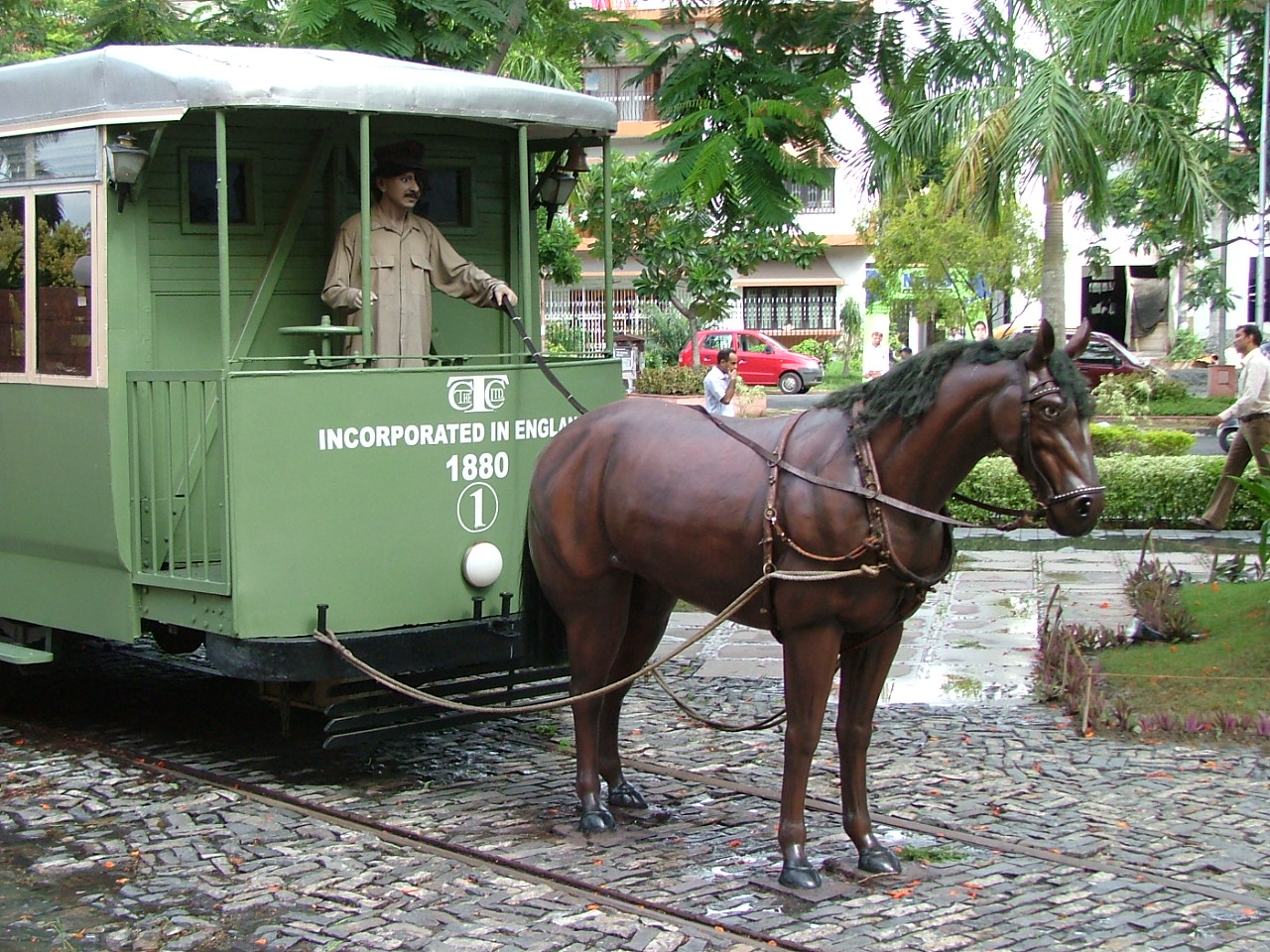
The first-ever mode of the urban rail transit system in India was commuter rail (or suburban rail), built in Mumbai on 16 April 1853. The first passenger train was flagged off from Bori Bunder (present-day Chhatrapati Shivaji Terminus in Mumbai) from where it travelled to Thane, covering a distance of 34 km in an hour and fifteen minutes. This made it the Asia's first suburban railway. At the turn of the 20th century, tram systems began to sprawl across the four major cities of India, viz. Delhi, Kolkata, Chennai and Mumbai, and helped local population to meet their intracity transportation needs. Horse-drawn tram was first introduced in Kolkata in 1873 and the electric trams began to operate in Chennai in 1895, later the cities of Mumbai, Kanpur, and Delhi saw trams being introduced. These services were discontinued in all Indian cities between 1933 and 1964, except for Kolkata where they operate on streets to the present day as heritage.
Metro and mass rapid transit

In September 1919, during a session of the Imperial Legislative Council at Shimla, a committee was set up by W. E. Crum that recommended a metro line for Kolkata. The next proposal for a metro system was mooted by government of West Bengal in 1949-50 and a survey was conducted by French experts. However, the proposal could not be brought into the effect and India had to wait for its first metro service. It was twenty three years later when the foundation stone was laid in Kolkata in 1972 to commence the construction of the ambitious metro system. On 24 October 1984, India saw its first metro system operational in Kolkata. After several struggles and bureaucratic hurdles, a stretch of 3.4 km was opened with five stations on the line. On 1 November 1995, the Chennai MRTS began its operations, becoming the first fully elevated suburban rail line (overall second elevated railway line in India) and also the country's longest elevated suburban railway corridor spanning 17 km.
The first concept of an urban rapid transit system in Delhi came out during 1969, when a traffic and travel characteristics study was conducted. The bus systems which catered the public transportation in the city soon began to run out of capacity and the traffic was on the rise, this soon became a growing concern. The concepts for an urban transit system were considered as the need for the country's capital. After planning, a proposal was made in 1984, which revealed plans for constructing three underground corridors and augmentation of the existing suburban rail system. The construction began on 1 October 1998 and the first line was operational on 24 December 2002. With 348.12 km, the Delhi Metro went on to be the longest and by far the busiest metro system in India, which also served as a role model to other Indian cities.
Monorails and their replacement
While the political capital of India was expanding on its success by constructing new metro lines, suburban railways remained as the dominant mode of transport in the financial capital, Mumbai. According to Mumbai Metropolitan Region Development Authority (MMRDA) the city bus services operating in narrow and crowded areas of the city were slow-moving and caused traffic congestion hence a rapid transit system was necessary. Since the city already had planned metro services and since the suburban railways also connected major parts of the city, a feeder system to these services was proposed in the form of Monorail. After the construction was completed, On 1 February 2014, Mumbai Monorail became the first of its kind in India.
In the early 2010s, many cities had conceived the plan to build monorails as the major urban transportation solution to their cities. However, Mumbai's monorail soon began to reveal the underlying problems of a monorail system. The issues such as low ridership, inefficient track maintenance (accessibility of the tracks during maintenance as well as the time taken to repair the tracks), train slowing down at the switches and for the fact that the monorail tracks had to be entirely elevated with a dedicated depot and set of rolling stocks, raised the concerns on feasibility, cost of construction and operation of the new lines significantly. For the similar reasons, almost all of the monorail systems around the world are seen in amusement parks or similar theme parks instead as a solution to the urban public transportation. A traditional light rail system soon emerged as the efficient mode but with cheaper cost and greater capacity than what monorail offered. As a result, many Indian cities replaced their proposed monorail projects with either a regular metro or a light rail system.
Rapid transit

There are currently 20 operational rapid transit (metro) systems in seventeen cities across India, with Delhi Metro being the largest. As of July 2024, India has 1001.13 km of operational metro lines in 18 cities. India's metro network is the third longest in the world, behind China and USA. A further 779.27 km of lines are under construction.
Apart from the Kolkata Metro (which has its own zone under Indian Railways), these rapid transit metro lines are not operated by Indian Railways, but a separate set of local authorities. In addition to their metro systems, the cities of Chennai and Hyderabad have mass transit systems operated by the Indian Railways, known as the Chennai MRTS and the Hyderabad MMTS, respectively. The first rapid transit system in India is the Kolkata Metro, which started operations in 1984. Kolkata Metro also currently has the only underwater metro line in the country. The Delhi Metro has the largest network in the entire country.
Implementation
In 2006, the National Urban Transport Policy had proposed the construction of a metro rail system in every city with a population of at least 20 lakh (2 million) people.
From 2002 to 2014, the Indian metro infrastructure expanded by 248 km.
Later on 11 August 2014, Union Government had announced that it would provide financial assistance for the implementation of a metro rail system to all Indian cities having a population of more than 1 million. In May 2015, the Union Government approved the Union Urban Development Ministry's proposal to implement metro rail systems in 50 cities, with the majority of the planned projects were to be implemented through special purpose vehicles, which will be established as 50:50 joint ventures between the Union and respective State Government. The Union Government would invest an estimated .
In a new draft policy unveiled in March 2017, the Central Government stated that it wanted state governments to consider metro rail as the "last option" and implement it only after considering all other possible mass rapid transit systems. The decision was taken due to the high cost of constructing metro rail systems. In August 2017, the Union Government announced that it would not provide financial assistance to the new metro rail project unless some sort of private partnership is involved.
List of systems
| System | Locale | Lines Operational | Stations | Length | Opened | Annual Ridership (in millions) | Operational | Under Construction | Total | 46 | 820 | 1014.85 km | 726.16 km | 3409.845 millions | |||||||
|---|---|---|---|---|---|---|---|---|---|---|---|---|---|---|---|---|---|---|---|---|---|
| Agra Metro [[File:UPMRC_logo.png | link=Agra_Metro | 24x24px]] | Agra | 1 | 6 | 5.2 km | 24.47 km | – | |||||||||||||
| Ahmedabad Metro | Ahmedabad, Gandhinagar, GIFT City | 4 | 54 | 67.56 km | – | 40.06 (2024)Total ridership figures from April 2023 to March 2024 | |||||||||||||||
| Bhoj Metro [[File:Indore_Metro_logo.png | link=Bhoj_Metro | 24x24px]] | Bhopal | 1 | 8 | 6.22 km | 21.68 km | – | |||||||||||||
| Chennai Metro | Chennai Metropolitan Area | 2 | 42 | 54.1 km | 118.9 km | 105.24 (2024) | |||||||||||||||
| Delhi Metro | Delhi NCR | date=8 March 2019 | title=Present Network | url=https://www.delhimetrorail.com/pages/en/present-network | publisher=Delhi Metro Rail Corporation}} | 257 | 353.31 kmThe lengths of the Noida Metro and Gurgaon Metro are not counted with the Delhi Metro. If they were counted, the total length of the three systems would be 392.448 km. | 65.20 km | 2032.30 (2024)From 2019 onwards the DMRC changed the ridership calculation to count every trip taken by a passenger on a line. This means that a passenger that takes 2 connections will count 3 times towards ridership. This is different from the more standard practice of counting entire journeys applied in other metro systems. Therefore, Delhi metro reports approximately 55% higher ridership when compared to similar transit systems worldwide. | ||||||||||||
| Hyderabad Metro | Hyderabad Metropolitan Region | 3 | 59 | 67 km | – | 178.00 (2024)The figure of 147,984,025 reflects the total monthly ridership for FY 2024–25 (April 2024 – March 2025), compiled using actual data as the report was published post-fiscal year. | |||||||||||||||
| Indore Metro [[File:Indore_Metro_logo.png | link=Indore_Metro | 24x24px]] | Indore | 1 | 5 | 6 km | 31.23 km | – | |||||||||||||
| Jaipur Metro | Jaipur | url=https://www.jaipurmetrorail.in/pdf/39Brief%20Note%20on%20the%20Project.pdf | title=Jaipur Metro A Brief Note on the Project | publisher=JMRC | page=2 | access-date=3 June 2015 | url-status=dead | archive-url=https://web.archive.org/web/20160304062922/https://www.jaipurmetrorail.in/pdf/39Brief%20Note%20on%20the%20Project.pdf | archive-date=4 March 2016 }} | 11 | 11.98 km | 2.85 km | 20.05 (2024) | ||||||||
| Kanpur Metro | Kanpur | 1 | 14 | 16 km | 15.05 km | 11.06 (2024) | |||||||||||||||
| Kochi Metro | Kochi | 1 | 25 | 27.96 km | 11.2 km | 36.52 (2024) | |||||||||||||||
| Kolkata Metro | Greater Kolkata | 5 | 58 | 73.42 kmAs for the size the system reached by the end of 2019, see | 30.8 km | 218.10 (2025) | |||||||||||||||
| Lucknow Metro | Lucknow | 1 | 21 | 22.90 km | – | 31.15 (2024) | |||||||||||||||
| Mumbai Metro [[File:Logo of Mumbai Metro Line 1.svg | 22px | link=Blue Line (Mumbai Metro)]][[File:Logo of Mumbai Metro Line 3.png | 16px | link=Aqua Line (Mumbai Metro)]] | Mumbai Metropolitan Region | 4 | 70 | 80.43 km | 132.45 km | 273.75 (2024)Figure extrapolated from a sum of average daily ridership figures of lines 1 (3,54,610), 2A & 7 (1,80,726.37) over a year as mentioned in the cited reports | |||||||||||
| Nagpur Metro [[File:Nagpur_Metro_logo.png | link=Nagpur_Metro | 25x25px]] | Nagpur | 2 | 37 | 38.22 km | 43 km | 33.88 (2024)Figure extrapolated from 75,000 average daily ridership figures over a year as mentioned in the cited report | |||||||||||||
| Namma Metro | Bengaluru | 3 | 85 | 96.10 km | 79.44 km | 278.54 (2024) | |||||||||||||||
| Navi Mumbai Metro [[File:Navi_Mumbai_Metro_Logo.png | link=Navi_Mumbai_Metro | 24x24px]] | Navi Mumbai | title=Navi Mumbai Metro | date=2023-11-17 | url=https://en.wikipedia.org/w/index.php?title=Navi_Mumbai_Metro&oldid=1185536621 | work=Wikipedia | access-date=2023-11-17 | language=en}} | 11 | 11.10 km (6.90 mi) | – | 0.94 (2024)Total figures from November 2023 to January 2024 | ||||||||
| Noida Metro | Noida & Greater Noida | 1 | 21 | 29.70 km | – | 22.03 (2024) | |||||||||||||||
| Patna Metro | Patna | 1 | 3 | 4.3 km | 32.91 km | - | |||||||||||||||
| Pune Metro [[File:Pune_Metro_logo.png | link=Pune Metro | 22x22px]] | Pune Metropolitan Region | 2 | 29 | 31.25 km | 79.56 km | 45.72 (2024) | |||||||||||||
| Rapid Metro Gurgaon | Gurgaon | 1 | 11 | 12.1 km | 28.5 km | 14.60 (2024) |
; Table note
Indicates ridership figures based on the fiscal year rather than the calendar year.
Systems in development
✿ Systems in development are suitably divided in two categories; under-construction and planned. Under-construction includes the commencement of physical work, not floating/awarding of tenders. While planned section includes systems with DPRs prepared or under-preparation. ✿ Wikipedia is not your personal sandbox where you can add the cities you wish to see a metro rail system in. Please avoid adding unsourced material and cities that do not have any substantial plans for a metro rail. ✿ Do not add monorails and light rail systems here. There is a dedicated section within this article named "Light Rail" if you scroll down enough. Please make sure to add the relevant systems under relevant sections with a reliable source. ✿ Systems that are reported by multiple reliable media outlets are to be added here. Avoid adding ones that are reported by a single media entity or has been mentioned once. ✿ Any system that fails to meet the criteria shall be removed to maintain the quality of the article.
| System | Locale | Length | Construction began | Planned Opening | Under-construction | Planned | Total | 123.03 km | 473.924 km | |||
|---|---|---|---|---|---|---|---|---|---|---|---|---|
| Meerut Metro [[File:NCRTC_logo.png | link=Meerut_Metro | 24x24px]] | Meerut | 23.6 km | 2019 | 2026 | ||||||
| Surat Metro [[File:GMRC_logo.png | link=Surat_Metro | 24x24px]] | Surat | 41.93 km | 2021 | 2027 | ||||||
| Thane Metro [[File:Thane_Metro.png | link=Thane_Metro | 25x25px]] | Thane | 29.5 km | 2025 | 2029 | ||||||
| Bhubaneswar Metro | Bhubaneswar | 26.024 km | TBD | 2028 | ||||||||
| Visakhapatnam Metro | Visakhapatnam | 76.9 km | 2026 | 2029 | ||||||||
| Vijayawada Metro | Vijayawada | 75 km | 2026 | url=https://www.thehindu.com/news/national/andhra-pradesh/green-signal-for-jvs-to-bid-for-visakhapatnam-vijayawada-metro-rail-projects/article70079444.ece | title=Green signal for JVs to bid for Visakhapatnam, Vijayawada metro | date=22 September 2025 | work=The Hindu}} | |||||
| Rajkot Metro | Rajkot | 38 km | TBD | url=https://timesofindia.indiatimes.com/city/ahmedabad/dprs-for-rajkot-vadodara-metro-rail-sent-for-centres-approval/articleshow/120705082.cms | title=DPRs for Rajkot, Vadodara metro rail projects sent for centre's approval | publisher=Times of India | date=28 April 2025}} | |||||
| Vadodara Metro | Vadodara | 40 km | TBD | TBD | ||||||||
| Kozhikode Metro | Kozhikode | 44 km | TBD | TBD | ||||||||
| Thiruvananthapuram Metro | Thiruvananthapuram | 42.1 km | TBD | TBD | ||||||||
| Prayagraj Metro | Prayagraj | 44 km | TBD | TBD |
List of lines
India has a total of 46 lines of metro under operation in 20 cities.
| Urban rapid rail transit lines | Line | System | Length | Stations | Rolling stock | Commencement | Latest extension | ||
|---|---|---|---|---|---|---|---|---|---|
| Kolkata Metro | blue}};" | Blue Line | Kolkata | 32.13 km | 26 | ICF, CRRC Dalian | 24 October 1984 | 22 February 2021 | |
| Kolkata Metro | green}};" | Green Line | 16.6 km | 12 | BEML Limited | 13 February 2020 | 22 August 2025 | ||
| Kolkata Metro | purple}};" | Purple Line | 7.75 km | 7 | ICF | 30 December 2022 | 6 March 2024 | ||
| Kolkata Metro | orange}};" | Orange Line | 9.5 km | 9 | 6 March 2024 | 22 August 2025 | |||
| Kolkata Metro | yellow}};" | Yellow Line | 7.04 km | 4 | 22 August 2025 | – | |||
| Delhi Metro | red}}" | Red Line | Delhi | 34.55 km | 29 | Hyundai Rotem and BEML Limited | 25 December 2002 | 8 March 2019 | |
| Delhi Metro | yellow}}" | Yellow Line | 49.02 km | 37 | BEML Limited | 20 December 2004 | 10 November 2015 | ||
| Delhi Metro | blue}}" | Blue Line (Main) | 56.11 km | 50 | 31 December 2005 | 9 March 2019 | |||
| Blue Line (Branch) | 8.51 km | 8 | 10 May 2009 | 14 July 2011 | |||||
| Delhi Metro | green}}" | Green Line (Main) | 28.79 km | 24 | 3 April 2010 | 24 June 2018 | |||
| Delhi Metro | violet}}" | Violet Line | 46.34 km | 34 | 3 October 2010 | 19 November 2018 | |||
| Delhi Metro | airport}}" | Airport Express | 22.70 km | 6 | CAF | 23 February 2011 | 17 September 2023 | ||
| Delhi Metro | magenta}}" | Magenta Line | 40.26 km | 25 | Hyundai Rotem | 25 December 2017 | 5 January 2025 | ||
| Delhi Metro | pink}}" | Pink Line | 59.24 km | 38 | Hyundai Rotem and BEML Limited | 14 March 2018 | 6 August 2021 | ||
| Delhi Metro | grey}}" | Grey Line | 5.19 km | 4 | Hyundai Rotem | 4 October 2019 | 18 September 2021 | ||
| Namma Metro | purple}}" | Purple Line | Bengaluru | 43.49 km | 37 | BEML Limited | 20 October 2011 | 9 October 2023 | |
| Namma Metro | green}};" | Green Line | 33.46 km | 32 | BEML Limited | 1 March 2014 | 7 November 2024 | ||
| Namma Metro | yellow}};" | Yellow Line | 19.15 km | 16 | CRRC Nanjing Puzhen, Titagarh Rail Systems | 10 August 2025 | – | ||
| Rapid Metro Gurgaon | 1}}" | Line 1 | Gurgaon | 12.85 km | 11 | Siemens | 14 November 2013 | 31 March 2017 | |
| Mumbai Metro | 1}};" | Blue Line 1 | Mumbai | 11.40 km | 12 | CRRC Nanjing Puzhen | 8 June 2014 | – | |
| Mumbai Metro | 2}}" | Yellow Line 2 | 18.58 km | 17 | BEML | 2 April 2022 | 19 January 2023 | ||
| Mumbai Metro | 7}};" | Red Line 7 | 16.50 km | 14 | 2 April 2022 | 19 January 2023 | |||
| Mumbai Metro | 3}};" | Aqua Line 3 | 33.5 km | 26 | Alstom Metropolis | 5 October 2024 | 8 October 2025 | ||
| Jaipur Metro | pink}}" | Pink Line | Jaipur | 11.97 km | 11 | BEML Limited | 3 June 2015 | 23 September 2020 | |
| Chennai Metro | blue}}" | Blue Line | Chennai | 32.65 km | 25 | Alstom | 21 September 2016 | 13 March 2022 | |
| Chennai Metro | green}}" | Green Line | 22.00 km | 17 | 29 June 2015 | 25 May 2018 | |||
| Kochi Metro | 1}}" | Line 1 | Kochi | 28.13 km | 22 | Alstom Metropolis | 17 June 2017 | 6 March 2024 | |
| Lucknow Metro | red}};" | Red Line | Lucknow | 22.87 km | 21 | Alstom | 5 September 2017 | 8 March 2019 | |
| Hyderabad Metro | red}}" | Red Line | Hyderabad | 29.21 km | 27 | Hyundai Rotem | 29 November 2017 | 24 September 2018 | |
| Hyderabad Metro | blue}}" | Blue Line | 27 km | 23 | 29 November 2017 | 29 November 2019 | |||
| Hyderabad Metro | green}}" | Green Line | 11 km | 10 | 7 February 2020 | – | |||
| Noida Metro | aqua}};" | Aqua Line | Noida | 29.7 km | 21 | CRRC | 25 January 2019 | – | |
| Ahmedabad Metro | blue}};" | Blue Line | Ahmedabad | 21.23 km | 18 | Hyundai Rotem | 4 March 2019 | 8 December 2024 | |
| Ahmedabad Metro | red}};" | Red Line | 18.87 km | 15 | 1 October 2022 | – | |||
| Ahmedabad Metro | yellow}};" | Yellow Line | 23.84 km | 21 | 16 September 2024 | 11 January 2026 | |||
| Ahmedabad Metro | violet}};" | Violet Line | 5.42 km | 3 | 17 September 2024 | – | |||
| Nagpur Metro | orange}};" | Orange Line | Nagpur | 19.658 km | 13 | CRRC | 8 March 2019 | 21 August 2021 | |
| Nagpur Metro | aqua}}" | Aqua Line | 18.557 km | 11 | 28 January 2020 | 6 April 2021 | |||
| Kanpur Metro | orange}};" | Orange Line | Kanpur | 16 km | 9 | Alstom | 28 December 2021 | 31 May 2025 | |
| Pune Metro | purple}};" | Purple Line | Pune | 16.59 km | 5 | Titagarh Firema | 6 March 2022 | 29 September 2024 | |
| Pune Metro | aqua}};" | Aqua Line | 14.66 km | 5 | 6 March 2022 | 21 August 2024 | |||
| Line 1 | Navi Mumbai | 11.10 km | 11 | CRRC Zhuzhou Locomotive | 17 November 2023 | – | |||
| Agra Metro | Yellow}};" | Yellow Line | Agra | 5.2 km | 6 | Alstom Movia | 6 March 2024 | – | |
| Indore Metro | Yellow}};" | Yellow Line | Indore | 6 km | 5 | Alstom Movia | 31 May 2025 | – | |
| Patna Metro | Blue}};" | Blue Line | Patna | 3.45 km | 3 | Titagarh Firema | 6 October 2025 | – | |
| Bhopal Metro | Orange}};" | Orange Line | Bhopal | 6.22 km | 8 | Alstom Movia | 21 December 2025 | – |
Note : Only operational lines are listed.
Suburban rail{{anchor|Suburban Rail}}

Suburban rail plays a major role in the public transport system of many major Indian cities. These services are operated by Indian Railways. Suburban rail is a rail service between a central business district and the suburbs, a conurbation or other locations that draw large numbers of people daily. The trains are called suburban trains. These trains are also referred to as "local trains" or "locals". The suburban rail systems in Hyderabad, Pune, Lucknow–Kanpur and Bengaluru do not have dedicated suburban tracks but share tracks with long-distance trains. The suburban rail system of Mumbai, Kolkata and Chennai have both dedicated tracks and tracks shared with long-distance trains.
The first suburban rail system in India is Mumbai Suburban Railway which started operations in 1853. The Kolkata Suburban Railway has the largest network in the entire country. The Chennai Suburban Railway started its operations in 1931.
Suburban trains that handle commuter traffic are all electric multiple units (EMUs). They usually have nine or 12 coaches, though can sometimes include 15 to handle rush hour traffic. One unit of an EMU train consists of one power car and two general coaches. Thus a nine coach EMU is made up of three units having one power car at each end and one at the middle. The rakes in the suburban rails run on 25 kV AC. Ridership on India's suburban railways has risen from 1.2 million in 1970–71 to 4.4 million in 2012–13. The suburban railways of Mumbai, Kolkata and Chennai occupy no more than 7.1% of the Indian Railways network, but account for 53.2% of all railway passengers. In some cities of India, the opening of rapid transit systems has led to a decline in the use of the suburban rail system.
| System | Locale | Lines | Stations | Length | Opened | Annual Ridership (in Billions) | Total | 8 | 48 | 1017 | 3319.84 km | 5.5 | ||||||||||
|---|---|---|---|---|---|---|---|---|---|---|---|---|---|---|---|---|---|---|---|---|---|---|
| Chennai Suburban Railway | Chennai metropolitan area | 8 | 300+ | 1200 km | last=Menon | first=Nitya | title=83 years of electric suburban rail | newspaper=The Hindu | location=Chennai | date=18 April 2014 | url=http://www.thehindu.com/news/cities/chennai/83-years-of-electric-suburban-rail/article5923173.ece | access-date=18 April 2014 | archive-url=https://web.archive.org/web/20140418091548/http://www.thehindu.com/news/cities/chennai/83-years-of-electric-suburban-rail/article5923173.ece | archive-date=18 April 2014 | url-status=live}} | 1.01 | ||||||
| Chennai Mass Rapid Transit System [[File:Indian_Railways_Suburban_Railway_Logo.svg | link=Chennai_MRTS | 20x20px | up]] | Chennai | 1 | 18 | 19.34 km | title=Development of MRTS in Chennai | url=http://www.cmdachennai.gov.in/mrts_phase1.html | work=CMDA | access-date=6 September 2021 | archive-date=12 July 2023 | archive-url=https://web.archive.org/web/20230712090557/https://www.cmdachennai.gov.in/mrts_phase1.html | url-status=dead}} | 0.1 | |||||||
| Delhi Suburban Railway | National Capital Region | 1 | 46 | 320 km | 1 October 1975 | – | ||||||||||||||||
| Hyderabad Multi-Modal Transport System [[File:Indian_Railways_Suburban_Railway_Logo.svg | link=Hyderabad_MMTS | 20x20px | up]] | Hyderabad Metropolitan Region | 5 | 44 | 90 km | author= | url=https://timesofindia.indiatimes.com/city/hyderabad/Advani-flags-off-Hyderabad-MMTS/articleshow/122771.cms | title=Advani flags off Hyderabad MMTS | work=The Times of India | date=9 August 2003 | language=en | access-date=9 December 2025}} | 0.01825 | |||||||
| Kolkata Suburban Railway | Kolkata metropolitan region | 24 | 458 | 1501 km | last=Railway | first=Eastern | date=31 March 2020 | title=ERSY 2020 FINAL | url=https://er.indianrailways.gov.in/uploads/files/1595316371921-ERSY%202020%20FINAL-rotated.pdf}} | 1.825 | ||||||||||||
| Mumbai Suburban Railway | Mumbai Metropolitan Region | 5 | 150 | 450.90 km | 16 April 1853 | 3.0 | ||||||||||||||||
| Pune Suburban Railway [[File:Indian_Railways_Suburban_Railway_Logo.svg | link=Pune_Suburban_Railway | 20x20px | up]] | Pune Metropolitan Region | 1 | 17 | 63 km | 11 March 1978 | 0.022 |
Systems in development
| System | Locale | Lines | Stations | Length | Planned Opening | |
|---|---|---|---|---|---|---|
| Bengaluru Suburban Railway [[File:Kride logo.png | 23x23px]] | Bengaluru | 4 | 69 | 160.0 km | 2026 |
Regional rapid transit
Regional Rapid Transit systems in India are higher-speed passenger rail services that operate beyond the limits of urban areas, and either connect similarly sized cities, or metropolitan cities and surrounding towns/cities, outside at the outer rim of a suburban belt.
The following list excludes passenger train services provided by Indian Railways.
| System | Metro Area | Stations | Length | Planned Stations | Planned Length | Operator(s) | Opened | |||||||
|---|---|---|---|---|---|---|---|---|---|---|---|---|---|---|
| Delhi–Meerut RRTS | NCR | 11 | 55 km | 25 | 82.15 km | NCRTC | last=Anabd | first=Jatin | date=20 October 2023 | title=PM Modi flags off RRTS: What is this mass transport system, how it can benefit NCR | url=https://indianexpress.com/article/explained/pm-modi-to-flag-off-rrts-what-is-this-mass-transport-system-how-it-can-benefit-ncr-8991437/ | access-date=20 October 2023 | work=The Indian Express | language=en}} |
Systems in development
| System | Metro Area | Stations | Length | Planned Opening |
|---|---|---|---|---|
| Delhi–Alwar RRTS | NCR | 22 | 199 km | 2031 |
| Delhi–Panipat RRTS | NCR | 15 | 103 km | 2030 |
Monorail

The Mumbai Monorail, which opened on 2 February 2014, is the first and only operational monorail system used for urban transit in India. Many other Indian cities had planned monorail projects, as a feeder system to the metro, but with issues like fewer options of rake manufacturers, lower capacity but high cost to construct, difficulty in evacuation during an emergency led to them considering a light rail instead.
| System | Locale | Lines | Stations | Length | Opened | Annual Ridership (in millions) |
|---|---|---|---|---|---|---|
| Mumbai Monorail | Mumbai | 1 | 17 | 19.53 km | 2 February 2014 | 1.2 |
Systems in development
| System | Locale | Lines | Stations | Length | Planned opening |
|---|---|---|---|---|---|
| Ahmedabad-Dholera SIR Monorail | 1 | 7 | 40.3 km | TBD |
Abandoned systems
| System | Locale | Length | Notes |
|---|---|---|---|
| Skybus Metro | Madgaon | 1.60 km | Defunct and Scrapped after the operation. Deemed unsafe by KRC. |
Light rail
Main article: Metrolite
Light rail transit (LRT) or popularly known as Metrolite in India, is a form of urban rail transit characterized by a combination of rapid transit and tram systems. It usually operates at a higher capacity than trams, and often on an exclusive right-of-way similar to rapid transit. Several tier-2 cities in India have proposed light rail systems.
| System | Locale | Lines | Stations | Length | Type | Planned opening | |||
|---|---|---|---|---|---|---|---|---|---|
| Jammu Metro | Jammu | 2 | 40 | 43.50 km | 25 kV AC railway electrification | url=https://www.greaterkashmir.com/city/srinagar-metro-project-stuck-in-administrative-limbo/ | title=Srinagar metro project stuck in administrative limbo | date=19 March 2025 | publisher=Greater Kashmir}} |
| Srinagar Metro | Srinagar | 2 | 24 | 25 km | 25 kV AC railway electrification | TBD | |||
| Chennai Light Rail | Chennai | 1 | TBD | 15.50 km | 25 kV AC railway electrification | TBD | |||
| Gorakhpur Metro [[File:UPMRC.svg | border | 22x22px]] | Gorakhpur | 2 | 27 | 27.41 km | 25 kV AC railway electrification | TBD |
Tram
Main article: Trams in India
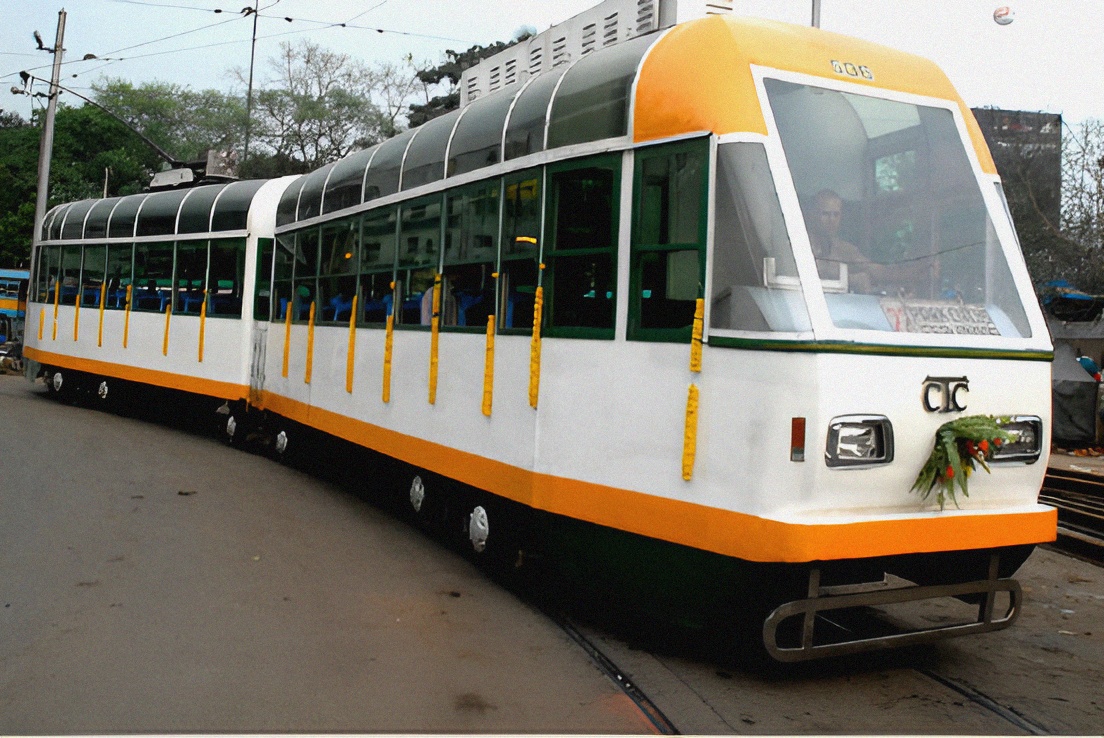
The Kolkata Tram built in 1873, is the oldest and the only operational Tram in India. Seen as a heritage ride despite being a plausible urban transit that is also in profit. In addition to trains, trams were introduced in many cities in the late 19th century, though almost all of these systems were defunct eventually. Due to construction of Kolkata Metro's Green Line from Salt Lake to Howrah, just 14 km of Tramline is operational in Kolkata.
| System | City | Lines | Length | Opened | |||
|---|---|---|---|---|---|---|---|
| Kolkata Tram | Kolkata | 2 | 14 km | title=History – CTC | url=http://calcuttatramways.com/history/ | access-date=7 June 2020 | language=en-US}} |
Abandoned systems

| System | City | Length | Opened | Discontinued |
|---|---|---|---|---|
| Bhavnagar | 1926 | 1960s | ||
| Chennai | 1892 | 1953 | ||
| Delhi | 1908 | 1963 | ||
| Kanpur | 6.04 km | 1907 | 16 May 1933 | |
| Kochi | 1907 | 1963 | ||
| Mumbai | 1873 | 1964 | ||
| Nashik | 10 km | 1889 | 1931 | |
| Patna | 1903 |
Funiculur Railway
India’s longest funicular railway — a 1.2 km cable-hauled rail line near Kalyan in Thane district, Maharashtra (outskirts of the Mumbai Metropolitan Region) — has been inaugurated after years of planning and construction, replacing a strenuous multi-hour uphill climb with a 7–10 minute ride and significantly improving access up the slope; the system can carry about 120 passengers per trip and is expected to boost convenience, safety and visitor numbers in the area.
Standardisation
Track gauge
Unlike Broad gauge which form majority of the railway tracks in the sub-continent, metro rail lines in India are of mainly standard gauge. Projects like the Kolkata Metro and Delhi Metro used broad gauge for their earliest lines, but to procure modern foreign rakes and to adopt international standard, India went ahead with standard gauge for all the following lines.
NCMC
Main article: National Common Mobility Card
Part of the 'One Nation, One Card' policy of the Government of India, the National Common Mobility Card is an inter-operable transport card that enables users to pay for multiple kinds of transport charges like metros and buses, as well as do other things like retail shopping and money withdrawal. It is enabled through the RuPay card mechanism. The Ministry of Housing and Urban Affairs have been working on the card since 2006, when it was envisaged as a cashless fare payment system in accordance with the National Urban Transport Policy, 2006 (NUTP-2006). Its aim was to provide seamless connectivity to passengers across transit systems, leading to convenience, higher digital payments penetration, savings on closed loop card lifecycle management cost, and reduced operating cost.
Manufacturing
There are multiple metro manufacturers in India. Under the Union Government's Make in India program, about 75% of the rolling stock procured for use on Indian metro systems are required to be manufactured in India.
| Company | Customer | Total coaches | BEML Total | 5 | 2,462 | Bombardier Total | 4 | 1,047 | Alstom Total | 8 | 1,223 | Hyundai Rotem Total | 4 | 903 | ICF Total | 1 | 1072 | Titagarh Total | 3 | 390 | CRRC Total | 7 | 581 | 7 | 20 | 7678 |
|---|---|---|---|---|---|---|---|---|---|---|---|---|---|---|---|---|---|---|---|---|---|---|---|---|---|---|
| India BEML | Delhi Metro | 1,444 | ||||||||||||||||||||||||
| Mumbai Metro | 576 | |||||||||||||||||||||||||
| Namma Metro | 300 | |||||||||||||||||||||||||
| Kolkata Metro | 102 | |||||||||||||||||||||||||
| Jaipur Metro | 40 | |||||||||||||||||||||||||
| Germany CanadaBombardier | Delhi Metro | 816 | ||||||||||||||||||||||||
| Agra Metro | 87 | |||||||||||||||||||||||||
| Kanpur Metro | 114 | |||||||||||||||||||||||||
| Meerut Metro | 30 | |||||||||||||||||||||||||
| France Alstom | Chennai Metro | 286 | ||||||||||||||||||||||||
| Kochi Metro | 75 | |||||||||||||||||||||||||
| Lucknow Metro | 80 | |||||||||||||||||||||||||
| Mumbai Metro | 248 | |||||||||||||||||||||||||
| Delhi Metro | 312 | |||||||||||||||||||||||||
| Indore Metro | 75 | |||||||||||||||||||||||||
| Bhopal Metro | 81 | |||||||||||||||||||||||||
| Pune Metro | 66 | |||||||||||||||||||||||||
| Meerut Metro | 4 | |||||||||||||||||||||||||
| Delhi Meerut RRTS | 80 | |||||||||||||||||||||||||
| South Korea Hyundai Rotem | Delhi Metro | 486 | ||||||||||||||||||||||||
| Ahmedabad Metro | 96 | |||||||||||||||||||||||||
| Namma Metro | 150 | |||||||||||||||||||||||||
| Hyderabad Metro | 171 | |||||||||||||||||||||||||
| India ICF | Kolkata Metro | 1072 | ||||||||||||||||||||||||
| India Titagarh Rail Systems | Namma Metro | 216 | ||||||||||||||||||||||||
| Pune Metro | 102 | |||||||||||||||||||||||||
| Surat Metro | 72 | |||||||||||||||||||||||||
| China CRRC | Namma Metro | 216 | ||||||||||||||||||||||||
| Rapid Metro Gurgaon | 36 | |||||||||||||||||||||||||
| Kolkata Metro | 112 | |||||||||||||||||||||||||
| Mumbai Metro | 48 | |||||||||||||||||||||||||
| Nagpur Metro | 69 | |||||||||||||||||||||||||
| Noida Metro | 76 | |||||||||||||||||||||||||
| Navi Mumbai Metro | 24 |
Summary
Northern Region
Delhi NCR
| System | Information | Currently operational | Currently under construction | Map | Website | ||
|---|---|---|---|---|---|---|---|
| Rapid Transit Map of Delhi.jpg | }} | Delhi suburban rail network.svg | }} |
Rajasthan
| System | Information | Currently operational | Currently under construction | Map | Website | |
|---|---|---|---|---|---|---|
| Map of Jaipur Metro created using Inkscape.png |
Central Region
Madhya Pradesh
| System | Information | Currently operational | Currently under construction | Map | Website | ||
|---|---|---|---|---|---|---|---|
| Indore Metro.png |
Uttar Pradesh
| System | Information | Currently operational | Currently under construction | Map | Website | ||
|---|---|---|---|---|---|---|---|
| Lucknow Metro Route Map (Tentative).svg | }} |
Western Region
Gujarat
| System | Information | Currently operational | Currently under construction | Map | Website | ||
|---|---|---|---|---|---|---|---|
| Ahmedabad Metro.png |
Maharashtra
| System | Information | Currently operational | Currently under construction | Map | Website | |
|---|---|---|---|---|---|---|
| Mumbai Metropolitan Railway Schematic Map (simplified).svg | Mumbai Metropolitan Railway Schematic Map (simplified).svg | |||||
Eastern Region
Bihar
| System | Information | Currently operational | Currently under construction | Map | Website | |
|---|---|---|---|---|---|---|
| Patna metro map.png |
Odisha
| System | Information | Currently operational | Currently under construction | Map | Website |
|---|
West Bengal
| System | Information | Currently operational | Currently under construction | Map | Website | |
|---|---|---|---|---|---|---|
| Kolkata Metro Network.png | Kolkata Suburban Railway.png | |||||
Southern Region
Karnataka
| System | Information | Currently operational | Currently under construction | Map | Website | ||
|---|---|---|---|---|---|---|---|
| Phase_2A_with_WFD_line.png | Bengaluru Urban Rail Transit Diagram.svg |
Kerala
| System | Information | Currently operational | Currently under construction | Map | Website | |
|---|---|---|---|---|---|---|
| Kochi Metro Map.png |
Tamil Nadu
| System | Information | Currently operational | Currently under construction | Map | Website | ||
|---|---|---|---|---|---|---|---|
| Chennai Metro Map.jpg | Chennai MRTS Map.svg |
Telangana
| System | Information | Currently operational | Currently under construction | Map | Website | |
|---|---|---|---|---|---|---|
| Hyderabadmetromap.png |
Notes
References
References
- (2025-08-02). "MP at the bottom in operational length of Metro network". The Times of India.
- (2023-10-27). "One crore passengers riding metro systems per day in India: Hardeep Singh Puri".
- "Urban Transport". Ministry of Housing and Urban Affairs.
- (13 September 2016). "The History of Mumbai's Local Trains in 1 Minute". The Culture Tip.
- (17 February 2013). "When trams plied".
- (5 February 2020). "Kolkata's Tube Railway plan nipped in bud a century ago". The Times of India.
- (21 May 2021). "History of Metro rail in India: Trams to driverless metro". Urban Transport News.
- "Year Book 2009". Bright Publications.
- "Country's first elevated railway track gets operational at Rohtak".
- Siemiatycki, Matti. (June 2006). "Message in a Metro: Building Urban Rail Infrastructure and Image in Delhi, India". International Journal of Urban and Regional Research.
- "History of Delhi Metro". [[Delhi Metro Rail Corporation.
- "Delhi metro map".
- (27 September 2007). "Mumbai monorail to run in two years". [[The Times of India]].
- (1 February 2014). "First mono runs crowded like the good old local". [[Mumbai Mirror]].
- Ateeq Shaikh. (1 February 2014). "India's first monorail flagged off by Maharashtra's Chief Minister Prithviraj Chavan". DNA.
- (22 August 2021). "Mumbai: Despite govt taking over operations, Monorail continues to be plagued with problems". The Times of India.
- (1 May 2018). "Why cities rarely build monorails, explained". Greater Greater Washington.
- (10 January 2019). "Failure of Mumbai's Monorail Holds Lessons for Urban Planners Everywhere". The Wire.
- Sood, Jyotika. (26 July 2017). "How metro rail networks are spreading across India".
- "Metro Rail Projects in India - Quick Snapshot".
- (2 January 2023). "Metros in India have less than 50% projected ridership, says IIT-D report".
- "Organization Structure of Indian Railways".
- Tanwar, Sangeeta. (13 August 2019). "As India readies an underwater line, here's a look at its various metro networks".
- Bhatt, Himansshu. (2 May 2015). "Feasibility report on Surat metro soon".
- (28 July 2019). "Jaipal's push set metro rail projects on track". The Hindu.
- (11 August 2014). "Centre to aid Metro projects in cities with 10 lakh people".
- (12 August 2014). "10 lakh to be new population norm for Metro Rail projects". Elets Technomedia Pvt Ltd.
- "- mydigitalfc".
- "Indian Metro Rail Network".
- (19 March 2017). "Metro no more Government's first carrier".
- (16 August 2017). "Union Cabinet approves new Metro Rail Policy; Focus on compact urban development, cost reduction and multi-modal integration".
- Nair, Sobhana. (16 August 2017). "Union Cabinet approves new metro rail policy".
- Nair, Shalini. (17 August 2017). "For Metro rail, states must bring private players: Govt".
- "Agra Metro Yellow Line: Route & Timings - Plan Your Journey - TimesProperty".
- (8 February 2024). "UPMRC Unveils Bidders For Agra Metro's Construction Contract On Line 1 - Metro Rail News".
- Shah, Narendra. (2024-02-27). "CMRS Completes Safety Inspection For Agra Metro's Priority Corridor - Metro Rail News".
- "Agra Metro - Information, Route Map, Fares, Tenders & Updates".
- "Route Information and Time Table".
- "Metro Rail Projects in India - Quick Snapshot".
- (5 March 2019). "Ahmedabad Metro to open for public on Wednesday".
- (4 March 2019). "PM Modi inaugurates Ahmedabad Metro first phase, takes a ride". The Economic Times.
- "AHMEDABAD METRO RAIL PROJECT - PASSENGER JOURNEYS".
- (2025-12-20). "Union Minister Khattar flags-off Bhopal metro along with CM Yadav: Inaugural ride from Subhash Nagar to AIIMS; 30 students onboard first trip - Madhya Pradesh News".
- "Agra Metro - Information, Route Map, Fares, Tenders & Updates".
- (5 October 2020). "Stations in Chennai Metro rails Phase I extension will be renamed". [[The Hindu]].
- . (15 February 2021). ["Now, reach airport from North Chennai in 1 hour"](https://www.newindianexpress.com/cities/chennai/2021/feb/15/now-reach-airport-from-north-chennai-in-1-hour-2264102.html). *Express Publications Ltd.*.
- (29 June 2015). "Chennai's First Metro rail ride begins". [[The Hindu]].
- "10.52 crore passengers travelled in Chennai Metro Train in 2024".
- (8 March 2019). "Present Network". Delhi Metro Rail Corporation.
- "Network map".
- (2023-11-05). "First section of Delhi Metro phase-IV to open by July 2024, says DMRC chief".
- (24 December 2002). "Indian PM launches Delhi metro". BBC News.
- Gandhiok. (18 January 2024). "Delhi Metro logs 2 billion passenger trips for 2023 — highest ever".
- "Track Work {{!}} Hyderabad Metro".
- (28 November 2017). "Hyderabad Metro rail flagged off today: See fares, timings, routes and other features".
- "Ridership - LT".
- (31 May 2025). "Indore's Metro dream to come true today".
- "Jaipur Metro A Brief Note on the Project". JMRC.
- (28 November 2020). "Present Status". JMRC - Jaipur Metro Rail Corporation Ltd..
- . (28 November 2022). ["Rajasthan govt. to start work on Jaipur Metro Phase 1 extension"](https://www.metrorailnews.in/rajasthan-govt-to-start-work-on-jaipur-metro-phase-1-extension/).
- "Passenger Travelled Count".
- "Kanpur Metro: Project Information, Routes, Fares and other Details".
- (2024-03-06). "Completed Kochi Metro phase 1B inaugurated by PM; makes access to port city easier". The Economic Times.
- (17 June 2017). "Kochi Metro a 'futuristic infrastructure that will contribute to India's growth': What PM Modi said at inauguration". [[The Indian Express]].
- Service, Express News. (2024-01-10). "Average monthly ridership 25 lakh in 2023, Kochi Metro guns for more".
- (4 May 2023). "Kolkata Metro System Map".
- "Kolkata Metro Rail Corporation Ltd". Kmrc.in.
- "Kolkata Metro Railway records 13.30% rise in passengers in 2024-25".
- "Project Status Lucknow Metro".
- Rawat, Virendra Singh. (16 November 2015). "Lucknow Metro Rail fastest and most economical project in India". [[Business Standard]].
- (2 January 2024). "Lucknow Metro records historic ridership surge".
- Figure extrapolated from 73,476 average daily ridership figures over a year as mentioned in the cited report
- "Metro Line- 2A {{!}} Mumbai Metropolitan Region Development Authority".
- "Metro Line - 7 {{!}} Mumbai Metropolitan Region Development Authority".
- "Metro Line - 1 {{!}} Mumbai Metropolitan Region Development Authority".
- (8 June 2014). "Mumbai Metro Blue Line 1 starts for public". [[India Today]].
- (5 December 2023). "Metro 1 ridership touches 90cr in 9 yrs of operation".
- (22 February 2024). "Mumbai: Metro Line 2A & 7 Sees 8 Million Ridership Since Inception".
- "NMRCL - Project Profile".
- "Nagpur metro work begins on 43-km phase 2 connecting satellite cities".
- ANI. (7 March 2019). "Delhi: Prime Minister Narendra Modi flags-off Nagpur Metro via video conferencing.pic.twitter.com/0n6ohgcok3".
- (28 February 2024). "33% fare reduced by Nagpur Metro from March 1".
- "Bangalore Metro - Information, Route Maps, Fares, Tenders & Updates".
- "Namma Metro - Home".
- "South India's first underground Metro launch on April 29". The Times of India.
- S, Lalitha. (22 April 2024). "Bengaluru Metro clocks highest ever profit of Rs 130 crore". The New Indian Express.
- (2023-11-17). "Navi Mumbai Metro". Wikipedia.
- Newton, Jonathan. (28 November 2023). "Navi Mumbai opens first metro line eight years late".
- (2 February 2024). "Metro ridership in Navi Mumbai touches one million in 2.5 months, generates ₹2.55-cr in revenues".
- (22 December 2018). "Aqua Line ready for launch, nod awaited from UP".
- Staff Reporter. (2024-01-27). "Noida Metro Celebrates 5th Anniversary with An Average Daily Ridership of Over 45K".
- (2025-10-07). "Patna Metro arrives month before Bihar elections, with 4.3-km priority corridor and 3 stations".
- (5 October 2025). "Nitish to inaugurate first phase of Patna metro on Oct 6, to open for public from Oct 7". The Times of India.
- Jedhe, Eeshwari. (31 July 2023). "Extended routes of Pune Metro to open to commuters on Tuesday from 5 pm". Pune Mirror.
- (2024-03-06). "Pune Metro's reach set to expand up to 30 km".
- Sarang Dastane. (4 March 2022). "Pune: Metro for people on 2 routes after Sunday flag-off by PM Narendra Modi".
- "Pune Metro Kicks Off 2025 With A Bang As 2.04 Lakh Commuters Travel On January 13". Free Press Journal.
- Kumar, Ashok. (2025-09-05). "Haryana CM Saini, Manohar Lal perform Bhoomi Pujan for Gurugram metro corridor". The Hindu.
- (15 November 2013). "Rapid MetroRail Gurgaon opens". [[Railway Gazette International.
- (5 December 2023). "Rapid Metro witnesses major spurt in ridership in 2023, revenue rises by 53%".
- Figure extrapolated from 40,000 average daily ridership figures over a year as mentioned in the cited report
- "Meerut Metro – Information, Route Map, Fares, Tenders & Updates". The Metro Rail Guy.
- "Surat Metro – Information, Route Maps, Fares, Tenders & Updates".
- "Surat Metro Project – Routes, Status Updates, Real Estate Impact & Completion Timeline -Times Property".
- (2025-12-05). "Thane Metro civil work has officially begun".
- "Maha Metro".
- (28 July 2025). "'Not viable': Bhubaneswar metro project hangs in balance as Odisha govt cancels tender". Indian Express.
- (1 January 2023). "Bhubaneswar Metro – Information, Route Map, Fares, Tenders & Updates". TheMetrorailguy.
- (28 April 2025). "DPRs for Rajkot, Vadodara metro rail projects sent for centre's approval". Times of India.
- (2025-02-08). "Metro rail service in Kozhikode soon to become a reality? Kerala Budget raises hopes".
- (2025-06-12). "Thiruvananthapuram metro plan moves ahead as Kerala govt forms new alignment committee".
- (2025-10-13). "Metro system likely to replace metrolite project in Prayagraj". The Times of India.
- ["IRFCA] Indian Railways FAQ: Electric Traction — I".
- Chaturvedi, Sumit. (7 September 2015). "Why India's Metro and suburban railways should merge".
- Varma, Vishnu. (11 March 2016). "Ring Railway left behind as Delhi swells beyond boundaries". The Indian Express.
- "scr clueless about poor patronage to mmts-suburban train services in hyderabad".
- Menon, Nitya. (18 April 2014). "83 years of electric suburban rail". The Hindu.
- "Development of MRTS in Chennai". CMDA.
- (15 February 2018). "Delhi's mega plan to link capital ring rail metro network". Hindustan Times.
- . (9 August 2003). ["Advani flags off Hyderabad MMTS"](https://timesofindia.indiatimes.com/city/hyderabad/Advani-flags-off-Hyderabad-MMTS/articleshow/122771.cms). *The Times of India*.
- Railway, Eastern. (31 March 2020). "ERSY 2020 FINAL".
- Umbrajkar, Manish. (12 March 2013). "Pune-Lonavla EMU train service completes 35 years". The Times of India.
- "Union Railway Minister reviews the progress of Bengaluru Suburban Rail Project".
- (12 January 2021). "Bangalore Suburban Railway to be safe, eco-friendly & comfortable! Project to be completed by 2026; details".
- Anabd, Jatin. (20 October 2023). "PM Modi flags off RRTS: What is this mass transport system, how it can benefit NCR". The Indian Express.
- (2022-04-04). "Delhi-Meerut RRTS construction work on schedule, likely to be done June 2025".
- (2025-11-01). "NCRTC begins process to appoint general consultant for Delh-SNB RRTS".
- (2025-05-07). "Haryana CM reviews progress on three RRTS corridors".
- (29 September 2007). "Mumbai monorail to run in two years". [[The Times of India]].
- (21 January 2021). "Ahmedabad Dholera Mono Rail project approved for connectivity at Dholera Airport: PM Modi". Dholera Prime.
- (6 January 2021). "Ahmedabad-Dholera SIR monorail gets green signal".
- (11 October 2013). "Its final! Konkan Railway Corporation to scrap skybus project - The Times of India".
- (19 March 2025). "Srinagar metro project stuck in administrative limbo". Greater Kashmir.
- (23 September 2025). "CM launches Rs 2.5 lakh crore Chennai mobility plan, single ticketing app". New Indian Express.
- (10 March 2020). "Gorakhpur metro rail gets green signal from up cabinet,4672 crores will be spent". Dainik jagran.
- (2 December 2021). "UP: Gorakhpur Metro on fast track, gets PIB nod, to be ready by 2024". The Times of India.
- "History – CTC".
- (20 January 2026). "Thane Gets Switzerland-Like Cable Cars: India’s Longest Funicular Railway Is Now Open".
- Dr. E Sreedharan. (30 January 2009). "Broad gauge for Delhi metro: No standard achievement". Economic Times.
- (1 September 2023). "NCMC - Tap & Transit, Pan India with RuPay". National Payments Corporation of India (NPCI).
- (5 March 2019). "National Common Mobility Card". Drishti IAS.
- (25 July 2015). "Report of the Committee for Standards and Specifications of National Common Mobility Card (NCMC)". Ministry of Housing and Urban Affairs.
- Singh, RK. (9 May 2012). "NCMC-'More' - Submission of Minimum Standards & Specification Document for Card and Devices". Ministry of Housing and Urban Affairs.
- Rawal, Swapnil. (10 May 2017). "Made in India trains to run on Mumbai's Metro-3 route".
- H S Anand. (11 June 2016). "DMRC Rolling Stock: Standardisation & Indigenisation".
- (October 15, 2019). "Delhi Metro's oldest corridors to get eight-coach trains".
- (27 June 2012). "Bombardier bags Australian deal; to export bogies from Gujarat facility".
- "Bombardier and Alstom Confirm Receipt of All Necessary Regulatory Approvals to Complete Bombardier Transportation Sale to Alstom".
- (29 January 2021). "Alstom completes Bombardier rail purchase for 5.5 billion euros". Reuters.
- Kurup, N.K.. (22 July 2012). "Alstom to make Sri City a global sourcing hub".
- (19 April 2016). "1st Hyundai Rotem Train Arrives at Delhi Metro's Kalindi Kunj Depot". The Metro Rail Guy.
- Pal Singh, Sudheer. (5 June 2015). "Delhi Metro gets its first train from controversial Hyundai contract". Business Standard.
- (8 November 2017). "Hyundai Rotem Wins Ahmedabad Metro's 96 Coach Contract". The Metro Rail Guy.
- (5 May 2016). "Bangalore Metro Rail Corporation Limited could double number of metro coaches". The Economic Times.
- Amirapu, Deepika. (11 September 2012). "L&T awards Hyderabad Metro Rail rolling stock contract to Hyundai Rotem". The Economic Times.
- (15 August 2019). "Indian multinational Titagarh Firema wins bid for supply of 102 Aluminium bodied metro rail coaches". Zee News.
- www.ETInfra.com. "Titagarh Rail Systems bags Rs 857 cr order for Surat Metro Rail - ET Infra".
- (20 November 2023). "First train of Namma Metro's Yellow Line rolls out from China". The Hindu.
- (30 June 2010). "CSR Zhuzhou to supply Gurgaon trains". [[Railway Gazette International]].
- (28 March 2023). "Evolution of Kolkata Metro Rakes". Metro Railway Kolkata.
- Jog, Sanjay. (15 October 2016). "China Railway Rolling Stock Corp bags Rs 851 cr Nagpur Metro contract". Business Standard.
- (5 December 2017). "CRRC metro train delivered in a satellite town of Indian capital". CRRC.
- Newton, Jonathan. (28 November 2023). "Navi Mumbai opens first metro line eight years late". International Rail Journal.

This article was imported from Wikipedia and is available under the Creative Commons Attribution-ShareAlike 4.0 License. Content has been adapted to SurfDoc format. Original contributors can be found on the article history page.
Ask Mako anything about Urban rail transit in India — get instant answers, deeper analysis, and related topics.
Research with MakoFree with your Surf account
Create a free account to save articles, ask Mako questions, and organize your research.
Sign up freeThis content may have been generated or modified by AI. CloudSurf Software LLC is not responsible for the accuracy, completeness, or reliability of AI-generated content. Always verify important information from primary sources.
Report