From Surf Wiki (app.surf) — the open knowledge base
Unmanned combat aerial vehicle
Unmanned aerial vehicle that is usually armed
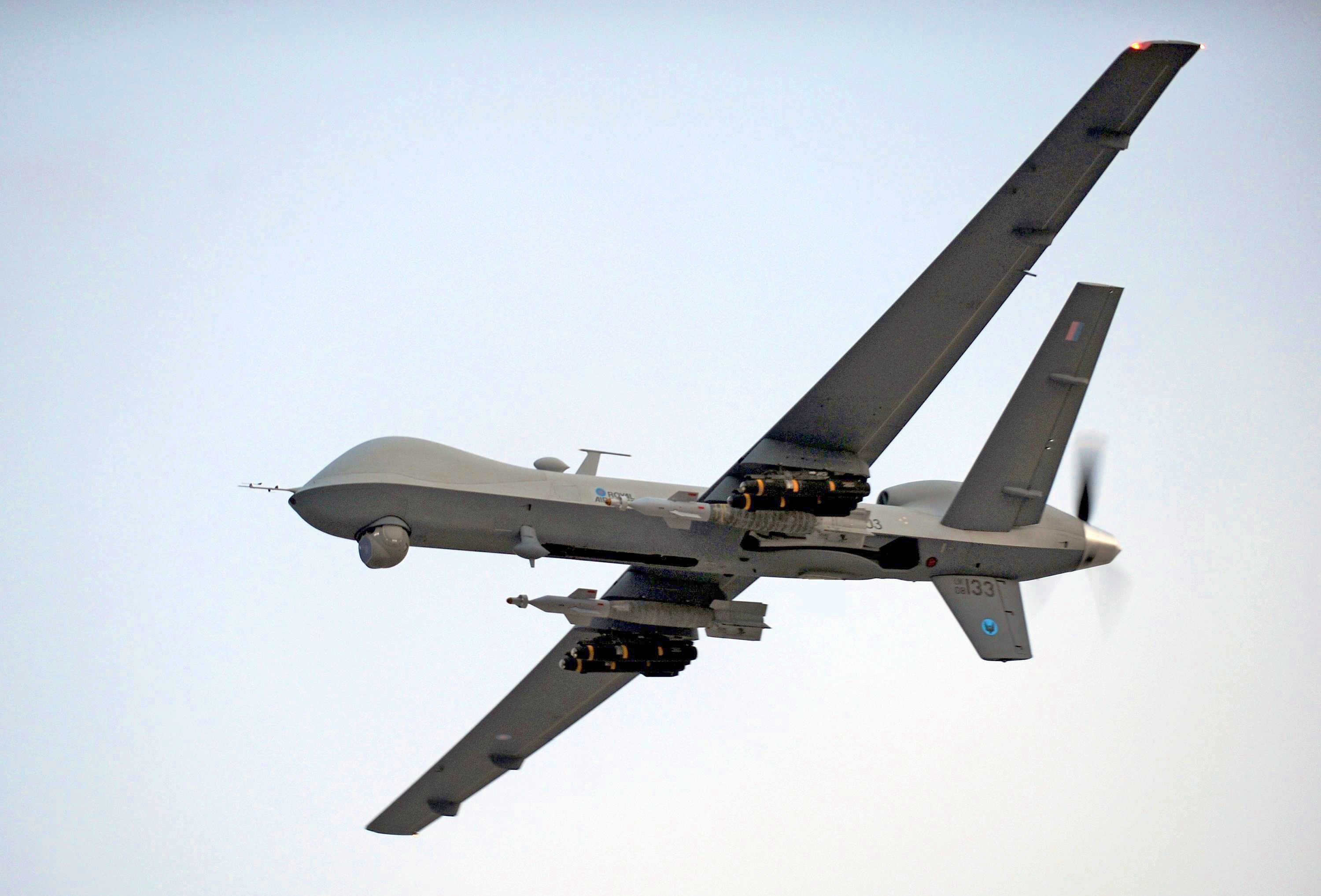
Unmanned aerial vehicle that is usually armed

An unmanned combat aerial vehicle (UCAV), also known as a combat drone, fighter drone or battlefield UAV, is an unmanned aerial vehicle (UAV) that carries aircraft ordnance such as air-to-surface missiles, anti-tank guided missiles (ATGMs), and/or aerial bombs on hardpoints or within weapons bay, allowing it to perform tactical attacks known as drone strikes. Some new UCAVs gained the capability for beyond-visual-range air-to-air combat when retains the drone strike capability. UCAVs are used for intelligence, surveillance, target acquisition and reconnaissance, attacking high-value targets and prolonged loitering before needing to return to base, unlike kamikaze drones, which are single-use drones made for physically ramming into a target and exploding on impact; or surveillance drones, which are unarmed drones used only for aerial reconnaissance and gathering intelligence.
Aircraft of this type have no onboard human pilot, but are usually under real-time remote control by human operators, with varying levels of automation. As the operator runs the vehicle from a remote terminal via radio control, equipment necessary to support an on-board human pilot is not needed, resulting in a lower weight and a smaller size than a manned aircraft for the same payload. Many countries have operational domestic UCAVs, and many more have imported fighter drones or are in the process of developing them.The number of countries that are manufacturing armed drones varies by source. See for example:
- , listing the United States, Israel, China, Turkey, and Iran
- , listing the United States, Sweden, South Africa, France, Spain, Italy, Greece, Switzerland, the UK, Russia, Ukraine, Turkey, Georgia, Israel, Jordan, Iran, the UAE, Saudi Arabia, India, Pakistan, North Korea, South Korea, China, Taiwan and Australia
Technological advancements are rapidly expanding the capabilities of UCAVs with a primary focus on enhanced autonomy and sophisticated artificial intelligence (AI). Several UCAVs can perform complex functions such as autonomous sensor fusion, real-time target identification and dynamic mission re-planning reducing the cognitive load on human operators. This evolution is central to modern network-centric warfare as UCAVs seamlessly integrate into combined architectures. By sharing data across platforms from satellites to ground units they create a fused, comprehensive battlespace picture that enables dramatically faster decision cycles which is a critical advantage in modern strategy. A significant new doctrinal is embodied in the development of loyal wingman capable UCAVs, designed to operate in collaborative teams with manned fighter jets. These drones can perform high-risk missions like electronic attack, forward reconnaissance or weapons delivery thereby shielding human pilots and acting as force multipliers. As global militaries increasingly invest in and deploy unmanned systems an arms race in countermeasures is concurrently accelerating. This includes the development of advanced electronic warfare (EW) suites, directed-energy weapons and anti-drone systems to disrupt, deceive or destroy UCAVs. This arms race ensuring that the battlefield of the future will be defined by this competition between UCAV platforms and the measures designed to defeat them.
History
Main article: History of unmanned combat aerial vehicles, Drone warfare, Civilian casualties from U.S. drone strikes

First Attempts - 1940-1970
One of the earliest explorations of the concept of the combat drone was pioneered by two men: Lee de Forest who was an inventor and developer of early radio controlled devices and U.A. Sanabria who was an electrical engineer in the emerging field of television and commercial broadcasting. Their idea for a radio-command vehicle was featured in an article in a 1940 publication of Popular Mechanics. The modern military drone was the brainchild of John Stuart Foster Jr., a nuclear physicist of Lawrence Livermore Laboratory. In 1971, Foster was a model airplane hobbyist and had the idea this hobby could be applied to building weapons. He drew up plans and by 1973 DARPA (Defense Advanced Research Projects Agency) built two prototypes called "Prairie" and "Calera". They were powered by a modified lawn-mower engine and could stay aloft for two hours while carrying a 28 lb load.
Israel Takes the Lead: Yom Kippur War and Lebanon War 1973-1982
In the 1973 Yom Kippur War, Israel used unarmed U.S. Ryan Firebee target drones to spur Egypt into firing its entire arsenal of anti-aircraft missiles. This mission was accomplished with no injuries to Israeli pilots, who soon exploited the depleted Egyptian defences. In the late 1970s and 80s, Israel developed the Scout and the Pioneer, which represented a shift toward the modern lighter, glider-type model of UAV. Israel pioneered the use of unmanned aerial vehicles (UAVs) for real-time surveillance, electronic warfare, and decoys.{{cite web |access-date = 2013-08-14 |archive-url = https://web.archive.org/web/20130522111255/http://www.howstuffworks.com/reaper1.htm |archive-date = 2013-05-22 |url-status = live |access-date = 2013-08-14 |archive-url = https://web.archive.org/web/20131026110814/http://strategypage.com/htmw/htairfo/articles/20090409.aspx |archive-date = 2013-10-26 |url-status = live |access-date = 2013-08-14 |archive-url = https://web.archive.org/web/20131203060756/http://www.globes.co.il/serveen/globes/docview.asp?did=1000691790 |archive-date = 2013-12-03 |url-status = live |access-date = January 13, 2010 |archive-url = https://web.archive.org/web/20150503014732/http://www.wsj.com/articles/SB126325146524725387 |archive-date = 2015-05-03 |url-status = live

Adolescence: US and Iran Explore New Capabilities and Evolving Technology 1980-1990
In the late 1980s, Iran deployed a drone armed with six RPG-7 rounds in the Iran–Iraq War.
Impressed by Israel's success, the US quickly acquired a number of UAVs, and its Hunter and Pioneer systems are direct derivatives of Israeli models. The first 'UAV war' was the first Persian Gulf War: according to a May 1991 Department of the Navy report: "At least one UAV was airborne at all times during Desert Storm." After the Persian Gulf War successfully demonstrated its utility, global militaries invested widely in the domestic development of combat UAVs. The first "kill" by an American UAV was on October 7, 2001, in Kandahar.
Between 2004 to late 2012, the U.S. has increased its use of drone strikes against targets in Pakistan and elsewhere as part of the war on terror. In January 2014, it was estimated that 2,400 people were killed by U.S. drone strikes in five years. In June 2015, the total death toll of U.S. drone strikes was estimated to exceed 6,000.
In 2020, Turkey became the first country to use UCAVs in a large, coordinated attack on a conventional battlefield when it attacked forces in Syria. They were used to attack enemy positions, to provide cover for ground forces and to scout for artillery. Drones were used extensively in the 2020 Nagorno-Karabakh war between Azerbaijan and Armenia. Azerbaijan's use of cheaper Turkish TB2 drones was seen as crucial to their victory against the Armenian forces.
Drones were also used extensively during the Russo-Ukrainian war. The 2022 conflict was widely described as the first full-scale war featuring the large-scale use of small and commercial-grade UAVs in military settings. Consumer quadcopters and first-person view (FPV) drones, modified with sensors and explosives, were being used for military missions. The affordability and availability of small UAVs have shifted modern warfare and given rise to new offensive and defensive strategies. Usage of small combat drones offers a cost advantage, and their high performance, reliability, and commercial availability for repair parts also contributed to their popularity.
By country
China

China manufactures and exports combat drones on a large scale, and the country is the source of most commercial UAV components. The People's Liberation Army military operates multiple types of unmanned combat aerial vehicles. Since 2010, Chinese drone companies have begun to export large quantities of drones to the global military market. Of the 18 countries that are known to have received military drones between 2010 and 2019, the top 12 all purchased their drones from China. The shift accelerated in the 2020s due to China's advancement in drone technologies and manufacturing, compounded by market demand from the Russian invasion of Ukraine and the Israel-Gaza conflict. Chinese companies that manufactures military unmanned aerial vehicles include China Aerospace Science and Technology Corporation (CASC) and Chengdu Aircraft Industry Group, etc.
China is known to be developing various "loyal wingman" UCAVs, such as AVIC Dark Sword, which is a concept first revealed in 2006. Stealth UCAV, such as Hongdu GJ-11 unmanned combat aerial vehicles, are designed to be controlled by the Chengdu J-20 fighter, forming manned-unmanned aircraft teams. Other stealth UCAVs include Feihong FH-97 UCAV developed by China Aerospace Science and Technology Corporation (CASC). It was designed to suppress air defenses with electronic countermeasures, fly ahead of aircraft to provide early warning, act as an expandable decoy, as well as provide reconnaissance and damage evaluation. Feihong FH-97A, a loyal wingman drone designed to fly alongside the fighter aircraft.
In August and September 2025, China unveiled multiple different types of UCAV and loyal wingmen prototype under development, and the naval variant of the Hongdu GJ-11 UCAV. These Chinese UCAV designs have different wing configurations and engine options, with some large UCAVs aimed to perform air superiority mission independently or collaboratively with manned aircraft.
In 2025, the first pictures of two very large stealthy long range drones appeared. They have been unofficially designated as the “WZ-X” and “GJ-X”.
Israel
Elbit Hermes 450
Main article: Elbit Hermes 450
,_(cropped).jpg)
The Israeli Air Force, which operates a squadron of Hermes 450s out of Palmachim Airbase south of Tel Aviv, has adapted the Hermes 450 for use as an assault UAV, reportedly equipping it with two Hellfire missiles or, according to various sources, two Rafael-made missiles. According to Israeli, Palestinian, Lebanese, and independent reports, the Israeli assault UAV has been used in the Gaza Strip and was used intensively in the Second Lebanon War. Israel has not denied this capability, but to date, its policy has been to not officially confirm it either.
Turkiye
TAI Anka-3
Main article: TAI Anka-3

TAI Anka 3 is the code-name for the new single engine UCAV being developed by TAI. It will have a flying wing form, and will feature low-observable stealth technology. The role of the aircraft will be suppression of enemy air defenses (SEAD), penetration and bomber.
TAI Aksungur
Main article: TAI Aksungur
TAI Aksungur is a built by Turkish Aerospace Industries (TAI) for the Turkish Armed Forces. Using existing technology from the TAI Anka series of drones, it is the manufacturer's largest drone,{{cite news |access-date=26 June 2019 |archive-url=https://web.archive.org/web/20190627193525/https://www.flightglobal.com/news/articles/idef-aksungur-uav-makes-show-debut-after-first-flig-457878/ |archive-date=27 June 2019 |url-status=live
Bayraktar Kizilelma
Main article: Bayraktar Kızılelma
Bayraktar Kızılelma is a proposed jet-powered, single-engine, low-observable, supersonic, carrier-capable unmanned combat aircraft in development by Baykar, famous for its Bayraktar TB2. On 12 March 2022, Selçuk Bayraktar, CTO of Baykar announced that the first prototype of the Bayraktar Kızılelma has entered the production line. On November 30, 2025, the Bayraktar Kızılelma successfully completed a landmark flight and firing test campaign, achieving a global first among Unmanned Combat Aerial Vehicles (UCAVs). The platform successfully launched Gökdoğan, a Beyond-Visual-Range (BVR) air-to-air missile, which is equipped with an active radar seeker head, utilizing the autonomous guidance capabilities of its own integrated MURAD AESA Radar system. With this unparalleled operational demonstration, the Kızılelma has officially secured its position as the world's first unmanned fighter jet to validate this critical BVR engagement capability on a fully autonomous platform.
United Kingdom
BAE Systems Taranis
Main article: BAE Systems Taranis
Taranis is a British demonstrator program for unmanned combat air vehicle (UCAV) technology. It is part of the UK's Strategic Unmanned Air Vehicle (Experimental) (SUAV[E]) program. BAE describes Taranis's role in this context as following: "This £124m, four -year programme is part of the UK Government's Strategic Unmanned Air Vehicle Experiment (SUAVE) and will result in a UCAV demonstrator with fully integrated autonomous systems and low observable features."
The Taranis demonstrator will have an MTOW (Maximum Takeoff Weight) of about 8000 kilograms and be of comparable size to the BAE Hawk – making it one of the world's largest UAVs. It will be stealthy, fast, and able to deploy a range of munitions over a number of targets, as well as being capable of defending itself against manned and other unmanned enemy aircraft. The first steel was cut in September 2007 and ground testing started in early 2009. The first flight of the Taranis took place in August 2013 in Woomera, Australia. The demonstrator will have two internal weapons bays. With the inclusion of "full autonomy" the intention is thus for this platform to be able to "think for itself" for a large part of the mission.
United States
Main article: Battlefield UAVs of the United States
J-UCAS
Main article: Joint Unmanned Combat Air Systems
- Boeing X-45 UCAV (TD)
- Northrop-Grumman X-47 Pegasus
Joint Unmanned Combat Air Systems, or J-UCAS, was the name for the joint U.S. Navy/U.S. Air Force unmanned combat air vehicle procurement project. J-UCAS was managed by DARPA, the Defense Advanced Research Projects Agency. In the 2006 Quadrennial Defense Review, the J-UCAS program was terminated. The program would have used stealth technologies and allowed UCAVs to be armed with precision-guided weapons such as Joint Direct Attack Munition (JDAM) or precision miniature munitions, such as the Small-Diameter Bomb, which are used to suppress enemy air defenses. Controllers could have used real-time data sources, including satellites, to plan for and respond to changes on and around the battlefield.
.jpg)
The program was later revitalized into UCAS-D, a United States Navy program designed to develop a carrier-based unmanned aircraft.
N-UCAS
UCAS-D and Northrop Grumman X-47B are the U.S. Navy-only successors to the J-UCAS, which was canceled in 2006. Boeing is also working on the X-45N in this sector.
In a New Year 2011 editorial titled "China's Naval Ambitions", The New York Times editorial board argued that "[t]he Pentagon must accelerate efforts to make American naval forces in Asia less vulnerable to Chinese missile threats by giving them the means to project their deterrent power from further offshore. Cutting back purchases of the Navy's DDG-1000 destroyer (with its deficient missile defense system) was a first step. A bigger one would be to reduce the Navy's reliance on short-range manned strike aircraft like the F-18 and the F-35, in favor of the carrier-launched N-UCAS ...."
On 6 January 2011, the DOD announced that this would be one area of additional investment in the 2012 budget request.
USAF Hunter-Killer
Main article: USAF Hunter-Killer
- Scaled Composites Model 395
- Scaled Composites Model 396
- General Atomics MQ-9 Reaper (originally the Predator B)
- Aurora Flight Sciences/Israel Aircraft Industries Eagle/Heron 2
- Unnamed Lockheed Martin entry
The United States Air Force has shifted its UCAV program from medium-range tactical strike aircraft to long-range strategic bombers. The technology of the Long Range Strike program is based on the Lockheed Martin Polecat demonstrator.
Multinational
- EADS Surveyor: The EADS "Surveyor" is still in preliminary investigation phase. It will be a fixed-wing, jet-powered UAV and is being positioned as a replacement for the CL-289. EADS is currently working on a demonstrator, the "Carapas", modified from an Italian Mirach 100 drone. The production Surveyor would be a stealthy machine with a top speed of 850 km/h (530 mph), an endurance of up to three hours, and capable of carrying a sophisticated sensor payload, including SIGINT gear. It would also be able to carry external loads, such as air-dropped sensors or light munitions.
Non-state actors
In the mid-2010s, the Islamic State terrorist group began attaching explosives to commercially available quadcopters such as the Chinese-made DJI Phantom to bomb military targets in Iraq and Syria. During the 2016–17 battle of Mosul, the Islamic State reportedly used drones as surveillance and weapons delivery platforms, using improvised cradles to drop grenades and other explosives. An Islamic State drone facility was notably targeted by Royal Air Force strike aircraft during the battle.
Militant groups during the Syrian civil war have also reportedly used UAVs in attacks, one example being a swarm of drones armed with bombs attacking Russian bases in western Syria in early January 2018.
Starting in the 2020s, Mexican drug cartels began dropping reportedly hundreds of drone-carried bombs targeting both security forces and enemy gangs during turf wars.
Safety and security
Counter-UAS
There has been widespread use of drones in the Russo-Ukrainian War. Ukrainian soldiers use GPS signals to guide a drone to find Russian artillery and to guide Ukrainian artillery. Jamming these drone GPS signals cause drones to operate less effectively, as the operators of drones have to rely on pre-programmed routes through areas of jamming until communications can be restored. Other systems supplied by the West rely on automation. Systems like the AeroVironment Switchblade can find targets autonomously, requiring human permission only to engage found targets. In October 2022 a video appeared on the web showing two drones colliding and one being rendered unflyable as a result.
On 27 December 2022 North Korea sent five drones over its border with South Korea. One reaching Seoul, all five returned to the North, despite a five-hour chase involving fighter jets and attack helicopters with some 100 rounds being fired. A South Korean KAI KT-1 Woongbi crashed although both crew survived. The Joint Chiefs of Staff (South Korea) released a statement in which it said that while it can stop attack drones, its ability to stop smaller spy drones is "limited". A senior official, Kang Shin-chul, said: "Our military's lack of preparedness has caused a lot of concern to the people…actively employ detection devices to spot the enemy's drone from an early stage and aggressively deploy strike assets". The South Korean President Yoon Suk-yeol has indicated that South Korea will invest in stealthy drones that could penetrate North Korea, with the creation of a new military unit.
The South Korean Defence Ministry announced a new series of anti-drone measures, planning to spend some 560 billion won over the next five years. The money will go towards four new initiatives. One is an airborne laser that will be used to destroy larger drones, whilst a jammer would be used on smaller drones. A new counter drone unit, made up of two squadrons, would also be created. The laser is already in the test phase and is expected to become operational in 2027. The jamming system has been described as "soft kill".
Ethics and laws
Civilian casualties
Israel
In March 2009, The Guardian reported allegations that Israeli UAVs armed with missiles killed 48 Palestinian civilians in the Gaza Strip, including two small children in a field and a group of women and girls in an otherwise empty street. In June, Human Rights Watch investigated six UAV attacks that were reported to have resulted in civilian casualties and alleged that Israeli forces either failed to take all feasible precautions to verify that the targets were combatants or failed to distinguish between combatants and civilians.
United States
Main article: Disposition Matrix, Civilian casualties from U.S. drone strikes
Collateral damage of civilians still takes place with drone combat, although some (like John O. Brennan) have argued that it greatly reduces the likelihood. Although drones enable advanced tactical surveillance and up-to-the-minute data, flaws can become apparent. The U.S. drone program in Pakistan has killed several dozen civilians accidentally. An example is the operation in February 2010 near Khod, in Uruzgan Province, Afghanistan. Over ten civilians in a three-vehicle convoy travelling from Daykundi Province were accidentally killed after a drone crew misidentified the civilians as hostile threats. A force of Bell OH-58 Kiowa helicopters, who were attempting to protect ground troops fighting several kilometers away, fired AGM-114 Hellfire missiles at the vehicles.
In 2009, the Brookings Institution reported that in the US-led drone attacks in Pakistan, ten civilians died for every militant killed. A former ambassador of Pakistan said that American UAV attacks were turning Pakistani opinion against the United States. The website PakistanBodyCount.Org reported 1,065 civilian deaths between 2004 and 2010. According to a 2010 analysis by the New America Foundation 114 UAV-based missile strikes in northwest Pakistan from 2004 killed between 830 and 1,210 individuals, around 550 to 850 of whom were militants. In October 2013, the Pakistani government revealed that since 2008 317 drone strikes had killed 2,160 Islamic militants and 67 civilians – far less than previous government and independent organization calculations.
In July 2013, former Pentagon lawyer Jeh Johnson said, on a panel at the Aspen Institute's Security Forum, that he felt an emotional reaction upon reading Nasser al-Awlaki's account of how his 16-year-old grandson was killed by a U.S. drone.
In December 2013, a U.S. drone strike in Radda, capital of Yemen's Bayda province, killed members of a wedding party. The following February, Human Rights Watch published a 28-page report reviewing the strike and its legality, among other things. Titled "A Wedding That Became A Funeral", the report concludes that some (but not necessarily all) of the casualties were civilians, not the intended regional Al-Qaeda targets. The organization demanded US and Yemeni investigations into the attack. In its research, HRW "found no evidence that the individuals taking part in the wedding procession posed an imminent threat to life. In the absence of an armed conflict, killing them would be a violation of international human rights law."
Political effects
As a new weapon, drones are having unforeseen political effects. Some scholars have argued that the extensive use of drones will undermine the popular legitimacy of local governments, which are blamed for permitting the strikes.
On August 6, 2020, U.S. Senators Rand Paul (R-KY), Mike Lee (R-UT), Chris Murphy (D-CT), Chris Coons (D-DE), and Bernie Sanders (I-VT) introduced a bill to ban sales, transfers, and exports of large armed drones to countries outside of NATO amid concerns that civilians were killed with American-made weapons used by Saudi Arabia and the UAE during the Saudi Arabian-led intervention in Yemen. Congress had previously passed a similar measure with bipartisan support, but failed to overcome President Donald Trump's veto.
Psychological effects
Controllers can also experience psychological stress from the combat they are involved in. A few may even experience posttraumatic stress disorder (PTSD). There are some reports of drone pilots struggling with post traumatic stress disorder after they have killed civilians, especially children. Unlike bomber pilots, moreover, drone operators linger long after the explosives strike and see its effects on human bodies in stark detail. The intense training that US drone operators undergo "works to dehumanise the 'enemy' people below whilst glorifying and celebrating the killing process."
Professor Shannon E. French, the director of the Center for Ethics and Excellence at Case Western Reserve University and a former professor at the U.S. Naval Academy, wonders if the PTSD may be rooted in a suspicion that something else was at stake. According to Professor French, the author of the 2003 book The Code of the Warrior:
If [I'm] in the field risking and taking a life, there's a sense that I'm putting skin in the game ... I'm taking a risk so it feels more honorable. Someone who kills at a distance—it can make them doubt. Am I truly honorable?The Missile Technology Control Regime applies to UCAVs.
On 28 October 2009, United Nations Special Rapporteur on extrajudicial, summary or arbitrary executions, Philip Alston, presented a report to the Third Committee (social, humanitarian and cultural) of the General Assembly arguing that the use of unmanned combat air vehicles for targeted killings should be regarded as a breach of international law unless the United States can demonstrate appropriate precautions and accountability mechanisms are in place.
In June 2015, forty-five former US military personnel issued a joint appeal to pilots of aerial drones operating in Afghanistan, Iraq, Syria, Pakistan and elsewhere urging them to refuse to fly and indicated that their missions "profoundly violate domestic and international laws." They noted that these drone attacks also undermine principles of human rights.
Stanford's ‘Living Under Drones’ researchers, meanwhile, have shown that civilians in Pakistan and Afghanistan are reluctant to help those hit by the first strikes because rescuers themselves have often been killed by follow-on drone strikes. Injured relatives in the rubble of the first strike have been known to tell their relatives not to help rescue them because of the frequency of these so-called ‘double-tap’ strikes. People also avoid gathering in groups in visible places. Many children are permanently kept indoors and often no longer attend school.
Writer Mark Bowden has disputed this viewpoint, saying in his The Atlantic article, "But flying a drone, [the pilot] sees the carnage close-up, in real time—the blood and severed body parts, the arrival of emergency responders, the anguish of friends and family. Often, he’s been watching the people he kills for a long time before pulling the trigger. Drone pilots become familiar with their victims. They see them in the ordinary rhythms of their lives—with their wives and friends, with their children. War by remote control turns out to be intimate and disturbing. Pilots are sometimes shaken."
This assessment is corroborated by a sensor operator's account:
Back in the United States, a combination of "lower-class" status in the military, overwork, and psychological trauma may be taking a mental toll on drone pilots. These psychological, cultural and career issues appear to have led to a shortfall in USAF drone operators, which is seen as a "dead end job".
=== Stand-off attacks === The "unmanned" aspect of armed UAVs has raised moral concerns about their use in combat and law enforcement contexts. Attacking humans with remote-controlled machines is even more abstract than the use of other "stand-off" weaponry, such as missiles, artillery, and aerial bombardment, possibly depersonalizing the decision to attack. By contrast, UAVs and other stand-off systems reduce casualties among the attackers.
=== Wrongful targeting === There are only estimates of the magnitude of the errors in target selection. However, they do occur, and some of them become known.
One fatal "error" happened in December 2023, when the Nigerian army accidentally hit a village in northwestern Nigeria, killing 85 civilians celebrating a Muslim festival. The army said they thought the people were rebels.
=== Autonomous attacks === The picture is further complicated if the UAV can initiate an attack autonomously, without direct human involvement. Such UAVs could possibly react more quickly and without bias, but would lack human sensibility. Heather Roff replies that lethal autonomous robots (LARs) may not be appropriate for complex conflicts and targeted populations would likely react angrily against them. Will McCants argues that the public would be more outraged by machine failures than human error, making LARs politically implausible. According to Mark Gubrud, claims that drones can be hacked are overblown and misleading and moreover, drones are more likely to be hacked if they're autonomous, because otherwise the human operator would take control: "Giving weapon systems autonomous capabilities is a good way to lose control of them, either due to a programming error, unanticipated circumstances, malfunction, or hack and then not be able to regain control short of blowing them up, hopefully before they've blown up too many other things and people." Others have argued that the technological possibility of autonomy should not obscure the continuing moral responsibilities humans have at every stage. There is an ongoing debate as to whether the attribution of moral responsibility can be apportioned appropriately under existing international humanitarian law, which is based on four principles: military necessity, distinction between military and civilian objects, prohibition of unnecessary suffering, and proportionality.
== Public opinion ==
In 2013, a Fairleigh Dickinson University poll asked registered voters whether they "approve or disapprove of the U.S. military using drones to carry out attacks abroad on people and other targets deemed a threat to the U.S.?" The results showed that three in every four voters (75%) approved of the U.S. military using drones to carry out attacks, while (13%) disapproved. A poll conducted by the Huffington Post in 2013 also showed a majority supporting targeted killings using drones, though by a smaller margin. A 2015 poll showed Republicans and men are more likely to support U.S. drone strikes, while Democrats, independents, women, young people, and minorities are less supportive.
Outside America, there is widespread opposition to US drone killings. A July 2014 report found a majority or plurality of respondents in 39 of 44 countries surveyed opposed U.S. drone strikes in countries such as Pakistan, Yemen, and Somalia. The U.S., Kenya, and Israel were the only countries where at least half the population supported drone strikes. Venezuela was found to be the most anti-drone country, where 92% of respondents disagreed with U.S. drone strikes, followed closely by Jordan, where 90% disagreed; Israel was shown as the most pro-drone, with 65% in favor of U.S. drone strikes and 27% opposed.
The drone strikes conducted by the Malian army have had devastating consequences on the civilian population in the Azawad region. In March 2024, attacks killed 13 civilians, including seven children, in Amasrakad, Gao region, sparking outrage and calls for justice from organizations like Amnesty International. These incidents highlighted the lack of transparency and accountability in drone use, exacerbating local and international tensions.’
== List of aircraft== === Operational ===
Below are a list of some current dedicated armed UAV's: {| class="wikitable sortable" !Country !Manufacturer !Aircraft !Introduced |- |United States |General Atomics |MQ-1 Predator
1995 United States General Atomics MQ-9 Reaper 2007 - United States General Atomics MQ-1C Gray Eagle 2009 - United States General Atomics General Atomics MQ-20 Avenger 2009 - China Chengdu Aerospace CAIG Wing Loong 2011 - China Chengdu Aerospace CAIG Wing Loong-10 2016 - China Chengdu Aerospace CAIG Wing Loong II 2017 - China Chengdu Aerospace Wing Loong-III 2022 - China Harbin Aircraft Industry Group Harbin BZK-005 2006 - China Hongdu Aerospace Hongdu GJ-11 2019 |Taiwan |NCSIST |NCSIST Teng Yun
2015 Don't add back till introduction-- China Sichuan Tengden Tengden TB-001 2017 - Turkey Turkish Aerospace Industries TAI Anka 2010 - Turkey Baykar Defense Bayraktar TB2 2014 - Turkey Turkish Aerospace Industries TAI Aksungur 2019 - Turkey Baykar Defense Bayraktar Akıncı 2021 - Turkey Turkish Aerospace Industries TAI Anka-3 2023 - Turkey Baykar Defense Bayraktar TB3 2023 - Pakistan NESCOM NESCOM Burraq 2016 - Pakistan GIDS GIDS Shahpar-2 2021 - India 2023 - Iran Qods Aviation Qods Mohajer-6 2017 - Iran Qods Aviation Industry Company Qods Mohajer-10 2023 - Iran HESA HESA Shahed-129 2012 - Iran HESA HESA Shahed-149 Gaza 2022 - Iran HESA HESA Shahed 191 Saegheh 2010 - Iran IRIAF Kaman 22 2021 - Russia Kronshtadt group Kronshtadt Orion 2020 - Russia Sukhoi Sukhoi S-70 2024 - Russia OKB Luch Luch Korsar 2018 - South Africa Milkor Milkor 380 2023 - Israel Elbit Systems Hermes-900 2010 - Israel Elbit Systems Hermes-450 1998 - Israel IAI Eitan 2007 } Some reconnaissance drones that have armed capability include the CASC CH-92, IAI Eitan and the Ababil-3, Ababil-5, Hamaseh. Some commercial drones, such as DJI Mavic and Phantom, have been modified to carry light explosives for combat missions in recent wars.
=== In development ===
Below is a table of some technology demonstrators and projects in development: {| class="wikitable sortable" !Aircraft !Country !Notes |- |Boeing MQ-28 Ghost Bat |Australia
Made by Boeing Australia. Under flight testing/development. AVIC Dark Sword China Technology demonstrator/testing - MD-22 China Hypersonic UCAV, Under development - FL-71 China Supersonic stealth UCAV, Under development - BAE Systems Corax United Kingdom Technology demonstrator - BAE Systems Taranis United Kingdom Technology demonstrator - Boeing Phantom Ray United States Under development/testing - Dassault nEUROn France Experimental stealth UCAV - DRDO Archer-NG India Under development - Eurodrone EU Under development - EMC Operations Anaconda United Kingdom Under development/testing - HAL CATS Warrior India Under development - Kratos XQ-58 Valkyrie United States Under development/testing - Northrop Grumman X-47A United States Technology demonstrator inc. X-47B / C variants - Bayraktar Kızılelma Turkey Under development/testing - TAI Anka-3 Turkey Under development/testing - Bayraktar Kızılelma Turkey First serial aircraft to be delivered by mid-2026 - Atobá XR Brazil Under development/testing - S-70 Okhotnik-B Russia Under development/testing - IAIO Qaher-313 Iran Under development/testing - Qods Mohajer-7 Iran Under development - Qods Mohajer-9 Iran Under development - Indonesian Aerospace Elang Hitam Indonesia Under development } == Users ==
Countries with known operational armed drones:
*Albania – Bayraktar TB2 *Algeria – TAI Anka, TAI Aksungur *Azerbaijan – Bayraktar TB2 *Bangladesh – Bayraktar TB2 *Brazil – Elbit Hermes 450, Elbit Hermes 900 *Burkina Faso – Bayraktar TB2 *China – GJ-11, CAIG Wing Loong I, CAIG Loong II, CAIG Wing Loong III, CH-4, TB-001, WZ-10 *Chad – TAI Anka *Djibouti – Bayraktar TB2 *Egypt – CAIG Wing Loong, CH-4 Rainbow *Ethiopia – Bayraktar TB2, CAIG Wing Loong, Mohajer-6 *France – MQ-9 Reaper *India – IAI Heron, MQ-9B *Iraq – CH-4 Rainbow, Mohajer-4, Mohajer-6, Ababil-3 *Iran – Hamaseh, Saegheh, Kaman-12, Kaman 22, IAIO Fotros, Shahed 129, Meraj, HESA Ababil, Mohajer-4, Mohajer-6, Mohajer-10, Shahed 149 Gaza, Shahed Saegheh, Shahed 171 Simorgh *Israel – Elbit Hermes 450, Elbit Hermes 900 (armed variant), IAI Eitan *Italy – MQ-1 Predator, MQ-9 Reaper *Kazakhstan – TAI Anka *Kosovo – Bayraktar TB2 *Kyrgyzstan – TAI Anka, TAI Aksungur, Bayraktar TB2, Bayraktar Akıncı *Libya – Bayraktar TB2 (used by GNA) / CAIG Wing Loong II (used by LNA) *Malaysia – TAI Anka *Maldives –Bayraktar TB2 *Morocco – MQ-9 Reaper, Bayraktar TB2, CAIG Wing Loong *Myanmar – CH-3A Rainbow, CH-4 Rainbow *Netherlands – MQ-9 Reaper *Niger – Bayraktar TB2 *Nigeria – Asisguard Songar, Bayraktar TB2, CAIG Wing Loong, CASC Rainbow, Yabhon Flash-20 *Pakistan – NESCOM Burraq, GIDS Shahpar-2, CAIG Wing Loong II, CH-4 Rainbow, Bayraktar TB2, Bayraktar Akıncı *Poland – Bayraktar TB2 *Qatar – Bayraktar TB2 *Romania – Bayraktar TB2 *Russia – Kronshtadt Orion, Forpost-R, Shahed 129, Mohajer-6 *Rwanda – Bayraktar TB2 *Saudi Arabia – CAIG Wing Loong, Vestel Karayel *Serbia – Elbit Hermes 900 (armed variant), CH-95, CH-92A, Pegaz *South Africa – Milkor 380 *Spain – MQ-9 Reaper *Sudan – Mohajer-6, Ababil-3 *Syria – Mohajer-6, Mohajer-4, Ababil-3, Ababil-2 *Taiwan- NCSIST Teng Yun, MQ-9 Reaper (on order) *Tajikistan- Ababil-2, Mohajer-2 *Togo – Bayraktar TB2 *Tunisia – TAI Anka *Turkey – TAI Anka, Bayraktar TB2, Vestel Karayel, TAI Aksungur, Bayraktar Akıncı *Turkmenistan – Bayraktar TB2, CASC Rainbow, CASIC WJ, Busel MB1, Busel MB2, Skystriker *Ukraine – Bayraktar TB2, R18 *United Arab Emirates – Bayraktar TB2, CAIG Wing Loong II *United Kingdom – MQ-9 Reaper/Protector RG1 *United States – MQ-1 Predator, MQ-1C Gray Eagle, MQ-9 Reaper, Boeing MQ-25 Stingray *Venezuela- Mohajer-6, Mohajer-2 * *
== See also ==
*Loyal wingman using AI *Drone carrier *Civilian casualties from US drone strikes *History of unmanned aerial vehicles *History of unmanned combat aerial vehicles *List of unmanned aerial vehicles *UAVs in the U.S. military
== Further reading ==
- Horowitz M, Schwartz JA, Fuhrmann M. 2020. "Who’s prone to drone? A global time-series analysis of armed uninhabited aerial vehicle proliferation." Conflict Management and Peace Science.
== References ==
== External links == *
- by Greg Goebel (in the public domain)
[[Category:Unmanned military aircraft|*]]
References
- (2010). "Unmanned aircraft systems : UAVs design, development and deployment". Wiley.
- (2017-05-11). "Drone warfare: The death of precision". Bulletin of the Atomic Scientists.
- (2015-02-17). "Virtuous drones?". The International Journal of Human Rights.
- (30 November 2025). "Turkey's New Killer Drone Makes History After Blasting Jet Out of the Sky—No Pilot Required". [[International Business Times]].
- (9 December 2025). "Australian MQ-28 CCA Downs Drone in Milestone Air-to-Air Test".
- Dowd, Alan. "Drone wars: risks and warnings".
- "The Simulation of the Human-Machine Partnership in UCAV Operation". College of Aeronautics, Northwestern Polytechnical University, Xi'an 710072, China.
- Robinson-Early, Nick. (2024-07-14). "AI’s Oppenheimer moment: autonomous weapons enter the battlefield". [[The Guardian]].
- "ANKA III UCAV".
- (November 7, 2025). "‘That’s a tank’: Army introduces AI-aided target recognition to next-gen C2 prototype".
- Srivastava, Ritu. (December 9, 2025). "Skunk Works AI Mission Contingency".
- (March 2013). "Networking Models in Flying Ad-Hoc Networks (FANETs): Concepts and Challenges". Journal of Intelligent & Robotic Systems.
- (November 17, 2025). "The pilot of an F-22 just controlled a drone wingman in flight".
- (April 10, 2024). "JADC2 Network Clear to Managing Forces Across the World, Says Panel".
- (September 20, 2024). "Turkish defense firm MKE introduces anti-drone system TOLGA". Anadolu Agency.
- (June 2024). "Drones in Modern Warfare: Lessons Learnt from the War in Ukraine". Australian Army Research Centre.
- (December 4, 2023). "Iran Hacked the Stealthiest Aircraft: How the Loss of the RQ-170 Sentinel Was a Major Setback".
- Mathur, Amitabh. (July 2023). "Drones & Counter-Drone Systems". Centre for Air Power Studies (CAPS) / KW Publishers Pvt Ltd.
- (December 2016). "The future of unmanned combat aerial vehicles: An analysis using the Three Horizons framework". Futures.
- [https://books.google.com/books?id=19kDAAAAMBAJ&pg=PA805 "Robot Television Bomber"] ''Popular Mechanics'' June 1940
- Fred Kaplan. (June 7, 2013). "The World as Free-Fire Zone". [[MIT Technology Review]].
- "NOVA {{!}} Spies That Fly {{!}} Firebee 1241 (Israel)".
- (8 September 2025). "Russia bombs Ukraine almost every night. This is what it sounds like.". The Washington Post.
- Haghshenass, Fariborz. (September 2008). "Iran's Asymmetric Naval Warfare". The Washington Institute for Near East Policy.
- (15 November 2012). "UAV evolution – how natural selection directed the drone revolution".
- (17 December 2015). "How Rogue Techies Armed the Predator, Almost Stopped 9/11, and Accidentally Invented Remote War". [[Wired (website).
- (24 January 2014). "The Toll Of 5 Years Of Drone Strikes". The Huffington Post.
- "Turkish drones, Greek challenges".
- (8 December 2020). "The Air and Missile War in Nagorno-Karabakh: Lessons for the Future of Strike and Defense".
- (29 December 2020). "UK wants new drones in wake of Azerbaijan military success".
- (14 March 2022). "Why are Ukraine's cheap, slow drones so successful against Russian targets?".
- Watling, Jack Reynolds, Nick. "Tactical developments during the third year of the russo–ukrainian war".
- (20 June 2024). "FPV drones in Ukraine are changing modern warfare".
- Kunertova, Dominika. (2023). "The war in Ukraine shows the game-changing effect of drones depends on the game". Bulletin of the Atomic Scientists.
- Tillett, Andrew. (15 May 2022). "Homegrown defence company helping Ukraine take out Russian drones".
- (2023-03-21). "As War in Ukraine Grinds On, China Helps Refill Russian Drone Supplies". [[The New York Times]].
- Greenwood, Faine. (16 February 2023). "The Drone War in Ukraine Is Cheap, Deadly, and Made in China".
- (10 April 2024). "How American Drones Failed to Turn the Tide in Ukraine".
- Stockman, Farah. (13 July 2025). "Drones Are Key to Winning Wars Now. The U.S. Makes Hardly Any".
- (19 March 2021). "Combat drones in China are coming to a conflict near you".
- (27 October 2016). "Market for Military Drones will Surge".
- (29 May 2018). "Is China at the Forefront of Drone Technology?".
- Seong Hyeon Choi. (25 November 2023). "Drone tech gives China an edge in Middle East arms sales, but Israel-Gaza war brings risks: analysts".
- Somerville, Heather. (9 November 2023). "Chinese, American—It Doesn't Matter. Israel Wants Inexpensive Drones.".
- Skove, Sam. (1 May 2024). "UK eyes Chinese drone parts for Ukraine".
- A. Tirpak, John. (28 October 2021). "China's New Two-Seat J-20: Trainer or Manned-Unmanned Teaming Platform?".
- (7 June 2018). "Image emerges of China's stealthy Dark Sword UCAV".
- Chan, Minnie. (20 October 2022). "Drones to become 'loyal wingmen' for China's advanced J-20 stealth fighter jets, state media reports".
- Meier, Ricardo. (12 October 2022). "Chinese two-seat J-20 fighter jet controlling three GJ-11 stealth drones".
- Kirton, David. (2021-09-29). "China unveils 'loyal wingman' armed drone concept". Reuters.
- Dubois, Gastón. (2022-11-08). "Airshow China 2022: FH-97A, the Chinese Loyal Wingman Project".
- Waldron, Greg. (9 November 2022). "Hard hitting UAVs star at Airshow China in Zhuhai".
- Trevithick, Joseph. (2 September 2025). "Top USAF General In Pacific "Not Deterred" By Drones, Missiles To Be Showcased At Huge Chinese Parade".
- Trevithick, Joseph. (17 August 2025). "Glimpses Of China's New Air Combat Drones Emerge Ahead Of Massive Military Parade".
- Satam, Parth. (17 August 2025). "China's New Collaborative Combat Aircraft Breaks Cover Ahead of September Parade".
- Satam, Parth. (3 September 2025). "Parade reveals China's latest UCAV designs, ranging from ISR and strike drones to large stealthy platforms hinting at future PLAAF roles".
- Chen, Chuanren. (3 September 2025). "China Unveils New UCAV, CCA Designs In Victory Day Parade".
- Waldron, Greg. (3 September 2025). "China unveils new support aircraft but no stealth bomber at World War II anniversary parade".
- https://thediplomat.com/2025/12/china-bets-on-unmanned-stealth-bombers/
- https://www.twz.com/air/chinas-huge-cj-x-stealth-drone-appears-to-have-been-spotted-in-the-air-for-the-first-time
- Dror Globerman, Amit Cohen, "[https://www.makorrishon.co.il/nrg/online/1/ART1/018/371.html Most of the Assassinations Were Made By Drones]", Makor Rishon, December 9th 2005
- (December 24, 2022). "İşte Anka-3".
- (December 24, 2022). "TUSAŞ'ın İnsansız Savaş Uçağı ANKA-3'ten İlk Görüntüler".
- (December 24, 2022). "TUSAŞ ANKA-3 MİUS'un ilk görselleri paylaşıldı!".
- Wong, Kelvin. (17 April 2019). "Turkey advances Anka-Aksungur MALE UAV development". [[Jane's Information Group.
- (18 Jan 2010). "Getting Ready for Takeoff". defensenews.com.
- "AKSUNGUR - Yüksek Faydalı Yük Kapasiteli İHA". Türk Havacılık Uzay Sanayi.
- (15 December 2022). "Baykar's unmanned fighter aircraft completes first flight".
- (7 June 2023). "Bayraktar Kızılelma, havacılık tarihinde ilkleri başardı". [[Habertürk TV]].
- Emma Helfrich. (11 April 2023). "Turkey's 'Drone Carrier' Amphibious Assault Ship Enters Service".
- "Üretim hattına 3 buçuk yıl sonra daha büyük ve daha çevik bir balık girdi.".
- "Unmanned Fighter Jet Hits Production Line: Turkey's Baykar".
- (30 November 2025). "'Global first': Turkish UAV shoots down aircraft with BVR air-to-air Missile;company lauds ''pinpoint accuracy''". [[The Times of India]].
- (30 November 2025). "Turkey's New Killer Drone Makes History After Blasting Jet Out of the Sky—No Pilot Required". [[International Business Times]].
- (30 November 2025). "Türkiye's Kızılelma writes history as it proves air-to-air capability". [[Daily Sabah]].
- (20 December 2025). "Unmanned Fighter Jet Bayraktar KIZILELMA Hits Target in First Air-to-Air Test-Firing".
- Farmer, Ben (6 February 2014) [https://www.telegraph.co.uk/news/uknews/defence/10619378/Successful-test-flight-for-Taranis-stealth-drone.html Successful test flight for Taranis stealth drone] {{Webarchive. link. (2018-07-29 Daily Telegraph, Page 12)
- [http://www.defenseindustrydaily.com/cv-ucavs-the-return-of-ucas-03557/ "Carrier UCAVs: The Return of UCAS"] {{Webarchive. link. (2011-05-10 , Defense Industry Daily, 7 February 2010)
- [https://www.nytimes.com/2011/01/02/opinion/02sun2.html?hp Editorial] {{Webarchive. link. (2017-10-20 , ''The New York Times'', January 1, 2011 (January 2, 2011 p. WK7 NY ed.). Retrieved 2011-01-02.)
- "Gates Reveals Budget Efficiencies, Reinvestment Possibilities". United States Department of Defense.
- (12 January 2017). "The Drones of ISIS". Defense One.
- Eshel, Tamir. (12 October 2016). "Weaponized Mini-Drones Entering the Fight".
- Eshel, Tamir. (17 January 2017). "RAF Strikes Daesh Drone Facility in Mosul".
- Reid, David. (January 11, 2018). "A swarm of armed drones attacked a Russian military base in Syria".
- (12 January 2018). "How Russia Says It Swatted Down a Drone Swarm in Syria".
- (23 August 2023). "Drug cartels are sharply increasing use of bomb-dropping drones, Mexican army says". CBS News.
- (31 May 2022). "Lessons from use of drones in the Ukraine war".
- (4 June 2022). "Deadly secret: Electronic warfare shapes Russia-Ukraine war".
- (13 May 2022). "Ukraine Embraces the 'Messy Middle' to Win the Drone War".
- Newdick, Thomas. (13 October 2022). "This Drone-Versus-Drone Kill In Ukraine Could Be An Air Combat First". The Drive.
- Kathryn Armstrong. (27 December 2022). "North Korea drones: South's military apologises for pursuit failure". BBC News.
- Jean Mackenzie in Seoul & Robert Plummer in London. (26 December 2022). "North Korean drone reaches north of Seoul". BBC News.
- (29 December 2022). "South Korea to spend millions on drone defence following North Korea's airspace invasion".
- ''The Guardian'', 23 March 2009. [https://www.theguardian.com/world/2009/mar/23/gaza-war-crimes-drones "Cut to pieces: the Palestinian family drinking tea in their courtyard: Israeli unmanned aerial vehicles – the dreaded drones – caused at least 48 deaths in Gaza during the 23-day offensive."] {{Webarchive. link. (2017-01-10 Retrieved on 3 August 2009.)
- (30 June 2009). "Precisely Wrong – Human Rights Watch". Hrw.org.
- "Report: IDF used RPV fire to target civilians". Ynet.co.il.
- (30 December 2008). "Israel/Gaza: Civilians must not be targets: Disregard for Civilians Underlies Current Escalation". Human Rights Watch.
- John O. Brennan. (30 April 2012). "The Ethics and Efficacy of the President's Counterterrorism Strategy". Woodrow Wilson International Center for Scholars.
- (2011). "Drone Warfare: Blowback from the New American Way of War". Middle East Policy.
- Alex Rodriguez. (May 2, 2010). "U.S. drone attacks in Pakistan get mixed response". [[Los Angeles Times]].
- David S. Cloud (April 10, 2011) [https://www.latimes.com/news/nationworld/world/la-fg-afghanistan-drone-20110410,0,2818134,full.story Anatomy of an Afghan war tragedy] {{Webarchive. link. (2012-06-29 , ''Los Angeles Times'')
- Karin Brulliard (May 30, 2010) [https://www.washingtonpost.com/wp-dyn/content/article/2010/05/29/AR2010052901390.html Drone operators blamed in airstrike that killed Afghan civilians in February] {{Webarchive. link. (2017-10-18 , ''The Washington Post'')
- (21 July 2009). "Drones kill 10 civilians for one militant: US report". [[Dawn (newspaper).
- Daniel L. Byman. (14 July 2009). "Do Targeted Killings Work?". The Brookings Institution.
- ''Newsweek'', 8 July 2009. Anita Kirpalani, [http://www.newsweek.com/id/205725 "Drone On. Q&A: A former Pakistani diplomat says America's most useful weapon is hurting the cause in his country"] {{Webarchive. link. (2009-08-14 Retrieved on 3 August 2009.)
- "Home". PakistanBodyCount.org.
- "2004–2011". New America Foundation.
- (31 October 2013). "Pakistan says 3% of drone deaths civilians". Usatoday.com.
- Michael Isikoff: [http://investigations.nbcnews.com/_news/2013/07/18/19546292-ex-pentagon-official-has-heavy-heart-over-us-teens-inadvertent-killing-by-drone Ex-Pentagon official has 'heavy heart' over US teen's inadvertent killing by drone] {{Webarchive. link. (2013-12-14)
- [https://www.cbsnews.com/news/official-us-drone-attack-in-yemen-kills-wedding-guests/ [Yemeni] Official: U.S. drone attack in Yemen kills wedding guests] {{Webarchive. link. (2013-12-15 – AP, December 12, 2013)
- (19 February 2014). "A Wedding That Became A Funeral: US Drone Attack on Marriage Procession in Yemen".
- Smith, Jordan Michael. (5 September 2012). "Drone "blowback" is real A new analysis finds five ways drone strikes in Yemen are hurting American interests". Salon.com.
- (2020-08-06). "U.S. senators want to block drone sales to Saudis". Reuters.
- David Zucchino. (March 18, 2012). "Stress of combat reaches drone crews". Los Angeles Times.
- Rachel Martin. (Dec 19, 2011). "Report: High Levels Of 'Burnout' In U.S. Drone Pilots". NPR.
- "Drone: Robot Imperium – Longreads".
- Blake, John. (March 9, 2013). "Two enemies discover a 'higher call' in battle". CNN.
- (2009-10-28). "UN News Centre, "UN rights expert voices concern over use of unmanned drones by United States", 28 October 2009". Un.org.
- Ed Pilkington. (June 17, 2015). "Former US military personnel urge drone pilots to walk away from controls".
- Dave Philipps. (15 April 2022). "The unseen scars of those who kill via remote control." [https://www.nytimes.com/2022/04/15/us/drones-airstrikes-ptsd.html NY Times website] Retrieved 16 April 2022.
- Mark Bowden. (15 August 2013). "The Killing Machines – Mark Bowden". The Atlantic.
- (22 October 2013). "Confessions of a Drone Warrior". GQ.
- [[Pratap Chatterjee. Chatterjee, Pratap]] (March 2015). [http://www.tomdispatch.com/post/175964/tomgram%3A_pratap_chatterjee%2C_is_drone_warfare_fraying_at_the_edges/ Is Drone Warfare Fraying at the Edges?] {{Webarchive. link. (2015-07-18. "Are Pilots Deserting Washington's Remote-Control War? A New Form of War May Be Producing a New Form of Mental Disturbance.")
- (21 August 2013). "Nobody Wants to Fly Air Force Drones Because It's a Dead End Job.". Gizmodo.com.
- Carroll, Rory. (2 August 2012). "The philosopher making the moral case for US drones". The Guardian.
- "Dozens Killed In Nigeria As Military Drone Accidentally Strikes Village".
- "Nigeria: Viele Tote bei versehentlichem Angriff durch Militär".
- (8 October 2013). "Why America Wants Drones That Can Kill Without Humans".
- (11 October 2013). "New Faustian pro-Terminator meme infection spreading".
- (29 January 2018). "The 'Killer Robots' are Us".
- (2011). "Post-Human Humanitarian Law: The Law of War in the Age of Robotic Weapons".
- Fairleigh Dickinson University's PublicMind, (February 7, 2013). [http://www.publicmind.fdu.edu/2013/drone/ Public says it's illegal to target Americans abroad as some question CIA drone attacks] {{Webarchive. link. (2013-02-13 (press release))
- (15 February 2013). "Drone Program Poll: The Public Does Not Uncritically Embrace Targeted Killings". The Huffington Post.
- (28 May 2015). "Public Continues to Back U.S. Drone Attacks". Pew Research Center.
- (6 February 2013). "U.S. Use of Drones, Under New Scrutiny, Has Been Widely Opposed Abroad". Pew Research Center.
- (14 July 2014). "Global Opposition to U.S. Surveillance and Drones, but Limited Harm to America's Image". Pew Research Center.
- (2024-03-27). "Civilians seeking shelter were killed by drone strike in town in Gao region".
- Allen, Nate. "Military Drone Proliferation Marks Destabilizing Shift in Africa's Armed Conflicts".
- "Taiwan Flight Tests Upgraded Tengyun Armed Drone".
- "Turkish UAV TB2 enters inventory of Albanian army".
- (February 28, 2023). "Chad and Algeria opts for Turkish ANKA-S drones".
- (October 7, 2022). "L'Algérie achète des drones d'attaque Aksungur".
- (December 14, 2021). "The Role of Turkish Drones in Azerbaijan's Increasing Military Effectiveness: An Assessment of the Second Nagorno-Karabakh War". Insight Turkey.
- Kula, Mehmet Ali. (December 5, 2023). "Bayraktar TB2 SİHA'lar Bangladeş'te göreve başladı".
- "Força Aérea Brasileira".
- (December 1, 2023). "Burkina Faso Bayraktar TB2 drones are taking the fight to the enemy".
- "Turkey's Bayraktar TB2 spotted in military parade in Djibouti".
- (20 March 2015). "China's Weapons of Mass Consumption".
- (8 August 2017). "dubai-airshow-china-ucav-drone-market-fighter". [[Defense News]].
- Mallapur, Chaitanya. (2015-05-04). "India tops list of drone-importing nations". Business Standard.
- (26 November 2020). "MQ-9 Reaper drone: India leases top-notch US drones for surveillance amid border row with China".
- (2024-07-28). "US to provide consultancy to India to build advanced UAVs under USD 3 billion 31 Predator drone deal".
- (5 September 2015). "Like It or Not, Iran Is a Drone Power". War is Boring.
- (December 27, 2023). "The Kazakh army is preparing to include the ANKA-S, purchased from TUSAS, in its fleet".
- "Kosovo receives new Turkish Bayraktar TB2 drones".
- "Kyrgyzstan buys new batch of Turkish-made drones".
- "Kyrgyzstan Inducts Turkish Akinci, Aksungur Drones".
- Kadidal, Akhil. (May 26, 2023). "LIMA 2023: Malaysia orders three TAI Ankas".
- "Operating From The Shadows: Morocco's UAV Fleet".
- Ankit Panda. (2016-06-09). "Is Myanmar Using Armed Chinese Drones For Counterinsurgency?".
- (August 2019). "Arms and Military Equipment Suppliers to the Tatmadaw". [[United Nations]].
- Weinberger, Sharon. (10 May 2018). "China Has Already Won the Drone Wars".
- (August 25, 2022). "Turkey's Bayraktar TB2 drone: Why African states are buying them".
- (September 2024). "A guide to Nigeria's military drones }}{{Dead link".
- "Poland receives 1st batch of Turkish Bayraktar TB2 combat drones".
- "Turkey's Baykar to export armed UAVs to Qatar".
- "Romania awards $321 million contract for Turkish TB2 combat drones".
- "Rwanda Procures Deadly Turkish Unmanned Aerial Vehicles".
- "Kazakhstan purchases two Chinese Wing-Loong UCAVs".
- (20 March 2015). "China's Weapons of Mass Consumption".
- (2020-05-01). "Saudi Arabia to Produce Turkish SIHA From 2021".
- (2020-04-28). "28.4.2020 - Saudi contract for Turkey's Karayel tactical UAS".
- (October 11, 2023). "The largest armed UAV built in Africa -Milkor 380 takes flight".
- (November 7, 2023). "Cabinet nod of approval for Milkor 380 UAV".
- (13 November 2021). "TUSAŞ'tan Tunus'a ANKA Teslimatı".
- (30 April 2016). "Milli İHA Bayraktar'dan gerçek mühimmat ile tam isabet (full video)".
- [https://www.youtube.com/watch?v=5NBS04ckgps Karayel UCAV MAM L Firing – Vestel Defence Industry] 16.06.2016: Vestel UCAV's firing test video 1
- [https://www.youtube.com/watch?v=yyOtd7jd7ic Karayel UCAV MAM-L Firing Test – Vestel Defence Industry] 25.06.2016: Vestel UCAV's firing test video 2
- "Delivery of Aksungur Combat Drones to Turkey in Jan 2020". defenseworld.net.
- "Turkey's Akinci Combat Drone Armed with HGK-84 Bombs". defenseworld.net.
- (September 2024). "Turkmenistan's path to drone power }}{{Dead link".
- (11 March 2019). "Ukraine receives Bayraktar armed UAVs from Turkey".
- Dagres, Holly. (November 16, 2022). "The UAE just received twenty drones from Turkey. What's the backstory?".
- (26 January 2018). "UAE revealed as Wing Loong II launch customer".
- (2 October 2018). "UAV Infrastructure Noted at the UAE's al-Safran Airbase". Belling Cat.
- (3 August 2012). "Drones by country: who has all the UAVs?". The Guardian.
This article was imported from Wikipedia and is available under the Creative Commons Attribution-ShareAlike 4.0 License. Content has been adapted to SurfDoc format. Original contributors can be found on the article history page.
Ask Mako anything about Unmanned combat aerial vehicle — get instant answers, deeper analysis, and related topics.
Research with MakoFree with your Surf account
Create a free account to save articles, ask Mako questions, and organize your research.
Sign up freeThis content may have been generated or modified by AI. CloudSurf Software LLC is not responsible for the accuracy, completeness, or reliability of AI-generated content. Always verify important information from primary sources.
Report