From Surf Wiki (app.surf) — the open knowledge base
University of Liverpool
University in Liverpool, England

University in Liverpool, England
| Field | Value |
|---|---|
| name | University of Liverpool |
| image_name | Arms of the University of Liverpool.svg |
| image_upright | 0.6 |
| caption | Coat of arms |
| latin_name | Universitas Lyrpulensis |
| other_name | UOL |
| former_name | University College Liverpool |
| motto | |
| motto_lang | la |
| mottoeng | These days of peace foster learning |
| established | 1881 – University College Liverpool |
| 1884 – affiliated to the federal Victoria University | |
| 1903 – royal charter | |
| type | Public |
| endowment | £202.9 million (2025) |
| budget | £722.9 million (2024/25) |
| city | Liverpool |
| country | England |
| campus | Urban |
| campus_size | 100 acre |
| coor | |
| chancellor | Wendy Beetlestone |
| vice_chancellor | Tim Jones |
| visitor | The Lord President of the Council ex officio |
| academic_staff | () |
| administrative_staff | () |
| students | () |
| FTE () | |
| undergrad | () |
| postgrad | () |
| colours | |
| affiliations | |
| website | |
| logo | University of Liverpool logo.svg |
1884 – affiliated to the federal Victoria University 1903 – royal charter FTE ()
The University of Liverpool (abbreviated UOL) is a public research university in Liverpool, England. Founded in 1881 as University College Liverpool and affiliated with Victoria University in 1884, it received a royal charter from King Edward VII in 1903, thereby attaining the authority to award degrees independently. The university holds and operates assets on the National Heritage List, such as the Liverpool Royal Infirmary (origins in 1749), the Ness Botanic Gardens, and the Victoria Gallery & Museum.
Organised into three faculties divided by 35 schools and departments, the university offers more than 230 first degree courses across 103 subjects. It is a founding member of the Russell Group, and the research intensive association of universities in Northern England, the N8 Group. The phrase "redbrick university" was inspired by the Victoria Building; thus, the university claims to be the original redbrick university, and uses it in its brand tagline.
Liverpool is the first UK university to establish departments in oceanography, civic design, architecture, and biochemistry (at the Johnston Laboratories), and also the first to establish an independent university campus in Suzhou, China, known as Xi'an Jiaotong–Liverpool University. The university also founded the University of Liverpool Mathematics School, a specialist A-level maths school, located on the university campus. The university launched a second international campus in Bengaluru, India. The university has the ninth-largest endowment of any university in the UK, and in 2024/25, it had an income of £722.9 million, of which £126.2 million was from research grants and contracts, with an expenditure of £723.5 million.
As of 2024, the university holds four academic fellows of the Academy of Social Sciences and one of the British Academy. Ten Nobel Prize laureates have been affiliated with the University of Liverpool as alumni or academic staff, with notable alumni leading fields in medicine, law, business, engineering, the arts, politics, and technology. Graduates of the university are styled with the post-nominal letters, Lpool, to indicate the institution.
History
University College Liverpool
The university was established in 1881 as College Liverpool, admitting its first students in 1882. In 1884, it became part of the federal Victoria University. In 1894 Oliver Lodge, a professor at the university, made the world's first public radio transmission and two years later took the first surgical X-ray in the United Kingdom. The Liverpool University Press was founded in 1899, making it the third-oldest university press in England. Students in this period were awarded external degrees by the University of London.
University status
.jpg)
Following a royal charter and an act of Parliament in 1903, it became an independent university (the University of Liverpool) with the right to confer its degrees. The next few years saw major developments at the university, including Sir Charles Sherrington's discovery of the synapse and William Blair-Bell's work on chemotherapy in the treatment of cancer. In the 1930s to 1940s, Sir James Chadwick and Sir Joseph Rotblat made major contributions to the development of the atomic bomb. From 1943 to 1966, Allan Downie, Professor of Bacteriology, was involved in the eradication of smallpox.
In 1994, the university was a founding member of the Russell Group, a collaboration of twenty leading research-intensive universities, as well as a founding member of the N8 Group in 2004. In the 21st century physicists, engineers and technicians from the University of Liverpool were involved in the construction of the Large Hadron Collider at CERN, working on two of the four detectors in the LHC.
In 2004, Sylvan Learning, later known as Laureate International Universities, became the worldwide partner for University of Liverpool online. In 2019, it was announced that Kaplan Open Learning, part of Kaplan, Inc., would be the new partner for the University of Liverpool's online programmes. Laureate continued to provide some teaching provision for existing students until 2021.
The university has produced ten Nobel Prize winners, from the fields of science, medicine, economics and peace. The Nobel laureates include the physician Sir Ronald Ross, physicist Charles Barkla, physicist Martin Lewis Perl, the physiologist Sir Charles Sherrington, physicist Sir James Chadwick, chemist Sir Robert Robinson, chemist Har Gobind Khorana, physiologist Rodney Porter, economist Ronald Coase and physicist Joseph Rotblat. Sir Ronald Ross was also the first British Nobel laureate in 1902. The university is also associated with Ronald Finn and Sir Cyril Clarke who jointly won the Lasker-DeBakey Clinical Medical Research Award in 1980 and Sir David Weatherall who won the Lasker-Koshland Special Achievement Award in Medical Science in 2010. These Lasker Awards are popularly known as America's Nobels.
Over the 2013/2014 academic year, members of staff took part in numerous strikes after staff were offered a pay rise of 1% which unions equated to a 13% pay cut since 2008. The strikes were supported by both the university's Guild of Students and the National Union of Students. Some students at the university supported the strike, occupying buildings on campus.
Campus and facilities


The university is mainly based around a single urban campus approximately five minutes walk from Liverpool City Centre, at the top of Brownlow Hill and Mount Pleasant. Occupying 100 acre, it contains 192 non-residential buildings that house 69 lecture theatres, 114 teaching areas, and research facilities.
The main site is divided into three faculties: Health and Life Sciences; Humanities and Social Sciences; and Science and Engineering. The Veterinary Teaching Hospital (Leahurst) and Ness Botanical Gardens are based on the Wirral Peninsula. There was formerly a marine biology research station at Port Erin on the Isle of Man until it closed in 2006.
Fifty-one residential buildings, on or near the campus, provide 3,385 rooms for students, on a catered or self-catered basis. The centrepiece of the campus remains the university's original red brick building, the Victoria Building. Opened in 1892, it was restored in 2008 as the Victoria Gallery and Museum, completed with a café and activities for school visits.
In 2011 the university made a commitment to invest £660m into the 'Student Experience', £250m of which will reportedly be spent on Student Accommodation. Announced so far have been two large On-Campus halls of residences (the first of which, Vine Court, opened September 2012), new Veterinary Science facilities, and a £10m refurbishment of the Liverpool Guild of Students. New Central Teaching Laboratories for physics, earth sciences, chemistry and archaeology were opened in autumn 2012.
In 2013, the University of Liverpool opened a satellite campus in Finsbury Square in London, offering a range of professionally focused masters programmes.
Central Teaching Hub
The Central Teaching Hub is a large multi-use building that houses a recently refurbished Lecture Theatre Block (LTB) and teaching facilities (Central Teaching Labs, CTL) for the Departments of Chemistry and Physics and the School of Environmental Sciences, within the university's Central City Centre Campus. It was completed and officially opened in September 2012 with an estimated project cost of £23m. The main building, the 'Central Teaching Laboratory', is built around a large atrium and houses seven separate laboratories that can accommodate 1,600 students at a time. A flexible teaching space, computing centre, multi-departmental teaching spaces, and communal workspaces can also be found inside. The adjoining University Lecture Block building contains four lecture rooms and further social spaces.
Sustainability
In 2008, the University of Liverpool was voted joint seventeenth greenest university in Britain by WWF supported company Green League. This represents an improvement after finishing 55th in the league table the previous year.
The position of the university is determined by point allocation in departments such as Transport, Waste management, sustainable procurement and Emissions among other categories; these are then transpired into various awards. Liverpool was awarded the highest achievement possible in Environmental policy, Environmental staff, Environmental audit, Fair trade status, Ethical investment policy and Waste recycled while also scoring points in Carbon emissions, Water recycle and Energy source.
Liverpool was the first among UK universities to develop their desktop computer power management solution, which has been widely adopted by other institutions. The university has subsequently piloted other advanced software approaches further increasing savings. The university has also been at the forefront of using the Condor HTC computing platform in a power saving environment. This software, which makes use of unused computer time for computationally intensive tasks usually results in computers being left turned on. The university has demonstrated an effective solution for this problem using a mixture of Wake-on-LAN and commercial power management software.
The Interdisciplinary Centre for Sustainability Research (ICSR) was established in 2024 to tackle the United Nations Sustainable Development Goals (SDGs).
Organisation and structure

The university is a research-based university with 33,000 students pursuing over 450 programmes spanning 54 subject areas. It has a broad range of teaching and research in both arts and sciences, and the University of Liverpool School of Medicine established in 1835 is today one of the largest medical schools in the UK. It also has close links to the neighbouring Royal Liverpool University Hospital.
The university has a students' union to represent students' interests, known as the Liverpool Guild of Students.
The university previously had a strategic partnership with Laureate Education, a for-profit college collective, for University of Liverpool online degrees. In 2019, the university announced a new partnership with Kaplan Open Learning for delivery of their online degrees.
Senior leadership
The figurehead of the university is the chancellor. The following have served in that role:
- 1903–1908: Frederick Arthur Stanley, 16th Earl of Derby
- 1908–1948: Edward Stanley, 17th Earl of Derby
- 1948–1950: Oliver Stanley
- 1951–1971: Robert Gascoyne-Cecil, 5th Marquess of Salisbury
- 1972–1979: Sir Kenneth Clinton Wheare
- 1980–1993: Philip Lever, 3rd Viscount Leverhulme
- 1994–1995: Alastair Pilkington
- 1996–2009: David Owen, Baron Owen
- 2010–2013: Sir David King
- 2017–2022: Colm Tóibín
- 2023–present: Wendy Beetlestone
The professional head of the university is the vice-chancellor. The following have served in that role:
- 1903–1919: A W W Dale
- 1919–1926: John George Adami
- 1926–1927: Lionel Wilberforce (acting vice-chancellor)
- 1927–1936: Hector Hetherington
- 1936–1937: John Leofric Stocks
- 1937–1945: Arnold McNair, 1st Baron McNair
- 1945–1963: Sir James Frederick Mountford
- 1963–1969: Winston Herbert Frederick Barnes
- 1969–1976: T C Thomas
- 1977–1984: R.F. Whelan
- 1986–1991: Graeme Davies
- 1992–2002: Philip Love
- 2002–2008: Sir Drummond Bone
- 2008–2014: Sir Howard Newby
- 2015–2022: Dame Janet Beer
- 2023–present: Tim Jones
Faculties
Since 2009, teaching departments of the university have been divided into three faculties: Health and Life Sciences, Humanities and Social Sciences and Science and Engineering. Each faculty is headed by an Executive Pro-Vice-Chancellor, who is responsible for all schools in the faculty. Faculty of Health and Life Sciences
- School of Dentistry
- School of Health Sciences
- School of Life Sciences
- School of Medicine
- School of Psychology
- School of Veterinary Science
Faculty of Humanities and Social Sciences
- School of the Arts
- Architecture
- School of Histories, Languages and Cultures
- Archaeology, Classics and Egyptology
- School of Law and Social Justice
- University of Liverpool Management School
Faculty of Science and Engineering
- School of Electrical Engineering, Electronics and Computer Science
- School of Engineering
- School of Environmental Sciences
- School of Physical Sciences
Finances
In the financial year ending 31 July 2024, the University of Liverpool had a total income of £705.3 million (2022/23 – £673.2 million) and total expenditure of £515.8 million (2022/23 – £662.5 million). Key sources of income included £367.1 million from tuition fees and education contracts (2022/23 – £342.5 million), £93.4 million from funding body grants (2022/23 – £94.6 million), £123.3 million from research grants and contracts (2022/23 – £118 million) and £22.7 million from endowment and investment income (2022/23 – £15.6 million).
At year end, Liverpool had endowments of £193.8 million (2023 – £182.7 million) and total net assets of £885.6 million (2023 – £679.8 million). It holds the ninth-largest endowment of any university in the UK.
Academic profile
Admissions
| 2024 | 2023 | 2022 | 2021 | 2020 |
|---|---|---|---|---|
| Applications | 43,365 | 43,975 | 43,435 | 42,255 |
| Accepted | 7,310 | 6,515 | 5,910 | 6,630 |
| Applications/Accepted Ratio | 5.9 | 6.7 | 7.3 | 6.4 |
| Offer Rate (%) | 73.2 | 72.1 | 69.2 | 72.3 |
| Average Entry Tariff | 150 | 147 |
| {{notelist-lg | refs= |
|---|
|}
| url=https://www.hesa.ac.uk/data-and-analysis/students/table-1 | title=HE student enrolments by HE provider, permanent address, level of study, mode of study, entrant marker, sex and academic year | publisher=HESA | access-date=3 April 2025}} and Ethnicity | Total | Undergraduate Widening Participation Indicators |
|---|---|---|---|---|---|
| British White | {{bartable | 57 | % | 2 | background:red}} |
| British Ethnic Minorities | {{bartable | 16 | % | 2 | background:green}} |
| International EU | {{bartable | 2 | % | 2 | background:blue}} |
| International Non-EU | {{bartable | 25 | % | 2 | background:gray}} |
| Female | {{bartable | 56 | % | 2 | background:purple}} |
| Independent School | {{bartable | 12 | % | 2 | background:orange}} |
| Low Participation Areas | {{bartable | 11 | % | 2 | background:black}} |
In terms of average UCAS points of entrants, Liverpool ranked 40th in Britain in 2014. The university gives offers of admission to 83.1% of its applicants, the 7th highest amongst the Russell Group.
According to the 2017 Times and Sunday Times Good University Guide, approximately 12% of Liverpool's undergraduates come from independent schools. In the 2016–17 academic year, the university had a domicile breakdown of 72:3:25 of UK:EU:non-EU students respectively with a female to male ratio of 55:45.
Rankings and reputation
| Times/Sunday_Times = 18

The university is ranked in the top 1% of universities worldwide according to Academic ranking of world universities and has previously been ranked within the top 150 university globally by the guide. It is also a founding member of the Russell Group and a founding member of the Northern Consortium.
In the Complete University Guide 2013, published in The Independent, the University of Liverpool was ranked 31st out of 124, based on nine measures, while The Times Good University Guide 2008 ranked Liverpool 34th out of 113 universities. The Sunday Times university guide recently ranked the University of Liverpool 27th out of 123. In 2010, The Sunday Times has ranked University of Liverpool 29th of 122 institutions nationwide. In 2008 the THE-QS World University Rankings rated University of Liverpool 99th best in the world, and 137th best worldwide in 2009. In 2011 the QS World University Rankings ranked the university in 123rd place, up 14. In the Times Good University Guide 2013, the University of Liverpool was ranked 29th. Liverpool is ranked 122nd in the world (and 15th in the UK) in the 2016 Round University Ranking.
The 2018 U.S. News & World Report ranks Liverpool 129th in the world. In 2019, it ranked 178th among the universities around the world by SCImago Institutions Rankings.
In the 2021 Research Excellence Framework (REF), which assesses the quality of research in UK higher education institutions, Liverpool is ranked joint 25th by GPA (along with Durham University and the University of Nottingham) and 19th for research power (the grade point average score of a university, multiplied by the full-time equivalent number of researchers submitted). The Research Excellence Framework for 2014 has confirmed the University of Liverpool's reputation for internationally outstanding research. Chemistry, Computer Science, General Engineering, Archaeology, Agriculture, Veterinary & Food Science, Architecture, Clinical Medicine, and English, are ranked in the top 10 in the UK for research excellence rated as 4* (world-leading) or 3* (internationally excellent), and also performed particularly well in terms of the impact of their research. The Computer Science department was ranked 1st in UK for 4* and 3* research, with 97% of the research being rated as world-leading or internationally excellent – the highest proportion of any computer science department in the UK. The Chemistry department was also ranked 1st in the UK with 99% of its research rated as 4* world leading or 3* internationally excellent
Xi'an Jiaotong-Liverpool University

In 2006 the university became the first in the UK to establish an independent university in China, making it the world's first Sino-British university. Resulting from a partnership between the University of Liverpool and Xi'an Jiaotong University, Xi'an Jiaotong–Liverpool University is the first Sino-British university between research-led universities, exploring new educational models for China.
The campus is situated in Suzhou Industrial Park in the eastern part of Suzhou in the province of Jiangsu, 90 km west of Shanghai. It is a science and engineering university with a second focus in English, recognised by the Chinese Ministry of Education as a "not-for-profit" educational institution. The university offers undergraduate degree programmes in the fields of Science, Engineering, and Management. Students are rewarded with a University of Liverpool degree as well as a degree from XJTLU. The teaching language is English.
Student life
University halls

The university offers a range of on- and off-campus accommodations. As part of a £660 million investment in campus facilities and student experience, the university has built three new on-campus halls, while refurbishing existing accommodations. For 2025/2026, available accommodations are listed below:
; On-campus
- Crown Place
- Philharmonic Court
- Vine Court
- Dover Court
- Tudor Close
- Melville Grove
; Off-campus
- Greenbank Student Village
- Derby
- Roscoe
- Derby Old Court
In 2018, the university faced strong criticism from the student body that the university provided too expensive halls by the Cut the Rent campaign.
Privately accommodation owned Apollo Court ranked 3rd and Myrtle Court ranked 4th in the UK for value for money on a university review platform StudentCrowd.
In 2021, "Gladstone Halls" was renamed after leading communist and anti-racist leader Dorothy Kuya.
Sport
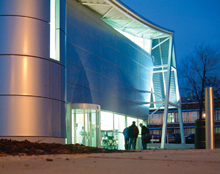
The University of Liverpool has a sporting tradition and has many premier teams in a variety of sports. The current sporting project comes under the title of Sport Liverpool and offers over 50 different sports ranging from football, rugby, cricket and hockey to others such as windsurfing, lacrosse, and cheerleading.
Many of the sports have both male and female teams and most are involved in competition on a national level. BUCS is the body that organises national university competitions involving 154 institutions in 47 sports. Most sports involve travelling to various locations across the country, mainly on Wednesday afternoons.
Two other prominent competitions are the Christie Championships and the Varsity Cup. The Christie Cup is an inter-university competition between Liverpool, Leeds and Manchester's universities. The Varsity Cup is a popular "derby" event between the University of Liverpool and the Liverpool John Moores University.
Notable alumni
Main article: Alumni of the University of Liverpool


.jpg)
- Gwen Alston, aerodynamicist and educationalist
- Clive Barker, fantasy and horror fiction writer and film director
- Wade Barrett, professional wrestler
- Hossein Bashiriyeh, Iranian professor of political science
- Stephen Bayley
- Torben Betts, playwright
- Roger Bolton, broadcaster and television producer
- George Henry Bolsover Director, School of Slavonic and East European Studies, London, 1947–76
- John Brophy, soldier and author
- Dariush Borbor, Iranian architect, urban planner, civic designer, writer
- Daasebre Oti Boateng, Ghanaian statistician, 1st black chairman of the United Nations Statistical Commission
- Paula Byrne, biographer
- Mary Cannell, educator, historian and biographer
- George Checkley, modernist architect
- Ong Teng Cheong, 5th President of Singapore
- Philip Clarke, CEO Tesco PLC
- Sir Stephen Cobb, Lord Justice of Appeal
- Steve Coppell, footballer and manager
- Alexander Critchley, MP for Liverpool Edge Hill 1893–1943
- Frances Crook, Chief Executive of the Howard League for Penal Reform
- Victoria Derbyshire, journalist and newsreader
- Irene Desmet, paediatric surgeon
- Frank Duckworth, statistician, developed the Duckworth–Lewis method
- Carol Ann Duffy, Poet Laureate
- Peter Dunphy, film producer, politician and Chief Commoner of the City of London
- Colum Eastwood, Northern Irish politician and SDLP leader
- Steve Firth, musician
- Maxwell Fry, modernist architect
- Ernest Gibbins, dipterist
- Mary Gibby, botanist and professor
- Simon Gilbert, journalist and author
- Rob Grant
- Nick Grimshaw
- Brian Hall, footballer
- Rose Heilbron, barrister and judge
- George Noel Hill, City Architect
- William Holford, Baron Holford, architect and town planner
- John Holt, physicist
- Barry Horne, journalist and pundit
- Beverley Hughes, former Member of Parliament (MP)
- Robert Roland Hughes, pioneer in neuroscience and electroencephalography
- Irshad Hussain, chemist and materials scientist
- Frank Irving, aeronautical engineer, glider pilot and author
- Sir Dawda Kairaba Jawara, first President and Prime Minister of The Gambia
- Rory Jennings, actor
- Sanjay Jha, Motorola, Inc. Co-CEO and Motorola's Mobile Devices business CEO
- Syed Kamall
- Alfredo Kanthack, pathologist
- Brian Keaney, children's author
- Sir Frank Kermode, literary critic
- Sir Ian Kershaw, historian
- Peter Kilfoyle
- Robert Legget, civil engineer, historian, and non-fiction writer
- Sir Leigh Lewis, permanent secretary
- Ann Limb first woman Chair of The Scouts
- William Lindesay English conservationist
- Oliver W F Lodge
- Chris Lowe, musician
- Diarmaid MacCulloch, historian
- Emma Mbua, palaeo-anthropologist
- Alden McLaughlin, Premier of the Cayman Islands
- Rex Makin, solicitor and philanthropist
- Helen Marnie, member of the band Ladytron
- Anna Maxwell Martin, actor
- Rod I. McAllister, architect
- Tony McNulty, Labour Minister
- Brian Millard, leader of Stockport Metropolitan Borough Council from 2005 to 2007
- Ben Mosley, expressive artist
- Margaret Murphy, crime writer
- Doug Naylor, co-creator of Red Dwarf
- Sir John Neale, historian of Tudor England
- Ernest Newman, music critic and biographer of Wagner
- Lord Nicholls, retired Law Lord
- Charlotte Nichols, Labour MP for Warrington North 2019–
- Paddy Nixon, Vice-Chancellor & President of the University of Canberra
- Gordon Oakes
- Stel Pavlou, author and screenwriter
- David Andrew Phoenix, biochemist
- Dee Plume and Sue Denim, musicians from the band Robots in Disguise
- Ceri Powell, geologist and senior Royal Dutch Shell executive
- John Preston (1950–2017), music industry executive
- James Quincey, The Coca-Cola Company's CEO
- Phil Redmond, television producer
- Sir Leonard Redshaw, shipbuilder
- Gordon Jackson Rees, paediatric anaesthesiologist
- Aki Riihilahti, former football player and current football executive
- Wolfgang Rindler, physicist
- Dame Stella Rimington, Director-General of MI5
- Roy Roberts, actor
- Winifred Robinson, broadcaster
- Michael Rosen, children's writer
- Patricia Routledge, actress
- Barham Ahmad Salih, 8th President of Iraq
- Sir Robin Saxby, former chairman of ARM Holdings
- Maeve Sherlock, social reformer and life peer
- Margaret Simey, social and political campaigner
- F.E. Smith, 1st Earl of Birkenhead
- Martin Smith, vehicle designer
- Jon Snow, Channel 4 television news presenter
- Edward Snowden, system administrator and counterintelligence trainer
- Olaf Stapledon, novelist and philosopher
- Sir James Stirling, architect
- Lytton Strachey, biographer and essayist
- Edward Stringer, Deputy Chief Defence, Royal Air Force
- Matt Taylor, project scientist for the Rosetta mission
- Heidi Thomas, screenwriter and playwright
- Sir Michael Thompson, academic
- Tung Chee-hwa, first chief executive of the Hong Kong Special Administrative Region, businessman
- Emma Jane Unsworth, writer
- Steve Voake, children's author
- Lee Bee Wah, politician
- Baroness Walmsley, politician
- Helen Walsh, novelist
- Sid Watkins, former Formula 1 chief medical officer
- Emma Watkinson, entrepreneur
- Sir David Weatherall, Regius Professor of Medicine, 1992–2000
- Jim Woodcock, professor of software engineering
- Verna Wright, evangelist, physician and research scientist
- Warrington Yorke, Professor of Tropical Medicine, University of Liverpool
Nobel Prize winners
| [[File:Prof. Charles Scott Sherrington.jpg | thumb | 100px | [[Charles Scott Sherrington]]]] | [[File:Charles Glover Barkla 01.jpg | thumb | 100px | [[Charles Barkla | Charles Glover Barkla]]]] |
|---|
There have been ten Nobel Prize Laureates who have been based at the university during a significant point in their career.
- Sir Ronald Ross (awarded the Nobel Prize in Medicine in 1902) for his work with malaria.
- Charles Barkla (awarded the Nobel Prize in Physics in 1917) for discovering the electromagnetic properties of X-rays.
- Sir Charles Sherrington (awarded the Nobel Prize in Physiology/Medicine in 1932) for his research into neurons.
- Sir James Chadwick (awarded the Nobel Prize in Physics in 1935) for discovering neutrons.
- Sir Robert Robinson (awarded the Nobel Prize in Chemistry in 1947) for his research into anthocyanins and alkaloids.
- Har Gobind Khorana (awarded the Nobel Prize in Physiology/Medicine in 1968) for his work on the interpretation of the genetic code and its function in protein synthesis.
- Rodney Porter (awarded the Nobel Prize in Physiology/Medicine in 1972) for his discovery of the structure of antibodies.
- Ronald Coase (awarded the Nobel Prize in Economics in 1991) for his discovery and clarification of the significance of transaction costs and property rights for the institutional structure and functioning of the economy.
- Joseph Rotblat (awarded the Nobel Peace Prize in 1995) for his efforts with nuclear disarmament.
- Martin Lewis Perl (awarded the Nobel Prize in Physics in 1995) for his discovery of the tau lepton.
Notes
References
References
- Anderson, Peter John. (1907). "Record of the Celebration of the Quatercentenary of the University of Aberdeen: From 25th to 28th September, 1906". Aberdeen University Press ([[University of Aberdeen]]).
- "University Regalia". liv.ac.uk.
- http://www.legislation.gov.uk/ukla/2004/4 University of Manchester Act 2004. legislation.gov.uk (4 July 2011). Retrieved on 14 September 2011.
- "Financial Statements for the Year to 31 July 2025". University of Liverpool.
- {{HESA staff citation
- {{HESA citation
- "Our reputation - Working at Liverpool - University of Liverpool".
- (2007-08-18). "Facts and figures: Our courses – University of Liverpool".
- "Our Universities – University of Liverpool". Russell Group.
- "University of Liverpool – News". News.liv.ac.uk.
- [[Xi'an Jiaotong-Liverpool University#cite note-0]]
- "Mathematics School The University of Liverpool Mathematics School- Mathematics School - University of Liverpool".
- "University of Liverpool India Campus {{!}} UK Degree {{!}} Admissions Open for 2026".
- (18 July 2024). "Professor Sara Cohen elected British Academy Fellow". University of Liverpool.
- (9 September 2024). "Four Liverpool academics named Fellows of the Academy of the Social Sciences". University of Liverpool.
- (27 March 2007). "History of the University". University of Liverpool.
- "A brief history of the University – University of Liverpool".
- "Student lists".
- [http://www.liv.ac.uk/news/press_releases/2008/09/CERN.htm Accessed 12 May 2009]. Liverpool University. Retrieved on 14 September 2011.{{webarchive. link. (13 September 2008)
- "Laureate Online Education and K.I.T. eLearning B.V., the eLearning partner of the University of Liverpool, announce name change.".
- "Laureate Online Education".
- "Awards {{!}} The Lasker Foundation".
- Akkoc, Raziye. (3 December 2013). "Liverpool students hit by second lecturers pay strike". Liverpool Echo.
- Trew, Alannah. (4 December 2013). "Liverpool students occupy campus buildings in solidarity with staff strikes". The Independent.
- BBC. "BBC - Liverpool - Places - Victoria Gallery and Museum".
- "The Waterhouse Café - Victoria Gallery & Museum - University of Liverpool".
- "Learning - Victoria Gallery & Museum - University of Liverpool".
- (24 October 2012). "GALLERY – Nobel Prize winner, Sir Paul Nurse opens CTL – University of Liverpool News – University of Liverpool".
- "University of Liverpool in London – University of Liverpool".
- (17 August 2012). "New £23M Central Teaching Laboratory unveiled".
- "Victoria Gallery & Museum – University of Liverpool".
- [http://peopleandplanet.org/gogreen/greenleague2008 People & Planet – The Green League 2008] {{webarchive. link. (28 July 2015 . Peopleandplanet.org. Retrieved on 14 September 2011.)
- [http://peopleandplanet.org/gogreen/greenleague2007/table People & Planet – People & Planet Green League 2007] {{webarchive. link. (10 July 2007 . Peopleandplanet.org. Retrieved on 14 September 2011.)
- [http://peopleandplanet.org/gogreen/greenleague2008/methodology People & Planet – The Green League 2008: Methodology] {{Webarchive. link. (12 October 2008 . Peopleandplanet.org. Retrieved on 14 September 2011.)
- (23 October 2008). "PowerDown".
- (23 October 2008). "University of Liverpool save estimated £70 per PC".
- [http://www.liv.ac.uk/csd/escience/condor/ University of Liverpool Condor Project]. Liverpool University. Retrieved on 14 September 2011. {{webarchive. link. (10 February 2010)
- [http://www.datasynergy.co.uk/CaseStudies/LiverpoolCondor.aspx University of Liverpool case study with Data Synergy PowerMAN software]. Datasynergy.co.uk. Retrieved on 14 September 2011.
- "Interdisciplinary Centre for Sustainability Research (ICSR)". University of Liverpool.
- "Liverpool Guild of Students {{!}} Liverpool Guild of Students (The Guild) {{!}} Undergraduate {{!}} University of Liverpool".
- "University of Liverpool Online Programs (in partnership with Laureate Online Education)".
- (13 May 2019). "New partner announced for University's online learning provision".
- "About the University". Liverpool University.
- "Financial Statements for the Year to 31 July 2024". University of Liverpool.
- (December 2024). "UCAS Undergraduate Sector-Level End of Cycle Data Resources 2024". UCAS.
- (7 February 2025). "2024 entry UCAS Undergraduate reports by sex, area background, and ethnic group". [[UCAS]].
- "University League Tables entry standards 2026". The Complete University Guide.
- "HE student enrolments by HE provider, permanent address, level of study, mode of study, entrant marker, sex and academic year". [[Higher Education Statistics Agency.
- (3 April 2025). "Who's studying in HE?: Personal characteristics". [[Higher Education Statistics Agency.
- (24 September 2024). "Good University Guide: Social Inclusion Ranking". [[The Times]].
- "University League Table 2017". Complete University Guide.
- "Which elite universities have the highest offer rates". [[The Daily Telegraph]].
- "The Times and Sunday Times Good University Guide 2017". [[Rankings of universities in the United Kingdom.
- "Where do HE students study?". Higher Education Statistics Authority.
- "University of Liverpool".
- The Independent newspaper, 24 April 2008
- [https://archive.today/20071103154551/http://extras.timesonline.co.uk/gug/gooduniversityguide.php The Times]
- The Times: [https://web.archive.org/web/20071011000203/http://extras.timesonline.co.uk/stug/universityguide.php]. 23 May 2008
- "topuniversities.com".
- "Round University Rankings 2016". RUR Rankings Agency.
- "U.S. News & World Report Best Global Universities Rankings 2018".
- "SCImago Institutions Rankings – Higher Education – All Regions and Countries – 2019 – Overall Rank".
- (12 May 2022). "REF 2021: Quality ratings hit new high in expanded assessment". Times Higher Education.
- (18 December 2014). "Liverpool research ranked in UK top 10".
- "REF 2014 Computer Science".
- "REF 2014 University of Liverpool Chemistry REF results 2014– Chemistry – University of Liverpool".
- (28 October 2011). "LING JUNHUI in China Today No.9 September 2011, saved on Nov.9, 2013". News.xjtlu.edu.cn.
- "Campus development".
- "Find accommodation {{!}} Accommodation {{!}} University of Liverpool".
- "Greenbank Student Village {{!}} Accommodation {{!}} University of Liverpool".
- (24 October 2018). "CUT THE RENT: STUDENTS SAY 'NO' TO THE RISING COST OF HALLS".
- "Best Value for Money UK Student Accommodation (2019) | StudentCrowd".
- (2021-04-27). "Gladstone Halls to be renamed after Dorothy Kuya from today".
- "The Christie Championships - Leeds, Liverpool & Manchester Universtiy".
- (December 2024). "Professor Mary Gibby Ph.D., OBE, FLS, FRSE, PPBPS (1949–2024)". [[Edinburgh Journal of Botany]].
- (1 December 2017). "John Preston obituary". The Guardian.
- "Our Nobel Prize winners". University of Liverpool.
This article was imported from Wikipedia and is available under the Creative Commons Attribution-ShareAlike 4.0 License. Content has been adapted to SurfDoc format. Original contributors can be found on the article history page.
Ask Mako anything about University of Liverpool — get instant answers, deeper analysis, and related topics.
Research with MakoFree with your Surf account
Create a free account to save articles, ask Mako questions, and organize your research.
Sign up freeThis content may have been generated or modified by AI. CloudSurf Software LLC is not responsible for the accuracy, completeness, or reliability of AI-generated content. Always verify important information from primary sources.
Report