From Surf Wiki (app.surf) — the open knowledge base
University of Hong Kong
Public university in Pokfulam, Hong Kong
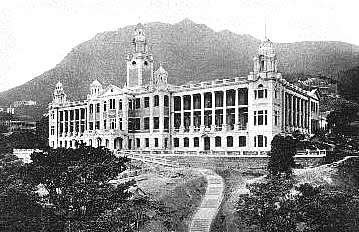
Public university in Pokfulam, Hong Kong
| Field | Value | |
|---|---|---|
| name | The University of Hong Kong | |
| native_name | 香港大學 | |
| native_name_lang | zh-hk | |
| image | University of Hong Kong coat of arms.png | |
| image_upright | .7 | |
| caption | Coat of arms | |
| motto | Sapientia et Virtus (Latin) | |
| 明德格物 (Classical Chinese) | ||
| mottoeng | Wisdom and Virtue | |
| established | (as Hong Kong College of Medicine for Chinese) | |
| (as the University of Hong Kong) | ||
| type | Public | |
| academic_affiliation | ||
| chancellor | ||
| president | Xiang Zhang | |
| head_label | Pro-chancellor | |
| head | David Li | |
| provost | Richard Wong{{cite web | |
| url | https://presidentoffice.hku.hk/smt/smt.html | title=President's Office |
| website | The University of Hong Kong | |
| location | Hong Kong | |
| access-date | 15 June 2022 | |
| vice-president | Gong Peng | |
| Ian Holliday | ||
| Max Shen | ||
| academic_staff | 9,288 (2023){{cite web | |
| url | https://www.cpao.hku.hk/qstats/staff-profiles | |
| title | QuickStats – Staff Profiles | |
| website | The University of Hong Kong | |
| location | Hong Kong | |
| access-date | 2024-08-20 | |
| archive-date | 17 September 2024 | |
| archive-url | https://web.archive.org/web/20240917105445/https://www.cpao.hku.hk/qstats/staff-profiles | |
| url-status | live | |
| administrative_staff | 4,427 (2023) | |
| students | 39,166 (2023){{cite web | |
| url | https://www.cpao.hku.hk/qstats/student-profiles | |
| title | QuickStats – Student Profiles | |
| website | The University of Hong Kong | |
| location | Hong Kong | |
| access-date | 19 August 2024 | |
| archive-date | 30 October 2018 | |
| archive-url | https://web.archive.org/web/20181030090747/https://www.cpao.hku.hk/qstats/student-profiles | |
| url-status | live | |
| undergrad | 18,491 (47.2%) (2023) | |
| postgrad | 20,675 (52.8%) (2023) | |
| city | Pok Fu Lam | |
| country | Hong Kong | |
| coor | ||
| campus | Urban | |
| campus_size | 17.7 hectare (Main campus) | |
| 70.1 hectare (Total){{Cite web | ||
| url | https://www.cpao.hku.hk/qstats/space | |
| title | QuickStats – Space | |
| website | The University of Hong Kong | |
| location | Hong Kong | |
| date | 2022 | |
| access-date | 12 September 2023 | |
| archive-date | 28 October 2023 | |
| archive-url | https://web.archive.org/web/20231028080715/https://www.cpao.hku.hk/qstats/space | |
| url-status | live | |
| free_label | Newspaper | |
| free | Undergrad HKUSU (Chinese) | |
| colours | Dark green{{Cite web | |
| url | https://100.hku.hk/v1/index0b69.html | |
| title | The 'HKU 100' Logo | |
| website | The University of Hong Kong Centenary | |
| location | Hong Kong | |
| access-date | 1 December 2024 | |
| mascot | Lion | |
| affiliations | ||
| website | ||
| logo | University of Hong Kong Logo.svg | |
| logo_upright | 1.2 | |
| module | {{infobox Chinese | |
| child | yes | |
| s | 香港大学 | |
| t | 香港大學 | |
| p | Xiānggǎng Dàxué | |
| j | Hoeng1gong2 Daai6hok6 | |
| y | Hēunggóng Daaihhohk | |
| ci | ||
| order | st}} |
明德格物 (Classical Chinese) (as the University of Hong Kong) |access-date=15 June 2022 | vice-president = Gong Peng Ian Holliday Max Shen |access-date=2024-08-20 |archive-date=17 September 2024 |archive-url=https://web.archive.org/web/20240917105445/https://www.cpao.hku.hk/qstats/staff-profiles |url-status=live |access-date=19 August 2024 |archive-date=30 October 2018 |archive-url=https://web.archive.org/web/20181030090747/https://www.cpao.hku.hk/qstats/student-profiles |url-status=live 70.1 hectare (Total){{Cite web |access-date=12 September 2023 |archive-date=28 October 2023 |archive-url=https://web.archive.org/web/20231028080715/https://www.cpao.hku.hk/qstats/space |url-status=live |access-date=1 December 2024
The University of Hong Kong (HKU) is a public university in Pok Fu Lam, Hong Kong. It was founded in 1887 as the Hong Kong College of Medicine for Chinese by the London Missionary Society and formally established as the University of Hong Kong in 1911. It is the oldest tertiary institution in Hong Kong.
The university was established and proposed by Governor Sir Frederick Lugard in an effort to compete with the other Great Powers opening universities in China. The university's governance consists of three bodies: the Court, the Council, and the Senate. These three bodies all have their own separate roles. The Court acts as the overseeing and legislative body of the university, the Council acts as governing body of the University, and the Senate as the principal academic authority of the university.
The university currently has ten academic faculties and 20 residential halls and colleges for its students, with English being its main medium of instruction and assessment.
The university has educated many notable alumni in many fields. Among them is Sun Yat-sen, the founder of the Republic of China, a graduate of the Hong Kong College of Medicine for Chinese, the predecessor of HKU. Notable alumni in the field of politics include Anson Chan, Carrie Lam, Jasper Tsang and Regina Ip.
History
Founding
The origins of the University of Hong Kong can be traced back to the Hong Kong College of Medicine for Chinese, founded in 1887 by Ho Kai (later known as Sir Kai Ho Kai). It was renamed the Hong Kong College of Medicine in 1907.{{cite book |access-date=15 December 2024
The University of Hong Kong was founded in 1911. The colony's governor, Sir Frederick Lugard (1858-1945), first proposed in January 1908 during a graduation ceremony at St Stephen's College to establish a university in Hong Kong to compete with the other Great Powers opening universities in China, most notably Germany, which had just opened the Tongji German Medical School in Shanghai. Sir Lugard saw the establishment of the university as an opportunity to promote British culture to China and the Chinese people through education, in turn enhancing Britain's influence in the Far East. He quoted saying, "We must either now take those opportunities or leave them for others to take...".{{Cite book |access-date=27 December 2024 |trans-title=HKU Story
Charles Eliot was appointed the university's first vice-chancellor. As Governor of Hong Kong, Lugard laid the foundation stone of the Main Building on 16 March 1910.{{cite web |access-date=30 November 2024 |archive-date=6 November 2018 |archive-url=https://web.archive.org/web/20181106221600/https://www.hku.hk/about/university-history/the-early-years.html |url-status=live
The school opened with three founding faculties: Arts, Engineering, and Medicine.{{Cite web |access-date=10 June 2013 |archive-date=13 March 2009 |archive-url=https://web.archive.org/web/20090313031536/http://arts.hku.hk/aboutus |url-status=dead |access-date=20 December 2024 |url-status=dead |archive-url=https://web.archive.org/web/20150328161704/http://www.med.hku.hk/v1/about-the-faculty |archive-date=28 March 2015
Move towards Chinese cultural education, and WW2

After the Canton–Hong Kong strikes of 1925 and 1926, the government moved towards greater integration of Eastern culture, increasing the number of Chinese courses.{{Cite web |archive-url=https://web.archive.org/web/20160311074253/https://i.imgsafe.org/7e7597a.png |url-status=dead |archive-date=11 March 2016
1945 to 2001
After the end of the Second World War, the university reopened and investment in law and the social sciences increased as post-war reconstruction efforts began in earnest. The Faculty of Social Sciences was established in 1967 and the Department of Law in 1969. The student population in 1961 was 2,000, quadrupled from 1941, and in 1980 the number of students exceeded 5,500.
In 1958, the librarian of University of Hong Kong, Mrs. Dorothea Scott, organized a meeting of over 40 library practitioners at the Fung Ping Shan Library on 3 April to determine and establish a library association for Hong Kong, the Hong Kong Library Association.{{Cite web |access-date=20 December 2024
In 1982, the Faculty of Dentistry, based at the Prince Philip Dental Hospital, was established. To this day, it remains Hong Kong's only faculty training dental professionals. In 1984, both the School of Architecture and School of Education became fully-fledged faculties and in the same year the Faculty of Law was created. The Faculty of Business and Economics was established in 2001 as the university's tenth and youngest faculty.
After 1989, the Hong Kong government began to emphasise local tertiary education in order to retain local students who would otherwise have studied abroad in the United Kingdom. Student places and course variety were greatly increased in preparation for the handover of Hong Kong. By 2001, the number of students had grown to 14,300 and the number of degree courses to over a hundred.
2001 to present

In 2002, Growing with Hong Kong: The University and Its Graduates — The First 90 Years was published by the Hong Kong University Press as a study of the impact of HKU's graduates on Hong Kong.{{cite book |access-date=15 December 2024
In January 2006, despite protest from a portion of students and alumni, the Faculty of Medicine was renamed as the Li Ka Shing Faculty of Medicine "to recognize the generosity of Mr Li and his Foundation as well as the wish of the donors to support, in addition to the general development of the University, research and academic activities in medicine."{{cite book
On 16 August 2011, Li Keqiang, Vice Premier of the People's Republic of China, began a three-day visit to promote development between Hong Kong and mainland China.{{cite web |access-date=3 December 2024 |trans-website=Ming Pao Website |access-date=30 August 2011 |archive-url=https://web.archive.org/web/20120317061541/http://news.hk.msn.com/highlight/article.aspx?cp-documentid=5395726 |archive-date=17 March 2012 |url-status=dead |access-date=7 November 2011 |url-status=dead |archive-url=https://web.archive.org/web/20120415070820/http://hku.hk/hkumedia/818/bulkmail2.html |archive-date=15 April 2012
From 2010 to 2012, the university celebrated its 100th anniversary and the opening of the Centennial Campus at the western end of the university site in Pokfulam.{{cite web |access-date=1 December 2024 |access-date=3 December 2024 |access-date=13 August 2013
On 10 April 2015, HKU declared itself as the first university in the world to join HeForShe, a UN Women initiative urging men to achieve more female rights.{{cite web |access-date=1 December 2024 |access-date=3 July 2015
On 15 December 2017, the university's governing council appointed University of California, Berkeley nanoscience professor Xiang Zhang to the posts of President and Vice-Chancellor with effect from January 2018. Zhang was the first vice-chancellor of the university born in mainland China and educated to undergraduate degree level there.{{cite news |access-date=13 December 2017 |access-date=17 December 2017
On 4 September 2023, the University announced the appointment of Fraser Stoddart, a chemist and Nobel Laureate, as a Chair Professor.{{cite web |access-date=1 January 2025 |access-date=1 January 2025
On 17 October 2025, the University announced the appointment of Ferenc Krausz as Chair Professor at the Department of Physics.{{cite news |access-date=15 December 2025
2015 political interference
Main article: University of Hong Kong pro-vice-chancellor selection controversy
The HKU Council made headlines in 2015 for alleged political interference behind the selection process for a new pro-vice chancellor. A selection committee unanimously recommended the council appoint Johannes Chan to the post, which involved the responsibility for staffing and resources, and which had been left vacant for five years.{{cite news |archive-date=2 October 2015 |access-date=4 October 2015 |archive-url=https://web.archive.org/web/20151002012835/http://www.scmp.com/news/hong-kong/education-community/article/1862412/five-points-note-johannes-chans-appointment-vote |url-status=live |access-date=3 July 2017 |archive-date=6 November 2015 |archive-url=https://web.archive.org/web/20151106193116/http://www.reuters.com/article/2015/09/29/hongkong-university-idUSL3N11Z2TV20150929|url-status=live
Customarily the HKU Council accepts the recommendations of search committees for senior posts, with no prior recommendation having been rejected by the council.{{cite news |archive-date=8 April 2025 |access-date=8 April 2025 |archive-url=https://web.archive.org/web/20250408183627/https://www.voanews.com/a/beijing-seen-as-meddling-in-hong-kong-university-election/2986995.html |url-status=live
The decision is seen widely viewed as a pro-government act of retaliation against "pro-democracy leaders and participants" and a blow to academic freedom. Six members of the council are directly appointed by the Chief Executive of Hong Kong, who acts as chancellor of all publicly funded tertiary institutions in the territory.{{cite news |archive-date=30 November 2024 |access-date=12 December 2024 |archive-url=https://web.archive.org/web/20241130072452/https://www.scmp.com/comment/insight-opinion/article/1838191/chief-executive-chancellor-hong-kong-universities?page=all |url-status=live |access-date=3 December 2024
The decision was decried by student groups including the Hong Kong University Students' Union and Hong Kong Federation of Students, faculty members, leading international law scholars, and legislators.{{cite news |archive-date=21 January 2025 |access-date=10 December 2024 |archive-url=https://web.archive.org/web/20250121043455/https://www.ibtimes.com/johannes-chan-blocked-hong-kong-university-post-raising-academic-freedom-concerns-2120232 |url-status=live
Campuses
Main article: Campuses of the University of Hong Kong


The university's main campus covers 177000 sqm of land on Pok Fu Lam Road and Bonham Road in Pok Fu Lam and on Lung Fu Shan of Central and Western District,{{cite web |access-date=2021-04-12 |archive-date=9 December 2020 |archive-url=https://web.archive.org/web/20201209211630/https://www.eac.hk/pdf/distco/2019dc/final/dc2019a.pdf |url-status=live
The Li Ka Shing Faculty of Medicine is situated 4.5 km southwest of the main campus, in the Southern District near Sandy Bay and Pok Fu Lam.{{cite web |access-date=20 August 2024 |archive-date=20 August 2024 |archive-url=https://web.archive.org/web/20240820061951/https://www.med.hku.hk/contact-us |url-status=live |access-date=2 December 2024 |archive-date=4 December 2024 |archive-url=https://web.archive.org/web/20241204004849/https://www.estates.hku.hk/campus-planning/campuses |url-status=live
The university also operates the Kadoorie Agricultural Research Centre, which occupies 95000 sqm of land in the New Territories, and the Swire Institute of Marine Science at the southern tip of Cape D'Aguilar on Hong Kong Island.
Main building
Main article: Main Building of the University of Hong Kong
Constructed between 1910 and 1912, the Main Building is the university's oldest structure and was sponsored by Sir Hormusjee Naorojee Mody and designed by Architect Messrs Leigh & Orange.{{cite journal |archive-date=18 February 2012 |access-date=17 March 2012 |archive-url=https://web.archive.org/web/20120218084111/http://www.hkia.net/en/pdf/journal/journal_issue45_03.pdf |url-status=live |access-date=2 December 2024 |archive-date=18 April 2024 |archive-url=https://web.archive.org/web/20240418235451/https://www.hku.hk/visit/campusbuilding.php?m=heritage&t=dm&bdg=main |url-status=live
Swire building
Around 1980, the Swire Group sponsored the building of a new residential hall in the eastern end of the campus. The new student residence was named Swire Building in honour of this sponsorship. The building was officially opened by Mr John Anthony Swire on 11 November 1980.{{cite web |access-date=20 August 2024 |archive-date=20 August 2024 |archive-url=https://web.archive.org/web/20240820055630/https://www.swire.hku.hk/introduction |url-status=live
In 1983, Mrs J. Lau (Director of Centre Media Resources) provided a design for the hall logo. The Swire Hall Students' Association, HKUSU, then made some amendments to that design. The logo shows the words 'S' and 'H'. The design of the word 'S' looks like two hands holding each other, signifying that all hall-mates should co-operate with each other, and promoting the hall motto 'Unity and Sincerity'.
Hung Hing Ying Building
Main article: Hung Hing Ying Building
Financed by Sir Paul Chater, Professor G. P. Jordan and others, it was opened in 1919 by the Governor of Hong Kong Sir Reginald Edward Stubbs and housed the students' union. After World War II, the building was used temporarily for administrative purposes. The East Wing was added in 1960. The building was converted into the Senior Common Room in 1974. It was named in honour of Mr Hung Hing-Ying in 1986 for his family's donations to the university. The building was subsequently used again for administrative purposes, and housed Department of Music and the Music Library until early 2013. It is currently used by the Development & Alumni Affairs Office. The two-storey Edwardian style structure is characterised by a central dome and the use of red brick to emulate the Main Building opposite. The building became a declared monument in 1995.{{cite web |access-date=20 August 2024 |archive-date=20 August 2024 |archive-url=https://web.archive.org/web/20240820062639/https://heritagefund.hku.hk/pages/various/hung-hing-ying-building |url-status=live
Tang Chi Ngong Building
Main article: Tang Chi Ngong Building
The idea to establish a school of Chinese was proposed in the inter-war period. Construction of the premises began in 1929 following a donation from Tang Chi-ngong, father of the philanthropist Sir Tang Shiu-kin, after whom the building was named. It was opened by Sir William Peel, Governor of Hong Kong, in 1931 and since then further donations have been received for the endowment of teaching Chinese language and literature. The building has been used for other purposes since the 1970s but the name remained unchanged. It housed the Centre of Asian Studies until 2012 and now houses the Jao Tsung-I Petite Ecole. This three-storey flat-roofed structure is surfaced with Shanghai plaster and became a declared monument in 1995.{{cite web |access-date=20 August 2024 |archive-date=6 March 2022 |archive-url=https://web.archive.org/web/20220306065326/https://www.amo.gov.hk/filemanager/amo/common/download-area/pamphlet/DMs_in_The_HKU_pamphlet_20191115.pdf |url-status=live
Centennial campus
To provide additional space for students under the new four-year undergraduate curriculum the Centennial Campus was built at the western end of the main campus, which was previously occupied by the Water Supplies Department.{{cite web |access-date=27 December 2024 |archive-date=27 December 2024 |archive-url=https://web.archive.org/web/20241227135057/https://www4.hku.hk/cecampus/eng/key/map5.php.html |url-status=live
Academics
Admission
Admission to HKU is highly competitive. In 2016, the university received around 40,000 applications for undergraduate studies, over 16,000 of which were from outside the Hong Kong schools' system.{{cite web |access-date=7 Mar 2019 |archive-date=7 March 2019 |archive-url=https://web.archive.org/web/20190307054157/https://aal.hku.hk/admissions/international/sites/default/files/HKU.GAP1617_Nov2017.pdf |url-status=dead |access-date=25 December 2024 |archive-date=12 November 2024 |archive-url=https://web.archive.org/web/20241112202846/https://www4.hku.hk/pubunit/review/2015.pdf |url-status=live
Undergraduate candidates are selected according to their relative merit in the local public examination (HKDSE) and apply online via JUPAS. Other applicants, including overseas students or ones taking other examinations, are classified as non-JUPAS applicants who are required to apply via the official website,{{cite web |access-date=28 July 2014 |archive-date=17 August 2014 |archive-url=https://web.archive.org/web/20140817085120/http://www.als.hku.hk/admission/intl/admission |url-status=live
Teaching and learning
Most undergraduate courses are 4-year degrees while the medical and nursing programmes require two and one more year(s) of studies respectively. English is the main medium of instruction, and the University's Senate has endorsed English as the campus lingua franca. Starting from 2012, local students are required to take Academic English courses and Chinese language enhancement courses; however, students who are native-speakers of languages other than Chinese, and students who have not studied Chinese language in their secondary curriculum can be exempted from the Chinese course requirement.{{cite web |access-date=13 August 2013 |archive-date=2 July 2014 |archive-url=https://web.archive.org/web/20140702223707/http://tl.hku.hk/reform/#anchor-1 |url-status=dead
Research
The university is a founding member of Universitas 21, an international consortium of research-led universities, and a member of the Association for Pacific Rim Universities, the Association of Commonwealth Universities, Washington University in St. Louis's McDonnell International Scholars Academy,{{Cite web |access-date=8 December 2024 |access-date=8 December 2024 |archive-date=8 November 2024 |archive-url=https://web.archive.org/web/20241108023802/https://cdcf.ugc.edu.hk/cdcf/indepthAnalysis.action |url-status=live
HKU research output, researchers, projects, patents and theses are profiled and made publicly available in the HKU Scholars Hub.{{cite web |access-date=20 December 2024 |access-date=24 December 2024 |archive-date=2 June 2023 |archive-url=https://web.archive.org/web/20230602121104/https://hub.hku.hk/local/top1pc/top1pc.jsp |url-status=live
The University Grants Committee delivered the idea of “knowledge transfer” among the community and universities. From the academic year 2009/10, a yearly recurrent funding for universities to invest in knowledge transfer has been approved by the Legislative Council.{{Cite web |access-date=19 July 2024 |archive-date=10 September 2024 |archive-url=https://web.archive.org/web/20240910185111/https://www.ugc.edu.hk/eng/ugc/activity/knowledge.html#:~:text=%22The%20systems%20and%20processes%20by,is%20a%20two%2Dway%20process |url-status=live |access-date=19 July 2024 |archive-date=13 July 2024 |archive-url=https://web.archive.org/web/20240713014232/https://www.ugc.edu.hk/doc/eng/ugc/activity/kt/HKU09.pdf |url-status=live
Libraries and museums
Main article: Hong Kong University Libraries, University Museum and Art Gallery, Hong Kong

HKU Libraries (HKUL) was established in 1912, being the oldest academic library in Hong Kong with over 2.3 million current holdings. It comprises the Main Library and six specialist branch libraries: the Dental, Education, Fung Ping Shan (East Asian Language), Yu Chun Keung Medical, Lui Che Woo Law, and Music libraries. They are located in buildings around the campus with varying opening hours. A web-based library catalogue, DRAGON, allows one to search HKUL's books, journals and other resources.{{Cite web |access-date=20 August 2024 |archive-date=14 June 2019 |archive-url=https://web.archive.org/web/20190614152155/https://lib.hku.hk/ |url-status=live
The HKUL Digital Initiatives, through its digitisation projects, has opened up online access to local collections originally in print format. The first HKUL Digital Initiative, ExamBase, was launched in 1996 and other projects of scholarly interests were introduced. More digital projects are being developed to provide continuous access to digital content and services. It provides open access to Chinese and English academic and medical periodicals published in Hong Kong.
The three-storey Fung Ping Shan Building was erected in 1932 originally as a library for Chinese books. Named after its donor, the building consists of masonry on the ground level surmounted by a two-storey red-brick structure with ornamental columns topped by a pediment over its entrance. Since 1962, the Chinese books collection, now known as the Fung Ping Shan Library, was transferred to the university's Main Library and the whole building was converted into a museum for Chinese art and archaeology. Among its collections are ceramics, pottery and bronze sculptures. In 1996, the lowest three floors of the new Tsui Building were added to the old building to form the University Museum and Art Gallery.{{cite web |access-date=20 August 2024 |archive-date=20 August 2024 |archive-url=https://web.archive.org/web/20240820071433/https://lib.hku.hk/fpslib/ |url-status=live |access-date=4 December 2024 |archive-date=3 December 2024 |archive-url=https://web.archive.org/web/20241203231026/https://umag.hku.hk/about/history/ |url-status=live
Reputation and rankings
|access-date=19 June 2021 |archive-date=7 December 2024 |archive-url=https://web.archive.org/web/20241207071325/http://www.shanghairanking.com/institution/the-university-of-hong-kong |url-status=live |access-date=19 June 2025 |archive-date=4 January 2024 |archive-url=https://web.archive.org/web/20240104115634/https://www.topuniversities.com/world-university-rankings |url-status=live |access-date=29 September 2023 |archive-date=28 October 2014 |archive-url=https://web.archive.org/web/20141028092904/http://www.usnews.com/education/best-global-universities/rankings |url-status=live |access-date=19 June 2025 |access-date=15 March 2025 |archive-date=17 November 2021 |archive-url=https://web.archive.org/web/20211117195637/https://www.topuniversities.com/university-rankings/asian-university-rankings/2022 |url-status=live |access-date=19 June 2025 |archive-date=9 March 2018 |archive-url=https://web.archive.org/web/20180309191133/https://www.usnews.com/education/best-global-universities/university-of-hong-kong-505046 |url-status=live |access-date=19 June 2025 |archive-date=15 May 2025 |archive-url=https://web.archive.org/web/20250515161240/https://www.timeshighereducation.com/world-reputation-rankings#!/length/25/locations/HKG/sort_by/rank/sort_order/asc |url-status=live
Overall ranking
HKU was ranked #11 worldwide and #1 in Asia in QS World University Rankings 2026, #35 worldwide in Times Higher Education World University Rankings 2025, #69 worldwide in Academic Ranking of World Universities 2024, and #44 worldwide in U.S. News 2025-2026.
The Aggregate Ranking of Top Universities (ARTU), which sorts universities based on their aggregate performance across Times Higher Education World University Rankings, QS World University Rankings, and Academic Ranking of World Universities, found that HKU was the 42nd best-ranked university worldwide in 2023.{{Cite web |access-date=2023-01-25 |archive-date=28 June 2023 |archive-url=https://web.archive.org/web/20230628200730/https://research.unsw.edu.au/artu/artu-results |url-status=live
HKU is ranked 49th in the THE World Reputation Rankings 2025.{{Cite web |access-date=2025-06-19 |archive-date=15 May 2025 |archive-url=https://web.archive.org/web/20250515161240/https://www.timeshighereducation.com/world-reputation-rankings |url-status=live
HKU is ranked as the most international university in the world in 2023 by Times Higher Education.{{cite web |date=25 January 2023 |title=Most International Universities |access-date=29 December 2023
Subject ranking
''[[QS World University Rankings|QS]]'' subject rankings
In the QS World University Rankings by broad subject area 2023:
| Broad subject area | HKU's world rank |
|---|---|
| Social Sciences & Management | 29 |
| Arts and Humanities | 34 |
| Engineering & Technology | 79 |
| Life Sciences & Medicine | 29 |
| Natural Sciences | 81 |
''[[Times Higher Education World University Rankings|THE]]'' subject rankings
In the Times Higher Education World University Rankings by subject 2024:
| Subject | HKU's world rank |
|---|---|
| Arts & Humanities | 54 |
| Business and Economics | 39 |
| Clinical & Health | 19 |
| Computer Science | 53 |
| Education | 6 |
| Engineering | 43 |
| Law | 20 |
| Life Sciences | 43 |
| Physical Sciences | 47 |
| Psychology | 62 |
| Social Sciences | 35 |
Graduate Employability Ranking
HKU graduates ranked 47th worldwide in the ''Times Higher Education'''s Global University Employability Ranking 2022,{{Cite web |access-date=2022-11-29 |access-date=4 December 2022 |archive-date=5 October 2021 |archive-url=https://web.archive.org/web/20211005000519/https://www.topuniversities.com/university-rankings/employability-rankings/2022 |url-status=live
Student life
Student welfare is served by several units, including the Centre of Development and Resources for Students (CEDARS), which provides guidance for most areas of student life including career counselling, students activities, financial support and more,{{cite web
Demographics
The student population of the university was 39,166 in the 2023-2024 academic year, comprising 18,491 undergraduates, 16,541 taught postgraduates and 4,134 research postgraduates. The university has become a popular choice for mainland and international students, with 19,145 non-local students (excluding exchange students) on campus in 2023, comprising 47.2% of the total students.
Halls and colleges
Main article: Accommodation at the University of Hong Kong
_exterior.JPG)
There are 20 residential halls and colleges for undergraduates, postgraduates and visitors.
The residential halls include:
- Main Campus – Swire Hall and Simon K. Y. Lee Hall, mainly for undergraduates. Graduate House and Robert Black College, primarily for postgraduates and visitors respectively.
- Sassoon Road Campus – Lee Hysan Hall, Richard Charles Lee Hall, Wei Lun Hall and Madam S. H. Ho Hall Residence for Medical Students.
- Jockey Club Student Village I (founded in 2001) – Lady Ho Tung Hall and Starr Hall.
- Jockey Club Student Village II (founded in 2005) – Morrison Hall, Lee Shau Kee Hall and Suen Chi Sun Hall.
- (founded in 2012) – made up of four residential colleges, Shun Hing College, Chi Sun College, Lap-Chee College and New College. They provide a total of 1,800 beds for students of whom 67% are non-local students.
- Jockey Club Student Village IV – made up of four residential colleges. They provide a total of 1,238 hostel places for students.
- Other historical student residences include St. John's College, Ricci Hall and University Hall.
Moreover, there are three non-residential halls:
- Hornell Hall (male only)
- Lee Chi Hung Hall (co-educational)
Student organisations

Two officially recognised student bodies, formerly three, provide opportunities for postgraduate students to participate in extracurricular activities. The two being the Postgraduate Student Association (PGSA) and the HKU Business School Postgraduate Student Association (HKUBSPA).{{cite web |access-date=22 August 2024 |archive-date=22 August 2024 |archive-url=https://web.archive.org/web/20240822065830/https://www.cedars.hku.hk/campuslife/societiesactivities/associations |url-status=live
The Hong Kong University Students' Union (HKUSU), which represented both undergraduate and postgraduate students, existed as an officially recognised student body from 1912 to 2021, with a majority of its members being undergraduate students. The union ceased to be officially recognised by the university after passing a motion in memorial to a deceased assailant who stabbed a police officer in the wake of the protests in 2021.{{cite web
This organisation was renowned amongst student activists, having been the main driving force behind evicting a vice-chancellor in recent years. There were controversies in 2011 when the president of the union, Ayo Chan, remarked that some of the protesters involved in the 1989 Tiananmen Square protests and massacre had acted irrationally. Many students believed his remarks to be offensive and subsequently ousted the President by a vote in under one week.{{Cite web |access-date=24 June 2009 |archive-url=https://web.archive.org/web/20110716034927/http://app2.rthk.org.hk/pda/news/content.php?id=576943 |archive-date=16 July 2011 |url-status=dead
Study abroad programme
Every year, over 1,000 undergraduates participate in exchange programmes. As part of their HKU degree, they study at universities spanning 40 countries around the world with the support of the University Grants Committee, University of Hong Kong Foundation for Educational Development and Research, Hongkong Bank Foundation, UBC Alumni Association (Hong Kong), Dr. Lee Shiu Scholarships for Hong Kong and South-East Asia Academic Exchange, Shell (Hong Kong) Limited, C. V. Starr Scholarship Fund, and others.
The university welcomes a similar number of students from those 340 partner universities onto the HKU campus to study each year.{{Cite web |url-status=dead |archive-url=https://web.archive.org/web/20230409172302/https://www.hku.hk/liaison/oise |archive-date=9 April 2023 |access-date=23 February 2024 |access-date=9 December 2024
Organisation and administration
Governance

Chancellor
Prior to Hong Kong's handover, the colony's governor was the de jure chancellor of the University. That role was assumed by the chief executive following the handover. The chancellor is officially the chief officer of the university and president of the Court, the duties and functions of the role are however delegated to the pro-chancellor, a person appointed by the chancellor.{{Cite book |access-date=23 December 2024
The chief executive's role as the university's chancellor is enshrined in the University of Hong Kong Ordinance.{{cite web |access-date=20 February 2017 |archive-url=https://web.archive.org/web/20170221105626/http://www4.hku.hk/pubunit/calendar/2016-2017/a/c/32-2016-2017/375-university-ordinance-statutes |archive-date=21 February 2017| url-status=dead
In the absence of the chief executive, the person for the time being assumes the duties of the chief executive is simultaneously appointed as the acting chancellor and has all powers and duties of the chancellor.{{cite web
For a list of pre and post-handover university chancellors, refer to the articles for the governor of Hong Kong and the chief executive of Hong Kong.
Vice-Chancellor
The vice-chancellor is the principal academic and administrative officer of the University. The current office holder is Xiang Zhang.{{cite web |access-date=19 August 2024 |archive-date=15 August 2024 |archive-url=https://web.archive.org/web/20240815054116/https://calendar.hku.hk/officers-of-the-university/ |url-status=live
The Court
The Court is a large overseeing and legislative body comprising University and lay members. The purpose of the Court is to represent the wider interests of the communities served by the University. It has the power to make, repeal and amend statutes.{{Cite web |access-date=4 December 2024}}
The Court currently consists of:{{Cite web |archive-url=https://web.archive.org/web/20240823152705/https://calendar.hku.hk/membership-of-the-court |archive-date=23 August 2024 |access-date=2024-08-23
- The Chancellor
- The Pro-Chancellor
- The Vice-Chancellor
- The Deputy Vice-Chancellor
- The Pro-Vice-Chancellors
- The Treasurer of the University
- The Registrar of the University
- Life Members
- Members of the Senate and Council
- The Chairman, Deputy Chairman, and Clerk of the Convocation
- Five members from the Legislative Council*
- Twelve members from the Standing Committee of Convocation*
- Five members elected by the Court
- Three members from the Grant Schools Council*
- Three members from the Hong Kong Subsidized Secondary Schools Council*
- Not more than twenty members appointed by the Chancellor
- Elected amongst their members
The Senate
The Senate is the principal academic authority of the University. It is responsible for all academic matters and welfare of students. Its 50 members are mainly academic staff while there are also student representatives. The Senate is chaired by the vice-chancellor.
The Senate currently consists of:
- The Vice-Chancellor
- The Deputy Vice-Chancellor
- The Pro-Vice Chancellors
- The Dean of each faculty
- The Chairman of each Board of the faculty
- Twelve professors*
- Six teachers*, not being professors
- The Director of the School of Professional and Continuing Education
- The Dean of the Graduate School
- The Librarian
- The Dean of Student Affairs
- Three full-time students*, at least one of whom being an undergraduate and one of whom being a postgraduate
- Elected in accordance with regulations
The Council
The Council is the body which governs the university. It is responsible for the management of financial and human resources of the university and for the university's future developments. The council comprises university members (both staff and students) and lay members (i.e. neither staff nor students of the university), with a ratio of lay to university members of 2:1 members are serving on the council as trustees in their personal capacity. The current chairman of the Council is Priscilla P.S. Wong.{{cite web |access-date=4 December 2024
The current council consists of:
- The Chairman of the Council
- The Vice-Chancellor of the University
- 6 persons, not being students or employees of the University, appointed by the Chancellor
- 6 persons, not being students or employees of the University, appointed by the Council
- 2 persons, not being students or employees of the University, elected by the Court
- Treasurer of the University
- 4 full-time teachers*
- 1 full-time employee of the University*, not being a teacher
- 1 full-time undergraduate student*
- Secretary to the Council
- Elected in accordance with regulations
The current council consists of 24 persons. The chancellor has the power to appoint the chairman of the council and six other members to the council. The vice-chancellor is in turn appointed by the council.{{cite web
Faculties
The university has ten faculties, namely the Faculties of Architecture, Arts, Business & Economics, Dentistry, Education, Engineering, Law, Science, Social Sciences, and the Li Ka Shing Faculty of Medicine, alongside a graduate school and a number of non-faculty academic units, which provide various study programmes and courses for students.{{Cite web |access-date=4 December 2024 |archive-date=17 December 2024 |archive-url=https://web.archive.org/web/20241217205503/https://hku.hk/faculties/ |url-status=live |access-date=19 June 2013 |archive-url=https://web.archive.org/web/20130607100727/http://www.als.hku.hk/admission/faq/non-jupas |archive-date=7 June 2013 |url-status=dead|df=dmy-all}}
Additionally, HKU operates two associate institutions:
- HKU SPACE (School of Professional and Continuing Education), which was first established as the Department of Extramural Studies in 1956, and later renamed in 1992.{{cite web |access-date=23 December 2024
- Centennial College, a liberal arts college established in 2012.{{cite web |access-date=24 December 2024 |access-date=28 July 2014
Shield, motto and coat of arms


The design of the university's shield of arms was proposed to the College of Arms by the university in October 1912.{{cite web |archive-url=https://web.archive.org/web/20230409024441/https://hku.hk/about/uid/background.html |archive-date=9 April 2023 |access-date=17 July 2014 |url-status=live |archive-url=https://web.archive.org/web/20240820165047/https://www.ica.org/app/uploads/2023/12/coat_of_arms_and_letters_patent_-_hku.pdf |archive-date=20 August 2024
The Latin motto Sapientia et Virtus is translated into English as "Wisdom and Virtue". The Chinese motto on the pages of the opened book, written from top to bottom, right to left in accordance with traditional Chinese writing direction, contains two phrases: 明德 (ming tak) and 格物 (kak mat), meaning "illustrious virtue" and "the investigation of things" respectively. The first phrase ming tak makes homage to the opening sentence of classic Confucian Classical Chinese literature the Great Learning, in which the author discusses the three great duties of a ruler: illustrious virtue, the renewal of the people, and repose in the highest good. The second phrase kak mat is a reference to the writing of Confucian scholar Zhu Xi 致知在格物 (lit. exhausting by examination the principles of things and affairs). The phrase occurs in discussion regarding how wise rulers set about cultivating wisdom and virtue. If one desires to rectify their heart, they must first sought to be sincere in their thoughts. Wishing to be sincere in their thoughts, they must first extended to the utmost their knowledge. Such extension of knowledge lay in the investigation of things.
In 1981, the year of the university's 70th anniversary, an application was made to the College of Arms for a full achievement of arms, which was granted in 1984, comprising the original shield and mottoes with the addition of a crest, supporters, a helmet and compartment. The supporters of the coat of arms are a Chinese dragon and a lion representing Britain, indicating the university's aspiration to blend East and West cultures, from the foundation by British people in Hong Kong and the later development of the university's research and studies in both west and east culture and technology, whereas the compartment is an allusion to Hong Kong Island, where the university is located. The university remains to this day the only university in Hong Kong to be granted a full coat of arms by the College of Arms. The other university in Hong Kong to have been granted a coat of arms by the College of Arms was The Chinese University of Hong Kong in 1961; it is, however, not a full achievement of arms owing to a missing crest.{{cite web |access-date=9 December 2024
University Mace
The Mace is the symbol of the university's authority. Made of silver gilt, the mace is 40 inches long and weighs about 300 ounces, with the two collars of the mace being set with amber-red and green jade stones. The drum bears the university’s shield of arms, which is enamelled in colour and encircled within a buckled belt displaying the motto. On both sides of the drum are full-length four-toed Chinese dragons. The original mace went missing during the Sino-Japanese War and was replaced.{{Cite web |access-date=9 December 2024 |archive-date=8 September 2024 |archive-url=https://web.archive.org/web/20240908103530/https://www4.hku.hk/hongrads/about/the-mace |url-status=live |access-date=9 December 2024
A mace bearer is appointed by the vice-chancellor to bear the university's mace. The current mace bearer is Gordon Wong Tin Chun.{{Cite web |access-date=9 December 2024 |access-date=25 December 2024
University Anthem
The recording of the reconstructed University Anthem was recorded by the Hong Kong Sinfonietta, the Diocesan Choral Society and the former HKU Students' Union Choir (now known as the HKU University Choir), conducted by the Sinfonietta's musical director, Yip Wing-sie, with new orchestration by Chan Hing-yan, Chairperson of the Department of Music.{{cite web |access-date=11 August 2014 |archive-date=20 May 2013 |archive-url=https://web.archive.org/web/20130520155234/http://100.hku.hk/doc/anthem.pdf |url-status=live |access-date=3 July 2015 |archive-date=9 May 2015 |archive-url=https://web.archive.org/web/20150509193655/http://www.hkumag.hku.hk/hkuhistory6.html |url-status=live
| Words in Latin | English Translation | |
|---|---|---|
| Finis hic operum! Domus | Here end our labours! | |
| Fons ubi est sapientia? | Where is the fountain of wisdom? | |
| En! Dei reverentia | Lo! The fear of God–that is science! | |
| Pandite ostia! | Fling open the gates! |
Notable alumni
The University of Hong Kong has educated many notable alumni in many varied fields. Among them is Sun Yat-sen, the founder of Republic of China, who was a graduate of the Hong Kong College of Medicine for Chinese, the predecessor of HKU. Over 40 principal officials, permanent secretaries, Executive Council and Legislative Council members of the Hong Kong SAR Government are HKU graduates. HKU graduates also form the senior management teams of many large organizations in the private sector.
In recent years Guan Yi became a notable figure when his research and work on SARS led to the successful identification of the SARS-Coronavirus and its infectious source from live animal markets and helped the Chinese Government successfully avert the second SARS outbreak in early 2004.
Notes
References
References
- "History – Hong Kong Library Association {{!}} HKLA".
- Taikoo by Charles Drage published 1970, pages 170–2
- "香港大学, The University of Hong Kong,香港大学排名,香港大学简介".
- "History {{!}} About Us {{!}} School of Chinese, The University of Hong Kong".
- Li Ka Shing Faculty of Medicine, The University of Hong Kong. "HKUMed: 135 Years of Medicine in Hong Kong".
- "HKU Scholars Achieve Distinguished Recognition in Stanford's 2025 Top 2% Scientists List".
- (2025-06-18). "QS World University Rankings 2026: Top global universities".
- (2024-06-27). "University of Hong Kong".
- "University of Hong Kong".
This article was imported from Wikipedia and is available under the Creative Commons Attribution-ShareAlike 4.0 License. Content has been adapted to SurfDoc format. Original contributors can be found on the article history page.
Ask Mako anything about University of Hong Kong — get instant answers, deeper analysis, and related topics.
Research with MakoFree with your Surf account
Create a free account to save articles, ask Mako questions, and organize your research.
Sign up freeThis content may have been generated or modified by AI. CloudSurf Software LLC is not responsible for the accuracy, completeness, or reliability of AI-generated content. Always verify important information from primary sources.
Report