From Surf Wiki (app.surf) — the open knowledge base
University of Frankfurt Institute for Social Research
Research institute in Frankfurt, Germany

Research institute in Frankfurt, Germany
| Field | Value |
|---|---|
| name | Institut für Sozialforschung |
| image | IfS Logo.jpg |
| size | 160px |
| alt | Logo of Institut für Sozialforschung |
| msize | |
| malt | |
| abbreviation | IfS |
| formation | |
| founder | Felix Weil |
| headquarters | Frankfurt am Main |
| coords | |
| mapframe-marker | college |
| mapframe-zoom | 14 |
| leader_title | Director |
| leader_name | |
| affiliations | Goethe University Frankfurt |
| Columbia University | |
| The New School | |
| website |
| mapframe-marker = college | mapframe-zoom = 14 Columbia University The New School
The University of Frankfurt Institute for Social Research (, IfS) is a research organization for sociology and continental philosophy, best known as the institutional home of the Frankfurt School and critical theory. Currently a part of Goethe University Frankfurt, it has historically also been affiliated with Columbia University in New York City.
History
The Institute was founded in Frankfurt am Main in 1923, where it was (and once again is) affiliated with the University of Frankfurt am Main. It was founded by Felix Weil, a student of the Marxist philosopher Karl Korsch, with an endowment provided by Weil's wealthy father Hermann Weil.
Kurt Albert Gerlach, who proposed the idea of creating the institute with Weil, was to be the first director of the Institute, but died in 1922 before he could take up his role. Instead, the inaugural director was Carl Grünberg, a Marxist historian who gathered together fellow "orthodox" Marxists at the Institute, including his former pupil Henryk Grossman. Following a non-fatal heart attack, co-founder Friedrich Pollock became acting director of the institute in 1928.
Grünberg was officially succeeded in 1930 by Max Horkheimer. Horkheimer rapidly became the guiding spirit of the Frankfurt School, a group of thinkers that was born under his directorship at the Institute. Horkheimer edited the group's journal ** (Journal for Social Research) and wrote essays defining a critical theory of society.
The growing influence of the Nazis led the founders to decide in September 1930 to prepare to move the Institute out of Germany, by establishing a branch in Geneva and moving the funds to the Netherlands. In 1933, after the rise of Hitler, the Institute left Germany for Geneva and then in 1934 moved to New York City. In New York it became affiliated with Columbia University, and its journal Zeitschrift für Sozialforschung was renamed Studies in Philosophy and Social Science. It was there that much of the important work of the Frankfurt School thinkers began to emerge, and the Institute's residence in New York was likely partly accountable for its work's favorable reception in American and English academia.
In 1940, Horkheimer moved to Pacific Palisades to surround himself with other German exiles, such as Bertolt Brecht and Thomas Mann, and to begin writing Dialectic of Enlightenment with his friend Theodor Adorno, and in 1941 Pollock again assumed the role of the Institute's acting director.
In 1950, Horkheimer, Pollock, and Adorno began the process of returning the Institute to Frankfurt. Horkheimer resumed his role as director and oversaw the reopening in 1951. He held onto this position until 1958, when he was succeeded by Adorno, who in turn was the director of the Institute until his sudden death in 1969. Adorno's assistant Jürgen Habermas declined the vacant position as did Thomas Bottomore, and the candidacy of Leszek Kołakowski proposed by Habermas met with opposition from the philosophy department.
In 1971, became the director of the Institute, returning it from an "orphanage" following Adorno's death. During his tenure as director, the Institute acquired a new focus on labor and labor sociology. In 1974, Brandt stepped down from his role and was replaced by Ludwig von Friedeburg, who had spent the last five years embroiled in political battles as the Hessian . Accordingly, Friedeburg's long tenure as director, which lasted until 2001, saw a new focus on the sociology of education.
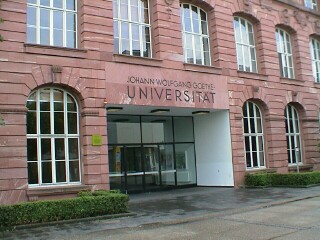
The Institute has been both a research enterprise and, during its Frankfurt periods, a provider of instruction in sociology at the university there. To this end, The Institute selected Axel Honneth, Professor for Social Philosophy at Goethe University Frankfurt and the Jack B. Weinstein Professor of the Humanities in the department of philosophy at Columbia University, as its director to succeed Friedeburg. Following Honneth's resignation in 2018, became the acting director until 2021, when he was replaced by on a permanent basis.
References
References
- Gruber, Hans-Peter. (2022). ""Aus der Art geschlagen": eine politische Biografie von Felix Weil (1898-1975)". Campus Verlag.
- "The Origins of Critical Theory: An interview with Leo Lowenthal" by Helmut Dubiel in ''Telos'' 49
- (2019). "Friedrich Pollock: The Éminence Grise of the Frankfurt School". Koninklijke Brill bv.
- Outhwaite, William. (2016). "Review of ''Habermas: A Biography'' by Stefan Müller-Doohm, Cambridge: Polity Press, 2016". Studies in Social and Political Thought.
- "The History of the IfS".
- "Goethe-Universität —".
- "Axel Honneth | Philosophy".
This article was imported from Wikipedia and is available under the Creative Commons Attribution-ShareAlike 4.0 License. Content has been adapted to SurfDoc format. Original contributors can be found on the article history page.
Ask Mako anything about University of Frankfurt Institute for Social Research — get instant answers, deeper analysis, and related topics.
Research with MakoFree with your Surf account
Create a free account to save articles, ask Mako questions, and organize your research.
Sign up freeThis content may have been generated or modified by AI. CloudSurf Software LLC is not responsible for the accuracy, completeness, or reliability of AI-generated content. Always verify important information from primary sources.
Report