From Surf Wiki (app.surf) — the open knowledge base
University of Antwerp
University in Antwerp, Belgium
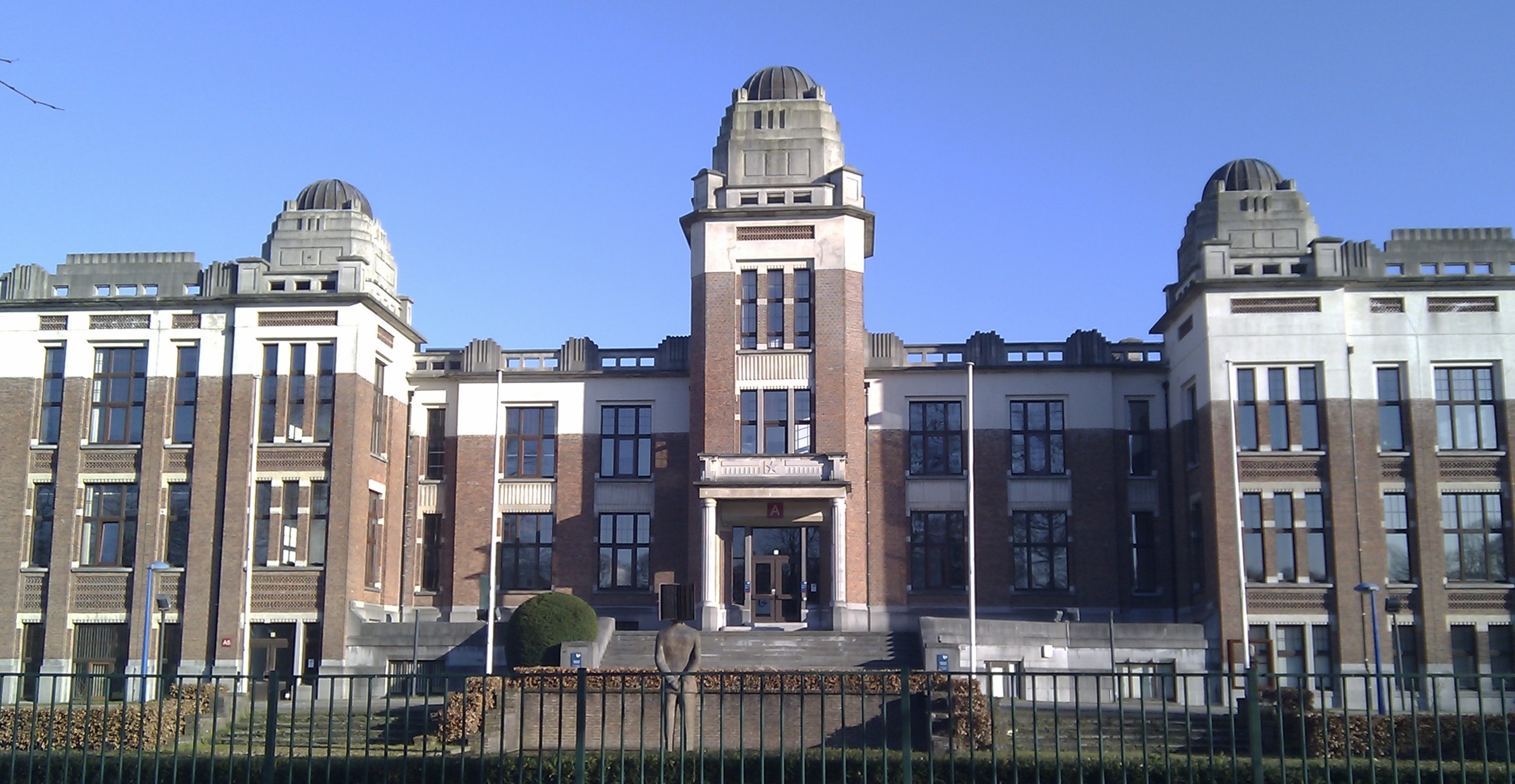
University in Antwerp, Belgium
| Field | Value |
|---|---|
| name | University of Antwerp |
| native_name | Universiteit Antwerpen |
| image | Universiteit Antwerpen nieuw logo.svg |
| established | |
| 1973 (confederation) | |
| 1852 (Institut Saint-Ignace) | |
| type | Public |
| rector | |
| students | 21,133 |
| doctoral | 1,939 |
| city | Antwerp |
| state | Flanders |
| province | Antwerp Province |
| country | |
| Belgium | |
| campus | City Campus |
| Campus Mutsaard | |
| Campus Paardenmarkt | |
| Campus Drie Eiken | |
| Campus Middelheim | |
| Campus Groenenborger | |
| colours | UAntwerp red and UAntwerp blue |
| nickname | UA |
| website | |
| academic_staff | 6,205 |
| affiliation | Utrecht Network, AACSB, EFDM, NVAO, YUFE, UASR |
1973 (confederation) 1852 (Institut Saint-Ignace) Belgium Campus Mutsaard Campus Paardenmarkt Campus Drie Eiken Campus Middelheim Campus Groenenborger
The University of Antwerp () is a major Belgian university located in the city of Antwerp. The official abbreviation is UAntwerp. The University of Antwerp has about 20,000 students, which makes it the third-largest university in Flanders. The University of Antwerp is characterised by its high standards in education, internationally competitive research and entrepreneurial approach. It was founded in 2003 after the merger of three smaller universities.
History
Origins
The university's roots go back to Sint-Ignatius Handelshogeschool (Saint-Ignatius College of Commerce) founded by the Jesuits (Society of Jesus) in Antwerp in 1852. This was one of the first European business schools to offer formal university degrees. It later opened a Faculty of Literature and Philosophy (including Law) and a Faculty of Political and Social Sciences. It was renamed Universitaire Faculteiten Sint-Ignatius Antwerpen (UFSIA) in the 1960s when the Belgian government granted it university status. In the early 1970s UFSIA joined into a confederation with "Rijksuniversitair Centrum Antwerpen" (RUCA) and "Universitaire Instelling Antwerpen" (UIA), public institutions.
Merger
In 2003 UFSIA, RUCA, and UIA merged into the University of Antwerp to become the first explicitly pluralistic university in Belgium, offering philosophical, ethical, and spiritual discourse and openness towards religion and intercultural dialogue. It soon became the third largest university in Flanders with 20,000 students. In order to face the challenges posed by the internationalization of European education and research, the university is part of the Antwerp University Association (AUHA). The Catholic influence that the Jesuits had at UFSIA continues through the Saint Ignatius University Centre (UCSIA), Antwerp, founded in 2003.
In September 2020, the University of Antwerp chose to start the new academic year with stricter coronavirus measures than those recommended by the government.
Faculties
The University of Antwerp has 34 academic bachelor programmes, 83 master programmes, 26 master-after-master programmes and 21 postgraduates. In addition, there are 26 programmes completely taught in English (1 bachelor, 16 master, 6 master-after-master and 3 postgraduate programmes). All of these programmes are divided into 9 faculties.
- Business and Economics
- Pharmaceutical, Veterinary and Biomedical Sciences
- Medicine and Health Sciences
- Arts
- Design Sciences (including architecture and conservation)
- Social Sciences
- Law
- Applied Engineering Sciences
- Science
The Institute of Development Policy and Management (IOB) has an autonomous faculty-like UAntwerp status and Antwerp Management School is an autonomous school within the University of Antwerp.
Campuses
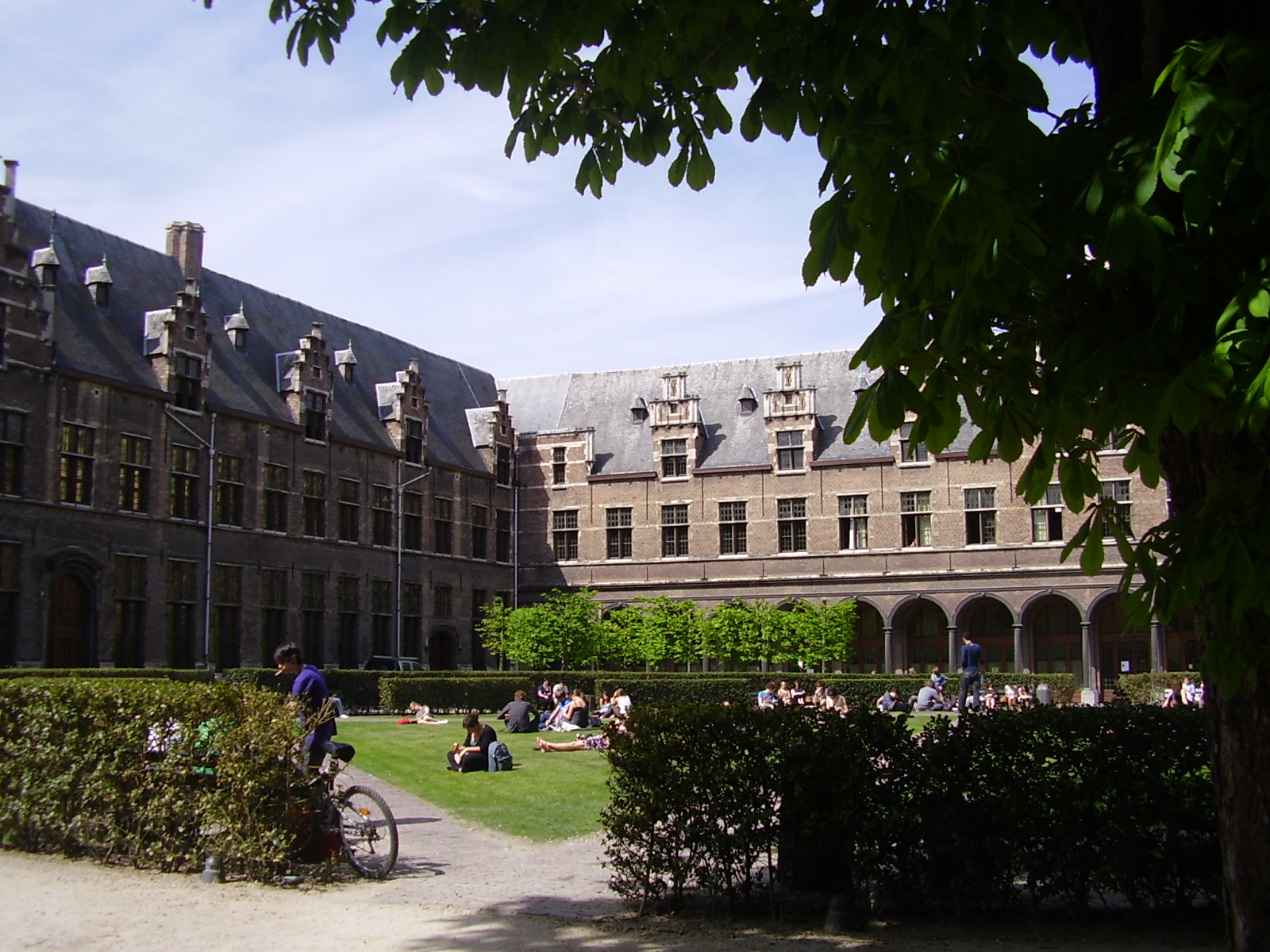
The six campuses are located all over the city of Antwerp, from the historic city centre to the green belt to the south of the city.
- Stadscampus: Prinsstraat 13, 2000 Antwerpen
- Campus Mutsaard: Mutsaardstraat 31, 2000 Antwerpen
- Campus Paardenmarkt: Paardenmarkt 92, 2000 Antwerpen
- Campus Drie Eiken: Universiteitsplein 1, 2610 Wilrijk (Antwerpen)
- Campus Middelheim: Middelheimlaan 1, 2020 Antwerpen
- Campus Groenenborger: Groenenborgerlaan 171, 2020 Antwerpen
Academic ranking
In the 2010 QS World University Rankings the University of Antwerp was ranked 179th overall in the world. On the 2009 THE–QS World University Rankings list (in 2010 Times Higher Education World University Rankings and QS World University Rankings parted ways to produce separate rankings), University of Antwerp was ranked on a shared 177th place. An overview of the THE-QS World University Rankings up to 2011:
| Year | Rank (Change) |
|---|---|
| 2005 | 235 |
| 2006 | 252 (17) |
| 2007 | 187 (65) |
| 2008 | 195 (8) |
| 2009 | 177 (18) |
| 2010 | 179 (2) |
| 2011 | 197 (18) |
Times Higher Education World University Ranking:
| Year | Rank (Change) |
|---|---|
| 2011–2012 | 276–300 |
| 2012–2013 | 192 (84–108) |
| 2013–2014 | 164 (28) |
| 2014–2015 | 170 (6) |
| 2015–2016 | 190 (20) |
| 2016–2017 | 201–250 (11–60) |
| 2017–2018 | 201–250 () |
| 2018–2019 | 201–250 () |
| 2019–2020 | 198 (3–52) |
| 2020–2021 | 170 (28) |
| 2021–2022 | 143 (27) |
| 2022–2023 | 131 (12) |
Notable alumni
Economics
- Marcia De Wachter (1953–), director of the National Bank of Belgium
- Patrick Janssens (1956–), politician (Flemish MP, former mayor of Antwerp)
- Mimi Lamote (1964–), CEO Mayerline
- Philippe Muyters (1961–), politician (Flemish minister)
History
- Bart De Wever, (1970-), politician (prime minister of Belgium (2025–present), representative, floor leader New Flemish Alliance party and mayor of Antwerp)
- Marie-Rose Morel, politician
Law
- Gerolf Annemans (1958–), politician (representative, floor leader Vlaams Belang party)
- Peter Van Den Bossche (1959-), professor and member of the WTO Appellate Body
- Cathy Berx (1969–), jurist and politician (governor of the province of Antwerp)
- Jan Grauls (1948–), diplomat (ambassador)
- Mieke Offeciers-Van De Wiele (1952–), politician (former minister)
- Kris Peeters (1962–), politician (Minister-President of Flanders)
- Herman Portocarero (1952–), author and diplomat
- Matthias Storme (1959–), lawyer and politician
- Rudi Thomaes (1952–2018), former CEO of the Federation of Belgian Enterprises
- Bruno Valkeniers, businessman and politician (party leader of Vlaams Belang)
- Staf Van Reet, businessman
Medicine
- Paul Stoffels (1962–), cofounder of Tibotec and Virco
- Manto Tshabalala-Msimang (1940–2009), South African politician
Linguistics and Literature & Philosophy
- Clara Cleymans (1989–), actress, voice actress and musical theatre singer
- Jan Huyghebaert (1945–), banker
- Jan Leyers (1958–), author, musician and presenter
- Hugo Matthysen (1956–), author, musician and presenter
- Bart Peeters (1959–), musician and presenter
- Matthias Storme (1959–), lawyer and politician
Political and Social Sciences
- Jos Geysels, former politician and chairman 11.11.11
- Patrick Janssens (1956–), politician (Flemish MP, mayor of Antwerp)
- Marthe Wandou (1963–), Cameroonian activist
- Peter Mertens (1969–), politician
- Lieven Janssens (1977–), politician (former mayor of Vorselaar)
- Johan Vande Lanotte (1955–), politician (minister, MP, senator)
- Johan Van Hecke (1954–), member of the European Parliament
- Mieke Vogels (1954–), politician (former minister, Flemish MP)
Sciences
- Dries Buytaert (1978–), author of Drupal
- Didier de Chaffoy de Courcelles (1953–), vice-president R&D of Janssen Pharmaceutica
- Peter Piot (1949–), microbiologist, head of UNAIDS
- Vincent Timmerman, molecular biologist
- Christine Van Broeckhoven (1953–), scientist and politician
- Rosa Rademakers (1978-), neurobiologist
- Anthony Liekens (1975–), informaticists, biologist, inventor and educator
Notable faculty
- Marc Bossuyt, law
- Fernand Deschamps (1868–1957), philosophy
- Rudy Martens, management
- Bence Nanay, philosophy
- Christine Van Broeckhoven, molecular biologist
- Christine Van Den Wyngaert, law
- Frank Vandenbroucke, Applied Economics and Social Sciences
- Hans Vangheluwe, computer science
Student life
Sports
The University of Antwerp has a long tradition in organizing international student championships. The following FISU, EUSA and IFIUS events have been organized:
- 1978: FISU World University Cycling Championship
- 1982: FISU World University Cross Country Championship
- 1992: FISU World University Chess Championship
- 2004: IFIUS World Interuniversity Games
- 2006: FISU World University Cycling Championship
- 2007: EUSA European University Bridge Championship
Student organisations
At the University of Antwerp there are faculty clubs, regional clubs and political clubs. Faculty bound clubs are governed by VUAS which consists of Unifac and ASK-Stuwer. Political and philosophical clubs are governed by PFK-Antwerpen. The student newspaper is called "Dwars".
References
References
- [https://www.uantwerpen.be/en/projects/uantwerp-style-guide/basic-principles/colours/ Colours] - website of UAntwerp
- "universitair centrum sint ignatius antwerpen - UCSIA - History".
- (2020-09-16). "Code orange: three Flemish universities tighten measures for new academic year".
- "Academic Ranking of World Universities 2020".
- "CWTS Leiden Ranking 2020 - P(top 10%)". CWTS Leiden Ranking.
- "World University Rankings 2020-2021". Center for World University Rankings.
- "QS World University Rankings".
- (21 June 2022). "THE World University Rankings: University of Antwerp".
- "USNWR Best Global Universities Rankings: University of Antwerp".
- "QS Top 50 Under 50 2021".
- "QS World University Rankings 2010 Results".
- (2012). "QS World University Rankings". Top Universities.
- (March 9, 2010). "Clara Cleymans binnenkort als Nina in 'Thuis'". TVvisie.
- "Student associations - University of Antwerp".
This article was imported from Wikipedia and is available under the Creative Commons Attribution-ShareAlike 4.0 License. Content has been adapted to SurfDoc format. Original contributors can be found on the article history page.
Ask Mako anything about University of Antwerp — get instant answers, deeper analysis, and related topics.
Research with MakoFree with your Surf account
Create a free account to save articles, ask Mako questions, and organize your research.
Sign up freeThis content may have been generated or modified by AI. CloudSurf Software LLC is not responsible for the accuracy, completeness, or reliability of AI-generated content. Always verify important information from primary sources.
Report