From Surf Wiki (app.surf) — the open knowledge base
United States Space Command
Unified command of the U.S. Department of Defense

Unified command of the U.S. Department of Defense
| Field | Value | ||
|---|---|---|---|
| unit_name | United States Space Command | ||
| image | United States Space Command emblem 2019.svg | ||
| caption | Seal of the United States Space Command | ||
| dates | 23 September 1985 – 1 October 2002 () | ||
| (first incarnation) | |||
| country | United States | ||
| type | Unified combatant command | ||
| role | Space command | ||
| command_structure | Department of Defense | ||
| garrison_label | Headquarters | ||
| garrison | Peterson Space Force Base, Colorado, U.S. | ||
| decorations | |||
| identification_symbol | [[File:Flag of the United States Space Command.svg | border | 150px]] |
| identification_symbol_label | Flag | ||
| <!-- Commanders --> | commander1 | Flag of a United States Space Force general.svg Gen Stephen Whiting, USSF | |
| commander1_label | Commander | ||
| commander2 | Flag of a United States Army lieutenant general.svg LTG Richard Zellmann, USA | ||
| commander2_label | Deputy Commander | ||
| commander3 | CMSgt Jacob C. Simmons, USSF | ||
| commander3_label | Command Senior Enlisted Leader | ||
| march | "Space Command March" | ||
| website |
(first incarnation)
29 August 2019 – present () (second incarnation)
United States Space Command (USSPACECOM or SPACECOM) is a unified combatant command of the United States Department of Defense, responsible for military operations in outer space, specifically all operations 100 kilometers (62 miles) and greater above mean sea level. U.S. Space Command is responsible for the operational employment of space forces that are provided by the uniformed services of the Department of Defense.
Space Command was originally created in September 1985 to provide joint command and control for all military forces in outer space and coordinate with the other combatant commands. SPACECOM was disestablished in 2002, and its responsibilities and forces were merged into United States Strategic Command. It was reestablished on 29 August 2019, with a reemphasized focus on space as a warfighting domain.
The U.S. Space Force is the military service responsible for organizing, training, and equipping the majority of forces for U.S. Space Command, which also includes a smaller number of forces from each of the other branches of the U.S. Armed Forces.
Mission
U.S. Space Command, working with allies and partners, plans, executes, and integrates military spacepower into multi-domain global operations in order to deter aggression, defend national interests, and when necessary, defeat threats. "Strategic Vision"
U.S. Space Command has four "space truths" that provide the foundation for its vision and operations:
- Space is a vital interest that is integral to the American way of life and national security.
- Space superiority enables the Joint Force to rapidly transition from competition to conflict and prevail in a global, all-domain fight.
- Space warfighters generate the combat power to win in space.
- Space provides the warfighter a combat advantage from the ultimate high ground to the last tactical mile.
History
Early military space defense
Early military space activities were predominantly focused on research and development, rather than operations, and split across the Air Force, Army, and Navy. In 1959, Admiral Arleigh Burke proposed the creation of the Defense Astronautical Agency to control all military space programs. This proposal was supported by the Army and Navy, but opposed by the Air Force.
Arguing that space defense was an extension of air defense, the Joint Chiefs of Staff ultimately agreed with the Air Force, putting operational control of space defense forces under the unified Continental Air Defense Command and multinational North American Air Defense Command in 1960. In 1975, Continental Air Defense Command was inactivated and replaced with Aerospace Defense Command (ADCOM), a specified command led by the Air Force. In 1981, North American Air Defense Command changed its name to North American Aerospace Defense Command to better reflect its role in both air and space defense.
Strategic Defense Initiative and the first U.S. Space Command
| Name | Headquarters | Dates | Army service components | Naval service components | Air Force service components | ||
|---|---|---|---|---|---|---|---|
| [[File:United States Army Space and Missile Defense Command Logo.svg | 40px]] | url=https://www.smdc.army.mil/Portals/38/Documents/Publications/History/Cmd%20History%20Book/Chap%204.pdf | title=Chapter 4: Renewed Interest in Space and The War in the Persian Gulf, 1985-1991: The Army Returns to Space }} | 1985–1986 | |||
| [[File:United States Army Space and Missile Defense Command Logo.svg | 40px]] | Army Space Agency | Colorado Springs, Colorado | 1986–1988 | |||
| [[File:Army_Space_Command_SSI.jpg | 40px]] | Army Space Command | 1988–August 1992 | ||||
| [[File:United States Army Space and Missile Defense Command Logo.svg | 40px]] | Army Space and Strategic Defense Command | Redstone Arsenal, Alabama | August 1992–1 October 1998 | |||
| [[File:United States Army Space and Missile Defense Command Logo.svg | 40px]] | Army Space and Missile Defense Command | Redstone Arsenal, Alabama | 1 October 1997 – 1 October 2002 | |||
| [[File:Naval Space Command (US Navy) insignia 1983.png | 40px]] | Naval Space Command | Dahlgren, Virginia | 1 October 1985 – July 2002 | |||
| [[File:Naval Netwarcom logo.gif | 40px]] | Naval Network Warfare Command | Norfolk, Virginia | July 2002 – 1 October 2002 | |||
| [[File:Air Force Space Command Logo.svg | 40px]] | Air Force Space Command | Peterson Space Force Base, Colorado | 23 September 1985 – 23 March 1992 | |||
| [[File:Fourteenth Air Force - Emblem.png | 40px]] | Fourteenth Air Force | Vandenberg Air Force Base, California | 23 March 1992 – 1 October 2002 |

The Reagan Administration's Strategic Defense Initiative brought a new focus on space. In 1983, General James V. Hartinger, the commander of Aerospace Defense Command and Air Force Space Command, proposed movement towards a unified space command. The Air Force supported a unified command, which would be dominated by the aerospace service, however, the Army, Navy, and Marine Corps were satisfied with the current arrangement. However, the White House supported the Air Force's position that a unified command should be created, and on 20 November 1984, President Ronald Reagan approved its establishment. U.S. Space Command's missions would include integrating tactical warning and space operations, including control of space, direction of space support activities, and planning for ballistic missile defense. U.S. Space Command would also replace Aerospace Defense Command as the supporting U.S. command to North American Aerospace Defense Command, sharing the same commander.
On 23 September 1985, U.S. Space Command was activated as a functional combatant command at Peterson Air Force Base, Colorado Springs and Aerospace Defense Command was inactivated on 19 December 1986. In February 1988, U.S. Space Command was assigned the ballistic missile defense mission in preparation for assuming operational command of the Strategic Defense Initiative. However, the end of the Cold War significantly reduced the investment in SDI.
In 1991, the Joint Chiefs of Staff debated establishing U.S. Strategic Command assume responsibility for nuclear deterrence, missile defense, and space. U.S. Space Command would have been made a sub-unified command under the U.S. Strategic Command. However, the decisive role played by U.S. Space Command in the Persian Gulf War prevented its absorption into U.S. Strategic Command, providing tactical missile warning, GPS, and other space data to forces in theater.

In 1997, General Howell M. Estes III proposed designating space as a geographic area of responsibility, transitioning U.S. Space Command from a functional to a geographic command. This effort was opposed by the Joint Staff, the State Department, and the National Security Council and did not occur. However, there was growing discussion about giving U.S. Space Command the mission for information support and renaming it to United States Space and Information Command. While U.S. Space Command was not renamed, it did assume responsibility for information, or cyberspace, operations.
Following the September 11 attacks, there was a growing focus on homeland defense and counter-terrorism at the expense of space. The Defense Department was intent on establishing United States Northern Command, merging U.S. Space Command and U.S. Strategic Command in 2002. On 1 October 2002, the first U.S. Space Command was shut down.
Space in U.S. Strategic Command
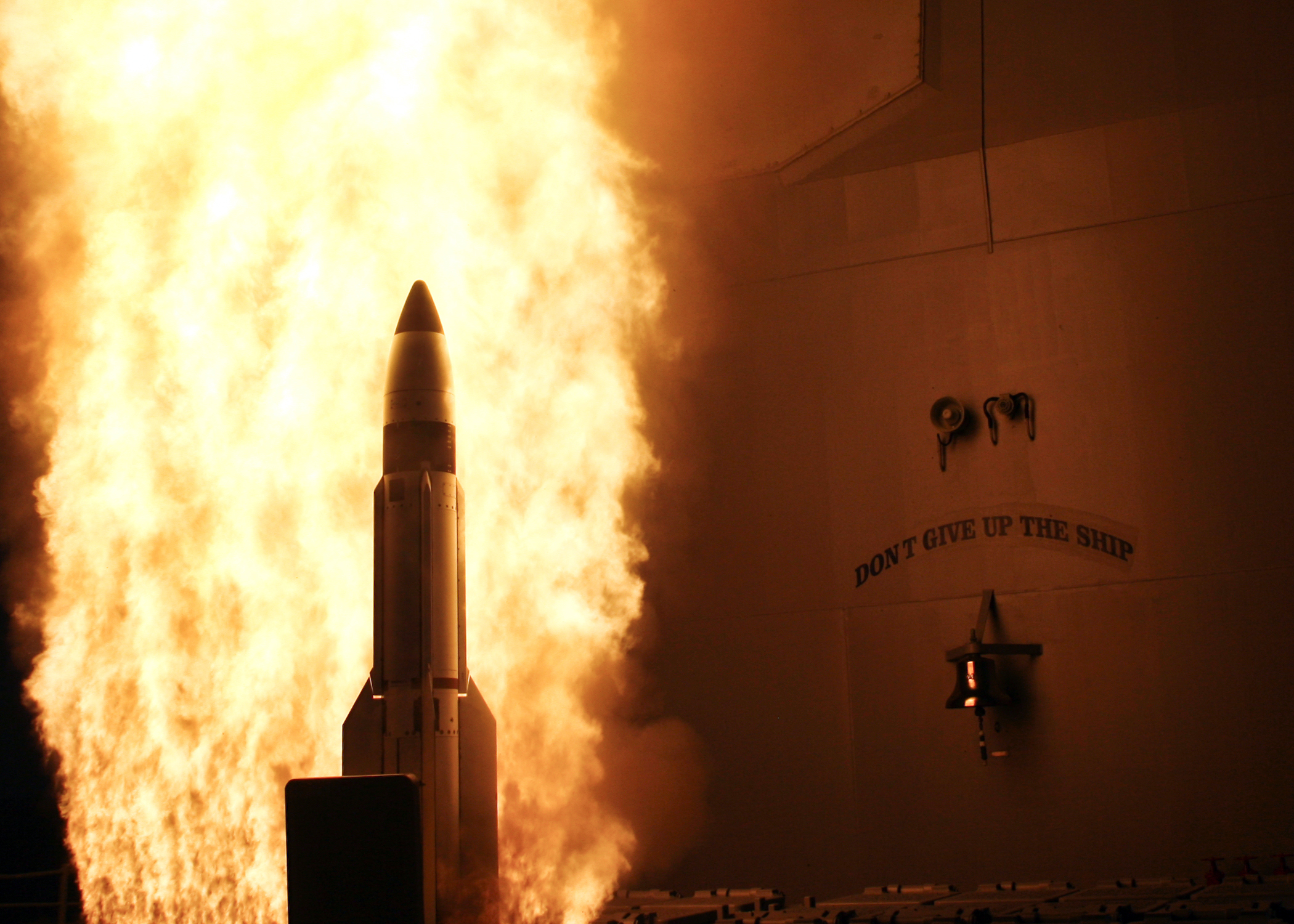
On 1 October 2002, as U.S. Space Command inactivated, a new U.S. Strategic Command at Offutt Air Force Base, Nebraska, stood up. Within STRATCOM, the responsibilities for space operations were initially managed by the Joint Functional Component Command for Space and Global Strike, led by the commander of the Air Force's Eighth Air Force. However, in 2006, space regained its own functional component under U.S. Strategic Command, under the command of the Fourteenth Air Force commanded.
Following the inactivation of U.S. Space Command in 2002, Russia and China began developing sophisticated on-orbit capabilities and an array of counter-space weapons. In particular, China conducted the 2007 Chinese anti-satellite missile test, destroying its Fengyun spacecraft, which, according to NASA, created 2,841 high-velocity debris items, a larger amount of dangerous space junk than any other space event in history. In 2008, U.S. Strategic Command conducted Operation Burnt Frost to destroy a non-functioning National Reconnaissance Office satellite, before its toxic hydrazine tank could reenter and cause potential harm to human safety, with a RIM-161 Standard Missile 3 launched from the .
This construct lasted until 2017, when the commander of Air Force Space Command became the Joint Force Space Component Commander, replacing it.
U.S. Space Command reestablished
.jpg)
The 2019 National Defense Authorization Act, which was signed into law in 2018, directed the re-establishment of U.S. Space Command as a sub-unified combatant command under U.S. Strategic Command; however, in December 2018, the Trump administration directed that U.S. Space Command instead be a newly established, full unified combatant command, with full responsibilities for space.
On 26 March 2019, U.S. Air Force General John Raymond was nominated to be the commander of the second establishment of USSPACECOM, pending Senate approval. In 2019 the Department of the Air Force released the list of finalists for the location of Headquarters Space Command: Cheyenne Mountain Air Force Station, Schriever Air Force Base, Peterson Air Force Base, Buckley Air Force Base, Vandenberg Air Force Base, and Redstone Arsenal. U.S. Space Command was officially reestablished as a geographic combatant command on 29 August 2019, during a ceremony at the White House. The former Joint Force Space Component Commander was dissolved and folded into Space Command. Following the creation of the United States Space Force in December 2019, the Department of the Air Force widened its search for a location of Space Command's permanent headquarters.
.jpg)
USSPACECOM has two subordinate commands: Combined Force Space Component Command (CFSCC), and Joint Task Force Space Defense (JTF-SD).
In August 2020, In the meeting of the National Space Council, acting Director of National Intelligence announced in case of an attack on the U.S. satellites the operational control of intelligence community assets will be in the ambit of the military, resulting in the National Reconnaissance Office being operationally subordinated to the commander of U.S. Space Command in matters of space defense.
.jpeg)
.jpg)
On 24 August 2021, two years after its establishment, U.S. Space Command announced that it had reached initial operating capability. Achieving full operating capability, according to Lieutenant General John E. Shaw, deputy commander of U.S. Space Command, is dependent on the selection of the combatant command's permanent headquarters.
U.S. Space Command is planning to reorganize its subordinate commands, possibly reactivating the Joint Force Space Component Command (JFSCC), the precursor organization of the combatant command. JFSSC is planned to be the combatant command's "primary warfighting command," formed by combining CFSCC and JTF–SD. Space Force Lieutenant General Stephen Whiting, commander of SpOC, is planned to lead the new organization.
In 2023, U.S. Space Command regained its responsibility for missile defense from U.S. Strategic Command and will be taking over the Joint Functional Component Command for Integrated Missile Defense.
Headquarters
In January 2021, it was announced that Redstone Arsenal in Huntsville, Alabama was the preferred final location for U.S. Space Command. The other locations in contention were Kirtland Air Force Base, Offutt Air Force Base, Joint Base San Antonio, its interim location at Peterson Space Force Base, and Patrick Space Force Base. Despite Peterson Space Force Base in Colorado being both the original and interim location of Space Command headquarters, Redstone Arsenal was selected, reportedly due to political pressure directly from then-president Donald Trump. A formal review from the Department of Defense Inspector General was initiated to ensure the process that selected Huntsville as the preferred location was impartial and factually sound. Former Secretary of Defense Lloyd Austin came out with his public support and backed the Department of the Air Force's decision process which resulted in the selection of Redstone Arsenal. In May 2022, the review found that the selection of Redstone Arsenal as the permanent site was reasonable and justified. In July 2023, the move to Huntsville was cancelled. General James H. Dickinson, USA, Commander of the U.S. Space Command, argued that moving the headquarters to Alabama from its current location in Colorado Springs would hurt military readiness. Republicans have accused the Biden administration of acting due to a partisan standoff over the Pentagon's abortion access policies at the time.
Relocation discussions intensified in early 2025, with the change in administrations. U.S. Rep. Mike Rogers (R-Ala.), who chairs the House Armed Services Committee, predicted an announcement by the end of April, but no such statement was issued. On 2 May 2025, two sources told a Huntsville television station that a decision had been reached to move USSPACECOM to Redstone Arsenal and—barring a reversal—the announcement would follow confirmation of a new Secretary of the Air Force. On 2 Sep 2025, President Donald Trump announced in the Oval Office that the headquarters will be moved to Huntsville, Alabama.
Organization
| Name | Function | Headquarters | Service components | Functional components | |||||
|---|---|---|---|---|---|---|---|---|---|
| [[File:United States Space Forces – Space emblem.png | 40px]] | ||||||||
| United States Space Forces – Space | |||||||||
| Combined Joint Force Space Component Commander (CJFSCC) | Plans, integrates, conducts, and assesses global space operations in order to deliver combat relevant space effects, in, from, and to space | Vandenberg Space Force Base, California | |||||||
| [[File:United States Army Space and Missile Defense Command Logo.svg | 40px]] | Army Space and Missile Defense Command | Develop and provide Army space, missile defense, and high altitude forces | Redstone Arsenal, Alabama | |||||
| [[File:Logo of the United States Marine Forces Space Command.png | 40px]] | Marine Corps Forces Space Command | Provides space operational support to the Fleet Marine Force | Peterson Space Force Base, Colorado | |||||
| [[File:Emblem of the U.S. Navy Space Command.png | 40px]] | Navy Space Command | Responsible for Navy information network operations, offensive and defensive cyberspace operations, space operations and signals intelligence | Fort Meade, Maryland | |||||
| [[File:ConrAfnorthAfspace.jpg | 40px]] | Air Forces Space | Ensures the aerospace control and air defense of the continental United States, U.S. Virgin Islands and Puerto Rico | Tyndall Air Force Base, Florida | |||||
| [[File:Joint Functional Component Command for Integrated Missile Defense emblem (2).png | 40px]] | Joint Functional Component Command for Integrated Missile Defense | Synchronizes global missile defense planning | Schriever Space Force Base, Colorado | |||||
| [[File:Seal of the Combined Space Operations Center.png | 40px]] | Combined Space Operations Center (subordinated to SPACEFOR–SPACE) | Execute operational command and control of space forces to achieve theater and global objectives. | Vandenberg Space Force Base, California | |||||
| [[File:Seal of the Joint Navigation Warfare Center.png | 40px]] | Joint Navigation Warfare Center (subordinate to SPACEFOR–SPACE) | Enable positioning, navigation and timing superiority | Kirtland Air Force Base, New Mexico | |||||
| [[File:Seal of the Joint Overhead Persistent Infrared Center.png | 40px]] | Joint Overhead Persistent Infrared Center (subordinate to SPACEFOR–SPACE) | Conduct integrated mission management to optimize the overhead persistent infrared enterprise | Buckley Space Force Base, Colorado | |||||
| [[File:Seal of the Missile Warning Center.png | 40px]] | Missile Warning Center (subordinate to SPACEFOR–SPACE) | Delivers global strategic and theater missile warning and nuclear detonation detection | Cheyenne Mountain Space Force Station, Colorado | |||||
| [[File:Seal of the National Space Defense Center.svg | 40px]] | National Space Defense Center (subordinate to SPACEFOR–SPACE) | title=National Space Defense Center | url=https://www.jtf-spacedefense.mil/About-Us/Fact-Sheets/Display/Article/3071003/national-space-defense-center/http%3A%2F%2Fwww.jtf-spacedefense.mil%2FAbout-Us%2FFact-Sheets%2FDisplay%2FArticle%2F3071003%2Fnational-space-defense-center%2F | access-date=2023-06-16 | website=Joint Task Force-Space Defense | language=en-US }} | Schriever Space Force Base, Colorado | |
| [[File:Joint-forces-headquarters-cyber air force.png | 40px]] | Joint Force Headquarters Cyber - Air Force | Cyber support from U.S. Cyber Command | Joint Base San Antonio, Texas |
Previous, now-deactivated functional components included the Combined Force Space Component Command at Vandenberg Space Force Base, California, and the Joint Task Force–Space Defense at Schriever Space Force Base, Colorado. Both were disestablished with the creation of U.S. Space Forces – Space to take on SpOC's Space Force responsibilities.
Relationship with the United States Space Force
United States Space Command is the unified combatant command for all military space operations, while the United States Space Force is the military service responsible for organizing, training, and equipping the majority of forces for U.S. Space Command. Space Command's Space Force service component is Space Operations Command, providing the majority of space forces. U.S. Space Command also consists of smaller amounts of forces from the United States Army, United States Marine Corps, United States Navy, and United States Air Force. This mirrors the relationship between the Space Force's predecessor, Air Force Space Command, and U.S. Space Command (and between 2002 and 2019, United States Strategic Command).
Emblem and symbols
|File:United States Space Command emblem 2019.svg|U.S. Space Command (2019–present) |File:Joint Force Space Component Command.jpg|Joint Force Space Component Commander (2017–2019) |File:JFCC SPACE Patch Final.JPG|Joint Functional Component Command for Space (2006–2017) |File:United States Space Command emblem.gif|U.S. Space Command (1985–2002)
U.S. Space Command seal (2019)
Shield: The bald eagle, a traditional symbol of American strength and vigilance, carries an olive branch in his right talon, symbolizing the worldwide goal of peaceful operations in space. In his left talon is a cluster of thirteen arrows with the silver delta as arrowheads, indicative of the strength and power necessary to protect our citizens and allies. The delta symbol is historically associated with space and represents change and innovation, and the cluster of deltoids thrusting upward into space signifies our ever growing aspirations in space beyond earth’s orbit. The blue globe with silver land masses, as viewed from space, signifies the origin and control point for all space assets and represents the global operations of the command in mission areas such as surveillance, navigation, communications and missile warning. The silver and white Polaris signifies our constant presence and vigilance in space now and in the future. Encompassing the globe are two white elliptical orbits representing the unity of U.S. Space Command with our joint and combined partners, and which intersect over the United States, the terrestrial heart of the command. An arc of four silver stars above the eagle symbolizes the four-star combatant commander of U.S. Space Command. The black background represents the infinity of space.
Seal: The coat of arms as blazoned in full color on a black disk, bearing the night sky, enclosed by a silver border, and inscribed "UNITED STATES" above and "SPACE COMMAND" below, all silver.
Army element shoulder sleeve and distinctive unit insignia
|File:USSPACECOM-Army Element SSI.png|Shoulder Sleeve Insignia |File:U.S. Space Command DUI.png|Distinctive Unit Insignia
Shoulder sleeve insignia
Black and gold together symbolize the United States Army. Black signifies the vast infinity of space and gold denotes high standards for excellence. The demi-globe represents the earth as seen from space and symbolizes the global operations of the command. The crossed orbital rings denote the unity of United States Space Command (USSPACECOM) with joint and combined partners. The rings intersect over the United States, identifying the terrestrial heart of the command. The gold pheon represents the combat power of Army Space. Four stars represent the four-star combatant commander of USSPACECOM. The Polaris star signifies constant presence and vigilance in space now and into the future.
Distinctive unit insignia
Black and gold together symbolize the United States Army. Black signifies the vast infinity of space and gold denotes high standards for excellence. The demi-globe represents the earth as seen from space and symbolizes the global operations of the command. The crossed orbital rings denote the unity of United States Space Command (USSPACECOM) with joint and combined partners. The gold pheon represents the combat power of Army Space. Four stars represent the four-star combatant commander of USSPACECOM. The Polaris star signifies constant presence and vigilance in space now and into the future. The motto translates to, "MUD TO SPACE."
Locations
Locations in the contiguous United States.


| Name | Location | State | Major USSPACECOM unit emblem | Major USSPACECOM unit | Other USSPACECOM units | ||
|---|---|---|---|---|---|---|---|
| Buckley Space Force Base | Aurora | Colorado | [[File:Seal of the Joint Overhead Persistent Infrared Center.png | 60px | center]] | Joint Overhead Persistent Infrared Center | |
| Kirtland Air Force Base | Albuquerque | New Mexico | [[File:Seal of the Joint Navigation Warfare Center.png | 60px | center]] | Joint Navigation Warfare Center | |
| Fort Meade | Fort Meade | Maryland | [[File:Emblem of the U.S. Navy Space Command.png | 60px | center]] | Navy Space Command | |
| Peterson Space Force Base | Colorado Springs | Colorado | [[File:United States Space Command emblem 2019.svg | 60px | center]] | United States Space Command | Marine Corps Forces Space Command |
| Redstone Arsenal | Huntsville | Alabama | [[File:United States Army Space and Missile Defense Command Logo.svg | 60px | center]] | Army Space and Missile Defense Command | |
| Schriever Space Force Base | Colorado Springs | Colorado | [[File:Seal of the National Space Defense Center.svg | 60px | center]] | National Space Defense Center | |
| Tyndall Air Force Base | Panama City | Florida | [[File:ConrAfnorthAfspace.jpg | 60px | center]] | Air Forces Space | |
| Vandenberg Space Force Base | Lompoc | California | [[File:United States Space Forces – Space emblem.png | 60px | center]] | United States Space Forces – Space | Combined Space Operations Center |
| Cheyenne Mountain Space Force Station | Cheyenne Mountain | Colorado | [[File:Seal of the Missile Warning Center.png | 60px | center]] | Missile Warning Center |
List of commanders
Main article: Leadership of the United States Space Command
Note: The numeric order of the commanders was reset due to the second establishment being considered a different command than the first.
| No. | Commander | Term | Service branch | Portrait | Name | Took office | Left office | Term length | Commander-in-Chief, United States Space Command | Commander, United States Space Command | ||||||||||||||||
|---|---|---|---|---|---|---|---|---|---|---|---|---|---|---|---|---|---|---|---|---|---|---|---|---|---|---|
| order = 1 | military_rank = General | image = General Robert Herres, military portrait, 1984.JPEG | officeholder = Robert T. Herres | born_year = | died_year = | last=Mehuron | first=Tamara A. | date=August 2009 | title=2009 Space Almanac: The US military space operation in facts and figures. | url=http://www.space-library.com/0908AFM_SpaceAlmanac.pdf | journal=Air Force Magazine | volume= | pages= | via=Space-Library.com | archive-date=24 February 2021 | access-date=21 May 2020 | archive-url=https://web.archive.org/web/20210224175847/http://www.space-library.com/0908AFM_SpaceAlmanac.pdf | url-status=dead}} | term_end = 6 February 1987 | 1985 | 9 | 23 | 1987 | 2 | 6}} | 75px]] |
| U.S. Air Force | order = 2 | |||||||||||||||||||||||||
| order = 1 | military_rank = General | image = Gen John W. Raymond (2).jpg | officeholder = John W. Raymond | born_year = | died_year = | term_start = 29 August 2019 | term_end = 20 August 2020 | 2019 | 8 | 29 | 2020 | 8 | 20}} | 75px]] | ||||||||||||
| U.S. Space Force | order = 2 |
References
Citations
Sources
References
- (21 December 2006). "Air Force Magazine". Air Force Association.
- "Approved JMUAs - 2020 09 30".
- (2023-08-07). "CHIEF MASTER SERGEANT JACOB C. SIMMONS".
- U.S. Air Force Academy, Band. (2009-08-27). "Space Command March".
- "Frequently Asked Questions". United States Space Command.
- (2000). "Seeking New World Vistas: The Militarization of Space". Greenwood Publishing Group.
- (January 2021). "Commander's Strategic Vision". U.S. Space Command.
- Strout, Nathan. (2021-02-02). "We hold these Space Truths to be self-evident".
- (2011-01-25). "Beyond Horizons: A Half-Century of Air Force Space Leadership". Air Force Space Command.
- "Chapter 4: Renewed Interest in Space and The War in the Persian Gulf, 1985-1991: The Army Returns to Space".
- (2013). "History of the Unified Command Plan".
- Shugart, Gary. (1 October 2018). "Re-establishing U.S. Space Command".
- (3 October 2017). "USSTRATCOM reaches first milestone in command restructure".
- Cooney, Michael. (2010-07-28). "NASA identifies Top Ten space junk missions". Network World.
- "U.S. Will Not Let China, Russia Deny Its Space Superiority, DOD Officials Say".
- (29 February 2008). "JSpOC intergral to Burnt Frost success".
- (2008-06-01). "Operation Burnt Frost: The Power of Social Networks {{!}} APPEL Knowledge Services".
- (26 March 2019). "Trump nominates Raymond to be commander of U.S. Space Command". [[SpaceNews]].
- Thomas, Will. (17 August 2018). "Trump Signs National Defense Authorization Act for Fiscal Year 2019". American Institute of Physics.
- Trump, Donald J.. (18 December 2018). "Text of a Memorandum from the President to the Secretary of Defense Regarding the Establishment of the United States Space Command". [[whitehouse.gov]].
- '''Note:''' General Raymond later transferred from the Air Force to the Space Force on 20 December 2019.
- Pawlyk, Oriana. (26 March 2019). "Air Force General Tapped to Head US Space Command". [[Military.com]].
- Browne, Ryan. (5 April 2019). "Trump's Space Command to be based in Colorado, Alabama or California". CNN.
- Mehta, Aaron. (20 August 2019). "Space Command to launch Aug. 29".
- (29 August 2019). "Trump formally reestablishes U.S. Space Command at White House ceremony".
- Secretary of the Air Force Public Affairs. (2020-05-15). "Department of the Air Force expands potential basing locations for US Space Command Headqu".
- (29 August 2019). "United States Space Command Organizational Fact Sheet". United States Space Command.
- Hitchens, Theresa. (30 August 2019). "Raymond's First SPACECOM Move: Two New Subcommands and Their Leaders".
- Erwin, Sandra. (2019-10-23). "Five things to know about U.S. Space Command".
- Harper, Jon. (24 August 2021). "SPACE SYMPOSIUM NEWS: Spacecom Achieves Initial Operational Capability".
- Miller, Amanda. (10 December 2021). "Space Command's Goal of Uniting All US Military Space Functions".
- (15 November 2021). "Exclusive: SPACECOM reorganizing amidst theater component command debate".
- (2023-05-31). "SPACECOM takes over missile defense ops from Strategic Command".
- (2021-01-13). "Space Command headquarters coming to Huntsville".
- Koren, Marina. (2021-01-26). "What Happens to the Space Force Now?".
- Erwin, Sandra. (2021-02-22). "Pentagon chief Austin stands behind Air Force amid investigation of Space Command basing decision".
- Roop, Lee. (2022-05-10). "Air Force backs plan to move Space Command HQ to Alabama".
- Insinna, Valerie. (2022-05-10). "OIG finds Huntsville choice for SPACECOM HQ justified".
- (31 July 2023). "Biden Cancels Space Command Move to Alabama Amid Tuberville Feud". New York Times.
- "FOX54 News Huntsville - YouTube".
- "LIVE: Trump announces Space Command is moving from Colorado to Alabama".
- "Warfighting Units".
- "Combined Space Operations Center / Space Delta 5 Fact Sheet".
- "Kirtland Air Force Base > Units > Joint Navigation Warfare Center".
- (3 August 2020). "Joint Overhead Persistent-Infrared Center (JOPC)".
- "Missile Warning Center Fact Sheet".
- (November 2025). "National Space Defense Center".
- Pomerleau, Mark. (2022-04-08). "Cyber Command's force is growing, in part, to support space".
- (12 December 2023). "USSF Creates New Component for SPACECOM".
- "About Space Operations Command".
- Kirby, Lynn. (2020-10-21). "Space Force activates first field command".
- "Shoulder Sleeve Insignia".
- "Distinctive Unit Insignia".
- Mehuron, Tamara A.. (August 2009). "2009 Space Almanac: The US military space operation in facts and figures.". Air Force Magazine.
- . (February 2000). [""USAF Almanac: Facts and Figures""](https://www.airforcemag.com/PDF/MagazineArchive/Magazine%20Documents%2F2000%2FMay%202000%2F0500facts_figs.pdf). *Air Force Magazine*.
- . (March 2021). [""General John L. Piotrowski""](https://www.af.mil/About-Us/Biographies/Display/Article/105974/general-john-l-piotrowski/). *United States Air Force Historical Support Division*.
This article was imported from Wikipedia and is available under the Creative Commons Attribution-ShareAlike 4.0 License. Content has been adapted to SurfDoc format. Original contributors can be found on the article history page.
Ask Mako anything about United States Space Command — get instant answers, deeper analysis, and related topics.
Research with MakoFree with your Surf account
Create a free account to save articles, ask Mako questions, and organize your research.
Sign up freeThis content may have been generated or modified by AI. CloudSurf Software LLC is not responsible for the accuracy, completeness, or reliability of AI-generated content. Always verify important information from primary sources.
Report