From Surf Wiki (app.surf) — the open knowledge base
United States Court of Appeals for the Tenth Circuit
Current United States federal appellate court
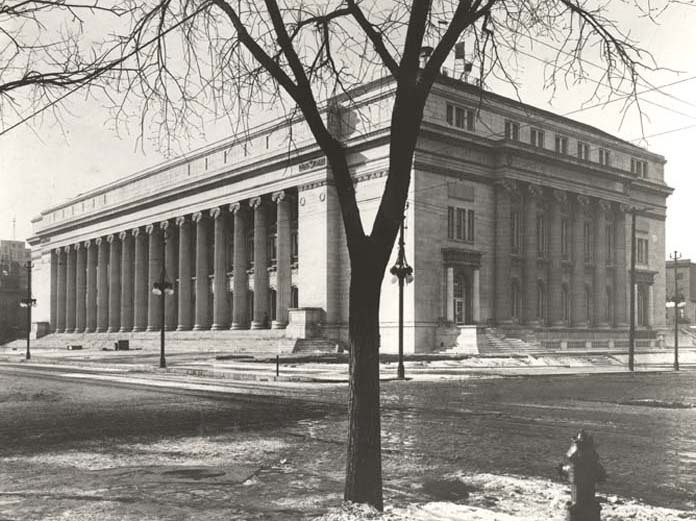
Current United States federal appellate court
| Field | Value |
|---|---|
| court_type | circuit |
| court_name | United States Court of Appeals for the Tenth Circuit |
| abbreviation | 10th Cir. |
| seal | US-CourtOfAppeals-10thCircuit-Seal.png |
| seal_size | 150 |
| map_image_name | File:10th Circuit map.svg |
| courthouse | Byron White U.S. Courthouse |
| location | Denver, Colorado |
| appeals_from | District of Colorado |
| appeals_from1 | District of Kansas |
| appeals_from2 | District of New Mexico |
| appeals_from3 | Eastern District of Oklahoma |
| appeals_from4 | Northern District of Oklahoma |
| appeals_from5 | Western District of Oklahoma |
| appeals_from6 | District of Utah |
| appeals_from7 | District of Wyoming |
| established | March 28, 1929 |
| judges_assigned | 12 |
| circuit_justice | Neil Gorsuch |
| chief | Jerome Holmes |
| official_site |
The United States Court of Appeals for the Tenth Circuit (in case citations, 10th Cir.) is a federal court with appellate jurisdiction over the district courts in the following districts:
- District of Colorado
- District of Kansas
- District of New Mexico
- Eastern District of Oklahoma
- Northern District of Oklahoma
- Western District of Oklahoma
- District of Utah
- District of Wyoming
These districts were part of the Eighth Circuit until 1929. The court is composed of nineteen active judges and is based at the Byron White U.S. Courthouse in Denver, Colorado. It is one of thirteen United States courts of appeals and has jurisdiction over 560,625 square miles, or roughly one seventh of the country's land mass.
History
Congress created a new judicial circuit in 1929 to accommodate the increased caseload in the federal courts. Between 1866 and 1912, twelve new states had entered the Union and been incorporated into the Eighth and Ninth Circuits. The Eighth Circuit encompassed 13 states and had become the largest in the nation.
Chief Justice William Howard Taft suggested the reorganization of the Eighth Circuit Court in response to widespread opposition in 1928 to a proposal to reorganize the nation's entire circuit structure. The original plan had sprung from an American Bar Association committee in 1925 and would have changed the composition of all but two circuits.
The House of Representatives considered two proposals to divide the existing Eighth Circuit. A bill by Representative Walter Newton would separate the circuit's eastern and western states. An alternate proposal divided the northern from the southern states. With the judges and bar of the existing Eighth Circuit for Newton's bill and little opposition to dividing the circuit, lawmakers focused on providing for more judgeships and meeting places of the circuit courts of appeals in their deliberations.
In 1929, Congress passed a law that placed the federal U.S. district courts in Minnesota, Iowa, North Dakota, South Dakota, Nebraska, Missouri, and Arkansas in the Eighth Circuit and created a Tenth Circuit that included Wyoming, Colorado, Utah, New Mexico, Kansas, and Oklahoma. Three additional judgeships were authorized and the sitting circuit judges were reassigned according to their residence. The Tenth Circuit was assigned a total of four judgeships.
Current composition of the court
:
List of former judges
Chief judges
Succession of seats
Notes
tags--
References
- {{cite web
|access-date = June 16, 2005
|archive-url = https://web.archive.org/web/20051021220038/https://lawclerks.ao.uscourts.gov/web/jobSearch
|archive-date = October 21, 2005
|url-status = dead
- primary but incomplete source for the duty stations
- {{cite web
| access-date = July 4, 2005 |archive-url = https://web.archive.org/web/20051111193332/http://www.utexas.edu/law/depts/career/downloads/judicial_listing.html |archive-date = November 11, 2005}}
- secondary source for the duty stations
- data is current to 2002
- {{cite web
| access-date = June 16, 2005 |archive-url = https://web.archive.org/web/20050101190951/http://www.fjc.gov/history/home.nsf/usca_10_frm?OpenFrameSet |archive-date = January 1, 2005}}
- source for the state, lifetime, term of active judgeship, term of chief judgeship, term of senior judgeship, appointer, termination reason, and seat information
References
- Elizabeth Aguilera. (20 November 2006). "10th Circuit judge's oath a family affair". [[The Denver Post]].
- Establishment of the Tenth Judicial Circuit: "An Act To amend sections 116, 118, 126 of the Judicial Code, as amended, to divide the eighth judicial circuit of the United States, and to create a tenth judicial circuit." Federal Judiciary History. [http://www.fjc.gov/history/home.nsf/page/16a_bdy FJC.gov]. Retrieved September 24, 2009.
- "Tenth Circuit Act of 1929". Official website of the Federal Judicial Center.
- Prior to January 8, 1996, Judge Porfilio was named John Porfilio Moore.
- Lewis was appointed to the bench of the [[United States Court of Appeals for the Eighth Circuit]] in 1921 by [[Warren G. Harding]]. 45 Stat. 1346 reassigned his seat to the U.S. Court of Appeals for the Tenth Circuit.
- Cotteral was appointed to the bench of the [[United States Court of Appeals for the Eighth Circuit]] in 1928 by [[Calvin Coolidge]]. 45 Stat. 1346 reassigned his seat to the U.S. Court of Appeals for the Tenth Circuit.
This article was imported from Wikipedia and is available under the Creative Commons Attribution-ShareAlike 4.0 License. Content has been adapted to SurfDoc format. Original contributors can be found on the article history page.
Ask Mako anything about United States Court of Appeals for the Tenth Circuit — get instant answers, deeper analysis, and related topics.
Research with MakoFree with your Surf account
Create a free account to save articles, ask Mako questions, and organize your research.
Sign up freeThis content may have been generated or modified by AI. CloudSurf Software LLC is not responsible for the accuracy, completeness, or reliability of AI-generated content. Always verify important information from primary sources.
Report