From Surf Wiki (app.surf) — the open knowledge base
Unit of length
Reference value of length

Reference value of length
A unit of length is any arbitrarily chosen and accepted reference standard for measurement of length. The most common units in modern use are the metric units, used in every country globally. In the United States the U.S. customary units are also in use. British Imperial units are still used for some purposes in the United Kingdom and some other countries. The metric system is sub-divided into SI and non-SI units.
History
Metric system
Main article: Metric system
SI
Main article: International System of Units
The base unit in the International System of Units (SI) is the metre, defined as "the length of the path travelled by light in vacuum during a time interval of seconds." It is approximately equal to . Other SI units are derived from the metre by adding prefixes, as in millimetre or kilometre, thus producing systematic decimal multiples and submultiples of the base unit that span many orders of magnitude. For example, a [kilometre]] is .
Non-SI
In the centimeter–gram–second system of units, the basic unit of length is the centimeter, or of a meter. Other non-SI units are derived from decimal multiples of the meter.
| Name | Symbol | SI value |
|---|---|---|
| fermi | fm | 1 femtometer |
| ångström | Å | 100 picometers |
| micron | μm | 1 micrometer |
| Norwegian/Swedish mil or myriameter | 10,000 meters | |
| x unit | xu | 0.1 picometer |
Imperial/U.S.
Main article: Imperial units, United States customary units, English units of measurement#Length
The basic unit of length in the imperial and U.S. customary systems is the yard, defined as exactly by international treaty in 1959.
Common imperial units and U.S. customary units of length include:
- thou or mil ( of an inch)
- inch ()
- foot (12 inches, 0.3048 m)
- yard (3 feet, 0.9144 m)
- (terrestrial) mile (5280 feet, or 1760 yards 1609.344 m)
- (land) league 3 mile
Marine
In addition, the following are used by sailors:
- fathom (for depth; only in non-metric countries) (2 yards = 1.8288 m)
- nautical mile (one minute of arc of latitude = )
Aviation
Aviators use feet for altitude worldwide (except in Russia and China) and nautical miles for distance.
Surveying
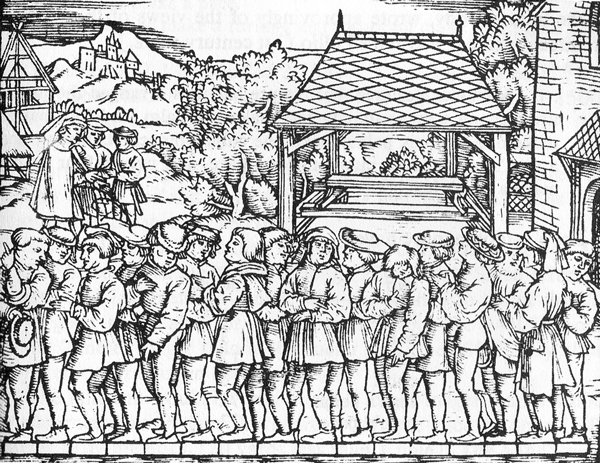
Surveyors in the United States continue to use:
- chain (22 yards, or )
- rod (also called pole or perch) (quarter of a chain, 5 yards, or )
Australian building trades
The Australian building trades adopted the metric system in 1966 and the units used for measurement of length are meters (m) and millimeters (mm). Centimeters (cm) are avoided as they cause confusion when reading plans. For example, the length two and a half meters is usually recorded as 2500 mm or 2.5 m; it would be considered non-standard to record this length as 250 cm.
Surveyor's trade
American surveyors use a decimal-based system of measurement devised by Edmund Gunter in 1620. The base unit is Gunter's chain of 66 ft which is subdivided into 4 rods, each of 16.5 ft or 100 links of 0.66 feet. A link is abbreviated "lk", and links "lks", in old deeds and land surveys done for the government.
Science
Astronomy
Main article: Astronomical system of units
Astronomical measure uses:
- Earth radius ≈ 6,371 km
- Lunar distance LD ≈ . Average distance between the center of Earth and the center of the Moon.
- astronomical unit au. Defined as .{{cite journal | access-date = 14 Sep 2012 | url-access = subscription
- light-year ly ≈ . The distance that light travels in a vacuum in one Julian year.
- parsec pc ≈ or about
- Hubble length 14.4 billion light-years or 4.55 gigaparsecs
Physics
In atomic physics, sub-atomic physics, and cosmology, the preferred unit of length is often related to a chosen fundamental physical constant, or combination thereof. This is often a characteristic radius or wavelength of a particle. Some common natural units of length are included in this table:
| Atomic property | Symbol | Length, in meters | Reference |
|---|---|---|---|
| The classical electron radius | *r*e | ||
| The Compton wavelength of the electron | *λ*C | ||
| The reduced Compton wavelength of the electron | C | ||
| The Compton wavelength (or reduced Compton wavelength) of any fundamental particle | x | ||
| The Bohr radius of the hydrogen atom (Atomic unit of length) | *a*0 | ||
| The reduced wavelength of hydrogen radiation | 1 / R∞ | ||
| The Planck length | 𝓁P | ||
| Stoney unit of length | *l*S | ||
| Quantum chromodynamics (QCD) unit of length | *l*QCD | ||
| Natural units based on the electronvolt | 1 eV−1 |
Archaic
Archaic units of distance include:
- cana
- cubit
- rope
- league
- li (China)
- pace (the "double pace" of about 5 feet used in Ancient Rome)
- verst (Russia)
Informal
In everyday conversation, and in informal literature, it is common to see lengths measured in units of objects of which everyone knows the approximate width. Common examples are:
- Double-decker bus (9.5–11 meters in length)
- American football field (100 yards in length)
- Thickness of a human hair (around 80 micrometers)
Other
Horse racing and other equestrian activities keep alive:
- furlong = 1/8 mi
- horse length ≈ 8 ft
References
References
- Cardarelli, François. (2003). "Encyclopaedia of Scientific Units, Weights, and Measures: Their SI Equivalences and Origins". Springer.
- Hinkelman, Edward G.. (2005). "Dictionary Of International Trade: Handbook Of The Global Trade Community". World Trade Press.
- Judson, Lewis Van Hagen. (1960). "Units of Weight and Measure (United States Customary and Metric): Definitions and Tables of Equivalents, Issue,233". U.S. Department of Commerce, National Bureau of Standards.
- "17th General Conference on Weights and Measures (1983), Resolution 1.".
- Donald Fenna. (2002). "A dictionary of weights, measures, and units". Oxford University Press.
- {{harvnb. Cardarelli. 2003
- Wilks, Kevin Joseph.. (1992). "Metrication in Australia : a review of the effectiveness of policies and procedures in Australia's conversion to the metric system". Australian Govt. Pub. Service.
- "Metrication in Australia".
- Moritz, H.. (March 2000). "Geodetic Reference System 1980". Journal of Geodesy.
- (January 2009). "The Apache Point Observatory Lunar Laser-ranging Operation (APOLLO): Two Years of Millimeter-Precision Measurements of the Earth-Moon Range". Astronomical Society of the Pacific.
- "The IAU and astronomical units". International Astronomical Union.
- (August 2000). "Recent advances in metrology and fundamental constants". IOS Press, 2001. Proceedings of the International School of Physics "Enrico Fermi".
- "Compton wavelength over 2 pi". NIST.
- "Planck length". [[NIST]].
This article was imported from Wikipedia and is available under the Creative Commons Attribution-ShareAlike 4.0 License. Content has been adapted to SurfDoc format. Original contributors can be found on the article history page.
Ask Mako anything about Unit of length — get instant answers, deeper analysis, and related topics.
Research with MakoFree with your Surf account
Create a free account to save articles, ask Mako questions, and organize your research.
Sign up freeThis content may have been generated or modified by AI. CloudSurf Software LLC is not responsible for the accuracy, completeness, or reliability of AI-generated content. Always verify important information from primary sources.
Report