From Surf Wiki (app.surf) — the open knowledge base
Ullrich congenital muscular dystrophy
| Field | Value |
|---|---|
| name | Ullrich congenital muscular dystrophy |
| synonyms | Scleroatonic muscular dystrophy |
| image | Autosomal recessive - en.svg |
| caption | Autosomal recessive pattern is the inheritance manner of this condition |
| symptoms | Muscle weakness |
| types | UCMD1, UCMD2 |
| causes | Mutations in the COL6A1, COL6A2, COL6A3, and COL12A1 gene |
| diagnosis | Physical exam, Medical history |
| medication | Physical therapy, Surgery(scoliosis) |
Ullrich congenital muscular dystrophy (UCMD) is a form of congenital muscular dystrophy. There are two forms: UCMD1 and UCMD2.
UCMD1 is associated with variants of type VI collagen, while UCMD2 is associated with variants of type XII collagen.
UCMD is commonly associated with contractures, joint laxity, muscle weakness, and respiratory problems, though cardiac issues are not associated with this type of CMD. It is named after Otto Ullrich, who is also known for the Ullrich-Turner syndrome.
Signs and symptoms
The presentation of Ullrich congenital muscular dystrophy in an affected individual is as follows:
- Muscle weakness
- Difficulty walking (ambulation is typically lost by age 5–15 years)
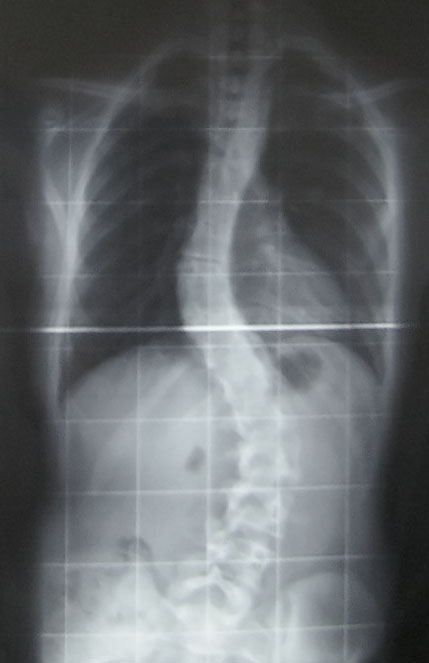
- Contractures Characteristically, bilateral contractures of the proximal joints of the upper extremities (shoulder and elbows) and proximal joints of the lower extremities (hips and knees). Spine contractures in the form of progressive scoliosis occurs and occasionally contracture of neck musculature also known as torticollis.
- Joint looseness Contractures can be associated with distal joint laxity of the upper extremities (wrists and fingers) and of the lower extremities (ankle and toes).
- Fatty infiltration of muscle
Genetics
In terms of the genetics of UCMD1, there are mutations in the genes COL6A1, COL6A2, and COL6A3. This sub-type of muscular dystrophy is both autosomal recessive and autosomal dominant in nature.
COL6A1 plays an important part in maintaining the human body's integrity of various tissues. Alpha 1 subunit of type VI collagen is the encoded protein.
In terms of the genetics of UCMD2, there are mutations in the gene COL12A1, and is autosomal recessive.
Diagnosis
In terms of the diagnosis of Ullrich congenital muscular dystrophy upon inspection follicular hyperkeratosis, may be a dermatological indicator, additionally also serum creatine kinase may be mildly above normal. Other exams/methods to ascertain if the individual has Ullrich congenital muscular dystrophy are:
- MRI
- Biopsy muscle
- Genetic testing
Differential diagnosis
This includes
- Autosomal recessive myosclerosis
- Bethlem myopathy
- Ehlers–Danlos syndrome
- Emery–Dreifuss muscular dystrophy
- Limb-girdle muscular dystrophy
- RYR1-associated multiminicore disease
Treatment
Treatment for Ullrich congenital muscular dystrophy can consist of physical therapy and regular stretching to prevent and reduce contractures. Respiratory support may be needed at some point by the affected individual.
Though cardiac complications are not a concern in this type of CMD, in regards to respiratory issues ventilation via a tracheostomy is a possibility in some cases.
Prognosis
The prognosis of this sub-type of MD indicates that the affected individual may eventually have feeding difficulties. Surgery, at some point, might be an option for scoliosis.
Scoliosis, which is a sideways curve of the persons vertebrate, is determined by a variety of factors, including the degree (mild or severe), in which case if possible a brace might be used by the individual.
Research

In terms of possible research for Ullrich congenital muscular dystrophy one source indicates that cyclosporine A might be of benefit to individuals with this CMD type.
According to a review by Bernardi, et al., cyclosporin A (CsA) used to treat collagen VI muscular dystrophies demonstrates a normalization of mitochondrial reaction to rotenone.
References
References
- "Phenotypic Series - PS254090 – Ullrich congenital muscular dystrophy".
- "Ullrich congenital muscular dystrophy - Conditions - GTR - NCBI".
- (January 31, 1993). "GeneReviews®". University of Washington, Seattle.
- Ullrich, O.. (December 1930). "Kongenitale, atonisch-sklerotische Muskeldystrophie, ein weiterer Typus der heredodegenerativen Erkrankungen des neuromuskulären Systems". Zeitschrift für die gesamte Neurologie und Psychiatrie.
- Reference, Genetics Home. "collagen VI-related myopathy".
- Bönnemann, Carsten G.. (2011). "Handbook of Clinical Neurology". Elsevier.
- Bönnemann, Carsten G.. (2011-06-21). "The collagen VI-related myopathies: muscle meets its matrix". Nature Reviews. Neurology.
- (31 January 2024). "Orthopedic manifestations of congenital muscular dystrophy subtypes in children: Emerging signatures need consolidation: a scoping review". Journal of Musculoskeletal Surgery and Research.
- "Orphanet: Congenital muscular dystrophy, Ullrich type".
- "COL6A1 collagen type VI alpha 1 [Homo sapiens (human)] - Gene - NCBI".
- (2014). "Progress in Heritable Soft Connective Tissue Diseases".
- (September 2005). "Ullrich congenital muscular dystrophy and bethlem myopathy: clinical and genetic heterogeneity". Arquivos de Neuro-Psiquiatria.
- "Ullrich congenital muscular dystrophy {{!}} Disease {{!}} Treatment {{!}} Genetic and Rare Diseases Information Center (GARD) – an NCATS Program".
- Emad R Noor. (July 3, 2019). "Congenital Muscular Dystrophy Treatment & Management: Medical Care, Surgical Care, Consultations".
- "Scoliosis: MedlinePlus".
- "OMIM Entry - # 254090 - Ullrich Congenital Muscular Dystrophy; UCMD1".
- (May 2013). "Mitochondrial Dysfunction and Defective Autophagy in the Pathogenesis of Collagen VI Muscular Dystrophies". Cold Spring Harbor Perspectives in Biology.
This article was imported from Wikipedia and is available under the Creative Commons Attribution-ShareAlike 4.0 License. Content has been adapted to SurfDoc format. Original contributors can be found on the article history page.
Ask Mako anything about Ullrich congenital muscular dystrophy — get instant answers, deeper analysis, and related topics.
Research with MakoFree with your Surf account
Create a free account to save articles, ask Mako questions, and organize your research.
Sign up freeThis content may have been generated or modified by AI. CloudSurf Software LLC is not responsible for the accuracy, completeness, or reliability of AI-generated content. Always verify important information from primary sources.
Report