From Surf Wiki (app.surf) — the open knowledge base
Ukrainian nationalism
Nationalism in support of the collective identity of Ukraine

Nationalism in support of the collective identity of Ukraine

Ukrainian nationalism (, ) is the promotion of the unity of Ukrainians as a people and the promotion of the identity of Ukraine as a nation state. The origins of modern Ukrainian nationalism emerge during the Cossack uprising against the Polish–Lithuanian Commonwealth led by Bohdan Khmelnytsky in the mid-17th century. Ukrainian nationalism draws upon a single national identity of culture, ethnicity, geographic location, language, politics (or the government), religion, traditions and belief in a shared singular history.
History
Zaporozhian Cossacks
The Cossacks played a strong role in solidifying Ukrainian identity during the Polish–Lithuanian Commonwealth. The Zaporozhian Cossacks lived on the Pontic–Caspian steppe below the Dnieper Rapids (Ukrainian: za porohamy), also known as the Wild Fields. They have played an important role in European geopolitics, participating in a series of conflicts and alliances with the Polish–Lithuanian Commonwealth, Russia, and the Ottoman Empire.
The Cossacks emerged as protectors against Tartar raids but were given greater rights as their influence grew. Cossacks revolted as the Polish Kings tried to enforce Catholicism and Polish language on the people of Ukraine. Precursors to the Ukrainian nation state identity emerged as Bohdan Khmelnytsky (c. 1595–1657), commanded the Zaporozhian Cossacks and led the Khmelnytsky Uprising against Polish rule in the mid-17th century. Khmelnytsky introduced a prop-government based on a form of democracy which had been practised by Cossacks since the 15th century.
After a conflict between Ottoman-Polish and Polish-Muscovite Principalities, the official Cossack register decreased. This, together with intensified socioeconomic and national-religious oppression of the other classes in Ukrainian society, led to a number of Cossack uprisings in the 1630s. These eventually culminated in the Khmelnytsky Uprising, led by the hetman of the Zaporizhian Sich, Bohdan Khmelnytsky. File:Січ з висоти польоту.jpg|Reconstruction of the Khortytsia sich File:Zaporozhian Sich rada.jpg|Zaporozhian Sich rada File:Cossack army in 1648.PNG|Forces of Bohdan Khmelnytskyi File:Bohdan Khmelnytsky.jpg|Hetman Bohdan Khmelnytskyi
Cossack Hetmanate
As a result of the mid-17th century Khmelnytsky Uprising, the Zaporozhian Cossacks briefly established an independent state, which later became the autonomous Cossack Hetmanate (1649–1764). It was placed under the suzerainty of the Russian Tsar from 1667, but was ruled by local hetmans for a century. The principal political problem of the hetmans who followed the Pereyeslav Agreement was defending the autonomy of the Hetmanate from Russian/Muscovite centralism. The hetmans Ivan Vyhovsky, Petro Doroshenko and Ivan Mazepa attempted to resolve this by separating Ukraine from Russia. File:Ivan Vyhovsky (Portrait, color, unknown author).jpg|Hetman Ivan Vyhovskyi (r. 1657-59) File:Petro Doroshenko 19.jpg|Hetman Petro Doroshenko (r. 1665–72) File:Portret Mazepa.jpg|Hetman Ivan Mazepa (r. 1687-1708) These conflicts created the conditions for Ukrainian nationalism as Bohdan Khmelnytsky spoke of the liberation of the "entire Ruthenian people". Following the uprisings and establishment of the Hetmanate state, Hetman Ivan Mazepa (1639–1709) focused on the restoration of Ukrainian culture and history during the early 18th century. Public works included the Saint Sophia Cathedral in Kyiv, and the elevation the Kyiv Mohyla Collegium to the status of Kyiv Mohyla Academy in 1694.
During the reign of Catherine II of Russia, the Cossack Hetmanate's autonomy was progressively destroyed. After several earlier attempts, the office of hetman was finally abolished by the Russian government in 1764, and his functions were assumed by the Little Russian Collegium, thus fully incorporating the Hetmanate into the Russian Empire.
On May 7, 1775, Empress Catherine II issued a direct order that the Zaporozhian Sich was to be destroyed. On June 5, 1775, Russian artillery and infantry surrounded the Sich and razed it to the ground. The Russian troops disarmed the Cossacks, and the treasury archives were confiscated. The Koshovyi Otaman, Petro Kalnyshevsky, was arrested and incarcerated in exile at Solovetsky Monastery. This marked the end of the Zaporozhian Cossacks. File:Vasily Kapnist - engr by A Osipov after V Borovikovsky.jpg|Russian language poet Vasyl Kapnist File:M. Miklashevskiy.jpg|General Mykhailo Myklashevskyi File:Полетика Григорий Андреевич.png|Civic leader and writer Hryhorii Poletyka File:Melhisedek Yavorskiy.jpg|Archimandrite Znachko-Yavorskyi File:Історія Русів.jpg|"Istoria Rusov" (history of the Rus' people, or Mala Rus')
Russian and Habsburg Empires
An intense period of Russification began for the areas of the Hetmanate. After 1785 the Romanov dynasty made a conscious effort to assimilate the Ruthenian and Cossack elites by granting them noble status within the Russian Empire. This led to a decline of the Ukrainian language among ruling elite. Ukrainian language and culture was preserved through folk stories and songs. File:PGRS 2 051 Kostomarov - crop.jpg|Founder and historian Mykola Kostomarov File:Taras Shevchenko selfportrait oil 1840-2.jpg|Ukrainian national poet Taras Shevchenko File:Panteleimon Kulish.jpg|Panteleimon Kulish File:Белозерский Василий.JPG|Vasyl Bilozerskyi File:Hulak mykola.jpg|Mykola Hulak File:Dmytro Pylchykov.jpg|Dmytro Pylchykov After the three partitions of the Polish–Lithuanian Commonwealth, the regions of Galicia (Halychyna) and Bukovina became part of the Habsburg Empire. Ukrainians living within the Austrian state did not face the same cultural repression and were influenced by the nationalism that spread after the French Revolution and the American Revolution.
After the Revolutions of 1848 in the Austrian Empire, the Ruthenian Council tried to establish a Ukrainian nation but this effort was thwarted. National identities developed among Belarusians, Ukrainians, and Carpatho-Rusyns. File:Перше засідання Головної руської ради у Львові.jpg|First session of the Supreme Ruthenian council in Lemberg, Austrian Empire File:Собор руських (українських) вчених.jpg|Assembly of the Ruthenian scholars File:Mykhaylo Verbytsky.jpg|Mykhailo Verbytskyi File:Головацький Яків.jpg|Yakiv Holovatskyi File:Vahilevych ivan.jpg|Ivan Vahylevych The Ukrainophilism movement developed in the Russian Empire from the 1860s–1880s, named as such after Ukrainian activists who self-identified as Ukrainophiles (ukrainofily or ukrainoliubtsi). File:Рылеев.jpg|Russian poet and one of the leaders of the Decembrist revolt (1825) Kondratii Ryleiev (executed in 1826) File:Kostomarov 7.jpg|Russian nobleman and historian Nikolai Kostomarov, founder of the Brotherhood of Sts Cyril and Methodius File:Антонович В.jpg|Polish-born historian Wolodzimier Antonowicz (dressed as a Ukrainian peasant) ukrainized his name in 1861 to Volodymyr Antonovych File:Хлопомани2.jpg|V. Antonovych and Borys Poznanskyi among a group of chlopomans File:Хлопомани1.jpg|chlopomans Onufrii Khoinovsky, Vikentii Vasylevsky, Vladyslav Vynarsky, Tadeusz Rylski, V. Antonovych File:Хлопоман серед однокашників.jpg|chlopomans among the students of Kiev university, including Jozef and Tadeusz Rylski The term acquired a negative connotation in the 1890s and 1900s when it began to be used by the next generation of nationalist thinkers, such as Borys Hrinchenko and Mykola Mikhnovsky, to describe Ukrainians whose national consciousness had not developed past an ethnographic appreciation. File:Грінченко Борис2.jpg|Borys Hrinchenko File:Mihnovsky.jpg|Mykola Mikhnovskyi Clandestine societies called hromadas began to be set up in the late 1850s by the Ukrainian intelligentsia in Tsarist Russia. They had the aim of promoting national consciousness through self-education and exhibited a shared emphasis on promoting the Ukrainian language and reading Ukrainian literature, especially the works of Taras Shevchenko. Because of police persecution and the transience of their members, most hromadas only existed for a few years. File:Стара громада 1874.jpg|The "old Hromada" of Kiev in 1874 File:Чернігівська громада.jpg|Hromada of Chernigov in 1898 File:Ukrainian in Russian Empire 1897.png|Ukrainian language in the Russian Empire according to the census of 1897 West Ukrainian populism emerged in the 1860s among the younger generation of the Ukrainian intelligentia (commonly known as narodovtsi or populists) in Austrian Galicia as a reaction to the increasingly disillusioned and clerical older generation that had begun to orient itself towards Russophilism. Contacts with Ukrainophiles in the Russian Empire strongly influenced the emergence of the movement, whereafter they organised hromadas.
The movement later lost its socially radical elements and became more clerically conservative as its proponents aged and began to cooperate with clerics who had broken with the Russophiles. In response, a new radical populist movement emerged based on the thought of Mykhailo Drahomanov that included Ivan Franko and which founded the Ukrainian Radical Party in 1890. File:Mykhailo Petrovych Drahomanov, 1870s.jpg|Mykhailo Drahomanov File:Іван Якович Франко.jpg|Ivan Franko File:Prosvitapublicationcover.jpg|Cover of a publication by the Prosvita society in Lemberg, Austro-Hungary
World War I

With the collapse of the Russian Empire, a political entity which encompassed political, community, cultural, and professional organizations was established in Kyiv from the initiative from the Association of the Ukrainian Progressionists (TUP). This entity was called the Tsentralna Rada (Central Council) and was headed by the historian Mykhailo Hrushevskyi. On 22 January 1918, the Tsentralna Rada declared Ukraine an independent country. However, this government did not survive very long because of pressures not only from Denikin's Russian White Guard but also the Red Army, German, and Entente intervention, and local anarchists such as Nestor Makhno and Green Army of Otaman Zeleny. File:Ukrainian pro-Tsentralna Rada demonstration in Sophia Square, Kyiv, 1917-03-17, 01.jpg|Ukrainian pro-Central Rada demonstration on Sophia Square, Kyiv, 1917 File:Pedagogical Museum in Kyiv.jpg|Seat of the Central Rada of the Ukrainian People's Republic in Kyiv File:Hrushevskyi Mykhailo XX.jpg|Mykhailo Hrushevskyi File:Vynnychenko.jpg|Volodymyr Vynnychenko File:Symon Petlura. Photo 1919.jpg|Symon Petliura
Interwar period in Soviet Ukraine
As Bolshevik rule took hold in Ukraine, the early Soviet government had its own reasons to encourage the national movements of the former Russian Empire. Until the early 1930s, Ukrainian culture enjoyed a widespread revival due to Bolshevik concessions known as the policy of Korenization ("indigenization"). In these years an impressive Ukrainization program was implemented throughout the republic. In such conditions, the Ukrainian national idea initially continued to develop and even spread to a large territory with traditionally mixed population in the east and south that became part of the Ukrainian Soviet Socialist Republic. File:Shumskyi na trybuni.JPG|Oleksandr Shumskyi File:Скрипник Микола.jpg|Mykola Skrypnyk File:Ukrainian SSR 1938.jpg|Territory of the Ukrainian SSR before 1939 At the same time, despite the ongoing Soviet-wide anti-religious campaign, the Ukrainian national Orthodox Church was created, the Ukrainian Autocephalous Orthodox Church. The church was initially seen by the Bolshevik government as a tool in their goal to suppress the Russian Orthodox Church, always viewed with great suspicion by the regime for its being the cornerstone of the defunct Russian Empire and the initially strong opposition it took towards the regime change. Therefore, the government tolerated the new Ukrainian national church for some time and the UAOC gained a wide following among the Ukrainian peasantry.
These events greatly raised the national consciousness of the Ukrainians, and brought about the development of a new generation of Ukrainian cultural and political elite. This in turn raised the concerns of Soviet dictator Joseph Stalin, who saw danger in the Ukrainians' loyalty towards their nation competing with their loyalty to the Soviet State, and in the early 1930s "Ukrainian bourgeois nationalism" was declared to be the primary problem in Ukraine. The Ukrainization policies were abruptly and bloodily reversed, most of the Ukrainian cultural and political elite was arrested and executed, and the nation was decimated with the famine called the Holodomor. File:MykolaHvylovyukraine.jpg|Mykola Khvyliovyi File:Les Kurbas OGPU-NKVD.jpg|Les Kurbas File:Kulish m.jpg|Mykola Kulish File:Яловий Михайло Омелянович.jpg|Mykhailo Yalovyi File:ВАПЛІТЕ.jpg|Members of the Free Academy of Proletarian Literature (VAPLITE) File:Ланка1924.jpg|Members of the literary group Lanka in 1924
Interwar period in the West
After World War I ended in 1918, the newly created Second Polish Republic (1918–1939) and the Soviet Union (1922–1991) each annexed a part of the territory of present-day Ukraine. The governments in Warsaw and in Moscow both continued to view Ukrainian nationalism as a threat. In March 1926, Vlas Chubar (Chairman of the Council of People's Commissars of Soviet Ukraine), gave a speech in Kharkiv and later repeated it in Moscow, in which he warned of the danger that Symon Petliura, the exiled former President of the Ukrainian People's Republic, represented to the Soviet Government. As a result of this speech the command was allegedly given to assassinate Petliura on French soil.
On 25 May 1926, at 14:12, by the Gibert bookstore, Petliura was walking on Rue Racine near Boulevard Saint-Michel in the Latin Quarter in Paris and was approached by Sholom Schwartzbard. Schwartzbard asked in Ukrainian: "Are you Mr. Petliura?". Petliura did not answer but raised his walking cane. As Schwartzbard claimed in court, he pulled out a gun and shot him five times.
News of Petliura's assassination triggered massive uprisings in Soviet-ruled Ukraine, particularly in Boromlia, Zhehailivtsi, (Sumy province), Velyka Rublivka, Myloradov (Poltava province), Hnylsk, Bilsk, Kuzemyn and all along the Vorskla River from Okhtyrka to Poltava, Burynia, Nizhyn (Chernihiv province) and other cities. These revolts were brutally suppressed by the Soviet government. The blind kobzars Pavlo Hashchenko and Ivan Kuchuhura Kucherenko composed a duma (epic poem) in memory of Symon Petliura. Petliura is the only modern Ukrainian politician to have a duma created and sung in his memory. This duma became popular among the kobzars of left-bank Ukraine and was also sung by Stepan Pasiuha, Petro Drevchenko, Bohushchenko, and Chumak.
The core defense at the Schwartzbard trial, as presented by the noted French jurist Henry Torrès, was that Petliura's assassin was avenging the deaths of his parents and the other Jewish victims of pogroms committed by Petliura's soldiers, whereas the prosecution (both criminal and civil) tried to show that Petliura was not responsible for the pogroms and that Schwartzbard was a Soviet spy. After a trial lasting eight days the jury acquitted Schwartzbard.
Under Polish rule, many Ukrainian schools were shut down in the 1920s, while the promise of national autonomy for Ukrainians was not fulfilled. Hołówko was killed while staying in a guest house owned by nuns of the Ukrainian Greek Catholic Church at Truskawiec on 29 August 1931. He was one of the victims of an assassination campaign waged by the OUN. His death, widely discussed in the Polish press, the international press, and even at a League of Nations session, became part of a vicious cycle involving the OUN's violence and sabotage and the Second Polish Republic's brutal repression of ethnic-Ukrainians.{{efn|"In the late 1920s and early 1930s, as a new Polish government sought reconciliation with its five million Ukrainian citizens, Ukrainian nationalists acted decisively to prevent any compromise settlement. Bandera was one of the main organizers of terror campaigns intended to prevent Ukrainians from accepting the Polish government by provoking Polish retaliation." In the early 1930s, OUN members carried out more than 60 successful or attempted assassinations, many of them targeted at Ukrainians who opposed the organization's policies (for example a respected educator Ivan Babij). File:Товариство «Просвіта» села Шоломиничі.jpg|Prosvita society meeting in Galicia, Second Polish Republic, 1935 File:Просвіта росоховатець.jpg|Stamp of the Prosvita society in Galicia In 1933, the OUN retaliated against the Soviet state for the Holodomor by assassinating Alexei Mailov, a Soviet consular official stationed in Polish-ruled Lviv. On 15 June 1934, Poland's Minister of the Interior, Bronisław Pieracki, was also assassinated by the faction led by Stepan Bandera within the Organization of Ukrainian Nationalists. Poland's Sanation government retaliated by creating, two days after the assassination, the Bereza Kartuska Prison. The prison's first detainees were the leadership of the Polish opposition National Radical Camp (the ONR), who were arrested on 6–7 July 1934. Many Ukrainian nationalists and Polish critics of the ruling party soon joined them there. Stepan Bandera and Mykola Lebed were arrested, tried, and sentenced to death for Pieracki's assassination. Their sentences were later commuted to life imprisonment.
On 23 May 1938, OUN leader Yevhen Konovalets was assassinated in a Rotterdam cafe. Konovalets was inside the cafe meeting with Pavel Sudoplatov, an NKVD mole who had infiltrated the OUN, and who gave Konovalets a box of chocolates with a bomb rigged to explode inside. Sudoplatov walked calmly away, waited until he heard the bomb explode, then walked calmly to the nearest train-station and left the city. Sudoplatov later alleged in his memoirs to have been personally ordered by Joseph Stalin to assassinate Konovalets as revenge for the 1933 assassination at the Soviet consulate in Lviv. Stalin also felt that Konovalets was a figure maintaining the unity of the OUN and that his death would cause the organization to become further factionalized, torn apart, and annihilated from within.
Due to Sudoplatov's sudden disappearance, the OUN immediately suspected him of murdering Konovalets. Therefore, a photograph of Sudoplatov and Konovalets together was distributed to every OUN unit. According to Sudoplatov, "In the 1940s, SMERSH ... captured two guerilla fighters in Western Ukraine, one of whom had this photo of me on him. When asked why he was carrying it, he replied, 'I have no idea why, but the order is if we find this man to liquidate him'." Just as Stalin had hoped, the OUN following Konovalets' murder split into two parts. The older, more moderate members supported Andriy Melnyk and the OUN-M (the Melnykites), while the younger and more radical members supported Stepan Bandera's OUN-B (the Banderites). File:Yevgen Konovalec.jpg|Yevhen Konovalets File:Andriy Melnyk 2.jpg|Andrii Melnyk, leader of the conservative faction of the OUN File:Organization of Ukrainian Nationalists-M.svg|Symbol of the OUN-M File:Stepan Bandera photo.jpg|Stepan Bandera, leader of the revolutionary faction of the OUN File:OUN-B-01.svg|Symbol of the OUN-B File:Dmytro Doncow.jpg|Dmytro Dontsov, founder of Ukrainian integral nationalism
World War II
With the outbreak of war between Nazi Germany and the Soviet Union in 1941, many nationalists in Ukraine thought that they would have an opportunity to create an independent country once again. An entire Ukrainian volunteer division of the Waffen SS had been created. Many of the fighters who had originally looked to the Nazis as liberators, quickly became disillusioned and formed the Ukrainian Insurgent Army (UPA) (), which waged military campaign against Germans and later Soviet forces as well against Polish civilians. The primary goal of OUN was "the rebirth, of setting everything in order, the defense and the expansion of the Independent Council of Ukrainian National State." The OUN also revived the sentiment that "Ukraine is for Ukrainians." In 1943, the UPA adopted a policy of massacring and expelling the Polish population. The ethnic cleansing operation against the Poles began on a large scale in Volhynia in late February, or early spring, of that year and lasted until the end of 1944. 11 July 1943 was one of the deadliest days of the massacres, with UPA units marching from village to village, killing Polish civilians. On that day, UPA units surrounded and attacked 99 Polish villages and settlements in the counties of Kowel, Horochów, and Włodzimierz Wołyński. On the following day, 50 additional villages were attacked. On 30 June 1941, the OUN, led by Stepan Bandera, declared an independent Ukrainian state. This was immediately acted upon by the Nazi army, and Bandera was arrested and imprisoned from 1941 to 1944. File:Ukrainian-nationalist-1941.jpg|Demonstration of Ukrainian nationalists in 1941 File:Taras Bulba-Borovets with his staff.jpg|Taras Bulba-Borovets with the staff of his Ukrainian National Revolutionary Army File:Стрільці УПА Коломийщини.jpg|Fighters of the Ukrainian Insurgent Army File:«За що борються українські повстанці?» Листівка УПА.jpg|UIA propaganda poster of the 1940s File:Roman Josypovyč Šuchevyč.jpg|Roman Shukhevych, commander of the UIA since 1942 File:Flag of the Ukrainian Insurgent Army.svg|Flag used by the OUN-B and the Ukrainian Insurgent Army during WWII There has been much debate as to the legitimacy of the UPA as a political group. The UPA maintains a prominent and symbolic role in Ukrainian history and the quest for Ukrainian independence. At the same time it was deemed an insurgent or terrorist group by Soviet historiography.
Ukrainian Canadian historian Serhiy Yekelchyk writes that during 1943 and 1944 an estimated 35,000 Polish civilians and an unknown number of Ukrainian civilians in the Volhynia and Chelm regions fell victim to mutual ethnic cleansing by the UPA and Polish insurgents. Niall Ferguson writes that around 80,000 Poles were murdered then by Ukrainian nationalists. In his book Europe at War 1939–1945: No Simple Victory, Norman Davies puts the number of Poles killed by Ukrainian nationalists between 200,000 and 500,000, while Timothy Snyder writes that the UPA killed "forty to sixty thousand Polish civilians in Volhynia in 1943."
1945–1953
In the post-World War II era, Stalin would still be the leader until his death in 1953. Early on in this era, the policy of Zhdanovschina was instituted, or the cultural-ideological purification of the Soviet Union. In the Ukrainian variant of this, any vestiges of nationalism were suppressed. Media that had been produced during the war to encourage Ukrainian patriotism, such as Ukraine in Flames, was denounced.
1953–1972
The Khrushchev Thaw started after Stalin's death. Under him, the first works of Samizdat appeared, and various people of Ukraine, whether it be ethnic Ukrainians, Crimean Tartars, and Jews, started publishing literature on both human rights and national/cultural rights issues. Under Petro Shelest, who became leader of the Ukrainian SSR from 1963 to 1972, there was a revival of Ukrainian culture particularly in the '60s, as some decision making was allowed for a time to moved back to Kyiv from the center (Moscow). The Shevchenko National Prize was created, with Oles Honchar as the first awardee. The Ukrainian Sixtiers would be an important new generator of intelligentsia that appeared during this time, and had similarities to the Beat Generation in the west in cultural impact on later groups.
There was also a resurgence of Ukrainian nationalist thought, associated with dissident writers such as Viacheslav Chornovil, Ivan Dziuba and Valentyn Moroz, which the authorities tried to stamp out through threats, arrests, and prison sentences. File:Костенко Л.jpg|Lina Kostenko File:Stamp of Ukraine s1421 (cropped).jpg|Vasyl Symonenko File:Viacheslav Chornovil.jpg|Viacheslav Chornovil File:Ivan Dziuba cropped.jpg|Ivan Dziuba File:EthnoCarpathians 22082017DolynaUA-26 Crop and fix.jpg|Vasyl Stus
1972–1985
Volodymyr Shcherbytsky took power over the Ukrainian SSR in 1972 until 1989. He was a member of the Politburo of the Communist Party of the Soviet Union, and a close friend of Leonid Brezhnev. As such, he was a very influential person in the Soviet Union, and led a very reactionary administration, aimed at centralizing power and suppressing dissent.
In 1975, the Helsinki Accords was passed, calling for a pan-European security structure. In 1976, Ukrainian Helsinki Group was formed to promote human rights, and this created a new nascent dissident movement.
1985–1990
Under Mikhail Gorbachev, a new era of Perestroika and Glasnost was instituted primarily to fix structural problems with the Soviet economy. In Ukraine, one year under Gorbachev, in April 1986, the disaster at Chornobyl occurred, and this incident did much to delegitimize the power of both the Communist Party and Volodymyr Shcherbytsky locally, after he ordered the children of the central committee and the Communist Party away from Kyiv to the Caucausus, while the city celebrated May Day. It also put Ukraine back on the world map, as the disaster was seen as an ecological problem not only locally, but potentially globally as well. The tragedy also started mobilizing the diaspora.
1991–2014
As opposed to the Soviet era, when nationality was understood in primarily ethnic terms where to be Ukrainian was something one would purely inherit, a gradual shift towards civic nationalism started in 1991 with the birth of the modern Ukrainian state. Ukraine chose to adopt pluralistic citizenship laws, which made everyone within its territorial borders a citizen, rejecting the model of Latvia and Estonia which adopted German-style ethnic citizenship laws which disenfranchised (self-identified) ethnic Russians. There has also been a gradual shift of self-identification of Russian-speaking Ukrainians away from a "Russian" self-identification. Even in the early 2000s, people from the Russian-speaking Odesa would often self-identify as "Russian" to foreigners and migrants, but not to Russians from the Russian Federation, indicating changes in identity.

In the first decade of the 21st century, voters from Western Ukraine and Central Ukraine tended to vote for pro-Western and pro-European general liberal national democrats, while pro-Russian parties got the vote in Eastern Ukraine and Southern Ukraine. From the 1998 Ukrainian parliamentary election until the 2012 Ukrainian parliamentary election, no nationalist party obtained seats in the Verkhovna Rada (Ukraine's parliament). In these elections, nationalist right-wing parties obtained less than 1% of the votes; in the 1998 parliamentary election, they obtained 3.26%.
The nationalist party Svoboda had an electoral breakthrough with the 2009 Ternopil Oblast local election, when they obtained 34.69% of the votes and 50 seats out of 120 in the Ternopil Oblast Council. This was the best result for a far-right party in Ukraine's history. In the previous 2006 Ternopil Oblast local election, the party had obtained 4.2% of the votes and 4 seats. In the simultaneous 2006 Ukrainian local elections for the Lviv Oblast Council, it had obtained 5.62% of the votes and 10 seats and 6.69% of the votes and 9 seats in the Lviv City Council. In 1991, Svoboda was founded as the Social-National Party of Ukraine. The party combined radical nationalism and alleged neo-Nazi features. Under Oleh Tyahnybok, it was renamed and rebranded in 2004 as the All-Ukrainian Association Svoboda. Political scientists Olexiy Haran and Alexander J. Motyl contend that Svoboda is radical rather than fascist and they also argue that it has more similarities with far-right movements such as the Tea Party movement than it has with either fascists or neo-Nazis. In 2005, Victor Yushchenko appointed Volodymyr Viatrovych head of the Ukrainian security service (SBU) archives. According to professor Per Anders Rudling, this not only allowed Viatrovych to sanitize ultra-nationalist history but also to officially promote its dissemination along with OUN(b) ideology, which is based on "ethnic purity" coupled with anti-Russian, anti-Polish, and antisemitic rhetoric. The extreme right-wing now capitalizes on Yushchenkoist propaganda initiatives. This includes Iuryi Mykhal'chyshyn, an ideologue who proudly confesses that he is a part of the fascist tradition. The autonomous nationalists focus on recruiting young people, participating in violent actions, and advocating "anti-bourgeoism, anti-capitalism, anti-globalism, anti-democratism, anti-liberalism, anti-bureaucratism, anti-dogmatism". Rulig suggested that Ukrainian President Viktor Yanukovych, sworn in on 25 February 2010, "indirectly aided Svoboda" by "granting Svoboda representatives disproportionate attention in the media".
In the 2010 Ukrainian local elections, Svoboda achieved notable success in Eastern Galicia. In the 2012 parliamentary election, Svoboda came in fourth with 10,44% (almost a fourteenfold of its votes compared with the 2007 Ukrainian parliamentary election) of the national votes and 38 out of 450 seats. Following the 2012 parliamentary election, Batkivshchyna and UDAR cooperated officially with Svoboda.
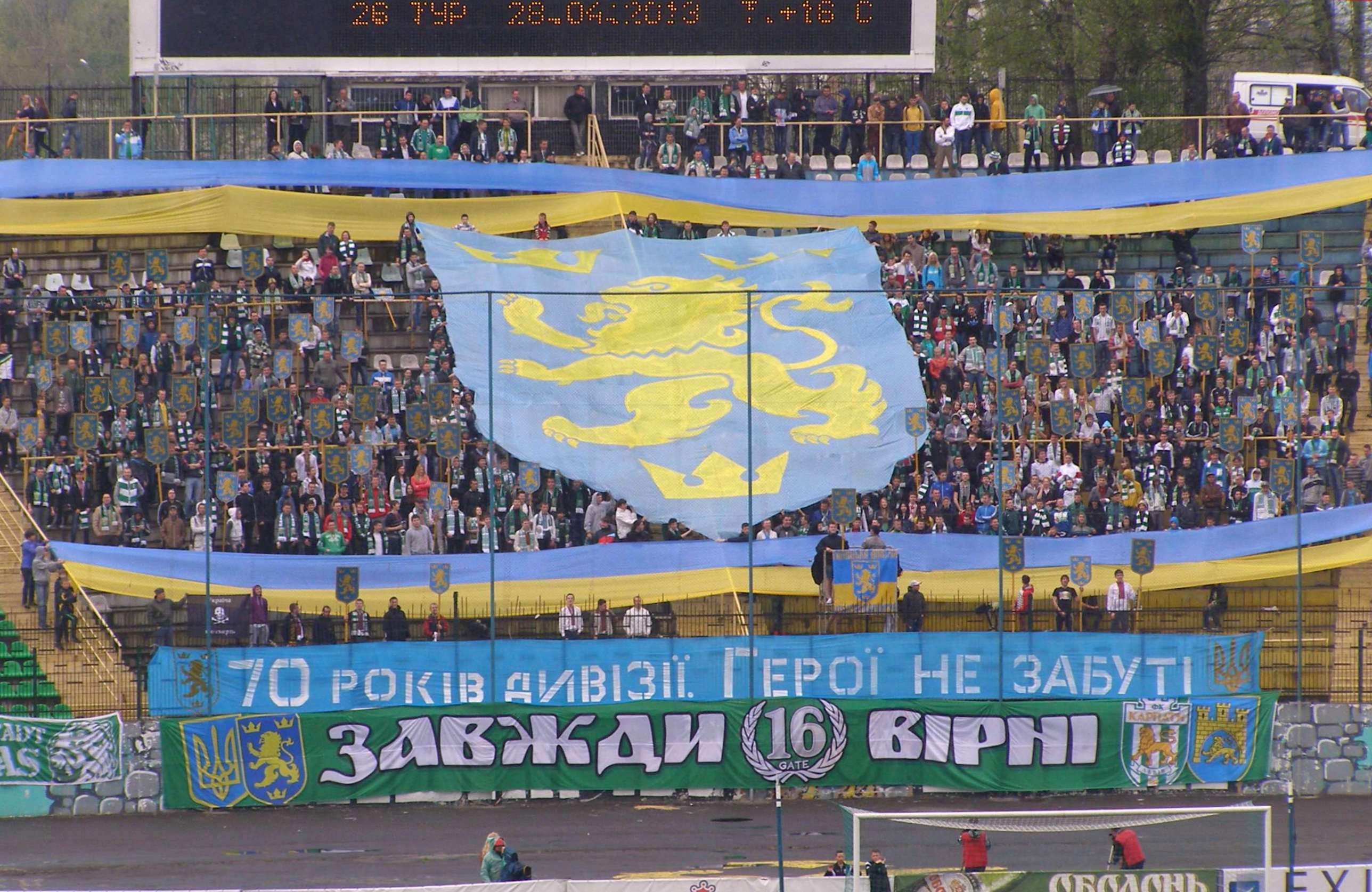

2014–2022
During the ongoing Russo-Ukrainian War, Russian media attempted to portray the Ukrainian party in the conflict as neo-Nazi, with Russian president Vladimir Putin claiming in early 2022 that Ukraine was an 'artificial country run by Nazis'. Scholars such as historians and political scientists generally regard such claims as unfounded. Dutch historian of Ukraine Marc Jansen stated in 2022: 'There are far-right, anti-Semitic parties in Ukraine, but they play no significant role in the national government.' Although certain neo-Nazi-like groups such as the Azov Battalion participated in Euromaidan (alongside many other groups), and some were incorporated into the Ukrainian military and deployed in Donbas, that didn't make the Zelenskyy government 'neo-Nazis', said Jansen, who pointed out that Volodymyr Zelenskyy (elected president in 2019) is Jewish and his family has suffered in the Holocaust, with several relatives being killed by the Nazis. The main Ukrainian organisations involved with a neo-Banderaite legacy are Svoboda, Right Sector, and Azov Battalion. Andriy Biletsky, the head of the ultra-nationalist and neo-Banderaite political groups Social-National Assembly and Patriots of Ukraine, was also the first commander of the Azov Battalion and the Azov Battalion is part of the Ukrainian National Guard fighting pro-Russian separatists in the War in Donbas. According to a report in The Daily Telegraph, some individual anonymous members of the battalion identified themselves as sympathetic to the Third Reich. In June 2015, Democratic Representative John Conyers and his Republican colleague Ted Yoho offered bipartisan amendments to block the U.S. military training of Ukraine's Azov Battalion.
After President Yanokovych's ouster in the February 2014 Ukrainian revolution, the interim Yatsenyuk Government placed four Svoboda members in leading positions; Oleksandr Sych as Vice Prime Minister of Ukraine, Ihor Tenyukh as Minister of Defense, lawyer Ihor Shvaika as Minister of Agrarian Policy and Food, and Andriy Mokhnyk as Minister of Ecology and Natural Resources of Ukraine. In a 5 March 2014 fact sheet, the U.S. State Department stated that "[f]ar-right wing ultranationalist groups, some of which were involved in open clashes with security forces during the Euromaidan protests, are not represented in the Ukrainian parliament."
In the 2014 Ukrainian presidential election and 2014 Ukrainian parliamentary election, Svoboda candidates failed to meet the electoral threshold to win. The party won six constituency seats in the 2014 parliamentary election and obtained 4.71% of national election list votes. In the 2014 presidential election, Svoboda leader Oleh Tyahnybok received 1.16% of the vote. Right Sector leader Dmytro Yarosh gained 0.7% of the votes in the 2014 presidential election, and was elected to parliament in the 2014 parliamentary election as a Right Sector candidate by winning a single-member district. Right Sector spokesperson Boryslav Bereza as an independent candidate also won a seat and district.
The Euromaidan, the annexation of Crimea by the Russian Federation and the War in Donbas have in the post-2014 years led to profound political, socio-economic and cultural-religious consequences for Ukrainian society. While it was a divided bilingual country between 1991 and 2014, the occupied parts became increasingly (pro-)Russian and the unoccupied parts more pro-European, pro-western and more monolingually Ukrainian. Unoccupied Ukraine developed into an increasingly united society, characterised to a large extent by its opposition to the government of Putin and to a lesser extent Russia, the Russian language and culture. In October 2018, there was also a schism between the Russian Orthodox Church and the Ecumenical Patriarchate of Constantinople when the latter granted autonomy to the Orthodox Church of Ukraine. According to historian Marc Jansen (2022): 'It is precisely because of the war in eastern Ukraine, which has been raging since 2014, that Ukraine has become a largely unified country. Putin has done more for Ukrainian nation-building than anyone else.' Other scholars also noted an acceleration of civic nationalism in a broad spectrum of Ukrainian society, such as political scientist Lowell Barrington of Marquette University, who said this type of nationalism bonds people through "feelings of solidarity, sympathy and obligation" rather than ethnicity. According to political scientist Oxana Shevel, author of the 2021 book From ‘the Ukraine’ to Ukraine, this was a result of aggression by Russia: 'In a paradoxical twist, Putin is basically unifying the Ukrainian nation.' This was also reflected in sociological data, despite Ukraine not having conducted a census since 2001.
The radical nationalists group С14, whose members openly expressed neo-Nazi views, gained notoriety in 2018 for being involved in violent attacks on Romany camps.
On 19 November 2018, Svoboda and fellow Ukrainian nationalist political organizations Organization of Ukrainian Nationalists, Congress of Ukrainian Nationalists, Right Sector, and C14 endorsed Ruslan Koshulynskyi's candidacy in the 2019 Ukrainian presidential election. In the election, Ruslan Koshulynskyi's and all united nationalist party received 1.6% of the votes. In the 2019 Ukrainian parliamentary election, a united party list with the nationalist right-wing parties Svoboda, Right Sector, Governmental Initiative of Yarosh, and National Corps completely failed elections with 2.15% of the votes and did not receive enough votes to clear the 5% election threshold, and thus lost all seats in Verkhovna Rada. Svoboda did win one constituency seat in the election. Boryslav Bereza and Dmytro Yarosh lost their parliamentary seats.
Volodymyr Zelenskyy won the 2019 presidential election in Ukraine. He ran for the Servant of the People party which has previously argued for "mild Ukrainization".
2022–present

During the Russian invasion of Ukraine, there has been a large increase in pro-Ukrainian position inside Ukraine. In other countries, the Ukrainian flag has been used to show support for the Ukrainian cause during the war. There was also a rapid shift in pro-Ukrainian attitudes in the eastern part of the country, including people vowing to use the Ukrainian language more. A study of survey data from 2019, 2021, and 2022 indicated that the eight-year war and major Russian invasion had strengthened pro-European and pro-democratic civic identity, rather than ethnolinguistic or ethnonational identity.
A derussification campaign swept through Ukraine following the February 2022 invasion. Among other renamings, in the central Ukrainian city Dnipro the Schmidt Street (the street was originally the Gymnasium Street but it was renamed to Otto Schmidt Street by Soviet authorities in 1934) was renamed to Stepan Bandera Street. Meanwhile several Ukrainian cities removed statues and busts of the 19th century Russian poet Alexander Pushkin.
Public school curriculum are no longer prescribing works by Russian authors, and publishing books written by Russian nationals was outlawed.{{cite web |author=Mansur Mirovalev|title=How Ukrainians 'de-Russify' themselves|url=https://www.aljazeera.com/news/2022/9/15/how-ukrainians-de-russify-themselves-2
Nationalist political parties
Current
- People's Movement of Ukraine (1990–present)
- Ukrainian National Assembly – Ukrainian People's Self-Defence (1990–present)
- Congress of Ukrainian Nationalists (1992–present)
- All-Ukrainian Union "Freedom" (1995–present)
- All-Ukrainian Union "Fatherland" (1999–present)
- Ukrainian People's Party (2002–present)
- Ukrainian Republican Party (2006–present)
- Radical Party of Oleh Liashko (2010–present)
- European Solidarity (2014–present)
- Right Sector (2013–present)
- People's Front (2014–present)
- National Corps (2016–present)
Defunct
- Ukrainian Radical Party (1890–1950)
- Revolutionary Ukrainian Party (1900–1905)
- Borotbists (1918–1920)
- Ukrainian Communist Party (1920–1925)
- All-Ukrainian Political Movement "State Independence of Ukraine" (1990–2003)
- Social-National Party of Ukraine (1991–2004)
- UKROP (2015–2020)
In literature
One of the most prominent figures in Ukrainian national history, the Ukrainian poet Taras Shevchenko, voiced ideas of an independent and sovereign Ukraine in the 19th century. Taras Shevchenko used poetry to inspire cultural revival to the Ukrainian people and to strive to overthrow injustice. Shevchenko died in Saint Petersburg on 10 March 1861, the day after his 47th birthday. Ukrainians regard him as a national hero, becoming a symbol of the national cultural revival of Ukraine. Beside Shevchenko, numerous other poets have written in Ukrainian. Among them, Volodymyr Sosyura stated in his poem Love Ukraine (1944) that one cannot respect other nations without respect for one's own.
Bibliography
Main article: Bibliography of Ukrainian history
- John Alexander Armstrong, Ukrainian Nationalism, Columbia University Press, 1963.
- John-Paul Himka, Galician Villagers and the Ukrainian National Movement in the Nineteenth Century, Palgrave Macmillan, 1988.
- Taras Hunczak, The Ukraine, 1917-1921: A Study in Revolution, Harvard University Press, 1990.
- John-Paul Himka, Religion and Nationality in Western Ukraine: The Greek Catholic Church and the Ruthenian National Movement in Galicia, 1867–1900, McGill–Queen's University Press, 1999.
- Taras Hunczak, Ukraine: The Challenges of World War II, University Press of America, 2003.
- Norman Davies, Europe at War 1939–1945: No Simple Victory, Macmillan Publishers, 2006.
- Timothy D. Snyder, Bloodlands: Europe Between Hitler and Stalin, Basic Books, 2010.
- Grzegorz Rossoliński-Liebe, Stepan Bandera: The Life and Afterlife of a Ukrainian Nationalist. Fascism, Genocide, and Cult, Ibidem Press, 2014.
- John-Paul Himka, Ukrainian Nationalists and the Holocaust, Ibidem Press, 2021.
- Taras Hunczak, On The Horns Of A Dilemma: The Story of the Ukrainian Division Halychyna, University Press of America, 2021.
References
Notes
References
- (1998). "National Identity and the Other". Ethnic and Racial Studies.
- "Vyshnevetsky, Dmytro".
- Wilson, Andrew. (1997). "Ukrainian Nationalism in the 1990s: A Minority Faith". Cambridge University Press.
- "Ukraine {{!}} History, Geography, People, & Language".
- "Cossacks".
- Yekelchyk, Serhy. (2007). "Ukraine : birth of a modern nation". Oxford University Press.
- Magocsi, Paul Robert. (1996). "A History of Ukraine". [[University of Toronto Press]].
- (2013). "The European Tributary States of the Ottoman Empire in the Sixteenth and Seventeenth Centuries". Brill.
- Wilson 78
- "Роль Галицько-Волинського князівства в історії української державності – Галицько-Волинська держава — спадкоємиця Київської Русі – Посібник О.Д. Бойко – Історія України – Статті – Шкільна програма 12 класів".
- Himka, John-Paul. (1993). "Ukrainophilism". Canadian Institute of Ukrainian Studies.
- (1989). "Hromadas". Canadian Institute of Ukrainian Studies.
- (1993). "Populism, Western Ukrainian". Canadian Institute of Ukrainian Studies.
- "Ukraine". MSN Encarta.
- Shelest, V.. (1997). "Symon Petliura – Liudyna i derzhavnyk". University ofToronto.
- (November 5, 1927). "Petlura Trial – TIME".
- (November 7, 1927). "FRANCE: Petlura Trial".
- Danylevsky, K.. (1947). "Petliura v sertsiakh i pisniakh svoho narodu".
- Danylevsky, K.. (1947). "Petliura v sertsiakh i pisniakh svoho narodu".
- Friedman, Saul S.. (1976). "Pogromchik : the assassination of Simon Petlura". Hart Pub. Co..
- (November 7, 1927). "FRANCE: Petlura Trial".
- (2019). "A History of Modern Political Thought in East Central Europe: Volume II: Negotiating Modernity in the 'Short Twentieth Century' and Beyond, Part I: 1918–1968". [[Oxford University Press]].
- (1972). "Politics in Independent Poland, 1921-1939: The Crisis of Constitutional Government". Clarendon Press.
- (24 February 2010). "A Fascist Hero in Democratic Kiev". NYREV.
- (20 September 2014). "Ukraińcy w przedwojennej Polsce".
- (2006-03-22). "The Reconstruction of Nations". Yale University Press.
- Davies, Norman. "God's Playground: A History of Poland". Columbia University Press.
- Rudnicki, Szymon. (1977). "Rozbicie ruchu młodzieżowego "Obozu Narodowego"". Dzieje Najnowsze.
- Breitman, Richard. (2010). "Hitler's Shadow: Nazi War Criminals, US Intelligence, and the Cold War". National Archives.
- Sudoplatov, Pavel. (1994). "[[Special Tasks".
- Sudoplatov, Pavel. (1994). "[[Special Tasks".
- Martin, Terry. (December 1998). "The Origins of Soviet Ethnic Cleansing". The University of Chicago Press.
- (2006-03-22). "The Reconstruction of Nations". Yale University Press.
- (March 2016). "Organization of Ukrainian Nationalists and the Ukrainian Insurgent Army". Institute of Ukrainian History, Academy of Sciences of Ukraine.
- Motyka, Grzegorz. (2006). "Ukraińska Partyzantka 1942–1960". Instytut Studiów Politycznych PAN: Oficyna Wydawnicza Rytm.
- "Bandera, Stepan". Encyclopediaofukraine.com.
- Wilson, Andrew. (1997). "Ukrainian Nationalism in the 1990s: A Minority Faith". Cambridge University Press.
- Yekelchyk, Serhy. (2007). "Ukraine : birth of a modern nation". Oxford University Press.
- Ferguson, Niall. (2006). "The war of the world : twentieth-century conflict and the descent of the West". Penguin Press.
- Davies, Norman. (2006). "Europe at War 1939-1945: No Simple Victory". Macmillan.
- (2006-03-22). "The Reconstruction of Nations". Yale University Press.
- Yekelchyk, Serhy. (2015-01-15). "Stalin's Empire of Memory: Russian-Ukrainian Relations in the Soviet Historical Imagination". University of Toronto Press.
- Joo, Hyung-Min. (June 2004). "Voices of freedom: Samizdat". Europe-Asia Studies.
- Удовенко, Олександр. "The Ukrainian Sixtiers Dissident Movement Museum".
- (1997). "Democratic changes and authoritarian reactions in Russia, Ukraine, Belarus, and Moldova". Cambridge University Press.
- Hunczak, Taras. (2015). "My Memoirs: Life's Journey through WWII and Various Historical Events of the 21st Century". Rowman & Littlefield.
- "The history and evolution of Ukrainian national identity – podcast".
- Kuzio, Taras. (2022-01-26). "Russian Nationalism and the Russian-Ukrainian War". Routledge.
- Besters-Dilger, Juliane. (2009). "Language Policy and Language Situation in Ukraine: Analysis and Recommendations". Peter Lang.
- "Eight Reasons Why Ukraine's Party of Regions Will Win the 2012 Elections".
- (2008). "Nations and Nationalism: A Global Historical Overview". [[ABC-CLIO]].
- (2009). "Ukraine on its Meandering Path Between East and West". [[Peter Lang (publishing company).
- "Передвиборчі програми політичних партій і виборчих блоків". [[Vernadsky National Library of Ukraine]].
- (2013-10-09). "Виборчий блок партій "Менше слів"". Central Election Commission of Ukraine.
- (2010-03-11). "Виборчий блок партій "Менше слів"". [[Central Election Commission of Ukraine]].
- "Олег Тягнибок". [[Ukrinform]].
- Olszański, Tadeusz A.. (2012-11-07). "After the parliamentary elections in Ukraine: a tough victory for the Party of Regions". [[Centre for Eastern Studies]].
- Shekhovtsov, Anton. (2011). "The Creeping Resurgence of the Ukrainian Radical Right? The Case of the Freedom Party". [[Europe-Asia Studies]].
- Algemeiner, The. "Svoboda Fuels Ukraine's Growing Anti-Semitism".
- Katchanovski, Ivan. (2014-03-04). "Interview with Reuters Concerning Svoboda, the OUN-B, and other Far Right Organizations in Ukraine".
- Motyl, Alexander J.. (21 March 2014). "'Experts' on Ukraine". World Affairs Journal.
- Miller, Christopher. (17 January 2014). "Svoboda's rise inspires some, frightens many others". Kyiv Post.
- Rudling, Per Anders. (2013). "Analysing Fascist Discourse European Fascism in Talk and Text". Routledge.
- Rudling, Per Anders. (2013). "Analysing Fascist Discourse European Fascism in Talk and Text". Routledge.
- Rudling, Per Anders. (2013). "Analysing Fascist Discourse European Fascism in Talk and Text". Routledge.
- (2010-02-24). "New Ukraine president pledges neutrality". Yahoo! UK.
- Rudling, Per Anders. (2013). "Analysing Fascist Discourse European Fascism in Talk and Text". Routledge.
- (2010-10-04). "Local government elections in Ukraine: last stage in the Party of Regions' takeover of power". [[Centre for Eastern Studies]].
- (2009-01-31). "Всеукраїнське об'єднання "Свобода"". ASD.
- Stern, David. (2012-12-26). "Svoboda: The rise of Ukraine's ultra-nationalists". [[BBC News]].
- Herszenhorn, David M.. (2012-11-08). "Ukraine's Ultranationalists Show Surprising Strength at Polls". New York Times.
- (2012-10-30). "Вибори народних депутатів України 28 жовтня 2012 року". [[Central Electoral Commission of Ukraine]].
- (2012-12-17). "Batkivschyna, UDAR, Svoboda to create opposition council to coordinate activity in Rada". [[Kyiv Post]].
- (2013-05-16). "Batkivschyna, UDAR, Svoboda to coordinate their actions at presidential election". [[Interfax-Ukraine]].
- Chiem Balduk. (1 March 2022). "Waarom Poetin Oekraïners 'neonazi's in een gecreëerd land' noemt". NOS.
- (2014-07-16). "Ukraine conflict: 'White power' warrior from Sweden". BBC News.
- (11 August 2014). "Ukraine crisis: the neo-Nazi brigade fighting pro-Russian separatists".
- Walker, Shaun. (2014-09-10). "Azov fighters are Ukraine's greatest weapon and may be its greatest threat". [[The Guardian]].
- (2014-09-09). "German TV Shows Nazi Symbols on Helmets of Ukraine Soldiers". [[NBC News]].
- (2015-06-12). "Ukraine's Neo-Nazis Won't Get U.S. Money". Bloomberg.com.
- (2014-03-07). "Ukraine's revolution and the far right". BBC News.
- Office of the Spokesperson. (5 March 2014). "President Putin's Fiction: 10 False Claims About Ukraine". U.S. Department of State.
- (2014-11-08). "Poroshenko Bloc to have greatest number of seats in parliament". [[Ukrainian Television and Radio]].
- (2014-11-08). "People's Front 0.33% ahead of Poroshenko Bloc with all ballots counted in Ukraine elections – CEC". [[Interfax-Ukraine]].
- (2014-11-08). "Poroshenko Bloc to get 132 seats in parliament – CEC". [[Interfax-Ukraine]].
- (29 May 2014). "Poroshenko wins presidential election with 54.7% of vote – CEC". [[Radio Ukraine International]].
- (26 October 2014). "Extraordinary parliamentary election on 26.10.2014: Data on vote counting at precincts within single-mandate districts". [[RBC Information Systems.
- link. RBK Ukraine. (25 October 2014). uk [http://vibori2014.rbc.ua/ukr/person/bereza-borislav-efimovich Boryslav Bereza very short bio] {{Webarchive. link. (2014-12-09 , [[RBK Ukraine]]
[http://www.kyivpost.com/content/kyiv-post-plus/video-of-first-brawl-in-verkhovna-rada-becomes-a-youtube-hit-374217.html Video of first brawl in Verkhovna Rada becomes a YouTube hit], [[Kyiv Post]] (5 December 2014)) - Gupta, Sujata. (2022-04-12). "Ukrainian identity solidified for 30 years. Putin ignored the science". Society for Science & the Public.
- (14 June 2018). "Ukrainian Militia Behind Brutal Romany Attacks Getting State Funds". Radio Free Europe/Radio Liberty.
- (2018-06-24). "Ukraine Roma camp attack leaves one dead". BBC News.
- (2018-11-19). "Націоналісти визначились з кандидатом у президенти". [[Ukrayinska Pravda]].
- Haring, Melinda. (2019-04-04). "Zelenskiy wins first round but that's not the surprise".
- (2019-06-09). "Ярош, Тягнибок та Білецький таки сформували єдиний список на вибори". [[Glavcom]].
- (2019-07-26). "CEC counts 100 percent of vote in Ukraine's parliamentary elections". [[Ukrinform]].
- (2019-07-21). "Результаты внеочередных выборов народных депутатов Украины 2019". [[Ukrayinska Pravda]].
- (2 July 2019). "Ukrainization should be 'quite mild' – Zelensky's envoy to Verkhovna Rada".
- Walker, Shaun. (2022-06-04). "Enemy tongue: eastern Ukrainians reject their Russian birth language".
- Onuch, Olga. (2022-09-26). "European Ukrainians and their fight against Russian invasion". Nations and Nationalism.
- L.M. Markova. "About the renaming of streets in the city of Katerynoslava - Dnipropetrovsk in the 1920s and 1930s".
- (21 September 2022). "In the center of Dnipro, the street of Stepan Bandera appeared - the mayor".
- David L. Stern, Robert Klemko and Robyn Dixon. (12 April 2022). "War impels many in Ukraine to abandon Russian language and culture". [[The Washington Post]].
- (2000). "From Nationalism to Universalism: Vladimir (Ze'ev) Zhabotinsky and the Ukrainian Question". Canadian Institute of Ukrainian Studies Press.
This article was imported from Wikipedia and is available under the Creative Commons Attribution-ShareAlike 4.0 License. Content has been adapted to SurfDoc format. Original contributors can be found on the article history page.
Ask Mako anything about Ukrainian nationalism — get instant answers, deeper analysis, and related topics.
Research with MakoFree with your Surf account
Create a free account to save articles, ask Mako questions, and organize your research.
Sign up freeThis content may have been generated or modified by AI. CloudSurf Software LLC is not responsible for the accuracy, completeness, or reliability of AI-generated content. Always verify important information from primary sources.
Report