From Surf Wiki (app.surf) — the open knowledge base
Ugadi
Kannada and Telugu Hindu New Year

Kannada and Telugu Hindu New Year
| Field | Value |
|---|---|
| holiday_name | Ugadi |
| official_name | ఉగాది (Telugu), ಯುಗಾದಿ (Kannada) |
| image | A Happy Ugadi puja tray Telugu Hindu New Year Vaisakhi.jpg |
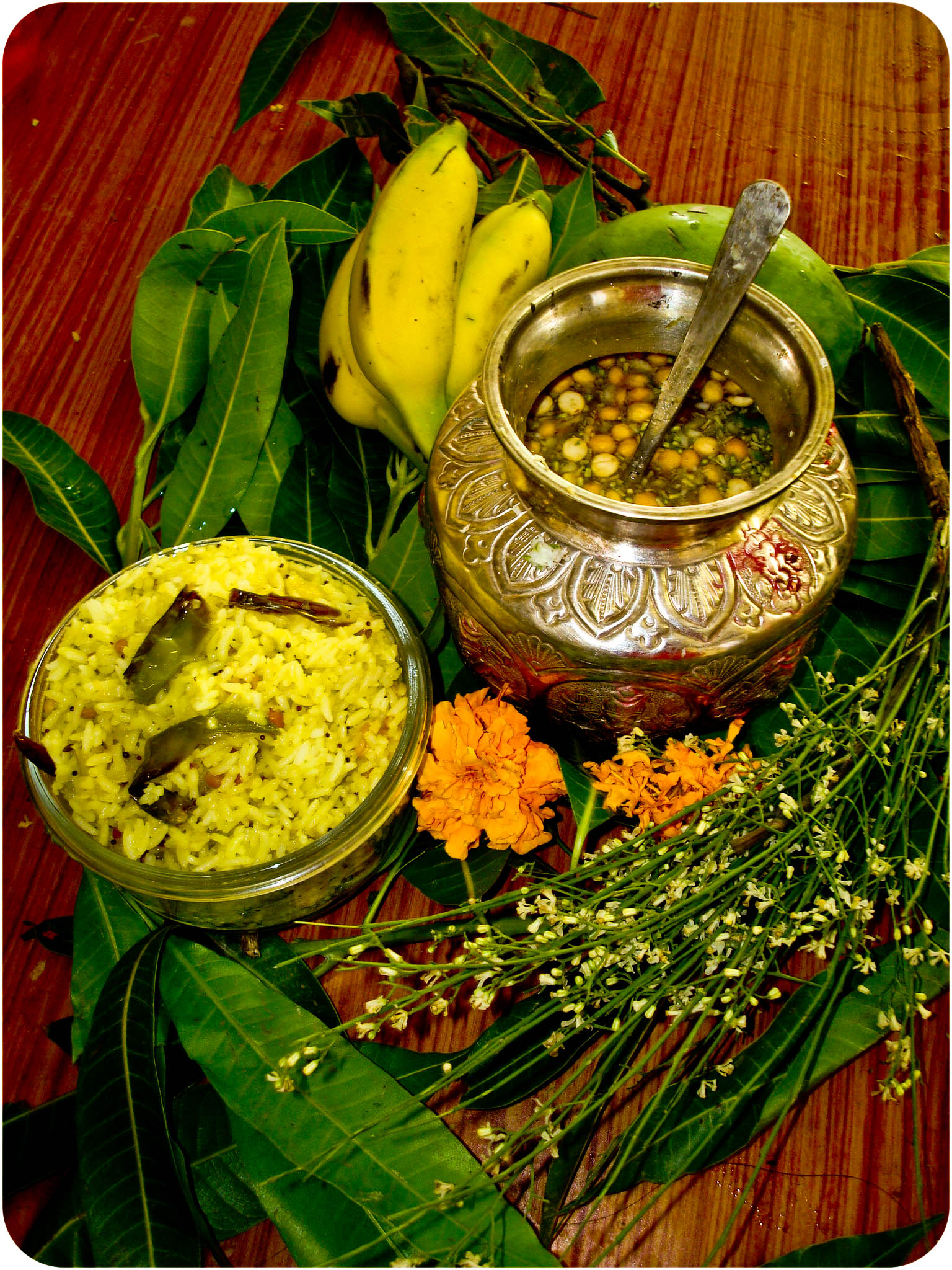
| caption | Ugadi Pachadi with puja tray |
| type | Hindu |
| nickname | Samvatsaradi, Yugadi |
| observedby | Hindus in Andhra Pradesh, Telangana, Karnataka and Tamil Nadu of India and Mauritius |
| date | |
| date2025 | 30 March (Sunday) |
| date2026 | 19 March (Thursday) |
| longtype | Religious (Hindu), social, cultural |
| frequency | Annual |
| celebrations | Muggu/Rangoli, visiting Temples, Feast with Bobbattu, Holige and Bevu Bella |
| relatedto | Gudi Padwa Cheti Chand |
| weekday | Wednesday |
| month | March |
te () or kn (), also known as Samvatsarādi (), is the first day of the year on the Hindu calendar. It is traditionally celebrated by the Telugu people and the Kannadigas in the Indian states of Andhra Pradesh, Telangana, Karnataka, Tamil Nadu, as well as by diasporan communities elsewhere. The cycle consists of 60 years—each year individually named. It is observed on the first day of the Hindu lunisolar calendar month of Chaitra. This typically falls in late March or early April of the Gregorian calendar. It also sometimes falls on the day after Amavasya with the 27th Nakshatra Revati. Ugadi Day is pivoted on the first new moon after the March equinox.
The day is observed by drawing colourful patterns on the floor called Muggulu/Rangoli, mango leaf decorations on doors called torana, buying and giving gifts such as new clothes, giving charity to the poor, oil massages followed by special baths, preparing and sharing a special food called pachadi, and visiting Hindu temples. The pachadi is a notable festive food that combines all flavors sweet, sour, salty, bitter, astringent, and piquant. In Kannada and Telugu harvest traditions, it is a symbolic reminder that one must expect all flavors of experiences in the coming new year and make the most of them.
Ugadi has been an important and historic festival of the Hindus, with medieval texts and inscriptions recording major charitable donations to Hindu temples and community centers on this day. The same day is observed as a New Year by Hindus in many other parts of India, such as Gudi Padwa in Maharashtra, Goa, and is a national public holiday in Mauritius.
Etymology
The name Yugadi or Ugadi is derived from the Sanskrit words yuga (age) and ādi (beginning): "the beginning of a new age."
The Telugu people use the term Ugadi (ఉగాది), and the Kannadigas use the term Yugadi (ಯುಗಾದಿ) for this festival.
Practices

The Kannada and Telugu communities in Karnataka, Andhra Pradesh, Telangana, and Tamil Nadu celebrate the festival with great fanfare; gatherings of the extended family and a sumptuous feast are required. The day begins early with ritual showers, rubbing the body with perfumed oil, followed by prayers.
Preparations for the festival begin a week ahead. Houses are given a thorough clean. People buy new clothes, including dhoti, and buy new items for the festival to decorate the entrance of their houses with fresh mango leaves. Mango leaves and coconuts are considered auspicious in the Hindu tradition, and they are used on Ugadi. People also clean the front of their house with water and cow dung paste, then draw colorful floral designs. People offer prayers in temples. The celebration of Ugadi is marked by religious zeal and social merriment. According to Vasudha Narayanan, a professor of religion at the University of Florida: The pacchadi festive dish symbolically reminds the people that the following year – as all of life – will consist of not just sweet experiences, but a combination of sweet, sour, salty, and bitter episodes. Just as the different substances are bound together, one is reminded that no event or episode is wholly good or bad. Even in the midst of bitter experiences, there are sweet moments. One is also reminded that the experience of taste is transitory and ephemeral; so too, is life, and one has to learn to put pain and pleasure in proper temporal perspective.
Special dishes are prepared for the occasion. In Andhra Pradesh and Telangana, foods such as pulihora, bobbatlu (bhakshalu/polelu/oligale), New Year burelu and pachadi, and preparations made with raw mango go well with the occasion. Of these, pachadi (or Ugadi pacchadi) is the most notable and consists of a chutney-like dish that combines all six flavours of food: sweet, sour, salty, spicy, bitter, and astringent. This festive Hindu food is made from tamarind paste (sour), neem flowers (bitter), brown sugar or sweet jaggery (sweet), table salt (salty), green chili (spicy), and raw mango (astringent). It is a symbolic reminder of complex phases of life one should reasonably expect in the new year.
In Karnataka, foods such as Holige or Obattu and mango pickles are made. In addition, a speciality of Yugadi in Karnataka is to create "bevu bella" a mixture of neem and jaggery, to signify both the sweet and the bitter, or the sihi-kahi(ಸಿಹಿ-ಕಹಿ). This symbolizes life's own experiences with a bit of bitterness and a hint of sweetness.
In Telugu, the traditional greetings for Ugadi are kroththa yeta, ugadi panduga, palukarimpulu or ugadi subhaakankshalu – "క్రొత్త ఏట" / "ఉగాది పండుగ" పలుకరింపులు, లేదా ఉగాది శుభాకాంక్షలు ("Greetings for the festival of Ugadi") and Nutana samvastara shubhaakankshalu -నూతన సంవత్సర శుభాకాంక్షలు ("Greetings on the New Year"). --
References
References
- Dalal, Roshen. (2010). "Hinduism: An Alphabetical Guide". Penguin Books India.
- Karen-Marie Yust. (2006). "Nurturing Child and Adolescent Spirituality: Perspectives from the World's Religious Traditions". Rowman & Littlefield.
- Roshen Dalal. (2010). "Hinduism: An Alphabetical Guide". Penguin Books.
- Jeaneane D. Fowler. (1997). "Hinduism: Beliefs and Practices". Sussex Academic Press.
- "Ugadi and Astronomy".
- K.V. Raman. (2003). "Sri Varadarajaswami Temple, Kanchi: A Study of Its History, Art and Architecture". Abhinav Publications.
- (March 25, 2020). "Hyderabad people celebrate Ugadi with food and family amid lockdown {{!}} Hyderabad News – Times of India". The Times of India.
- "Ugadi 2021 date, time and significance of Yugadi – Times of India". Times of india.
- ಸೋಹೋನಿ, ವಿಶ್ವಾಸ. (2018-03-15). "ಯುಗಾದಿ ಎಂಬ ಹೊಸ ವರ್ಷ... ಏನಿದರ ಮಹತ್ವ?".
- "Ugadi Festival in Telugu {{!}} ఉగాది చరిత్ర విశిష్టత విధానం".
- [[Gabriella Eichinger Ferro-Luzzi]] 91977), [https://www.jstor.org/stable/2741405 Ritual as Language: The Case of South Indian Food Offerings] {{Webarchive. link. (30 March 2017 , Current Anthropology, University of Chicago Press, Vol. 18, No. 3 (September 1977), pages 507–514)
- Narayanan, Vasudha. (1999). "Y51K and Still Counting: Some Hindu Views of Time". Butler University.
- Neem - Ancient Tree, Modern Miracle, Warm Earth, National Library of Australia, No. 83, Mar/Apr 2009, pages 36-37
- (2011). "Indian Heritage Cooking". Marshall Cavendish.
- Gabriella Eichinger Ferro-Luzzi 91977), [https://www.jstor.org/stable/2741405 Ritual as Language: The Case of South Indian Food Offerings], Current Anthropology, University of Chicago Press, Vol. 18, No. 3 (September 1977), pages 507–514
- Narayanan, Vasudha. (1999). "Y51K and Still Counting: Some Hindu Views of Time". Butler University.
- (2011). "Indian Heritage Cooking". Marshall Cavendish.
- "Share the love with a delectable Mavinakayi Chitranna recipe as you stay home this Gudi Padwa". The economic Times.
- (4 April 2005). "Ugadi a time to rejoice". [[The Hindu]].
- (2018-03-18). "Navratri, Gudi Padwa, Sajibu Cheiraoba, Ugadi geetings flood Twitter".
- (2020-03-24). "Bali's Silent Nyepi and India's Ugadi - A Time for Introspection".
This article was imported from Wikipedia and is available under the Creative Commons Attribution-ShareAlike 4.0 License. Content has been adapted to SurfDoc format. Original contributors can be found on the article history page.
Ask Mako anything about Ugadi — get instant answers, deeper analysis, and related topics.
Research with MakoFree with your Surf account
Create a free account to save articles, ask Mako questions, and organize your research.
Sign up freeThis content may have been generated or modified by AI. CloudSurf Software LLC is not responsible for the accuracy, completeness, or reliability of AI-generated content. Always verify important information from primary sources.
Report