From Surf Wiki (app.surf) — the open knowledge base
UD Las Palmas
Spanish association football team
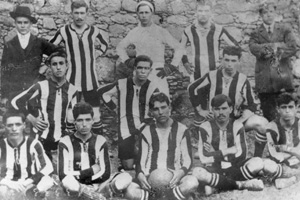
Spanish association football team
| Field | Value |
|---|---|
| clubname | Las Palmas |
| image | UD Las Palmas logo.svg |
| image_size | 130px |
| fullname | Unión Deportiva Las Palmas, S.A.D. |
| nickname | Canarias |
| Los Amarillos | |
| La Unión Deportiva | |
| Pío Pío | |
| founded | |
| ground | Estadio Gran Canaria |
| capacity | 32,400 |
| chairman | Miguel Ángel Ramírez |
| chrtitle | President |
| mgrtitle | Head coach |
| manager | Luis García |
| league | |
| season | |
| position | |
| website | |
| pattern_la1 | _laspalmas2526h |
| pattern_b1 | _laspalmas2526h |
| pattern_ra1 | _laspalmas2526h |
| pattern_sh1 | _laspalmas2526h |
| pattern_so1 | _yellowtop |
| leftarm1 | FFFF00 |
| body1 | FFFF00 |
| rightarm1 | FFFF00 |
| shorts1 | 0000FF |
| socks1 | 0000FF |
| pattern_b2 | _laspalmas2526a |
| pattern_sh2 | _laspalmas2526a |
| leftarm2 | aad7ea |
| body2 | aad7ea |
| rightarm2 | aad7ea |
| shorts2 | ffffff |
| socks2 | aad7ea |
| pattern_la3 | _laspalmas2526t |
| pattern_b3 | _laspalmas2526t |
| pattern_ra3 | _laspalmas2526t |
| pattern_sh3 | _laspalmas2526t |
| leftarm3 | e9dfcd |
| body3 | e9dfcd |
| rightarm3 | e9dfcd |
| shorts3 | 442d22 |
| socks3 | e9dfcd |
| current | 2025–26 UD Las Palmas season |
Los Amarillos La Unión Deportiva Pío Pío
Unión Deportiva Las Palmas S.A.D. is a professional football club based in Las Palmas de Gran Canaria, Canary Islands, Spain. The club currently compete in Segunda División, the 2nd tier of the Spanish football league system following their relegation from La Liga in May 2025. Nicknamed Los Amarillos, the club was founded on 22 August 1949 as a result of a merger between five clubs in the Canary region. The club initially played in the Estadio Insular before beginning hosting their home matches at the Estadio Gran Canaria in 2003.
Las Palmas have been Segunda División champions four times, in 1953–54, 1963–64, 1984–85 and 1999–2000, and have won the Segunda División B twice, in 1992–93 and 1995–96. They have been runners-up in La Liga once, in 1968–69, and runners-up in the Copa del Rey, in 1977–78. Las Palmas is the only side in Spanish football to achieve back-to-back promotions to La Liga in their first two seasons. They had a 19-year run in the competition, ending in 1982–83 and has been promoted to La Liga on four additional occasions since that time, achieving it recently in 2022–23.
Since its foundation, the club has played with yellow and blue as their primary and secondary colours. They have a fierce rivalry with neighbouring island Tenerife, with whom they contest the Canary Islands derby. The two clubs are among the most isolated professional football clubs in Europe since they play their away games on the distant Spanish mainland.
History
Foundation
A decade after the Spanish Civil War, football in Las Palmas faced numerous challenges and difficulties. The financial situations of Las Palmas’ five biggest clubs, Real Club Victoria, Marino FC, CD Gran Canaria, Atlético Club, and Arenas Club, were deteriorating rapidly due to their financial strength of being able to compete for players against Spain's top clubs. A new registration law by the Royal Spanish Football Federation, which limited players to a maximum of a two-year contract, resulted in the clubs in Las Palmas being unable to retain their academy players for extended periods. Consequently, many players relocated to the Spanish mainland to continue their football careers in national competitions. As a result, Eufemiano Fuentes Díaz, president of Marino CF, went to a meeting in Madrid to change the legislation of contracts to a minimum of four years. A different proposal was also presented, stating that all Spanish clubs were prohibited from signing players in the Canary region with the exception if they were first-team players who had already passed the stage of being academy players. These proposals were delayed and denied by the RFEF.
During this time, clubs continued to see their debts increase, leading to the possibility of defunction. The Vice President of the Las Palmas Football Federation, Manuel Rodríguez Monroy, proposed a merger of the five teams comprising the regional competition, aiming to compete in national competitions and resolve the economic situation as a result. The purpose of this proposal was to present a compelling case to the RFEF for allowing the Canary Islands to participate in national competitions, enabling Canarian footballers to compete without relocating to the Spanish mainland. This proposal was presented towards the president, Adolfo Miranda Ortega, who among other board members agreed. On 4 February 1949, a letter was sent to the presidents of the five clubs, proposing a potential merger to compete in the national competitions. The first meeting was held on 28 February 1949 in Alameda de Colón, Las Palmas with the representatives of the five merging clubs attending. Gran Canaria, Atlético and Arenas promptly agreed to the proposal due to their finances whilst Marino and Victoria remained wary of the repercussions it could have on the club and its fans. From there, the representatives agreed to meet every Monday and create a collaborative group that would be known as the Fusion Presentation.
That by agreement of the five teams that make up the First Regional Category, dependent on the Regional Football Federation of Las Palmas de Gran Canaria, it has been done with permission to merge them with the objective that, grouped in one only all their potential economically and sportingly, incorporate this powerful Club into national football competitions.
Likewise, and by unanimous agreement of the merged teams, its name is "Unión Deportiva Las Palmas" and that both the colors and the shield of the teams resulting from this merger are those of this city; but for the latter to be legally carried out, it is necessary that the Hon. Corporation gives its approval in this regard, that is why it begs that Excma. Corporation that, having presented this document, deigns to authorize the aforementioned Club "Unión Deportiva Las Palmas" to use the shield of this city, orlando with the name of this Club and the emblems of the five merged teams.
It is grace that you expect from that Excma. Corporation, whose life God save many years.
Las Palmas de Gran Canaria, September 1, 1949.
After more than a month of deliberations, Miranda and Monroy were delegated the role of requesting a transfer into the Spanish Second Division via a letter to the RFEF. The letter was sent on 4 April 1949 but the proposition was rejected for being to detriment for the other teams and that it would alter the regulation of promotions. However, Ricardo Cabot, a secretary in the RFEF, resumed the proposition towards the board members and, on 6 June 1949, following a meeting in Madrid that Miranda and Monroy attended, it was announced by telegram that Canary Islands football was accepted into the third division of Spanish football. The acceptance allowed the merger of Arenas Club and CD Gran Canaria, both of whom gave up their headquarters and trophies, to form under the name Unión Deportiva Las Palmas as the first phase for total integration.
On 16 August 1949, the Fusion Presentation had their last meeting where after coming in contact with Marino and Victoria stated the clubs would not merge as of yet due to difficult financial situation. This led to refusals to financially support the lease of the Las Palmas Stadium for UD Las Palmas to play its games in the 1949–50 season. As a result, a "Magna Assembly" was held by Monroy on 22 August 1949 at Real Club Náutico. After a successful meeting in which all five clubs unanimously agreed towards the final proposition presented by Monroy, Unión Deportiva Las Palmas was officially established at 8 p.m. on 22 August 1949. A committee was established with José del Río Amor as the club's first president and Monroy appointed as the club's first vice president. The headquarters of Las Palmas was located in the Plazoleta Luis Antunez.
Las Palmas’ first training session was held on 16 September 1949 with new manager, Pancho Arencibia. Juan Santana Macías, a winger from Atlético, was the first player signed by the club and was present during the training session. On 9 October 1949, Las Palmas played their first match against Marino with Antoñito Jorge scoring the first goal in their history of a 2–1 win at Las Palmas stadium. Antoñito played three seasons for Las Palmas, scoring 11 goals in their promotion campaign towards the Second Division.
(1949–1963)
In their debut competitive season, the club secured 2nd place in a group that included CD Tenerife, Imperial de Murcia, SD Ceuta, CD Toledo, and UD Melilla, earning promotion to the Second Division. Las Palmas played their first derby match against Tenerife on 30 April 1950, at the Santa Cruz Stadium, winning 2–1. Their first away match outside the islands was on 21 May 1950, against Toledo at the Palomarejos Stadium, resulting in a 5–2 victory. However, on 25 June 1950, Las Palmas suffered a 2–0 defeat in their last league match against Melilla, which initially threatened their chances of promotion. Fortunately, Imperial de Murcia, who sat third in the table, also faced defeat, securing Las Palmas' certified promotion to the Second Division. Tragically, one of Las Palmas' first signed players and starter, Antonio Vieira, died from illness on 4 April 1951. His funeral was held in the Church of San Pablo and a tribute match was held with locals in which Las Palmas won 3–1. In the club's participation in the 1950–51 Second Division, the club achieved a second consecutive promotion to the First Division, following a 4–1 victory over Málaga on 8 July 1951 that sent the club to first place of the table. Las Palmas became the first club in Spanish football to gain promotion twice consecutively to the First Division despite being two years old at the time. By the end of the season, Las Palmas’ first goalkeeper, Manolo Montes, was sold to Atletico Madrid in 1951 for a fee of 375,000 Pt. Nicknamed "El Patrón", Montes made 55 official appearances for Los Amarillos and became the first player to be sold by the club.
The following season saw Las Palmas relegated down to the Second Division after coming 15th with 9 wins, 4 draws and 17 losses. In the club's first match of the season, Las Palmas would lose 4–1 to Real Madrid at the newly inaugurated Insular Stadium on 9 September 1951. A hat-trick from Pahiño and a goal from Luis Molowny sealed Madrid's win whilst Juan Cedrés scored the first goal in the division for Las Palmas. The following games saw defeat to Celta (5–2), Sevilla (5–0) and Deportivo La Coruña (3–1) before the club earned their first point to Racing Santandar after a 1–1 draw on 23 September 1951. The poor run of form convinced the club's personnel to sign more experienced players with Manolo Torres and Beneyto, both signing from Málaga on 14 October 1951 for a combined total of 1,000,000 Pt. The club achieved their first win of the season two days later, defeating Atlético Tetuán 4–1 with two goals from Torres on his debut and another two from Tacoronte. Additionally, the first foreign player for Las Palmas, Jean Luciano, who signed from Real Madrid, made his debut on 16 December 1951 in a 6–0 defeat to Real Zaragoza at Torrero Stadium.
In January 1952, goalkeeper José “Pepín” Casas Gris was signed as a replacement for Montes and for a starting position after goalkeepers Viera and González were having poor performances in recent matches. Born in Valencia, Pepín became the first player from the Peninsular region to represent Las Palmas. He arrived at the Hotel of Santa Brígida, Las Palmas from Alicante on 5 January 1952. On 26 March 1952, Las Palmas played Millonarios de Bogotá in a match that contained the likes of Alfredo Di Stéfano. The Colombian team at the time was considered the best in South America and had remained undefeated against the likes of Porto, Real Madrid, Sevilla and Valencia during their tour in Europe. Las Palmas triumphed 3–2 over Millonarios with Di Stéfano scoring his first goal in Spain whilst Las Palmas became the only European team to have defeated Millonarios. In the 1952–53 season, manager Luis Valle Benítez, who managed Las Palmas in their promotion campaign to the First Division, resigned on 6 October 1952. The club remained in the Second Division until the 1953–1954 season when they achieved promotion back to the First Division. The club won their first title in their history under Satur Grech after finishing first in the table, jointly becoming winners with Alavés. On 27 December 1953, Las Palmas played their first derby match against Tenerife in a national competition. Los Amarillos drew both matches they played against Tenerife, the last being on 25 April 1954 where a goalless draw led to Las Palmas' promotion at the Santa Cruz Stadium.
Las Palmas would stay in the First Division for the first time during the 1954–55 season after placing 12th on the table. During the season, Las Palmas won their first game against Barcelona on 9 February 1955 with a final score of 2–1 at the Insular Stadium. The club ensured survival with 27 points on 10 April 1955, defeating Celta 3–1 at home and overcoming Espanyol who sat below with 26 points on the table. The 1955–56 season saw Las Palmas reaching a peak of 3rd place in the first half of the season before succumbing towards a relegation battle in the second half of the season. According to Marcial Sánchez, a player who signed from Real Murcia in the 1954–55 season, the club briefly shared a spot in the top three of the league table with Barcelona at one point. However, due to the losses of key players, including captain Juan Beltrán and Marcial himself, the club's form deteriorated as the season progressed. Beltrán suffered a two-year knee injury, eventually recovering, but Marcial recalled that the player was never the same again and the injury led him to retirement. Beltrán, in particular, was a highly respected captain and nicknamed by the fans as "El del pañuelo en la frente" (The one with the handkerchief on his forehead). He was the first player selected from Las Palmas Atlético's side and also the first from the club to represent the Spanish national football team. On 16 January 1957, Beltrán was appointed as the first designated youth coach of Las Palmas during his recovery from injury. During the 1956–57 season, Las Palmas claimed their 100th point in their First Division history on 28 October 1956 after a 2–2 draw with Valencia. Two Canarian-born players, Alfonso Silva and Rafael Mújica, both of whom were considered to be the best players from the Canary Islands, made their return to Las Palmas to play for Los Amarillos. Mújica made his league debut on 9 September 1956 in a 2–0 victory against Real Jaén at home while Silva made his debut midway through the season on 13 January 1957 when the club won 2–0 against Deportivo La Coruña at Estadio Riazor.
The 1957–58 season saw the appointment of Luis Molowny as a player-coach following the departure of the previous coach, José Urbieta after unsatisfactory results. Prior to his appointment, Las Palmas suffered from poor form in the first half of the season, including a 7–0 loss to Barcelona at the Camp Nou, a 6–1 defeat at home against Celta, and their largest-ever loss in the club's history, a 9–0 drubbing by Atletico Madrid at the Metropolitano. Molowny was signed on 5 December 1957, returning from Real Madrid, and scored 3 goals in 3 appearances for the club during that same season. The most notable match under Molowny's management was on 9 February 1958 when Las Palmas held a clash against Atletico Madrid at the Insular Stadium. With two former Atletico players, Silva and Mújica, Las Palmas triumphed 3–0 over Atletico Madrid in a match that was described for its “beauty and quality.” The club secured safety from relegation by defeating Real Valladolid 3–1 at home on 4 May 1958, which also resulted in Valladolid's relegation. For the first time in the club's history, Las Palmas resorted to the signings of more foreign players, Paraguayan player José Parodi and Argentine players, Pierutz, Ianizzotto and Puche, being the few that arrived at the club. Molowny was dropped at the end of the season and was replaced by Baltasar Albéniz for the subsequent season. Las Palmas avoided relegation once more, finishing in the relation playoff of the 1958–59 season. They played two home-away legs against Levante, who placed second in their league table during the season. The first leg was played on 10 May 1959 with Las Palmas winning 2–1 at Valencia before a week later, a 1–1 second leg draw at home ensured their survival.
Within the same season, Damián Massanet Plomer, the chairman of the Las Palmas Regional Football Federation, dismissed all board of directors of UD Las Palmas, alleging it to the debts that had been accumulating from previous seasons. In the 1959–60 season, Las Palmas eventually succumbed to relegation after six seasons in the First Division, with a total of 13 points gained from five wins and three draws by the end of the campaign. The club conceded the most goals out of the league, with 77 and garnered 22 league defeats, leading it to be Las Palmas's worst season at the time. During the season, Vicente Gonzalez Sosa became the first international youth player for Las Palmas, making four appearances for the Spain national under-18 team between March and April 1960. He would register three goals in six league appearances before departing, like most of his teammates, for Barcelona following the club's relegation. Las Palmas relegation was attributed to the over-reliance on foreign players, rather than trusting in the club's youth players, and increasing financial instability which by the end of the season had reached "an extreme situation."
Top-flight success
.jpg)
.jpg)
After Las Palmas returned to La Liga at the end of the 1963–64 season, again as champions, the club went on to have their most successful spell in the competition. Managed by Vicente Dauder, they finished third in 1967–68 behind Real Madrid and FC Barcelona, and four club players made the Spain squad which hosted and won the UEFA Euro 1964 tournament; the following season the team fared even better and only lost the league to Real Madrid, and thus qualified for European competition for the first time in its history, appearing in the 1969–70 Inter-Cities Fairs Cup and being knocked out in the first round by Germany's Hertha BSC (0–0 home draw, 0–1 away loss).

Las Palmas player Juan Guedes died suddenly on 9 March 1971 at the age of 28. The next season, French coach Pierre Sinibaldi led the club to the fifth place, with subsequent qualification for the UEFA Cup: after disposing of Torino F.C. and ŠK Slovan Bratislava, the Spaniards bowed out to Dutch club FC Twente; at the end of 1974–75 another team player, Tonono – a defender who played with Guedes – died of a liver infection.
Las Palmas' third appearance in European competition came with the 1977–78 UEFA Cup, where they defeated FK Sloboda Tuzla of Yugoslavia in the first round before falling to the English side Ipswich Town. Under the management of Miguel Muñoz, and with players such as Argentines Miguel Ángel Brindisi, Daniel Carnevali (the first to arrive in 1973), Carlos Morete and Quique Wolff, the club also reached their first final of the Copa del Rey in that year, losing on 19 April to Barcelona at the Santiago Bernabéu Stadium (1–3).
From the 1990s onwards, Las Palmas played mainly in the Segunda División, but also spent six years in Segunda División B – the new third level created in 1977 – and, from 2000 to 2002, competed in the top flight. On 3 October 2001 the side managed a 4–2 home win against Real Madrid, with youth product Rubén Castro scoring two goals for the hosts, but the season ended nonetheless in relegation. On 22 December 2001, Las Palmas played its 1,000th game in La Liga. In the 2009–10 season in Segunda División the club finished 17th, just one point away from being relegated to Segunda División B. On 21 June 2015, Las Palmas was promoted back to La Liga after defeating Real Zaragoza on the away goals rule.
On 27 May 2023, Las Palmas achieved promotion to the first division by sealing a 2nd position in the table, respectively, on the very last match day of the season, after spending five years in the second tier.
Ciudad deportiva
The Ciudad Deportiva UD Las Palmas, also known as Barranco Seco, is the training ground of UD Las Palmas. Occupying a total area of 70,000 m2, the complex is located in the area known as Barranco Seco at the southern outskirts of the city of Las Palmas.
History and construction
The current land in Barranco Seco was acquired by UD Las Palmas during the 1960s by the efforts of then club director Manuel Betancor. During the 1970s, there was only a single training pitch used by the reserve and junior teams of the club. In 1982, when the ground was upgraded to be used as a training field by the first team.
In June 2015, the Ciudad Deportiva project was initiated. However, works did not start until 2017. After around 2 years of construction works, the complex was finally opened on July 8, 2019. It was designed by architect Juan Palop-Casado, who assured that the construction of this project was "an attempt that has been made to build with the greatest possible sustainability". The construction was executed by "Construcciones Alex y Nadal, S.L.", involving around 380 workers, 10,000 tons of sand, nearly 300 tons of steel, almost 2,000 cubic meters of concrete and beams of approximately 1,600 meters.
Being only the first phase of the entire sports city project, the club invested 22.5 million euros of its own funds to carry out the construction works of the current facilities. The construction of a multifunctional service building is scheduled in the second phase. The eventual area of the complex will become 70,000 m2 after the completion of the second phase.
Facilities
The new complex has modern changing rooms, a meeting hall, a gym with physiotherapy facilities, a dining room, a press room, in addition to two parking spaces designated for 130 vehicles. The Ciudad Deportiva is home to 3 regular size training pitches:
- Ernesto Aparicio training field of natural grass.
- David García Santana training field of natural grass.
- Manuel Betancor training field of artificial turf, designated for the training sessions of UD Las Palmas Atlético and UD Las Palmas C; the reserve teams of the club.
Seasons
Season to season


| Season | Tier | Division | Place | Copa del Rey | DNP | DNP | DNP | Third round | Round of 16 | Round of 16 | Round of 16 | Round of 16 | Quarter-finals | Round of 32 | Round of 32 | Round of 16 | First round | Round of 16 | First round | Round of 16 | Round of 16 | Round of 16 | Round of 16 | Round of 16 |
|---|---|---|---|---|---|---|---|---|---|---|---|---|---|---|---|---|---|---|---|---|---|---|---|---|
| 1949–50 | 4 | 1ª Reg. | 1st | |||||||||||||||||||||
| 1950–51 | 2 | 2ª | 3rd | |||||||||||||||||||||
| 1951–52 | 1 | 1ª | 15th | |||||||||||||||||||||
| 1952–53 | 2 | 2ª | 4th | |||||||||||||||||||||
| 1953–54 | 2 | 2ª | 1st | |||||||||||||||||||||
| 1954–55 | 1 | 1ª | 12th | |||||||||||||||||||||
| 1955–56 | 1 | 1ª | 11th | |||||||||||||||||||||
| 1956–57 | 1 | 1ª | 10th | |||||||||||||||||||||
| 1957–58 | 1 | 1ª | 11th | |||||||||||||||||||||
| 1958–59 | 1 | 1ª | 14th | |||||||||||||||||||||
| 1959–60 | 1 | 1ª | 16th | |||||||||||||||||||||
| 1960–61 | 2 | 2ª | 5th | |||||||||||||||||||||
| 1961–62 | 2 | 2ª | 4th | |||||||||||||||||||||
| 1962–63 | 2 | 2ª | 3rd | |||||||||||||||||||||
| 1963–64 | 2 | 2ª | 1st | |||||||||||||||||||||
| 1964–65 | 1 | 1ª | 9th | |||||||||||||||||||||
| 1965–66 | 1 | 1ª | 10th | |||||||||||||||||||||
| 1966–67 | 1 | 1ª | 11th | |||||||||||||||||||||
| 1967–68 | 1 | 1ª | 3rd | |||||||||||||||||||||
| 1968–69 | 1 | 1ª | 2nd |
| Season | Tier | Division | Place | Copa del Rey | Round of 16 | Round of 16 | Round of 16 | Fifth round | Semi-finals | Quarter-finals | Quarter-finals | Round of 16 | Runners-up | Fourth round | Third round | First round | Round of 16 | Third round | Semi-finals | Fourth round | Fourth round | Fourth round | Round of 16 | Round of 32 |
|---|---|---|---|---|---|---|---|---|---|---|---|---|---|---|---|---|---|---|---|---|---|---|---|---|
| 1969–70 | 1 | 1ª | 9th | |||||||||||||||||||||
| 1970–71 | 1 | 1ª | 14th | |||||||||||||||||||||
| 1971–72 | 1 | 1ª | 5th | |||||||||||||||||||||
| 1972–73 | 1 | 1ª | 11th | |||||||||||||||||||||
| 1973–74 | 1 | 1ª | 11th | |||||||||||||||||||||
| 1974–75 | 1 | 1ª | 13th | |||||||||||||||||||||
| 1975–76 | 1 | 1ª | 13th | |||||||||||||||||||||
| 1976–77 | 1 | 1ª | 4th | |||||||||||||||||||||
| 1977–78 | 1 | 1ª | 7th | |||||||||||||||||||||
| 1978–79 | 1 | 1ª | 6th | |||||||||||||||||||||
| 1979–80 | 1 | 1ª | 12th | |||||||||||||||||||||
| 1980–81 | 1 | 1ª | 15th | |||||||||||||||||||||
| 1981–82 | 1 | 1ª | 15th | |||||||||||||||||||||
| 1982–83 | 1 | 1ª | 16th | |||||||||||||||||||||
| 1983–84 | 2 | 2ª | 11th | |||||||||||||||||||||
| 1984–85 | 2 | 2ª | 1st | |||||||||||||||||||||
| 1985–86 | 1 | 1ª | 13th | |||||||||||||||||||||
| 1986–87 | 1 | 1ª | 14th | |||||||||||||||||||||
| 1987–88 | 1 | 1ª | 20th | |||||||||||||||||||||
| 1988–89 | 2 | 2ª | 11th |
|}
| Season | Tier | Division | Place | Copa del Rey | First round | Round of 16 | Fourth round | Fourth round | Third round | Fourth round | Second round | Semi-finals | Third round | Fourth round | Second round | Round of 32 | Round of 32 | Round of 64 | Round of 64 | Round of 64 | Third round | Third round | Round of 32 | Second round |
|---|---|---|---|---|---|---|---|---|---|---|---|---|---|---|---|---|---|---|---|---|---|---|---|---|
| 1989–90 | 2 | 2ª | 6th | |||||||||||||||||||||
| 1990–91 | 2 | 2ª | 15th | |||||||||||||||||||||
| 1991–92 | 2 | 2ª | 20th | |||||||||||||||||||||
| 1992–93 | 3 | 2ª B | 1st | |||||||||||||||||||||
| 1993–94 | 3 | 2ª B | 2nd | |||||||||||||||||||||
| 1994–95 | 3 | 2ª B | 3rd | |||||||||||||||||||||
| 1995–96 | 3 | 2ª B | 1st | |||||||||||||||||||||
| 1996–97 | 2 | 2ª | 7th | |||||||||||||||||||||
| 1997–98 | 2 | 2ª | 3rd | |||||||||||||||||||||
| 1998–99 | 2 | 2ª | 6th | |||||||||||||||||||||
| 1999–00 | 2 | 2ª | 1st | |||||||||||||||||||||
| 2000–01 | 1 | 1ª | 11th | |||||||||||||||||||||
| 2001–02 | 1 | 1ª | 18th | |||||||||||||||||||||
| 2002–03 | 2 | 2ª | 5th | |||||||||||||||||||||
| 2003–04 | 2 | 2ª | 20th | |||||||||||||||||||||
| 2004–05 | 3 | 2ª B | 7th | |||||||||||||||||||||
| 2005–06 | 3 | 2ª B | 3rd | |||||||||||||||||||||
| 2006–07 | 2 | 2ª | 18th | |||||||||||||||||||||
| 2007–08 | 2 | 2ª | 8th | |||||||||||||||||||||
| 2008–09 | 2 | 2ª | 18th |
| Season | Tier | Division | Place | Copa del Rey | Third round | Second round | Second round | Round of 16 | Round of 32 | Round of 32 | Quarter-finals | Round of 16 | Round of 16 | Second round | Second round | Second round | Second round | Second round | Round of 32 | Round of 32 | First round |
|---|---|---|---|---|---|---|---|---|---|---|---|---|---|---|---|---|---|---|---|---|---|
| 2009–10 | 2 | 2ª | 17th | ||||||||||||||||||
| 2010–11 | 2 | 2ª | 15th | ||||||||||||||||||
| 2011–12 | 2 | 2ª | 9th | ||||||||||||||||||
| 2012–13 | 2 | 2ª | 6th | ||||||||||||||||||
| 2013–14 | 2 | 2ª | 6th | ||||||||||||||||||
| 2014–15 | 2 | 2ª | 4th | ||||||||||||||||||
| 2015–16 | 1 | 1ª | 11th | ||||||||||||||||||
| 2016–17 | 1 | 1ª | 14th | ||||||||||||||||||
| 2017–18 | 1 | 1ª | 19th | ||||||||||||||||||
| 2018–19 | 2 | 2ª | 12th | ||||||||||||||||||
| 2019–20 | 2 | 2ª | 9th | ||||||||||||||||||
| 2020–21 | 2 | 2ª | 9th | ||||||||||||||||||
| 2021–22 | 2 | 2ª | 4th | ||||||||||||||||||
| 2022–23 | 2 | 2ª | 2nd | ||||||||||||||||||
| 2023–24 | 1 | 1ª | 16th | ||||||||||||||||||
| 2024–25 | 1 | 1ª | 19th | ||||||||||||||||||
| 2025–26 | 2 | 2ª |
|}
- 36 seasons in La Liga
- 34 seasons in Segunda División
- 6 seasons in Segunda División B
Recent seasons
| Season | Pos. | Pld | W | D | L | GF | GA | Pos. | Cup | Notesint | |
|---|---|---|---|---|---|---|---|---|---|---|---|
| 1999–2000 | 2D | 1 | 42 | 20 | 12 | 10 | 60 | 41 | 72 | ||
| 2000–01 | 1D | 11 | 38 | 13 | 7 | 18 | 42 | 62 | 46 | ||
| 2001–02 | 1D | 18 | 38 | 9 | 13 | 16 | 40 | 50 | 40 | ||
| 2002–03 | 2D | 5 | 42 | 16 | 16 | 10 | 53 | 43 | 64 | ||
| 2003–04 | 2D | 20 | 42 | 10 | 14 | 18 | 46 | 68 | 44 | ||
| 2004–05 | 2DB | 7 | 38 | 17 | 9 | 12 | 50 | 33 | 60 | ||
| 2005–06 | 2DB | 3 | 38 | 18 | 13 | 7 | 45 | 24 | 67 | ||
| 2006–07 | 2D | 18 | 42 | 13 | 12 | 17 | 51 | 59 | 51 | ||
| 2007–08 | 2D | 8 | 42 | 15 | 12 | 15 | 51 | 55 | 57 | ||
| 2008–09 | 2D | 18 | 42 | 10 | 17 | 15 | 46 | 51 | 47 | ||
| 2009–10 | 2D | 17 | 42 | 12 | 15 | 15 | 49 | 49 | 51 | ||
| 2010–11 | 2D | 15 | 42 | 13 | 15 | 14 | 56 | 71 | 54 | ||
| 2011–12 | 2D | 9 | 42 | 16 | 10 | 16 | 58 | 59 | 58 | ||
| 2012–13 | 2D | 6 | 42 | 18 | 12 | 12 | 62 | 55 | 66 | ||
| 2013–14 | 2D | 6 | 42 | 18 | 9 | 15 | 51 | 50 | 63 | ||
| 2014–15 | 2D | 4 | 42 | 22 | 12 | 8 | 73 | 47 | 78 | ||
| 2015–16 | 1D | 11 | 38 | 12 | 8 | 18 | 45 | 53 | 44 | ||
| 2016–17 | 1D | 14 | 38 | 10 | 9 | 19 | 53 | 74 | 39 | ||
| 2017–18 | 1D | 19 | 38 | 5 | 7 | 26 | 24 | 74 | 22 | ||
| 2018–19 | 2D | 12 | 42 | 12 | 18 | 12 | 48 | 50 | 54 | ||
| 2019–20 | 2D | 9 | 42 | 14 | 15 | 13 | 49 | 46 | 57 | ||
| 2020–21 | 2D | 9 | 42 | 14 | 14 | 14 | 46 | 53 | 56 | ||
| 2021–22 | 2D | 4 | 42 | 19 | 13 | 10 | 57 | 47 | 70 | ||
| 2022–23 | 2D | 2 | 42 | 18 | 18 | 6 | 49 | 29 | 72 | ||
| 2023–24 | 1D | 16 | 38 | 10 | 10 | 18 | 33 | 47 | 40 | ||
| 2024–25 | 1D | 19 | 38 | 8 | 8 | 22 | 40 | 61 | 32 |
European cup history
Main article: UD Las Palmas in European football
Current squad
Reserve team
Main article: UD Las Palmas Atlético, UD Las Palmas C
Out on loan
Current technical staff
Honours
Former players
Pedri
List of coaches
Since its founding, Unión Deportiva has had 79 coaching changes (including interim coaches). Among those 79, several have coached the team on more than one occasion. In total, 61 different coaches have held the position in the club's history. Pierre Sinibaldi is the coach who has led the most matches with 166 in four full seasons. He is followed by Roque Olsen with 135, Luis Molowny with 130, Juan Manuel Rodríguez with 125, Sergio Krešić with 120, Satur Grech with 113, Paco Castellano with 108 and Vicente Dauder with 104 matches. In terms of sporting achievements, the Gran Canaria team has 9 promotions (7 to Primera and 2 to Segunda). The first promotion was achieved by Arsenio Arocha. The promotions to Primera were chronologically achieved by Arsenio Arocha, Jesús Navarro, Vicente Dauder, Roque Olsen, Sergio Krešić, Paco Herrera, and the most recent by Francisco Javier García Pimienta. The promotions to Segunda were achieved by Pacuco Rosales and Juanito Rodríguez. Regarding the nationalities of the coaches of Unión Deportiva, Spanish coaches predominate, although 9 other different nationalities have occupied the bench.
- Spain Satur Grech (1953–57)
- Spain Luis Molowny (1957–58)
- Spain Baltasar Albéniz (1958–59)
- Spain Luis Molowny (1959)
- France Marcel Domingo (1959–60)
- Spain Paco Campos (1961–62)
- Spain Rosendo Hernández (1962–63)
- Spain Vicente Dauder (1963–66)
- Spain Luis Molowny (1968–70)
- Spain Rosendo Hernández (1970)
- Spain Héctor Rial (1970–71)
- France Pierre Sinibaldi (1971–75)
- Paraguay Heriberto Herrera (1975–76)
- Argentina Roque Olsen (1976–77)
- Spain Miguel Muñoz (1977–79)
- Spain Antonio Ruiz (1979–80)
- Paraguay Heriberto Herrera (1982)
- Austria Walter Skocik (1982–83)
- Uruguay Héctor Núñez (1983–84)
- Argentina Roque Olsen (1984–85)
- Hungary Ferenc Kovács (1986–87)
- Argentina Roque Olsen (1988)
- Spain Paquito (1989–90)
- Spain Manolo Cardo (1990–91)
- Argentina Roque Olsen (1991), (1991–92)
- Argentina Miguel Ángel Brindisi (1991–92)
- Spain Iñaki Sáez (1993–94)
- Spain Paco Castellano (1994–95)
- Spain Iñaki Sáez (1995)
- Argentina Ángel Cappa (1996–97)
- Spain Paco Castellano (1997)
- Spain Mariano García Remón (1997–98)
- Spain Paco Castellano (1998–99)
- Croatia Sergije Krešić (1999–01)
- Spain Fernando Vázquez (2001–02)
- Spain Josu Uribe (2002–03)
- Spain Juan Manuel Rodríguez (2003)
- Spain David Vidal (2003–04)
- Spain David Amaral (2004)
- Spain Carlos Sánchez Aguiar (2004–05)
- Serbia Josip Višnjić (2005–06)
- Spain Carlos Sánchez Aguiar (2006)
- Spain Juanito (2006–07)
- Spain Juan Manuel Rodríguez (2007–08)
- Spain Javier Vidales (2008–09)
- Spain Paco Castellano (2009)
- Croatia Sergije Krešić (2009–10)
- Spain Paco Jémez (2010–11)
- Spain Juan Manuel Rodríguez (2011–12)
- Spain Sergio Lobera (2012–14)
- Spain Josico (2014)
- Spain Paco Herrera (2014–15)
- Spain Quique Setién (2015–17)
- Spain Manolo Márquez (2017)
- Spain Pako Ayestarán (2017)
- Spain Paco Jémez (2017–18)
- Spain Manolo Jiménez (2018)
- Spain Paco Herrera (2018–19)
- Spain Pepe Mel (2019–22)
- Spain García Pimienta (2022–2024)
- Spain Luis Carrión (2024)
- Spain Diego Martínez (2024–)
Affiliated teams
Las Palmas has used farm teams since 1954, but its official B-team, Las Palmas Atlético, was founded in 1976. A third side was founded in 2006 and reached the highest division of regional football, the Preferente, before folding in 2010 and being re-created the following season.
The club also had a women's team in the top division between 2009 and 2011. In 2010 Las Palmas founded an indoor football team for the Liga de Fútbol Indoor, staging matches at the Centro Insular de Deportes.
Crest
Las Palmas' badge is a blue shield with yellow scrolls on top with the club's name, city and archipelago. The municipal arms, granted by the city's mayor, feature in the centre of the design. Underneath lie the five crests of the clubs which united in 1949 to create the club: from left to right – Victoria, Arenas, Deportivo, Marino and Atlético; a smaller white scroll above them displays the city motto Segura tiene la palma.
In Spanish football, many clubs possess royal patronage and thus are permitted to use the prefix Real in their name and use an image of the Spanish crown. Las Palmas does not have such patronage, but tops its crest with the Spanish crown due to the patronage held by Real Club Victoria.
The crest is the central emblem of the club flag, a horizontal bicolour with yellow on top and blue underneath. The flag of the island of Gran Canaria uses these colours diagonally.
References
References
- "Gran Canaria Stadium". UD Las Palmas.
- [http://www.udlaspalmas.es/club-historia-identidad Historia – Nombre del club (History – Club name)] {{webarchive. link. (18 November 2012 ; Las Palmas' official website {{in lang). es
- (7 April 2009). "Historia de la UD Las Palmas".
- (22 August 2019). "22 de agosto de 1949, cuando nació el sentimiento amarillo". Deportes Canarias Ahora.
- "Origen y nacimiento de la UD Las Palmas".
- (22 August 2018). "The UD Las palmas celebrates 66 anniversary returning back to the First National Division".
- (1 December 2018). "El primer ovetense de la UD".
- (7 July 2013). "Fallece Macías, primer jugador de la UD Las Palmas".
- (7 July 2013). "El adiós a Macías, primer jugador de la UD en 1949".
- (22 August 2013). "La UD Las Palmas cumple 64 años de su fundación".
- (8 August 2018). "Fallece Antoñito Jorge, primer goleador en la historia de la UD Las Palmas".
- (7 August 2018). "El adiós de Antoñito Jorge, primer goleador de la UD Las Palmas".
- (7 August 2018). "Fallece Antoñito Jorge, primer goleador en la historia de la UD Las Palmas".
- "¿Sabías que...?".
- (25 June 2020). "70 años del histórico ascenso de la UD Las Palmas a categorías nacionales".
- (21 October 2014). "Antonio Vieira Delgado (Vieira), primer jugador de la UD Las Palmas fallecido en activo.".
- "History".
- (14 June 2021). "Manolo Montes, el número uno".
- (16 January 2016). "Club Atlético de Madrid - Fallece el ex guardamenta rojiblanco Manuel Montes".
- (21 August 2019). "1951: el ascenso a Primera que trajo un Romance".
- (31 August 2015). "La vuelta de la UD a Primera División".
- (29 November 2016). "La UD Las Palmas alcanza los 1.000 puntos en Primera en su partido 1.071".
- (13 October 2011). "Manolo Torres, el primer crack repatriado".
- (6 September 2010). "La UD abre el mercado cafetero".
- (24 September 2020). "Zaragoza, escenario del debut de un extranjero en la UD Las Palmas".
- (2 October 2014). "José Casas Gris (Pepín)".
- (13 October 2010). "Fallece Pepín, legendario portero de la UD Las Palmas".
- (8 July 2014). "Y Millonarios cayó ante la UD".
- (24 September 2014). "La dimisión de D. Luis Valle".
- (13 January 2002). "Mallorquines con sello canario".
- (18 March 2023). "Los héroes del Heliodoro en los derbis".
- (24 April 2009). "Un repaso a la historia del derbi".
- (25 April 2021). "25-04-1954: "¡Alirón, alirón, a Primera División!"".
- (12 January 2017). "Aquellos 'globitos' de Manolo Torres a Ramallets".
- (10 April 2021). "10-04-1955: La primera permanencia de la UD en la élite".
- "Historia".
- (20 September 2022). "Fallece Marcial Sánchez de Egea, exjugador de la UD Las Palmas".
- (17 May 2014). "El bravo defensa Marcial y el partido de las langostas".
- (January 2026). "La Federación de Fútbol de Las Palmas presidida por Damián Massanet Plomer designa a Juanito Beltrán primer seleccionador juvenil". UD Las Palmas.
- (1 January 1970). "A la memoria del capitán del pañuelo".
- (16 May 2014). "La huella de un gran capitán".
- (6 August 2017). "Silva, Mújica, Molowny y Cabrera, el cuarteto que marcó el camino de vuelta a Valerón y Vitolo".
- (2 April 2020). "Alfonso Silva: el matemático del balón (1949-1951)". Deportes Canarias Ahora.
- (15 December 2016). "Cuando Silva y Mujica vistiendo de amarillo derrotaron al Atlético de Madrid".
- (11 January 2017). "44. Con Molowny se salva la categoría".
- (13 February 2010). "Fallece Luis Molowny a los 84 años de edad".
- (4 May 2021). "4-05-1958: Permanencia en Primera en una emotiva jornada final".
- (11 January 2017). "44. Con Molowny se salva la categoría".
- (30 August 2020). "Parodi, primer rastro mundialista en la UD".
- "Los primeros fútbolistas suramericanos". Historia del Futbol Canario.
- "45.Los primeros fútbolistas suramericanos". Historia del Futbol Canario.
- (25 August 2015). "1959: UD-Levante, a vida o muerte".
- "1958–59: HISTORIA SIN PRECEDENTES EN LA INSTITUCIÓN AMARILLA". UD Las Palmas.
- (20 April 2018). "Tiempo de Canarias - El digital de las islas".
- (2006). "VICENTE, primer canario internacional juvenil".
- [http://www.udlaspalmas.es/club-historia-detallada#ancla0 Historia – De las tragedias del destino a los argentinos (71–83) (Historia – From twists of fate to Argentines (71–83))] {{webarchive. link. (29 November 2010 ; Las Palmas' official website {{in lang). es
- [https://www.rsssf.org/tabless/spancup1978.html Spain – Cup 1978] {{Webarchive. link. (3 June 2023 ; at [[Rec.Sport.Soccer Statistics Foundation). RSSSF]]
- [http://es.eurosport.yahoo.com/12102011/47/liga-nino-eclipso-zidane-reta-madrid.html Liga – El 'niño' que eclipsó a Zidane reta al Madrid (Liga – The 'boy' who eclipsed Zidane challenges Madrid)] {{Webarchive. link. (22 June 2015 ; [[Yahoo!]] Deportes, 12 October 2011 {{in lang). es
- "Inaugurada la Ciudad Deportiva UD Las Palmas".
- "Inaugurada la Ciudad Deportiva UD Las Palmas".
- "Un complejo deportivo de referencia arquitectónica".
- "UD Las Palmas Realidad Nueva Ciudad Deportiva".
- "Ciudad Deportiva Unión Deportiva Las Palmas".
- "¿Quieres ver cómo es la Ciudad Deportiva de la UD Las Palmas?".
- "Plantilla". UD Las Palmas.
- "Managers Las Palmas {{!}} BDFutbol".
- Canaria, MARTÍN ALONSO Las Palmas de Gran. (2012-01-27). "Un entrenador de récord".
- "Sinibaldi, el entrenador que más partidos dirigió a la UD Las Palmas".
- MARCA.com. (2015-06-21). "¡Las Palmas regresa a Primera división trece años después!".
- (2015-06-15). "Los seis ascensos de la UD Las Palmas a Primera".
- Canarias7.es/EFE. (1970-01-01). "La UD abandona la Segunda B".
- Nam Em. (2022-03-13). "Jeetbuzz".
- "Abarán, un rincón en la memoria de la UD Las Palmas".
- ""La plantilla del ascenso de 1996 era la más barata de la historia"".
- ""Las pasamos canutas en 2006, pero logramos el ascenso"".
- link. (14 July 2014 ; Historia del Fútbol Canario {{in lang). es
- [http://www.udlaspalmas.es/actualidad-noticias-1726 La UD Las Palmas volverá a tener equipo "C" (UD Las Palmas to have a "C" team again)] {{webarchive. link. (5 March 2012 ; Las Palmas' official website, 20 June 2011 {{in lang). es
- [http://www.udlaspalmas.es/actualidad-noticias-178 La UD Las Palmas crea un equipo de Fútbol Indoor (UD Las Palmas creates Indoor Football team)] {{webarchive. link. (6 March 2012 ; Las Palmas' official website, 23 September 2010 {{in lang). es
This article was imported from Wikipedia and is available under the Creative Commons Attribution-ShareAlike 4.0 License. Content has been adapted to SurfDoc format. Original contributors can be found on the article history page.
Ask Mako anything about UD Las Palmas — get instant answers, deeper analysis, and related topics.
Research with MakoFree with your Surf account
Create a free account to save articles, ask Mako questions, and organize your research.
Sign up freeThis content may have been generated or modified by AI. CloudSurf Software LLC is not responsible for the accuracy, completeness, or reliability of AI-generated content. Always verify important information from primary sources.
Report