From Surf Wiki (app.surf) — the open knowledge base
Typology of Greek vase shapes
none
none
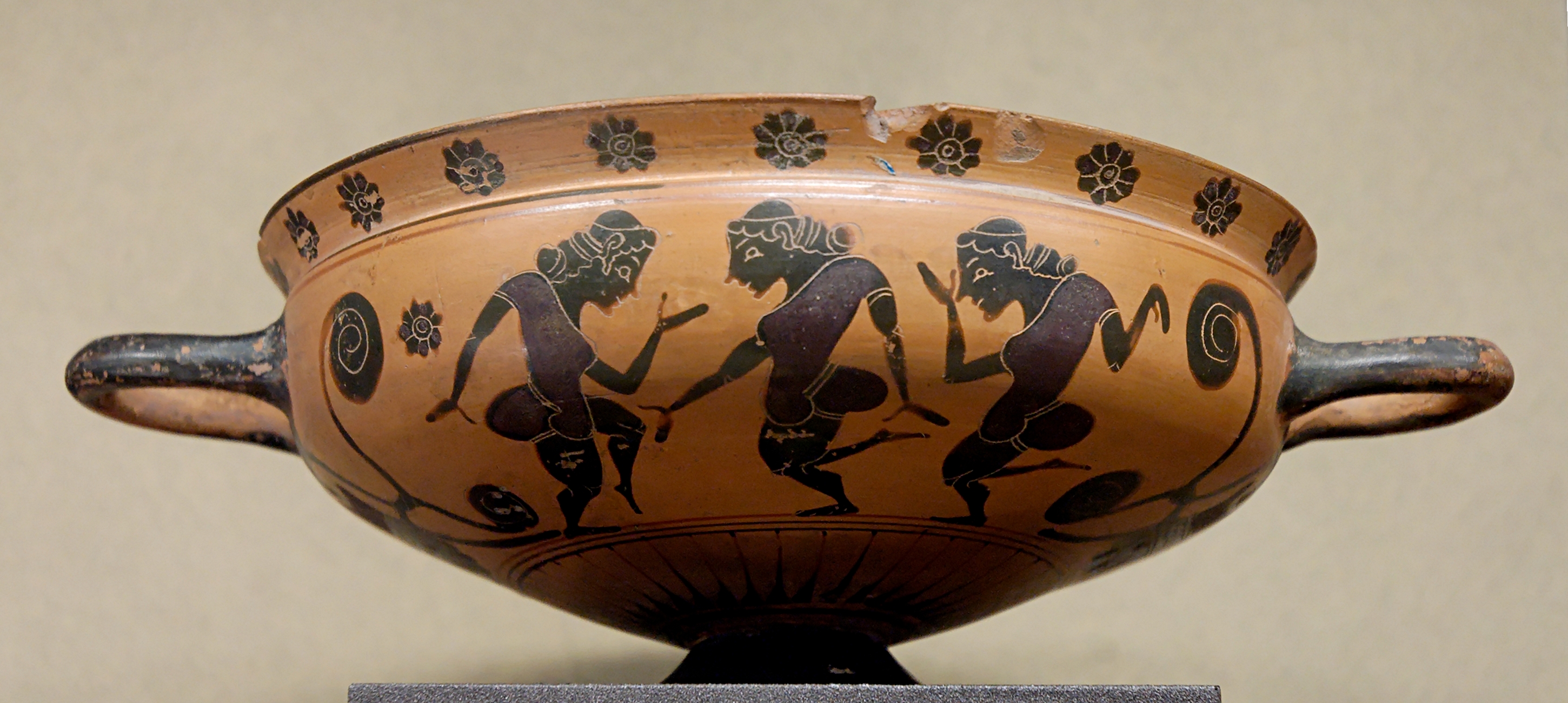

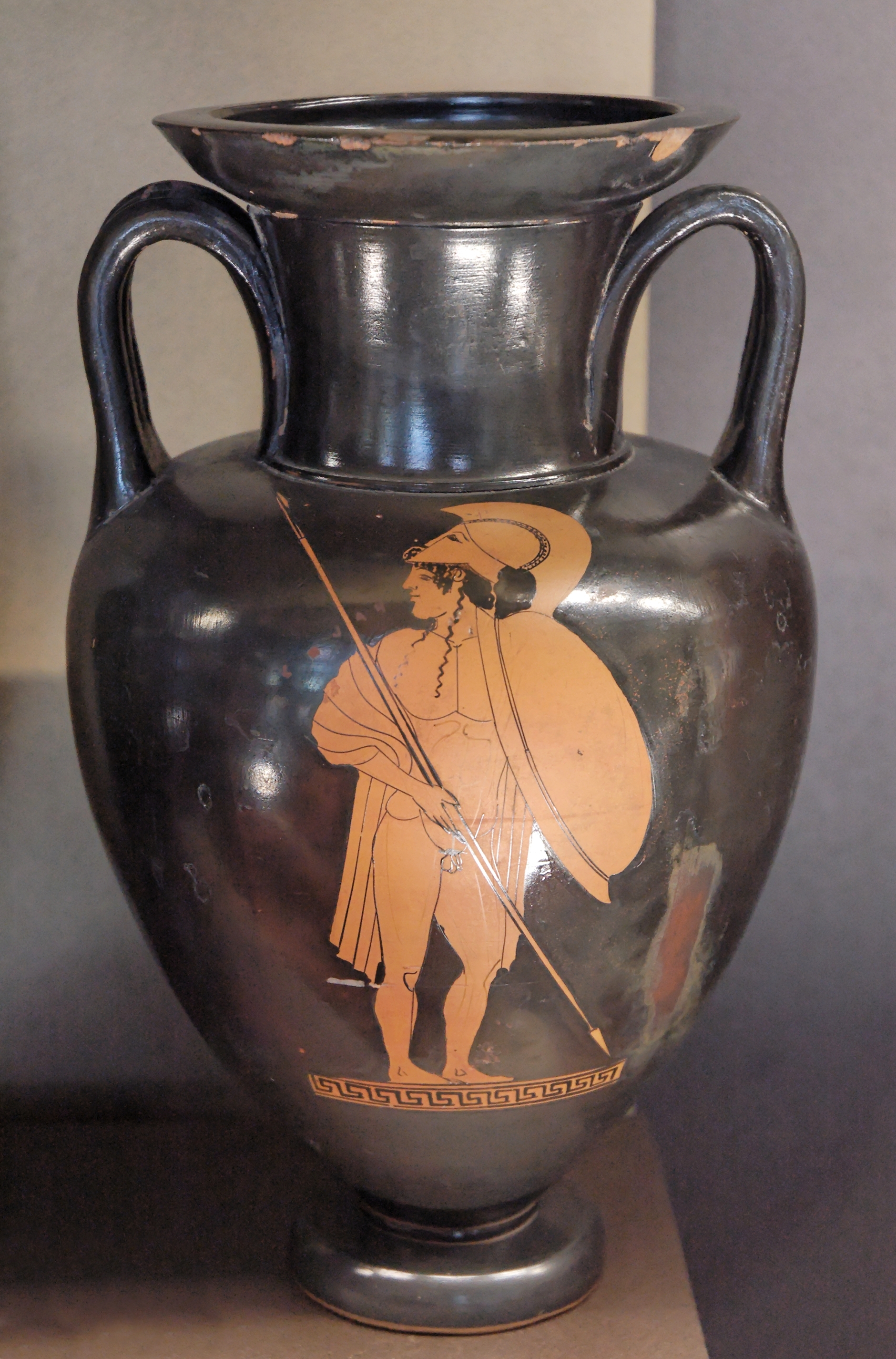
The pottery of ancient Greece has a long history and the form of Greek vase shapes has had a continuous evolution from Minoan pottery down to the Hellenistic period. As Gisela Richter puts it, the forms of these vases (by convention the term "vase" has a very broad meaning in the field, covering anything that is a vessel of some sort) find their "happiest expression" in the 5th and 6th centuries BC, yet it has been possible to date vases thanks to the variation in a form’s shape over time, a fact particularly useful when dating unpainted or plain black-gloss ware.
The task of naming Greek vase shapes is by no means a straightforward one. The endeavour by archaeologists to match vase forms with those names that have come down to us from Greek literature began with Theodor Panofka’s 1829 book Recherches sur les veritables noms des vases grecs, whose confident assertion that he had rediscovered the ancient nomenclature was quickly disputed by Gerhard and Letronne.
A few surviving vases were labelled with their names in antiquity; these included a hydria depicted on the François Vase and a kylix that declares, “I am the decorated kylix of lovely Phito” (BM, B450). Vases in use are sometimes depicted in paintings on vases, which can help scholars interpret written descriptions. Much of our written information about Greek pots come from such late writers as Athenaios and Pollux and other lexicographers who described vases unknown to them, and their accounts are often contradictory or confused. With those caveats, the names of Greek vases are fairly well settled, even if such names are a matter of convention rather than historical fact.
The following vases are mostly Attic, from the 5th and 6th centuries, and follow the Beazley naming convention. Many shapes derive from metal vessels, especially in silver, which survive in far smaller numbers. Some pottery vases were probably intended as cheaper substitutes for these, either for use or to be placed as grave goods. Some terms, especially among the types of kylix or drinking cup, combine a shape and a type or location of decoration, as in the band cup, eye cup and others. Some terms are defined by function as much as shape, such as the aryballos, which later potters turned into all sorts of fancy novelty shapes.
Overview
Main article: Pottery of ancient Greece
Greek pottery may be divided into four broad categories, given here with common types:
- storage and transport vessels, including the amphora, pithos, pelike, hydria, stamnos, pyxis,
- mixing vessels, mainly for symposia or male drinking parties, including the krater, dinos, and kyathos,
- jugs and cups, several types of kylix also just called cups, kantharos, phiale, skyphos, rhyton, mastos, and jug-types oinochoe and loutrophoros,
- vases for oils, perfumes and cosmetics, including the large lekythos, and the small aryballos, alabastron, and askos.
In addition, various standard types might be used as external grave-markers (in extra-large versions, sometimes in stone), funerary urns containing ashes, or as grave goods. Several types of vase, especially the taller ones, could be made in "plastic" forms (also called "figure vases" or "relief vases") where the body was shaped sculpturally (somewhat in the manner of the modern Toby jug), typically to form a human head.
Vase shapes
Image:Athena Herakles Staatliche Antikensammlungen 2301 B full.jpg|Amphora type A, c. 520 BC. Image:Amphora_Louvre_F12.jpg|Amphora type B. Image:Warrior departure Louvre F22.jpg|Amphora type C. Image:Greek_vase_Dionysos_attica_520_bC.jpg|Neck amphora, c. 520 BC. File:Exekias - Black-figure Belly Amphora with the Reclamation of Helen and Herakles and Kerberos - Walters 4816 - Side B.jpg|Belly amphora, with hardly a distinct neck Image:Pederastic courtship Louvre F20.jpg|Ovoid neck amphora Image:Nikosthenic amphora Louvre F99.jpg|Nikosthenic amphora, c. 530 BC. Image:Neck-amphora swordsman Louvre G216.jpg|Nolan amphora Image:Panathenaic_amphora_BM_B137.jpg|Panathenaic amphora, always large Image:Chariot_terma_Staatliche_Antikensammlungen_1452.jpg|Pseudo-panathenaic amphora, c. 500 BC. Image:Pointed amphora Louvre G30.jpg|Pointed amphora Image:Amphorae.jpg|Transport amphorae Image:Hydria Louvre F43.jpg|Hydria-black figure type Image:Hydria_Python_Louvre_K287.jpg|Hydria-red figure type or Kalpis Image:Women bath Asteas Lebes gamikos MAN Inv11445 n1.jpg|Lebes Gamikos, for weddings, c. 340 BC Image:Pelike woman youth BM F316.jpg|Pelike Image:Pithos_Louvre_CA4523.jpg|Pithos Image:Odysseus Sirens BM E440.jpg|Stamnos, c. 480–470 BC. Image:Dinos animals Louvre Cp11243.jpg|Dinos Image:Crater_Orestes_Pylades_Louvre_K404.jpg|Bell krater, c 330 BC. Image:Calyx-krater Kerch Louvre CA1262.jpg|Calyx-krater, c. 510 BC. Image:Phineus Boreads Louvre G364.jpg|Column krater Image:Crater_Actaeon_Louvre_CA3482.jpg|Volute krater Image:Kyathos Dionysos Louvre CA3309.jpg|Kyathos Image:Psykter warrior Louvre F319.jpg|Psykter Image:Kantharos sphinxes Louvre CA1339.jpg|Kantharos type A Image:Kantharos_Boeotia_Louvre_CA6121.jpg|Kantharos type B Image:Type A kylix MOS 1983 1157.JPG|Kylix type A Image:Triptolemos Painter MOS 1887 213.JPG|Kylix type B Image:Band cup Louvre F75.jpg|Band cup, with the main painting in a band low on the body. All these "cups" are covered by kylix Image:Droop_cup_Louvre_CA2512.jpg|Droop cup Image:Eye-cup kantharos Louvre F144.jpg|Eye-cup, painted with eyes Image:Kassel_cup_Louvre_E673.jpg|Kassel cup Image:Komast_cup_Louvre_E742.jpg|Komast cup, Athenian black-figure, with short stem, angled "offset" lip. Image:Lakonian cup BM GR 1968.2-13.1.jpg|Lakonian cup File:Lip-Cup sexual intercourse Ialysos black background.jpg|Lip cup, with the main painting just below the lip; the stem and footr are lost in this example Image:Siana_cup_Louvre_F67.jpg|Siana cup, Similar to Komast, with slightly longer stem, and painted on the inside. File:Merrythought Cup Antikensammlung Berlin.jpg|Merrythought cup, with distinctive "wishbone" handles Image:Mastos riders Louvre E740.jpg|Mastos, breast-shaped cup with pointed nipple base; handles optional Image:Peleus Thetis Cdm Paris 349.jpg|Mastoid cup, like a mastos but with flat base and often handles Image:Phiale Louvre L55.jpg|Phiale Image:Donkey_head_rhyton_Louvre_Cp3555.jpg|Rhyton, c. 430 BCE. Image:Skyphos_birds_Louvre_CA3822.jpg|Skyphos, c. 740 BC Image:Black-slip glaux skyphos Louvre ED294.jpg|Glaux skyphos Image:Hermogenes_skyphos_Louvre_S1836.jpg|Hermogenes skyphos Image:Tithonos_Eos_Louvre_G438.jpg|Oenochoe Shape 1 Image:Lampadedromia Louvre N3357.jpg|Oinochoe Shape 2 Image:Oinoche_Anthesteria_Louvre_L71.jpg|Oinochoe Shape 3 Image:Javelin thrower Louvre G243.jpg|Oinochoe Shape 7 Image:Olpe riders Louvre E647.jpg|Olpe Image:Alabastron Louvre CA1920.jpg|Alabastron, small holders for oil or perfume Image:Louvre_amphorisque_animaux_sirenes.JPG|Amphoriskos Image:Protocorinthian aryballos Louvre CA2919.jpg|Pyriform Aryballos Image:Globular aryballos Louvre Ele357.jpg|Globular aryballos File:Cockleshells aryballos Met 23.160.33.jpg|Fancy aryballos in the form of three cockle shells, 6th century BC Image:Acorn-lekythos Louvre MNB1320.jpg|Acorn lekythos Image:KAMA_Guerrier_s'armant.jpg|Deianeira lekythos, c. 550 BC. Image:NAMA_Thésée_&taureau.jpg|Shoulder or secondary lekythos, c. 500 BC. Image:NAMA_Circé&_Ulysse.jpg|Standard or cylinder lekythos c.490 BCE. Image:Aryballos-shaped_lekythos_Louvre_CA1727.jpg|Squat lekythos Image:Loutrophoros Louvre CA1960.jpg|Loutrophoros File:Loutrophoros Antikensammlung Kiel B 787 (3).jpg|"Huge" Loutrophoros, 330 BC
Image:Askos Louvre G447.jpg|Askos Image:Epichysis Louvre ED859.jpg|Epichysis Image:Tripod_exaleiptron_Louvre_CA927.jpg|Exaleiptron Image:Kernos Melos Sevres 3552.jpg|Kernos Image:Corinthian kothon Louvre CA3352.jpg|Kothon Image:Music lagynos Louvre M149.jpg|Lagynos Image:Lekane Louvre CA3059.jpg|Lekane Image:Lekanis_Louvre_Cp513-Cp202.jpg|Lekanis Image:Ionian lydion MAR Palermo NI1779.jpg|Lydion Image:Nestoris Louvre K534.jpg|Nestoris (Trozella) Image:Pinax prothesis Louvre MNB905.jpg|Pinax (plaque) Image:Phormiskos Louvre CA1418.jpg|Phormiskos (here a terracotta model) Image:Plate Euphorbos BM GR1860.4-4.1.jpg|Plate Image:Fish plate Louvre K588.jpg|Fish Plate Image:Black-glaze plemochoe Louvre CA3131.jpg|Plemochoe Image:Pyxis_Peleus_Thetis_Louvre_L55_by_Wedding_Painter.jpg|Pyxis, c. 470 BC. Image:Pointed pyxis Louvre CA6020.jpg|Pointed pyxis Image:Strainer_vase_Herakles_Louvre_CA822.jpg|Strainer vase
Styles of lips and feet
Image:Amphora Louvre F12 detail.jpg|Flaring lip Image:Pederastic courtship Louvre F20 detail.jpg|Inverted Echinus lip Image:Stamnos Dionysos Louvre G43 detail.jpg|Lip in several degrees Image:Warrior departure Louvre F22 detail.jpg|Torus lip
Image:Helen Menelaus Louvre G424 detail.jpg|Disk foot Image:Warrior youths Louvre F26 detail.jpg|Echinus foot
Notes
References
- Gisela M. A. Richter, Marjorie J. Milne, Shapes and Names of Athenian Vases, Metropolitan Museum of art, New York, 1935.
References
- Woodford, 12-14; [http://www.beazley.ox.ac.uk/tools/pottery/shapes/default.htm "Shapes" (see menu at left)], Beazley Archive, Oxford
- [http://www.beazley.ox.ac.uk/tools/pottery/shapes/komast.htm Beazley, Cups]
- [http://www.beazley.ox.ac.uk/tools/pottery/shapes/komast.htm Beazley, Cups]
This article was imported from Wikipedia and is available under the Creative Commons Attribution-ShareAlike 4.0 License. Content has been adapted to SurfDoc format. Original contributors can be found on the article history page.
Ask Mako anything about Typology of Greek vase shapes — get instant answers, deeper analysis, and related topics.
Research with MakoFree with your Surf account
Create a free account to save articles, ask Mako questions, and organize your research.
Sign up freeThis content may have been generated or modified by AI. CloudSurf Software LLC is not responsible for the accuracy, completeness, or reliability of AI-generated content. Always verify important information from primary sources.
Report