From Surf Wiki (app.surf) — the open knowledge base
Types of chocolate
Classification of different chocolate types
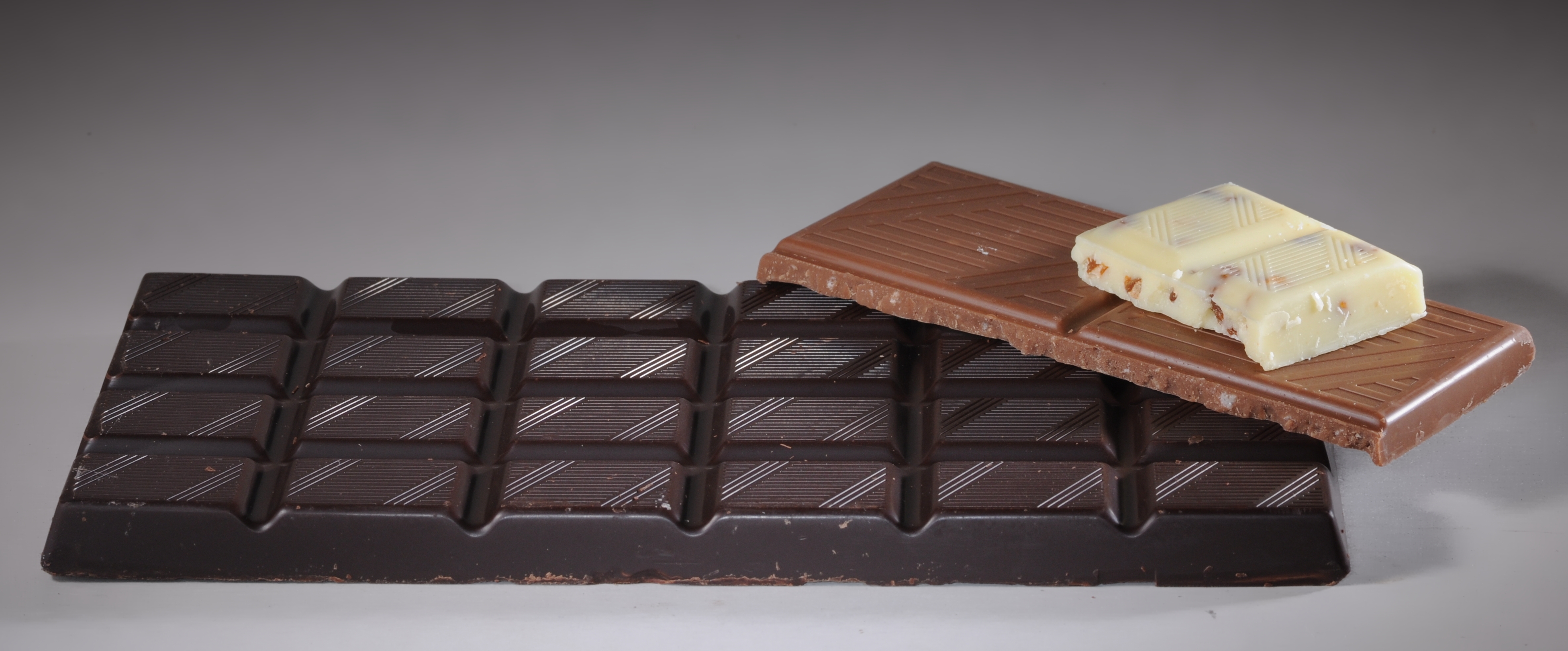
Classification of different chocolate types
Chocolate is a food made from roasted and ground cocoa beans mixed with fat (e.g. cocoa butter) and powdered sugar to produce a solid confectionery. There are several types of chocolate, classified primarily according to the proportion of cocoa and fat content used in a particular formulation.
Eating
Traditional
Dark
Main article: Dark chocolate

"Bittersweet chocolate" is a version of dark chocolate intended for baking with a low amount of sugar, with the sugar typically consisting of about 33% of the final mass. "Semi-sweet chocolate" includes more sugar, resulting in a somewhat sweeter confection, but the two are largely interchangeable in baking.
European Union rules specify a minimum of 35% cocoa solids. The U.S. Food and Drug Administration does not have a standard of identity for dark chocolate, but requires a minimum concentration of chocolate liquor of 15% for sweet chocolate and 35% for semisweet or bittersweet chocolate.
, there is no high-quality evidence that dark chocolate affects blood pressure significantly. However, a 2017 review found some moderate‐quality evidence that flavanol‐rich cocoa products may have a small (≈2 mmHg) short term lowering of blood pressure in mainly healthy adults.
Milk
Main article: Milk chocolate

Milk chocolate is solid chocolate made with milk. Differences in flavor between different brands and regions are largely due to differences in how the manufacturers handle the milk during production, such as by choosing powdered milk, condensed milk, chocolate crumb, or partially lipolyzed milk.
In 1875 a Swiss confectioner, Daniel Peter, developed a solid milk chocolate using condensed milk, which had been invented by Henri Nestlé, Peter's neighbor in Vevey.
White
Main article: White chocolate
White chocolate is made from cocoa butter, sugar and milk solids. It is ivory in color and lacks the dark appearance of other types of chocolate as it does not contain the non-fat components of cocoa (cocoa solids). Due to this omission, as well as its sweetness and the occasional use of additives, some consumers challenge whether white chocolate should be considered chocolate.
Of the three traditional types of chocolate, white chocolate is the least popular. It is sold in a variety of forms, including bars, chips and coating nuts. It is common for manufacturers to pair white chocolate with other flavors, such as matcha or berries. The taste and texture of white chocolate are divisive: admirers praise its texture as creamy, while detractors criticize its flavor as cloying and bland. White chocolate has a shorter shelf life than milk and dark chocolate, and easily picks up odors from the environment.
White chocolate is made in a five-step process. First, the ingredients are mixed to form a paste. Next, the paste is refined, reducing the particle size to a powder. It is then agitated for several hours (a process known as conching), after which further processing standardizes its viscosity and taste. Finally, the chocolate is tempered by heating, cooling and then reheating, which improves the product's appearance, stability and snap.
White chocolate was first sold commercially in tablet form in 1936 by the Swiss company Nestlé, and was long considered a children's food in Europe. It was not until the 1980s that white chocolate became popular in the United States. During the 21st century, attitudes towards white chocolate changed: markets for "premium" white chocolate grew, it became acceptable for adults in the UK to eat it, and in the US it was legally defined for the first time. A variant, blond chocolate, was created by slowly cooking white chocolate over several days.
Other
Aerated
Main article: Aerated chocolate
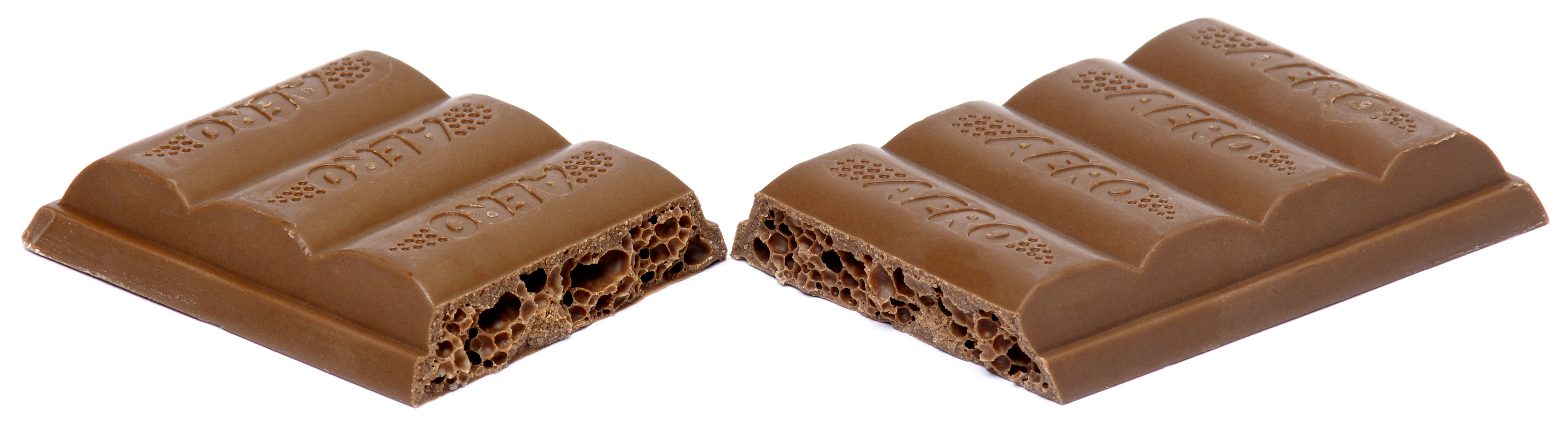
Chocolate that has been turned into foam through adding bubbles.
Gianduja
Main article: Gianduja (chocolate)
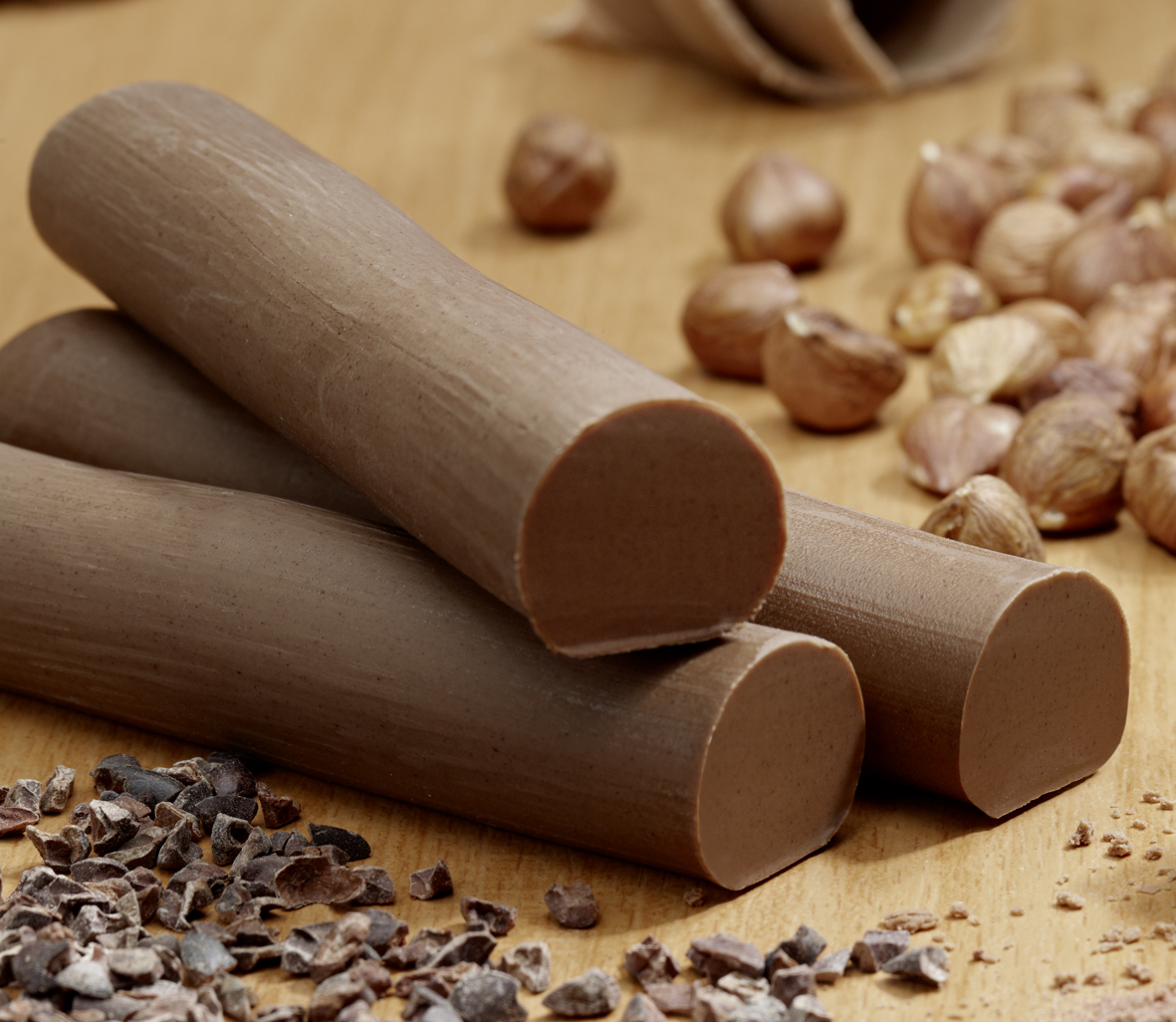
Gianduja chocolate is made by blending hazelnut butter with chocolate paste. Similarly to standard chocolate, it is made in both plain and milk versions. It may also contain other nuts, such as almond. As a bar, gianduja resembles regular chocolate, excepting the fact that it is significantly softer due to the presence of hazelnut oil.
Organic
Main article: Organic chocolate
Organic chocolate is chocolate which has been certified organic, generally meaning that there are no synthetic fertilizers or pesticides used in growing the cocoa beans producing the chocolate. As of 2016, it was a growing sector in the global chocolate industry. Organic chocolate is a socially desirable product for some consumers.
Raw
Main article: Raw chocolate
Raw chocolate is chocolate that has not been processed, heated, or mixed with other ingredients. It is sold in chocolate-growing countries and to a lesser extent in other countries. It is often promoted as being healthy. Raw chocolate includes many essential antioxidants, minerals, and vitamins. This includes protein, iron, and fiber.
Ruby
Main article: Ruby chocolate

Ruby chocolate is made from the Ruby cocoa bean, resulting in a distinct red color and a different flavor, described as "sweet yet sour". It was created by Barry Callebaut, a Belgian–Swiss cocoa company. The variety was in development from 2004, and was released to the public in 2017. It has been debated by chocolate experts whether ruby chocolate constitutes a new variety of chocolate or if it is a marketing strategy.
Confectionery
Baking
Main article: Baking chocolate

Baking chocolate, or cooking chocolate, is chocolate intended to be used for baking and in sweet foods that may or may not be sweetened. Dark chocolate, milk chocolate, and white chocolate, are produced and marketed as baking chocolate. However, lower quality baking chocolate may not be as flavorful compared to higher-quality chocolate, and may have a different mouthfeel.
Poorly tempered or untempered chocolate may have whitish spots on the dark chocolate part, called chocolate bloom; it is an indication that sugar or fat has separated due to poor storage. It is not toxic and can be safely consumed.
In the US, baking chocolate containing no added sugar may be labeled "unsweetened chocolate".
Couverture{{Anchor|Types of chocolate#Couverture}}
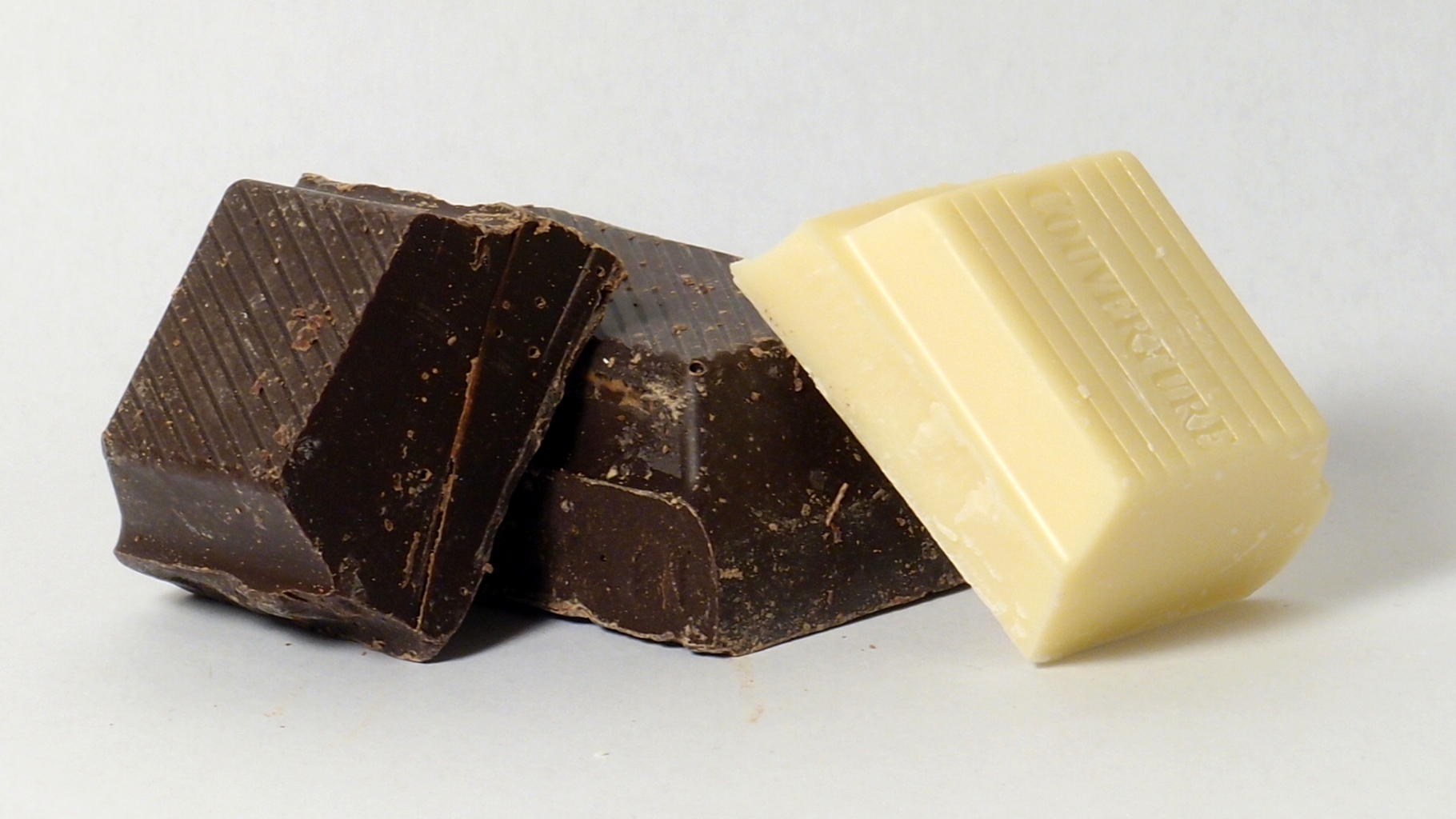
Couverture chocolate is a class of high-quality chocolate containing a higher percentage of cocoa butter than other chocolate which is precisely tempered. Couverture chocolate is used by professionals for dipping, coating, molding and garnishing ('couverture' means 'covering' in French). Popular brands of couverture chocolate used by pastry chefs include: Valrhona, Lindt & Sprüngli, Scharffen Berger, Callebaut, and Guittard.
Compound{{Anchor|Types of chocolate#Compound}}

Compound chocolate is the name for a confection combining cocoa with other vegetable fats, usually tropical fats or hydrogenated fats, as a replacement for cocoa butter. It is often used for candy bar coatings. In many countries it can not legally be called "chocolate".
Modeling{{Anchor|Types of chocolate#Modeling}}
Modeling chocolate is a chocolate paste made by melting chocolate and combining it with corn syrup, glucose syrup, or golden syrup. It is primarily used by cakemakers and pâtisseries to add decoration to cakes and pastries.
By country
During the 20th century, chocolate was categorized based on where it was manufactured. During the 21st century, there was a shift away from this, in favor of describing the origins of the cocoa beans.
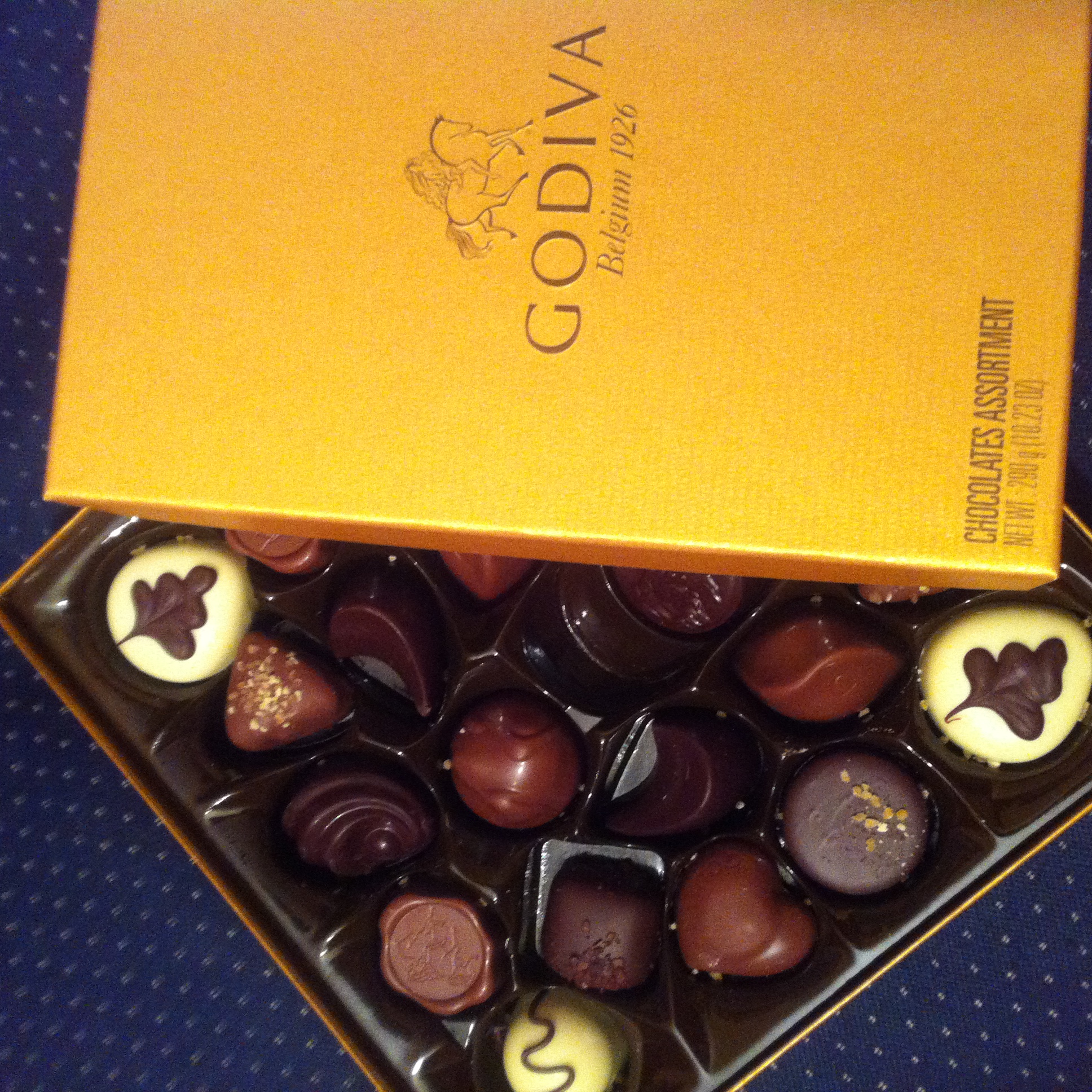
Belgium
Main article: Belgian chocolate}}Belgian chocolate, according to academic Kristy Leissle, does not denote flavor or texture, but refers to [[bonbon]]s.{{Sfnp, Leissle, 2018
France
Main article: French chocolate
French chocolate's flavor is that of a dark roast and smooth texture.
Switzerland
Main article: Swiss chocolate
Swiss chocolate has a milky flavor and smooth texture.
Legal definitions
Canada
The legislation for cocoa and chocolate products in Canada is found in Division 4 of the Food and Drug Regulations (FDR), under the Food and Drugs Act (FDA). The Canadian Food Inspection Agency (CFIA) is responsible for the administration and enforcement of the FDR and FDA (as it relates to food).
| Product | Cocoa butter | Milk solids | Milk fat | Fat-free cocoa solids | Cocoa solids |
|---|---|---|---|---|---|
| Milk chocolate | ≥ 15% | ≥ 12% | ≥ 3.39% | ≥ 2.5% | ≥ 25% |
| Sweet chocolate | ≥ 18% | ≥ 12% | ≥ 31% | ||
| Chocolate, bittersweet chocolate, semi-sweet chocolate or dark chocolate | ≥ 18% | ≥ 14% | ≥ 35% | ||
| White chocolate | ≥ 20% | ≥ 14% | ≥ 3.5% |
The use of cocoa butter substitutes in Canada is not permitted. Chocolate sold in Canada cannot contain vegetable fats or oils.
The only sweetening agents permitted in chocolate in Canada are listed in Division 18 of the Food and Drug Regulations. Artificial sweeteners such as aspartame, sucralose, acesulfame potassium, and sugar alcohols (sorbitol, maltitol, etc.) are not permitted.
Products manufactured or imported into Canada that contain non-permitted ingredients (vegetable fats or oils, artificial sweeteners) cannot legally be called "chocolate" when sold in Canada. A non-standardized name such as "candy" must be used.
European Union and United Kingdom
There has been disagreement in the EU about the definition of chocolate; this dispute covers several issues, including the types of fat and the quantity of cocoa used. In 1999, however, the EU resolved the fat issue by allowing up to 5% of chocolate's content to be one of six alternatives to cocoa butter: illipe oil, palm oil, sal, shea butter, kokum gurgi, or mango kernel oil.
Products labelled as "family milk chocolate" elsewhere in the European Union are permitted to be labelled as simply "milk chocolate" in Malta, the UK and the Republic of Ireland.
| Product | Total dry cocoa solids | Cocoa butter | Non-fat cocoa solids | Total fat | Milk fat | Milk solids | Flour/starch |
|---|---|---|---|---|---|---|---|
| Dark chocolate | ≥ 35% | ≥ 18% | ≥ 14% | ||||
| Couverture chocolate | ≥ 35% | ≥ 31% | ≥ 2.5% | ||||
| Chocolate vermicelli or flakes | ≥ 32% | ≥ 12% | ≥ 14% | ||||
| Milk chocolate | ≥ 25% | ≥ 2.5% | ≥ 25% | ≥ 3.5% | ≥ 14% | ||
| Couverture milk chocolate | ≥ 25% | ≥ 2.5% | ≥ 31% | ≥ 3.5% | ≥ 14% | ||
| Milk chocolate vermicelli or flakes | ≥ 20% | ≥ 2.5% | ≥ 12% | ≥ 3.5% | ≥ 12% | ||
| Family milk chocolate | ≥ 20% | ≥ 2.5% | ≥ 25% | ≥ 5% | ≥ 20% | ||
| Cream chocolate | ≥ 25% | ≥ 2.5% | ≥ 25% | ≥ 5.5% | ≥ 14% | ||
| Skimmed milk chocolate | ≥ 25% | ≥ 2.5% | ≥ 25% | ≤ 1% | ≥ 14% | ||
| White chocolate | ≥ 20% | ≥ 14% | |||||
| Chocolate a la taza | ≥ 35% | ≥ 18% | ≥ 14% | ≤ 8% | |||
| Chocolate familiar a la taza | ≥ 30% | ≥ 18% | ≥ 12% | ≤ 18% |
Japan
In Japan, "chocolate products" are classified on a complex scale.
Chocolate materials:
- Pure chocolate material
- : Cocoa content ≥35%, cocoa butter ≥18%, sucrose ≤55%, lecithin ≤0.5%, no additives other than lecithin and vanilla flavoring, C, water ≤3%
- Pure milk chocolate material
- : Cocoa content ≥21%, cocoa butter ≥18%, milk solids ≥14%, milk fats ≥3.5%, sucrose ≤55%, lecithin ≤0.5%, no additives other than lecithin and vanilla flavoring, no fats other than cocoa butter and milk fats, water ≤3%
- Chocolate material
- : Cocoa content ≥35%, cocoa butter ≥18%, water ≤3%. It is also permitted to substitute milk solids for cocoa content as follows: cocoa content ≥21%, cocoa butter ≥18%, combined milk solids & cocoa content ≥35%, milk fats ≥3%, water ≤3%.
- Milk chocolate material
- : Cocoa content ≥21%, cocoa butter ≥18%, milk solids ≥14%, milk fats ≥3%, water ≤3%
- Quasi chocolate material
- : Cocoa content ≥15%, cocoa butter ≥3%, fats ≥18%, water ≤3%
- Quasi milk chocolate material
- : Cocoa content ≥7%, cocoa butter ≥3%, fats ≥18%, milk solids ≥12.5%, milk fats ≥2%, water ≤3%
Chocolate products:
Products using milk chocolate or quasi milk chocolate as described above are handled in the same way as chocolate / quasi chocolate.
- Chocolate
- : Processed chocolate products made from chocolate material itself or containing at least 60% chocolate material. Processed chocolate products must contain at least 40% chocolate material by weight. Amongst processed chocolate products, those containing at least 10% by weight of cream and no more than 10% of water can be called raw chocolate
- Chocolate sweet
- : Processed chocolate products containing less than 60% chocolate material
- Quasi chocolate
- : The quasi symbol should officially be circled. Processed quasi chocolate products made from quasi chocolate material itself or containing at least 60% quasi chocolate material.
- Quasi chocolate sweet
- : Processed quasi chocolate products containing less than 60% quasi chocolate material
United States
The U.S. Food and Drug Administration (FDA) regulates the naming and ingredients of cocoa products:
Semisweet and bittersweet are terms traditionally used in the United States to indicate the amount of added sugar in dark chocolate. Typically, bittersweet chocolate has less sugar than semisweet chocolate, but the two are interchangeable when baking. Both must contain a minimum of 35% cocoa solids.
In the American chocolate industry chocolate liquor is the ground or melted state of the nib of the cacao bean, containing roughly equal parts cocoa butter and solids.
| Product | Chocolate liquor | Milk solids | Sugar | Cocoa fat | Milk fat |
|---|---|---|---|---|---|
| Buttermilk chocolate | ≥ 10% | ≥ 12% | |||
| Milk chocolate | ≥ 10% | ≥ 12% | ≥ 3.39% | ||
| Mixed dairy product chocolates | ≥ 10% | ≥ 12% | |||
| Skim milk chocolate | ≥ 10% | ≥ 12% | |||
| Sweet chocolate | ≥ 15% | ||||
| Semisweet or bittersweet chocolate | ≥ 35% | ||||
| White chocolate | ≥ 14% | ≤ 55% | ≥ 20% | ≥ 3.5% |
In March 2007, the Chocolate Manufacturers Association, whose members include Hershey's, Nestlé, and Archer Daniels Midland, began lobbying the U.S. Food and Drug Administration (FDA) to change the legal definition of chocolate to allow the substitution of "safe and suitable vegetable fats and oils" (including partially hydrogenated vegetable oils) for cocoa butter in addition to using "any sweetening agent" (including artificial sweeteners) and milk substitutes. Currently, the FDA does not allow a product to be referred to as "chocolate" if the product contains any of these ingredients. To work around this restriction, products with cocoa substitutes are often branded or labeled as "chocolatey" or "made with chocolate".
Notes
References
Sources
References
- Matsko Hood, Karen Jean. (2015). "Chocolate Delights Cookbook: A Collection of Chocolate Recipes". Whispering Pine Press International, Inc.
- {{CELEX. 32000L0036
- (2017). "Effect of cocoa on blood pressure". Cochrane Database of Systematic Reviews.
- Beckett, Stephen T. (August 2003). "Is the taste of British milk chocolate different?". International Journal of Dairy Technology.
- Mintz, Sidney. (2015). "The Oxford Companion to Sugar and Sweets". Oxford University Press.
- Moskin, Julia. (13 February 2008). "Dark may be king, but milk chocolate makes a move". The New York Times.
- Beckett, Steve T.. (2011). "Industrial Chocolate Manufacture and Use". [[John Wiley & Sons]].
- Medrich, Alice. (2015). "Pure Dessert: True Flavors, Inspiring Ingredients, and Simple Recipes". [[Artisan Books]].
- Mitch Lipka. (11 February 2015). "Is organic chocolate worth the price?". Reuters.
- Cahalane, Claudia. (30 March 2007). "A raw deal". [[The Guardian]].
- "FoodData Central".
- McGee, Oona. (20 January 2018). "We try the world's first ruby chocolate… inside a Japanese Kit Kat【Taste Test】".
- Sarah Young. (5 September 2017). "Scientists just invented a brand new flavour of chocolate". [[The Independent]].
- Corstjens, Marcel. (2019). "The promise of targeted innovation". MIT Sloan Management Review.
- Risley, M. S.. (2009). "The Tante Marie's Cooking School Cookbook: More Than 250 Recipes for the Passionate Home Cook". Simon & Schuster.
- Gisslen, W.. (2012). "Professional Baking". Wiley.
- (20 August 2009). "Bloom Formation on Poorly-Tempered Chocolate and Effects of Seed Addition". Journal of the American Oil Chemists' Society.
- "Responsibilities of the Agency: 11. (3) (a)". Department of Justice Canada.
- "Division 4: Cocoa and Chocolate Products". Department of Justice Canada.
- "Division 18: Sweetening Agents". Department of Justice Canada.
- "EU Agrees on Chocolate Definition Upsetting Major Cocoa Producers".
- "Guidance on the Cocoa and Chocolate Products Regulations 2003".
- "Title 21 – Food and Drugs, Chapter I, Sub chapter B – Food for Human Consumption, Part 163 – Cocoa Products". Food and Drug Administration Department of Health and Human Services.
- "Types of Chocolate Products".
- Mushet, C.. (2008). "The Art and Soul of Baking". Andrews McMeel Publishing.
- (2 January 2008). "Making Sense of % Cacao". CMA – Chocolate Manufacturers Association.
- Bragg, Lynn M.. (April 2007). "To Our Stakeholders". Chocolate Manufacturers Association.
- ([https://www.fda.gov/ohrms/dockets/dockets/07p0085/07p-0085.htm 2007P-0085] {{webarchive. link. (22 May 2007 , [http://www.typetive.com/blogimages/07p-0085AppendixC.pdf Copy of 2007P-0085 Appendix C] {{Webarchive). link. (26 March 2019 – search for cacao))
This article was imported from Wikipedia and is available under the Creative Commons Attribution-ShareAlike 4.0 License. Content has been adapted to SurfDoc format. Original contributors can be found on the article history page.
Ask Mako anything about Types of chocolate — get instant answers, deeper analysis, and related topics.
Research with MakoFree with your Surf account
Create a free account to save articles, ask Mako questions, and organize your research.
Sign up freeThis content may have been generated or modified by AI. CloudSurf Software LLC is not responsible for the accuracy, completeness, or reliability of AI-generated content. Always verify important information from primary sources.
Report