From Surf Wiki (app.surf) — the open knowledge base
Type 23 frigate
Class of frigates built for the Royal Navy
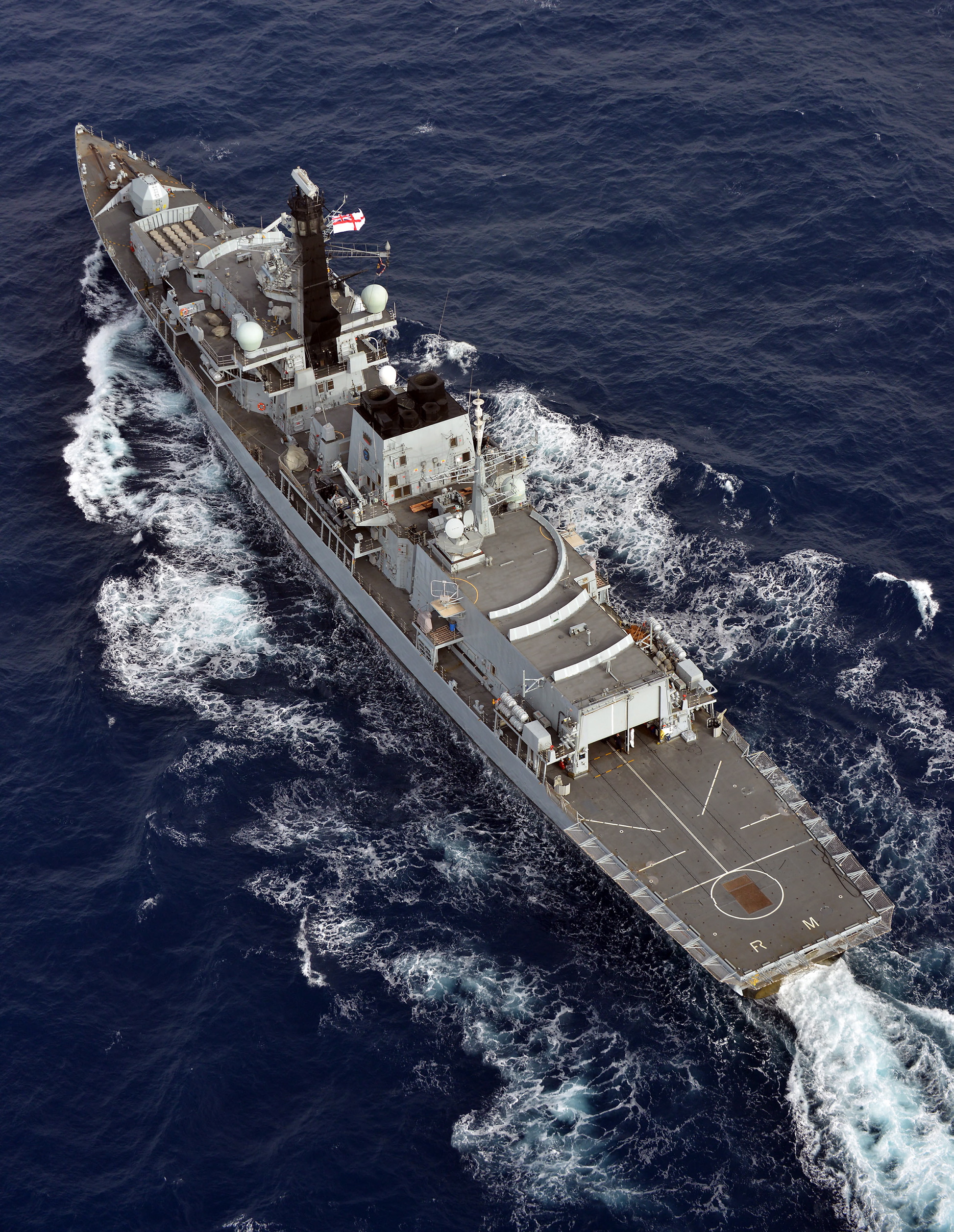
Class of frigates built for the Royal Navy
| Field | Value | ||||||
|---|---|---|---|---|---|---|---|
| section1 | {{Infobox ship/image | ||||||
| image | HMS Sutherland (F81) MoD.jpg | ||||||
| image_caption | HMS Sutherland in December 2012 | ||||||
| section2 | {{Infobox ship/class overview | ||||||
| name | Type 23 frigate | ||||||
| builders | Yarrow Shipbuilders and Swan Hunter | ||||||
| operators | * | ||||||
| class_before | * Type 22 frigate | ||||||
| cost | £130 million per ship | ||||||
| in_commission_range | 24 November 1987 | ||||||
| total_ships_planned | 16 | ||||||
| total_ships_completed | 16 | ||||||
| total_ships_active | 7 Royal Navy, 3 Chilean Navy | ||||||
| total_ships_retired | 6 (Royal Navy) | ||||||
| section3 | {{Infobox ship/characteristics | ||||||
| type | Anti-submarine warfare frigate | ||||||
| displacement | 4900 t | ||||||
| length | 133.0 m | ||||||
| beam | 16.1 m | ||||||
| draught | 7.3 m | ||||||
| propulsion | * CODLAG: | ||||||
| ** 4 × {{convert | 1510 | kW | abbr | on | 0}} Paxman Valenta 12CM diesel generators (Non-PGMU ships) | ||
| ** 2 × GEC electric motors delivering {{convert | 2980 | kW | abbr | on | 0}} each | ||
| ** 2 × Rolls-Royce Marine Spey SM1C delivering {{convert | 19500 | kW | abbr | on | 0}} | ||
| speed | In excess of 28 kn | ||||||
| range | 7500 nmi at 15 kn | ||||||
| complement | 185 (accommodation for up to 205) | ||||||
| EW | * UAT Mod 1 | ||||||
| **1 × 32-cell Sea Ceptor GWS 35 Vertical Launching System (VLS) canisters for 32 missiles (1–25+ km)<ref>{{cite web | url | https://www.edrmagazine.eu/royal-navy-unveiled-sea-ceptor-and-launched-first-user-group-at-dsei-2017 | title=Royal Navy unveiled Sea Ceptor and launched first user group at DSEI 2017 | last=Peruzzi | first=Luca | work=European Defence Review | access-date=21 June 2021 }} (replaced original Sea Wolf SAM) |
| **2 × quad Harpoon Block 1C (originally fit, retired from most ships 2023, retained on F229 as of late 2024);<ref>{{cite tweet | url | https://x.com/NavyLookout/status/1876620077660880897/photo/1 | user=NavyLookout | number=1876620077660880897 | title=@NavyLookout. @HMSLANCASTER conducted boarding operations under the command of CTF-150 to deter and disrupt illicit activities on December 31st. | date=7 January 2025 | access-date=8 January 2025}} being replaced by Naval Strike Missile (fit to F79, F82 & F239 as of early 2025) |
| **2 × Miniguns (replaced by Browning .50 caliber heavy machine guns as of 2023)<ref>{{cite web | url | https://www.navylookout.com/in-focus-the-50-cal-heavy-machine-gun-in-royal-navy-service/ | title=In focus: the 50 cal heavy machine gun in Royal Navy service | publisher=Navy Lookout | date=5 May 2023 | access-date=5 May 2023}} | |
| aircraft | * 1 × Wildcat HMA2, armed with: | ||||||
| * 2 × anti-submarine torpedoes or Martlet anti-ship (ASM)/air-to-air missiles,<ref>{{Cite web | date | 2 November 2024 | title=The Royal Navy has enhanced its ability to thwart drone attack after helicopter crews downed a pilotless aircraft off the Welsh coast. | url=https://www.royalnavy.mod.uk/news/2024/november/02/20241102-martlet-air-to-air | access-date=2 November 2024 | website=Royal Navy}} initially deployed with RN carrier strike group helicopters in 2021; Sea Venom ASM reached initial operating capability in 2025 and is projected to achieve full operational capability in 2026. | |
| *2 x Peregrine ISR UAV (from mid-2024 on F229)<ref>{{cite web | url | https://www.navylookout.com/peregrine-rotary-wing-uav-to-enter-service-with-the-royal-navy/ | title=Peregrine rotary wing UAV to enter service with the Royal Navy | website=Navy Lookout | date=10 February 2023 | access-date=29 July 2024}} | |
| aircraft_facilities | * Flight deck | ||||||
| boats | 2 × Pacific 24 RIBs |
-
Type 26 frigate (under construction)
-
Type 31 frigate (under construction)
- 4 × 1510 kW Paxman Valenta 12CM diesel generators (Non-PGMU ships)
- 4 × 1,650 kW MTU 12V4000 M53 diesel generators (PGMU ships)
- 2 × GEC electric motors delivering 2980 kW each
- 2 × Rolls-Royce Marine Spey SM1C delivering 19500 kW
-
Seagnat
-
Type 182 towed torpedo decoy
-
Surface Ship Torpedo Defence
-
Anti-air missiles:
- 1 × 32-cell Sea Ceptor GWS 35 Vertical Launching System (VLS) canisters for 32 missiles (1–25+ km) (replaced original Sea Wolf SAM)
-
Anti-ship missiles:
- 2 × quad Harpoon Block 1C (originally fit, retired from most ships 2023, retained on F229 as of late 2024); being replaced by Naval Strike Missile (fit to F79, F82 & F239 as of early 2025)
-
Anti-submarine torpedoes:
- 2 × twin 12.75in (324mm) Sting Ray torpedo tubes
-
Guns:
- 1 × BAE 4.5inch Mk8 naval gun
- 2 × 30mm DS30M Mk2 guns, or, 2 × 30mm DS30B guns
- 2 × Miniguns (replaced by Browning .50 caliber heavy machine guns as of 2023)
- 4 × General-purpose machine guns
-
2 × anti-submarine torpedoes or Martlet anti-ship (ASM)/air-to-air missiles, initially deployed with RN carrier strike group helicopters in 2021; Sea Venom ASM reached initial operating capability in 2025 and is projected to achieve full operational capability in 2026.
-
or
-
1 × Westland Merlin HM2, armed with;
-
4 × anti-submarine torpedoes
-
Plus
-
2 x Peregrine ISR UAV (from mid-2024 on F229)
-
Enclosed hangar
The Type 23 frigate or Duke class is a class of frigates built for the United Kingdom's Royal Navy. The ships are named after British Dukes, thus leading to the class being commonly known as the Duke class. The first Type 23, , was commissioned in 1989, and the sixteenth, was commissioned in June 2002. They form the core of the Royal Navy's destroyer and frigate fleet and serve alongside the Type 45 destroyers. They were designed for anti-submarine warfare, but have been used for a range of uses. Eight Type 23 frigates remain in service with the Royal Navy, with three vessels having been sold to the Chilean Navy and five being retired since 2021.
The Royal Navy's Type 23 frigates will be replaced by the Type 26 Global Combat Ship and the Type 31 frigate. it is anticipated that HMS St Albans will be the last to retire from the Royal Navy, in 2035.
Development
When first conceived in the late 1970s, the Type 23 was intended to be a light anti-submarine frigate with a towed array sonar to counter Soviet nuclear submarines operating in the North Atlantic. The Type 23 would be replacing the frigates (which had entered service in the 1960s) and the Type 21 frigate (a general purpose design that had recently entered service) as the backbone of the Royal Navy's surface ship anti-submarine force. The procurement of the class was announced in the 1981 Defence White Paper as "simpler and cheaper than the Type 22 [with] its characteristics... framed with an eye to the export market as well as Royal Navy needs."
The ship was designed by the Royal Corps of Naval Constructors, in close partnership with the prime contractor, Yarrow Shipbuilders. No anti-air warfare system was planned, however the lessons learned during the Falklands War led to the introduction of the vertically launched Sea Wolf missile; In June 1984 BAe Dynamics was awarded a development contract for the missile system. Unlike conventional Sea Wolf, the missile is boosted vertically until it clears the ship's superstructure, and then turns to fly directly to the target. Consequently, the ship's structure does not impose no-fire directions that would delay or inhibit missile firing in a conventionally launched system. With the addition of Harpoon surface-to-surface missiles and a medium calibre gun for naval gunfire support, the Type 23 had evolved into a more complex and balanced vessel optimised for general warfare, which introduced a host of new technologies and concepts to the Royal Navy. These included extensive radar cross-section reduction design measures, automation to substantially reduce crew size, a combined diesel-electric and gas (CODLAG) propulsion system providing very quiet running for anti-submarine operations and a large range.
In December 1986 the procurement of a Ferranti command and control system was cancelled as the specification was deemed to be insufficient to meet the demands of a modern warship, particularly the processing demands of the towed sonar array. Dowty-Sema won a contract for a replacement command and control system in August 1989, however, the delay meant early Type 23s entered service without the capability to use the Sea Wolf missile system in combat.
It was reported in 1998 to the House of Commons that: "Type 23 frigates achieved approximately 85–89 percent average availability for operational service in [the previous] five years with the exception of 1996 when the figure dropped to just over 80 per cent due to a number of ships experiencing a particular defect. This discounts time spent in planned maintenance."
Unlike the Type 45 destroyer, the Type 23 frigate does not have the capability to act as a flagship.
Programme costs
Prior to the Falklands War the cost of the Type 23 frigates was estimated at £75 million each (September 1980 prices) Changes following the experiences in the Falklands, including improved damage control and fire precautions, led to an increased cost estimated at £110 million (1984–85 prices) By 2001, the Ministry of Defence said the cost of was £135.449 million and the remaining ships would have a final cost between £60 million and £96 million each. The Ministry of Defence said in 1998 that the Merlin ASW helicopter was costing them £97M each (this was for an order for 44 airframes), and that this was 57% of the cost of Type 23. From this it can be calculated that the cost of Type 23 was £170.1M each. The Government's declared policy for construction contracts for Type 23 was "...competition, the aim being to secure best value for money for the defence budget." while maintaining "sufficient warship-building capacity to meet likely future defence requirements and a competitive base"
HMS Norfolk was the first of the class to enter service, commissioned into the fleet on 1 June 1990 at a cost of £135.449 million; later vessels cost £60–96 million.
Upgrades and future technologies

Mid-life refit
The class underwent mid-life refits which lasted 12–18 months and cost £15-20m. Aside from refurbishment of the mess decks and drive train, the ships are being retrofitted with a transom flap which can add up to 1 kn to the top speed and reduce fuel consumption by 13%, and Intersleek anti-fouling paint which added 2 kn to the top speed of the carrier Ark Royal. Although the top speed of the Duke class is commonly quoted as 28 knots, the caption of an official Navy photo suggests that Lancaster was capable of 32 knots even before her mid-life refit. The Sea Wolf Mid Life Update (SWMLU) improves the sensors and guidance of the missiles, point defences are further improved with new remotely operated 30 mm guns, and Mod 1 of the Mk8 main gun has an all-electric loading system and a smaller radar cross-section. The communications and command systems are also upgraded.
A further Life Extension (LIFEX) Upkeep project saw the Sea Wolf missiles replaced with the new Sea Ceptor anti-air defence missiles; these were first test-fired from HMS Argyll on 4 September 2017.
Sonar 2087
Sonar 2087 is described by its manufacturer as "a towed-array system that enables Type 23 frigates to hunt the latest submarines at considerable distances and locate them beyond the range at which they [submarines] can launch an attack." Sonar 2087 was fitted to eight Type 23 frigates in mid-life refits between 2004 and 2012; the five oldest Type 23 frigates, HMS Montrose, Monmouth, Iron Duke, Lancaster and Argyll are not scheduled to receive Sonar 2087. These ships will instead continue to be employed across the normal range of standing Royal Navy deployments. The Chilean Navy is procuring a number of Sonar 2087 towed arrays from Thales Underwater Systems to equip its multipurpose frigates.
Artisan 3D radar

Main article: Type 997 Artisan radar
The Type 23's original medium-range radar was replaced by BAE Systems Type 997 Artisan 3D radar; the project was worth £100 million and the contract was announced on 4 August 2008. It is a medium-range radar designed to be capable of operating effectively in littoral zones and improving air-defence, anti-surface (anti-ship) and air traffic management capabilities of the Type 23 frigates. The radar is also designed to combat complex jammers. HMS Iron Duke was the first Type 23 frigate to receive the Artisan radar during her refit in 2012–13.
It is claimed the radar is five times more capable than the Type 996 radar it replaces.
Common Anti-Air Modular Missile
CAMM(M), the maritime variant of the Common Anti-Air Modular Missile, started to replace the Sea Wolf missiles on the Type 23 frigates from 2016. CAMM(M) has a longer range of 1–25+ km compared to the 1–10 km offered by the Sea Wolf missile. An option exists to give the missile a surface-attack capability, though it is currently understood the Royal Navy will not take that option, because of cost. Like Sea Wolf, CAMM(M) will be VLS launched; however due to its design, CAMM(M) can be packed much more tightly into the VLS, with up to four CAMM(M) fitting into the space occupied by one Sea Wolf missile. CAMM(M) is known as Sea Ceptor in Royal Navy service.
Martlet Lightweight Multirole Missile
On an unspecified date in early 2019, tested a modified mounting for the 30mm cannon which incorporated a launcher for five 'Martlet' Lightweight Multirole Missiles, by firing four of them at a small speedboat target at the Aberporth range in Wales. The concept of mounting the missile alongside the 30mm Bushmaster cannon was tested just 5 months after the idea's conception.
The intended role of the Martlet is to further extend the Type 23's capabilities against small, fast moving targets beyond the current 30mm, GPMG and Minigun options to provide a long range 'stand-off' ability. However, a 2023 report suggested that the tests had not been deemed successful due to efflux management issues on the Type 23. The missile is therefore likely to be limited to employment on the Wildcat helicopter.
Anti-ship missile
In March 2019, a study commenced for an interim replacement for the ageing Harpoon anti-ship missiles, until completion of the Anglo-French Future Cruise/Anti-Ship Weapon (FC/ASW) programme which was scheduled to enter service in the 2030s. The interim replacement missile was originally planned to be fitted to five of the newer Type 23 frigates.
In November 2021, then First Sea Lord, Admiral Tony Radakin, said that the program had been paused and would likely be cancelled. In February 2022, the project was cancelled. However, in July 2022 the Defence Secretary confirmed that the program had been restarted. In November 2022, it was announced that the Royal Navy would receive the Naval Strike Missile (NSM), which will be fitted to a total of 11 vessels, both Type 23 frigates and Type 45 destroyers.
In 2021, it was reported that only two frigates, Montrose and Kent, were deployed with a full load of eight Harpoon canisters per ship. In August 2022, it was reported that in preparation for her planned deployment to the Persian Gulf to replace HMS Montrose, HMS Lancaster had also been fitted with eight Harpoon anti-ship missiles.
Weapons, countermeasures, capabilities and sensors


Anti-air warfare
- Type 997 Artisan 3D radar installed/being installed on 12 of 13 vessels replacing previous Type 996 Mod 1, 3D surveillance and target indication radar.
- 12 of 13 Royal Navy frigates (plus the Chilean vessels) upgraded with 32-cell Sea Ceptor GWS.35 VLS canisters (range of over 25 km) as replacement for the previous Sea Wolf SAM. HMS Argyll was the first ship to receive Sea Ceptor, completing refit in February 2017. As of 2021 in addition to Argyll, Westminster, Montrose, Northumberland, Kent, Lancaster, Richmond and Portland had all received Sea Ceptor systems. Somerset returned to service with Sea Ceptor in March 2022, and Iron Duke followed in May 2023. St Albans and Sutherland are the final frigates to receive the upgrade, with Sutherland having begun her refit in April 2021. The 2021 defence white paper announced that Monmouth will not receive the upgrade and, together with Montrose, would be retired early. Monmouth was formally withdrawn from service in June 2021, followed by Argyll and Westminster in 2024.
Anti-ship warfare (missiles)
- Up to eight Harpoon anti-ship missile launchers (apart from those fitted to HMS Lancaster (F229), withdrawn in 2023/24; being replaced on eleven Type 23 frigates and Type 45 destroyers by the Naval Strike Missile - NSM; NSM fitted to F79, F82 and F239 as of early 2025).
- Up to one embarked Agusta Westland AW159 Wildcat helicopter equipped with Martlet multirole missiles (as of 2021) or Sea Venom anti-ship missiles (initial operating capability from October 2025 and full operating capability projected from 2026).
Anti-submarine warfare
- A Thales Underwater Systems Type 2050 bow sonar scheduled to be replaced by an Ultra Electronics Type 2150 next generation ASW bow sonar in due course.
- An Ultra Electronics Type 2031Z towed sonar initially fit on Type 23 frigates – no longer in RN service.
- A Type 2087 towed sonar now fit to eight of the Type 23 frigates (F237, F238, F239, F78, F79, F81, F82, F83).
- 2× twin 12.75 in (324 mm) magazine launched torpedo tubes built by SEA Ltd for anti-submarine Sting Ray torpedoes. The tubes are magazine reloaded.
- Up to one embarked Agusta Westland AW159 Wildcat or one AgustaWestland EH101 Merlin helicopter can be equipped with 2-4× anti-submarine Sting Ray torpedoes respectively. An embarked Merlin HM2 helicopter is equipped with its own dipping sonar, sonobuoys and radars; For submarine targets, Wildcat relies on the ship's sensors.
Guns
- 1× BAE Systems 4.5 inch Mark 8 naval gun.
- 2× 30mm DS30M Mark 2 Automated Small Calibre Guns or 30mm DS30B guns.
- 2× Miniguns (replaced by Browning .50 caliber heavy machine guns as of 2023)
- 4× General-purpose machine guns.
Countermeasures
- The Seagnat decoy system allows for the seduction and distraction of radar guided weapons, through active and passive means.
- Type 182 towed torpedo decoys.
- Type 2070 towed torpedo decoy system.
- Thales defence Scorpion Electronic Counter Measures/UAF-1 ESM Jammer. Used to confuse or block enemy radar making the Type 23 frigate harder to detect and/or lock onto by enemy radar/sonar guided weapons.
Electronic systems
- Navigation: Kelvin Hughes Radar Type 1007 and Racal Decca Type 1008.
- fire-control system: Sperry Sea Archer 30 optronic surveillance/director'
- Combat Management System: BAE Systems Command System DNA(2)'
Additional capabilities
- The Type 23 frigates have sufficient space to embark a small detachment of Royal Marines and their equipment.
Ships

Although the Type 23 is officially the "Duke" class, and includes such famous names as HMS Iron Duke (which had been the name of the battleship , Admiral Jellicoe's flagship at the Battle of Jutland), five of the names had previously been used on classes known as the "County class": Kent and Norfolk were names given both to 1960s guided-missile destroyers and Second World War-era County-class heavy cruisers, while Monmouth, Lancaster, Kent and Argyll revived names carried by First World War-era Monmouth-class armoured cruisers. This use of Ducal and County names broke a tradition of alphabetical names for escort ships which had run in two – not unbroken – cycles from the L-class destroyers of 1913 to the s of 1950; this progression was revived with the Amazon-class Type 21 frigates of 1972–1975, and continued with B and C names for most of the Type 22 frigates of 1976–1989. However, the D names have since been used for the new Type 45 Daring-class destroyers.
On 21 July 2004, in the Delivering Security in a Changing World review of defence spending, Defence Secretary Geoff Hoon announced that Norfolk, and were to be paid off. In 2005 it was announced that these three vessels would be sold to the Chilean Navy, to be delivered in 2008. In September 2005 BAE Systems was awarded a £134 million GBP contract to prepare the frigates for transfer. ex-Marlborough, ex-Norfolk and ex-Grafton were sold to Chile for a total of £134 million. The letter of intent for purchase was signed in December 2004, followed by a formal contract on 7 September 2005. ex-Norfolk was handed over by the Defence Logistics Organisation and BAE Systems and commissioned into the Chilean Navy on 22 November 2006, and named Almirante Cochrane (FF-05) (after Lord Cochrane, a naval hero to both the British and Chileans). Ex-Grafton was delivered to Chilean Navy on 28 March 2007 at Portsmouth and renamed Almirante Lynch (FF-07). Ex-Marlborough was delivered to Chilean Navy on 28 May 2008 at Portsmouth and renamed Almirante Condell (FF-06). , these three ships remain in service with the Chilean Navy and were upgraded by Lockheed Martin Canada by the local ASMAR shipbuilding company.
The two oldest ships in Royal Navy service are classified as General Purpose ships, and are primarily homeported at Portsmouth. The remainder are equipped with the Type 2087 Towed Array Sonar, and are primarily tasked with the anti-submarine warfare mission. These seven ships are based primarily at Devonport. The Type 23 ships in the Royal Navy are due to be replaced in service by the Type 26 ASW and Type 31 general purpose frigates. The 2021 defence white paper indicated that both Montrose and Monmouth would be withdrawn early. Monmouth, having had the planned life-extension refit cancelled, and been laid up since 2018, was withdrawn from service in June 2021. In 2021 in a written answer provided to the House of Commons Select Defence Committee, the First Sea Lord, Admiral Tony Radakin, suggested that older frigates of the class would be retained in service longer than anticipated in order to ensure that escort numbers did not fall below 17 ships (6 destroyers and 11 frigates) and start to rise above 19 escorts beginning in 2026. However, personnel shortages and the age of some ships ended up making this cost prohibitive. In November 2024, the newly elected Labour government indicated that HMS Northumberland would also be withdrawn from service by March 2025.
| Name | Pennant No. | Type | Builder | Laid down | Launched | Commissioned | Mid-life upgrade | Decommissioned | Status | |||||||||
|---|---|---|---|---|---|---|---|---|---|---|---|---|---|---|---|---|---|---|
| F230 | Marconi Marine (YSL), Scotstoun | 14 December 1985 | 10 July 1987 | 1 June 1990 | 15 April 2005 | Sold to Chile as Almirante Cochrane | ||||||||||||
| F233 | Swan Hunter, Wallsend | 22 October 1987 | 21 January 1989 | 14 June 1991 | 8 July 2005 | Sold to Chile as Almirante Condell | ||||||||||||
| F231 | GP | Marconi Marine (YSL), Scotstoun | editor-last=Gardiner | editor-first=Robert | date=1995 | title=Conway's All the World's Fighting Ships 1947–1995 | url=https://archive.org/details/conwaysallworlds00gard | url-access=limited | publisher=Conway Maritime Press | page=525 | isbn=0-85177-605-1}} | 8 April 1989 | 31 May 1991 | Jun 2015 to Feb 2017 | May 2024 | Awaiting disposal | ||
| F229 | GP | Marconi Marine (YSL), Scotstoun | 18 December 1987 | 24 May 1990 | title=Jane's Fighting Ships 2008–2009 | editor-last=Saunders | editor-first=Stephen | date=2008 | publisher=Jane's Information Group | isbn=978-0-7106-2845-9 | page=862}} | March 2017 – December 2019 | 6 December 2025 | Awaiting disposal | ||||
| F234 | GP | Marconi Marine (YSL), Scotstoun | 12 December 1988 | 2 March 1991 | 20 May 1993 | From January 2019 - June 2023 | In Active Service | |||||||||||
| F235 | GP | Marconi Marine (YSL), Scotstoun | 1 June 1989 | 23 November 1991 | 24 September 1993 | 30 June 2021 | Sold for scrap | |||||||||||
| F236 | GP | Marconi Marine (YSL), Scotstoun | 1 November 1989 | 31 July 1992 | 2 June 1994 | October 2014 – July 2017 | 17 April 2023 | Awaiting disposal | ||||||||||
| F237 | ASW | Swan Hunter, Wallsend | 18 January 1991 | 4 February 1992 | 13 May 1994 | November 2014 – January 2017 | May 2024 | Awaiting disposal | ||||||||||
| F238 | ASW | Swan Hunter, Wallsend | 4 April 1991 | 4 April 1992 | 29 November 1994 | May 2016 – May 2018 | 12 March 2025 | Awaiting disposal | ||||||||||
| F239 | ASW | Swan Hunter, Wallsend | 16 February 1992 | 6 April 1993 | 22 June 1995 | August 2017 – February 2020 | In Active Service | |||||||||||
| F82 | ASW | Marconi Marine (YSL), Scotstoun | 12 October 1992 | 25 June 1994 | 20 September 1996 | November 2018 – March 2022 | In Active Service | |||||||||||
| F80 | Marconi Marine (YSL), Scotstoun | 13 May 1993 | 5 November 1994 | 29 May 1997 | 31 March 2006 | Sold to Chile as Almirante Lynch | ||||||||||||
| F81 | ASW | Marconi Marine (YSL), Scotstoun | 14 October 1993 | 9 March 1996 | 4 July 1997 | url=https://www.royalnavy.mod.uk/news-and-latest-activity/news/2024/march/15/20240315-final-frigate-revamp-passes-key-milestone-as-hms-sutherland-returns-to-the-water | title=Final frigate revamp passes key milestone as HMS Sutherland returns to the water | work=Royal Navy | date=15 March 2024 | access-date=25 March 2024}} | title=Written question: Type 23 Frigates | url=http://www.parliament.uk/business/publications/written-questions-answers-statements/written-question/Commons/2016-02-23/28004/ | house=House of Commons | date=1 March 2016 | speaker=Philip Dunne | position=Minister for Defence Procurement}} | ||
| F78 | ASW | Marconi Marine (YSL), Scotstoun | 16 April 1997 | 27 May 1998 | 8 June 2000 | January 2017 – August 2018 | Refit at Devonport | |||||||||||
| F79 | ASW | Marconi Marine (YSL), Scotstoun | 14 January 1998 | 15 May 1999 | 3 May 2001 | February 2018 – March 2021 | In Active Service | |||||||||||
| F83 | ASW | Marconi Marine (YSL), Scotstoun | 18 April 1999 | 6 May 2000 | 6 June 2002 | July 2019 – November 2023 | In Active Service | |||||||||||
| Almirante Cochrane | FF05 | ASW | Marconi Marine (YSL), Scotstoun | 14 December 1985 | 10 July 1987 | 22 November 2006 | url=https://www.infodefensa.com/texto-diario/mostrar/3247172/asmar-entrega-armada-chile-ultima-fragata-type-23-modernizada | title=Asmar entrega a la Armada de Chile la última fragata Type 23 modernizada | work=infodefensa.com | language=es | last=García | first=Nicolás | date=25 October 2021 | access-date=26 November 2021 }} | In active service | |||
| Almirante Condell | FF06 | ASW | Swan Hunter, Wallsend | 22 October 1987 | 21 January 1989 | 28 May 2008 | September 2020 to October 2021 | In active service | ||||||||||
| Almirante Lynch | FF07 | ASW | Marconi Marine (YSL), Scotstoun | 13 May 1993 | 5 November 1994 | 28 March 2007 | June 2019 to December 2020 | In active service |
Operational history
In April 2003 Richmond was one of 3 Royal Navy warships (2 x Type 23 and 1 x Type 22 frigates) on the gun line for the Al Faw assault, undertaking Naval Gunfire Support (NGS) for allied troops as they entered Iraq.
In 2011, destroyed a gun battery outside the besieged city of Misrata, Libya. She also fired star shells into the night sky to illuminate pro-Gaddafi positions to allow NATO aircraft to destroy them.
On the 9th March 2024 used its Sea Ceptor missiles to shoot down two attack drones. This was the first use of Sea Ceptor in operational circumstances by the class.
In fiction
- was used for the Type 23 interior shots in the James Bond film Tomorrow Never Dies in three different roles as HMS Chester, HMS Devonshire and HMS Bedford. For the exterior shots a Type 23 model was constructed.
- The ITV series Making Waves was set aboard the Type 23 frigate HMS Suffolk (which was portrayed by ).
- and were used to portray the interior and exterior shots of the fictional HMS Monarch for the film Command Approved which is the centre piece of Action Stations at Portsmouth Historic Dockyard, Portsmouth, England.
- The fictional HMS Beaufort is the centrepiece of British author Mike Lunnon-Wood's novel King's Shilling. In it, HMS Beaufort is tasked to evacuate the British embassy and citizens in the Liberian capital Monrovia during the 1990s civil war.
- The TNT series The Last Ship featured a Chilean Duke-class frigate in the fourth episode of its fifth season, charging an and landing a hit with one of four Sea Wolf missiles.
References
Bibliography
References
- "Type 23 Frigate".
- Peruzzi, Luca. "Royal Navy unveiled Sea Ceptor and launched first user group at DSEI 2017". European Defence Review.
- (7 January 2025). "@NavyLookout. @HMSLANCASTER conducted boarding operations under the command of CTF-150 to deter and disrupt illicit activities on December 31st.".
- Scott, Richard. (19 December 2023). "First NSM fit on RN Type 23 frigate".
- (August 26, 2021). "Contenders for the Royal Navy's interim anti-ship missile requirement".
- (March 9, 2025). "HMS Richmond third Royal Navy warship to receive the Naval Strike Missile".
- (December 12, 2024). "Royal Navy frigate HMS Portland fitted with Naval Strike Missiles".
- Navy Lookout. (18 December 2023). "@NavyLookout First view of Royal Navy warship equipped with the Naval Strike Missile.".
- (23 November 2022). "Royal Navy ships to be fitted with advanced new missile system". [[gov.uk]].
- Scott, Richard. (February 16, 2022). "UK confirms cancellation of I-SSGW programme". [[Janes Information Services]].
- (5 May 2023). "In focus: the 50 cal heavy machine gun in Royal Navy service". Navy Lookout.
- (2 November 2024). "The Royal Navy has enhanced its ability to thwart drone attack after helicopter crews downed a pilotless aircraft off the Welsh coast.".
- (2 October 2025). "Initial Operating Capability declared for Royal Navy Sea Venom anti-ship missile".
- (21 June 2023). "Royal Navy's Sea Venom light anti-ship missile full operating capability delayed until 2026".
- (10 February 2023). "Peregrine rotary wing UAV to enter service with the Royal Navy".
- (1 September 2023). "UK Peregrine UAS completes factory acceptance testing".
- (25 September 2024). "@NavyLookout Recent photos showing two Peregrine RWUAS embarked on @HMSLANCASTER for trials in the Indian Ocean. Both aircraft fitted with the Thales I-Master radar with tactical data link integrated into ship's combat managment [sic] system.".
- "Mission Systems provides the Royal Navy's Type 23 Frigates with combat management systems and radar".
- "Royal Navy Future Ships: Type 26 Global Combat Ship".
- (20 August 2012). "Navy unveils latest design of future frigate".
- "The United Kingdom Defence Programme: The Way Forward".
- Fishlock, David. (13 May 1983). "Last ditch attempt to sink the frigates". Financial Times.
- McLain, Lynton. (10 July 1987). "Design Changes Add £90M To Cost Of Frigate". Financial Times.
- Donne, Michael. (9 June 1984). "BAe wins MoD contract to develop Seawolf missile". Financial Times.
- Grove, Eric. (September 1987). "The Royal Navy Sails Into Tomorrow". Defense & Foreign Affairs.
- (10 August 1989). "MoD Order With Dowty-Sema Is Blow To Ferranti". Financial Times.
- White, David. (3 January 1990). "A beauty waiting for a new brain". Financial Times.
- (10 February 1998). "Type 23 Frigates".
- (17 March 2011). "Frigates".
- (11 January 1985). "Written Answers: Type 23 Frigates".
- (19 July 1983). "Defence Estimates".
- (18 February 1998). "At Hebburn". Maritime Books.
- (2 November 1989). "Written Answers: Frigates".
- (5 July 2001). "Written Answers: Type 23 Frigates".
- (September 2008). "A Forth for Good". [[Navy News]].
- (2010). "The Royal Navy's Fleet". Royal Navy.
- (12 September 1999). "Duke class Type 23 Frigate F229 HMS Lancaster steaming at 32 knots".
- "HMS Sutherland – More About The Ship".
- (16 June 2015). "HMS ''Argyll'' upkeep marks start of Type 23 life extension".
- (4 September 2017). "New missiles tested off Scottish coast".
- Thales Group. (13 July 2010). "HMS Sutherland's Sonar Impresses on First Major Test".
- (17 July 2006). "Written Answers: Type 23 Frigates (Sonar 2087)".
- (4 August 2008). "Navy to Get New Radar".
- "Artisan 3D Radar".
- (13 September 2011). "New Royal Navy Type 997 radar is put through its paces on the Isle of Wight".
- (6 March 2013). "Navy's new Type 23 frigate radar 'five times more efficient'".
- (26 June 2013). "''Iron Duke'' Back at Sea After Major Upgrade".
- (June 2011). "Press Information – Common Anti-air Modular Missile".
- Sweetman, Bill. (23 May 2011). "CAMM on Path To Replace Seawolf".
- (6 August 2023). "Ukraine war sees uncrewed surface vessels mature into a serious threat".
- Eshel, Tamir. (13 April 2021). "IAI, Thales Offer Sea Serpent Missiles to Replace the Harpoon on the Royal Navy Frigates". [[Defense Update]].
- (4 November 2021). "Royal Navy rows back on plans to acquire new anti-ship missiles before 2030s". Navy Lookout.
- Scott, Richard. (16 February 2022). "UK confirms cancellation of I-SSGW programme". [[Janes Information Services]].
- (2022-07-06). "Royal Navy changes course on interim anti-ship missile for a second time {{!}} Navy Lookout".
- (23 November 2022). "Norwegian Naval Strike Missiles to the British Royal Navy".
- (23 November 2022). "UNITED KINGDOM'S ROYAL NAVY SELECTS KONGSBERG'S NAVAL STRIKE MISSILE".
- (3 August 2022). "@HMSLANCASTER off the UHAF yesterday after receiving a full outfit of Harpoon missiles ahead of her eventual deployment to the Gulf.".
- Peruzzi, Luca. "Royal Navy unveiled Sea Ceptor and launched first user group at DSEI 2017". European Defence Review.
- (31 January 2019). "Progress on extending the life of the Royal Navy's Type 23 frigates". Navy Lookout.
- (25 March 2022). "Frigate HMS Somerset returns to sea after four years following massive revamp". Royal Navy.
- (21 May 2023). "HMS Iron Duke Completes Five Year Refit".
- Allison, George. (28 March 2021). "British frigate returns to sea after four years". UK Defence Journal.
- (4 November 2020). "Progress report – extending the life of Royal Navy's Type 23 frigates". Navy Lookout.
- Allison, George. (22 March 2021). "Two frigates to be scrapped early". UK Defence Journal.
- (March 9, 2025). "HMS Richmond third Royal Navy warship to receive the Naval Strike Missile".
- (December 12, 2024). "Royal Navy frigate HMS Portland fitted with Naval Strike Missiles".
- Navy Lookout. (18 December 2023). "@NavyLookout First view of Royal Navy warship equipped with the Naval Strike Missile.".
- (22 November 2022). "Royal Navy warships to receive Harpoon replacement from next year".
- (2 October 2025). "Initial Operating Capability declared for Royal Navy Sea Venom anti-ship missile".
- (21 June 2023). "Royal Navy's Sea Venom light anti-ship missile full operating capability delayed until 2026".
- Scott, Richard. (24 May 2021). "RN Wildcats field new anti-surface guided weapons for CSG21". Janes.
- (4 February 2019). "In focus: the Wildcat multi role helicopter in service with the Royal Navy". Navy Lookout.
- (5 May 2023). "In focus: the 50 cal heavy machine gun in Royal Navy service". Navy Lookout.
- Page, Lewis. (5 January 2009). "Windows for Warships™ reaches Royal Navy frigates".
- (2008). "Jane's Fighting Ships 2008–2009". Jane's Information Group.
- Scott, Richard. (6 January 2021). "Work continues on Chilean Type 23 frigate upgrade programme".
- . (24 November 2017). ["Defence Secretary announces Type 23 base port moves"](https://www.royalnavy.mod.uk/news-and-latest-activity/news/2017/november/24/171124-defence-secretary-announces-type-23-base-port-moves).
- Charlie, Lima. (5 September 2018). "The Dilemma Behind The Navy's Type 26 And Type 31 Frigates".
- Allison, George. (2024-05-14). "Two Royal Navy frigates to be retired". UK Defence Journal.
- Allison, George. (24 November 2021). "Royal Navy escort fleet to 'return above 19' warships by 2026". UK Defence Journal.
- Vock, Ido. (20 November 2024). "UK to decommission ships, drones and helicopters to save £500m".
- (1995). "Conway's All the World's Fighting Ships 1947–1995". Conway Maritime Press.
- (16 September 2025). "@NavyLookout ex-HMS Argyll leaves Devonport for the final time - being towed to Portsmouth to be prepared for disposal.".
- Allison, George. (2024-05-14). "Two Royal Navy frigates to be retired". UK Defence Journal.
- (2008). "Jane's Fighting Ships 2008–2009". Jane's Information Group.
- "https://www.royalnavy.mod.uk/news/2025/december/05/20251205-hms-lancaster-bows-out-after-34-years-of-distinguished-service}".
- (5 December 2025). "HMS Lancaster to be decommissioned in Bahrain".
- (27 April 2024). "Snapshot of the status of the British fleet".
- (July 27, 2021). "Frigate HMS Monmouth cut from Royal Navy fleet". [[UK Defence Journal]].
- . (3 April 2025). ["Farewell HMS Monmouth – first of the Type 23 frigates to be scrapped is towed away"](https://www.navylookout.com/farewell-hms-monmouth-first-of-the-type-23-frigates-to-be-scrapped-is-towed-away/).
- "Montrose Decommissioned".
- . (17 April 2023). ["Navy bids farewell to 'a fine ship' as stalwart frigate HMS Montrose is retired"](https://www.royalnavy.mod.uk/news-and-latest-activity/news/2023/april/17/20230417-montrose-decommissioned).
- Vock, Ido. (20 November 2024). "UK to decommission ships, drones and helicopters to save £500m".
- (15 March 2024). "Final frigate revamp passes key milestone as HMS Sutherland returns to the water". Royal Navy.
- (1 March 2016). "Written question: Type 23 Frigates".
- (27 April 2024). "Snapshot of the status of the British fleet".
- Ainsworth, Clare. (2023-11-15). "Royal Navy ship preparing to return to sea after four-year refit".
- García, Nicolás. (25 October 2021). "Asmar entrega a la Armada de Chile la última fragata Type 23 modernizada". infodefensa.com.
- Ministry of Defence. (7 March 2012). "HMS Iron Duke honoured for efficiency on operations". Government of the United Kingdom.
- (September 2011). "Global Reach".
- (9 March 2024). "Navy Lookout".
- (1 January 2000). "Command Approved".

This article was imported from Wikipedia and is available under the Creative Commons Attribution-ShareAlike 4.0 License. Content has been adapted to SurfDoc format. Original contributors can be found on the article history page.
Ask Mako anything about Type 23 frigate — get instant answers, deeper analysis, and related topics.
Research with MakoFree with your Surf account
Create a free account to save articles, ask Mako questions, and organize your research.
Sign up freeThis content may have been generated or modified by AI. CloudSurf Software LLC is not responsible for the accuracy, completeness, or reliability of AI-generated content. Always verify important information from primary sources.
Report