From Surf Wiki (app.surf) — the open knowledge base
Tyneside (UK Parliament constituency)
Parliamentary constituency in the United Kingdom, 1885–1918
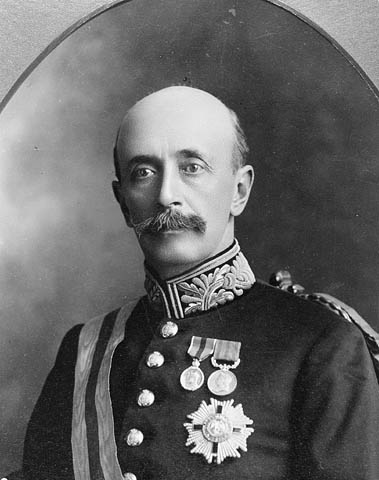
Parliamentary constituency in the United Kingdom, 1885–1918
| Field | Value |
|---|---|
| name | Tyneside |
| parliament | uk |
| image | |
| caption | Tyneside in Northumberland |
| year | 1885 |
| abolished | 1918 |
| type | County |
| elects_howmany | One |
| previous | South Northumberland |
| next | Wallsend, Newcastle upon Tyne East, Newcastle upon Tyne West, Wansbeck |
| region | England |
| county | Northumberland |
Tyneside was a parliamentary constituency in the Tyneside area of north-east England, which returned one Member of Parliament (MP) to the House of Commons of the Parliament of the United Kingdom, elected by the first-past-the-post voting system.
The constituency was created by the Redistribution of Seats Act 1885 for the 1885 general election as one of four single-member Divisions of the county of Northumberland, and abolished for the 1918 general election.
Boundaries
The contents of the county division, as defined by the Redistribution of Seats Act 1885, were:The Sessional Division of Castle West (part), the Municipal Boroughs of Newcastle-upon-Tyne, and Tynemouth, and the Parish of Wallsend.NB included non-resident freeholders in the parliamentary boroughs of Newcastle upon Tyne and Tynemouth.
Abolition
On abolition in 1918, the contents of the seat were distributed as follows:
- the majority of the electorate, comprising the municipal borough of Wallsend and the urban districts of Gosforth, Longbenton and Weetslade formed the new Parliamentary Borough of Wallsend;
- the former urban districts of Walker, and Benwell and Fenham which had been abolished in 1904 and absorbed into the County Borough of Newcastle upon Tyne were included in Newcastle upon Tyne East and West respectively; and
- the urban district of Newburn and surrounding rural areas were transferred to Wansbeck.
Members of Parliament
Elections
Elections in the 1880s
|reg. electors = 11,852 |reg. electors = 11,852
Elections in the 1890s

|reg. electors = 13,727 |reg. electors = 14,932
Elections in the 1900s
|reg. electors = 18,460

|reg. electors = 23,167
Elections in the 1910s
|reg. electors = 25,711 |reg. electors = 25,711 General Election 1914–15:
Another General Election was required to take place before the end of 1915. The political parties had been making preparations for an election to take place and by July 1914, the following candidates had been selected;
- Liberal: J. M. Robertson
- Unionist:
References
References
- Great Britain, Incorporated Council of Law Reporting for England and Wales. "The public general acts". Proprietors of the Law Journal Reports, 1884.
- "HMSO Boundary Commission Report 1885 Northumberland".
- Fraser, Hugh. (1918). "The Representation of the people act, 1918 : with explanatory notes". London : Sweet and Maxwell.
- Fraser, Hugh. (1918). "The Representation of the people act, 1918 : with explanatory notes". London : Sweet and Maxwell.
- (1974). "British Parliamentary Election Results: 1885-1918". Macmillan Press.
This article was imported from Wikipedia and is available under the Creative Commons Attribution-ShareAlike 4.0 License. Content has been adapted to SurfDoc format. Original contributors can be found on the article history page.
Ask Mako anything about Tyneside (UK Parliament constituency) — get instant answers, deeper analysis, and related topics.
Research with MakoFree with your Surf account
Create a free account to save articles, ask Mako questions, and organize your research.
Sign up freeThis content may have been generated or modified by AI. CloudSurf Software LLC is not responsible for the accuracy, completeness, or reliability of AI-generated content. Always verify important information from primary sources.
Report