From Surf Wiki (app.surf) — the open knowledge base
Tylwyth Teg
Mythological creature in Welsh folklore
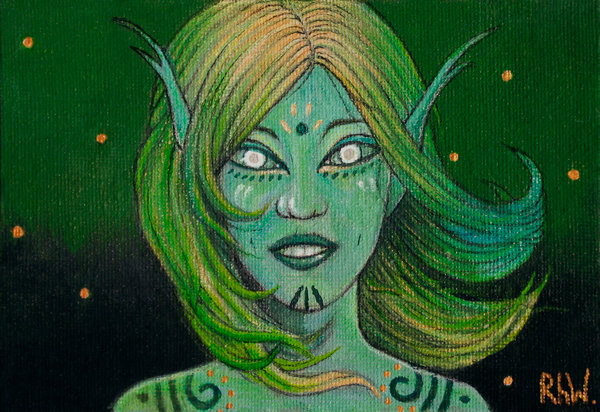
Mythological creature in Welsh folklore
Tylwyth Teg (Middle Welsh for "Fair Family"; ) is the most usual term in Wales for the mythological creatures corresponding to the fairy folk of English and Continental folklore and the Irish Aos Sí. Other names for them include Bendith y Mamau ("Blessing of the Mothers"), Gwyllion and Ellyllon.
Origins
The term tylwyth teg is first attested in a poem attributed to the 14th-century Dafydd ap Gwilym, in which the principal character gets perilously but comically lost while going to visit his girlfriend: "Hudol gwan yn ehedeg, / hir barthlwyth y Tylwyth Teg" ("(The) weak enchantment (now) flees, / (the) long burden of the Tylwyth Teg (departs) into the mist").
Attributes
In later sources the tylwyth teg are described as fair-haired and covet golden-haired human children whom they kidnap, leaving changelings (or crimbilion, sing. crimbil) in their place. They dance and make fairy rings and they live underground or underwater. They bestow riches on those they favour but these gifts vanish if they are spoken of, and fairy maidens may become the wives of human men.
As the Bendith y Mamau (the mothers blessing, a Southern Welsh name for fair folk),
According to the folklorist Wirt Sikes the Tylwyth Teg may be divided into five general types: the Ellyllon (elves), the Coblynau (fairies of the mines), the Bwbachod (household fairies similar to brownies), the Gwragedd Annwn (female fairies of the lakes and streams) and the Gwyllion (mountain fairies more akin to hags). The ellyllon (singular ellyll) inhabit groves and valleys and are similar to English elves. Their food consists of toadstools and fairy butter (a type of fungus) and they wear digitalis bell flowers as gloves. They are ruled by Queen Mab and bring prosperity to those they favour.
References
References
- Briggs, Katharine. (1976). "An Encyclopedia of Fairies". Pantheon Books.
- Walters, John. (1828). "An English and Welsh Dictionary". Clwydian-Press.
- Parker, Sean B.. "On a Misty Walk / Ar Niwl Maith".
- (2023-11-08). "Tylwyth Teg Are The Welsh Fairies From British Legend - Wales Culture".
- Evans-Wentz, Walter. (1911). "The Fairy-Faith in Celtic Countries". Oxford University Press.
- Sikes, Wirt. (1880). "British Goblins: Welsh Folklore, Fairy Mythology, Legends and Traditions". Sampson Low, Marston, Searle & Rivington.
This article was imported from Wikipedia and is available under the Creative Commons Attribution-ShareAlike 4.0 License. Content has been adapted to SurfDoc format. Original contributors can be found on the article history page.
Ask Mako anything about Tylwyth Teg — get instant answers, deeper analysis, and related topics.
Research with MakoFree with your Surf account
Create a free account to save articles, ask Mako questions, and organize your research.
Sign up freeThis content may have been generated or modified by AI. CloudSurf Software LLC is not responsible for the accuracy, completeness, or reliability of AI-generated content. Always verify important information from primary sources.
Report