From Surf Wiki (app.surf) — the open knowledge base
Turpentine
Liquid distilled from pine resin
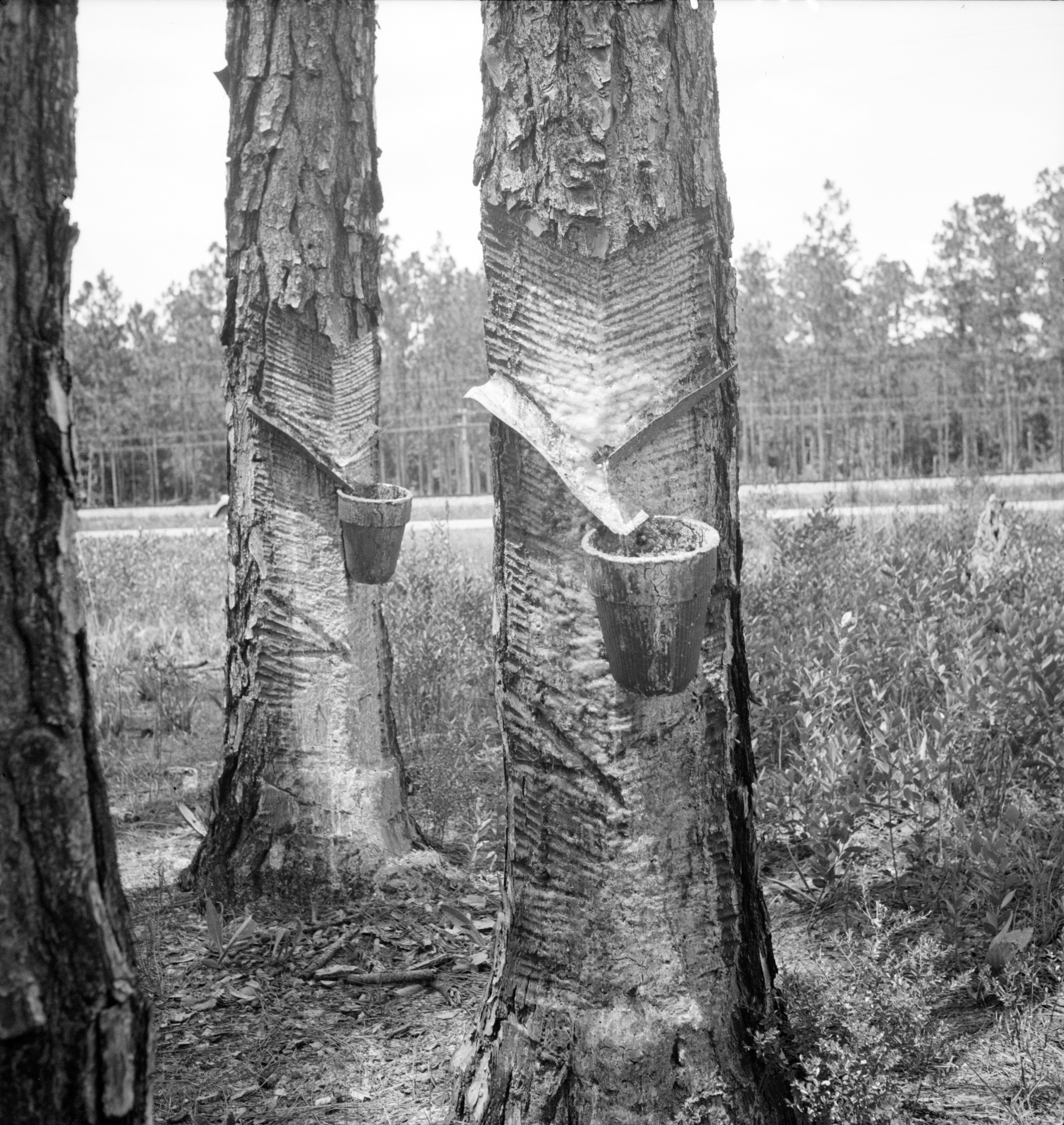
Liquid distilled from pine resin
oil of turpentine
no GHS info in ACHA source, not in pubchem. Dec 2021.
--
| NFPA-H = 1 | NFPA-F = 3 | NFPA-R = 0
Turpentine (which is also called spirit of turpentine, oil of turpentine, terebenthine, terebenthene, terebinthine and, colloquially, turps) is a fluid obtainable by the distillation of resin harvested from living trees, mainly pines. Principally used as a specialized solvent, it is also a source of material for organic syntheses.
Turpentine is composed of terpenes, primarily the monoterpenes α-pinene and β-pinene, with lesser amounts of carene, camphene, limonene, and terpinolene. Nowadays, turpentine is rarely the product of distillation of pine resin, but is a byproduct of pulping. Pulping is achieved by two processes, the Kraft process and the sulfite process. The turpentines obtained from these two processes differ in their chemical compositions. The sulfite process gives a product that is rich in cymene, whereas the Kraft process gives a pinene-rich product.
Substitutes include white spirit or other petroleum distillates, although the constituent chemicals are very different.
Etymology
The word turpentine derives (via French and Latin) from the Greek word τερεβινθίνη, terebinthine in English, in turn the feminine form (to conform to the feminine gender of the Greek word, which means 'resin') of an adjective (τερεβίνθινος) derived from the Greek noun τερέβινθος for the terebinth tree.
Although the word originally referred to the resinous exudate of terebinth trees (e.g. Chios turpentine, Cyprus turpentine, and Persian turpentine), it now refers to that of coniferous trees, namely crude turpentine (e.g. Venice turpentine is the oleoresin of larch), or the volatile oil part thereof, namely oil (spirit) of turpentine; the latter usage is much more common today.
Source trees
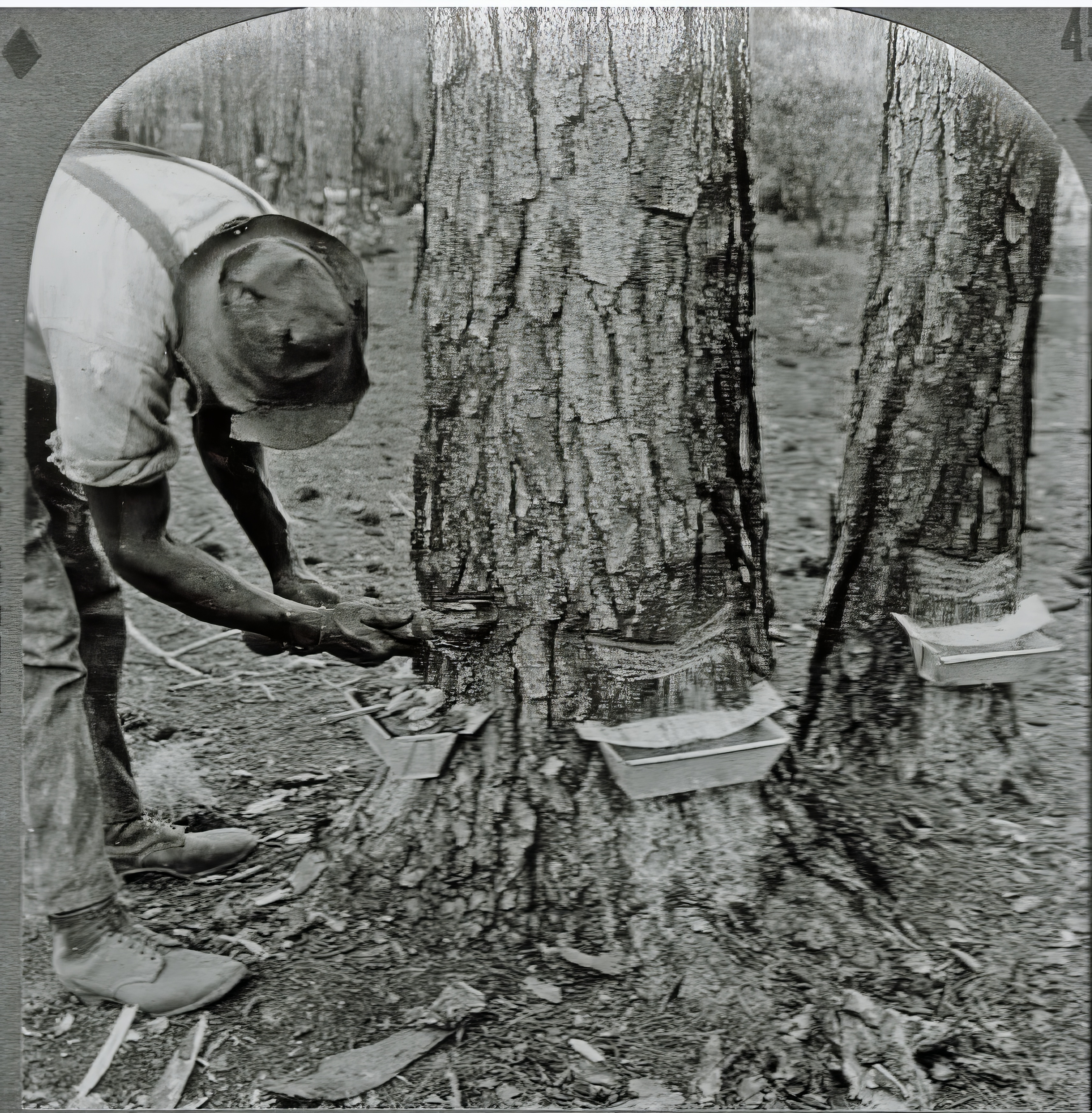


Important pines for turpentine production include maritime pine (Pinus pinaster), Aleppo pine (Pinus halepensis), Masson's pine (Pinus massoniana), Sumatran pine (Pinus merkusii), longleaf pine (Pinus palustris), loblolly pine (Pinus taeda), slash pine (Pinus elliottii), and ponderosa pine (Pinus ponderosa).
Converting crude turpentine to oil of turpentine
Crude turpentine collected from the trees may be evaporated by steam distillation in a copper still. Molten rosin remains in the still bottoms after turpentine has been distilled out. The term gum turpentine may also refer to crude turpentine, which may cause some confusion.
Turpentine may alternatively be extracted from destructive distillation of pine wood, such as shredded pine stumps, roots, and slash, using the light end of the heavy naphtha fraction (boiling between 90 and) from a crude-oil refinery. Such turpentine is called wood turpentine. Multi-stage counter-current extraction is commonly used so that fresh naphtha first contacts wood leached in previous stages and naphtha laden with turpentine from previous stages contacts fresh wood before vacuum distillation to recover naphtha from the turpentine. Leached wood is steamed for additional naphtha recovery prior to burning for energy recovery.
Sulfate turpentine
When producing chemical wood pulp from pines or other coniferous trees, sulfate turpentine may be condensed from the gas generated in Kraft process pulp digesters. The average yield of crude sulfate turpentine is 5–10 kg/t pulp. Unless burned at the mill for energy production, sulfate turpentine may require additional treatment measures to remove traces of sulfur compounds.
Uses
Solvent
As a solvent, turpentine is used for thinning oil-based paints, for producing varnishes, and as a raw material for the chemical industry. Its use as a solvent in industrialized nations has largely been replaced by the much cheaper turpentine substitutes obtained from petroleum such as white spirit. A solution of turpentine and beeswax or carnauba wax has long been used as a furniture wax.
Lighting
Spirits of turpentine, called camphine, were burned in lamps with glass chimneys in the 1830s through the 1860s. Turpentine blended with grain alcohol was known as burning fluid. Both were used as domestic lamp fuels, gradually replacing whale oil, until kerosene, gas lighting, and electric lights began to predominate.
Source of organic compounds
Turpentine is also used as a source of raw materials in the synthesis of fragrant chemical compounds. Commercially used camphor, linalool, alpha-terpineol, and geraniol are all usually produced from alpha-pinene and beta-pinene, which are two of the chief chemical components of turpentine. These pinenes are separated and purified by distillation. The mixture of diterpenes and triterpenes that is left as residue after turpentine distillation is sold as rosin.
Niche uses
- Because it is naturally a pine pitch thinner, it will remove pitch from clothing while other common solvents may not do as well.
- Turpentine is also added to many cleaning and sanitary products due to its antiseptic properties and its "clean scent".
- In early 19th-century America, spirits of turpentine (camphine) were burned in lamps as a cheap alternative to whale oil. It produced a bright light but had a strong odour. Camphine and burning fluid (a mix of alcohol and turpentine) served as the dominant lamp fuels replacing whale oil until the advent of kerosene, electric lights, and gas lighting.
- Honda motorcycles, first manufactured in 1946, ran on a blend of gasoline and turpentine, due to the scarcity of gasoline in Japan following World War II. The French Emeraude rocket uses a similar fuel mixture. Turpentine has also been researched as a potential biofuel for mixing into gasoline.
- In his book If Only They Could Talk, veterinarian and author James Herriot describes the use of the reaction of turpentine with resublimed iodine to "drive the iodine into the tissue", or perhaps just impress the watching customer with a spectacular treatment (a dense cloud of purple smoke).
Safety and health considerations
Turpentine is highly flammable, so much so that it has been considered as an automotive fuel.
Turpentine was added extensively into gin during the Gin Craze.
Turpentine's vapour can irritate the skin and eyes, damage the lungs and respiratory system, as well as the central nervous system when inhaled, and cause damage to the renal system when ingested, among other things. Ingestion can cause burning sensations, abdominal pain, nausea, vomiting, confusion, convulsions, diarrhea, tachycardia, unconsciousness, respiratory failure, and chemical pneumonia.
The US Occupational Safety and Health Administration (OSHA) has set the legal limit (permissible exposure limit) for turpentine exposure in the workplace as 100 ppm (560 mg/m3) over an 8-hour workday. The same threshold was adopted by the National Institute for Occupational Safety and Health (NIOSH) as the recommended exposure limit (REL). At levels of 800 ppm (4480 mg/m3), turpentine is immediately dangerous to life and health.
Folk medicine
Turpentine and petroleum distillates such as coal oil and kerosene, were used in folk medicine for abrasions and wounds, as a treatment for lice, and when mixed with animal fat, as a chest rub or inhaler for nasal and throat ailments.{{cite news |access-date=2018-12-29 |archive-date=2020-08-07 |archive-url=https://web.archive.org/web/20200807221113/https://www.cbc.ca/player/play/1606945926 |url-status=live
Turpentine, now understood to be dangerous for consumption, was a common medicine among seamen during the Age of Discovery. It was one of several products carried aboard Ferdinand Magellan's fleet during the first circumnavigation of the globe. Taken internally, it was used as a treatment for intestinal parasites. This is dangerous, due to the chemical's toxicity.
Turpentine enemas, a very harsh purgative, had formerly been used for stubborn constipation or impaction. They were also given punitively to political dissenters in post-independence Argentina.
References
References
- {{GESTIS
- "Turpentine". European Chemicals Agency.
- Mayer, Ralph. (1991). "The Artist's Handbook of Materials and Techniques". Viking.
- Kent, James A.. (1983). "Riegel's Handbook of Industrial Chemistry". Van Nostrand Reinhold Company.
- (2015). "Catalytic Upgrading of Extractives to Chemicals: Monoterpenes to "EXICALS"". Chemical Reviews.
- (2002). "Solvents".
- Barnhart, R. K.. (1995). "The Barnhart Concise Dictionary of Etymology". Harper Collins.
- Skeat, Walter W.. (1882). "A Concise Etymological Dictionary of the English Language". Oxford University Press.
- (1977). "Natural Resins of Art and Archaeology Their Sources, Chemistry, and Identification". Studies in Conservation.
- Mahood, S. A.. (1921-03-01). "Larch (Venice) Turpentine from Western Larch (Larix occidentalis)". Journal of Forestry.
- "Turpentine".
- "Turpentine".
- (2000). "Forest Products Chemistry". Fapet Oy : Published in cooperation with the Finnish Paper Engineers' Association and [[TAPPI]].
- Charles H. Haswell. "Reminiscences of New York By an Octogenarian (1816 - 1860)".
- (20 August 2008). "The "Whale Oil Myth"".
- "Honda History". Smokeriders.com.
- (2007). "Ariane: Une Épopée Européenne". ETAI.
- (September 2010). "Effects of turpentine and gasoline-like fuel obtained from waste lubrication oil on engine performance and exhaust emission". Energy.
- (February 2013). "Wood sulphate turpentine as a gasoline bio-component". Fuel.
- (28 June 2012). "If Only They Could Talk".
- Rohrer, Finlo. (28 July 2014). "When gin was full of sulphuric acid and turpentine". BBC News.
- "CDC - NIOSH Pocket Guide to Chemical Hazards - Turpentine - Symptoms". [[Centers for Disease Control]].
- "Turpentine". International Programme on Chemical Safety, World Health Organization.
- Sarah Rieger. (December 29, 2018). "100 years ago, a train carrying Spanish flu pulled into Calgary. Within weeks, Alberta was in crisis". CBC News.
- "DailyMed - VICKS VAPORUB (camphor- synthetic, eucalyptus oil, and menthol ointment".
- Laurence Bergreen. (2003). "Over the edge of the world : Magellan's terrifying circumnavigation of the globe". HarperCollins.
- "Home Remedies - American Memory Timeline- Classroom Presentation". The Library of Congress.
- "ICSC 1063 - Turpentine".
- (7 October 2019). "Turpentine enema". Biology-Online.
- "Ribbons and Rituals". In "Problems in Modern Latin American History". Ed. Chasteen and Wood. Oxford, UK: Scholarly Resources, 2005. p. 97, ISBN 9781442218598 and 9781442218604
This article was imported from Wikipedia and is available under the Creative Commons Attribution-ShareAlike 4.0 License. Content has been adapted to SurfDoc format. Original contributors can be found on the article history page.
Ask Mako anything about Turpentine — get instant answers, deeper analysis, and related topics.
Research with MakoFree with your Surf account
Create a free account to save articles, ask Mako questions, and organize your research.
Sign up freeThis content may have been generated or modified by AI. CloudSurf Software LLC is not responsible for the accuracy, completeness, or reliability of AI-generated content. Always verify important information from primary sources.
Report