From Surf Wiki (app.surf) — the open knowledge base
Turks in Tunisia
Ethnic group in Tunisia

Ethnic group in Tunisia
| Field | Value |
|---|---|
| group | Turks in Tunisia |
| popplace | |
| rels | Sunni Islam |
The Turks in Tunisia, also known as Turco-Tunisians and Tunisian Turks, were ethnic Turks who lived in Ottoman Tunisia.
In 1534, with about 10,000 Turkish soldiers, the Ottoman Empire took control and settled in the region when Tunisia's inhabitants called for help due to fears that the Spanish would invade the country. Thus, during the Ottoman rule, the Turkish community dominated the political life of the region for centuries; as a result, the ethnic mix of Tunisia changed considerably with the continuous migration of Turks from Anatolia, as well as other parts of the Ottoman territories, for over 300 years. In addition, some Turks intermarried with the local population and their male offspring were called "Kouloughlis". Consequently, the terms "Turks" and "Kouloughlis" were used to distinguish between those of full and partial Turkish ancestry.
Demographics
Families of Turkish origin live mainly near the coastal cities, such as Tunis, Mahdia, Hammamet and the islands (such as Djerba), although there are also many living within central Tunisia as well.
Culture
Religion
The Ottoman Turks brought with them the teaching of the Hanafi School of Islam during the Ottoman rule of Tunisia, which still survives among the Turkish-descended families today. Traditionally, Turco-Tunisian mosques have octagonal minarets. Examples of Ottoman-Turkish mosques include:
File:Minaret, mosquée Hammouda Pacha.jpg|Hammouda Pacha Mosque File:Babsouika 1890.jpg|Sidi Mahrez Mosque File:Mosquée des Turcs-Houmt Souk.jpg|Mosque of the Turks File:MinaretMosquéeSidiYousefDey.JPG|Youssef Dey Mosque
Notable people


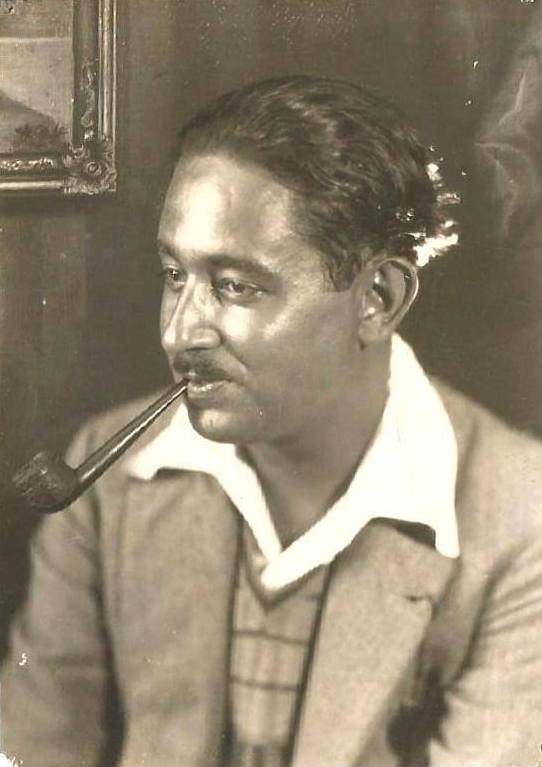
The Turks in Tunisia were traditionally a privileged élite in Tunisia who held positions in the military and the bureaucracy. However, by the nineteenth century, marriages with the local population linked the ruling families to indigenous notables. At this time, many Turks also turned to commerce and the crafts, initially in the Souq el-Trouk (the Bazaar of the Turks), where a considerable number of merchants of Turkish ancestry emerged. The Turks also entered the corps of artisans. The Ben Romdhan family, of Turkish origin, claim much of the notable Tunisian families of Mahdia such as the Hamza, Turki, Gazdagli, Agha, and Snène families. Other prominent Tunisian families of Turkish origin include the , , El Materis, , , Mamis and the s.
- Ahmed Abdelkefi, economist
- , historian
- Mahmoud Aslan, writer
- , politician
- Al-Husayn I ibn Ali at-Turki, founder of the Husainid Dynasty
- Mohamed Salah Baratli, resistant of the French occupation, opponent of President Bourguiba, human rights activist
- , religious cleric
- , religious cleric
- , intellectual
- , religious cleric
- , religious cleric
- Asma Belkhodja, pioneer of the Tunisian feminist movement
- , politician
- Ali Bach Hamba, journalist and politician
- Mohamed Bach Hamba, writer
- Mahmoud Ben Mahmoud, filmmaker
- Yasemin Besson, wife of Éric Besson
- Hassen Bouhajeb, doctor
- , journalist
- Ahmed Chérif, doctor
- , doctor
- Mustapha Dinguizli, politician
- Ali Douagi, literary and cultural icon
- Abderrahman Dziri, medical researcher
- Mustafa Elkatipzade, Fenerbahçe football manager
- Nazli Fadhel, pioneer of the Tunisian feminist movement
- Sadok Ghileb, politician
- , theatre director
- Afef Jnifen, model and actress
- Mohamed Lahbib, pioneer of theater and television in Tunisia
- Mahmoud El Materi, physician and politician
- Moncef El Materi, former soldier and businessman
- Sakher El Materi, businessman
- Tahar El Materi, businessman
- , photographer
- , artist
- Chafia Rochdi, singer and actress
- Hichem Rostom, actor
- Mourad Salem, artist
- Rachid Sfar, former prime minister
- Mongi Slim, nationalist leader and Minister
- , diplomat
- Najiya Thamir, writer and radio producer
- Hedi Turki, painter
- Yahia Turki, painter
- Zoubeir Turki, painter
- Abdeljelil Zaouche, Minister of Justice (1936–1943)
- , professor
References
Bibliography
- .
- .
- .
- .
- .
- .
- .
- .
- .
- .
- .
- .
References
- {{Harvnb. Hourani. Ruthven. 2002
- Today's Zaman. "Turks in northern Africa yearn for Ottoman ancestors".
- {{Harvnb. UNESCO. 2009
- Tunisia Today. "Vient de paraître "Tribus : des origines à la dislocation"".
- {{Harvnb. UNESCO. 2009
- Milli Gazete. "Levanten Türkler".
- Miltoun, Francis. (1985). "The spell of Algeria and Tunisia". [[Darf Publishers]].
- Leaders. "Le Monde Arabe et la Turquie: les prémices d'une entente".
- Delarosbil, Dave. (May 2019). "Mahdia : histoire et société". Université de Montréal.
- {{Harvnb. Jacobs. Morris. 2002
- {{Harvnb. Green. 1978
- {{Harvnb. Khouaja. 1962
- Tunisia Today. "Ahmed Abdelkefi, la machine à idées!".
- {{Harvnb. Déjeux. 1984
- {{Harvnb. Brett. Fentress. 1997
- {{Harvnb. Smida. 1971
- Union Nationale de la Femme Tunisienne. "Asma Belkhodja-Rébaï, une pionnière du mouvement féministe tunisien (1930-2011)".
- Africa Time. (July 2018). "Histoire et repères: Grandes figures tunisiennes".
- {{Harvnb. Puaux. 1954
- {{Harvnb. Derrick. 2008
- Toute la Tunisie. "Mahmoud Ben Mahmoud".
- Hurriyet. "Umarım yakında bütün Arap kadınları Tunuslularla aynı haklara sahip olur".
- {{Harvnb. Ferté. Barrera. 2010
- Paul Lambert, ''Dictionnaire illustré de La Tunisie : choses et gens de Tunisie'', éd. C. Saliba aîné, Tunis, 1912, p. 157
- {{Harvnb. Granara. 2010
- Toute la Tunisie. "Ali Douagi".
- Leaders. "Abderrahman Dziri".
- Leaders. "La princesse Nazli Fadhel en Tunisie: une figure moderniste".
- Mohamed El Aziz Ben Achour, ''Catégories de la société tunisoise dans la deuxième moitié du XIXe siècle'', éd. Institut national d'archéologie et d'art, Tunis, 1989, p. 235
- Sanna, Cristiano. (2019). "[Il ritratto] Afef, le quarte nozze, i milioni e quei veleni da scansare. Il potere riservato di una ribelle". Tiscali Spettacoli.
- Africa Time. "Les pionniers du théâtre et de la TV en Tunisie-Mohamed Lahbib : le kawkeb du théâtre arabe en Tunisie".
- TelQuel. "TUNISIE. Où s'arrêtera Sakhr El Materi?".
- {{Harvnb. Ferchiou. 2001
- Africa Time. "Chafia Rochdy : la voix cristalline venue du Sud".
- Festival Tetouan. "Hommages 2012: Hichem Rostom, Acteur Tunisien".
- Royal Borough of Kensington and Chelsea. "Sultans Are No Sultans: Mourad Salem".
- Rachid Sfar. "Le LEADERS TAHAR SFAR CO-FONDATEUR AVEC BOURGUIBA DU PARTI TUNISIEN NEO-DESTOUR FUT DE 1925 à 1928 UN ETUDIANT EXCEPTIONNEL".
- {{Harvnb. Bidwell. 2012
- Arab Women Writers. "Najiya Thamir".
- Women of Tunisia. "Tunisian women Yesterday and Today: Nejia Thameur".
- Toute la Tunisie. "Hédi Turki".
- Toute la Tunisie. "Yahia Ben Mahmoud El Hajjem Turki".
- Toute la Tunisie. "Zoubeïr Turki".
This article was imported from Wikipedia and is available under the Creative Commons Attribution-ShareAlike 4.0 License. Content has been adapted to SurfDoc format. Original contributors can be found on the article history page.
Ask Mako anything about Turks in Tunisia — get instant answers, deeper analysis, and related topics.
Research with MakoFree with your Surf account
Create a free account to save articles, ask Mako questions, and organize your research.
Sign up freeThis content may have been generated or modified by AI. CloudSurf Software LLC is not responsible for the accuracy, completeness, or reliability of AI-generated content. Always verify important information from primary sources.
Report