From Surf Wiki (app.surf) — the open knowledge base
Turkish diaspora
Communities of Turks outside Turkey

Communities of Turks outside Turkey
| Field | Value |
|---|---|
| group | Turkish diaspora |
| image | Map of the Turkish Diaspora in the World.svg |
| caption | Map of the Turkish people around the world |
| population | Over 6 million (2020) |
| region2 | Americas |
| region3 | Europe |
| region4 | West Asia and Other |
| languages | Turkish language |
| religions |
The Turkish diaspora ( or Türk gurbetçiler) refers to ethnic Turkish people who have migrated from, or are the descendants of migrants from, the Republic of Turkey, Northern Cyprus or other modern nation-states that were once part of the former Ottoman Empire. Therefore, the Turkish diaspora is not only formed by people with roots from mainland Anatolia and Eastern Thrace (i.e. the modern Turkish borders); rather, it is also formed of Turkish communities which have also left traditional areas of Turkish settlements in the Balkans (such as Bulgaria, Greece, North Macedonia, Romania, etc.), the island of Cyprus, the region of Meskhetia in Georgia, and the Arab world (such as Algeria, Iraq, Lebanon).
In particular, most mainland Turkish migration has been to Western and Northern Europe. Meanwhile, almost all the Turkish minorities in former Ottoman lands have a large diaspora in Turkey, many having migrated as muhacirs (refugees); furthermore, the Cretan Turks have migrated throughout the Levant; Cypriot Turks have a significant diaspora in the English-speaking countries (especially the UK and Australia); the Meskhetian Turks have a large diaspora in Central Asia; and Algerian Turks and Tunisian Turks have mostly settled in France. Since Bulgarian Turks and Romanian Turks gained EU citizenship in 2007, their diasporas in Western Europe significantly increased once restrictions on movement came to a halt in 2012.
Europe
Main article: Turks in Europe
As early as 1997 Professor Servet Bayram and Professor Barbara Seels said that there was 10 million Turks living in Western Europe and the Balkans (i.e. excluding Cyprus and Turkey). By 2010, Boris Kharkovsky from the Center for Ethnic and Political Science Studies said that there was up to 15 million Turks living in the European Union. According to Dr Araks Pashayan 10 million "Euro-Turks" alone were living in Germany, France, the Netherlands and Belgium in 2012. Furthermore, there are significant Turkish communities living in Austria, the UK, Switzerland, Italy, Liechtenstein and the Scandinavian countries. Meanwhile, approximately 400,000 Meskhetian Turks live in Europe .
In addition to the modern Turkish diaspora in Europe, there are also traditional Turkish communities in post-Ottoman nation-states. For example, Turkish Cypriots and Turkish settlers living in North Cyprus number around 300,000 to 500,000. In addition, in Southeastern Europe there is over 1 million Turks living in the Balkan countries (i.e. Bosnia and Herzegovina, Bulgaria, Croatia, Greece, Kosovo, Montenegro, North Macedonia, Romania and Serbia). Since the 20th century, these ethnic Turkish communities have also migrated to Western Europe and have enlarged the Turkish diaspora significantly (e.g. Algerian Turks have mostly settled in France; Bulgarian Turks have migrated mostly to Germany, the Netherlands, and Sweden; Turkish Cypriots have a large population in the UK; Macedonian Turks have migrated mostly to Sweden; Tunisian Turks have migrated mostly to France and Italy; and Western Thrace Turks have mostly migrated to Germany and the Netherlands). More recently, since the "European migrant crisis" (2014–20), Iraqi Turks, Kosovo Turks and Syrian Turks have also settled in areas where there are large Turkish diasporas.
Consequently, within the diaspora, ethnic Turkish people now form the largest minority group in Austria, Denmark, Germany and the Netherlands.
In March 2017, Turkish President Recep Tayyip Erdoğan stated to the Turks in Europe, "Make not three, but five children. Because you are the future of Europe. That will be the best response to the injustices against you." This has been interpreted as an imperialist call for demographic warfare.
According to The Economist, Erdoğan is the first Turkish leader to take the Turkish diaspora seriously, which has created friction within these diaspora communities and between the Turkish government and several of its European counterparts.
Germany
Main article: Turks in Germany
The Turkish-Germans are the largest ethnic minority group in Germany and also the largest Turkish community in the Turkish diaspora.
The German census counts around three million Turks living in Germany. This does not only count those born in Turkey, but also descendants. The majority of ethnic Turks living in Germany have either arrived from or originate from Turkey; however, there are also significant ethnic Turkish communities which have come from (or descend from) other post-Ottoman nation-states in the Balkans (especially from Bulgaria and Greece), as well as from the island of Cyprus, and Lebanon. More recently, since the European migrant crisis (2014–19), there has also been a significant increase in the number of ethnic Turks from Syria, Iraq and Kosovo who have come to Germany.
The German state does not allow citizens to self-declare their identity; consequently, the statistics published in the official German census does not show data on ethnicity. According to the 2023 estimation, roughly 3 million German residents had a "migration background" from Turkey.
France
Main article: Turks in France


The Turks living in France form one of the largest Turkish communities in Western Europe. Official data on the total number of French Turks is not available because the French census only records statistics on the country of birth rather than one's ethnic affiliation.
Although the majority of French Turks are descend from people from the Republic of Turkey, there has also been significant Turkish migration from other post-Ottoman countries including ethnic Turkish communities which have come to France from North Africa (especially Algeria and Tunisia), the Balkans (e.g. from Bulgaria, Greece, Kosovo, North Macedonia and Romania), the island of Cyprus, and more recently from Iraq, Lebanon, and Syria.
In 2014 Professor reported in L'Express that the Turkish population was around 800,000. However, an earlier academic publication in 2010 by Dr Jean-Gustave Hentz and Dr Michel Hasselmann said that there were already 1 million Turks living in France. Professor İzzet Er, as well as the French-Armenian politician Garo Yalic (who is an advisor to Valerie Boyer), also said that there were 1,000,000 Turks in France in 2011 and 2012 respectively. More recently, the Turkish-French population has been estimated to be more than one million according to French-published articles in Le Petit Journal (2019) and Marianne (2020).
The Netherlands
Main article: Turks in the Netherlands
.jpg)

The Turkish-Dutch community form the largest ethnic minority group in the Netherlands. The majority of Dutch Turks descend from the Republic of Turkey; however there has also been significant Turkish migration waves from other post-Ottoman countries including ethnic Turkish communities which have come to the Netherlands from the Balkans (e.g. especially from Bulgaria, Greece, and North Macedonia), the island of Cyprus, and more recently during the European migrant crisis from Syria, Iraq and Kosovo. In addition, there has been migration to the Netherlands from the Turkish diaspora; many Turkish-Belgians and Turkish-Germans have arrived in the country as Belgian and German citizens.
The Dutch official census only collects data on country of birth, rather than ethnically; consequently, the total number of ethnic Turkish migrants (regardless of country of birth) nor the third, fourth or fifth generation of the Turkish-Dutch community have been collectively counted. Assistant Professor Suzanne Aalberse, Professor Ad Backus and Professor Pieter Muysken have said that "over the years" the Dutch-Turkish community "must have numbered half a million". However, there are significantly higher estimates. As early as 2003, the political scientist and international relations expert Dr Nathalie Tocci said that there was already "two million Turks in Holland". Rita van Veen also reported in Trouw that there was 2 million Turks in the Netherlands in 2007. More recently, in 2020, a report published in L1mburg Centraal estimated that there are more than 2 million Dutch-Turks. Voetbal International also reported in 2020 that the Dutch football club Fortuna Sittard will be carrying out annual scouting activities to find "Turkish talent" among the approximately 2 million Turkish-Dutch community.
In 2009 The Sophia Echo reported that Bulgarian Turks were now the fastest-growing group of immigrants in the Netherlands.
The CBS gives a total number, 444.300 Turks in 2022, up from 271.500 in 1996. About half were born in the Netherlands (second generation) and the other half outside the Netherlands (first generation) The third generation, those who are born in the Netherlands including their parents but at least one grandparent not, was 36.200 in 2022. This only accounts for people being between the age of 0 and 55. In 2022 there were about 430.000 Turks in the Netherlands. The third generation is counted as autochthonous. Thus, the total number of people in the Netherlands with at least one grandparent born in Turkey in 2022 was at least 466.200.
Austria
Main article: Turks in Austria
The Turkish community, including descendants, form the largest ethnic minority in Austria. In 2011 a report by the Initiative Minderheiten said that there was 360,000 people of Turkish origin living in Austria. This figure has also been echoed by the former Austrian Foreign Minister and Chancellor of Austria Sebastian Kurz. However, the former Austrian MEP, Andreas Mölzer, has claimed that there are 500,000 Turks in the country.
Belgium
Main article: Turks in Belgium
In 2012 Professor Raymond Taras said that the Belgian-Turkish community was over 200,000. More recently, in 2019 Dr Altay Manço and Dr Ertugrul Taş said that there was 250,000 Belgian residents of Turkish origin.
United Kingdom
Main article: British Turks
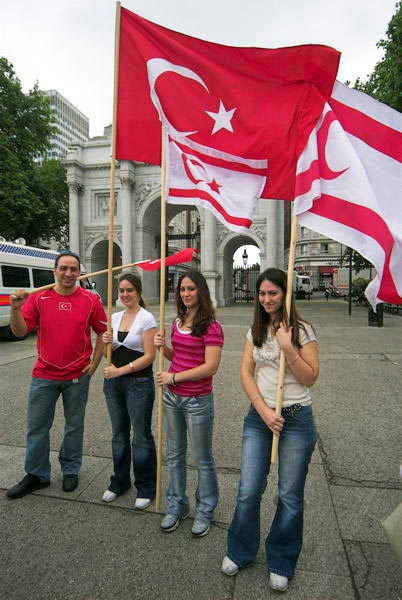
In 2011 the Home Affairs Committee stated that there was 500,000 British Turks made up of 300,000 Turkish Cypriots, 150,000 Turkish nationals (i.e. people from Turkey), and smaller groups of Bulgarian Turks and Romanian Turks. Despite a lack of statistics on the collective number of Turks who have immigrated from their traditional homelands, it is known that Germany, Austria, the Netherlands and France all have larger Turkish diaspora communities than the UK.
Sweden
Main article: Turks in Sweden
In 2009 the Swedish Ministry for Foreign Affairs said that there was almost 100,000 people with a Turkish background living in Sweden. More recently, in 2018 the Swedish Consul General, Therese Hyden, said that the population was now around 150,000.
Switzerland
Main article: Turks in Switzerland
In 2017 there was over 120,000 Turks living in Switzerland. They mostly live in German-speaking regions, especially in the cantons of Zurich, Aargau and Basel. Figures on naturalization and migration from Turkey has been declining, however, the Swiss population with a Turkish background continues to grow.
Denmark
Main article: Turks in Denmark
The Turkish community form the largest ethnic minority in Denmark. In 2008, it was estimated that Danes of Turkish origin numbered 70,000.
Italy
Main article: Turks in Italy
In 2020 there were 50,000 Turkish citizens living in Italy; however, this figure does not include naturalized Italian citizens of Turkish origin or their descendants. Between 2008 and 2020 some 5,295 Turkish citizens acquired Italian citizenship.
In addition to the diaspora, some of the population in Moena has identified as Turkish since the 17th century.
Norway
Main article: Turks in Norway
In 2013 there were roughly 16,500 Norwegians of Turkish descent living in Norway.
Finland
Main article: Turks in Finland
In 2010 Professor Zeki Kütük said that there was approximately 10,000 people of Turkish origin living in Finland.
Poland
Main article: Turks in Poland
In 2013 data from the Institute of Public Affairs showed that there was 5,000 Turks living in Poland.
Portugal
In 2021 data from the National Statistical Institute showed that there were 1,363 Turks legally living in Portugal. In addition, between 2002 and 2020, 270 Turks acquired Portuguese citizenship.
Luxembourg
Luxembourg does not formally collect ethnic or racial data of its citizens, however according to the Turkish embassy in Luxembourg, about 1,000 Turkish nationals were living in Luxembourg around the time of the 2017 Turkish referendum. Close to 10,000 Turkish people voted from Luxembourg, the others having come from neighbouring countries, who found the Luxembourg voting location closer to their homes.
Liechtenstein
Main article: Turks in Liechtenstein
Liechtenstein does not record data on the ethnicity of its citizens; however, in 2009, the Turkish community was estimated to number approximately 1,000 out of a total population of 35,000. Hence, estimates suggest that the Turks form around 3% of Liechtenstein's total population and that they are the fifth largest ethnic group in the country.
North America
United States

Main article: Turkish Americans
In 1996 Professor John J. Grabowski estimated that there was 500,000 Turks living in the United States. By 2009, Erdal Şafak said that the Turkish American community was approximately 850,000 to 900,000. More recently, in 2012 the former United States Secretary of Commerce, John Bryson, confirmed at the Center for American Progress that the Turkish American community was now over 1,000,000:
There are, however, much higher estimates. Non-governmental Turkish organizations in the USA claim that there are at least 3,000,000 people of Turkish origin living in the United States, including Turkish Americans as well as new Turkish migrant workers, students and illegal migrants. Consequently, since the twenty-first century, the Turkish American population is fast approaching the significant number of Turks in Germany because most students, expats, etc. decide to live permanently in the United States.
Canada

Main article: Turkish Canadians
According to the 2016 Canadian census, 63,955 people voluntarily declared their ethnicity as "Turkish". However, in 2018, the Canadian Ambassador Chris Cooter said that there was approximately 100,000 Turkish Canadians living in the country, as well as several thousand Turkish students:
The "Federation of Canadian Turkish Associations" and the "Federation of Chinese Canadians in Markham" have also reported that there was over 100,000 Turkish Canadians living in the country.
South America
Main article: Turkish Argentines
Venezuela
Main article: Turkish Venezuelan
According to statistics, there are likely around 27,000 people of Turkish ancestry in Venezuela. This refers to people who are either descendants of immigrants who came from the Ottoman Empire before 1923 or who came from the Republic of Turkey since then. Additionally, Turks who immigrated from countries neighboring Turkey are also counted in this figure. It's likely that most of the Turkish Venezuelans trace their ancestry to immigrants from the Ottoman Empire, who arrived to Venezuela at the same time most of the Arab diaspora in South America had emigrated as well.
Brazil
According to Brazilian statistics, there are 6,200 Turkish-born people living in Brazil as of 2024.
Oceania
Australia
Main article: Turkish Australians
In 1994 a report by The Age estimated that the Turkish Australian community numbered 150,000. By 2013 Louise Asher, who was a member of the Victorian Legislative Assembly, said that the Turkish Australian community in Melbourne alone had numbered 300,000. More recently, the number of Turkish Australians who originate from Turkey reached 200,000 in 2017; in addition, the Turkish Cypriot-Australian community was estimated to number 120,000 in 2016.
New Zealand
Main article: Turks in New Zealand
In 2010 the Turkish-New Zealander population was estimated to number between 2,000 and 3,000; in addition, the Turkish Cypriot-New Zealander population was 1,600 in 2016.
The Middle East
United Arab Emirates
In 2010, the number of Turkish citizens living in the UAE was around 8000, by 2014 this number had increased to around 10,000 and it increased to 40,000 in 2023. This shows that the Turkish population in the UAE has been steadily rising since the 2010s. In recent years, many Turkish doctors have moved to Dubai and Abu Dhabi.
Algerian Turks
Initially, the first wave of migration occurred in 1830 when many Turks were forced to leave the region once the French took control over Algeria; approximately 10,000 were shipped off to Turkey whilst many others migrated to other regions of the Ottoman Empire, including Palestine, Syria, Arabia, and Egypt. Furthermore, some Turkish/Kouloughli families also settled in Morocco (such as in Tangier and Tétouan).
In regards to modern migration, there are many Algerian Turks who have emigrated to Europe and, hence, make up part of Algeria's diaspora. For example, there is a noticeable Algerian community of Turkish descent living in England. Many Algerians attend the Suleymaniye Mosque which is owned by the British-Turkish community. There are also thousands of Algerian Turks living in France. Germany, Switzerland, the Netherlands, Belgium, Canada, and Spain are also top receiving countries of Algerian citizens.
Bulgarian Turks
Main article: Bulgarian Turks
Cretan Turks
| Country | Prof Andrew Rippin (1971 estimates) | Further information | ||||||
|---|---|---|---|---|---|---|---|---|
| Turkey | last=Rippin | first=Andrew | year=2008 | title=World Islam: Critical Concepts in Islamic Studies | publisher=Routledge | page=77 | isbn=978-0-415-45653-1}} | |
| Egypt | 100,000 | |||||||
| Libya | 100,000 | |||||||
| Lebanon | ||||||||
| Palestine | ||||||||
| Syria | 50,000 |
Cypriot Turks
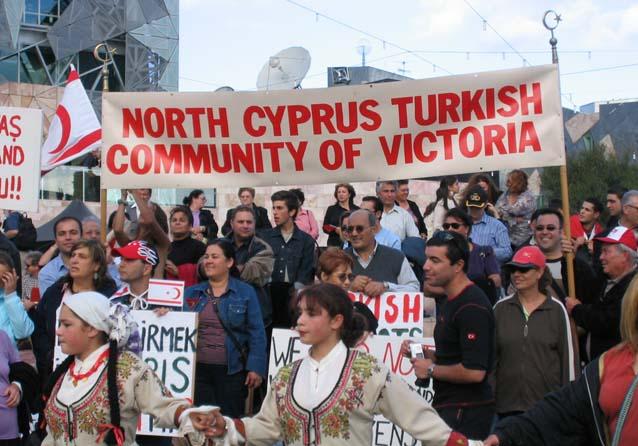
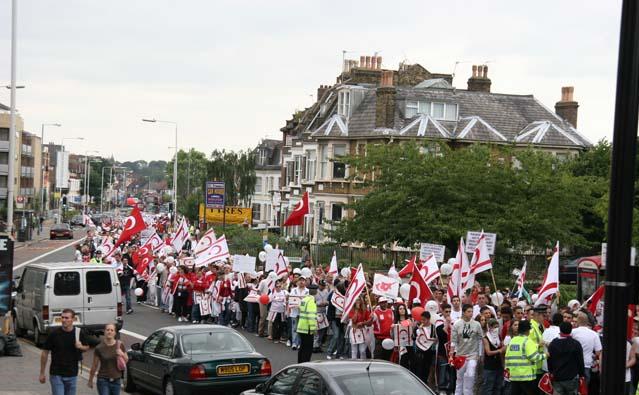
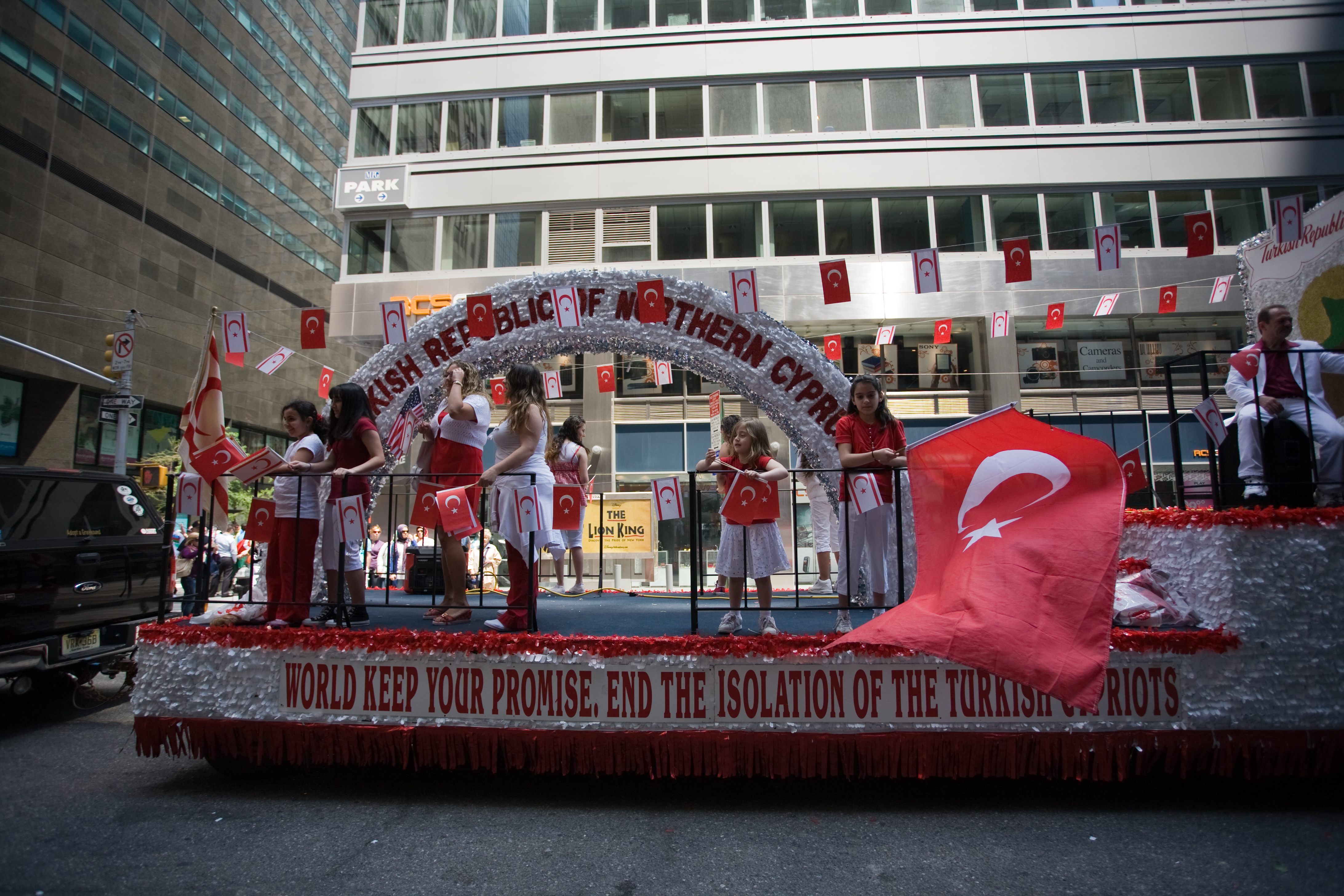
| Country | year=1993 | title=European Population Conference: Proceedings, Geneva | volume=2 | publisher=Council of Europe | url=https://books.google.com/books?id=grk3AQAAMAAJ&q=number+of+Turkish+Cypriots+now+living+in+Turkey+is+about+300+000+while+the+number+of+those+who+have+settled+in+England+is+100+000.+There+are+also+approximately+30+000+Turkish+Cypriots+living+in+Australia+and+about+6+000+in+Canada+and+the | quote= The number of Turkish Cypriots now living in Turkey is about 300 000 while the number of those who have settled in England is 100 000. There are also approximately 30 000 Turkish Cypriots living in Australia and about 6 000 in Canada and the U.S.A. | isbn=9789287125514}} | title=Briefing Notes on the Cyprus Issue | url=http://www.trncinfo.com/tanitmadairesi/2002/ENGLISH/BRIEFINGNOTES/070202BRIEFINGNOTES.htm | publisher=Ministry of Foreign Affairs and Defence, Turkish Republic of Northern Cyprus | date=May 2001 | access-date=5 October 2010 | archive-url=https://web.archive.org/web/20100709094909/http://www.trncinfo.com/tanitmadairesi/2002/ENGLISH/BRIEFINGNOTES/070202BRIEFINGNOTES.htm | archive-date=9 July 2010 | url-status=usurped | quote=there are currently about 500,000 Turkish Cypriots living in Turkey; 200,000 in Great Britain; 40,000 in Australia and some 10,000 in North America and 5,000 in other countries. }} | TÜBİTAK | |
|---|---|---|---|---|---|---|---|---|---|---|---|---|---|---|---|---|---|---|
| (2016 estimate) | Other estimates | Further information | ||||||||||||||||
| Turkey | 300,000 (immigrants only) | 500,000 | 500,000 | 300,000 (1968 estimate) | ||||||||||||||
| Including descendants, exceeding 600,000 (2018 estimate) | ||||||||||||||||||
| United Kingdom | 100,000 (immigrants only in England) | 200,000 | 300,000 | author=BBC | title=Network Radio BBC Week 39: Wednesday 28 September 2011: Turkish Delight? | url=https://www.bbc.co.uk/pressoffice/proginfo/radio/2011/wk39/wed.shtml | access-date=2011-09-14 | archive-url=https://web.archive.org/web/20111102190501/http://www.bbc.co.uk/pressoffice/proginfo/radio/2011/wk39/wed.shtml | archive-date=2011-11-02 | url-status=live}}-400,000 | ||||||||
| (including descendants) | ||||||||||||||||||
| Australia | 30,000 (immigrants only) | 40,000 | 120,000 | author=Star Kıbrıs | year=2012 | title=Sözünüzü Tutun | url=http://www.starkibris.net/index.asp?haberID=125704 | access-date=10 September 2012 | quote=Tarihsel süreç içerisinde yaşanan bazı olaylar nedeniyle Kıbrıs’tan göç etmek zorunda kalan Türklerin, bugün dünyanın farklı bölgelerinde yaşam sürdüklerine dikkat çeken Kasapoğlu, "Kıbrıslı Türklerin 300 bin kadarı İngiltere’de, 500 bini Türkiye’de, 120 bini Avustralya’da, 5 bini ABD’de, bin 800’ü Kanada’da, çok az bir popülasyon Güney Afrika Cumhuriyeti’nde, bin 600’ü Yeni Zellanda’da, 2 bin kadarının da Almanya’da olduğu tahmin ediliyor" ifadelerini kullandı.}} | |||||||||
| (including descendants) | ||||||||||||||||||
| North America | ||||||||||||||||||
| United States | ||||||||||||||||||
| Canada | N/A | |||||||||||||||||
| 6,000 (immigrants only) | ||||||||||||||||||
| 6,000 (immigrants only) | 10,000 | |||||||||||||||||
| N/A | ||||||||||||||||||
| N/A | N/A | |||||||||||||||||
| 5,000 | ||||||||||||||||||
| 1,800 | N/A | |||||||||||||||||
| 5,000 | ||||||||||||||||||
| 1,800 | ||||||||||||||||||
| Palestine | N/A | N/A | N/A | 4,000 (early twentieth century Turkish Cypriot brides only) | ||||||||||||||
| Germany | N/A | N/A | 2,000 | 2,000 | ||||||||||||||
| New Zealand | N/A | N/A | 1,600 | 1,600 | ||||||||||||||
| South Africa | N/A | N/A | "small community" | N/A | ||||||||||||||
| Other | N/A | 5,000 | N/A | N/A |
Indian Turks
There is a roughly 2000+ strong Turkish community living in India in the cities of Delhi, Mumbai and Hyderabad https://www.thehindu.com/features/metroplus/the-turkish-connection/article5368278.ece
Iraqi Turks
Most Iraqi Turkmen migrate to Turkey followed by Germany, Denmark, and Sweden. There are also Iraqi Turkmen communities living in Canada, the United States, Australia, New Zealand, Greece, the Netherlands, and the United Kingdom.
There are many established Iraqi Turkmen diaspora communities, such as the Canadian Iraqi Turkmen Culture Association, based in Canada.
Lebanese Turks
Due to the numerous wars in Lebanon since the 1970s onwards, many Lebanese Turks have sought refuge in Turkey and Europe, particularly in Germany. Indeed, many Lebanese Turks were aware of the large German-Turkish population and saw this as an opportunity to find work once settling in Europe. In particular, the largest wave of Lebanese-Turkish migration occurred once the Israel-Lebanon war of 2006 began. During this period more than 20,000 Turks fled Lebanon, particularly from Beirut, and settled in Germany.
Macedonian Turks
Meskhetian Turks
.jpg)
| Country | last1=Aydıngün | first1=Ayşegül | last2=Harding | first2=Çiğdem Balım | last3=Hoover | first3=Matthew | last4=Kuznetsov | first4=Igor | last5=Swerdlow | first5=Steve | year=2006 | title=Meskhetian Turks: An Introduction to their History, Culture, and Resettelment Experiences | url=http://www.cal.org/CO/pdffiles/mturks.pdf | publisher=Center for Applied Linguistics | pages=13–14 | journal= | access-date=2011-10-18 | archive-date=2007-07-14 | archive-url=https://web.archive.org/web/20070714205907/http://www.cal.org/co/pdffiles/mturks.pdf | url-status=dead}} | author=Al Jazeera | title=Ahıska Türklerinin 70 yıllık sürgünü | url=http://www.aljazeera.com.tr/al-jazeera-ozel/ahiska-turklerinin-70-yillik-surgunu | work=Al Jazeera | date=2014 | access-date=2016-07-05}} | Further information |
|---|---|---|---|---|---|---|---|---|---|---|---|---|---|---|---|---|---|---|---|---|---|---|---|---|---|---|---|
| Kazakhstan | 150,000 | 180,000 | |||||||||||||||||||||||||
| Azerbaijan | 90,000-110,000 | 87,000 | |||||||||||||||||||||||||
| Russia | 70,000-90,000 | 95,000 | |||||||||||||||||||||||||
| Kyrgyzstan | 50,000 | 42,000 | |||||||||||||||||||||||||
| Turkey | 40,000 | 76,000 | |||||||||||||||||||||||||
| United States | 15,000{{cite news | author=The Seattle Times | title=Refugees' road leads to Tukwila | access-date=2010-11-16 | date=2006-03-07}} | 16,000 | |||||||||||||||||||||
| Uzbekistan | 15,000 | 38,000 | |||||||||||||||||||||||||
| Ukraine | 10,000 | 8,000 | |||||||||||||||||||||||||
| Northern Cyprus | 180 |
Palestinian Turks

Both during and after the 1947–1949 Palestine war, some members of Palestine's Turkish minority fled the region (particularly the Jezreel Valley region and the Golan Heights) and settled in Lebanon, Syria, and Jordan. In Jordan, there is approximately 55,000 Palestinian-Turkish refugees in Irbid 5,000 near Amman 5,000 in El-Sahne 3,000 in El-Reyyan 2,500 in El-Bakaa 1,500 in El-Zerkaa and 1,500 in Sahab
Romanian Turks
Syrian Turks
Since the outbreak of the Syrian Civil War, hundreds of thousands of Syrian Turkmen have been internally displaced and/or forced to leave the country, and most of them have sought refuge in neighbouring states and Western Europe. In particular, approximately 300,000 to 500,000 Syrian Turkmen have taken refuge in the Republic of Turkey. Moreover, there are between 125,000 and 150,000 Syrian Turkmen refugees in Lebanon, which means they outnumber the long-established Turkish minority in Lebanon.
In 2020 it was reported that 1 million Syrian Turkmen were living in Turkey and demanding that the Turkish government grant them Turkish citizenship.
Turkish Jews
In 2012, it was estimated that around 280,000 Jews living in Israel were from Turkey or of Turkish descent. In Israel, the Arkadaş Association was founded by Turkish Jews to maintain their relationship with Turkey.
Western Thrace Turks
In 1990, it was estimated that around 300,000 to 400,000 Western Thrace Turks had migrated to Turkey since 1923. Moreover, from the 1950s onwards, Turks of Western Thrace began to immigrate to Western Europe alongside other Greek citizens. Whilst many Western Thrace Turks had intended to return to Greece after working for a number of years, a new Greek law was introduced which effectively forced the minority to remain in their host countries. Article 19 of the 1955 Greek Constitution essentially stripped the Western Thrace Turks living abroad (particularly those in Germany and Turkey) of their Greek citizenship. According to Article 19 of the Greek Constitution
This law continued to effect Western Thrace Turks studying in Turkey and Germany in the late 1980s. A report published by the Human Rights Watch in 1990 confirmed that:
Despite many being stripped of their Greek citizenship since 1955, Western Thrace Turks continued to migrate to Western Europe the 1960s and 1970s because the Thracian tobacco industry was affected by a severe crisis and many tobacco growers lost their income. Between 1970 and 2010, approximately 40,000 Western Thrace Turks arrived in Western Europe, most of which settled in Germany. In addition, between 2010 and 2018, a further 30,000 Western Thrace Turks left for Western Europe due to the Greek government-debt crisis. The remainder have emigrated to the Netherlands, the United Kingdom, Austria and Italy; furthermore, outside of Europe, they have built communities in Australia, Canada and the United States.
Politics
2023 and 2018 Turkish presidential election
Main article: 2023 Turkish presidential election, 2018 Turkish presidential election
File:2023YurtdışıCBSeçim.png|Results of voters abroad in the first and second rounds. In 2023 Turkish presidential election File:2018YurtdışıSeçim.png|Results of voters abroad in the first and second rounds. in 2018 Turkish presidential election
2017 Turkish constitutional referendum
Main article: 2017 Turkish constitutional referendum

| Country | Yes | Yes (%) | No | No (%) | Overseas results | 831,208 | 59.09% | 575,365 | 40.91% |
|---|---|---|---|---|---|---|---|---|---|
| Albania | 153 | 41.80% | 213 | 58.20% | |||||
| Algeria | 356 | 43.00% | 472 | 57.00% | |||||
| Australia | 5,960 | 41.82% | 8,290 | 58.18% | |||||
| Austria | 38,215 | 73.23% | 13,972 | 26.77% | |||||
| Azerbaijan | 1,024 | 38.31% | 1,649 | 61.69% | |||||
| Bahrain | 69 | 13.56% | 440 | 86.44% | |||||
| Belgium | 54,083 | 74.98% | 18,044 | 25.02% | |||||
| Bosnia and Herzegovina | 750 | 61.83% | 463 | 38.17% | |||||
| Bulgaria | 365 | 28.65% | 909 | 71.35% | |||||
| Canada | 3,247 | 27.92% | 8,384 | 72.08% | |||||
| China | 213 | 23.77% | 683 | 76.23% | |||||
| Czech Republic | 73 | 12.54% | 509 | 87.46% | |||||
| Denmark | 6,604 | 60.63% | 4,288 | 39.37% | |||||
| Egypt | 259 | 59.00% | 180 | 41.00% | |||||
| Finland | 558 | 28.45% | 1,403 | 71.55% | |||||
| France | 91,266 | 64.85% | 49,475 | 35.15% | |||||
| Georgia | 285 | 40.66% | 416 | 59.34% | |||||
| Germany | 412,149 | 63.07% | 241,353 | 36.93% | |||||
| Greece | 176 | 22.62% | 602 | 77.38% | |||||
| Hungary | 232 | 25.75% | 669 | 74.25% | |||||
| Iran | 121 | 45.32% | 146 | 54.68% | |||||
| Iraq | 119 | 34.59% | 225 | 65.41% | |||||
| Ireland | 173 | 19.93% | 695 | 80.07% | |||||
| Israel | 284 | 43.43% | 370 | 56.57% | |||||
| Italy | 2,135 | 37.94% | 3,492 | 62.06% | |||||
| Japan | 416 | 36.11% | 736 | 63.89% | |||||
| Jordan | 349 | 75.87% | 111 | 24.13% | |||||
| Kazakhstan | 636 | 41.41% | 900 | 58.59% | |||||
| Kosovo | 404 | 57.14% | 303 | 42.86% | |||||
| Kuwait | 191 | 23.38% | 626 | 76.62% | |||||
| Kyrgyzstan | 499 | 57.36% | 371 | 42.64% | |||||
| Lebanon | 1,058 | 93.88% | 69 | 6.12% | |||||
| Luxembourg | 5,987 | 62.86% | 3,538 | 37.14% | |||||
| Macedonia | 618 | 57.97% | 448 | 42.03% | |||||
| Netherlands | 82,672 | 70.94% | 33,871 | 29.06% | |||||
| New Zealand | 32 | 17.68% | 149 | 82.32% | |||||
| Northern Cyprus | 19,225 | 45.18% | 23,324 | 54.82% | |||||
| Norway | 2,193 | 57.20% | 1,641 | 42.80% | |||||
| Oman | 138 | 24.04% | 436 | 75.96% | |||||
| Poland | 302 | 25.61% | 877 | 74.39% | |||||
| Qatar | 241 | 18.89% | 1,035 | 81.11% | |||||
| Romania | 824 | 44.64% | 1,022 | 55.36% | |||||
| Russia | 833 | 26.02% | 2,368 | 73.98% | |||||
| Saudi Arabia | 4,475 | 55.06% | 3,653 | 44.94% | |||||
| Singapore | 284 | 44.31% | 357 | 55.69% | |||||
| South Africa | 126 | 36.84% | 216 | 63.16% | |||||
| Spain | 172 | 13.32% | 1,119 | 86.68% | |||||
| Sudan | 240 | 65.93% | 124 | 34.07% | |||||
| Sweden | 4,367 | 47.09% | 4,902 | 52.91% | |||||
| Switzerland | 19,181 | 38.08% | 31,193 | 61.92% | |||||
| Thailand | 27 | 12.92% | 182 | 87.02% | |||||
| Turkmenistan | 510 | 43.74% | 656 | 56.26% | |||||
| Ukraine | 341 | 35.74 | 613 | 64.26% | |||||
| United Arab Emirates | 395 | 13.31% | 2,572 | 86.69% | |||||
| United Kingdom | 7,177 | 20.26% | 28,247 | 79.79% | |||||
| United States | 5,296 | 16.20% | 27,397 | 83.80% | |||||
| Uzbekistan | 169 | 53.65% | 146 | 46.35% | |||||
| Border Gates | 52,961 | 54.17% | 44,816 | 45.83% |
November 2015 Turkish general election
Main article: November 2015 Turkish general election
| Country | Party |
|---|---|
| Albania | |
| Algeria | |
| Australia | |
| Austria | |
| Azerbaijan | |
| Bahrain | |
| Belgium | |
| Bosnia | |
| Bulgaria |
| Country | Party |
|---|---|
| Canada | |
| China | |
| Czech Republic | |
| Denmark | |
| Egypt | |
| Finland | |
| France | |
| Georgia | |
| Germany |
| Country | Party |
|---|---|
| Greece | |
| Hungary | |
| Iran | |
| Ireland | |
| Israel | |
| Italy | |
| Japan | |
| Jordan | |
| Kazakhstan |
| Country | Party |
|---|---|
| Kosovo | |
| Kuwait | |
| Kyrgyzstan | |
| Lebanon | |
| Macedonia | |
| Netherlands | |
| New Zealand | |
| Northern Cyprus | |
| Norway |
| Country | Party |
|---|---|
| Oman | |
| Poland | |
| Qatar | |
| Romania | |
| Russia | |
| Saudi Arabia | |
| South Africa | |
| Spain | |
| Sudan |
| Country | Party |
|---|---|
| Sweden | |
| Switzerland | |
| Thailand | |
| Turkmenistan | |
| Ukraine | |
| United Arab Emirates | |
| United Kingdom | |
| United States | |
| Uzbekistan |
|}
June 2015 Turkish general election
Main article: June 2015 Turkish general election

Main article: Results breakdown of the June 2015 Turkish general election#Overseas results
This was the second election, after the 2014 presidential election, in which Turkish expats were given the right to vote. Furthermore, votes were also cast 38 customs gates in airports, ports and border gates around the country. In an overseas vote period lasting 23 days between 8 May and 31 May 2015, the turnout was significantly higher than that in the presidential election, reaching 37% as opposed to the 8% recorded in 2014.
Out of the 54 countries where expats were given the vote, the Justice and Development Party (AKP) won the most votes in 23 countries. The Republican People's Party (CHP) won the most votes in 18 countries. The Peoples' Democratic Party (HDP) won the most votes in 11 countries and the Nationalist Movement Party (MHP) managed to win the most votes in only one country, namely Albania.
The overseas vote, which had been won by AKP candidate Recep Tayyip Erdoğan with over 62.3% in the 2014 presidential election, showed a significant swing of around 10% from the AKP to the HDP, which increased its overseas vote share from 9.8% (that their candidate Selahattin Demirtaş won in 2014) to over 20%. The AKP, on the other hand, won just over 50%, coming first due to strong support from countries with a significant Turkish expat population, such as Germany and Austria.
The following table shows the winners according to countries in which Turkish consulates held voting periods for the election.
| Country | Party |
|---|---|
| Albania | |
| Algeria | |
| Australia | |
| Austria | |
| Azerbaijan | |
| Bahrain | |
| Belgium | |
| Bosnia | |
| Bulgaria |
| Country | Party |
|---|---|
| Canada | |
| China | |
| Czech Republic | |
| Denmark | |
| Egypt | |
| Finland | |
| France | |
| Georgia | |
| Germany |
| Country | Party |
|---|---|
| Greece | |
| Hungary | |
| Iran | |
| Ireland | |
| Israel | |
| Italy | |
| Japan | |
| Jordan | |
| Kazakhstan |
| Country | Party |
|---|---|
| Kosovo | |
| Kuwait | |
| Kyrgyzstan | |
| Lebanon | |
| Macedonia | |
| Netherlands | |
| New Zealand | |
| Northern Cyprus | |
| Norway |
| Country | Party |
|---|---|
| Oman | |
| Poland | |
| Qatar | |
| Romania | |
| Russia | |
| Saudi Arabia | |
| South Africa | |
| Spain | |
| Sudan |
| Country | Party |
|---|---|
| Sweden | |
| Switzerland | |
| Thailand | |
| Turkmenistan | |
| Ukraine | |
| United Arab Emirates | |
| United Kingdom | |
| United States | |
| Uzbekistan |
|}
- In Greece, the HDP and CHP each received 174 votes (29.4%) and came joint first.


2014 Turkish presidential election
Main article: 2014 Turkish presidential election
File:2014 Turkish presidential election - Erdoğan global.png|Results obtained by Recep Tayyip Erdoğan by country File:2014 Turkish presidential election - İhsanoğlu global.png|Results obtained by Ekmeleddin İhsanoğlu by country File:2014 Turkish presidential election - Demirtaş global.png|Results obtained by Selahattin Demirtaş by country Results are listed in alphabetical order. Although Ekmeleddin İhsanoğlu won the most pluralities and majorities, the significantly larger Turkish electorate in countries that heavily voted for Erdoğan resulted in Erdoğan breaking many predictions by receiving nearly two thirds of the overseas vote. In Cairo, the city in which İhsanoğlu was born, 53.73% voted for İhsanoğlu with 44.03% voting for Erdoğan. Regardless, İhsanoğlu won in Egypt by just one vote, due to large support for Erdoğan in Alexandria. Note that in the maps, Greenland is considered part of Denmark, despite the fact that no voting took place in Greenland.
| Country | Erdoğan | İhsanoğlu | Demirtaş |
|---|---|---|---|
| Albania | 35.81% | 61.49% | 2.70% |
| Algeria | 42.41% | 37.59% | 20.00% |
| Australia | 56.35% | 34.53% | 9.12% |
| Austria | 80.17% | 14.93% | 4.90% |
| Azerbaijan | 39.06% | 53.86% | 7.08% |
| Bahrain | 25.00% | 71.88% | 3.12% |
| Belgium | 69.85% | 21.07% | 9.09% |
| Bosnia and Herzegovina | 52.59% | 46.67% | 0.74% |
| Bulgaria | 35.31% | 58.42% | 6.27% |
| Canada | 33.35% | 51.62% | 15.02% |
| China | 25.27% | 68.86% | 5.86% |
| Czech Republic | 19.88% | 73.49% | 6.63% |
| Denmark | 62.65% | 27.01% | 10.33% |
| Egypt | 48.59% | 49.15% | 2.26% |
| Finland | 28.89% | 43.70% | 27.41% |
| France | 66.02% | 15.27% | 18.71% |
| Georgia | 46.51% | 48.37% | 5.12% |
| Germany | 68.63% | 23.74% | 7.63% |
| Country | Erdoğan | İhsanoğlu | Demirtaş |
|---|---|---|---|
| Greece | 43.95% | 44.44% | 11.60% |
| Hungary | 52.57% | 35.29% | 12.13% |
| Iran | 47.89% | 49.30% | 2.82% |
| Ireland | 24.56% | 64.91% | 10.53% |
| Israel | 31.87% | 58.24% | 9.89% |
| Italy | 45.82% | 45.22% | 8.96% |
| Japan | 46.01% | 47.85% | 6.13% |
| Jordan | 78.90% | 20.45% | 0.65% |
| Kazakhstan | 36.50% | 56.70% | 6.80% |
| Kosovo | 56.65% | 37.64% | 5.70% |
| Kuwait | 31.47% | 66.81% | 1.72% |
| Kyrgyzstan | 56.65% | 37.64% | 5.70% |
| Lebanon | 85.93% | 14.07% | 0.00% |
| Macedonia | 45.08% | 54.10% | 0.82% |
| Netherlands | 77.95% | 18.09% | 3.96% |
| New Zealand | 15.91% | 72.73% | 11.36% |
| Northern Cyprus | 54.85% | 37.02% | 8.12% |
| Norway | 50.99% | 33.44% | 15.56% |
| Country | Erdoğan | İhsanoğlu | Demirtaş |
|---|---|---|---|
| Oman | 29.03% | 69.35% | 1.61% |
| Poland | 32.17% | 50.00% | 17.83% |
| Qatar | 24.51% | 61.76% | 13.73% |
| Romania | 38.27% | 42.65% | 19.08% |
| Russia | 28.74% | 64.10% | 7.16% |
| Saudi Arabia | 80.55% | 18.38% | 1.07% |
| South Africa | 33.33% | 66.06% | 0.61% |
| Spain | 11.00% | 76.98% | 12.03% |
| Sudan | 53.94% | 44.24% | 1.82% |
| Sweden | 51.11% | 32.64% | 16.25% |
| Switzerland | 39.62% | 31.89% | 28.49% |
| Tunisia | 32.14% | 61.90% | 5.95% |
| Turkmenistan | 39.57% | 55.00% | 5.43% |
| Ukraine | 48.17% | 44.04% | 7.80% |
| United Arab Emirates | 18.75% | 75.47% | 5.78% |
| United Kingdom | 23.53% | 49.72% | 26.74% |
| United States of America | 15.91% | 77.88% | 6.21% |
| Uzbekistan | 65.57% | 32.79% | 1.64% |
|}
A summary of the numbers of countries won by each candidate is shown below.
| Candidate | Countries with pluralities ( | Countries with majorities (50%) | Combined | Proportion |
|---|---|---|---|---|
| Recep Tayyip Erdoğan | 4 | 19 | 23 | |
| Ekmeleddin Mehmet İhsanoğlu | 8 | 23 | 31 | |
| Selahattin Demirtaş | 0 | 0 | 0 | |
| 12 | 42 | 54 | 100.00% |

Countries won by Ekmeleddin İhsanoğlu]]
References
References
- "Turkish Citizens Living Abroad / Republic of Türkiye Ministry of Foreign Affairs".
- (1997). "The Utilization of Instructional Technology in Turkey". [[Springer Publishing.
- (2010). "52% of Europeans say no to Turkey's EU membership". [[Aysor]].
- Pashayan, Araks. (2012). "European Muslims, Civility and Public Life: Perspectives On and From the Gülen Movement". [[Continuum International Publishing Group]].
- Dursun-Özkanca, Oya. (2019). "Turkey–West Relations: The Politics of Intra-alliance Opposition". [[Cambridge University Press]].
- (2013). "Middle East and North African Immigrants in Europe: Current Impact; Local and National Responses". [[Routledge]].
- Goldman, Russell. (17 March 2017). "'You Are the Future of Europe,' Erdogan Tells Turks". The New York Times.
- (31 August 2017). "How Recep Tayyip Erdogan seduces Turkish migrants in Europe". [[The Economist]].
- Federal Statistical Office of Germany. "Population, Migration and integration".
- Engstrom, Aineias. (12 January 2021). "Turkish-German "dream team" behind first COVID-19 vaccine". [[Portland State University]].
- "Bevölkerung in Privathaushalten nach Migrationshintergrund im weiteren Sinn nach ausgewählten Geburtsstaaten".
- Kerdat, Marianne. (2019). "Donner une autre image de la Turquie à travers le cinéma". [[Le Petit Journal (website).
- (2020). "Il est temps que la France appelle à de véritables sanctions contre le jeu d'Erdogan". [[Marianne (magazine).
- [[:fr:Pierre Vermeren. (2014). "Face à l'islam de France, du déni à la paralysie".
- (2010). "Transculturalité, religion, traditions autour de la mort en réanimation". [[Springer Publishing.
- Fransa Diyanet İşleri Türk İslam Birliği. "2011 YILI DİTİB KADIN KOLLARI GENEL TOPLANTISI PARİS DİTİB'DE YAPILDI".
- Nalci, Aris. (2012). "An Interview with Garo Yalic, Advisor to Valerie Boyer". [[Armenian Weekly]].
- Sag, Armand. (2016). "De destinteresse in Nederland". Platform Dergisi.
- (2019). "Heritage Languages: A language Contact Approach". [[John Benjamins Publishing Company]].
- Tocci, Nathalie. (2003). "EU Accession Dynamics and Conflict Resolution: The Case of Cyprus 1988–2002". [[London School of Economics]].
- van Veen, Rita. (2007). "De koningin heeft oog voor andere culturen". [[Trouw]].
- (2020). "L1mburg Centraal: Fortuna gaat samenwerking aan met Turkse Beşiktaş". [[:nl:L1 (omroep).
- (2020). "Trots Fortuna Sittard gaat talenten scouten voor Besiktas". [[Voetbal International]].
- TheSophiaEcho. "Turkish Bulgarians fastest-growing group of immigrants in the Netherlands".
- "Bevolking; generatie, geslacht, leeftijd en herkomstgroepering, 1 januari".
- CBS. "Bevolking – Integratie en Samenleven {{!}} CBS".
- (2011). "Warum die Türken?". [[:de:Initiative Minderheiten.
- (2017). "Turkey angry after Erdogan is told he can't campaign in Austria". [[The Local]].
- [[Andreas Mölzer. "In Österreich leben geschätzte 500.000 Türken, aber kaum mehr als 10–12.000 Slowenen".
- [[Raymond Taras. (2012). "Xenophobia and Islamophobia in Europe". [[Edinburgh University Press]].
- (2019). "Migrations Matrimoniales: Facteurs de Risque en Sante´ Mentale". [[SAGE Publishing]].
- Home Affairs Committee. (2011). "Implications for the Justice and Home Affairs area of the accession of Turkey to the European Union". The Stationery Office.
- (1 August 2011). "UK immigration analysis needed on Turkish legal migration, say MPs". [[The Guardian]].
- (2009). "Ankara Historia". [[Swedish Ministry for Foreign Affairs]].
- Sayıner, Arda. (2018). "Ankara Historia". [[Daily Sabah]].
- (2017). "Türken in der Schweiz – Zahlen und Fakten zur Diaspora vom Bosporus". [[Aargauer Zeitung]].
- Larsen, Nick Aagaard. (2008). "Tyrkisk afstand fra Islamisk Trossamfund". [[DR (broadcaster).
- (2008). "Tyrkere langer ud efter trossamfund". [[Berlingske]].
- Seçkin, Barış. (2020). "İtalya'daki Türk vatandaşları Kovid-19 nedeniyle kayıp vermedi". [[Anadolu Agency]].
- "Acquisition of citizenship by age group, sex and former citizenship".
- Visintainer, Ermanno. (2011). "La Presenza Turca Dimenticata In Italia: I Turchi Di Moena [The Forgotten Turks in Italy: Moena Turks]". ORSAM.
- (2013). "Norwegian-Turkish cooperation". The Royal House of Norway.
- Kütük, Zeki. (2010). "Finlandiya'da Yabancı Düşmanlığı, Sosyal Dışlanma ve Türk Diasporası". [[:tr:TASAM.
- Pawłowska-Salińska, Katarzyna. (2013). "Nie pytaj Turka o kebab i język arabski". [[Gazeta Wyborcza]].
- "Estrangeiros em Portugal".
- "Acquisition of citizenship by age group, sex and former citizenship, Portugal 2020".
- Shendruk, Amanda. (2021-07-08). "Are you even trying to stop racism if you don't collect data on race?".
- (18 April 2017). "More than 9,000 Turks voted from Luxembourg".
- (2009). "Bir masal ülkesinde yaşam öğretisi.". [[Milliyet]].
- (2016). "İspanya'dan 8 yiyen Liechtenstein'ın Türkleri". [[Hürriyet]].
- Grabowski, John J.. (1996). "Encyclopedia of Cleveland History". [[John Wiley & Sons]].
- Erdal, Şafak. (2009). "ABD'de kaç Türk var?". [[Sabah (newspaper).
- (2012). "Remarks at Center for American Progress & Confederation of Businessmen and Industrialists of Turkey (TUSKON) Luncheon". [[U.S. Department of Commerce]].
- (2012). "Remarks by Commerce Secretary Bryson, April 5, 2012". [[Cambridge University Press]].
- (25 October 2017). "Data tables, 2016 Census". [[Statistics Canada]].
- Aytaç, Seyit Ahmet. (2018). "Shared issues, stronger ties: Canada's envoy to Turkey". [[Anadolu Agency]].
- "Welcome!". The Federation of Canadian Turkish Associations.
- (2019). "Journey to the East: 16th Taste of Asia and Asian Heritage Month Reception May 1st, 2018". Federation of Chinese Canadians in Markham.
- [https://www.nepo.unicamp.br/observatorio/bancointerativo/numeros-imigracao-internacional/sincre-sismigra/ Immigrants in Brazil (2024, in Portuguese)]
- (1994). "Gallipoli Turkish Premiere to Aid Peninsula Restoration". [[The Age]].
- (2013). "Avustralya'dan THY'ye çağrı var". Milliyet.
- Lennie, Soraya. (2017). "Turkish diaspora in Australia vote in referendum". [[TRT World]].
- "How many Turks living in New Zealand?". Pearl of the Islands Foundation.
- (2 August 2014). "Turks living in the UAE vote in presidential elections – The National".
- Reporter, Ashfaq Ahmed, Chief. (5 June 2010). "Turkish community group marks fourth anniversary".
- "English-Turkish Community Dubai – Dubai".
- (2010-06-05). "Turkish community group marks fourth anniversary".
- Rizvi, Muzaffar. "Dubai plays a vital role in fostering Türkiye-UAE relations".
- "Turkish Healthcare Professionals in the UAE".
- Kateb, Kamel. (2001). "Européens: "Indigènes" et juifs en Algérie (1830–1962) : Représentations et Réalités des Populations". [[INED]].
- Koroghli, Ammar. (2010). "EL DJAZAÎR : De la Régence à l'Istiqlal". Sétif Info.
- Communities and Local Government. (2009). "The Algerian Muslim Community in England: Understanding Muslim Ethnic Communities". Communities and Local Government.
- Communities and Local Government. (2009). "The Algerian Muslim Community in England: Understanding Muslim Ethnic Communities". Communities and Local Government.
- Rippin, Andrew. (2008). "World Islam: Critical Concepts in Islamic Studies". [[Routledge]].
- (1993). "European Population Conference: Proceedings, Geneva". [[Council of Europe]].
- (May 2001). "Briefing Notes on the Cyprus Issue". Ministry of Foreign Affairs and Defence, Turkish Republic of Northern Cyprus.
- (2016). "Three-dimensional cephalometric norms of Turkish Cypriots using CBCT images reconstructed from a volumetric rendering program in vivo". [[Scientific and Technological Research Council of Turkey]].
- Salih, Halil Ibrahim. (1968). "Cyprus: An Analysis of Cypriot Political Discord". T. Gaus' Sons.
- Kanlı, Yusuf. (2018). "Bridging the population gap in Cyprus". [[Hurriyet Daily News]].
- BBC. "Network Radio BBC Week 39: Wednesday 28 September 2011: Turkish Delight?".
- Laschet, Armin. (17 September 2011). "İngiltere'deki Türkler". Hurriyet.
- Cemal, Akay. (2 June 2011). "Dıştaki gençlerin askerlik sorunu çözülmedikçe…". Kıbrıs Gazetesi.
- Star Kıbrıs. (2012). "Sözünüzü Tutun".
- Cahit, Neriman. (2014). "Brides for Sale". TCAUW.
- Sabah. "Küçük adanın talihsiz kızları".
- Sirkeci, Ibrahim. (2005). "Turkmen in Iraq and International Migration of Turkmen". University of Bristol.
- Wanche, Sophia I.. (2004). "An Assessment of the Iraqi Communityin Greece". United Nations High Commissioner for Refugees.
- (2008). "Iraklı Türkmenler Kerkük için yürüdü". Hürriyet.
- International Organization for Migration. (2007). "Iraq Mapping Exercise". International Organization for Migration.
- "Canadian Iraqi Turkmen Culture Association".
- "Turkish migrants grieve for Beirut from exile". Today's Zaman.
- (2006). "Meskhetian Turks: An Introduction to their History, Culture, and Resettelment Experiences". Center for Applied Linguistics.
- Al Jazeera. (2014). "Ahıska Türklerinin 70 yıllık sürgünü". Al Jazeera.
- {{Harvnb. Suwaed. 2015
- Suwaed, Muhammad. (2015). "Historical Dictionary of the Bedouins". [[Rowman & Littlefield]].
- El-Hatip, Alyaa. (2014). "Ortadoğu Türkmenlerİ Sempozyumu". ORSAM.
- Ünal, Ali. (2016). "Turkey stands united with Turkmens, says Foreign Ministry Undersecretary Yalçın". [[Daily Sabah]].
- Ahmed, Yusra. (2015). "Syrian Turkmen refugees face double suffering in Lebanon". Zaman Al Wasl.
- Syrian Observer. (2015). "Syria's Turkmen Refugees Face Cruel Reality in Lebanon".
- (9 August 2020). "Türkiye'deki Suriyeli Türkmenler de Vatandaşlık İstiyor".
- CBS. "Estimated Number of Turkish Jews Born in Israel".
- Whitman, Lois. (1990). "Destroying ethnic identity: the Turks of Greece". Human Rights Watch.
- Hirschon, Renée. (2003). "Crossing the Aegean: An Appraisal of the 1923 Compulsory Population Exchange Between Greece and Turkey". Berghahn Books.
- (1999). "Islam Outside the Arab World". Palgrave Macmillan.
- Whitman, Lois. (1990). "Destroying Ethnic Identity: The muslims of Greece". Human Rights Watch.
- Arif, Nazmi. (2018). "Yunanistan'da, Batı Trakya Türklerinin dış ülkelere göçü endişe ve kaygı verici boyutlara ulaştı.". [[Turkish Radio and Television Corporation.
- Şentürk, Cem. (2008). "Batı Trakya Türklerin Avrupa'ya Göçleri". Uluslararası Sosyal Aratırmalar Dergisi.
- Kultur. "BATI TRAKYA TÜRK EDEBİYATI".
- "Archived copy".
- "TÜM ÜLKELERİN CUMBAŞKANLIĞI SEÇİM SONUÇLARI". haberler.com.
- "MISIR CUMHURBAŞKANLIĞI SEÇİM SONUÇLARI". haberler.com.
This article was imported from Wikipedia and is available under the Creative Commons Attribution-ShareAlike 4.0 License. Content has been adapted to SurfDoc format. Original contributors can be found on the article history page.
Ask Mako anything about Turkish diaspora — get instant answers, deeper analysis, and related topics.
Research with MakoFree with your Surf account
Create a free account to save articles, ask Mako questions, and organize your research.
Sign up freeThis content may have been generated or modified by AI. CloudSurf Software LLC is not responsible for the accuracy, completeness, or reliability of AI-generated content. Always verify important information from primary sources.
Report