From Surf Wiki (app.surf) — the open knowledge base
Tunnel fin
Type of fin used on surfboards
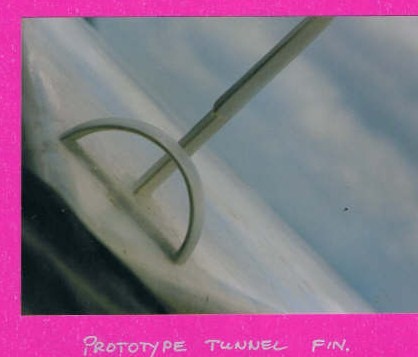
Type of fin used on surfboards
A tunnel fin is a type of surfboard fin used on surfboards, especially heavy longboards and longboard guns. The weight and length of these boards make it easier to control the fore and aft angle of the tunnel. As the name suggests, it is shaped like a tunnel. Tunnel fins were first used by Richard Deese and Bob Bolen (also known as the Greek) in California during the late sixties and continue to be developed by shapers today.
Background
The Tunnel fin is based on the principle of the annular wing with the lowest drag and highest lift fin configuration possible. It has no drag inducing fin tips, this is important as it means that rail to rail turning movements are drag-free and effortless. Tunnel fins have the ability to enhance hydrodynamics by slightly twisting the water flow into a vortex as it passes through the tunnel, preventing random turbulence in its wake. The tunnel fin has a large amount of horizontal lift utilizing the hydrofoil principle providing better lift-to-drag ratio.
The horizontal area in the tunnel fin also acts as a means of transferring rider energy into forward thrust through board flex (similar to a dolphin tail). As the board pumps up and down it drives the 'fluke' at the tail. In other words, the speed of the tunnel finned board can be increased by weighting and unweighting (pumping). This is slightly different from the side to side movement used by thruster riders.
The ability of the tunnel to organize volumetric flow rate means that (in the case where a central fin is used in front of the tunnel) any turbulence coming off the trailing edge and base of the front fin is organized into a lower drag flow pattern.
References
References
- "Turbo Tunnel Fin".
- (2004-03-30). "Turbo Tunnel Fin....more".
This article was imported from Wikipedia and is available under the Creative Commons Attribution-ShareAlike 4.0 License. Content has been adapted to SurfDoc format. Original contributors can be found on the article history page.
Ask Mako anything about Tunnel fin — get instant answers, deeper analysis, and related topics.
Research with MakoFree with your Surf account
Create a free account to save articles, ask Mako questions, and organize your research.
Sign up freeThis content may have been generated or modified by AI. CloudSurf Software LLC is not responsible for the accuracy, completeness, or reliability of AI-generated content. Always verify important information from primary sources.
Report