From Surf Wiki (app.surf) — the open knowledge base
Tunisian wine
Wine making in Tunisia
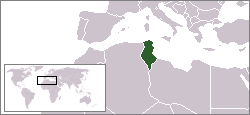
Wine making in Tunisia
Tunisian wine has a long history dating back to the Antiquity like most Mediterranean countries with the Phoenicians and Carthage .
The agronomist Mago that lived in the city of Carthage, wrote a treaty about agronomy and viticulture, from which its techniques are still used until this day. Despite the arrival of a Muslim power since the 7th century AD, viticulture and wine production never quite disappeared from Tunisia.
Rosé wine accounts for a large proportion of the Tunisian production.
History
Sousse mosaic palm tree.JPG|Vine and palm Villa rustica Tabarka.jpg|Mosaic of the villa rustica of Tabarka Henchir choud el battal pressoir vin Saladin.jpg|Reconstruction of a wine press near Fériana Triumph of Bacchus - Sousse.jpg|Mosaic of the Triumph of Bacchus in Sousse Archaeological Museum Sousse museum mosaic kitchen.jpg|Basket of grapes Wine production in today's Tunisia was probably introduced by the Phoenicians when Carthage was established. The Carthaginian agronomist Mago wrote on viticulture, and his works, which were later translated from Punic to Latin, were quoted by later Roman writers such as Columella.
Wine production continued after the Romans occupied Carthage in 146 BC. After Tunisia's conquest by Arabs in the 8th century AD, wine production was reduced but not eliminated.
Subsequent to the French conquest of Tunisia in 1881, large-scale wine production was introduced into the country, similar to the other North African countries. After Tunisia's independence in 1956, wine production continued but lack of expertise became a problem, and vineyard area slowly decreased.
From the late 1990s, Tunisia has seen foreign investment in its wine industry from several European countries, and production is slowly increasing in the 2000s.
Production

In 2008, there were 31000 ha of vineyards in Tunisia, of which just over half was dedicated to wine, and the rest mostly to the production of table grapes. In the early 2000s, the wine production in Tunisia consisted of 60–70 per cent rosé, 25–30 per cent red and under 10 per cent white.
Tunisia produces annually between 300 and 400 thousands hectoliters of wine, growing by 40% since 2002 with a peak of 600 thousands hectoliters in 2007. The yearly Tunisian local consumption averages 2.2 L by citizen.
Exportation amounts up to 40% of the revenues of the sector reaching $40.3 million in 2009. Germany and France are the main clients, with some quantities also exported to Switzerland, Belgium, the United States, Canada and some countries of eastern Europe like Russia. The production is commercialized at 70% with the label "AOC" among which 20% are further labelled « premier cru ».
Wine regions
Most of the Tunisian wine production is located in Cap Bon and the surrounding area. Tunisia has an Appellation Contrôlée (AOC) system consisting of the following seven AOCs, which are protected under the geographical indications in Tunisia and internationally in the parties to the Lisbon Agreement for the Protection of Appellations of Origin and their International Registration (except Iran).
- Grand Cru Mornag
- Mornag
- Coteau de Tébourba
- Sidi Salem
- Kélibia
- Thibar
- Côteaux d’Utique
Grape varieties
Tunisia shares most of its common grape varieties with southern France with local varieties. Common grape varieties (which have local variations) for rosé and red wine include Carignan, Mourvèdre, Cinsaut, Alicante Bouschet, Grenache, Syrah and Merlot, and for white wines Muscat of Alexandria, Chardonnay and Pedro Ximenez.
References
References
- Pascal Airault et [[Sonia Mabrouk]], « L'offensive internationale des vins du Maghreb », ''Jeune Afrique'', 11 mai 2008, pp. 75-77
- Frida Dahmani, « Les crus prennent de la bouteille », ''Jeune Afrique'', 4 juillet 2010, p. 50
- (2006). "Tunisia". Oxford University Press.
- [http://www.tunisia-live.net/2011/11/04/our-guide-to-tunisian-red-wine/ Our Guide to Tunisian Red Wine] {{Webarchive. link. (2013-03-31 , Tunisia Live 2011-11-04)
- [http://www.oiv.int/oiv/info/enstatoivextracts2 Stat OIV extracts] {{Webarchive. link. (2012-11-15)
- fr
This article was imported from Wikipedia and is available under the Creative Commons Attribution-ShareAlike 4.0 License. Content has been adapted to SurfDoc format. Original contributors can be found on the article history page.
Ask Mako anything about Tunisian wine — get instant answers, deeper analysis, and related topics.
Research with MakoFree with your Surf account
Create a free account to save articles, ask Mako questions, and organize your research.
Sign up freeThis content may have been generated or modified by AI. CloudSurf Software LLC is not responsible for the accuracy, completeness, or reliability of AI-generated content. Always verify important information from primary sources.
Report