From Surf Wiki (app.surf) — the open knowledge base
Tulu people
Dravidian ethnic group of southwestern India
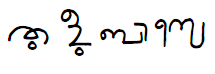
Dravidian ethnic group of southwestern India
| Field | Value |
|---|---|
| group | Tuluvas |
| native_name | Tuḷuvarŭ |
| image | Posa jodigu per korpuna.jpg |
| total | 1.8 million |
| region1 | India |
| pop1 | 1,846,427 (2011 census) |
| languages | Tulu |
| religions | Majority: |
| Hinduism | |
| Minority: | |
| related | Pancha-Dravida, Dravidian, Malayali, Kannadigas, Konkanis, Kodavas |
Hinduism Minority:
The Tulu people or Tuluvas are an ethno-linguistic and ethno-cultural group from Southern India. They are native speakers of the Tulu language and the region they traditionally inhabit is known as Tulu Nadu. This region comprises the districts of Dakshina Kannada, Mangalore, and Udupi in Karnataka, part of Kasaragod district in Kerala, with Mangalore, Karnataka being the commercial hub. The Census report of 2011 reported a population of 1,846,427 native Tulu speakers living in India.
Etymology
According to Keralolpathi, the name Tuluva comes from that of one of the Cheraman Perumal kings of Kerala, who fixed his residence in the northern portion of his dominions just before its separation from Kerala, and who was called Tulubhan Perumal.{{cite book
Mythology
According to mythology, Tulu Nadu was reclaimed by Parashurama from the sea. According to the 17th-century Malayalam work Keralolpathi, the lands of Kerala and Tulu Nadu were recovered from the Arabian Sea by the axe-wielding warrior sage Parashurama, the sixth avatar of Vishnu (hence, Kerala is also called Parashurama Kshetram 'The Land of Parashurama'). Parashurama threw his axe across the sea, and the water receded as far as it reached. According to legend, this new area of land extended from Gokarna to Kanyakumari. The land which rose from sea was filled with salt and unsuitable for habitation, so Parashurama invoked the snake king Vasuki, who spat holy poison and converted the soil into fertile lush green land. Out of respect, Vasuki and all snakes were appointed as protectors and guardians of the land. P. T. Srinivasa Iyengar theorised, that Senguttuvan may have been inspired by the Parashurama legend, which was brought by early Aryan settlers.
People and identity
Tulu speakers are divided into various castes. The major Tulu speaking castes are:
- Bunts
- Mansas
- Billavas
- Madivala
- Shettigars
- Tulu Gowdas
- Devadigas
- Kulalas
- Koragas
- Mogaveeras
- Tulu Brahmins
- Vishwakarmas
- Naiks
- Tulu Bhandary
Mangalorean Protestants are also Tulu speakers.
Culture


Tuluvas follow a matrilineal system of inheritance known as Aliyasantana, where inheritance is from uncle to nephew, except for Brahmins, Tulu Gowda, Shettigar caste and Vishwakarmas.{{cite web|url=http://rupkatha.com/siri-possession-cult/ |access-date= 12 December 2010 |access-date= 28 January 2008 |access-date = 20 May 2017
Tuluva New Year, called Bisu Parba, falls on the same day as Baisakhi, Vishu and the Thai New Year.{{cite web |url=http://starofmysore.com/bisu-parbha-celebrated-city/
Tuluva Paddanas are sung narratives, which are part of several closely related singing traditions in Tulu language. They are sung during occasions which describe the evolution of Tulu tribes and Tulu culture.
Buta Kola
Main article: Buta Kola
sa ( or 'soul worship'; a sa or sa is a supernatural creature, or spiritual entity, especially of ancestors) in Tulu Nadu is similar to the rest of South India, though the sa and forms of worship differ. The kola or nema is the yearly ceremony celebrating the festival of sa. They have attained a godly status among some worshippers, mainly non-Brahmins, and even have their own sa (a place of abode similar to temples). However, in many villages the Brahmins, who consider these spirits as their protectorates, conduct the yearly ceremonies.
sa, who may be considered local deities, can be animistic as in Panjurli (boar) or sa (tiger). A second variety can be representatives of characters taken out of the Puranas like Bermer (Brahma), Lekkesiri (Raktesvari, Kali) or Vishnumurti. A third category is deified human beings like Gulige, Annappe, and Koti-Chananye. The fourth kind is strictly local characters like Male-Chandi (from the male-Nadu), Ullaldi (from Ullal), and Malaraye (from the Ghats). Then there are sa that provide comical relief during nemas, namely Marlu-Jumadi (crazy Jumadi) or Potte (mute–deaf demigod). Newer sa also have been added, like sa (new demigod), Vokku-Ballala, and Muttappe.
The 2022 film Kantāra, directed and acted by Rishabh Shetty depicts the ritual, as well as cites the importance of Kul Devtās (Clan Deities)
Demand for a Tulu Nadu state
Main article: Tulu Nadu state movement
From India's independence and following the reorganization of states, the Tuluvas have been demanding national language status for Tulu and a separate state for themselves called Tulu Nadu ('land of Tuluvas'), based on their language and distinct culture. Though somewhat subdued for a while, this demand has grown stronger in recent years. Several organizations like the Tulu Rajya Horata Samiti have taken up the cause of the Tuluvas, and frequent meetings and demonstrations are held across towns in Tulunadu (such as Mangalore and Udupi) to voice their demands.
Prominent Tuluvas
References
References
- "Population by religion community – 2011". The Registrar General & Census Commissioner, India.
- "Tulu". ethnologue.com.
- "Tulu Nadu, Kasaragod, Kerala, India". Kerala Tourism.
- "ABSTRACT OF SPEAKERS' STRENGTH OF LANGUAGES AND MOTHER TONGUES - 2011". Indian Census 2011, Government of India.
- S.C. Bhatt, Gopal K. Bhargava (2006) "Land and People of Indian States and Union Territories: Volume 14.", p. 18
- Aiya VN. (1906). "The Travancore State Manual". Travancore Government Press.
- Srinivisa Iyengar, P. T.. (1929). "History of the Tamils: From the Earliest Times to 600 A.D.". Asian Educational Services.
- (2010). "Telling Stories: Language, Narrative, and Social Life (Identity building through Narratives on a Tulu Call-in Show)". Georgetown University Press.
- (21 January 1989). "CiNii - Transformation of the Marumakkathayam System in Malabar: The Malabar Marriage Act, 1896 and the Nayar Tarawads". ci.nii.ac.jp.
- Page 35-39 ''Kandamathu Kudumba Sangamam'' Published by K. K. N., Neyyattinkara, S. India 1995
- Jeffrey in the Decline of Nayar Dominance in Travancore, See notes under C V Raman Pillai
- (10 January 2019). "'Devakoothu'; the lone woman Theyyam in North Malabar".
- (23 December 2012). "Devakoothu: This year, Devakoothu gets a new face | Kozhikode News - Times of India".
- [http://class.csueastby.com.edu/anthropology/claus/gundert/gubdert.htm Peter J. Claus, "Variability in Tulu Padannas".]{{dead link. (April 2025 Retrieved 2011-03-09.)
- "Bhuta Aradhana". Asia InCH; Craft Revival Trust.
- Neria H. Hebbar. "Tulu Nadu: The Land and its People".
- "Demand in RS for official status to Tulu, Kodava languages". Daily News and Analysis.
- "News headlines". daijiworld.com.
- "Beltangady: Litterateur Kudyady Vishwanath Rai Voices Need for Tulunadu State". daijiworld.com.
- (November 2016). "Vedike demands separate Tulunadu State". The Hindu.
This article was imported from Wikipedia and is available under the Creative Commons Attribution-ShareAlike 4.0 License. Content has been adapted to SurfDoc format. Original contributors can be found on the article history page.
Ask Mako anything about Tulu people — get instant answers, deeper analysis, and related topics.
Research with MakoFree with your Surf account
Create a free account to save articles, ask Mako questions, and organize your research.
Sign up freeThis content may have been generated or modified by AI. CloudSurf Software LLC is not responsible for the accuracy, completeness, or reliability of AI-generated content. Always verify important information from primary sources.
Report