From Surf Wiki (app.surf) — the open knowledge base
TU Wien
University in Vienna, Austria
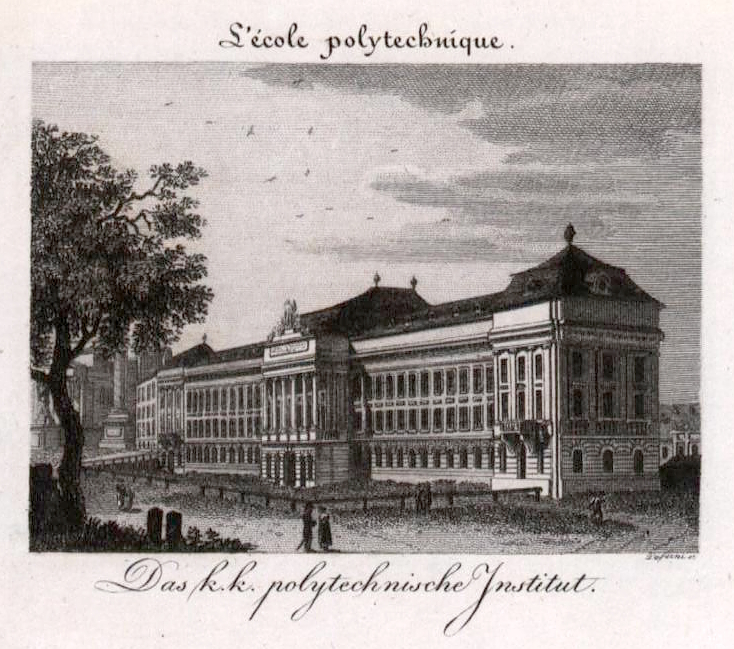
University in Vienna, Austria
| Field | Value | ||
|---|---|---|---|
| image | [[File:TU Signet CMYK.svg | 150px | TU Wien logo]] |
| name | TU Wien | ||
| native_name | Technische Universität Wien | ||
| motto | Technik für Menschen | ||
| motto_lang | de | ||
| mottoeng | Technology for people | ||
| established | |||
| founder | Emperor Francis I of Austria | ||
| type | Public | ||
| rector | Jens Schneider | ||
| city | Vienna | ||
| country | Austria | ||
| campus | Urban | ||
| website | |||
| logo | File:TU-Logo-Austria_CMYK.png | ||
| enrollment | 26,654 (2021) | ||
| faculty | 4,228 (2020) | ||
| administrative_staff | 1,271 (2020) | ||
| affiliation | |||
| budget | €271 million (2019) |


TU Wien () is a public research university in Vienna, Austria.
The university's teaching and research are focused on engineering, computer science, and natural sciences. It currently has about 28,100 students (29% women), eight faculties, and about 5,000 staff members (3,800 academics).
History
The institution was founded in 1815 by Emperor Francis I of Austria as the k.k. Polytechnisches Institut (). The first rector was Johann Joseph von Prechtl. It was renamed the Technische Hochschule () in 1872. In 1975, it was renamed Technische Universität Wien ().
Academic reputation
As a university of technology, TU Wien covers a wide spectrum of scientific concepts from abstract pure research and the fundamental principles of science to applied technological research and partnership with industry.
TU Wien is ranked #190 by the QS World University Ranking, #406 by the Center of World University Rankings, and it is positioned among the best 251-300 higher education institutions globally by the Times Higher Education World University Rankings. The computer science department has been consistently ranked among the top 100 in the world by the QS World University Ranking and The Times Higher Education World University Rankings respectively.
| Ranking | 2019 | 2018 | 2017 | 2016 | 2015 | 2014 | 2013 | 2012 | |||||||
|---|---|---|---|---|---|---|---|---|---|---|---|---|---|---|---|
| QS World University Rankings | 199 | 182 | 183 | 197 | 246 | 264 | 274 | ||||||||
| title=Engineering and Technology | url=https://www.topuniversities.com/university-rankings/university-subject-rankings/2017/engineering-technology | access-date=2021-09-16 | website=Top Universities | language=en | archive-date=2017-08-09 | archive-url=https://web.archive.org/web/20170809133821/https://www.topuniversities.com/university-rankings/university-subject-rankings/2017/engineering-technology | url-status=live }} | 127 | 142 | 115 | 93 | 93 | 91 | 132 | - |
| title=QS World University Rankings by Subject 2015 - Engineering - Mechanical, Aeronautical & Manufacturing | url=https://www.topuniversities.com/university-rankings/university-subject-rankings/2015/engineering-mechanical | access-date=2021-09-16 | website=Top Universities | language=en | archive-date=2021-09-16 | archive-url=https://web.archive.org/web/20210916064716/https://www.topuniversities.com/university-rankings/university-subject-rankings/2015/engineering-mechanical | url-status=live }} | 151-200 | 151-200 | 101-150 | 101-150 | 151-200 | 151-200 | 151-200 | - |
| title=QS World University Rankings by Subject 2015 - Engineering - Electrical & Electronic | url=https://www.topuniversities.com/university-rankings/university-subject-rankings/2015/engineering-electrical-electronic | access-date=2021-09-16 | website=Top Universities | language=en | archive-date=2021-09-16 | archive-url=https://web.archive.org/web/20210916064735/https://www.topuniversities.com/university-rankings/university-subject-rankings/2015/engineering-electrical-electronic | url-status=live }} | 101-150 | 101-150 | 101-150 | 101-150 | 101-150 | 51-100 | 51-100 | - |
| title=QS World University Rankings by Subject 2015 - Chemistry | url=https://www.topuniversities.com/university-rankings/university-subject-rankings/2015/chemistry | access-date=2021-09-16 | website=Top Universities | language=en | archive-date=2019-07-07 | archive-url=https://web.archive.org/web/20190707125420/https://www.topuniversities.com/university-rankings/university-subject-rankings/2015/chemistry | url-status=live }} | 101-150 | 151-200 | 151-200 | - | 151-200 | - | - | - |
| title=QS World University Rankings by Subject 2015 - Engineering - Civil & Structural | url=https://www.topuniversities.com/university-rankings/university-subject-rankings/2015/engineering-civil-structural | access-date=2021-09-16 | website=Top Universities | language=en | archive-date=2021-09-16 | archive-url=https://web.archive.org/web/20210916064739/https://www.topuniversities.com/university-rankings/university-subject-rankings/2015/engineering-civil-structural | url-status=live }} | 101-150 | 101-150 | 101-150 | 101-150 | 101-150 | 101-150 | 101-150 | - |
| title=QS World University Rankings by Subject 2015 - Computer Science & Information Systems | url=https://www.topuniversities.com/university-rankings/university-subject-rankings/2015/computer-science-information-systems | access-date=2021-09-16 | website=Top Universities | language=en | archive-date=2019-07-07 | archive-url=https://web.archive.org/web/20190707125419/https://www.topuniversities.com/university-rankings/university-subject-rankings/2015/computer-science-information-systems | url-status=live }} | 51-100 | 51-100 | 51-100 | 51-100 | 51-100 | 51-100 | 51-100 | - |
| The Times Higher Education World University Rankings | 251-300 | 251-300 | 251-300 | 226-250 | 226-250 | 251-275 | 301-350 | ||||||||
| The Times Higher Education Subject Rankings: Engineering and Technology | 151-175 | 126-150 | 91 | 100 | 96 | - | - | ||||||||
| The Times Higher Education Subject Rankings: Computer Science | 76 | ||||||||||||||
| title=Academic Ranking of World Universities | url=http://www.shanghairanking.com/World-University-Rankings/Vienna-University-of-Technology.html | access-date=2015-06-11 | archive-date=2021-02-13 | archive-url=https://web.archive.org/web/20210213145124/http://www.shanghairanking.com/World-University-Rankings/Vienna-University-of-Technology.html | url-status=dead }} | 301-400 | 401-500 | 401-500 | 401-500 | 401-500 | 401-500 | 401-500 | |||
| title=Academic Ranking of World Universities, Subject field: Computer Sciences | url=http://www.shanghairanking.com/World-University-Rankings/Vienna-University-of-Technology.html | access-date=2015-06-11 | archive-date=2021-02-13 | archive-url=https://web.archive.org/web/20210213145124/http://www.shanghairanking.com/World-University-Rankings/Vienna-University-of-Technology.html | url-status=dead }} | 76-100 | - | - | 101-150 | 76-100 | 76-100 | 101-150 | |||
| title=Academic Ranking of World Universities, Subject field: Electrical Engineering | url=http://www.shanghairanking.com/Shanghairanking-Subject-Rankings/Electrical-Electronic-Engineering-2016.html | access-date=2016-06-22 | archive-date=2016-07-04 | archive-url=https://web.archive.org/web/20160704200604/http://www.shanghairanking.com/Shanghairanking-Subject-Rankings/Electrical-Electronic-Engineering-2016.html | url-status=dead }} | 101-150 | 76-100 | - | - | - | - | ||||
| title=Academic Ranking of World Universities, Subject field: Materials Science & Engineering | url=http://www.shanghairanking.com/Shanghairanking-Subject-Rankings/Materials-Science-Engineering-2016.html | access-date=2016-06-22 | archive-date=2016-09-13 | archive-url=https://web.archive.org/web/20160913172212/http://www.shanghairanking.com/Shanghairanking-Subject-Rankings/Materials-Science-Engineering-2016.html | url-status=dead }} | 151-200 | 101-150 | - | - | - | - | ||||
| title=Academic Ranking of World Universities, Subject field: Mechanical Engineering | url=http://www.shanghairanking.com/Shanghairanking-Subject-Rankings/Mechanical-Engineering-2016.html | access-date=2016-06-22 | archive-date=2018-06-21 | archive-url=https://web.archive.org/web/20180621040847/http://www.shanghairanking.com/Shanghairanking-Subject-Rankings/Mechanical-Engineering-2016.html | url-status=dead }} | - | 101-150 | - | - | - | - |
Organization
TU Wien has eight faculties led by deans: Architecture and Planning, Chemistry, Civil Engineering, Computer Sciences, Electrical Engineering and Information Technology, Mathematics and Geoinformation, Mechanical and Industrial Engineering, and Physics.
The university is led by the Rector and four Vice Rectors (responsible for Research, Academic Affairs, Finance as well as Human Resources and Gender). The Senate has 26 members. The University Council, consisting of seven members, acts as a supervisory board.
Research
Development work in almost all areas of technology is encouraged by the interaction between basic research and the different fields of engineering sciences at TU Wien. Also, the framework of cooperative projects with other universities, research institutes and business sector partners is established by the research section of TU Wien. TU Wien has sharpened its research profile by defining competence fields and setting up interdisciplinary collaboration centres, and clearer outlines will be developed.
Research focus points of TU Wien are introduced as computational science and engineering, quantum physics and quantum technologies, materials and matter, information and communication technology and energy and environment.
The EU Research Support (EURS) provides services at TU Wien and informs both researchers and administrative staff in preparing and carrying out EU research projects.
Notable faculty and alumni


- Adolph Giesl-Gieslingen (1903–1992), Austrian locomotive designer and engineer
- Alexander Meissner (1883 – 1958), Austrian engineer and physicist, co-inventor of the Electronic oscillator
- Alfred Preis (1911–1993), designer of the USS Arizona Memorial in Pearl Harbor
- Benno Mengele (1898–1971), Austrian electrical engineer
- Camillo Sitte (1843-1903), Austrian architect
- Christian Andreas Doppler (1803–1853), Austrian mathematician and physicist
- Edmund Hlawka (1916-2009), Austrian mathematician
- Edo Šen (1877–1949), Croatian architect
- Elfriede Tungl (1922-1981), civil engineer, first Austrian woman to earn a doctorate in civil engineering, in 1973 became the first female associate professor at TU Wien.
- Ernst Hiesmayr (1920-2006), architect, artist and former rector of TU Wien
- Ferdinand Piëch (1937-2019), Austrian business magnate, engineer and executive who was the chairman of the supervisory board of Volkswagen Group
- Ferenc Krausz (born 1962), Hungarian–Austrian physicist, Nobel Prize in Physics 2023
- Franz Pitzinger (1858–1933), Constructor General of the Austrian Navy
- Gottfried Ungerboeck (1940), inventor of trellis modulation, IBM Fellow
- Günter Blöschl (born 1961), Austrian hydrologist
- Hannspeter Winter (1941-2006), Austrian plasma physicist
- Heinz Zemanek (1920-2014), Austrian computer pioneer
- Hellmuth Stachel (born 1942), Austrian mathematician
- Herman Potočnik (1892–1929), Slovene space pioneer
- Hermann Knoflacher (born 1940), Austrian engineer
- Hubert Petschnigg (1913–1997), architect (completed his studies at TU Graz)
- Hugo Ehrlich (1879–1936), Croatian architect
- Ignaz Sowinski (1858–1917), architect
- Ina Wagner (born 1946), Austrian physicist, sociologist, professor of computer science 1987 – 2011, TU's second ever female professor
- Ingeborg Hochmair (born 1953), electrical engineer, developed the first microelectronic, multi-channel cochlear implant
- Irfan Skiljan, author of the image viewer software Irfanview
- Jörg Streli (1940–2019), Austrian architect
- Karl Gölsdorf (1861–1916), Austrian engineer and locomotive designer
- Leon Kellner (1859–1928), grammarian, Shakespearean, and Zionist
- Marie-Therese Hohenberg (born 1972), Austrian architect
- Milan Vidmar (1885-1962), Slovene electrical engineer
- Milutin Milanković (1879–1958), Serbian geophysicist and civil engineer
- Ottó Titusz Bláthy (1860–1939), Hungarian mechanical engineer
- Paul Eisler (1907–1992), inventor of the printed circuit
- Paul Schneider-Esleben (1915–2005), visiting professor of architecture
- Peter Schattschneider (born 1950), Austrian physicist
- Peter Skalicky (born 1941), rector of TU Wien from 1991 to 2011
- Richard von Mises (1883–1953), scientist
- Rudolf Steiner (1861-1925), Austrian philosopher and transdisciplinary researcher
- Rudolph Michael Schindler (1887–1953), early Modern architect
- Siegfried Becher (1806–1873), professor of economics
- Silke Bühler-Paschen, professor of physics
- Tillman Gerngross, Professor of Engineering at Dartmouth College, leading entrepreneur and bioengineer, founder of GlycoFi and Adimab
- Ulrike Diebold (born 1961), Austrian–American physicist, vice president of the Austrian Academy of Sciences
- Victoria Coeln (born 1962), Austrian light artist
- Viktor Kaplan (1876–1934), inventor of the Kaplan turbine
- Vinzenz Bronzin (1872-1970), Italian mathematics professor, and pioneering finance theorist
- Yordan Milanov (1867–1932), one of the leading Bulgarian architects from the end of 19th and the beginning of the 20th century
- Zvonimir Richtmann (1901–1941), Croatian physicist, philosopher, politician and publicist
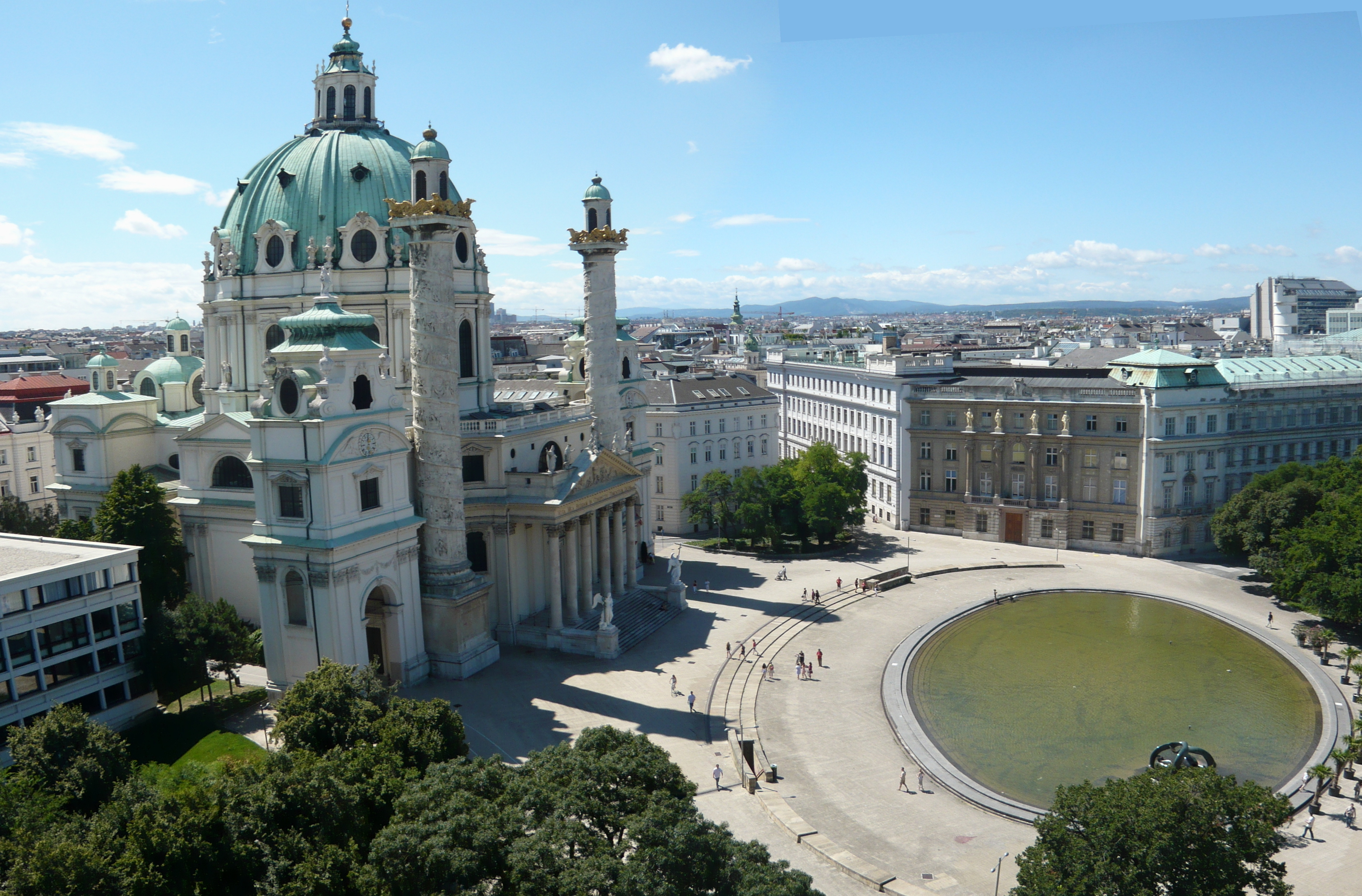
Library
TU Wien Bibliothek, the university library, was founded in 1815. The main library building was designed by the architects Justus Dahinden, , , , and partners. Completed in 1987, it features owl sculptures by the Swiss artist Bruno Weber. The main library has six floors of open access areas and reading rooms, with around 700 study desks.
Sports
The university hosted the IFIUS World Interuniversity Games in October 2007.
References
- "Die TU Wien in Zahlen (The TU Wien in numbers)".
- (2019-05-08). "About TU Wien".
- "Corporate Design".
- "Global 2000 List by the Center for World University Rankings".
- "Computer Science and Information Systems World University Ranking".
- "The Times Higher Education University Ranking by Subject".
- "Technische Universität Wien".
- "Engineering and Technology".
- "QS World University Rankings by Subject 2015 - Engineering - Mechanical, Aeronautical & Manufacturing".
- "QS World University Rankings by Subject 2015 - Engineering - Electrical & Electronic".
- "QS World University Rankings by Subject 2015 - Chemistry".
- "QS World University Rankings by Subject 2015 - Engineering - Civil & Structural".
- "QS World University Rankings by Subject 2015 - Computer Science & Information Systems".
- (2021-09-08). "TU Wien".
- "Academic Ranking of World Universities".
- "Academic Ranking of World Universities 2018".
- "Academic Ranking of World Universities, Subject field: Computer Sciences".
- "Subject Ranking 2018".
- "Academic Ranking of World Universities, Subject field: Electrical Engineering".
- "Academic Ranking of World Universities, Subject field: Materials Science & Engineering".
- "Academic Ranking of World Universities, Subject field: Mechanical Engineering".
This article was imported from Wikipedia and is available under the Creative Commons Attribution-ShareAlike 4.0 License. Content has been adapted to SurfDoc format. Original contributors can be found on the article history page.
Ask Mako anything about TU Wien — get instant answers, deeper analysis, and related topics.
Research with MakoFree with your Surf account
Create a free account to save articles, ask Mako questions, and organize your research.
Sign up freeThis content may have been generated or modified by AI. CloudSurf Software LLC is not responsible for the accuracy, completeness, or reliability of AI-generated content. Always verify important information from primary sources.
Report