From Surf Wiki (app.surf) — the open knowledge base
Tsagantegia
Extinct genus of dinosaurs

Extinct genus of dinosaurs
Tsagantegia (; meaning Tsagan Teg) is a genus of medium-sized ankylosaurid thyreophoran dinosaur that lived in Asia during the Late Cretaceous period. The genus is monotypic, including only the type species, T. longicranialis. The specimen consists of a very partial individual, comprising the skull and lacking postcranial remains. Since it only preserves the skull, Tsagantegia is mainly characterized by its elongated snout and the flattened facial osteoderms, greatly differing from other ankylosaurs.
Discovery and naming
The first, and only, discovery of Tsagantegia fossils occurred in 1983, when the Mesozoic team of the Joint Soviet-Mongolian Paleontological Expedition unearthed an ankylosaur skull from the Tsagan-Teg (or "White Mountain") locality near the town of Dzun-Bayan, Mongolia. This locality is one of many deriving from the Bayan Shireh Formation, an Upper Cretaceous (Cenomanian-Turonian)-aged geologic formation in the eastern Gobi Desert, Mongolia. This ankylosaur skull was then deposited at the Institute of Paleontology and Geology of the Mongolian Academy of Sciences (MPC) under specimen number MPC 700/17. This skull remained unresearched until it was described by Russian paleontologist Tatiana Tumanova in 1993. Tumanova described the skull as belonging to a new genus and species of ankylosaurine ankylosaurid, Tsagantegia longicranialis. The generic name, Tsagantegia, is in reference to the Tsagan-Teg locality where the skull was unearthed, and the specific name, longicranialis, comes from the Latin roots longus "long" and cranium "skull" in reference to its elongated skull. Due to being known solely from MPC 700/17, MPC 700/17 was chosen as the holotype (name-bearing) specimen for Tsagantegia longicranialis. Since its description, no additional remains of Tsagantegia longicranialis have been mentioned in scientific literature.
Description
Tsagantegia was a medium to large-sized ankyosaur, with an estimated length of 6 to and weighing about 1 to. The skull measures about 38 cm in length, with a near width of 25 cm, missing the lower jaws. Unlike other Asian ankylosaurs, in Tsagantegia the caputegulae (cranial ornamentation) are not subdivided into a mosaic of polygons but are amorphous and flattened; they show some degree of symmetry. The quadratojugal, squamosal and orbital horns are poorly preserved, in contrast with other ankylosaurs. The snout was long and flat with a pointed rostrum (beak); each maxilla preserves approximately 18 alveoli, no teeth were preserved. According to Arbour, Tsagantegia differs from Gobisaurus and Shamosaurus based on the more rounded, U-shaped premaxillary beak and the flat ornamentation.[[File:Tsagantegia Skeleton Reconstruction.jpg|left|thumb|Skeletal diagram of MPC 700/17]]
Classification
Although fragmentary, the phylogenetic position of Tsagantegia can be established. In 2012, Thompson et al. conducted an analysis of almost all known valid ankylosaurs and outgroup taxa at the time. They based their resulting phylogeny on characters representing cranial, post-cranial, and osteodermal anatomy, and details of synapomorphies for each recovered clade. Tsagantegia was found to be closely related to Pinacosaurus and Shamosaurus. In the performed phylogenetic analysis by Arbour and Currie in 2015, below are the results for the analysis:
Paleoecology

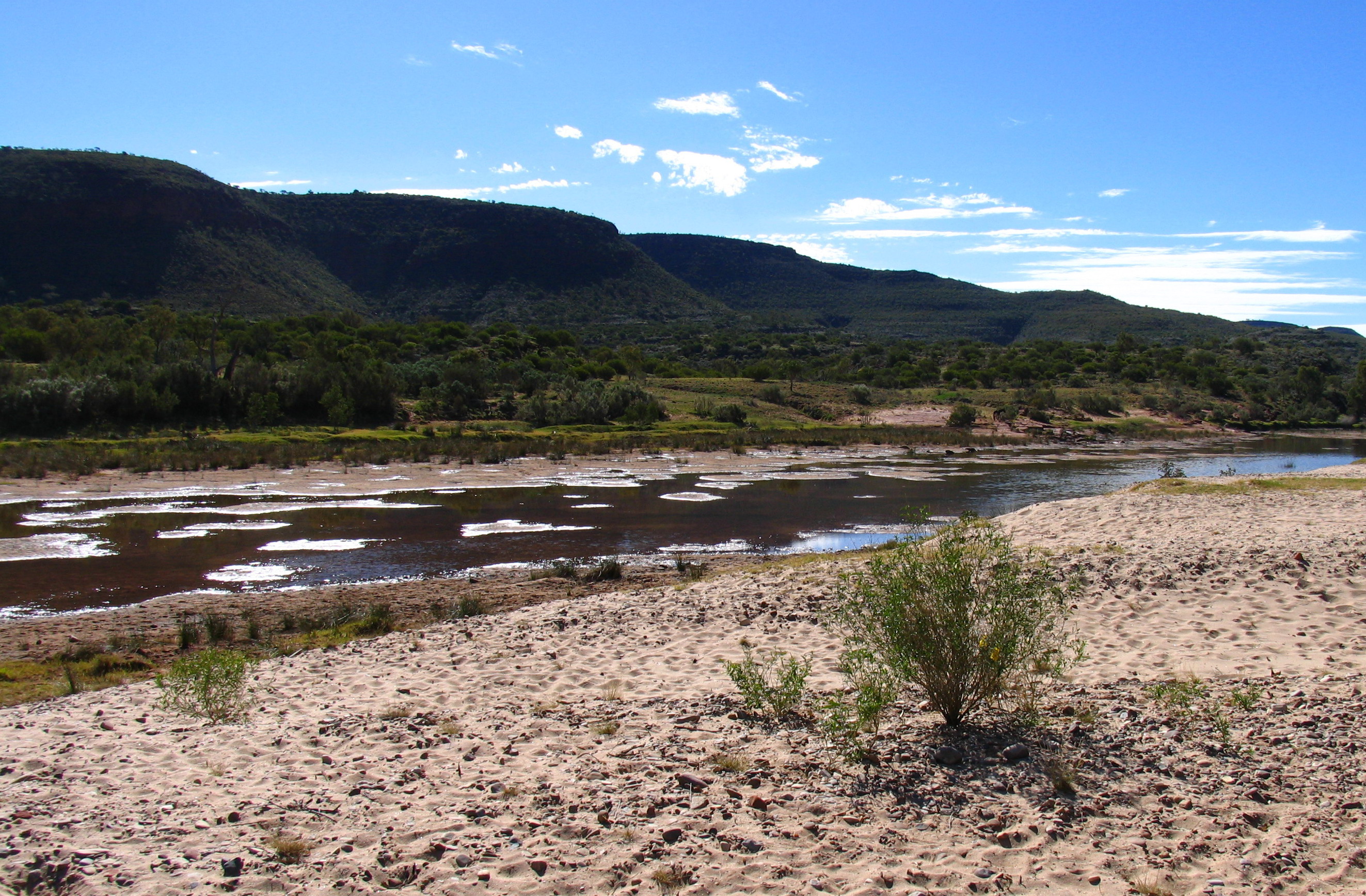
Caliche-based boundary indicates a semi-arid environment and climate, but also, the presence of fluvial and lacustrine sediments are indicators of large rivers and lakes. As interpreted by Hicks et al. 1999, during the times of the Bayan Shireh Formation, large rivers drained the eastern part of the Gobi Desert. Additional to this, fossil fruits remains have been recovered from the Bor Guvé and Khara Khutul localities (Upper and Lower Bayan Shireh, respectively), suggesting the presence of Angiosperm plants.
Tsagantegia shared its habitat with numerous animals from other localities of the formation, compromising dinosaur and non-dinosaur genera; such as the theropods Achillobator, Khankhuuluu, Erlikosaurus, Garudimimus and Segnosaurus; Marginocephalians: Amtocephale and Graciliceratops; the hadrosauroid Gobihadros, the crocodylomorph Paralligator, unnamed azhdarchids and the shark Hybodus.
References
References
- (1993). "O novom pantsirnov dinozavre iz iugo-vostochnoy Gobi". Paleontologicheskii Zhurnal.
- Park, Jin-Young. (2022). "Cretaceous ankylosaurs of Mongolia: implications for paleobiogeography, paleoecology, and evolution, with a taxonomic review of Mongolian armored dinosaurs". Seoul National University Graduate School Department of Earth and Environmental Sciences.
- Romano, Marco. (2021-01-01). "Disparity versus diversity in ankylosaurid dinosaurs: explored morphospace indicates two separate evolutive radiations". Rendiconti Online della Società Geologica Italiana.
- Raven, Thomas. (2021). "The taxonomic, phylogenetic, biogeographic and macroevolutionary history of the armoured dinosaurs (Ornithischia: Thyreophora)". University of Brighton for the degree of Doctor of Philosophy.
- (2007). "Dinosaurs: The Most Complete, Up-to-Date Encyclopedia for Dinosaur Lovers of All Ages". Random House}} [https://www.geol.umd.edu/~tholtz/dinoappendix/HoltzappendixWinter2011.pdf Genus List for Holtz 2012] {{Webarchive.
- (2000). "The Age of Dinosaurs in Russia and Mongolia". Cambridge University Press.
- (2014). "Systematics, evolution, and biogeography of the ankylosaurid dinosaurs".
- (2012). "Phylogeny of the ankylosaurian dinosaurs (Ornithischia: Thyreophora)". Journal of Systematic Palaeontology.
- (2015). "Systematics, phylogeny and palaeobiogeography of the ankylosaurid dinosaurs". Journal of Systematic Palaeontology.
- (2019). "A new hadrosauroid (Dinosauria: Ornithopoda) from the Late Cretaceous Baynshire Formation of the Gobi Desert (Mongolia)". PLOS ONE.
- (2020). "Calcite U–Pb age of the Cretaceous vertebrate-bearing Bayn Shire Formation in the Eastern Gobi Desert of Mongolia: usefulness of caliche for age determination". Terra Nova.
- (2019). "Additional skulls of Talarurus plicatospineus (Dinosauria: Ankylosauridae) and implications for paleobiogeography and paleoecology of armored dinosaurs". Cretaceous Research.
- (1982). "The Upper Cretaceous mollusks of Mongolia". Sovmestnaya Sovetsko– Mongolskaya Paleontolog-icheskaya Ekspeditsia.
- (1996). "Geochemical features of dinosaur remains from the Gobi Desert, South Mongolia". PALAIOS.
- (2012). "Correlation of Late Cretaceous continental vertebrate assemblages in Middle and Central Asia". Journal of Stratigraphy.
- (1999). "Paleomagnetic and palynologic analyses of Albian to Santonian strata at Bayn Shireh, Burkhant, and Khuren Dukh, eastern Gobi Desert, Mongolia". Cretaceous Research.
- (2006). "Erketu ellisoni, a long-necked sauropod from Bor Guvé (Dornogov Aimag, Mongolia)". American Museum Novitates.
- (1999). "A new maniraptoran Theropod−Achillobator giganticus (Dromaeosauridae)−from the Upper Cretaceous of Burkhant, Mongolia". Contributions from the Geology and Mineralogy Chair, National Museum of Mongolia.
- Voris, Jared T.. (2025-06-11). "A new Mongolian tyrannosauroid and the evolution of Eutyrannosauria". [[Nature (journal).
- (1980). "Segnosauria, a new suborder of carnivorous dinosaurs". Acta Palaeontologica Polonica.
- (1981). "Toothless carnivorous dinosaurs of Mongolia". Transactions, Joint Soviet–Mongolian Palaeontological Expedition.
- (1952). "Новый анкилозавр из верхнего мела Монголии". Doklady Akademii Nauk SSSR.
- (2011). "A new pachycephalosaurid from the Baynshire Formation (Cenomanian-late Santonian), Gobi Desert, Mongolia". Fossil Record 3. New Mexico Museum of Natural History and Science, Bulletin.
- (2000). "The Age of Dinosaurs in Russia and Mongolia". Cambridge University Press.
- (2008). "The Description and Phylogenetic Position of a New Nanhsiungchelyid Turtle from the Late Cretaceous of Mongolia". Acta Palaeontologica Polonica.
- (2015). "A Review of Shamosuchus and Paralligator (Crocodyliformes, Neosuchia) from the Cretaceous of Asia". PLOS ONE.
- (2009). "The first discovery of pterosaurs from the Upper Cretaceous of Mongolia". Acta Palaeontologica Polonica.
This article was imported from Wikipedia and is available under the Creative Commons Attribution-ShareAlike 4.0 License. Content has been adapted to SurfDoc format. Original contributors can be found on the article history page.
Ask Mako anything about Tsagantegia — get instant answers, deeper analysis, and related topics.
Research with MakoFree with your Surf account
Create a free account to save articles, ask Mako questions, and organize your research.
Sign up freeThis content may have been generated or modified by AI. CloudSurf Software LLC is not responsible for the accuracy, completeness, or reliability of AI-generated content. Always verify important information from primary sources.
Report