From Surf Wiki (app.surf) — the open knowledge base
Tropical spastic paraparesis
| Field | Value |
|---|---|
| name | Tropical spastic paraparesis |
| image | HTLV-1 EM 8241 lores.jpg |
| caption | HTLV-1 which causes TSP |
| synonyms | HTLV-I-associated myelopathy (HAM) or HTLV-I-associated myelopathy/tropical spastic paraparesis (HAM/TSP) |
| symptoms | Bowel dysfunction |
| causes | HTLV-1 retrovirus causes 80% of cases |
| diagnosis | Lumbar puncture, MRI |
| treatment | Interferon alpha, corticosteroids |
| Tropical spastic paraparesis (TSP), is a medical condition that causes weakness, muscle spasms, and sensory disturbance by human T-lymphotropic virus resulting in paraparesis, weakness of the legs. As the name suggests, it is most common in tropical regions, including the Caribbean. Blood transfusion products are screened for human T-lymphotropic virus 1 (HTLV-1) antibodies, as a preventive measure.
Signs and symptoms
Some of the signs of Tropical spastic paraparesis are:
:::::::*Leg instability :::::::*Urinary dysfunction. :::::::*Bowel dysfunction :::::::*Back pain :::::::*Erectile problems :::::::*Psoriasis
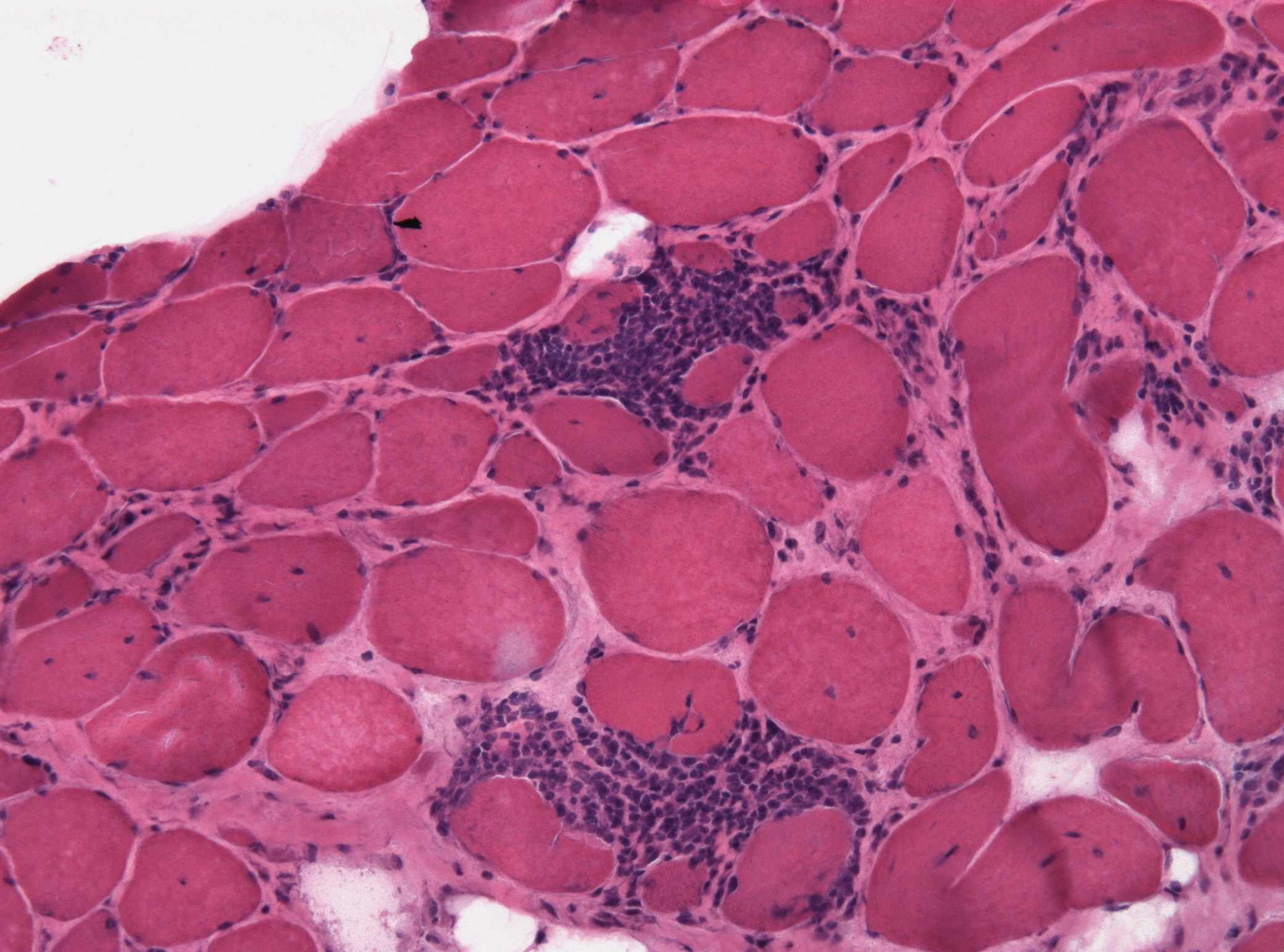
Individuals with TSP may also exhibit uveitis (inflammation of the uveal tract of the eye), arthritis (inflammation of one or more joints), pulmonary lymphocytic alveolitis (inflammation of the lung tissues), polymyositis (an inflammatory muscle disease), keratoconjunctivitis sicca (persistent dryness of the cornea and conjunctiva), and infectious dermatitis (inflammation of the skin).
HTLV-1 can be transmitted via breastfeeding (mother to child), sexual contact, via blood contact (transfusion or needle sharing).
Pathogenesis
In tropical spastic paraparesis, HTLV-1 shows elevated cellular acquired immune response as well as high production of proinflammatory cytokines. Interferon overexpression has been demonstrated as well. Also the number of NK cells (CD56+ and CD16+) is diminished.
Diagnosis
Among the methods of diagnosing tropical spastic paraparesis are MRI (magnetic resonance imaging) and lumbar puncture (which may show lymphocytosis).
Often, the diagnosis process is based on symptoms and one's risk of exposure to the virus. A spinal tap or lumbar puncture may be used to obtain blood and CSF samples which can then be tested for parts of the virus or antibodies produced to combat the virus. MRI may be performed on the brain and spinal cord to check for abnormalities such as spinal cord degeneration and other potential causes of symptoms.
Treatment

Treatment of TSP involves corticosteroids to help with inflammation. However, any success with corticosteroids is short-lived, with symptoms worsening as the dosage is reduced. A synthetic derivative, 17-alpha-ethinyltestosterone, can be used to treat tropical spastic paraparesis, improvement in motor and bladder function was reported but not sustainable.
Mogamulizumab, an anti-CCR4 IgG1 monoclonal antibody, is also being researched as a possible treatment for tropical spastic paraparesis. The antibody reduces HTLV-1 proviral load and production of proinflammatory cytokines. Valproic acid has also succeeded in reducing the proviral load of HTLV-1 (though clinical benefits were minimal or none). A further combination of valproic acid and zidovudine has demonstrated a decrease in proviral loads (in animals).
Prognosis
The prognosis for tropical spastic paraparesis indicates some improvement in a percentage of cases due to immunosuppressive treatment. A higher percentage will eventually lose the ability to walk within a ten-year interval.
History
For several decades, the term tropical spastic paraparesis was used to describe a chronic and progressive clinical syndrome that affected adults living in equatorial areas of the world. This condition was initially thought to be associated with infectious agents (such as Treponema pertenue and Treponema pallidum, which cause inflammation of the central nervous system) and with chronic nutritional deficiencies (such as avitaminosis) or exposure to potentially toxic foods (such as bitter cassava).
Tropical myeloneuropathies are classified as two separate syndromes: tropical ataxic neuropathy (TAN) and tropical spastic paraparesis (TSP). They are placed together because they are found in tropical countries, although tropical spastic paraparesis has occurred in temperate countries (e.g., Japan).
References
References
- Oh, Unsong. (23 December 2016). "Treatment of HTLV-I-Associated Myelopathy / Tropical Spastic Paraparesis: Towards Rational Targeted Therapy". Neurol Clin.
- "Tropical Spastic Paraparesis Information Page {{!}} National Institute of Neurological Disorders and Stroke".
- "Tropical Spastic Paraparesis Information Page: National Institute of Neurological Disorders and Stroke (NINDS)".
- Centers for Disease Control (CDC). (1988). "Licensure of screening tests for antibody to human T-lymphotropic virus type I". MMWR.
- Clarke, Charles. (2011-09-09). "Neurology: A Queen Square Textbook". John Wiley & Sons.
- "HTLV-1 associated myelopathy/tropical spastic paraparesis {{!}} Disease {{!}} Overview {{!}} Office of Rare Diseases Research (ORDR-NCATS)".
- Yamano, Yoshihisa. (2012). "Clinical Pathophysiology of Human T-Lymphotropic Virus-Type 1-Associated Myelopathy/Tropical Spastic Paraparesis". Frontiers in Microbiology.
- "Tropical Spastic Paraparesis. About TSP medical condition {{!}} Patient".
- "HTLV-1–Associated Myelopathy/Tropical Spastic Paraparesis (HAM/TSP)".
- Ali, A. (2006). "Tropical spastic paraparesis and polymyositis: a still unfolding story". West Indian Medical Journal.
- {{EMedicine. article. 219285. Human T-Cell Lymphotropic Viruses. treatment
- Prayson, Richard A.. (2011-11-15). "Neuropathology". Elsevier Health Sciences.
- {{EMedicine. article. 1166055. Tropical Myeloneuropathies
This article was imported from Wikipedia and is available under the Creative Commons Attribution-ShareAlike 4.0 License. Content has been adapted to SurfDoc format. Original contributors can be found on the article history page.
Ask Mako anything about Tropical spastic paraparesis — get instant answers, deeper analysis, and related topics.
Research with MakoFree with your Surf account
Create a free account to save articles, ask Mako questions, and organize your research.
Sign up freeThis content may have been generated or modified by AI. CloudSurf Software LLC is not responsible for the accuracy, completeness, or reliability of AI-generated content. Always verify important information from primary sources.
Report