From Surf Wiki (app.surf) — the open knowledge base
Triple-A All-Star Game
Exhibition game played by Minor League Baseball players

Exhibition game played by Minor League Baseball players
| Field | Value |
|---|---|
| name | Triple-A All-Star Game |
| logo | Triple-A All-Star Game logo.png |
| status | Inactive |
| frequency | Annual |
| location | Varies (see prose) |
| years_active | 32 |
| first | |
| (Pilot Field, Buffalo, New York, United States) | |
| last | |
| (Southwest University Park, El Paso, Texas, United States) | |
| participants | Triple-A minor league baseball players |
| organized | Triple-A Baseball |
(Pilot Field, Buffalo, New York, United States) (Southwest University Park, El Paso, Texas, United States) The Triple-A All-Star Game was an annual baseball game held from 1988 to 2019 between professional players from the affiliated Triple-A leagues of Minor League Baseball. These leagues were the International League (IL) and Pacific Coast League (PCL) from 1998 to 2019. Previously, the American Association competed along with the IL and PCL before it disbanded following the 1997 season. The 2020 game was cancelled along with the entire minor league season due to the COVID-19 pandemic. The 2021 game was postponed and not rescheduled after a delayed start to the season, and there has been no indication that the Triple-A All-Star Game will resume in the future.
All-Star players were selected through a vote by team managers and general managers, members of the media, and fans. From the inaugural 1988 event through 1997, teams of American League-affiliated Triple-A All-Stars faced off against teams of National League-affiliated Triple-A All-Stars. During this period, six games were won by National League teams, and four were won by American League teams. From 1998 through 2019, the IL and PCL each fielded a team composed of players in their respective leagues. The International League won 12 games, while the Pacific Coast League won 10.
Traditionally, the game took place on the day after the mid-summer Major League Baseball All-Star Game. The game was meant to mark a symbolic halfway-point in the season (though not the mathematical halfway-point which, for most seasons, was usually one month prior). The Triple-A leagues shared a common All-Star break, with no regular-season games scheduled for two days before the All-Star Game itself. Some additional events, such as the All-Star Fan Fest and Triple-A Home Run Derby, took place each year during this break in the regular season.
History
At a meeting of the three Triple-A leagues of Minor League Baseball in 1986, International League (IL) president Harold Cooper proposed establishing committees to find ways to improve their product. One result was the creation of the Triple-A All-Star Game. In August 1987, the American Association (AA), International League, and Pacific Coast League (PCL) announced plans to begin holding joint all-star games in 1988 which would occur the day after the annual Major League Baseball All-Star Game. The first was to be played at Pilot Field in Buffalo, New York, home to the IL's Buffalo Bisons. The host city would then alternate annually between cities in each Triple-A league.
Due to the odd number of leagues, it was decided that one team would be made up of All-Stars from American League (AL) affiliates and the other of players from National League (NL) affiliates, with each Triple-A team having at least one representative. Starting players were elected by voters in each Triple-A city, while reserve players were chosen by a committee of the three league presidents and representatives from Baseball America, which sponsored the game.
At the inaugural Triple-A All-Star game on July 13, 1988, in Buffalo, the AL All-Stars defeated the NL team, 2–1, before a sellout crowd of 19,500 people and a national television audience watching on ESPN. Ed Jurak (Tacoma Tigers, PCL) was selected as the first Triple-A All-Star Game Most Valuable Player after leading off the top of the ninth inning with a triple and then scoring the winning run on Bob Geren's (Columbus Clippers, IL) ground out. Another part of the All-Star festivities was the Triple-A Home Run Derby, a contest to see which player could hit the most home runs. The first, held the day before the 1988 game, was won by Columbus' Geren.
The AL-versus-NL format continued to be used through the 1997 Triple-A All-Star Game. In the final game to utilize this format, the AL affiliates defeated the NL affiliates, 5–3, at Sec Taylor Stadium in Des Moines, Iowa, home to the AA's Iowa Cubs, on July 9, 1997. All told, the National League won six Triple-A All-Star Games, and the American League won four.
The American Association ceased operations after the 1997 season. So in 1998, the teams were reorganized so that one consisted of International League All-Stars and the other of Pacific Coast League All-Stars. The first IL versus PCL match-up occurred on July 8, 1998, at Harbor Park in Norfolk, Virginia, home of the IL's Norfolk Tides, with the IL team winning, 8–4.
From 2006 to 2016, the winning league earned the distinction of having its league champion (determined at the end of the season) being given home team status for the Triple-A National Championship Game, a single game to determine a Triple-A champion in the postseason. This changed in 2017, when home team status began being awarded to the team from the league which hosted the championship game.

The most recent edition of the Triple-A All-Star Game was played on July 10, 2019, at Southwest University Park in El Paso, Texas, home to the PCL's El Paso Chihuahuas. The PCL won, 9–3, before 9,706 in attendance and a national television audience on MLB Network.
The start of the 2020 season was postponed due to the COVID-19 pandemic before ultimately being cancelled on June 30. This resulted in the cancellation of the 2020 game, which had been slated for PNC Field in Moosic, Pennsylvania, home of the IL's Scranton/Wilkes-Barre RailRiders.
In conjunction with Major League Baseball's restructuring of Minor League Baseball in 2021, the IL and PCL disbanded, and Triple-A teams were reorganized into the Triple-A East and Triple-A West. Opening Day for the 2021 season was postponed for nearly a month to temporarily eliminate commercial air travel and give players the opportunity to be vaccinated against COVID-19 before the season started. While the 2021 schedule originally included a three-day All-Star break, this was removed after the delayed start. The 2021 Triple-A All-Star Game, scheduled to be held at the Dell Diamond in Round Rock, Texas, home to the Triple-A West's Round Rock Express, was postponed and not rescheduled. In 2022, the Triple-A East and West were renamed the International League and Pacific Coast League, respectively, and they carried on the history of those leagues prior to reorganization. The 2022 Triple-A schedule included a four-day All-Star break from July 18–21, but there has been no indication that the All-Star Game will resume.
Structure

In the 2019 Triple-A All-Star Game, the most recently held, each league's roster consisted of 33 players, though the actual number of players on gameday may have been less due to call-ups, injuries, or players choosing not to participate. Thirteen players were elected for each team through a vote by team managers and general managers, members of the media, and fans. Twenty additional players were selected by each league office to fill out their rosters. One goal of adding these additional players was to ensure every Triple-A team was represented.
The game itself consisted of a single nine-inning game to determine a champion. The league in which the host city competed was considered the home team, and the other team was designated as the visiting team. Designated hitters batted in place of pitchers. The only All-Star game to ever go beyond the prescribed nine innings was the 2004 event. Rules restricted the game from going beyond 10 innings, but the International League scored in the bottom of the 10th inning, avoiding a tie game as the result.
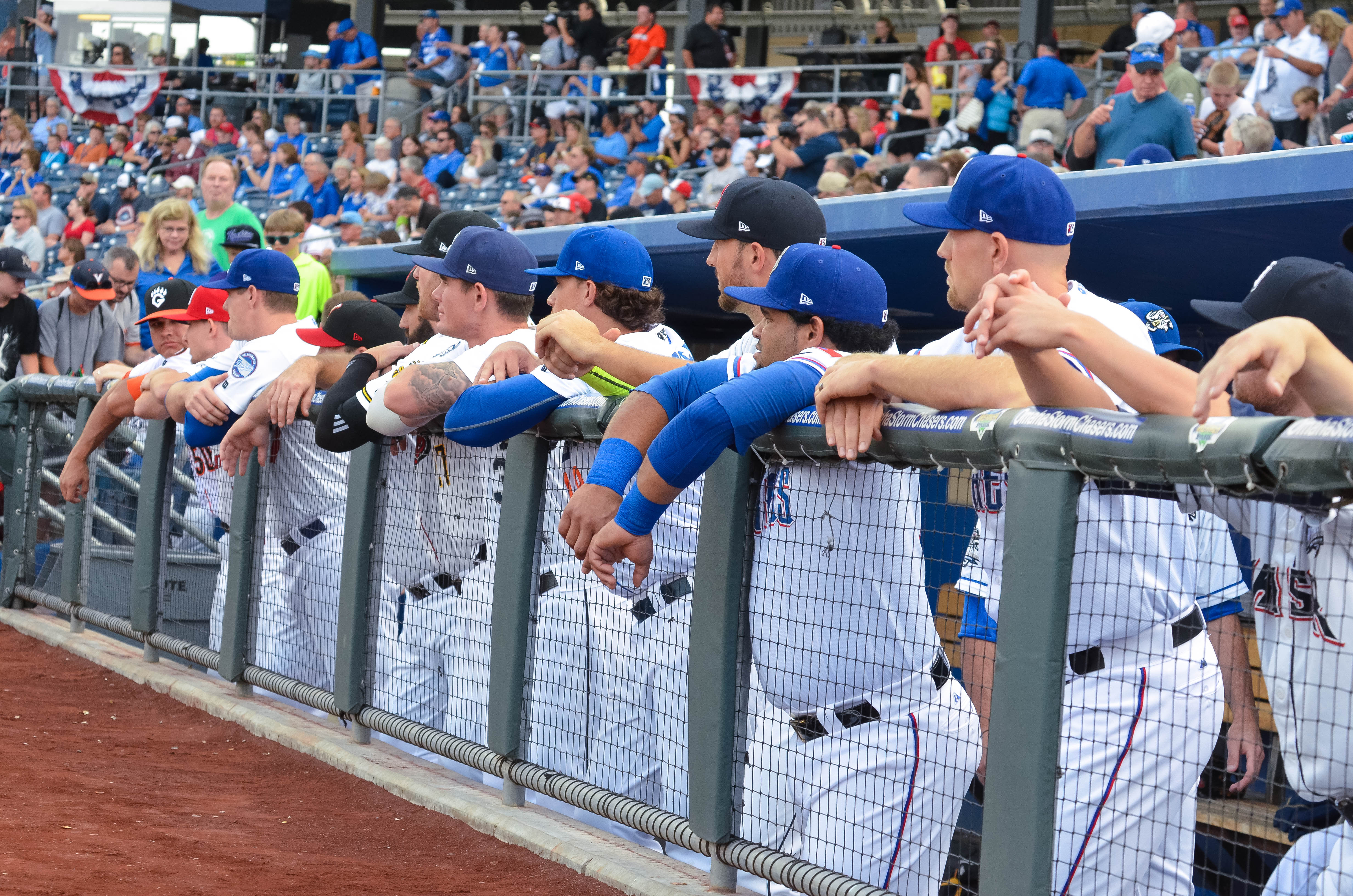
Historically, players wore their respective team's uniforms. Players on the home team wore their club's white home uniforms, while players on the away team wore their club's gray road uniforms. Often, a patch depicting the game's logo was sewn onto their jerseys and/or caps. One exception was in 2017, when players wore league-specific jerseys paired with the appropriate home/road pants and their respective team's cap.
The game was umpired by a four-man crew, with one umpire behind home plate and the others covering each base. Two of the umpires worked in the IL, while two worked in the PCL. Positions rotated each year, such that IL umpires were assigned to home plate and second base in even years, and PCL umpires manned those positions in odd years.
Results
American League vs. National League (1988–1997)
| Date | Winning league | ||||||
|---|---|---|---|---|---|---|---|
| (All-time record) | Score | City | Ballpark | Host team (league) | Attendance | Ref. | |
| American | |||||||
| (1–0 AL) | Buffalo, New York | Pilot Field | Buffalo Bisons (AA) | 19,500 | |||
| National | |||||||
| (1–1 NL) | Columbus, Ohio | Cooper Stadium | Columbus Clippers (IL) | 14,131 | |||
| National | |||||||
| (2–1 NL) | Las Vegas, Nevada | Cashman Field | Las Vegas Stars (PCL) | 10,323 | |||
| National | |||||||
| (3–1 NL) | Louisville, Kentucky | Cardinal Stadium | Louisville Redbirds (AA) | 20,725 | |||
| American | |||||||
| (2–3 AL) | Richmond, Virginia | The Diamond | Richmond Braves (IL) | 12,186 | |||
| National | |||||||
| (4–2 NL) | Albuquerque, New Mexico | Albuquerque Sports Stadium | Albuquerque Dukes (PCL) | 10,541 | |||
| National | |||||||
| (5–2 NL) | Nashville, Tennessee | Herschel Greer Stadium | Nashville Sounds (AA) | 11,601 | |||
| American | |||||||
| (3–5 AL) | Moosic, Pennsylvania | Lackawanna County Stadium | Scranton/Wilkes-Barre Red Barons (IL) | 10,965 | |||
| National | |||||||
| (6–3 NL) | Salt Lake City, Utah | Franklin Quest Field | Salt Lake Buzz (PCL) | 15,500 | |||
| American | |||||||
| (4–6 AL) | Des Moines, Iowa | Sec Taylor Stadium | Iowa Cubs (AA) | 11,183 |
| National League (6 wins) | American League (4 wins) |
|---|
International League vs. Pacific Coast League (1998–2019)
| Date | Winning league | ||||||
|---|---|---|---|---|---|---|---|
| (All-time record) | Score | City | Ballpark | Host team (league) | Attendance | Ref. | |
| International | |||||||
| (1–0 IL) | Norfolk, Virginia | Harbor Park | Norfolk Tides (IL) | 11,049 | |||
| Pacific Coast | |||||||
| (1–1 PCL) | Metairie, Louisiana | Zephyr Field | New Orleans Zephyrs (PCL) | 8,895 | |||
| Pacific Coast | |||||||
| (2–1 PCL) | Rochester, New York | Frontier Field | Rochester Red Wings (IL) | 12,810 | |||
| Pacific Coast | |||||||
| (3–1 PCL) | Indianapolis, Indiana | Victory Field | Indianapolis Indians (IL) | 15,868 | |||
| Pacific Coast | |||||||
| (4–1 PCL) | Oklahoma City, Oklahoma | SBC Bricktown Ballpark | Oklahoma RedHawks (PCL) | 11,343 | |||
| International | |||||||
| (2–4 IL) | Memphis, Tennessee | AutoZone Park | Memphis Redbirds (PCL) | 15,214 | |||
| International | |||||||
| (3–4 IL) | Pawtucket, Rhode Island | McCoy Stadium | Pawtucket Red Sox (IL) | 11,192 | |||
| Pacific Coast | |||||||
| (5–3 PCL) | Sacramento, California | Raley Field | Sacramento River Cats (PCL) | 14,414 | |||
| International | |||||||
| (4–5 IL) | Toledo, Ohio | Fifth Third Field | Toledo Mud Hens (IL) | 11,300 | |||
| International | |||||||
| (5–5 IL) | Albuquerque, New Mexico | Isotopes Park | Albuquerque Isotopes (PCL) | 12,367 | |||
| Pacific Coast | |||||||
| (6–5 PCL) | Louisville, Kentucky | Louisville Slugger Field | Louisville Bats (IL) | 13,131 | |||
| International | |||||||
| (6–6 IL) | Portland, Oregon | PGE Park | Portland Beavers (PCL) | 16,637 | |||
| International | |||||||
| (7–6 IL) | Allentown, Pennsylvania | Coca-Cola Park | Lehigh Valley IronPigs (IL) | 10,000 | |||
| International | |||||||
| (8–6 IL) | Salt Lake City, Utah | Spring Mobile Ballpark | Salt Lake Bees (PCL) | 12,439 | |||
| Pacific Coast | |||||||
| (7–8 PCL) | Buffalo, New York | Coca-Cola Field | Buffalo Bisons (IL) | 18,025 | |||
| International | |||||||
| (9–7 IL) | Reno, Nevada | Aces Ballpark | Reno Aces (PCL) | 10,135 | |||
| International | |||||||
| (10–7 IL) | Durham, North Carolina | Durham Bulls Athletic Park | Durham Bulls (IL) | 10,274 | |||
| International | |||||||
| (11–7 IL) | Papillion, Nebraska | Werner Park | Omaha Storm Chasers (PCL) | 9,023 | |||
| International | |||||||
| (12–7 IL) | Charlotte, North Carolina | BB&T Ballpark | Charlotte Knights (IL) | 10,386 | |||
| Pacific Coast | |||||||
| (8–12 PCL) | Tacoma, Washington | Cheney Stadium | Tacoma Rainiers (PCL) | 7,024 | |||
| Pacific Coast | |||||||
| (9–12 PCL) | Columbus, Ohio | Huntington Park | Columbus Clippers (IL) | 10,516 | |||
| Pacific Coast | |||||||
| (10–12 PCL) | El Paso, Texas | Southwest University Park | El Paso Chihuahuas (PCL) | 9,706 |
| International League (12 wins) | Pacific Coast League (10 wins) |
|---|
Cancelled games (2020–2021)
| Date | City | Ballpark | Host team (league) | Notes | Ref. |
|---|---|---|---|---|---|
| Moosic, Pennsylvania | PNC Field | Scranton/Wilkes-Barre RailRiders (IL) | Cancelled due to COVID-19 pandemic | ||
| Round Rock, Texas | Dell Diamond | Round Rock Express (AAAW) | Cancelled due to delayed season start |
Awards
The Most Valuable Player (MVP) awards at the Triple-A All-Star Game went by various names. One player was selected in the inaugural 1988 contest for the SportsTicker "Star of Stars" Award. From 1989 through 1997, the award was bestowed upon one player from each Triple-A league. For 2004, this award was renamed the TSN "Star of the Game" Award. From 2005 to 2016, it was known as the MiLB.com "Top Star" Award. From 2017 to 2019, it was the Bush's Beans "Top Star" Award.
Additional awards were given out to honor the best overall performance and/or best pitching performance from 2000 to 2008. From 2000 to 2003, two players were honored as the Maurice Lacroix/Lou Gehrig Players of the Game—one as "Player of the Game" and one as "Pitcher of the Game." In 2004, one player was selected as the Dodge Most Valuable Player. From 2005 to 2007, this award has given out as the Bank of America Most Valuable Player Award. The Bank of America Most Valuable Pitcher Award was given in 2008.
The teams with the most MVP winners (excluding additional awards from 2000 to 2008) were the Buffalo Bisons (IL), Oklahoma City RedHawks (PCL), and Richmond Braves (IL) with five MVPs each. The Columbus Clippers (IL), Durham Bulls (IL), Indianapolis Indians (IL), Las Vegas 51s (PCL), and Syracuse Chiefs (IL) are tied for second place with four MVPs each. The only player to win more than one regular MVP award is Luis Lopez, who won in 1994 with Richmond and in 1995 with Buffalo.
1988–1997
| Year | AA MVP | IL MVP | PCL MVP | Ref. | 1988 | 1989 | 1990 | 1991 | 1992 | 1993 | 1994 | 1995 | 1996 | 1997 |
|---|---|---|---|---|---|---|---|---|---|---|---|---|---|---|
| — | — | |||||||||||||
| (Tacoma Tigers, SS) | ||||||||||||||
| (Oklahoma City 89ers, 3B) | ||||||||||||||
| (Richmond Braves, 2B) | ||||||||||||||
| (Vancouver Canadians, SP) | ||||||||||||||
| (Oklahoma City 89ers, DH) | ||||||||||||||
| (Syracuse Chiefs, 2B/SS) | ||||||||||||||
| (Las Vegas Stars, 3B) | ||||||||||||||
| (Denver Zephyrs, CF) | ||||||||||||||
| (Scranton/Wilkes-Barre Red Barons, DH) | ||||||||||||||
| (Tucson Toros, 3B) | ||||||||||||||
| (Denver Zephyrs, 3B) | ||||||||||||||
| (Columbus Clippers, RP) | ||||||||||||||
| (Edmonton Trappers, RF) | ||||||||||||||
| (Buffalo Bisons, SP) | ||||||||||||||
| (Richmond Braves, 1B) | ||||||||||||||
| (Albuquerque Dukes, RF) | ||||||||||||||
| (Nashville Sounds, 2B) | ||||||||||||||
| (Richmond Braves, DH) | ||||||||||||||
| (Phoenix Firebirds, SS) | ||||||||||||||
| (Buffalo Bisons, DH) | ||||||||||||||
| (Syracuse Chiefs, 3B) | ||||||||||||||
| (Salt Lake Buzz, LF) | ||||||||||||||
| (Indianapolis Indians, C) | ||||||||||||||
| (Syracuse SkyChiefs, RP) | ||||||||||||||
| (Salt Lake Buzz, 2B) | ||||||||||||||
| (Nashville Sounds, CF) | ||||||||||||||
| (Toledo Mud Hens, 2B) | ||||||||||||||
| (Colorado Springs Sky Sox, RP) |
1998–2019
| Year | IL MVP | PCL MVP | Other awards | Ref(s). | Most Valuable Player | Most Valuable Pitcher | 1998 | 1999 | 2000 | 2001 | 2002 | 2003 | 2004 | 2005 | 2006 | 2007 | 2008 | 2009 | 2010 | 2011 | 2012 | 2013 | 2014 | 2015 | 2016 | 2017 | 2018 | 2019 |
|---|---|---|---|---|---|---|---|---|---|---|---|---|---|---|---|---|---|---|---|---|---|---|---|---|---|---|---|---|
| (Columbus Clippers, DH) | ||||||||||||||||||||||||||||
| (Colorado Springs Sky Sox, SS) | — | — | ||||||||||||||||||||||||||
| (Buffalo Bisons, DH) | ||||||||||||||||||||||||||||
| (New Orleans Zephyrs, 1B) | — | — | ||||||||||||||||||||||||||
| (Rochester Red Wings, RP) | ||||||||||||||||||||||||||||
| (Las Vegas Stars, 1B) | ||||||||||||||||||||||||||||
| (PCL – Las Vegas Stars, 1B) | ||||||||||||||||||||||||||||
| (IL – Rochester Red Wings, RP) | ||||||||||||||||||||||||||||
| (Louisville Riverbats, LF) | ||||||||||||||||||||||||||||
| (Tacoma Rainiers, DH) | ||||||||||||||||||||||||||||
| (IL – Louisville Riverbats, LF) | ||||||||||||||||||||||||||||
| (PCL – Iowa Cubs, RP) | ||||||||||||||||||||||||||||
| (Richmond Braves, SP) | ||||||||||||||||||||||||||||
| (Colorado Springs Sky Sox, DH) | ||||||||||||||||||||||||||||
| (PCL – Colorado Springs Sky Sox, DH) | ||||||||||||||||||||||||||||
| (PCL – Oklahoma RedHawks, SP) | ||||||||||||||||||||||||||||
| (Richmond Braves, C) | ||||||||||||||||||||||||||||
| (Oklahoma RedHawks, RF) | ||||||||||||||||||||||||||||
| (IL – Richmond Braves, C) | ||||||||||||||||||||||||||||
| (IL – Columbus Clippers, RP) | ||||||||||||||||||||||||||||
| (Durham Bulls, CF) | ||||||||||||||||||||||||||||
| (Memphis Redbirds, SP) | ||||||||||||||||||||||||||||
| (IL – Columbus Clippers, 2B) | — | |||||||||||||||||||||||||||
| (Louisville Bats, 3B) | ||||||||||||||||||||||||||||
| (Oklahoma RedHawks, C) | ||||||||||||||||||||||||||||
| (PCL – Oklahoma RedHawks, C) | — | |||||||||||||||||||||||||||
| (Durham Bulls, 1B) | ||||||||||||||||||||||||||||
| (Iowa Cubs, SP) | ||||||||||||||||||||||||||||
| (IL – Durham Bulls, 1B) | — | |||||||||||||||||||||||||||
| (Toledo Mud Hens, LF/CF) | ||||||||||||||||||||||||||||
| (Albuquerque Isotopes, DH) | ||||||||||||||||||||||||||||
| (IL – Toledo Mud Hens, LF/CF) | — | |||||||||||||||||||||||||||
| (Indianapolis Indians, CF) | ||||||||||||||||||||||||||||
| (Salt Lake Bees, 3B) | — | |||||||||||||||||||||||||||
| (IL – Syracuse Chiefs, SP) | ||||||||||||||||||||||||||||
| (Indianapolis Indians, C) | ||||||||||||||||||||||||||||
| (Oklahoma City RedHawks, 3B) | — | — | ||||||||||||||||||||||||||
| (Syracuse Chiefs, 3B/1B) | ||||||||||||||||||||||||||||
| (Iowa Cubs, SP) | — | — | ||||||||||||||||||||||||||
| (Durham Bulls, 3B) | ||||||||||||||||||||||||||||
| (Las Vegas 51s, 1B) | — | — | ||||||||||||||||||||||||||
| (Buffalo Bisons, RP) | ||||||||||||||||||||||||||||
| (Omaha Storm Chasers, LF) | — | — | ||||||||||||||||||||||||||
| (Indianapolis Indians, C) | ||||||||||||||||||||||||||||
| (Memphis Redbirds, RP) | — | — | ||||||||||||||||||||||||||
| (Buffalo Bisons, SP) | ||||||||||||||||||||||||||||
| (Tacoma Rainiers, SS) | — | — | ||||||||||||||||||||||||||
| (Scranton/Wilkes-Barre RailRiders, 1B) | ||||||||||||||||||||||||||||
| (Reno Aces, RF) | — | — | ||||||||||||||||||||||||||
| (Pawtucket Red Sox, RF) | ||||||||||||||||||||||||||||
| (Las Vegas 51s, DH) | — | — | ||||||||||||||||||||||||||
| (Columbus Clippers, DH) | ||||||||||||||||||||||||||||
| (Nashville Sounds, LF) | — | — | ||||||||||||||||||||||||||
| (Durham Bulls, 2B) | ||||||||||||||||||||||||||||
| (Albuquerque Isotopes, 3B) | — | — | ||||||||||||||||||||||||||
| (Columbus Clippers, C) | ||||||||||||||||||||||||||||
| (El Paso Chihuahuas, 3B) | — | — |
Notable All-Stars

As of the 2023 Major League Baseball All-Star Game, of the more than 1,200 players that participated in the Triple-A All-Star Game, 118 have also been selected for the MLB All-Star Game. These players are:
- Ozzie Albies
- Sandy Alomar Jr.
- Yonder Alonso
- Jesus Aguilar
- Garret Anderson
- Bronson Arroyo
- Jay Bell
- Ronnie Belliard
- José Berríos
- Hank Blalock
- Aaron Boone
- Bret Boone
- Jackie Bradley Jr.
- Jeromy Burnitz
- Jeff Conine
- Ron Coomer
- Garrett Cooper
- Scott Cooper
- Joey Cora
- Jesse Crain
- Carl Crawford
- Joe Crede
- Jake Cronenworth
- Nelson Cruz
- Michael Cuddyer
- Elías Díaz
- Josh Donaldson
- Justin Duchscherer
- Adam Dunn
- Ray Durham
- Adam Duvall
- Damion Easley
- Edwin Encarnación
- Alcides Escobar
- Johnny Estrada
- Carl Everett
- Steve Finley
- Darrin Fletcher
- Ty France
- Zac Gallen
- Carlos García
- Brian Giles
- Álex González
- Juan González
- Alex Gordon
- Dan Haren
- Corey Hart
- Matt Harvey
- Todd Helton
- Liam Hendriks
- Ken Hill
- Orlando Hudson
- Todd Hundley
- Jason Isringhausen
- Gregg Jefferies
- Derek Jeter
- Lance Johnson
- Adam Jones
- Chipper Jones
- Howie Kendrick
- Ian Kinsler
- Jason Kipnis
- Andrew Kittredge
- Ryan Klesko
- Paul Konerko
- Bryan LaHair
- Paul Lo Duca
- Kenny Lofton
- Javy López
- Mark Loretta
- Mike Lowell
- Ryan Ludwick
- Ketel Marte
- Starling Marte
- Pedro Martínez
- Ramón Martínez
- Tino Martinez
- Andrew McCutchen
- Nate McLouth
- Devin Mesoraco
- Justin Morneau
- Brandon Moss
- Edward Mujica
- Wil Myers
- Denny Neagle
- Eduardo Núñez
- José Offerman
- Magglio Ordóñez
- Joc Pederson
- Jhonny Peralta
- Mike Piazza
- Jorge Polanco
- Rick Reed
- Henry Rodríguez
- Taylor Rogers
- Brent Rooker
- José Rosado
- Gary Sánchez
- Joe Saunders
- Marco Scutaro
- Richie Sexson
- George Sherrill
- Alfonso Soriano
- Geovany Soto
- Ed Sprague
- Chris Taylor
- Jim Thome
- Mark Trumbo
- Kyle Tucker
- Chase Utley
- Greg Vaughn
- Daniel Vogelbach
- Joey Votto
- Michael Wacha
- Bob Wickman
- Bernie Williams
- Kirby Yates
- Dmitri Young
Home Run Derby

The Triple-A Home Run Derby was an annual home run hitting contest usually held two days before the Triple-A All-Star Game. Though the rules changed from year to year, the 2019 iteration featured eight players—four of the top home-run-hitters from each league—competing to see who could hit the most home runs within a time limit. The single-elimination tournament consisted of three rounds. The first two rounds determined which of the four hitters from each league would compete in the final round against the winner from the other league.
Fifteen contests were won by Pacific Coast League players, while 13 were won by International League players, two by American Association players, and one by a retired player. Rob Stratton (2003 and 2007) and Chad Huffman (2009 and 2018) were the only participants to win the derby twice. Juan González is the only player to win the Triple-A Home Run Derby and the Major League Baseball Home Run Derby. He won the Triple-A version in 1990 and the MLB version in 1993.
Winners
| Year | Winner | Team | League | Ref. | ||||
|---|---|---|---|---|---|---|---|---|
| 1988 | Columbus Clippers | IL | ||||||
| 1989 | section=Triple-A All-Star Home Run Derby Winners | title=2017 Pacific Coast League Sketch & Record Book | publisher=Pacific Coast League | year=2017 | page=162}} | |||
| 1990 | Oklahoma City 89ers | AA | ||||||
| 1991 | Tucson Toros | PCL | ||||||
| Edmonton Trappers | PCL | |||||||
| 1992 | ||||||||
| 1993 | Norfolk Tides | IL | ||||||
| 1994 | Louisville Redbirds | AA | ||||||
| 1995 | Albuquerque Dukes | PCL | ||||||
| 1996 | Tacoma Rainiers | PCL | ||||||
| 1997 | Colorado Springs Sky Sox | PCL | ||||||
| 1998 | Rochester Red Wings | IL | ||||||
| 1999 | Oklahoma RedHawks | PCL | ||||||
| 2000 | Calgary Cannons | PCL | ||||||
| 2001 | Syracuse SkyChiefs | IL | ||||||
| 2002 | Louisville Bats | IL | ||||||
| 2003 | Albuquerque Isotopes | PCL | ||||||
| 2004 | Tacoma Rainiers | PCL | ||||||
| 2005 | Colorado Springs Sky Sox | PCL | ||||||
| 2006 | Buffalo Bisons | IL | ||||||
| 2007 | Retired | — | ||||||
| 2008 | Tucson Sidewinders | PCL | ||||||
| 2009 | Portland Beavers | PCL | ||||||
| 2010 | Durham Bulls | IL | ||||||
| 2011 | Gwinnett Braves | IL | ||||||
| 2012 | Buffalo Bisons | IL | ||||||
| 2013 | Reno Aces | PCL | ||||||
| 2014 | Las Vegas 51s | PCL | ||||||
| 2015 | Norfolk Tides | IL | ||||||
| 2016 | Pawtucket Red Sox | IL | ||||||
| 2017 | Pawtucket Red Sox | IL | ||||||
| 2018 | Toledo Mud Hens | IL | ||||||
| 2019 | Reno Aces | PCL |
Broadcasts
Each Triple-A All-Star Game was broadcast on radio across various regional and national sports networks. The 1988 and 1989 events were televised on ESPN. It was carried on Prime Network from 1990 to 1992. The 1993 game was not televised, but it returned to SportSouth/Prime Network in 1994. ESPN2 broadcast the game from 1995 to 2009. It aired on MLB Network from 2010 to 2019.
References
;Specific
;General
References
- Singer, Patti. (October 2, 1987). "International League Teams to Face American Association in '88 Season". Democrat and Chronicle.
- (August 6, 1987). "Triple-A All-Star Game Planned". The Courier-Journal.
- Bibb, John. (October 2, 1987). "2 Triple-A Leagues Form New Alliance". The Tennessean.
- Collins, Danny. (June 29, 2017). "Collins: Is AAA All-Star Game a Pipe Dream for PNC Field? Hardly".
- (December 8, 1987). "Triple-A All-Star Game Set for Buffalo". The Paducah Sun.
- (June 29, 1988). "Fans, Officials Select 3 Tides for Triple-A All-Star Game". Daily Press.
- "Triple-A All-Star Game Results (1988–1992)".
- Singer, Patti. (July 13, 1988). "Minor-League Players Getting Their Turn". Democrat and Chronicle.
- "Triple-A All-Star Game Results (1993–1997)".
- "Notable Events in American Association History".
- "Triple-A All-Star Game Results (1998–2002)".
- (July 12, 2006). "Bricktown Showdown to Determine Triple-A Baseball Champion".
- (August 11, 2017). "2017 Governors' Cup Playoffs Preview".
- "Triple-A All-Star Game Results (2013–present)".
- "Triple-A All-Star Game Results (2003–2007)".
- "Triple-A All-Star Game Results (2008–2012)".
- (March 13, 2020). "A Message From Pat O'Conner".
- (June 30, 2020). "2020 Minor League Baseball Season Shelved".
- Bumbaca, Chris. (December 8, 2018). "RailRiders Take '20 Triple-A All-Star Reins".
- Mayo, Jonathan. (February 12, 2021). "MLB Announces New Minors Teams, Leagues".
- Harrigan, Thomas. (March 2, 2021). "Triple-A Start Delayed; Alternate Sites to Return".
- (February 18, 2021). "Bisons Unveil 2021 Playing Schedule, Opening Day Set for April 6 at Sahlen Field". Minor League Baseball.
- (March 3, 2021). "New 2021 Sounds Schedule". Minor League Baseball.
- Harrigan, Thomas. (March 2, 2021). "Triple-A Start Delayed; Alternate Sites to Return".
- (July 25, 2019). "Round Rock Express, Dell Diamond to Host 2021 Triple-A All-Star Game".
- (March 2, 2021). "Major League Baseball Delays Start of Triple-A Season". Minor League Baseball.
- (March 16, 2022). "Historical League Names to Return in 2022".
- Stanley, John. (August 18, 2021). "Tides Announce 2022 Schedule". Minor League Baseball.
- (June 27, 2019). "2019 International League All-Star Team Announced". Minor League Baseball.
- Ravich, Jared. (July 11, 2019). "France Powers PCL to Another All-Star Win". Minor League Baseball.
- Ravich, Jared. (July 13, 2017). "Nunez Slugs PCL to Triple-A All-Star Win".
- (June 20, 2019). "Umpire Crew Announced For Triple-A All-Star Game".
- (July 11, 2018). "PCL All-Stars vs. INT All-Stars".
- (July 10, 2019). "INT All-Stars vs. PCL All-Stars Box Score".
- "Triple-A All-Star Game Records".
- Ravich, Jared. (July 10, 2019). "France Powers PCL to Another All-Star Win".
- "All-Time Roster by Player".
- "Triple-A All-Star Game – Participants".
- "2021 All-Star Game Box Score, July 13". Sports Reference.
- "2022 All-Star Game Box Score, July 19". Sports Reference.
- "2023 All-Star Game Box Score, July 11". Sports Reference.
- Speddon, Zach. (June 12, 2022). "Tacoma to Host 2017 Triple-A All-Star Game".
- (July 2, 2019). "2019 Jarritos Triple-A Home Run Derby Participants Announced".
- Monarrez, Larry. (July 8, 2019). "Gallery+Story: Reno Aces' Yasmany Tomas Takes 2019 Jarritos Home Run Derby".
- "All-Star Game Home Run Derby History".
- (2017). "2017 Pacific Coast League Sketch & Record Book". Pacific Coast League.
- Sletten, Tommy. (July 11, 2017). "Pawtucket's Brentz Blasts 38 Home Runs, Wins 2017 Triple-A Home Run Derby".
- (July 10, 2018). "Mud Hens' Chad Huffman Wins Triple-A Home Run Derby Contest".
- Ravich, Jared. (July 9, 2019). "Tomas Reigns in Triple-A Home Run Derby".
This article was imported from Wikipedia and is available under the Creative Commons Attribution-ShareAlike 4.0 License. Content has been adapted to SurfDoc format. Original contributors can be found on the article history page.
Ask Mako anything about Triple-A All-Star Game — get instant answers, deeper analysis, and related topics.
Research with MakoFree with your Surf account
Create a free account to save articles, ask Mako questions, and organize your research.
Sign up freeThis content may have been generated or modified by AI. CloudSurf Software LLC is not responsible for the accuracy, completeness, or reliability of AI-generated content. Always verify important information from primary sources.
Report