From Surf Wiki (app.surf) — the open knowledge base
Trickle-down economics
Controversial political term
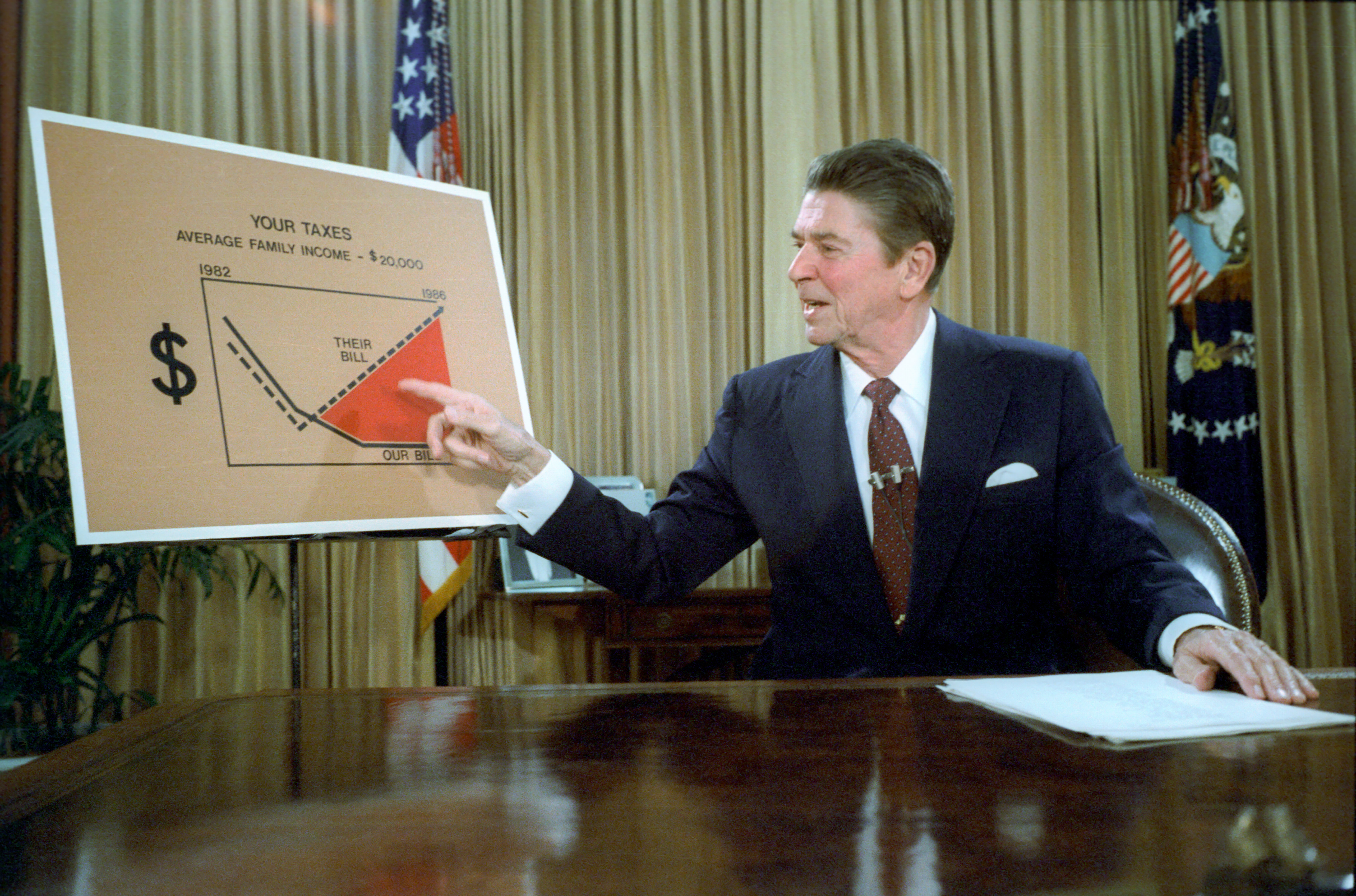
Controversial political term
Trickle-down economics, also known as trickle-down theory and the horse-and-sparrow theory, is a term, most-often used pejoratively, to describe government economic policies that disproportionately favor the upper tier of the economic spectrum (wealthy individuals and large corporations). The term has been used broadly by critics of supply-side economics to refer to taxing and spending policies by governments that, intentionally or not, result in widening income inequality; it has also been used in critical references to neoliberalism. These critics reject the notion that spending by this elite group would "trickle down" to those who are less fortunate and lead to economic growth that will eventually benefit the economy as a whole.
While criticisms have existed since at least the 19th century, the term "trickle-down economics" was popularized by Democrats in the US to derogate Reaganomics and its reduction in the top marginal tax rates.
Major examples of what critics have called "trickle-down economics" in the US include the Reagan tax cuts, the Bush tax cuts, and in UK include Margaret Thatcher's economic policies in the 1980s and Liz Truss's mini-budget tax cuts of 2022.
History
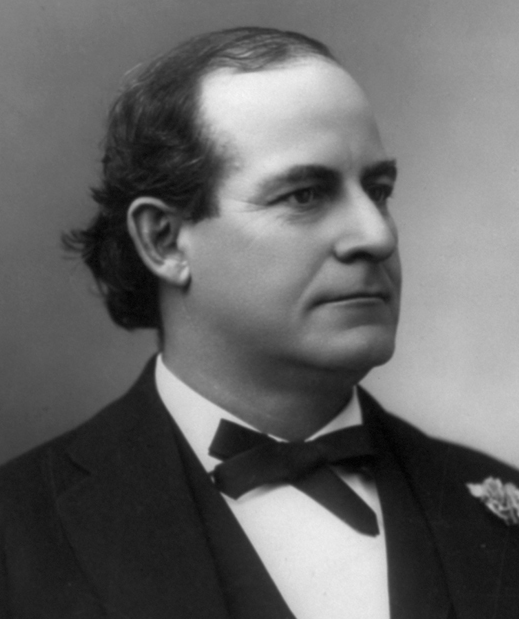
In 1896, United States Democratic presidential candidate William Jennings Bryan claimed in his Cross of Gold speech that his opposition based their policies on the idea that the success of the rich would "leak through" to the lower classes, stating: "There are those who believe that, if you will only legislate to make the well-to-do prosperous, their prosperity will leak through on those below."
In 1932, humorist and social commentator Will Rogers wrote a column criticizing Herbert Hoover's policies and approach to The Great Depression and stated: "The money was all appropriated for the top in the hopes that it would trickle down to the needy. Mr. Hoover was an engineer. He knew that water trickles down. Put it uphill and let it go and it will reach the driest little spot." In 2007, political commentator William J. Bennett credited Rogers for coining the term "trickle down" and observed its persistent use throughout the decades since.
In 1983, H. W. Arndt wrote that Indian nationalist and statesman Jawaharlal Nehru may have been the first to use the term in an economic (rather than political context) when he stated in 1933 "the exploitation of India and other countries brought so much wealth to England that some of it trickled down to the working class and their standard of living rose."
Samuel Rosenman, a Democratic presidential speechwriter under Franklin D. Roosevelt and Harry Truman, and coiner of the term "New Deal", wrote that "trickle down policies" had been prevalent in American government since 1921. In 1969, after leaving the presidency, Democrat Lyndon B. Johnson alleged "Republicans ... simply don't know how to manage the economy. They're so busy operating the trickle-down theory, giving the richest corporations the biggest break, that the whole thing goes to hell in a handbasket."
Ronald Reagan launched his 1980 campaign for the presidency on a platform advocating for supply-side economics. During the 1980 Republican Party presidential primaries, George H. W. Bush had derided Reagan's economic approach as "voodoo economics". Following Reagan's election, the "trickle-down" reached wide circulation with the publication of "The Education of David Stockman", a December 1981 interview of Reagan's incoming Office of Management and Budget director David Stockman, in the magazine Atlantic Monthly. In the interview, Stockman expressed doubts about supply side economics, telling journalist William Greider that the Kemp–Roth Tax Cut was a way to rebrand a tax cut for the top income bracket to make it easier to pass into law. Reagan administration officials including Michael Deaver wanted Stockman to be fired in response to his comments, but he was ultimately kept on in exchange for a private apology. Political opponents of the Reagan administration soon seized on this language in an effort to brand the administration as caring only about the wealthy. In 1982, John Kenneth Galbraith wrote the "trickle-down economics" that Stockman was referring to was previously known under the name "horse-and-sparrow theory", the idea that feeding a horse a huge amount of oats results in some of the feed passing through for lucky sparrows to eat.
In the 1992 presidential election, independent candidate Ross Perot also referred to trickle-down economics as "political voodoo". In the same election, during a presidential town hall debate, Bill Clinton, referring to the previous presidencies of Ronald Reagan and George H. W. Bush stated "...we've had 12 years of trickle-down economics. We've gone from first to twelfth in the world in wages. We've had four years where we've produced no private-sector jobs. Most people are working harder for less money than they were making 10 years ago".
Usage
Author and political commentator William Safire, in his political dictionary published in 2008, defined "trickle-down theory" as "The idea that aid to corporations will seep through to employees and irrigate the economy."
Broader use
While the term "trickle-down" is commonly used to refer to income benefits, it is sometimes used to refer to the idea of positive externalities arising from technological innovation or increased trade. Arthur Okun, and separately William Baumol, for example, have used the term to refer to the flow of the benefits of innovation, which do not accrue entirely to the "great entrepreneurs and inventors", but trickle down to the masses. And Nobel laureate economist Paul Romer used the term in reference to the impact on wealth from tariff changes. The Laffer curve is often cited by proponents of trickle-down policy.
The political campaign group, Tax Justice Network has used the term referring broadly to wealth inequality in its criticisms of tax havens. In 2013, Pope Francis used the term in his apostolic exhortation Evangelii gaudium, saying that "Some people continue to defend trickle-down theories which assume that economic growth, encouraged by a free market, will inevitably succeed in bringing about greater justice and inclusiveness in the world."
In New Zealand, Damien O'Connor, an MP from the Labour Party, called trickle-down economics "the rich pissing on the poor" in the Labour Party campaign launch video for the 2011 general election. In a 2016 US presidential election candidates debate, Hillary Clinton accused Donald Trump of supporting the "most extreme" version of trickle-down economics with his tax plan, calling it "trumped-up trickle-down" as a pun on his name. In his speech to a joint session of Congress on April 28, 2021, US President Joe Biden stated that "trickle-down economics has never worked". Biden has continued to be critical of trickle-down.
A Columbia journal article comparing a failed UK Enterprise Zone proposal to later US proposals references them as a form of trickle-down policy where lower regulatory and tax burdens were aimed at wealthier developers with the hope they would benefit residents. Nobel laureate Paul Krugman states that despite the narrative of trickle-down style tax cuts, the effective tax rate of the top 1% of earners has failed to change very much. Political commentator Robert Reich has implicated institutions such as The Heritage Foundation, Cato Institute, and Club for Growth for promoting what he considers to be a discredited idea. Kansas governor and politician Sam Brownback's 2018 tax cut package was widely labelled as an attempt at trickle-down economics. Friedrich Hayek's economic theories have also been described as trickle-down by his opponents.
Objections to the term
In 1983, H. W. Arndt described the term as a myth, saying that no major economists of the 1950s assumed that wealth would accumulate among the rich and then spread to the poor.
Speaking on the US Senate floor in 1992, Hank Brown (Republican senator for Colorado) objected to the use of the term for the policies of Ronald Reagan and George H. W. Bush, saying that they have never advocated for it.
Thomas Sowell, a proponent of supply-side economics, says that trickle-down economics have never been advocated by any economist, writing in his 2012 essay "Trickle Down" Theory and "Tax Cuts for the Rich" that "[t]he 'trickle-down' theory cannot be found in even the most voluminous scholarly studies of economic theories." Sowell disagrees with the characterization of supply-side economics as trickle-down, saying that the economic theory of reducing marginal tax rates works in precisely the opposite direction: "Workers are always paid first and then profits flow upward later – if at all." In 2014, Sowell called trickle-down economics the "biggest lie in politics," and said "The time is long overdue for people to ask themselves why it is necessary for those on the left to make up a lie if what they believe in is true."
Benjamin Lockwood, professor of business economics and public policy at Wharton, said "The term ‘trickle-down economics’ doesn't really represent a cohesive economic theory,” “It's a term used, often negatively, to characterize the view that reducing taxes on the rich will benefit the non-rich.”
In 2022, the Liz Truss administration objected to characterizing its policies as "trickle-down economics".
Economic analyses of the effects of lowering taxes on the wealthy
Nobel laureate Joseph Stiglitz wrote in 2015 that the post–World War II evidence does not support trickle-down economics, but rather "trickle-up economics" whereby more money in the pockets of the poor or the middle benefits everyone. In a 2020 research paper, economists David Hope and Julian Limberg analyzed data spanning 50 years from 18 countries, and found that tax cuts for the rich increased inequality in the short and medium term, and had no significant effect on real GDP per capita or employment in the short and medium term. According to the study, this shows that the tax cuts for the upper class did not trickle down to the broader economy. From 1980 to 2016, a divergence in the distribution of wealth was noted, with the top .01% of earners seeing a 600% change in real income, vs a 0% change in the bottom 99%, leading to the top 1% accruing 15% more of the total wealth pool, from a share of 15 to 30%.
A 2015 IMF staff discussion note by Era Dabla-Norris, Kalpana Kochhar, Nujin Suphaphiphat, Frantisek Ricka and Evridiki Tsounta suggests that lowering taxes on the top 20% could actually reduce growth. Political scientists Brainard Guy Peters and Maximilian Lennart Nagel in 2020 described the 'trickle down' description of tax cuts for the wealthy and corporations stimulating economic growth that helps the less affluent as a "zombie idea" and stated that it has been the most enduring failed policy idea in American politics.
Effects of very high marginal tax rates
Sowell noted that John Maynard Keynes in 1933 said, that “taxation may be so high as to defeat its object,”.
He also noted that even left-wing politicians like Woodrow Wilson in 1919 stated that very high tax rates are detrimental to the economy at large and John F. Kennedy in 1962 stated "it is a paradoxical truth that tax rates are too high today and tax revenues are too low and the soundest way to raise the revenues in the long run is to cut the rates now."
References
References
- Duerringer, C. M.. (2019). "Class Structure and the Movement of Capital: The Rhetoric of Supply Side Economics".
- (2016-07-07). "Handbook of Neoliberalism". Routledge.
- "Does Trickle-down Economics Add Up – or Is It a Drop in the Bucket?". A business journal from the Wharton School of the University of Pennsylvania.
- Noah, Timothy. (2011-09-21). "New Republic: How Did Trickle-Down Get Acceptable?".
- (April 1983). "Thatcherism and Reagonomics: Supply-Side Economic Policy in Great Britain and the United States". The Athenaeum Press.
- Schomberg, William. (September 7, 2022). "UK heads for return to 'trickle-down' economics under low-tax Truss". Reuters.
- link. (March 11, 2023 ''. Armonk, New York: M. E. Sharpe. p. 172. {{ISBN)
- link. (March 11, 2023 ''. London; New York: Routledge. p. 26. {{ISBN). 9780203479278.
- Roger, Will. (November 26, 1932). "Will Rogers Explains That Money, Unlike Water, Always Trickles Up". [[The St. Louis Star and Times]].
- (2007). "America: The Last Best Hope". Harper Collins.
- The "Trickle-Down" Myth, [[Heinz Arndt. H.W. Arndt]], Economic Development and Cultural Change, Oct., 1983, Vol. 32, No. 1 (Oct., 1983), pp. 1-10, UCP, https://www.jstor.org/stable/1153421 {{Webarchive. link. (October 10, 2022)
- Shlaes, Amity. (May 27, 2008). "The Forgotten Man: A New History of the Great Depression". Harper Perennial.
- Janos, Leo. (July 1973). "The Last Days of the President". The Atlantic.
- Wiseman, Paul. "Trickle-down economics gets another try".
- link. (December 27, 2020 by William Greider)
- William Greider. ''The Education of David Stockman''. {{ISBN. 0-525-48010-2.
- White, Michael. (1983). "Creative statistics: the Laffer Curve and taxation incentives.". Journal of Australian Political Economy, the.
- (1986-04-12). "David Stockman's famous trip to the woodshed was prompted...".
- Thomas, Sowell. (January 7, 2014). "The Trickle-Down Lie".
- Galbraith, John Kenneth (February 4, 1982) [http://www.nybooks.com/articles/archives/1982/feb/04/recession-economics/ "Recession Economics"]. {{Webarchive. link. (December 27, 2020 . ''[[New York Review of Books]]'' Volume 29, Number 1.)
- "Commercials – 1992 – Trickle Down".
- (2012-10-16). "How Bill Clinton Engaged With One Voter To Win 1992 Town Hall Debate".
- Safire, William. (2008). "Safire's Political Dictionary". Oxford University Press.
- Okun, Arthur M.. (1975). "Equality and Efficiency, the Big Tradeoff". Brookings Institution.
- Baumol, William J.. (July 1, 2010). "The Microtheory of Innovative Entrepreneurship". Princeton University Press.
- Romer, Paul. (February 1, 1994). "New goods, old theory, and the welfare costs of trade restrictions". Journal of Development Economics.
- "Art Laffer still thinks he was right about tax cuts". Washington Post.
- Elliott, Larry. (2022-09-20). "Liz Truss favours trickle down economics but results can be trickle up". The Guardian.
- Heather Stewart. (July 21, 2012). "Wealth doesn't trickle down – it just floods offshore, research reveals". [[The Guardian]].
- "Evangelii Gaudium: Apostolic Exhortation on the Proclamation of the Gospel in Today's World". Holy See.
- Chapman, Kate. (October 28, 2011). "Labour campaign video harks back to history". Stuff.co.nz.
- Pramuk, Jacob. (September 26, 2016). "Clinton: Trump would cut taxes for the rich in 'trumped up' trickle down economics". [[CNBC]].
- (April 28, 2021). "Biden: 'Trickle-down economics has never worked'". The Hill.
- "Biden Criticizes 'Mega-MAGA Trickle-Down Economics'".
- "Video 'I'm so sick and tired of trickle-down economics': Biden".
- Jordan, Bre. (2020-02-27). "DENOUNCING THE MYTH OF PLACE-BASED SUBSIDIES AS THE SOLUTION FOR ECONOMICALLY DISTRESSED COMMUNITIES: AN ANALYSIS OF OPPORTUNITY ZONES AS A SUBSIDY FOR LOW-INCOME DISPLACEMENT". Columbia Journal of Race and Law.
- (2017-08-20). "The Political Failure of Trickle-Down Economics".
- (2022-10-09). "Why is trickle-down economics still with us? {{!}} Robert Reich".
- (2018-04-27). "After tax cuts many saw as a failure, Kansas may cut again".
- Whyte, Jessica. (2019). "The Invisible Hand of Friedrich Hayek: Submission and Spontaneous Order". Political Theory.
- (2015-03-06). "Friedrich Hayek and the left: A response to Simon Griffiths".
- Arndt, H. W.. (1983). "The "Trickle-down" Myth". [[Economic Development and Cultural Change]].
- Hank Brown. ''[[Congressional Record]]'', March 24, 1992.
- Sowell, Thomas. (2012). ""Trickle Down" Theory and "Tax Cuts for the Rich"". Hoover Institution Press.
- Sowell, Thomas. (2014-01-08). "Thomas Sowell commentary: Trickle-down economics is a figment of liberal imaginations". [[Columbus Dispatch]].
- Sowell, Thomas. (January 7, 2014). "The 'Trickle-Down' Lie".
- [http://www.tsowell.com/images/Hoover%20Proof.pdf {{"'Trickle Down' Theory and 'Tax Cuts for the Rich{{'"]. {{Webarchive. link. (September 24, 2012 .)
- Mason, Rowena. (2022-09-21). "'No way' Truss's policies are trickle-down economics, says minister".
- Stiglitz, Joseph E.. (December 2015). "8. Inequality and Economic Growth". The Political Quarterly.
- (2022-01-07). "The economic consequences of major tax cuts for the rich". [[Socio-Economic Review]].
- (2020-12-21). "Trickle-Down Economics Fails a Sophisticated Statistical Test". Bloomberg.com.
- Picchi, Aimee. (December 17, 2020). "50 years of tax cuts for the rich failed to trickle down, economics study says".
- (December 23, 2020). "'Trickle-down' tax cuts make the rich richer but are of no value to overall economy, study finds". [[The Washington Post]].
- "Staff Discussion Notes Volume 2015 Issue 013: Causes and Consequences of Income Inequality: A Global Perspective (2015)".
- Goodwin, Neva R.. (2020). "Principles of economics in context". Routledge.
- (2020). "Zombie Ideas: Why Failed Policy Ideas Persist". Cambridge University Press.
This article was imported from Wikipedia and is available under the Creative Commons Attribution-ShareAlike 4.0 License. Content has been adapted to SurfDoc format. Original contributors can be found on the article history page.
Ask Mako anything about Trickle-down economics — get instant answers, deeper analysis, and related topics.
Research with MakoFree with your Surf account
Create a free account to save articles, ask Mako questions, and organize your research.
Sign up freeThis content may have been generated or modified by AI. CloudSurf Software LLC is not responsible for the accuracy, completeness, or reliability of AI-generated content. Always verify important information from primary sources.
Report