From Surf Wiki (app.surf) — the open knowledge base
Transportation in Mexico
none

none
The roadway network in Mexico is extensive and covers all areas of the country. The roadway network in Mexico has an extent of 366095 km,CIA - The World Factbook. CIA World Factbook. Retrieved on 20 December 2010 of which 116802 km are paved, making it the largest paved-roadway network in Latin America. Of these, 10474 km are multi-lane expressways: 9544 km are four-lane highways and the rest have six or more lanes.
The highway network in Mexico is classified by number of lanes and type of access. The great majority of the network is composed of undivided or divided two-lane highways, with or without shoulders, and are known simply as carreteras. Four or more-lane freeways or expressways, with restricted or unrestricted access, are known as autopistas. Speed limits on two-lane highways can vary depending on terrain conditions. The speed limit on multi-lane freeways or expressways is on average 110 km/h (70 mph) for automobiles and 95 km/h (60 mph) for buses and trucks.
The expressways are for the most part toll roads or autopistas de cuota. Non-toll roads are referred to as carreteras libres (free-roads). Most toll expressways have emergency telephone booths, water wells, and emergency braking ramps at short intervals. The toll usually includes a "travelers' insurance" (seguro del viajero) for any accident occurring within the freeway. The toll expressways are on average among the most expensive in the world according to a comparative study realized in 2004 by the Chamber of Deputies. The most traveled freeways are those that link the three most populous cities in Mexico— Mexico City, Guadalajara, and Monterrey in the form of a triangle.
.png)

No federal freeway or expressway crosses a city; toll expressways are either turned into toll bypasses (libramientos), often used as toll or free ring roads (periféricos), or are turned into major arterial roads even if they function as freeways with restricted access.
Mexican highways are assigned a one to three-digit number. North-south highways are assigned odd numbers whereas east-west highways are assigned even numbers. Toll expressways usually run parallel to a free road and so are assigned the same number with the letter "D" added. (For example, the undivided two-lane highway connecting Mexico City and Puebla is MX 150, and the six-lane toll expressway is MX 150D).
Mexico has had difficulty in building an integrated highway network because of the country's orography and landscape characteristics—most of the country is crossed by high-altitude ranges of mountains. Over the last two decades, Mexico has made impressive investments in order to improve its road infrastructure and connect main cities and towns across the country. In spite of its extension and recent development, the roadway network in Mexico is still inadequate to meet the current needs of the population and except for the toll roads, and they are often inadequately maintained.
An additional problem is that in the center of the country the roads run into Metropolitan Mexico City from regional centers, but there are few roads that run peripherically to connect the other regional centers without running through the congestion around the capital. The federal government, in partnership with the government of Mexico State and the Federal District, has tried to alleviate that problem by constructing a tolled Mexico City bypass highway, Arco Norte, which was partially opened in 2009.
Railroads
Main article: Rail transport in Mexico}}{{See Also, Tren Maya

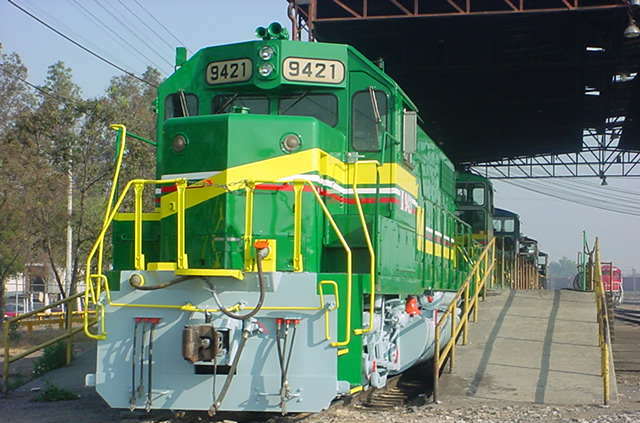
Mexico privatized its freight rail service with the dissolution of the former Ferrocarriles Nacionales de México freight service in 1998, leading to significant improvements and modernization in the sector. Today, the country boasts a robust rail network primarily operated by companies like Ferromex and Kansas City Southern de México, which facilitate the transport of various goods across the nation. In addition to freight, Mexico also supports urban rail infrastructure, including the Mexico City Metro and the Monterrey Metro, along with light rail systems such as the Xochimilco Light Rail in Mexico City and the Guadalajara Light Rail System. Looking towards the future, the Secretariat of Communications and Transport of Mexico has proposed ambitious projects like a high-speed rail link from Mexico City to Guadalajara, with stops in Querétaro, Guanajuato, León, and Irapuato, allowing passengers to travel at speeds of 300 km/h and reducing travel time between these cities significantly compared to road transport.
Airports and air travel
| Airport and air traffic | Paved runways | Largest airport | |
|---|---|---|---|
| [[File:2X A320-271N XA-VRH and XA-VIT at MLM.jpg | 200x200px]] | ||
| 1,834 (2007) | |||
| 231 | |||
| Mexico City International Airport | |||
| (26 million p/year) |
Air travel has played a central role in connecting Mexico’s remote regions, supporting economic development, and boosting international mobility. Given the country's vast and often rugged geography, aviation emerged early on as a practical solution for connecting remote areas, especially in the absence of reliable road infrastructure. Today, it remains essential for domestic mobility, tourism, business travel, and trade logistics, especially across regions poorly served by rail or long-distance buses.
Commercial aviation in Mexico began in 1921 with the creation of Compañía Mexicana de Transportación Aérea in Mexico City, the forerunner to Mexicana de Aviación, once the country's oldest and most prestigious airline. Throughout the 20th century, air travel expanded alongside industrial growth and urbanization, with Mexico City becoming a major regional hub. The liberalization of airspace in the 1990s, followed by waves of privatization and deregulation, reshaped the industry—paving the way for low-cost carriers and increased international competition.
The 2016 U.S.–Mexico Air Transport Agreement marked a turning point. It scrapped decades-old restrictions and gave airlines freedom to fly point-to-point between any cities in either country—no more limiting each route to two or three carriers or routing everything through major hubs. It also opened the door to fifth freedom rights and commercial alliances, giving airlines more flexibility to serve international routes via third countries.
Airports
.jpg)
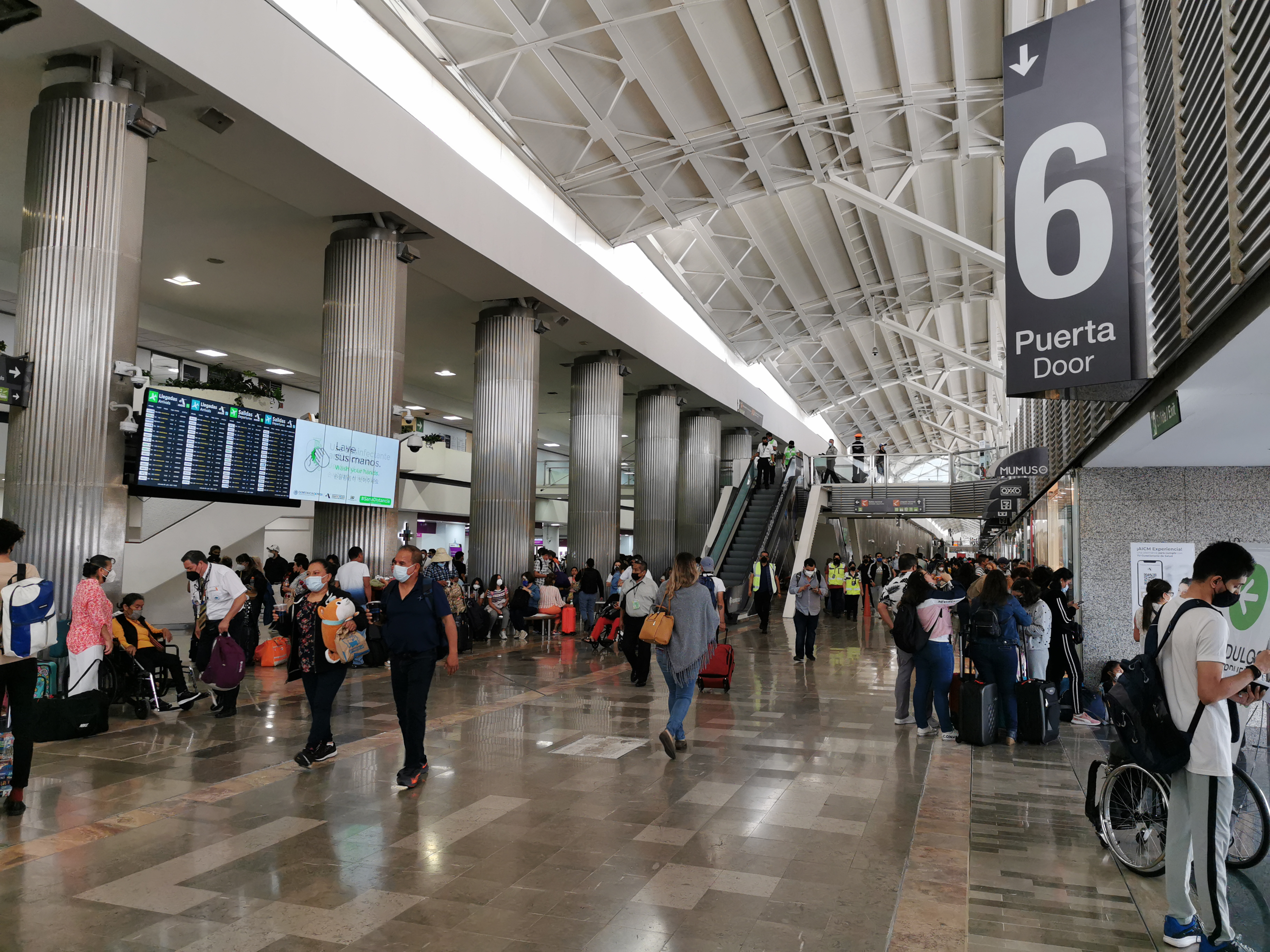
Mexico has a vast aviation network, with 1,527 registered airfields and 80 officially recognized airports as of 2025, ranking 4th globally after the U.S., Brazil, and Australia. A significant number of these airports offer scheduled commercial flights, including both domestic-only and international passenger services. The country also has 20 Air Force bases, 10 Air Force stations, 13 Naval Air Bases, and 5 Naval Air Stations, most of which share facilities with civil aviation rather than operating independently. Additionally, hundreds of airfields and airstrips remain scattered across the country, many dating back to a time when limited road infrastructure made air travel crucial for connecting remote areas and supporting military logistics.
Mexico’s airport system is managed by both public and private operators, with the Federal Civil Aviation Agency (AFAC) overseeing regulations and safety. In 1995, the government launched a major airport privatization effort through the '''Ley de Aeropuertos''' (Airports Law), transferring most state-owned airports to private operators: Grupo Aeroportuario del Sureste (ASUR), Grupo Aeroportuario del Pacífico (GAP), and Grupo Aeroportuario del Centro Norte (OMA). In 2023, the government expanded military involvement in infrastructure, creating the military-owned Grupo Olmeca-Maya-Mexica (OMM), which took over several previously government-operated airports. A small number of airports remain under state control, managed by Aeropuertos y Servicios Auxiliares (ASA) and other public entities.
Mexico City International Airport (MEX) remains the country’s busiest airport and one of the largest in Latin America. It serves as the primary hub for Mexico's flagship carrier, Aeroméxico. The broader Mexico City Airport System, which includes Felipe Ángeles International Airport (NLU) and Toluca International Airport (TLC), is one of the busiest city airport systems in Latin America.
Cancún International Airport (CUN) is the busiest airport in Mexico and Latin America by international passenger traffic, offering flights to numerous destinations across the Americas and Europe. Felipe Ángeles International Airport (NLU) leads in cargo operations, with the most operational runways (3) and the longest runway in Mexico.
Other major airports include Guadalajara (GDL), Monterrey (MTY), Tijuana (TIJ), Los Cabos (SJD), and Puerto Vallarta (PVR). Every Mexican metropolitan area with over 300,000 inhabitants has an airport, with Saltillo (SLW), Cuernavaca (CVJ), and Xalapa (JAL) being the largest cities whose airports lack scheduled passenger service.

Airlines
Mexico’s commercial aviation sector is dominated by a handful of carriers that reflect the country’s fragmented geography, uneven development, and class-based mobility patterns.
The landscape is led by three major players: Aeroméxico, Volaris, and Viva—each catering to a different segment of the market while competing on overlapping routes both domestically and internationally. Today, Aeroméxico is the national flag carrier and the country’s largest airline by fleet size and number of destinations. Volaris leads by passengers carried, while Viva ranks third among major carriers. Other domestic and regional airlines include TAR México, Aerus, Aero Servicio Guerrero, Magnicharters, and the recently launched, state-owned Mexicana de Aviación.
Seaports


Mexico has a total of 76 seaports and 10 river ports. The country's maritime infrastructure supports a diverse range of economic activities and trade. Among these ports, four major seaports stand out for concentrating approximately 60% of Mexico's merchandise traffic. These key ports include Altamira and Veracruz on the Gulf of Mexico, and Manzanillo and Lázaro Cárdenas on the Pacific Ocean. Following closely in terms of traffic are ports like Acapulco, Puerto Vallarta, Guaymas, Tampico, Topolobampo, Mazatlán, and Tuxpan. Each of these ports plays a vital role in facilitating the import and export of goods, supporting industrial activities, and enhancing Mexico's connectivity with global markets.
The Port of Acapulco, known for its historical and touristic importance, handles minerals and agricultural products alongside its tourist traffic. Puerto Vallarta's port supports tourism and fishing industries while managing cargo operations. Guaymas Port, strategically positioned on the Sea of Cortez, specializes in minerals, agricultural exports, and manufacturing products. Topolobampo Port in Sinaloa primarily exports grains and produce. Mazatlán Port on the Pacific coast manages a mix of agricultural products and manufactured goods. Tuxpan Port on the Gulf of Mexico is emerging as a key hub for container shipping and automotive exports. Together, these ports facilitate the movement of goods, support local industries, and connect Mexico to global markets, reflecting its pivotal role in international trade and commerce.
References
References
- [http://www.nationsencyclopedia.com/economies/Americas/Mexico-INFRASTRUCTURE-POWER-AND-COMMUNICATIONS.html Mexico Infrastructure, power and Communications]. National Economies Encyclopedia. Retrieved 13 January 2007
- [http://dgaf.sct.gob.mx/fileadmin/EST_BASICA/EST_BASICA_2005/EST2005_12INFRA.pdf Infraestructura Carretera] {{Webarchive. link. (16 July 2007. Secretaría de Comunicaciones y Transportes. México. Retrieved 13 January 2007)
- With data from [[The World Factbook]]
- [http://www.condusef.gob.mx/Seccion_Fija/ftc/ftc_78.pdf Seguro de Viajero en Carreteras Federales]{{dead link. (September 2024)
- [http://www.mexperience.com/guide/essentials/toll_road_charges.htm#Insurance Toll Roads and Driving in Mexico.] Mexperience.com. Retrieved 13 January 2007.
- [http://www.elsiglodetorreon.com.mx/noticia/211918.mexico-aun-con-las-autopistas-mas-caras.html México, aún con las autopistas más caras]. El Siglo de Torreón. 8 May 2006. Accessed 13 January 2008.
- [http://www.britannica.com/eb/article-27400/Mexico Transportations and Telecommunications]. Mexico. [[Encyclopædia Britannica]]. Retrieved 14 January 2008
- [http://www.mexperience.com/guide/essentials/toll_road_charges.htm#Intro Guide to Toll Roads in Mexico]. Toll Roads and Driving in Mexico. Mexperience.com. Retrieved 13 January 2007.
- [http://www.mexperience.com/guide/essentials/getting_around.htm#TravRoad The Development of Mexico's Road Network]. Getting Around in Mexico. Mexperience. Retrieved 13 January 2007.
- [http://arconorte.com.mx/index.jsp Arco Norte web site] {{Webarchive. link. (22 August 2010 Retrieved 25 August 2010)
- Hawley, Chris. (6 January 2006). "Mexico reviving travel by train". Arizona Republic.
- "Systra : Project for a Mexico City - Guadalajara High Speed Line. Rail transport engineering, public transport engineering".
- [http://www.mexperience.com/guide/essentials/getting_around.htm#DomFlights Domestic Flights in Mexico]. Mexperience. Accessed 19 January 2008
- [http://www.mcx.es/turismo/infopais/mexico/Mexico.htm#D.-%20Infr Infrastructuras]. Información de México. Ministerio de Industria, Turismo y Comercio de España.
- "Indicadores de Transporte Aéreo* enero 2025".
- "Country Comparisons - Airports".
- [https://web.archive.org/web/20070613003449/https://www.cia.gov/library/publications/the-world-factbook/rankorder/2053rank.html Ranking on the number of airports per country]. CIA Factbook
- "AEROPUERTOS. Historia de la construcción, operación y administración aeroportuaria en México".
- (April 2016). "Company history".
- (17 August 2021). "Sedatu traspasa 5 hectáreas a Sedena para construcción de aeropuerto "Felipe Ángeles"". El Universal (México).
- "Aeropuertos y Servicios Auxiliares".
- link. (16 July 2012)
- (January 12, 2023). "Cancun passes 30 million passengers in 2022; new records for both domestic and international traffic".
- (20 February 2022). "On March 21, the three runways at the AMLO's General Felipe Ángeles Airport will begin to operate". Mexico City Post.
- "Statistics by Airport". Secretaría de Comunicaciones y Transportes.
- [http://www.cideiber.com/infopaises/Mexico/Mexico-06-06.html Transporte Marítimo. México] {{Webarchive. link. (27 May 2008 . Centro de Información y Documentación Empresarial sobre Iberoamérica)
This article was imported from Wikipedia and is available under the Creative Commons Attribution-ShareAlike 4.0 License. Content has been adapted to SurfDoc format. Original contributors can be found on the article history page.
Ask Mako anything about Transportation in Mexico — get instant answers, deeper analysis, and related topics.
Research with MakoFree with your Surf account
Create a free account to save articles, ask Mako questions, and organize your research.
Sign up freeThis content may have been generated or modified by AI. CloudSurf Software LLC is not responsible for the accuracy, completeness, or reliability of AI-generated content. Always verify important information from primary sources.
Report