From Surf Wiki (app.surf) — the open knowledge base
Transport protein
Protein that moves other materials within an organism
Protein that moves other materials within an organism
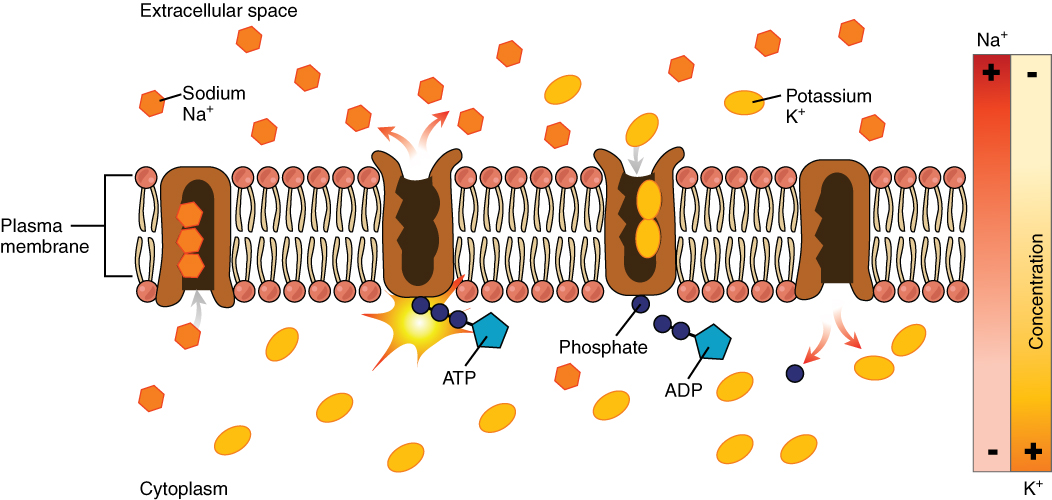
A transport protein (variously referred to as a transmembrane pump, transporter, escort protein, ** acid transport protein**, cation transport protein, or anion transport protein) is a protein that serves the function of moving other materials within an organism. Transport proteins are vital to the growth and life of all living things. There are several different kinds of transport proteins.
Carrier proteins are proteins involved in the movement of ions, small molecules, or macromolecules, such as another protein, across a biological membrane. Carrier proteins are integral membrane proteins; that is, they exist within and span the membrane across which they transport substances.
The proteins may assist in the movement of substances by facilitated diffusion (i.e., passive transport) or active transport. These mechanisms of movement are known as carrier-mediated transport. Each carrier protein is designed to recognize only one substance or one group of very similar substances. Research suggests that potassium, calcium and sodium channels can function as oxygen sensors in mammals and plants, and has correlated defects in specific carrier proteins with specific diseases.
A membrane transport protein (or simply transporter) is a membrane protein that acts as such a carrier.
A vesicular transport protein is a transmembrane or membrane associated protein. It regulates or facilitates the movement by vesicles of the contents of the cell.
References
References
- Sadava, David, et al. Life, the Science of Biology, 9th Edition. Macmillan Publishers, 2009. {{ISBN. 1-4292-1962-9. pg 119.
- Thompson, Liz A. Passing the North Carolina End of Course Test for Biology. American Book Company, Inc. 2007. {{ISBN. 1-59807-139-4. pg. 97.
- (10 August 2007). "Oxygen sensing by ion channels". Essays in Biochemistry.
- (27 January 2022). "Cation transporters in cell fate determination and plant adaptive responses to a low-oxygen environment". Journal of Experimental Botany.
- Sadava, David, Et al. Life, the Science of Biology, 9th Edition. Macmillan Publishers, 2009. {{ISBN. 1-4292-1962-9. pg 119.
- {{MeshName. Membrane+transport+proteins
- {{MeshName. Vesicular+Transport+Proteins
This article was imported from Wikipedia and is available under the Creative Commons Attribution-ShareAlike 4.0 License. Content has been adapted to SurfDoc format. Original contributors can be found on the article history page.
Ask Mako anything about Transport protein — get instant answers, deeper analysis, and related topics.
Research with MakoFree with your Surf account
Create a free account to save articles, ask Mako questions, and organize your research.
Sign up freeThis content may have been generated or modified by AI. CloudSurf Software LLC is not responsible for the accuracy, completeness, or reliability of AI-generated content. Always verify important information from primary sources.
Report