From Surf Wiki (app.surf) — the open knowledge base
Transmisogyny
Intersection of transphobia and misogyny, experienced by transfeminine individuals
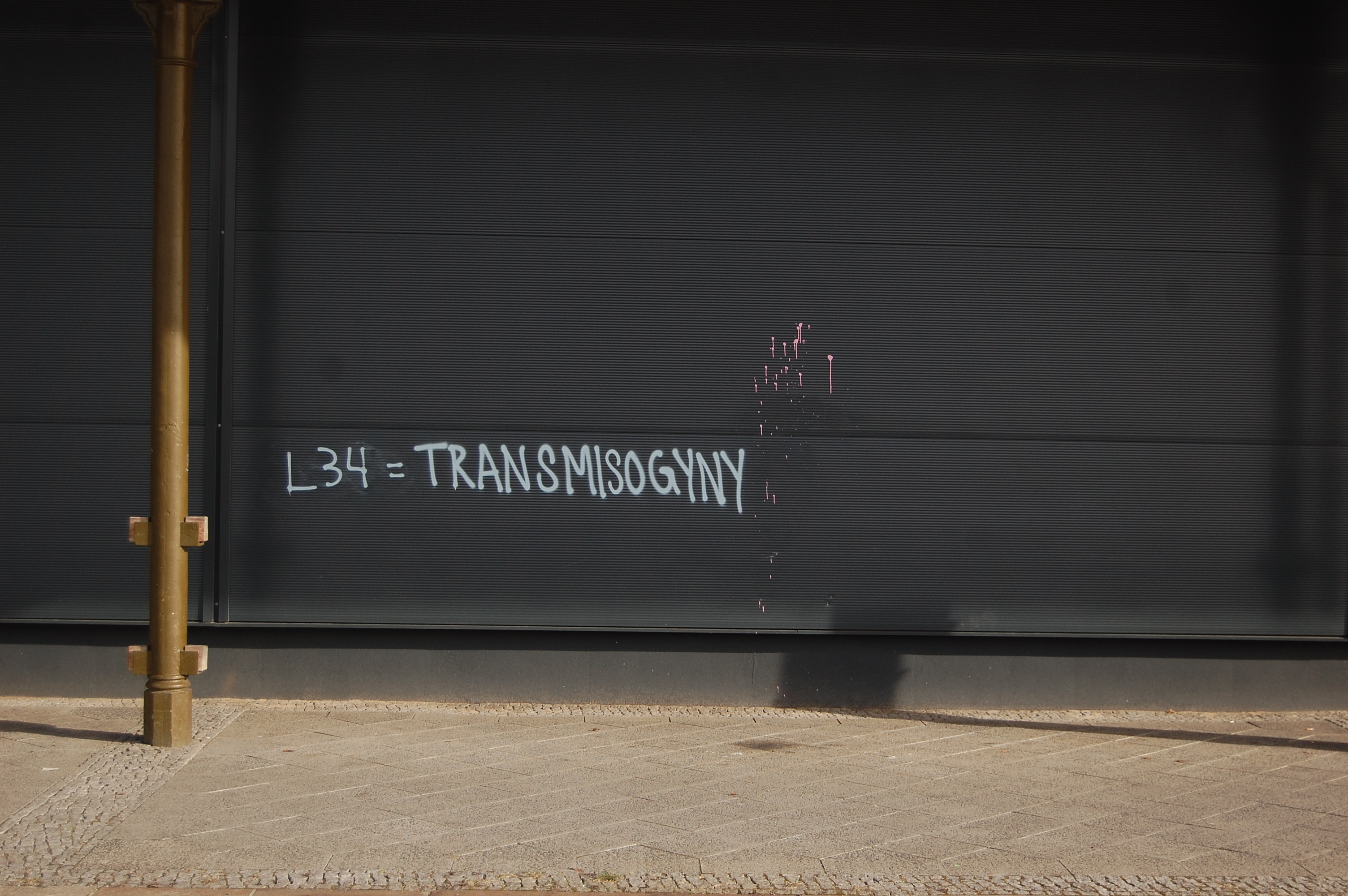
Intersection of transphobia and misogyny, experienced by transfeminine individuals
Transmisogyny, otherwise known as trans-misogyny and transphobic misogyny, is the intersection of transphobia and misogyny as experienced by trans women and transfeminine people. The term was coined by Julia Serano in her 2007 book Whipping Girl to describe a particular form of oppression experienced by trans women. In a 2017 interview with The New York Times, Serano explores the roots of transmisogyny as a critique of feminine gender expressions which are "ridiculed in comparison to masculine interests and gender expression."
Transmisogyny is a central concept in transfeminism and is commonly referenced in intersectional feminist theory. In her definition of transmisogyny, Serano does not limit those affected by transmisogyny to individuals who identify as transgender and includes others, such as cisgender people, and those who identify as drag queens.
Framework
The concept of transmisogyny hinges on two other concepts first described by Serano: traditional sexism and oppositional sexism. The former is the idea that "maleness and masculinity are superior to femaleness and femininity", while the latter holds male and female as "rigid, mutually exclusive categories". Transmisogyny stems from both these concepts.
In Whipping Girl, Julia Serano writes that the existence of trans women is seen as a threat to a "male-centered gender hierarchy". Gender theorist Judith Butler echoes this assumption, stating that the murder of transgender women by men is "the most toxic form that masculinity can take", a way for the killer to assert power over the victim in the instant, in response to the idea of the intrinsic nature of his power (i.e., his masculinity) being threatened. Butler states that trans women have relinquished masculinity, showing that it is possible to do so.
Trans panic is a common legal and social defense strategy that is used to justify violence towards transgender individuals, particularly trans women. Similar to Gay Panic, it suggests that the aggressor was provoked into violence due to the victim's gender presentation being misleading or deceptive. In A Short History of Trans Misogyny, Jules Gill-Peterson outlines several moments of trans panic related violence leading back to the 1800s. She adds that, "The misgendering of trans-femme individuals as male sexual aggression… allows people to respond to trans femininity with as much preemptive violence as they desire."
Instances
United States
Transgender women face harsher levels of discrimination than some other transgender people. An analysis of around 7.000 LGBTQ+ workers conducted by the HRC Foundation found that trans women report the largest wage gap out of the gender-variant demographics, earning sixty cents for every one dollar earned by a typical worker, less than what is earned by trans men. However, the opposite effect was also observed in a study published in Labour Economics based on data from the US Transgender Survey, which has a different methodology and sample, notably including closeted trans people and any employment status.
According to Laura Kacere (2014), trans people experience a disproportionately large number of hate crimes, with trans women experiencing the majority of these crimes. The National Coalition of Anti-Violence Programs (2012) found that police violence is three times higher against transgender people than it is against cisgender people. In fact, over half of all anti-LGBTQIA+ homicides were perpetrated against transgender women. (See List of people killed for being transgender.) In the United States, the majority of transmisogyny is directed at trans women of color. The Human Rights Campaign Foundation (2018) reports significant overlaps between the gender identity and race of anti-trans violence victims: of the known homicides of transgender people from 2013 to 2018, approximately 92% were trans women, and approximately 70% were black. Kacere (2014) also states that 21% of transgender women and 47% of black transgender women have experienced incarceration, rates that are much higher than those for the overall U.S. population.
Ecuador
A study of discrimination directed against lesbian, bisexual, transsexual, transgender and intersex women in Ecuador found that transgender women "lack protection against discrimination in both law and practice." As a result, trans women have faced violence, sexual abuse, and discrimination in educational, health and workforce institutions.
Sexualization and harassment
Julia Serano has stated that many trans women experience an additional layer of misogyny in the form of fetishization. She notes that, despite public fixation on describing even post-transition trans women as male, they are rarely sexualized as men. In the porn industry, whose target audience is primarily heterosexual men, trans women are largely presented as sexual objects.
According to Serano, the sexualisation of trans women is not solely because transgender women, by nature of their relative rarity, are viewed as "exotic": she notes that trans women are sexualized particularly much even compared to other types of "rare" women. In Whipping Girl, Serano writes on what she calls a "predator–prey dichotomy" where "men are invariably viewed as predators and women as prey." Because of this view, trans women are perceived to be luring men by transitioning and "turning [themselves] into sexual objects that no red-blooded man can resist."
Transmisogynistic violence and harassment directed towards trans feminine individuals is often perpetrated by strangers rather than those known by the victim and oftentimes includes catcalling and other forms of verbal abuse. Although some states have non-discrimination laws protecting transgender individuals, there is no federal law specifically designed to protect those who identify as transgender.
Forming coalitions with trans activism is crucial to collectively challenge both ableism and transmisogyny. Transmisogyny and ableism often intersect, resulting in unique challenges for trans disabled individuals who face compounded discrimination and marginalization.
Relation to transphobia
Transmisogyny is a distinct category of transphobia in that transmisogyny mainly focuses on trans women and other transgender individuals who demonstrate femininity, whereas transphobia is a more general term, covering a broader spectrum of prejudice and discrimination towards transsexual and transgender individuals. Julia Serano states in Whipping Girl that "[w]hen the majority of jokes made at the expense of trans people center on 'men wearing dresses' or 'men who want their penises cut off' that is not transphobia – it is transmisogyny. When the majority of violence and sexual assaults committed against trans people is directed at trans women, that is not transphobia – it is transmisogyny."
In an interview in The New York Times, Serano states the discrimination experienced by transgender women differs from that experienced by transgender men as follows:
Online stereotypes
The phenomenon described by Serano is particularly evident in online depictions of trans women, mainly in Internet memes wherein trans women are often derogatorily portrayed as masculine men wearing feminine clothing. The same transphobic depictions also often attempt to express that trans women suffer from victim mentality, are overreactive and demanding, or are "pretending" to be women with the intention of sexually harassing "real" women and/or children. Such motifs are particularly prominent in discourse surrounding trans bathroom bills.
Pseudoscience
Noteworthy in the discussion surrounding transmisogyny is also the idea of autogynephilia, a hypothetical paraphilia proposed by Ray Blanchard, and defined by him as "a male's propensity to be sexually aroused by the thought of himself as a female." Although modern scientific knowledge does not completely rule out the existence of autogynephilia as something that may occur in some individuals, it contradicts Blanchard's formulation that it is the basis for the transsexuality of heterosexual trans women. The dominant scientific explanation remains the incongruence between gender identity and assigned sex, which is responsible for gender dysphoria. Nevertheless, autogynephilia is often promoted by anti-LGBT hate groups and transphobic writers as an attempt to pathologize trans identity.
On the topic of autogynephilia, Julia Serano (a former academic biologist by profession) has said: "If proponents of autogynephilia insist that every exception to the model is due to misreporting, then autogynephilia theory must be rejected on the grounds that it is unfalsifiable and therefore unscientific. If, on the other hand, we accept that these exceptions are legitimate, then it is clear that autogynephilia theory's two-subtype taxonomy does not hold true."
References
References
- Kevin L. Nadal. (2017). "The SAGE Encyclopedia of Psychology and Gender". SAGE Publications.
- (24 August 2019). "Spilling the T on Trans-Misogyny and Microaggressions: An Intersectional Oppression and Social Process Among Trans Women". Journal of Homosexuality.
- (2017). "Is Transmisogyny Killing Trans Women of Color?". TSQ: Transgender Studies Quarterly.
- Serano, Julia. "Transmisogyny primer".
- Harrison, Kelby. (2013). "Sexual deceit: the ethics of passing". Lexington Books.
- Carstensen, Caitlyn. (June 22, 2017). "Julia Serano, Transfeminist Thinker, Talks Transmisogyny". The New York Times.
- Serano, Julia. (2016). "Outspoken: A Decade of Transgendered Activism and Trans Feminism". Switch Hitter Press.
- (2015-12-16). "Why Do Men Kill Trans Women? Gender Theorist Judith Butler Explains".
- (2020). "The Trans Panic Defense Revisited". American Criminal Law Review.
- (2007). "Whipping Girl: A Transsexual Woman on Sexism and the Scapegoating of Femininity". Seal Press.
- (2024). "A Short History of Trans Misogyny". Verso.
- (2024). "A Short History of Trans Misogyny". Verso.
- "The Wage Gap Among LGBTQ+ Workers in the United States".
- Shannon, Matthew. (2022-08-01). "The labour market outcomes of transgender individuals". Labour Economics.
- National Coalition of Anti-Violence Programs. (2013). "A Report from the National Coalition of Anti-Violence Programs (NCAVP): Lesbian, Gay, Bisexual, Transgender, Queer, and HIV-Affected Hate Violence in 2012".
- Kacere, Laura. (2014-01-27). "Transmisogyny 101: What It Is and What Can We Do About It". Everyday Feminism.
- "A National Epidemic: Fatal Anti-Transgender Violence in America".
- (2008). "Ecuador: Discrimination of Lesbian, Bisexual, Transsexual, Transgender and Intersex Women".
- Bianco, Marcie. (September–October 2016). "A manifesto for all: Bisexual trans activist and author Julia Serano wants to make feminism inclusive".
- (May 2009). "Violence against transgender people: A review of United States data". Aggression and Violent Behavior.
- (2018-07-05). "Why Disability Studies Scholars Must Challenge Transmisogyny and Transphobia". Canadian Journal of Disability Studies.
- Baril, Alexandre. (November 2015). "Transness as Debility: Rethinking Intersections between Trans and Disabled Embodiments". Feminist Review.
- (September 13, 2021). "How Fake "Experts" Are Driving the Campaign Against Trans People". [[GenderGP]].
- (2016). "Whipping Girl: A Transsexual Woman on Sexism and the Scapegoating of Femininity". Basic Books.
- Carstensen, Caitlyn. (June 22, 2017). "Julia Serano, Transfeminist Thinker Talks Trans-Misogyny". The New York Times.
- Spencer, Leland G.. (2019-10-20). "Bathroom Bills, Memes, and a Biopolitics of Trans Disposability". Western Journal of Communication.
- Moser MD, Charles. (2010-06-30). "Blanchard's Autogynephilia Theory: A Critique". Journal of Homosexuality.
- Serano, Julia. (2020-07-01). "Autogynephilia: A scientific review, feminist analysis, and alternative 'embodiment fantasies' model". The Sociological Review.
- "Gender incongruence and transgender health in the ICD".
- "What is Gender Dysphoria?".
- Serano, Julia M.. (2010-10-12). "The Case Against Autogynephilia". International Journal of Transgenderism.
- (2018-01-25). "Conservative book 'When Harry Became Sally' attacks trans people while conveniently leaving them out".
- (2016-04-07). "Anti-LGBT Hate Group Releases Anti-Trans Position Statement".
- (2018-10-03). "Roundup of anti-LGBT activities 10/3/2018".
- (2021). "The SAGE Encyclopedia of Trans Studies: 2". SAGE Publications, Inc.
This article was imported from Wikipedia and is available under the Creative Commons Attribution-ShareAlike 4.0 License. Content has been adapted to SurfDoc format. Original contributors can be found on the article history page.
Ask Mako anything about Transmisogyny — get instant answers, deeper analysis, and related topics.
Research with MakoFree with your Surf account
Create a free account to save articles, ask Mako questions, and organize your research.
Sign up freeThis content may have been generated or modified by AI. CloudSurf Software LLC is not responsible for the accuracy, completeness, or reliability of AI-generated content. Always verify important information from primary sources.
Report