From Surf Wiki (app.surf) — the open knowledge base
Trail running
Mountain sport
Mountain sport
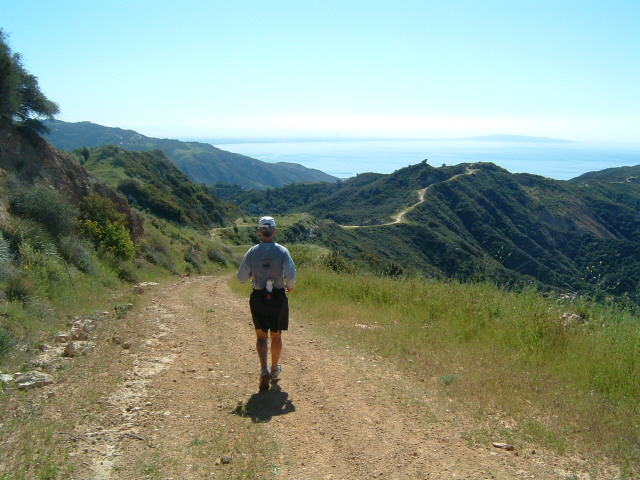
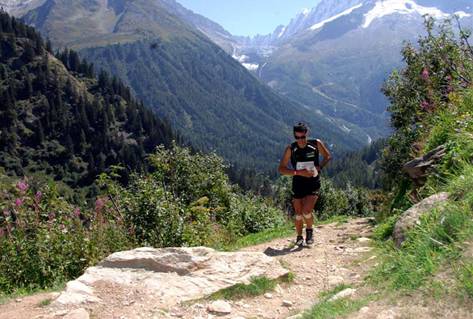
Trail running is a type of running that takes place on outdoor trails, often in mountainous terrain, and often includes significant ascents and descents.
It is similar to both mountain and fell running (also known as hill running). Unlike road running and track running, it generally takes place on outdoor trails, often in mountainous terrain, and often includes significant ascents and descents. It is difficult to definitively distinguish trail running from cross country running. In general, however, cross country running is a discipline governed by World Athletics, which is typically raced over shorter distances.
Runners often cite less impact stress compared to road running, as well as the landscape and non-urban environment, as primary reasons for preferring trail running. This move to nature is also reflected in a large increase in competitors in non-traditional/off-road triathlons and adventure racing in the 2010s.
In 2013 International Trail Running Association (ITRA) was formed to promote trail running. ITRA's Performance Index and WMRA world ranking are used to rank runner's performances.
Equipment
When comparing a trail-running shoe to a road-running shoe, trail-running shoes are built for more rugged terrain. They have noticeably thicker outsoles allowing for better traction on the trails and stiffer midsoles for support on uneven and rocky surfaces. Other features like added heel and toe protection and waterproof technologies are also found in trail shoes.

Trail-running gear can vary depending on specific trail and weather conditions but can include wicking garments, water bottles, sunscreen, sunglasses, hats, gaiters, insect repellent spray, headlamps, headphones, and ivy block. Some trail runners attach lightweight crampons to the bottom of their shoes to aid with traction in the snow and on ice. Ultra-light hiking poles or trekking poles can be used to increase speed and stability. Water may be stored inside a hydration bladder with a drinking tube, carried in a backpack, waist pack, or hydration pack.
Races

Trail running races are organized globally and vary in distance, terrain, and vertical climb. For example, in the United States, the American Trail Running Association was only founded in 1996 to represent trail races in the US. In the United Kingdom, the Trail Running Association was formed in 1991. The International Trail Running Association (ITRA) was founded in 2013, and was first recognized by the IAAF in 2015. In 2025, Sophie Power launched a series of women-only trail races in the UK.
Distances in races vary widely, from 5 km, to over 100 miles (161 km). Many trail races are of ultramarathon distance. Races of similar distances often differ significantly in terms of terrain, which makes it difficult to compare performance across different courses. This is in contrast to times over standard distances in road running, such as 10 km or marathon.
The International Triathlon Union conducts an annual Cross Triathlon World Championship race. Additionally, the XTERRA Triathlon is a private off-road series that concludes with a championship each year in Maui.
Aid stations
Aid stations are physical checkpoints commonly located every 5 to 10 kilometers along the course. Ultramarathon aid stations are often stocked with foods that provide runners with quickly digestible sugars that can provide a needed boost as their glycogen levels begin to drop. Most trail races only have a single stage, where competitors are timed over the entire duration of their run, including stops at aid stations. However, trail running stage races also exist. These multiday-stage races usually offer complete support and runner amenities between stages. There are, however, stage races that provide no support apart from water and medical aid, and require competitors to carry all their equipment (food, sleeping bag, change of clothes, compass). The best-known example of such races is the Marathon des Sables, which was first held in 1986.
Participation limitations
Compared to road races, there are often fewer participants as the number of entries is often limited. There can be a few reasons for this: narrowness of trails, national parks (where the courses are often set) may limit the number of participants via a permitting process, safety, and environmental concerns. There are many popular races such as the Ultra-Trail du Mont-Blanc in Europe or the Western States Endurance Run in the United States that have been forced to limit entries due to overwhelming demand.
Additionally, runners may be expected to behave in sportsmanlike ways that increase access and enjoyment for all participants. These actions can include yielding to uphill traffic, staying on established trails, passing on the left (United States), staying single file, and yielding to fast runners.
Some notable trail races include:
Africa
- Fish River Canyon Ultra Marathon
- Kalahari Augrabies Extreme Marathon
- Mount Cameroon Race of Hope
- Rhodes Trail Run
Asia
- 9 Dragons: Hong Kong, 50 km 100 km
- Coast To Coast Night Trail Ultra: Indonesia, since 2015
- Japan Mountain Endurance Race Hasegawa Tsuneo Cup (HASETSUNE CUP): 71.5 km (since 1993)
- Trans Japan Alps Race (TJAR): 415 km (since 2002)
- Ultra-Trail Mount Fuji (UTMF): 161 km (since 2012)
Europe
- Fruškogorski maraton: 125 km (since 1978)
- Scenic Trail: 167 km
- Tatry Running Tour
- Tor des Géants: 330 km
- Transvulcania: 83 km
- Ultra-Trail du Mont-Blanc: 166 km
- Zugspitz Ultratrail 101 km since 2011
North America
- Barkley Marathons: 100 mi
- Bear 100 Mile Endurance Run: 100 miles (160 km)
- Dipsea Race: 7.5 mi the oldest trail running event in the US
- Hardrock Hundred Mile Endurance Run: 100 mi
- Leadville Trail 100: 100 mi
- Western States Endurance Run: 100 mi
Oceania
- Kepler Challenge: 60 km also includes the Luxmore Grunt 28 km (New Zealand)
- Kokoda Challenge Race: 96 km
References
References
- "ITRA Discover Trail Running".
- (14 June 2013). "Why Trail Running Is Good for You". runnersworld.com.
- "Outdoor Participation Report 2013". Outdoor Foundation.
- "Trail Running".
- Pasteris, Joe. "What's the Difference Between Road and Trail-Running Shoes?".
- "Trail Running Shoes Can be Worn on the Road, Too".
- "Hydration for Running: A Beginner's Guide".
- "Trail Running Basics".
- Bettin, Allison. (2021-11-22). "A Beginner's Guide to Trail Running".
- "ATRA history". American Trail Ruunning Association.
- "History". International Trail Running Association.
- Sellers, Kate. (2024-12-19). "SheRACES launches first female trail ultra series and new research – and we have all the info you need to know".
- Team, Run Infinite. (2019-05-08). "Making The Most of Aid Stations".
- Pollmann, Tayte. (2019-03-12). "Training and Racing Etiquette Tips for the Trails".
- (2021-11-08). "ANMELDESTART FÜR DEN SALOMON ZUGSPITZ ULTRATRAIL POWERED BY LEDLENSER 2022 — DAS GRÖSSTE TRAILRUNNING-EVENT DEUTSCHLANDs".
- Kate Siber. (6 August 2009). "Fastpacking: What is it, and why do it?".
- Clint Cherepa, [https://www.outdoors.org/articles/fastpacking "Hike Fast, Sleep Hard: Are You Ready to Try Fastpacking?"] {{Webarchive. link. (23 January 2021 ''Outdoors.org'', 27 August 2018.)
- "An introduction to hill running - runbritain".
- (11 October 2013). "Trail Running or Fell Running?".
- (25 March 2018). "A 60-second guide to fell running". Runner's World.
- "IAAF Competition Rules 2016-2017, rule 251".
This article was imported from Wikipedia and is available under the Creative Commons Attribution-ShareAlike 4.0 License. Content has been adapted to SurfDoc format. Original contributors can be found on the article history page.
Ask Mako anything about Trail running — get instant answers, deeper analysis, and related topics.
Research with MakoFree with your Surf account
Create a free account to save articles, ask Mako questions, and organize your research.
Sign up freeThis content may have been generated or modified by AI. CloudSurf Software LLC is not responsible for the accuracy, completeness, or reliability of AI-generated content. Always verify important information from primary sources.
Report