From Surf Wiki (app.surf) — the open knowledge base
Tracheal collapse
Flattening of the trachea in animals
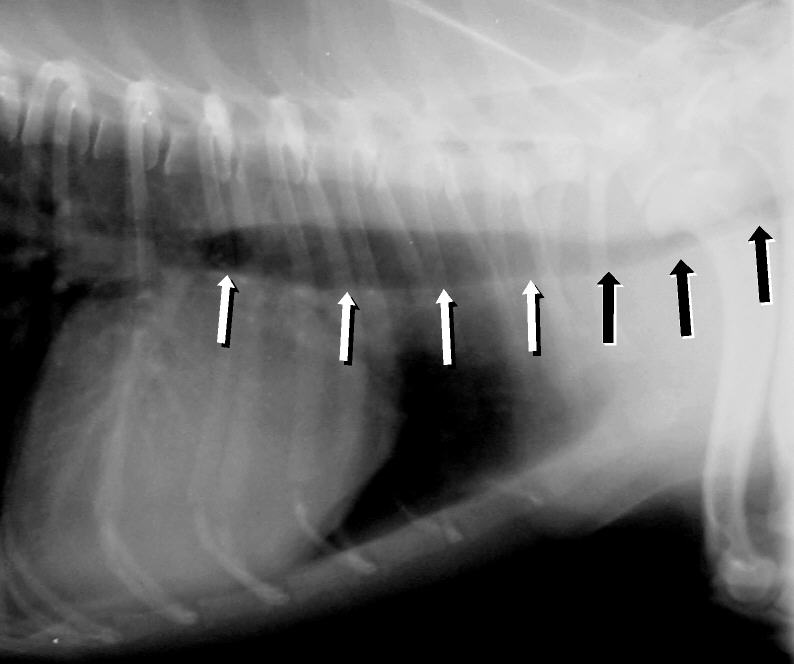
Flattening of the trachea in animals
tracheal collapse in animals

Tracheal collapse in dogs is a condition characterized by incomplete formation or weakening of the cartilaginous rings of the trachea resulting in flattening of the trachea. It can be congenital or acquired, and extrathoracic or intrathoracic (inside or outside the thoracic cavity). Tracheal collapse is a dynamic condition. Collapse of the cervical trachea or extrathoracic (in the neck) occurs during inspiration; collapse of the thoracic trachea or intrathoracic (in the chest) occurs during expiration. Tracheal collapse is most commonly found in small dog breeds, including the Chihuahua, Pomeranian, Toy Poodle, Shih Tzu, Lhasa Apso, Maltese, Pug, and Yorkshire Terrier.
Congenital tracheal collapse appears to be caused by a deficiency of normal components of tracheal ring cartilage like glycosaminoglycans, glycoproteins, calcium, and chondroitin. Acquired tracheal collapse can be caused by Cushing's syndrome, heart disease, and chronic respiratory disease and infection.
Symptoms include a cough (often called a "goose honk cough" due to its sound), especially when the dog is excited. This cough is usually paroxysmal in nature. Other symptoms include exercise intolerance, respiratory distress, and gagging while eating or drinking. Tracheal collapse is easily seen on a radiograph as a narrowing of the tracheal lumen. Treatment for mild to moderate cases include corticosteroids, bronchodilators, and antitussives. Medical treatment is successful in about 70 percent of tracheal collapse cases. Severe cases can be treated with surgical implantation of a tracheal stent (inside or outside of the trachea) or prosthetic rings. Extraluminal (outside the trachea) stenting is generally used only for tracheal collapse in the neck region. Intraluminal stenting has shown more promise for success with intrathoracic cases, especially using nitinol, a type of shape memory alloy composed of nickel and titanium. Potential problems include stent migration and fracture.
Tracheal collapse has also been described in horses, both as a congenital condition and as a result of trauma. It is most commonly seen in the cervical trachea.
References
References
- Fossum, Theresa W.. (2002). "Surgical Management Of Tracheal Collapse". Proceedings of the 27th World Congress of the World Small Animal Veterinary Association.
- (1995). "Textbook of Veterinary Internal Medicine". W.B. Saunders Company.
- Payne, Justin D.. (May 2006). "Tracheal Collapse". Veterinary Learning Systems.
- (2006). "Noninvasive correction of a fractured endoluminal nitinol tracheal stent in a dog". J Am Anim Hosp Assoc.
- Sammarco, Carl. (June 2006). "Tracheal collapse frustrating; minimally invasive techniques promising". Advanstar Communications.
- (2002). "Disorders of the Trachea in Horses". Equine Respiratory Diseases.
This article was imported from Wikipedia and is available under the Creative Commons Attribution-ShareAlike 4.0 License. Content has been adapted to SurfDoc format. Original contributors can be found on the article history page.
Ask Mako anything about Tracheal collapse — get instant answers, deeper analysis, and related topics.
Research with MakoFree with your Surf account
Create a free account to save articles, ask Mako questions, and organize your research.
Sign up freeThis content may have been generated or modified by AI. CloudSurf Software LLC is not responsible for the accuracy, completeness, or reliability of AI-generated content. Always verify important information from primary sources.
Report