From Surf Wiki (app.surf) — the open knowledge base
Toxin
Naturally occurring organic poison
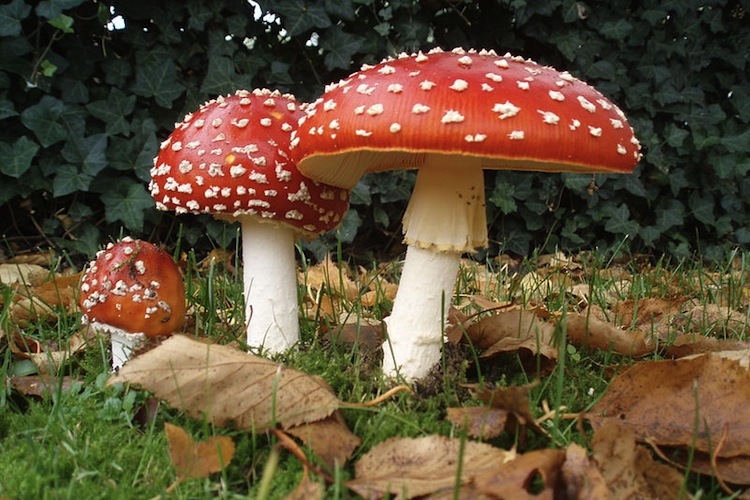
Naturally occurring organic poison
A toxin is a naturally occurring poison produced by metabolic activities of living cells or organisms. They occur especially as proteins, often conjugated. The term was first used by organic chemist Ludwig Brieger (1849–1919), derived from toxic.
Toxins can be small molecules, peptides, or proteins that are capable of causing disease on contact with or absorption by body tissues interacting with biological macromolecules such as enzymes or cellular receptors. They vary greatly in their toxicity, ranging from usually minor (such as a bee sting) to potentially fatal even at extremely low doses (such as botulinum toxin).
Terminology
Toxins are often distinguished from other chemical agents strictly based on their biological origin.
Less strict understandings embrace naturally occurring inorganic toxins, such as arsenic. Other understandings embrace synthetic analogs of naturally occurring organic poisons as toxins, and may or may not embrace naturally occurring inorganic poisons. It is important to confirm usage if a common understanding is critical.
Toxins are a subset of toxicants. The term toxicant is preferred when the poison is man-made and therefore artificial. The human and scientific genetic assembly of a natural-based toxin should be considered a toxin as it is identical to its natural counterpart. The debate is one of linguistic semantics.
The word toxin does not specify method of delivery (as opposed to venom, a toxin delivered via a bite, sting, etc.). Poison is a related but broader term that encompasses both toxins and toxicants; poisons may enter the body through any means - typically inhalation, ingestion, or skin absorption. Toxin, toxicant, and poison are often used interchangeably despite these subtle differences in definition. The term toxungen has also been proposed to refer to toxins that are delivered onto the body surface of another organism without an accompanying wound.
A rather informal terminology of individual toxins relates them to the anatomical location where their effects are most notable:
- Genitotoxin, damages the urinary organs or the reproductive organs
- Hemotoxin, causes destruction of red blood cells (hemolysis)
- Phototoxin, causes dangerous photosensitivity
- Hepatotoxins affect the liver
- Neurotoxins affect the nervous system
On a broader scale, toxins may be classified as either exotoxins, excreted by an organism, or endotoxins, which are released mainly when bacteria are lysed.
Biological
The term "biotoxin" is sometimes used to explicitly confirm the biological origin as opposed to environmental or anthropogenic origins. Biotoxins can be classified by their mechanism of delivery as poisons (passively transferred via ingestion, inhalation, or absorption across the skin), toxungens (actively transferred to the target's surface by spitting, spraying, or smearing), or venoms (delivered through a wound generated by a bite, sting, or other such action). They can also be classified by their source, such as fungal biotoxins, microbial toxins, plant biotoxins, or animal biotoxins.
Toxins produced by microorganisms are important virulence determinants responsible for microbial pathogenicity and/or evasion of the host immune response.
Biotoxins vary greatly in purpose and mechanism, and can be highly complex (the venom of the cone snail can contain over 100 unique peptides, which target specific nerve channels or receptors).
Biotoxins in nature have two primary functions:
- Predation, such as in the spider, snake, scorpion, jellyfish, and wasp
- Defense as in the bee, ant, termite, honey bee, wasp, poison dart frog and plants producing toxins
- The toxins used as defense in species among the poison dart frog can also be used for medicinal purposes
Some of the more well known types of biotoxins include:
- Cyanotoxins, produced by cyanobacteria
- Dinotoxins, produced by dinoflagellates
- Necrotoxins cause necrosis (i.e., death) in the cells they encounter. Necrotoxins spread through the bloodstream. In humans, skin and muscle tissues are most sensitive to necrotoxins. Organisms that possess necrotoxins include:
- The brown recluse or "fiddle back" spider
- Most rattlesnakes and vipers produce phospholipase and various trypsin-like serine proteases
- Puff adder
- Necrotizing fasciitis (caused by the "flesh eating" bacterium Streptococcus pyogenes) – produces a pore forming toxin
- Neurotoxins primarily affect the nervous systems of animals. The group neurotoxins generally consists of ion channel toxins that disrupt ion channel conductance. Organisms that possess neurotoxins include:
- The black widow spider.
- Most scorpions
- The box jellyfish
- Elapid snakes
- The cone snail
- The Blue-ringed octopus
- Venomous fish
- Frogs
- Palythoa coral
- Various different types of algae, cyanobacteria and dinoflagellates
- Myotoxins are small, basic peptides found in snake and lizard venoms, They cause muscle tissue damage by a non-enzymatic receptor based mechanism. Organisms that possess myotoxins include:
- rattlesnakes
- Mexican beaded lizard
- Cytotoxins are toxic at the level of individual cells, either in a non-specific fashion or only in certain types of living cells:
- Ricin, from castor beans
- Apitoxin, from honey bees
- T-2 mycotoxin, from certain toxic mushrooms
- Cardiotoxin III, from Chinese cobra
- Hemotoxin, from vipers
Weaponry
Many living organisms employ toxins offensively or defensively. A relatively small number of toxins are known to have the potential to cause widespread sickness or casualties. They are often inexpensive and easily available, and in some cases it is possible to refine them outside the laboratory. As biotoxins act quickly, and are highly toxic even at low doses, they can be more efficient than chemical agents. Due to these factors, it is vital to raise awareness of the clinical symptoms of biotoxin poisoning, and to develop effective countermeasures including rapid investigation, response, and treatment.
Environmental
The term "environmental toxin" can sometimes explicitly include synthetic contaminants such as industrial pollutants and other artificially made toxic substances. As this contradicts most formal definitions of the term "toxin", it is important to confirm what the researcher means when encountering the term outside of microbiological contexts.
Environmental toxins from food chains that may be dangerous to human health include:
- Paralytic shellfish poisoning (PSP)
- Amnesic shellfish poisoning (ASP)
- Diarrheal shellfish poisoning (DSP)
- Neurotoxic shellfish poisoning (NSP)
Research
In general, when scientists determine the amount of a substance that may be hazardous for humans, animals and/or the environment they determine the amount of the substance likely to trigger effects and if possible establish a safe level. In Europe, the European Food Safety Authority produced risk assessments for more than 4,000 substances in over 1,600 scientific opinions and they provide open access summaries of human health, animal health and ecological hazard assessments in their OpenFoodTox database. The OpenFoodTox database can be used to screen potential new foods for toxicity.
The Toxicology and Environmental Health Information Program (TEHIP) at the United States National Library of Medicine (NLM) maintains a comprehensive toxicology and environmental health web site that includes access to toxins-related resources produced by TEHIP and by other government agencies and organizations. This web site includes links to databases, bibliographies, tutorials, and other scientific and consumer-oriented resources. TEHIP also is responsible for the Toxicology Data Network (TOXNET), an integrated system of toxicology and environmental health databases that are available free of charge on the web.
TOXMAP is a Geographic Information System (GIS) that is part of TOXNET. TOXMAP uses maps of the United States to help users visually explore data from the United States Environmental Protection Agency's (EPA) Toxics Release Inventory and Superfund Basic Research Programs.
References
References
- {{OEtymD. toxin
- "toxin – Definition from the Merriam-Webster Online Dictionary".
- {{DorlandsDict. eight/000109718. toxin
- Brade, Helmut. (1999). "Endotoxin in Health and Disease". CRC Press.
- Gupta, PK. (2018). "Illustrated Toxicology with Study Questions". Elsevier Inc..
- (2021-06-01). "Diagnosis and Treatment {{!}} Botulism".
- (2015). "Are Some Fungal Volatile Organic Compounds (VOCs) Mycotoxins?". Toxins.
- "Arsenic in Food: FAQ". WebMD.
- (2012). "Arsenic in your food - Our findings show a real need for federal standards for this toxin". [[Consumer Reports]].
- Beans, Carolyn. (2021). "Keeping arsenic out of rice". Proceedings of the National Academy of Sciences.
- "U.S. Code".
- "Module 1: Introduction to Toxicology". Agency for Toxic Substances and Disease Registry.
- Goldblat, Jozef. (30 June 1997). "The Biological Weapons Convention – An overview".
- (31 October 2021). "Difference Between Toxin and Toxicant (With Table)".
- (1987). "Genetic assembly and selective toxicity of diphtheria-toxin-related polypeptide hormone fusion proteins". Biochemical Society Symposium.
- (2014). "Poisons, toxungens, and venoms: Redefining and classifying toxic biological secretions and the organisms that employ them". Biological Reviews.
- "biotoxin – Definition from the Merriam-Webster Online Dictionary".
- {{DorlandsDict. one/000012874. biotoxin
- "Biotoxins: What are Biotoxins?".
- (2009). "Microbial Toxins: Current Research and Future Trends". Caister Academic Press.
- (17 December 2014). "Conotoxin Gene Superfamilies". Marine Drugs.
- (2012). "[[Dorland's Illustrated Medical Dictionary]]". Saunders/Elsevier.
- (2019-03-08). "Biological Toxins as the Potential Tools for Bioterrorism". International Journal of Molecular Sciences.
- Editorial, Team. (24 May 2021). "Toxins: Venom within Living Cells or Organisms".
- Płusa, Tadeusz. (September 2015). "[Toxins as a biological weapon]". Polski Merkuriusz Lekarski.
- (March 2004). "Environmental toxins; their impact on children's health". Archives of Disease in Childhood.
- (March 2008). "In vitro and in vivo evaluation of paralytic shellfish poisoning toxin potency and the influence of the pH of extraction". Analytical Chemistry.
- (2008). "Difference in the level of paralytic shellfish poisoning toxin accumulation between the crabs Telmessus acutidens and Charybdis japonica collected in Onahama, Fukushima Prefecture". Fisheries Science.
- (April 2008). "Paralytic shellfish poisoning toxin profile of mussels Perna perna from southern Atlantic coasts of Morocco". Toxicon.
- (November 2009). "Amnesic shellfish poisoning toxin stimulates the transcription of CYP1A possibly through AHR and ARNT in the liver of red sea bream Pagrus major". Marine Pollution Bulletin.
- (2001). "Optimization of conditions for the liquid chromatographic-electrospray lonization-mass spectrometric analysis of amnesic shellfish poisoning toxins". [[Chromatographia]].
- (August 2006). "Detection of the marine toxin okadaic acid in mussels during a diarrhetic shellfish poisoning (DSP) episode in Thermaikos Gulf, Greece, using biological, chemical and immunological methods". The Science of the Total Environment.
- (September 2007). "Enzymatic hydrolysis of esterified diarrhetic shellfish poisoning toxins and pectenotoxins". Analytical and Bioanalytical Chemistry.
- (July 2000). "Neurotoxic shellfish poisoning and brevetoxin metabolites: a case study from Florida". Toxicon.
- (1995). "Brevetoxin B3, a new brevetoxin nalog isolated from the greenshell mussel perna canaliculus involved in neurotoxic shellfish poisoning in new zealand". [[Tetrahedron Letters]].
- (1999). "Brevetoxin B4 isolated from greenshell mussels Perna canaliculus, the major toxin involved in neurotoxic shellfish poisoning in New Zealand". Natural Toxins.
- "Chemical hazards data - OpenFoodTox".
- (January 2017). "OpenFoodTox: EFSA's open source toxicological database on chemical hazards in food and feed.". EFSA Journal.
- (October 2019). "Testing the thresholds of toxicological concern values using a new database for food-related substances". Toxicology Letters.
- (April 2019). "Preliminary Automated Determination of Edibility of Alternative Foods: Non-Targeted Screening for Toxins in Red Maple Leaf Concentrate". Plants.
- "Environmental Health and Toxicology Information". National Library of Medicine.
- (January 2000). "TOXNET: A computerized collection of toxicological and environmental health information". Toxicology and Industrial Health.
- "TOXNET".
- (2006-07-24). "TOXMAP: a GIS-based gateway to environmental health resources". Medical Reference Services Quarterly.
This article was imported from Wikipedia and is available under the Creative Commons Attribution-ShareAlike 4.0 License. Content has been adapted to SurfDoc format. Original contributors can be found on the article history page.
Ask Mako anything about Toxin — get instant answers, deeper analysis, and related topics.
Research with MakoFree with your Surf account
Create a free account to save articles, ask Mako questions, and organize your research.
Sign up freeThis content may have been generated or modified by AI. CloudSurf Software LLC is not responsible for the accuracy, completeness, or reliability of AI-generated content. Always verify important information from primary sources.
Report