From Surf Wiki (app.surf) — the open knowledge base
Tourist sign
Sign that directs visitors to tourist destinations

Sign that directs visitors to tourist destinations
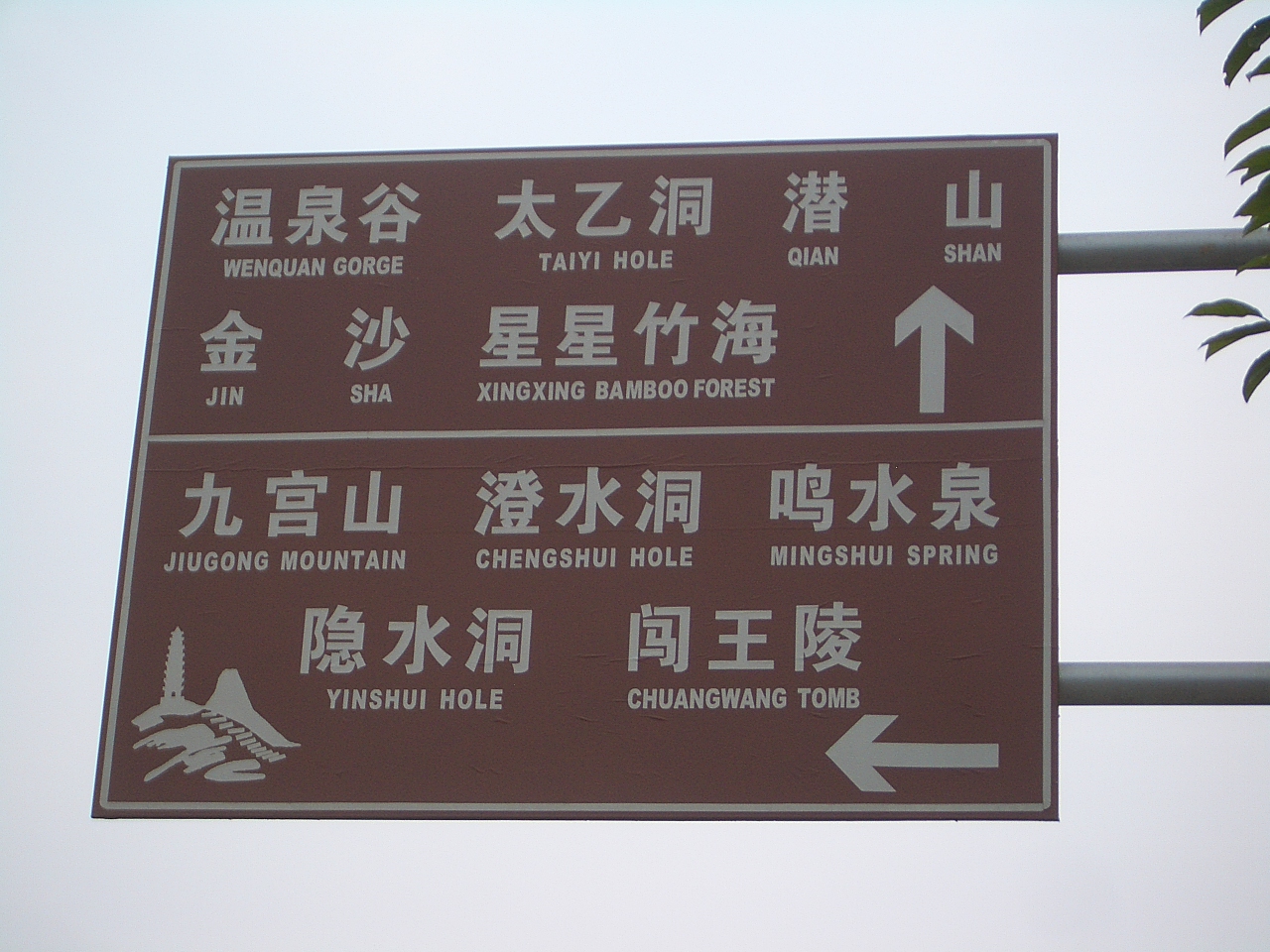
A tourist sign, often referred to as a brown sign, is a traffic sign whose purpose is to direct visitors to tourist destinations, such as historic buildings, tourist regions, caravan or camp sites, picnic areas, sporting facilities or museums. By international convention brown signs with white lettering and white pictograms are often used for this purpose.
In the mid-1970s tourist signs were introduced in France. Since that time the idea of directing tourists to sights and attractions using a uniform type of signage has spread around the world. In Germany these tourist signs were first used in 1983. A sign promoting Burg Teck was erected first, followed by signs for other tourist destinations in the governmental region of Stuttgart.
Usage
Tourist signs have three main applications:
- as information signs and signposts that point to important tourist destinations or places of interest in a specific area, such as within a village or a town;
- as standard signs used to mark tourist or holiday routes with special themes; or
- to herald the presence of nearby landscapes, towns and regions, usually on long-distance routes such as motorways.
Design


In many countries the design and use of tourist signs is laid down in order to ensure a uniform appearance. In addition to their typically brown and white colours, they use sans serif fonts that are easy to read. In order to improve their usefulness for tourists dual languages may be used. The pictograms employed are designed to be simple and meaningful, and are not multi-coloured. In some countries, such as the UK, the pictograms are standardised; though there are still signs which employ the use of non-standard pictograms, such as for the National Space Centre.
Criticism and reception
Critics complain that tourists signs contain too much information and distract motorists from concentrating on the road. The number of tourist signs continues to grow and less significant destinations are increasingly being signed. A study carried out at Harz University of Applied Sciences in 2019 found that one in six motorists on German freeways had already spontaneously visited a destination advertised on a tourist information board. Around two thirds could also recall specific contents of individual information boards.
References
References
- [http://www.highways.gov.uk/our-road-network/tourist-signs/ ''Tourist Signs (Brown Signs)''] at www.highways.gov.uk. Accessed on 10 Aug 13.
- [http://www.spiegel.de/auto/fahrkultur/0,1518,625855,00.html {{Lang. de. Touri-Tafeln an der Autobahn ("Tourist Signs on the Motorway")] dated 11 August 2006 at Spiegel-Online
- "Road traffic - The Traffic Signs Regulations and General Directions 2016".
- [http://www.kulturfahrt-deutschland.de/content/view/16/52/ {{Lang. de. Kritik] ("Criticism") at Kulturfahrt-Deutschland.de
- [https://www.welt.de/regionales/mecklenburg-vorpommern/article206045005/Touristische-Hinweisschilder-an-Autobahnen-zeigen-Wirkung.html {{Lang. de. Touristische Hinweisschilder an Autobahnen zeigen Wirkung. de
- [https://www.absatzwirtschaft.de/tourismusmarketing-spontane-abstecher-von-der-autobahn-170534/ {{Lang. de. Tourismusmarketing: Spontane Abstecher von der Autobahn. de
This article was imported from Wikipedia and is available under the Creative Commons Attribution-ShareAlike 4.0 License. Content has been adapted to SurfDoc format. Original contributors can be found on the article history page.
Ask Mako anything about Tourist sign — get instant answers, deeper analysis, and related topics.
Research with MakoFree with your Surf account
Create a free account to save articles, ask Mako questions, and organize your research.
Sign up freeThis content may have been generated or modified by AI. CloudSurf Software LLC is not responsible for the accuracy, completeness, or reliability of AI-generated content. Always verify important information from primary sources.
Report