From Surf Wiki (app.surf) — the open knowledge base
Tottenham (UK Parliament constituency)
Parliamentary constituency in the United Kingdom, 1950 onwards

Parliamentary constituency in the United Kingdom, 1950 onwards
| Field | Value | |
|---|---|---|
| name | Tottenham | |
| parliament | uk | |
| image | [[File:Tottenham 2023 Constituency.svg | 200px]] |
| map_size | 200px | |
| map_entity | Greater London | |
| year | 1950 | |
| year2 | 1885 | |
| abolished2 | 1918 | |
| elects_howmany2 | One | |
| type2 | Borough | |
| next2 | Tottenham North and Tottenham South | |
| previous2 | Middlesex | |
| type | Borough | |
| elects_howmany | One | |
| previous | Tottenham North and Tottenham South | |
| electorate | 75,968 (2023){{cite web | url= https://boundarycommissionforengland.independent.gov.uk/2023-review/the-2023-review-of-parliamentary-constituency-boundaries-in-england-volume-two-constituency-names-designations-and-composition/2023-volume-two-constituency-names-designations-and-composition-london/#lg_tottenham-bc-75968 |
| title | The 2023 Review of Parliamentary Constituency Boundaries in England – Volume two: Constituency names, designations and composition – London | |
| publisher | Boundary Commission for England | |
| access-date | 22 June 2024 | |
| df | dmy | |
| mp | David Lammy | |
| party | Labour | |
| region | England | |
| county | Greater London | |
| european | London | |
| towns | Tottenham |
a parliamentary constituency in North London
|access-date=22 June 2024
Tottenham () is a constituency in Greater London represented in the House of Commons of the Parliament of the United Kingdom since 2000 by the current Deputy Prime Minister, David Lammy of the Labour Party, who also serves as Secretary of State for Justice and Lord High Chancellor of Great Britain. Lammy has previously served as Foreign Secretary from 2024 to 2025, and also served in the Shadow Cabinet of Keir Starmer, firstly as Shadow Secretary of State for Justice and Shadow Lord Chancellor from 2020 to 2021, and as the Shadow Foreign Secretary from 2021 to 2024. Tottenham was re-created as a parliamentary constituency in 1950, having previously existed from 1885 to 1918.
Boundaries
Historic
1885–1918: The parish of Tottenham (and the area included in the Parliamentary Boroughs of Bethnal Green, Hackney, Shoreditch, and Tower Hamlets; for many wealthy voters this sub-provision gave a choice of which seat to vote for).
1918–1950: The Tottenham area was represented by the Tottenham North and Tottenham South parliamentary constituencies.
1950–1974: The Borough of Tottenham wards of Bruce Grove and Stoneleigh, Chestnuts, Green Lanes, Stamford Hill, Town Hall, and West Green.
1974–1983: The Borough of Haringey wards of Bruce Grove, Green Lanes, High Cross, Seven Sisters, South Tottenham, Tottenham Central, and West Green.
1983–2010: As above plus Coleraine, Harringay, Park, and White Hart Lane.
2010–2024: Bruce Grove, Harringay, Northumberland Park, St Ann's, Seven Sisters, Tottenham Green, Tottenham Hale, West Green, White Hart Lane.
The constituency is in the London Borough of Haringey in north London, covering the borough's central and eastern area.
Current
Further to the 2023 Periodic Review of Westminster constituencies, which came into effect for the 2024 general election, the constituency is composed of:
- The London Borough of Hackney wards of: Brownswood; Woodberry Down.
- The London Borough of Haringey wards of: Bruce Castle; Hermitage & Gardens; Northumberland Park; St Ann's; Seven Sisters; South Tottenham; Tottenham Central; Tottenham Hale; West Green.
The two Hackney wards were transferred from Hackney North and Stoke Newington. The contents in the Borough of Haringey reflect the local government boundary review which came into effect in May 2022. The Harringay and White Hart Lane wards were included in the new constituencies of Hornsey and Friern Barnet, and Southgate and Wood Green, respectively.
History
1885 to 1918

.svg)
The seat, aided by the choice to wealthy voters owning property in the eastern metropolitan divisions to the south of exercising "the county franchise" (see definition above) sided with the Conservative party candidate until the January-to-February-held 1906 election, a party noted for the gradual social reforms of Benjamin Disraeli in the early 1880s, particularly in education and urban deprivation. By the time of the 1906 United Kingdom general election the Liberal Party was at its final apex and stood on the moral high ground on issues of free trade and abhorrences in the Boer War which turned the seat in the Liberal landslide result of that year to the party's candidate. The two elections in 1910 (before a near eight-year long hiatus in elections due to World War I) were one-member parliamentary majority results nationally between the two then-dominant parties but the Liberal Party's People's Budget proposed at the first 1910 election saw Liberal incumbent Alden narrowly returned to serve Tottenham and again at the end of the year.
Since 1950
This constituency was recreated to cover a narrower, more focussed seat on the largest town or London District itself, of Tottenham. Parts of two wards were in the former Borough of Hornsey which had a seat, abolished in 1983 to make way for Hornsey and Wood Green.
;Political history During its modern period of existence, Tottenham has been won consistently by the Labour Party; however, one member in the early 1960s, Alan Brown, defected to become independent in opposition and then, crossing the floor, became a Conservative. Brown failed by a wide margin to win re-election in 1964. The closest result since 1950 was in 1987 when the Labour Party candidate Bernie Grant retained the seat by 8.2% of the vote ahead of the Conservatives. The first by-election to Tottenham occurred in 2000 due to Grant's death, which saw Labour, with new candidate David Lammy, retain the seat with a reduced majority.
In 1966, 12% of the constiuency were born in the New Commonwealth. In 1971, 25.3% of the constituency were non-White. In 1981, 35.7% of the constituency were non-White. The constituency had the highest concentration of those born in the Mediterranean New Commonwealth (7.2% of the population) in 1981.
In 2005 and 2010 – reflecting a national swing – the runner-up was a Liberal Democrat candidate.
The re-election of Lammy in 2015 made the seat the twelfth-safest of Labour's 232 seats by percentage of majority; and third-safest in London. In 2017, Lammy was re-elected with 81.6% of the vote and a 70.1% majority, making Tottenham the safest seat for any party in Greater London.
At the 2016 EU referendum on continuing British membership of the European Union, 76.2% of the constituency voted to remain.
;Prominent frontbenchers David Lammy was the Minister of State for Higher Education and Intellectual Property from 2008 until Labour's defeat in the 2010 general election. Lammy served on the Shadow Cabinet as Shadow Justice Secretary and Shadow Lord Chancellor from 2020 until 2021, when he was reshuffled to serve as Shadow Secretary of State for Foreign, Commonwealth and Development Affairs.
Constituency profile
A cosmopolitan, inner-city seat in the London Borough of Haringey, Tottenham has a large ethnic minority population – around one-fifth of the residents are Black, and there is a large Muslim population. Excluding the south of the constituency, the percentage of White residents understates the ethnic variety of this constituency, similar to the borough as a whole which includes major Cypriot, Irish, Eastern European, Jewish and Russian communities. The seat includes the two Haringey metropolitan centres of Harringay and Tottenham. London football club Tottenham Hotspur F.C. is also based in the constituency.
The seat includes the district of Tottenham. The constituency also includes the Broadwater Farm estate which was notorious for the 1985 riots, following which the estate underwent a massive facelift and is no longer a crime blackspot, and Northumberland Park which is blighted by social problems, including overcrowding.
In the east of the area is the River Lea with its valley trail and the Tottenham marshes, while to the south the seat takes in Finsbury Park in Harringay.
Members of Parliament
MPs 1885–1918
| Election | t | 2 | date=March 2012}} | Party |
|---|---|---|---|---|
| Conservative Party (UK)}}" | 1885 | Joseph Howard | ||
| Liberal Party (UK)}}" | 1906 | Percy Alden | ||
| 1918 | constituency abolished: see Tottenham North and Tottenham South |
MPs 1950–present
| Election | Member | Party | |
|---|---|---|---|
| Labour Co-operative}}" | 1950 | Frederick Messer | |
| Labour Party (UK)}}" | 1959 | Alan Grahame Brown | |
| Independent}}" | 1961 | Independent | |
| Conservative Party (UK)}}" | 1962 | Conservative | |
| Labour Party (UK)}}" | 1964 | Norman Atkinson | |
| Labour Party (UK)}}" | 1987 | Bernie Grant | |
| Labour Party (UK)}}" | 2000 by-election | David Lammy |
Elections

Elections in the 2020s
|reg. electors=75,906
Elections in the 2010s
| 2019 notional result | Party | Vote | % |
|---|---|---|---|
| Labour | 35,564 | 77.8 | |
| Conservative | 5,076 | 11.1 | |
| Liberal Democrats | 2,306 | 5.0 | |
| Green | 1,965 | 4.3 | |
| Brexit Party | 588 | 1.3 | |
| Others | 221 | 0.5 | |
| Turnout | 45,720 | 60.2 | |
| Electorate | 75,968 |
|reg. electors = 75,740
|reg. electors = 72,884
|reg. electors = 70,803
|reg. electors = 68,834
Elections in the 2000s
|reg. electors = 66,238
|reg. electors = 65,568
|reg. electors = 64,554
Elections in the 1990s
|reg. electors = 66,251
|reg. electors = 68,319
Elections in the 1980s
|reg. electors = 76,092
|reg. electors = 67,944
Elections in the 1970s
|reg. electors = 46,821
|reg. electors = 47,530 |reg. electors = 47,289 |reg. electors = 51,295
Elections in the 1960s
|reg. electors = 54,079 |reg. electors = 55,644
Elections in the 1950s
|reg. electors = 59,794 |reg. electors = 63,242 |reg. electors = 66,866 |reg. electors = 66,943
Elections in the 1910s

|reg. electors = 29,260 |reg. electors = 29,260
Elections in the 1900s
|reg. electors = 23,409
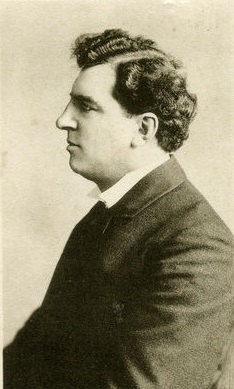
|reg. electors = 19,412
Elections in the 1890s
|reg. electors = 17,346
|reg. electors = 15,716
Elections in the 1880s
|reg. electors = 10,887
|reg. electors = 10,887
Notes
References
References
- Wells, John C.. (2008). "Longman Pronunciation Dictionary". Longman.
- Roach, Peter. (2011). "Cambridge English Pronouncing Dictionary". Cambridge University Press.
- "The public general acts". Proprietors of the Law Journal Reports.
- Redistribution of Seats Act 1885, Seventh Schedule—Counties at Large, Part I—England
- "The Parliamentary Constituencies Order 2023".
- "Oxford DNB theme: The general election of 1906".
- "POWELL, THE MINORITIES, AND THE 1970 ELECTION".
- Layton-Henry, Z.. (1978). "RACE, ELECTORAL STRATEGY AND THE MAJOR PARTIES". Parliamentary Affairs.
- Norris, Pippa. (1992-01-01). "Race and parliamentary representation". British Elections and Parties Yearbook.
- McAllister, Ian. (1984-08-01). "The electoral geography of immigrant groups in Britain". Electoral Studies.
- "Labour Members of Parliament 2015".
- "Revised estimates of leave vote in Westminster constituencies".
- "2011 census interactive maps".
- The London Borough of Haringey says its "Metropolitan Centres serve wide catchments areas and can cover several boroughs. Typically they contain at least 100,000sq.m of retail floorspace with a significant proportion of high-order comparison goods relative to convenience goods. These centres generally have very good accessibility and significant employment, leisure, service and civic functions", London Borough of Haringey's Local Plan, Site Allocations DPD, July 2017
- {{Rayment-hc. t. 2. (March 2012)
- "Notional results for a UK general election on 12 December 2019". [[UK Parliament]].
- "Tottenham Parliamentary constituency". BBC.
- (28 January 2020). "Commons Briefing Paper 8749. General Election 2019: results and analysis". [[House of Commons Library]].
- "Tottenham parliamentary constituency". BBC News.
- (29 January 2019). "Commons Briefing Paper 7979. General Election 2017: results and analysis". [[House of Commons Library]].
- "Election Data 2015". [[Electoral Calculus]].
- "Tottenham parliamentary constituency – Election 2015". BBC News.
- "London Green Party general election results".
- "Jenny Sutton for Tottenham next May". Harringay online.
- "tottenham-parliamentary-constituency".
- "Election Data 2010". [[Electoral Calculus]].
- "Election Data 2005". [[Electoral Calculus]].
- "Election Data 2001". [[Electoral Calculus]].
- Boothroyd, David. "Results of Byelections in the 1997–2002 Parliament".
- "Election Data 1997". [[Electoral Calculus]].
- "Election Data 1992". [[Electoral Calculus]].
- "Election Data 1987". [[Electoral Calculus]].
- "Election Data 1983". [[Electoral Calculus]].
- (1980). "Election Expenses". [[Parliament of the United Kingdom]].
- "Cross, George".
- (1974). "British Parliamentary Election Results: 1885–1918". Macmillan Press.
- (5 July 1892). "Today's Polling". [[Aberdeen Press and Journal]].
- (5 July 1886). "The General Election". Huddersfield Chronicle.
This article was imported from Wikipedia and is available under the Creative Commons Attribution-ShareAlike 4.0 License. Content has been adapted to SurfDoc format. Original contributors can be found on the article history page.
Ask Mako anything about Tottenham (UK Parliament constituency) — get instant answers, deeper analysis, and related topics.
Research with MakoFree with your Surf account
Create a free account to save articles, ask Mako questions, and organize your research.
Sign up freeThis content may have been generated or modified by AI. CloudSurf Software LLC is not responsible for the accuracy, completeness, or reliability of AI-generated content. Always verify important information from primary sources.
Report